


A bathroom with zero storage doesn’t give you many options. Every decision about placement affects how much usable space is left and a poorly positioned single sink countertop can make an already cramped room feel unworkable.
The most common mistake? Defaulting to the center wall without considering how the door swings, natural light and the remaining floor space interact with the sink position.
In a storage-free bathroom, placement isn’t just a design decision. It’s a functional decision that determines how the entire room operates day to day. This blog walks you through where to position a single sink countertop maximize both usability and the sense of space.
Table of Contents |
Start With the Bathroom Traffic Flow
Leave Enough Clearance Around the Sink
You should focus on how the traffic flows around your space before choosing a bathroom sink countertop. Because a cramped layout quickly becomes frustrating during busy mornings.
Try to leave enough open space in front of the countertop so drawers, doors and shower screens can open comfortably. In smaller bathrooms, tight placements beside the toilet or directly beside the shower often creates clutter buildup because there is nowhere to place daily essentials.
A layout that feels open on paper can still feel restrictive once towels, baskets and toiletries are added.
Avoid Blocking the Only Open Wall
One of the biggest mistakes in small bathrooms is placing the vanity where valuable vertical storage could go. Blocking the only free wall space for:
-
Floating shelves
-
Towel hooks
-
Slim cabinets
-
Ladder storage
Many homeowners focus only on where the sink fits instead of how the entire room functions afterward.
The Best Wall for a Single Sink Countertop in Small Bathrooms
Why Side-Wall Placement Works Best
In most compact bathrooms, placing the single sink countertop along the longer wall creates a better layout. This setup improves sightlines and makes the room appear wider instead of boxed in. It also simplifies plumbing access and creates a cleaner area for mirrors and lighting.
Side-wall placement usually works especially well for:
-
Narrow bathrooms
-
Apartments layouts
-
Hallway-style bathrooms
When Corner Placement Makes More Sense
Some bathrooms have awkward layouts where standard vanity placement wastes space. Corner placement often works better in:
-
Powder rooms
-
Very narrow bathrooms
-
Bathrooms with multiple doorways
Positioning the countertop in a corner can free up more usable floor area for slim shelving, baskets or storage ladders.

Mistakes That Make Small Bathrooms Feel Smaller
Certain layout choices immediately make compact bathrooms feel cramped:
-
Placing the vanity directly opposite the door
-
Using overly deep countertops
-
Choosing bulky vanity bases
-
Blocking natural walking paths
Large vanities may look impressive in showrooms but in smaller bathrooms they often reduce usability instead of improving it.
Use the Countertop Placement to Create Hidden Storage
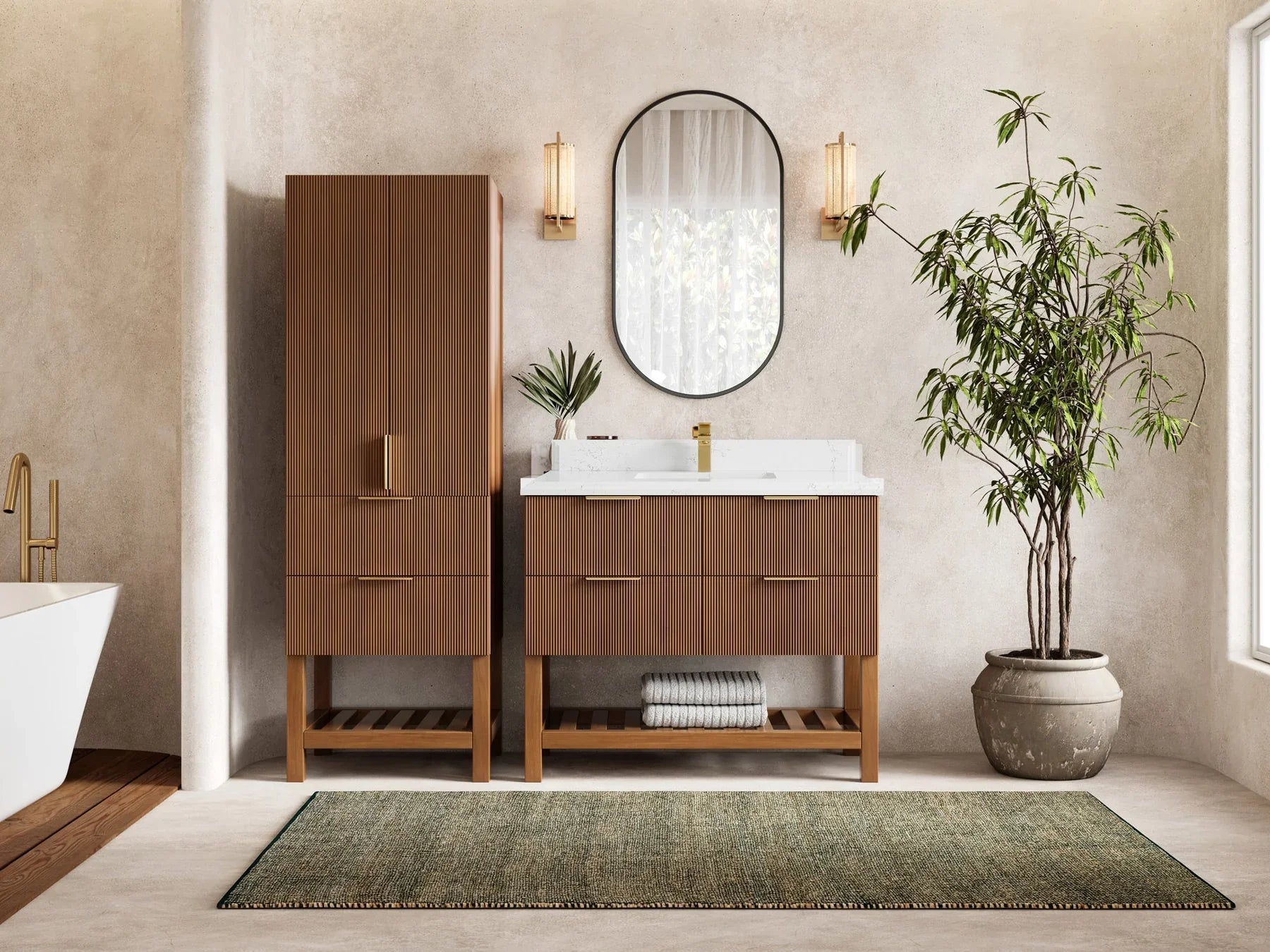
Leave Space Beside the Vanity
Even a small gap beside a single sink countertop can become valuable storage. Leaving around 8 to 12 inches beside the vanity creates room for:
-
Slim rolling carts
-
Vertical organizers
-
Towel storage
-
Laundry baskets
These small additions often improve functionality more than oversized cabinetry.
Think Vertically, Not horizontally
Bathrooms with zero storage need to maximize wall space instead of floor space. Good vertical storage options include:
-
Recessed medicine cabinets
-
Floating shelves
-
Wall-mounted lighting
-
Mirrors with hidden storage
Vertical solutions keep countertops cleaner and reduce visual clutter.
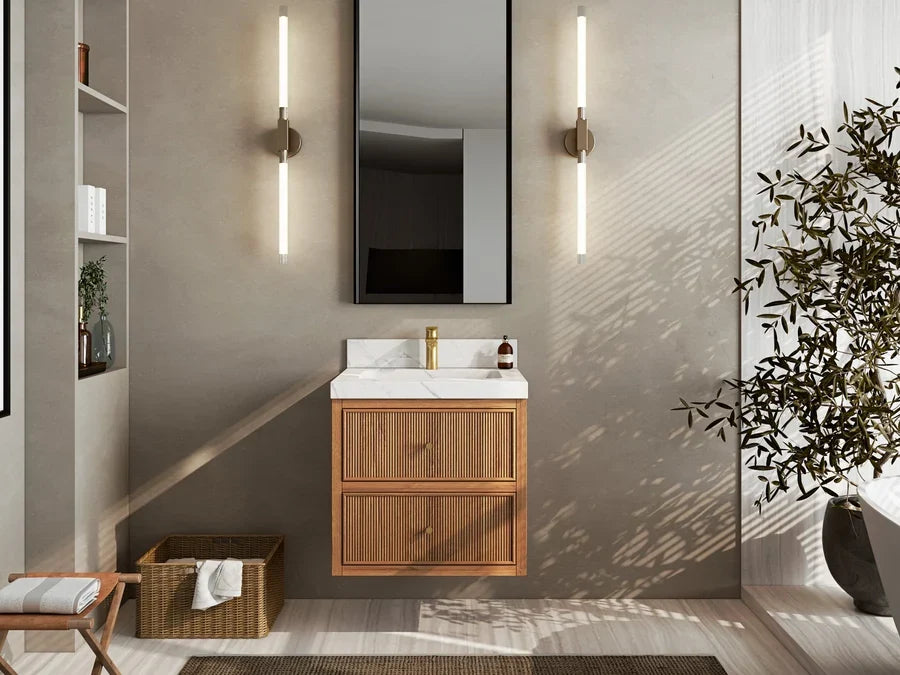
Floating Countertops Create More Flexibility
Floating bathroom countertops for sale have become popular for small bathrooms because they visually open the floor. Wall-mounted designs create space underneath for:
-
Storage baskets
-
Hidden bins
-
Small stools
-
Extra towels
That open area also makes the room feel lighter and less crowded.
Choosing the Right Countertop Size for Better Placement
Match the Countertop Width to the Room Size
The best countertop size depends on how the bathroom is used daily. Compact bathrooms usually work better with smaller widths that preserve walking space. Larger primary bathrooms can handle wider layouts without feeling cramped.
Oversized vanities often reduce functionality because they interfere with movement and storage flexibility.
Depth is More Important Than Most Buyers Realize
Countertop depth affects comfort more than many homeowners expect.
In tight bathrooms, shallower countertops improve movement and create a more open feel. Reduced-depth bathroom sink countertop designs are often better suited for narrow layouts than full-depth models.
A smaller depth can make the room feel noticeably easier to navigate.
Materials and Layout Features That Improve Small Bathrooms
Material choice also changes how spacious a bathroom feels. Lighter countertop colours reflect more light and help compact bathrooms appear larger. Integrated sinks create a cleaner look by removing seams and bulky edges.
Many buyers also prefer:
-
Moisture-resistant finishes
-
Easy-clean surfaces
-
Rounded countertop edges
-
Seamless sink designs
The right combination of layout and materials improves both durability and day-to-day usability.
How to Know You’ve Found the Right Placement Before Buying
Before installing a single sink countertop, test the layout first. Use painter’s tape to outline the vanity size on the floor and walls. Then check:
-
Door swing clearance
-
Drawer movement
-
Mirror visibility
-
Walking space
This simple step helps homeowners spot layout problems before installation begins.
Conclusion
In bathrooms with zero storage, countertop placement matters far more than decoration trends. The right single sink countertop layout improves movement, opens visual space, and creates smarter storage opportunities without needing a larger renovation. Focusing on traffic flow, vertical storage, and realistic sizing usually delivers better long-term results than simply choosing the biggest vanity available.
Willow Bath and Vanity offers bathroom countertops for sale designed to balance storage, comfort and everyday practicality in both compact and larger bathroom layouts. Visit us today.
FAQs
What is the best place for a single sink countertop in a small bathroom?
Placing the countertop along the longer wall usually creates better movement and keeps the bathroom feeling open.
Can a floating single sink countertop add storage space?
Yes. Floating designs create flexible storage underneath while making the room feel less crowded.
What size single sink countertop works best in narrow bathrooms?
Compact widths with shallower depths usually work best for maintaining comfortable walking space in narrow layouts.
Share:
Beyond Pinterest: How to Style a Double Sink Bathroom Vanity for Real Life
The Skinny Bathroom Fix: Why Vanity Depth Beats Width