





CURATED FOR THIS COLLECTION
Built Beyond the Surface
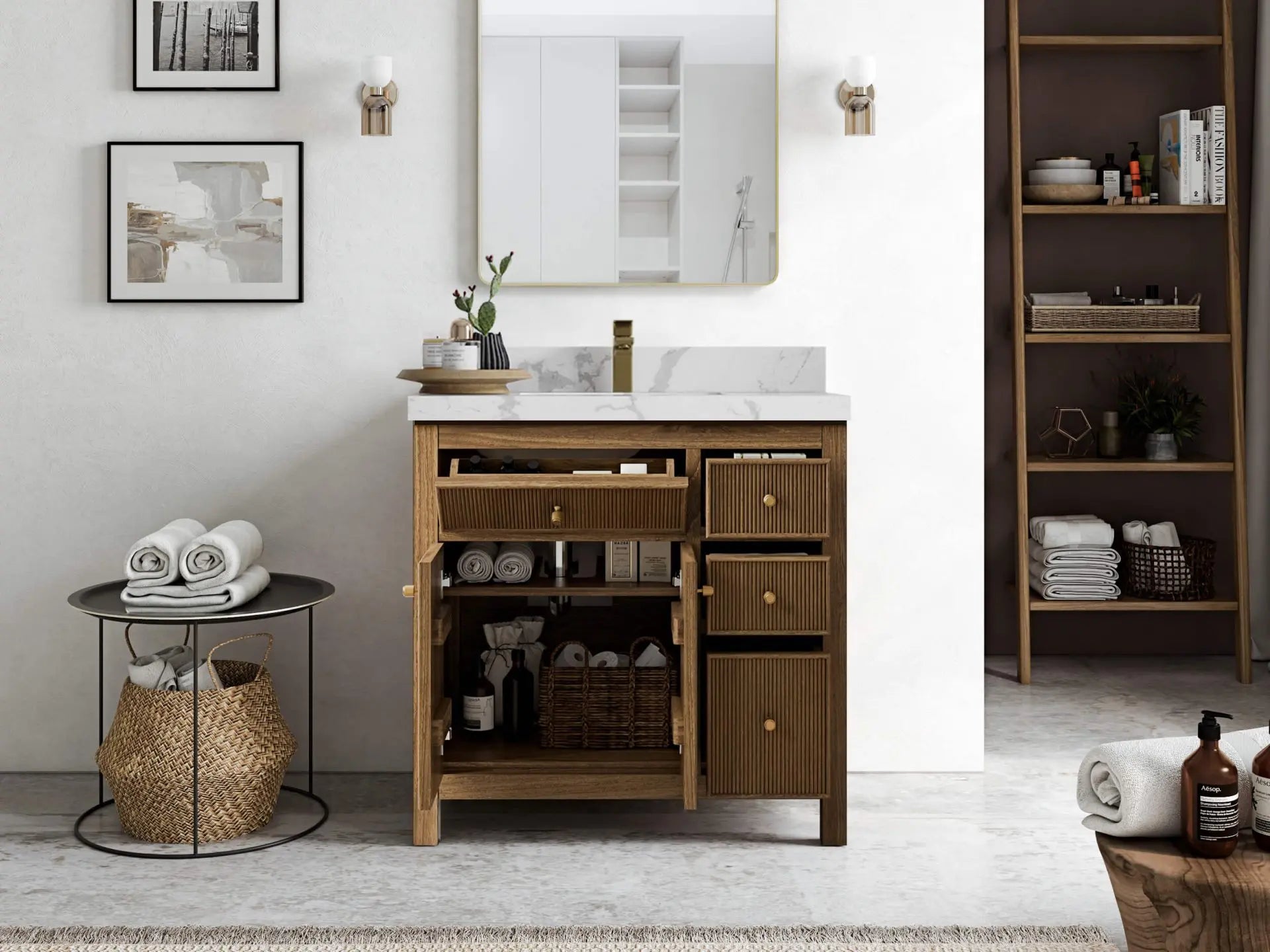
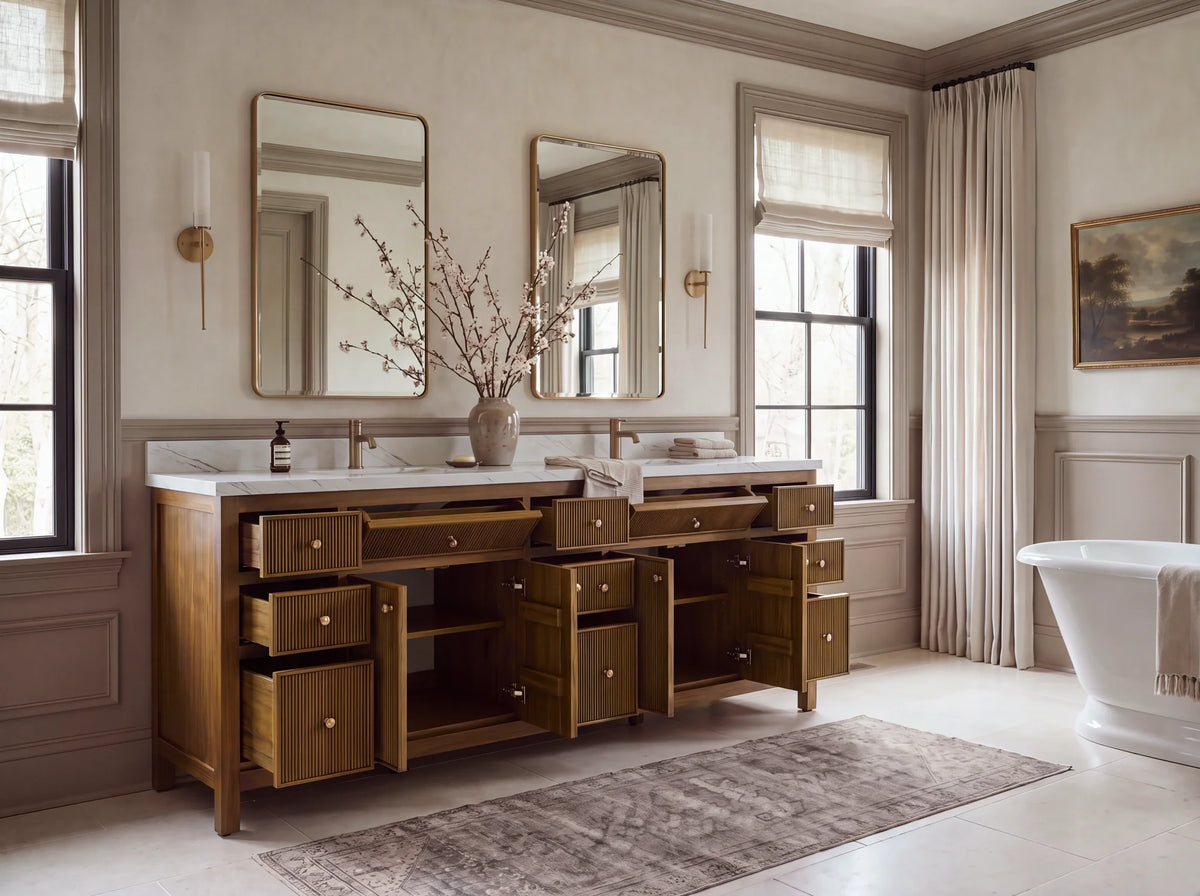
Solid-wood construction, dovetail drawers and considered details made for real bathrooms and daily life.
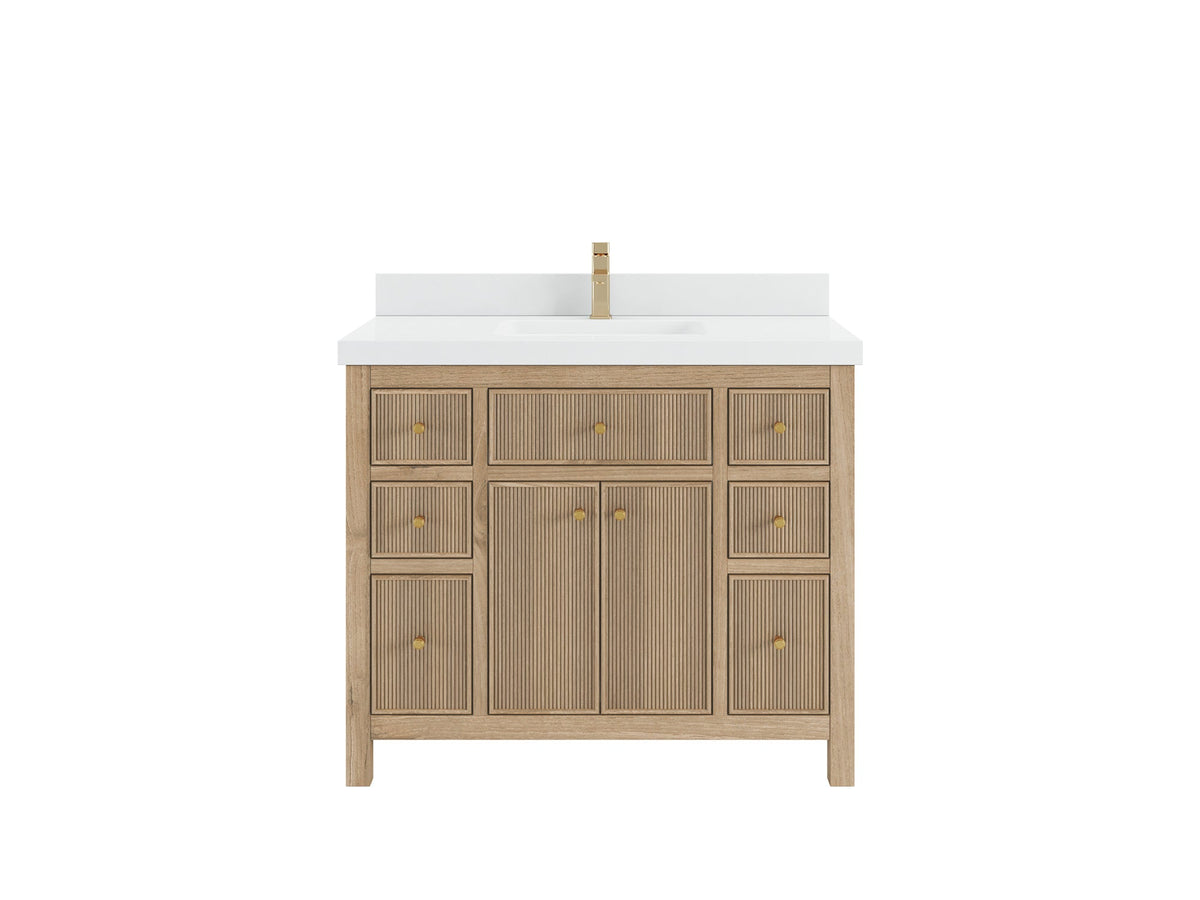
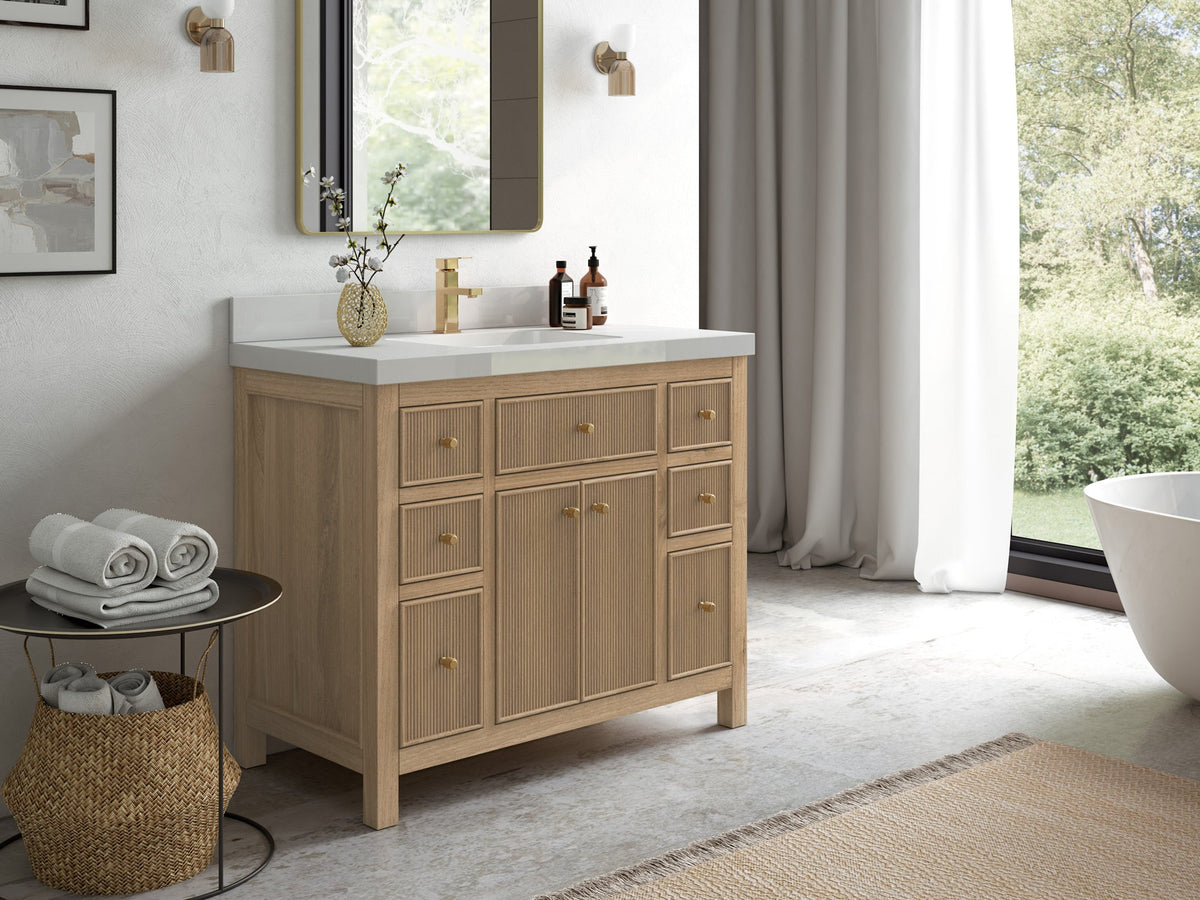
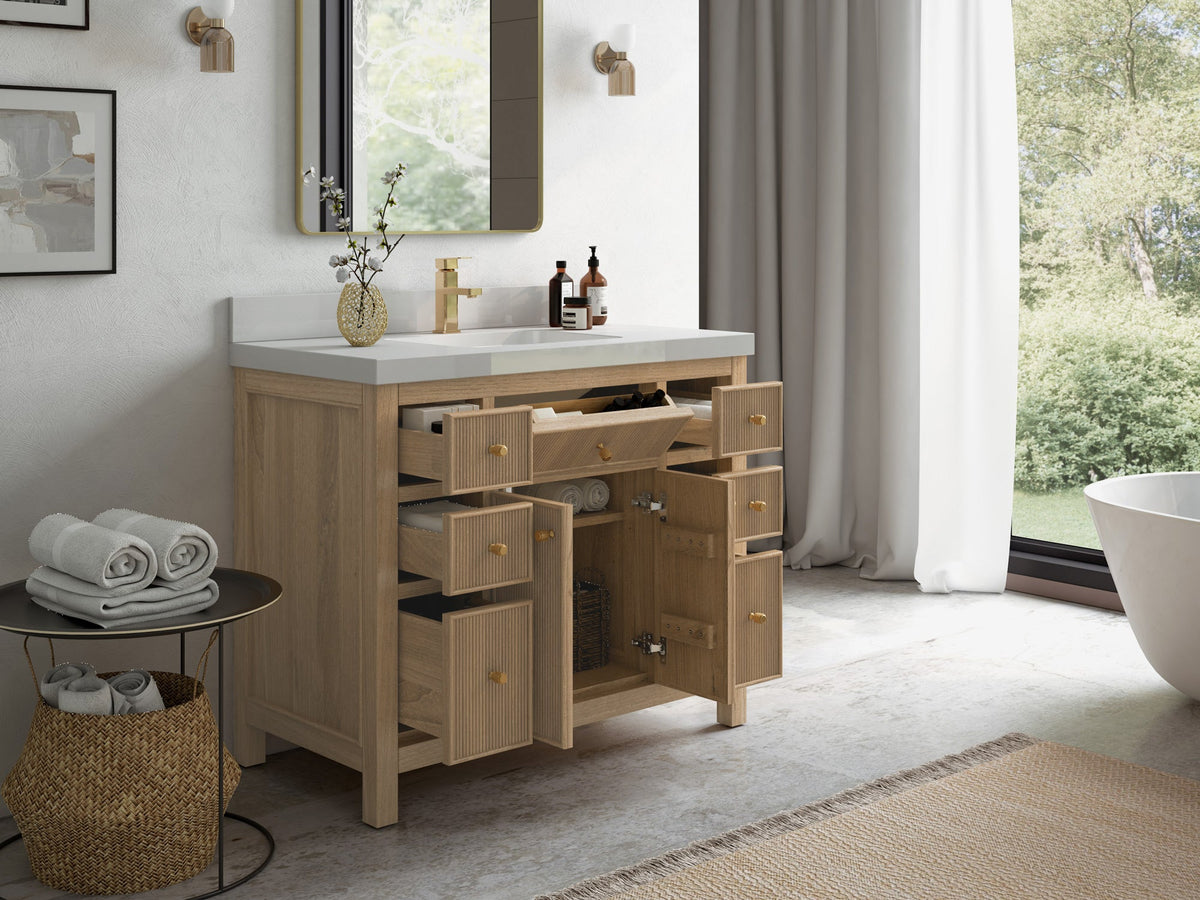
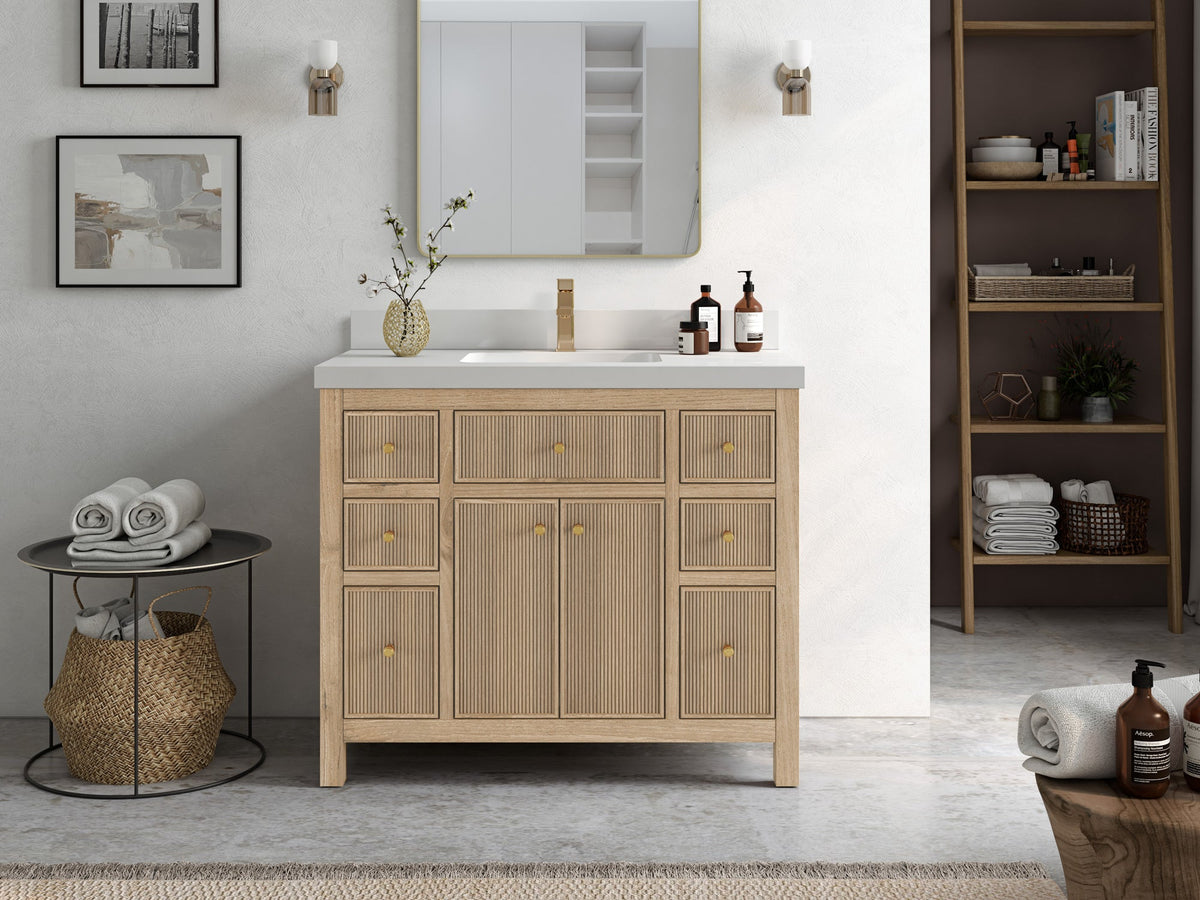


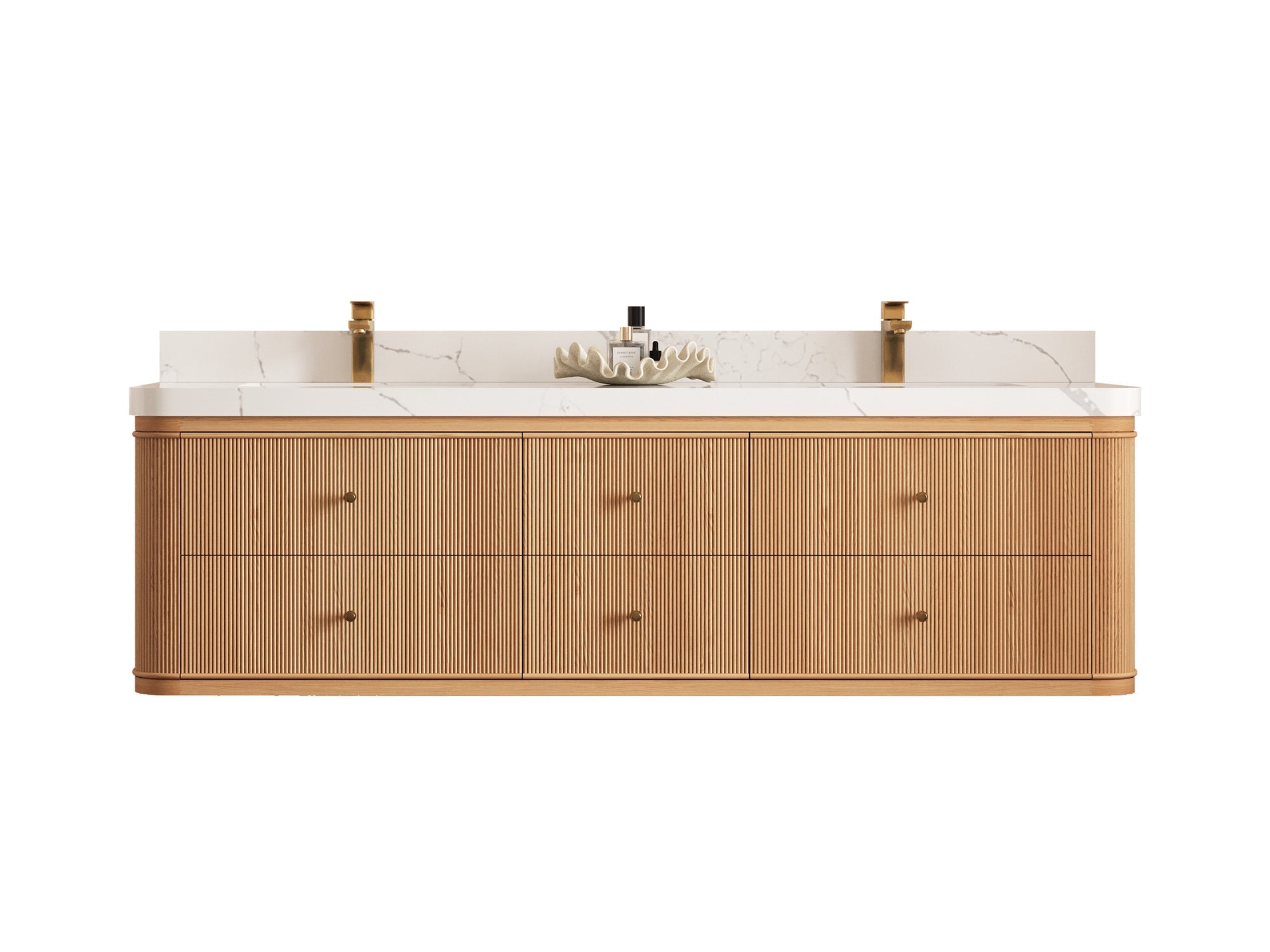
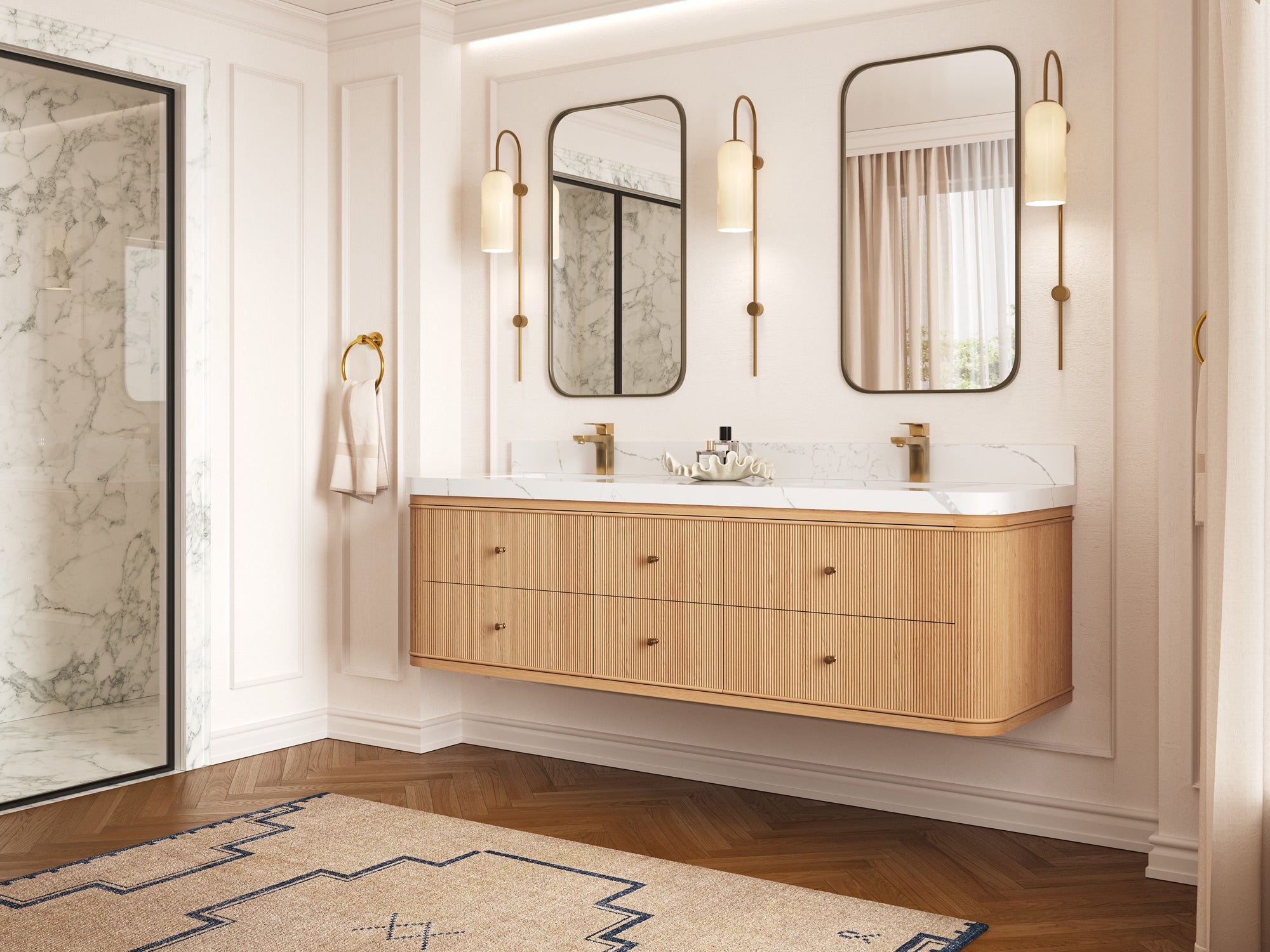
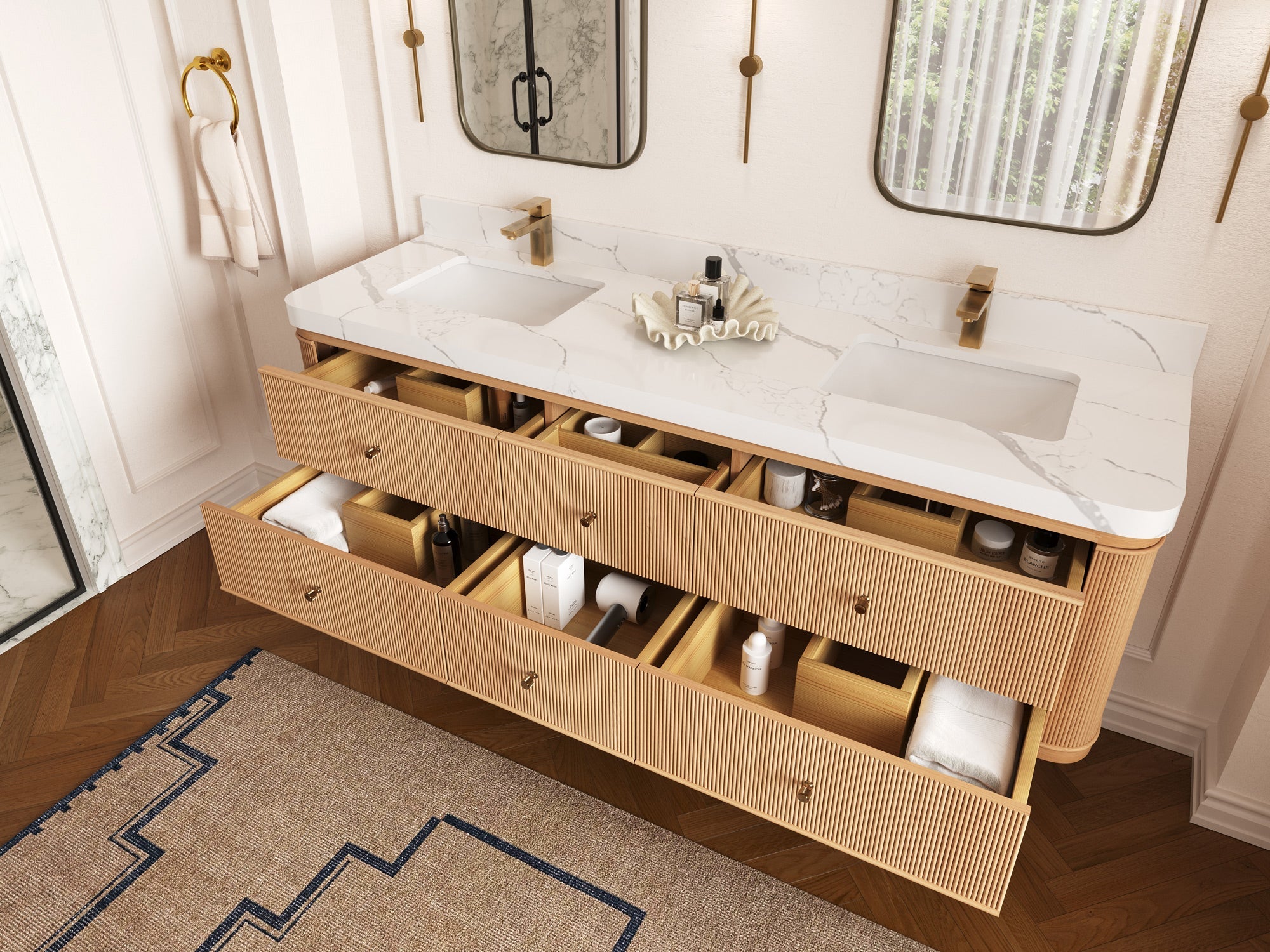
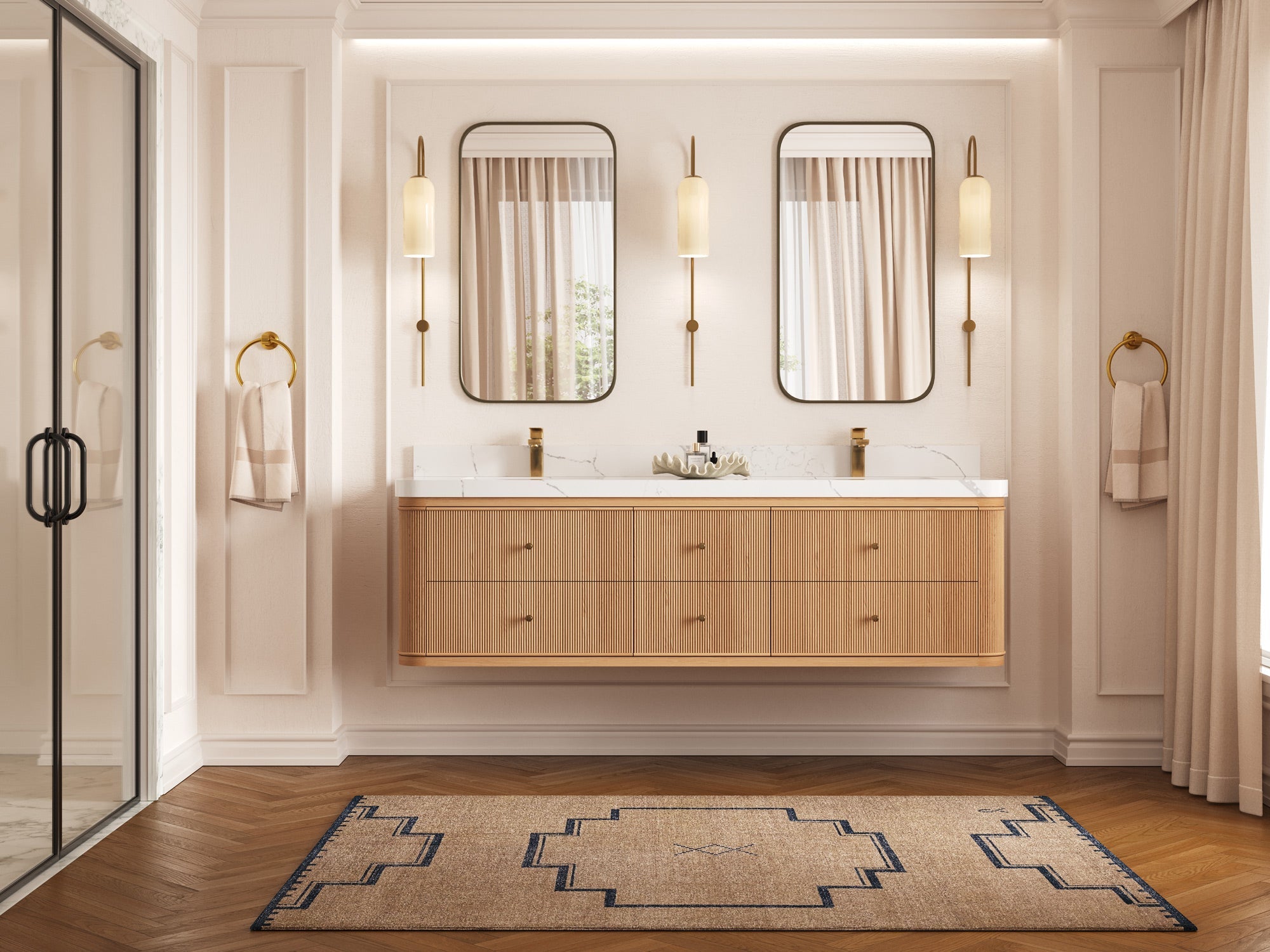
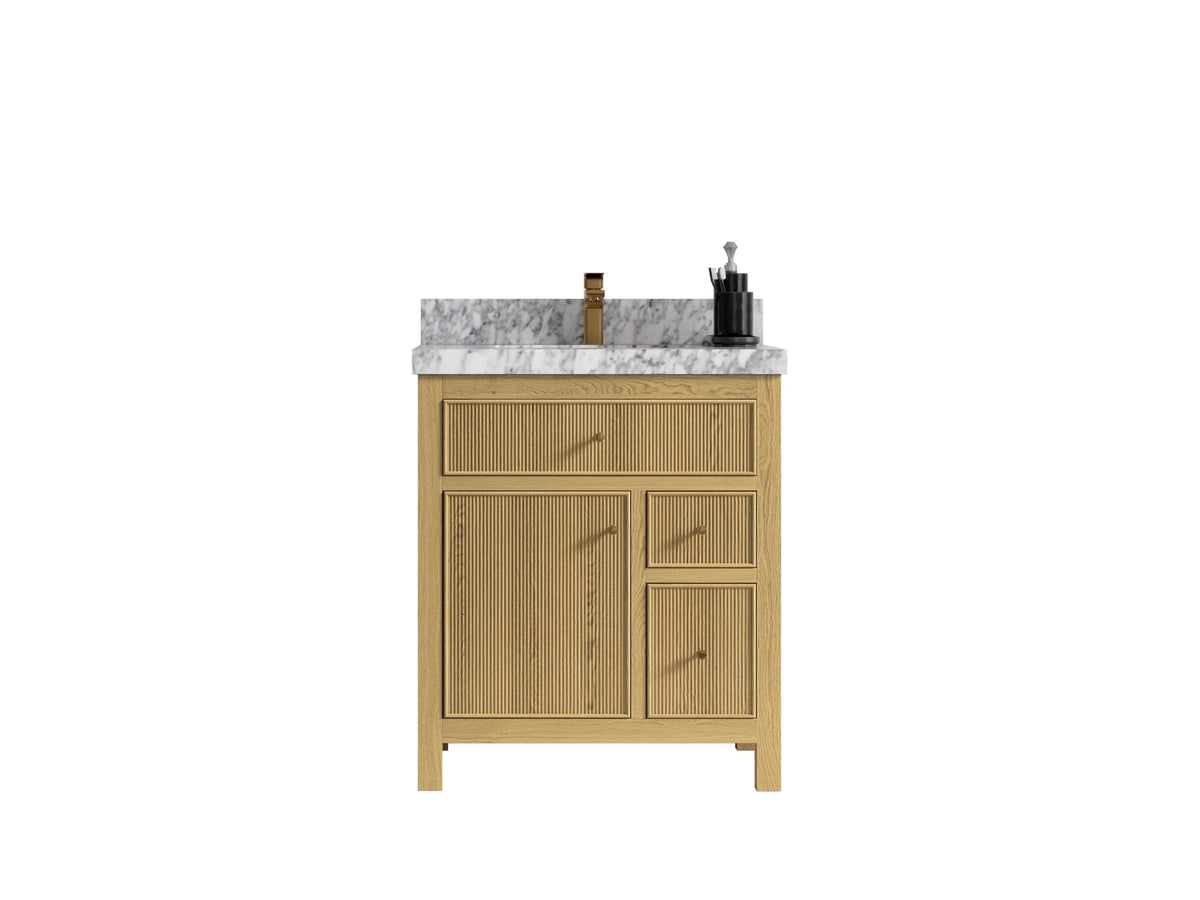
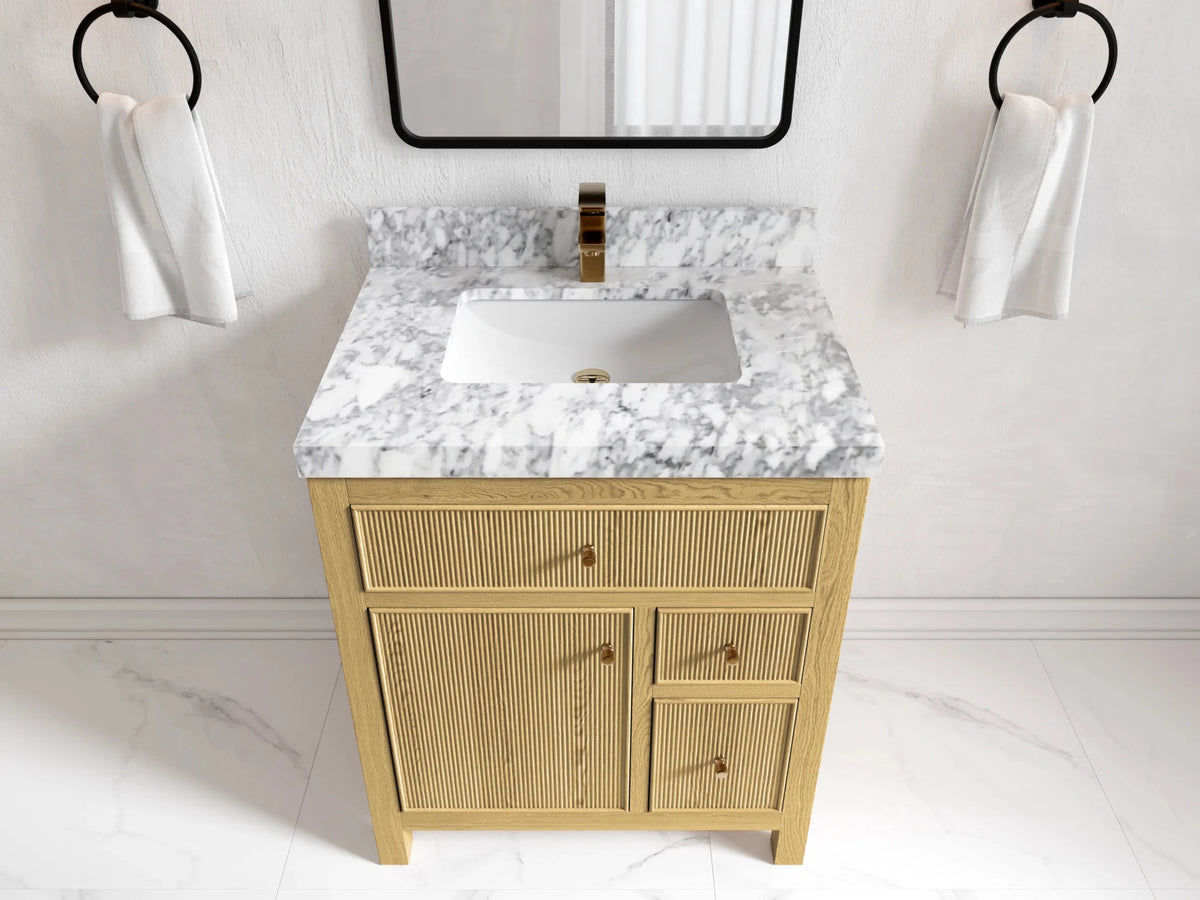
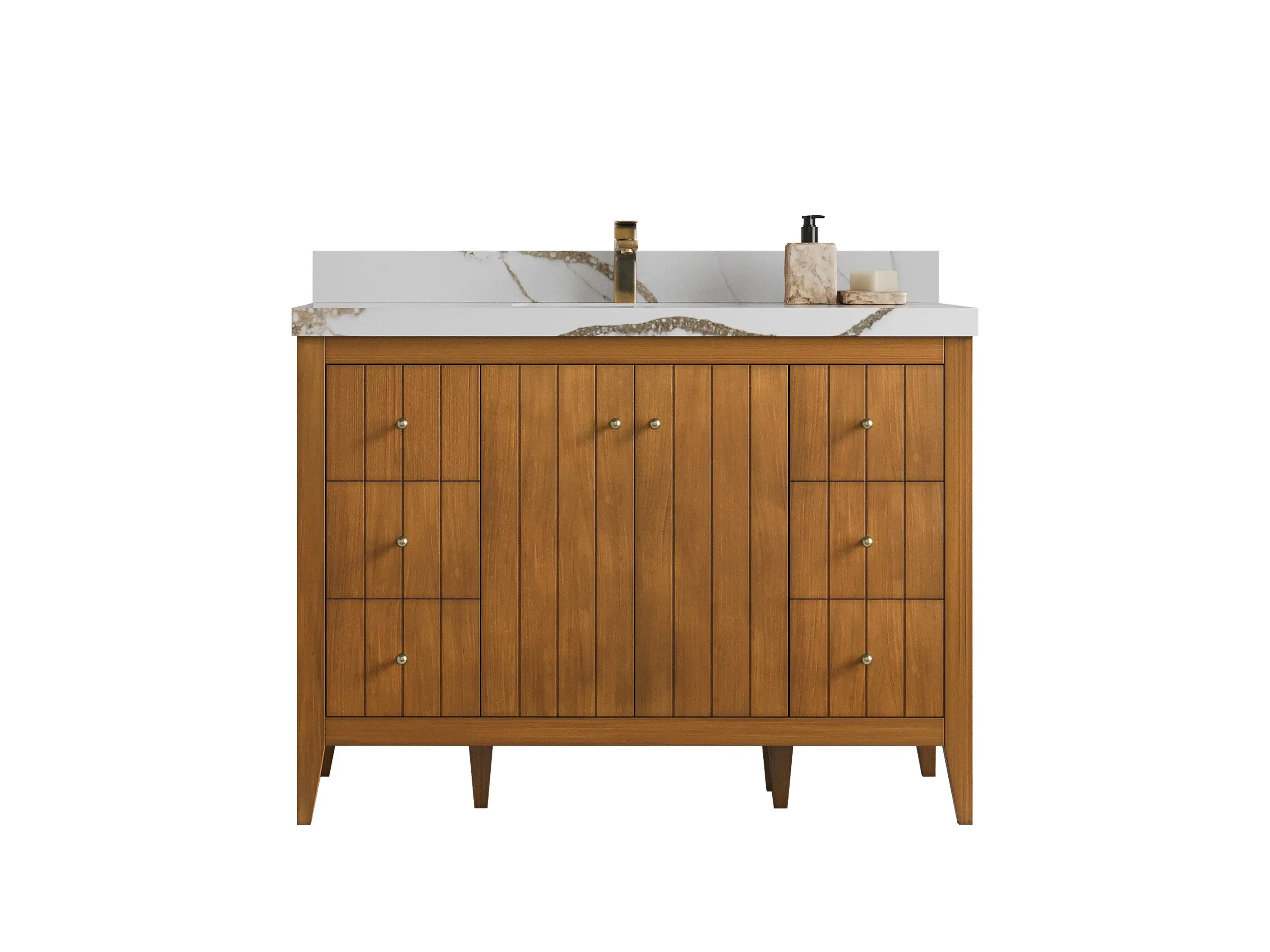
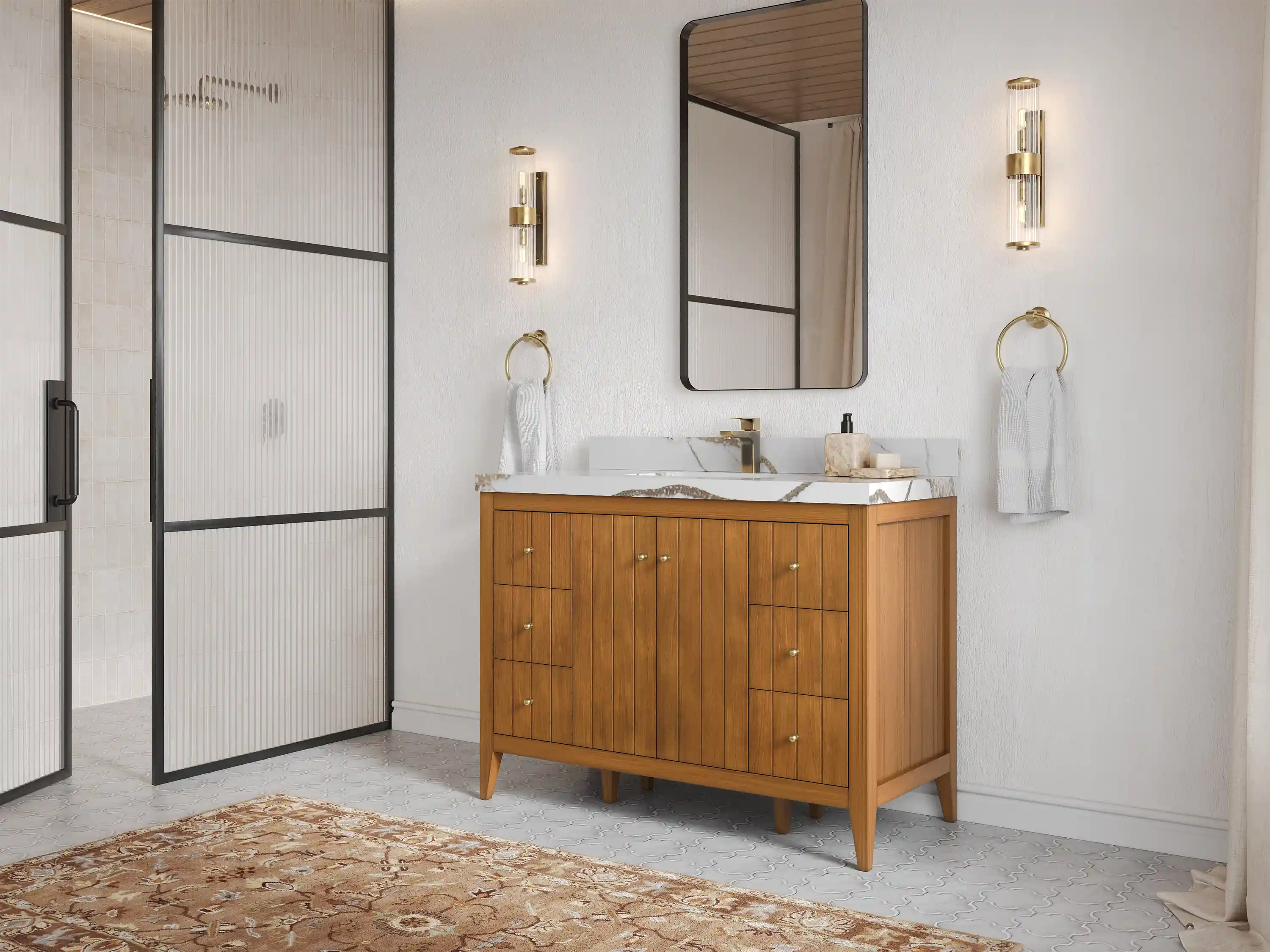
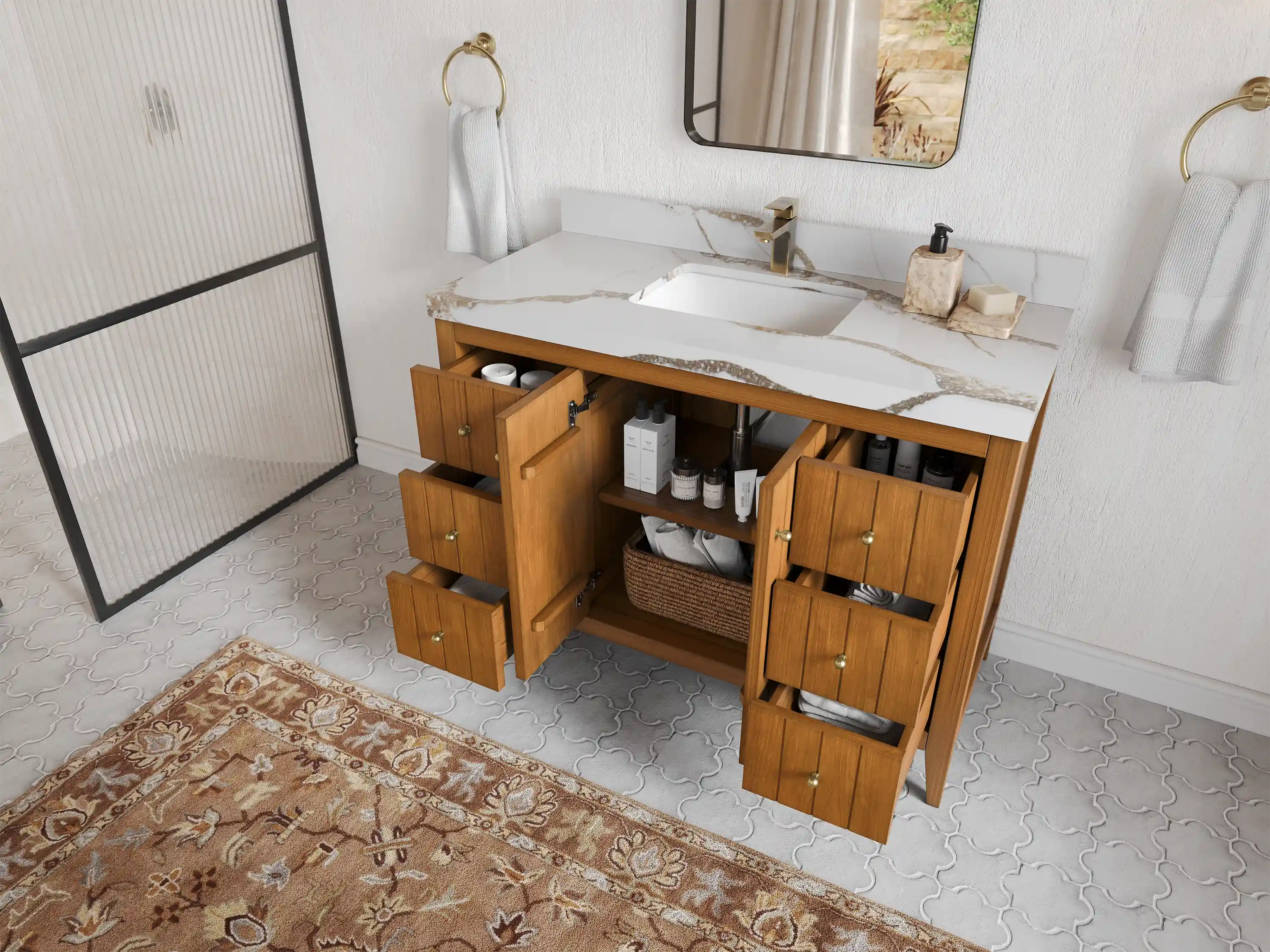
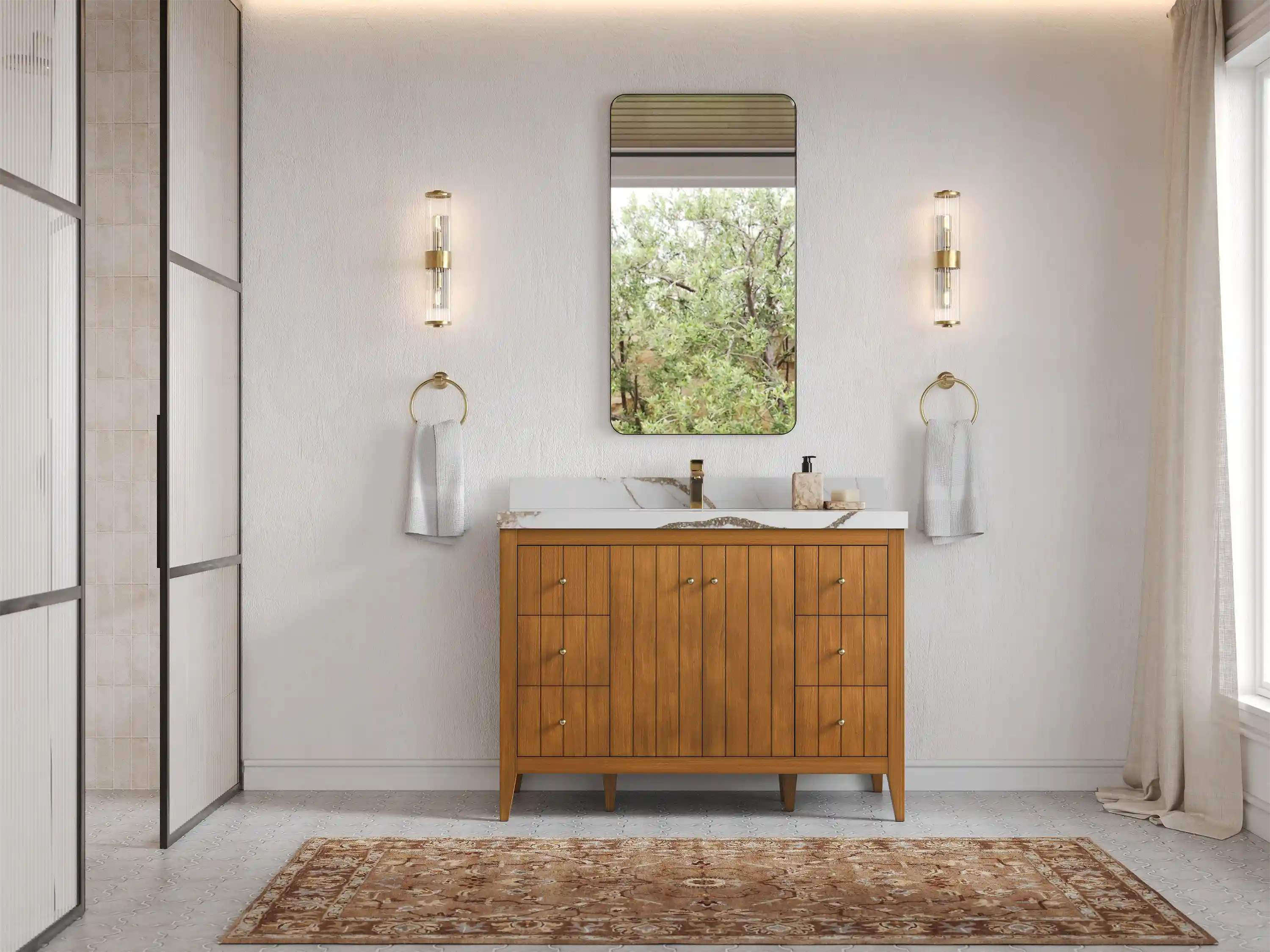
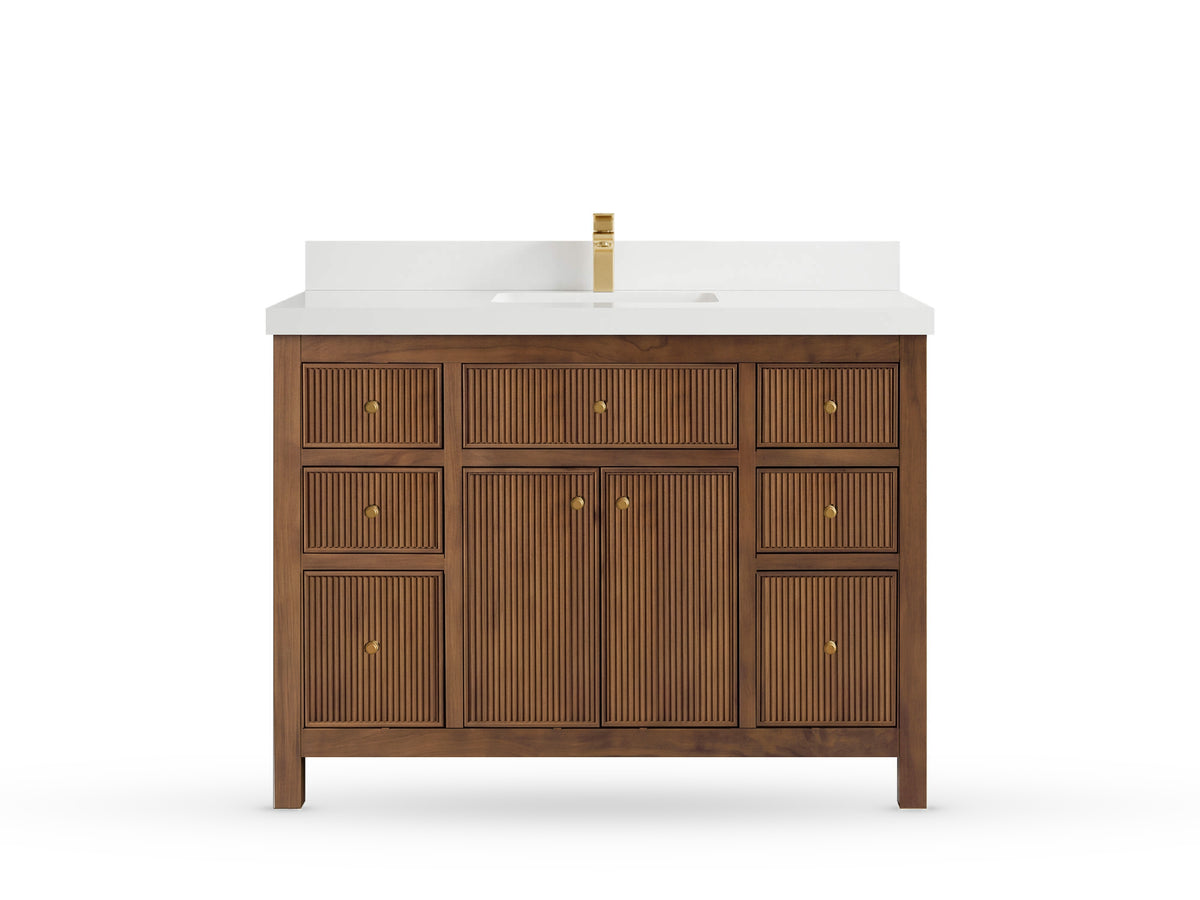
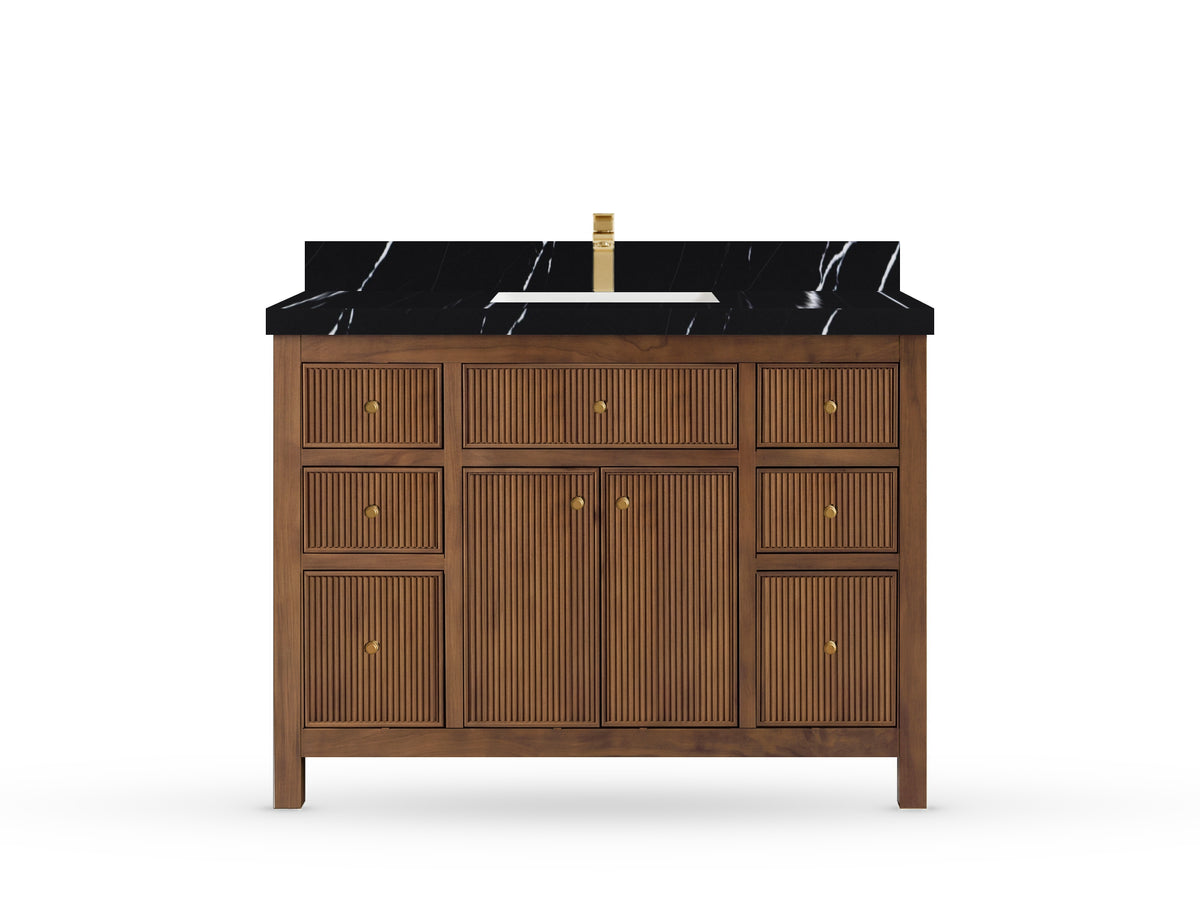
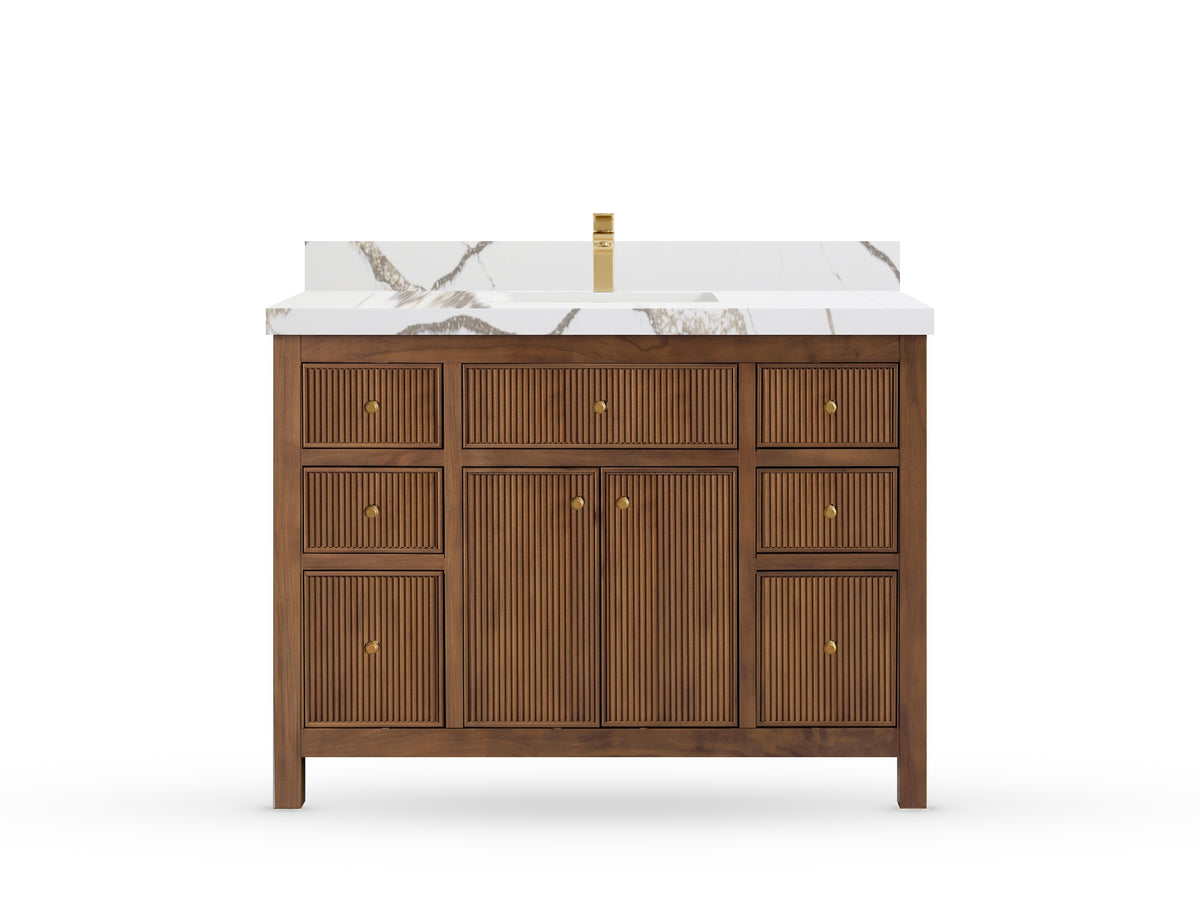
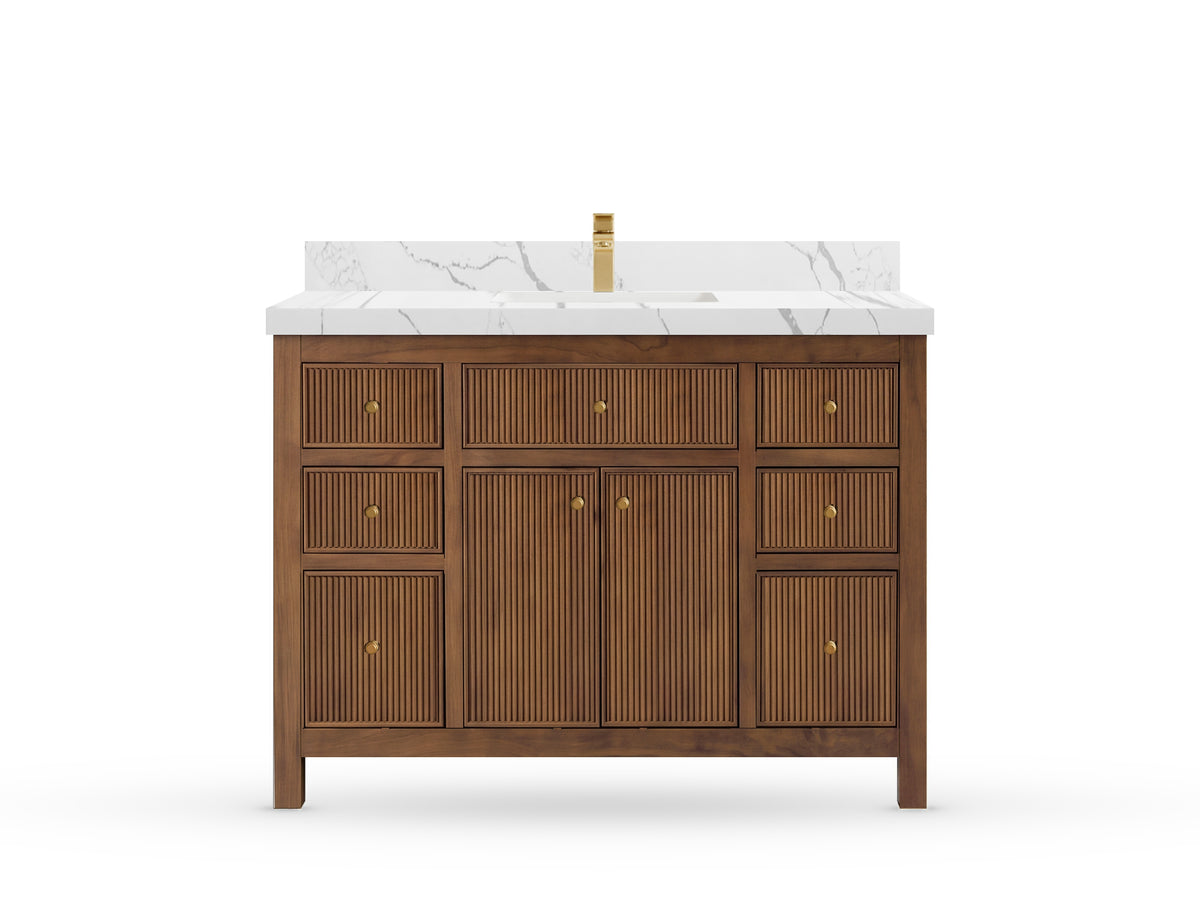
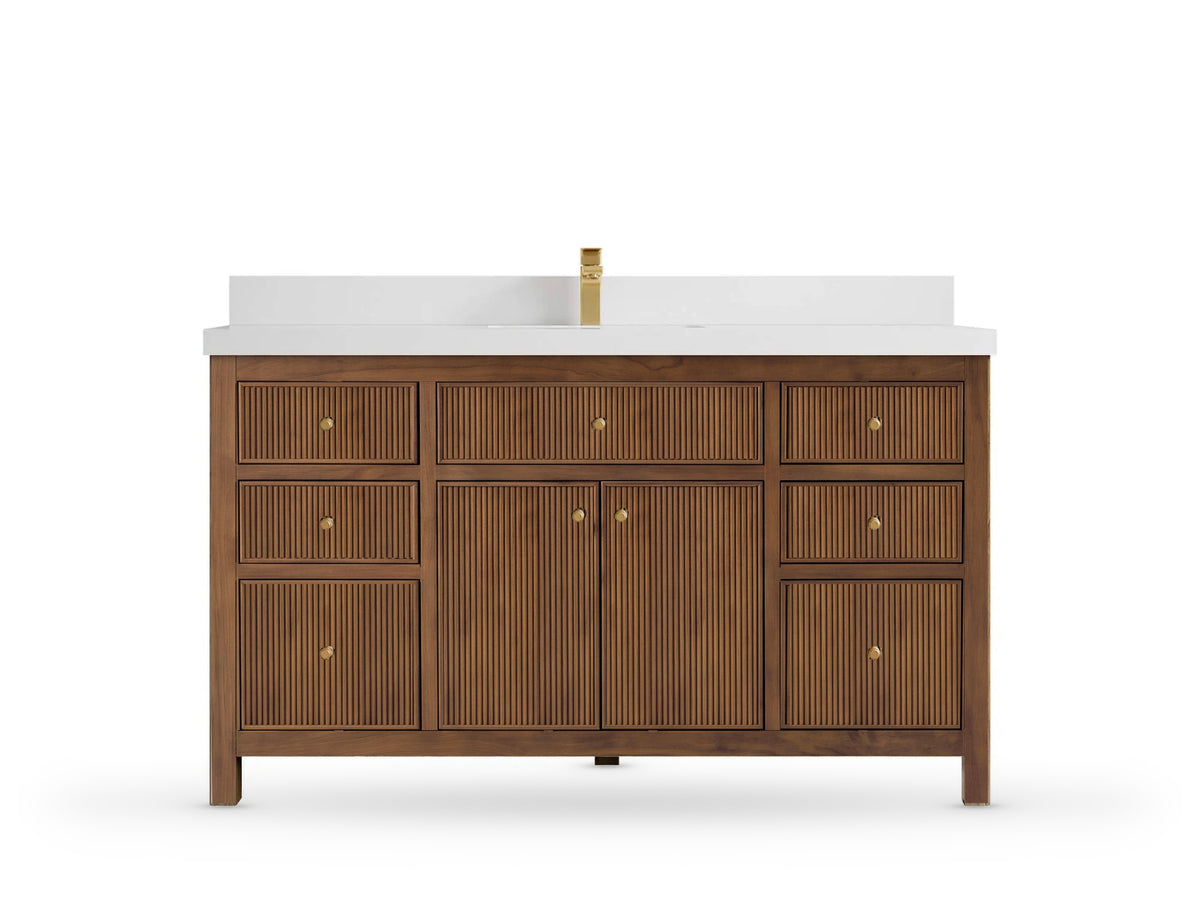
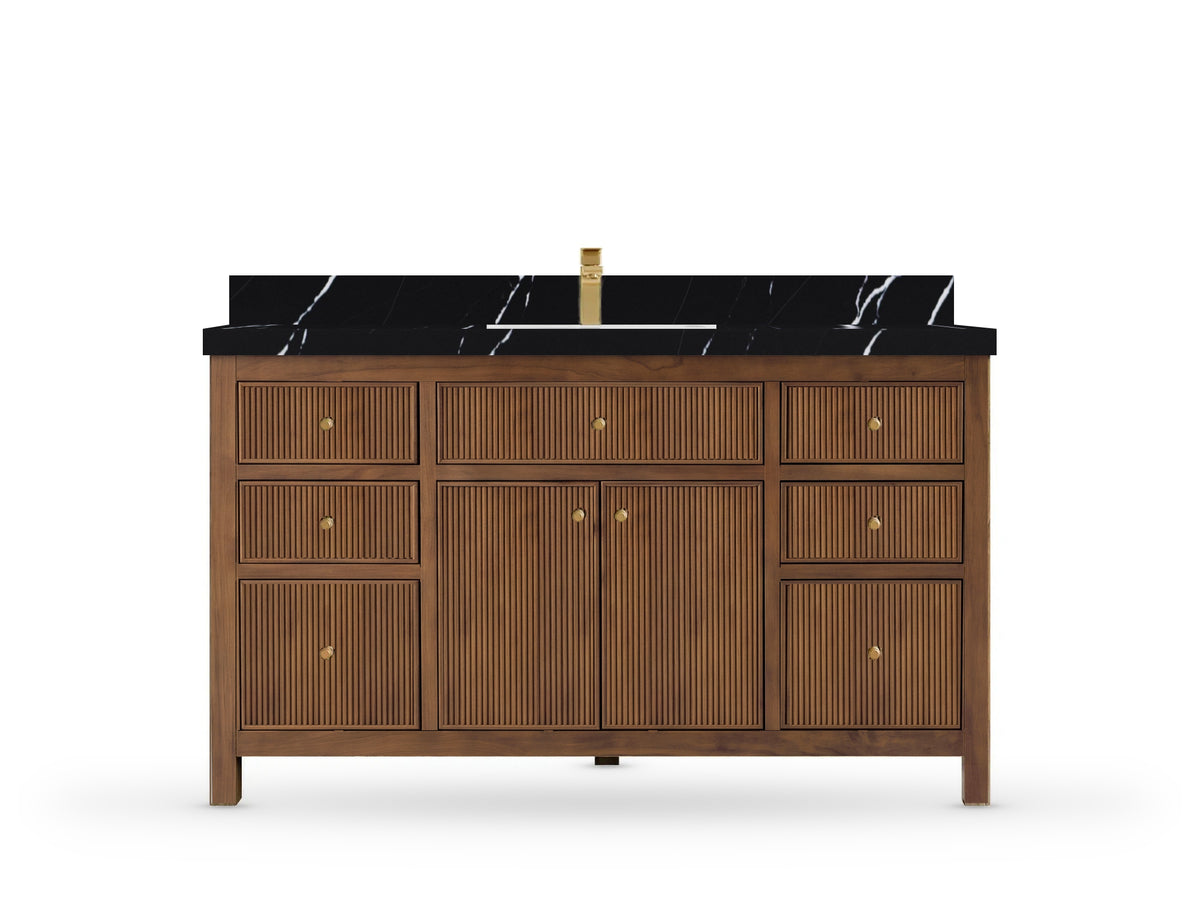
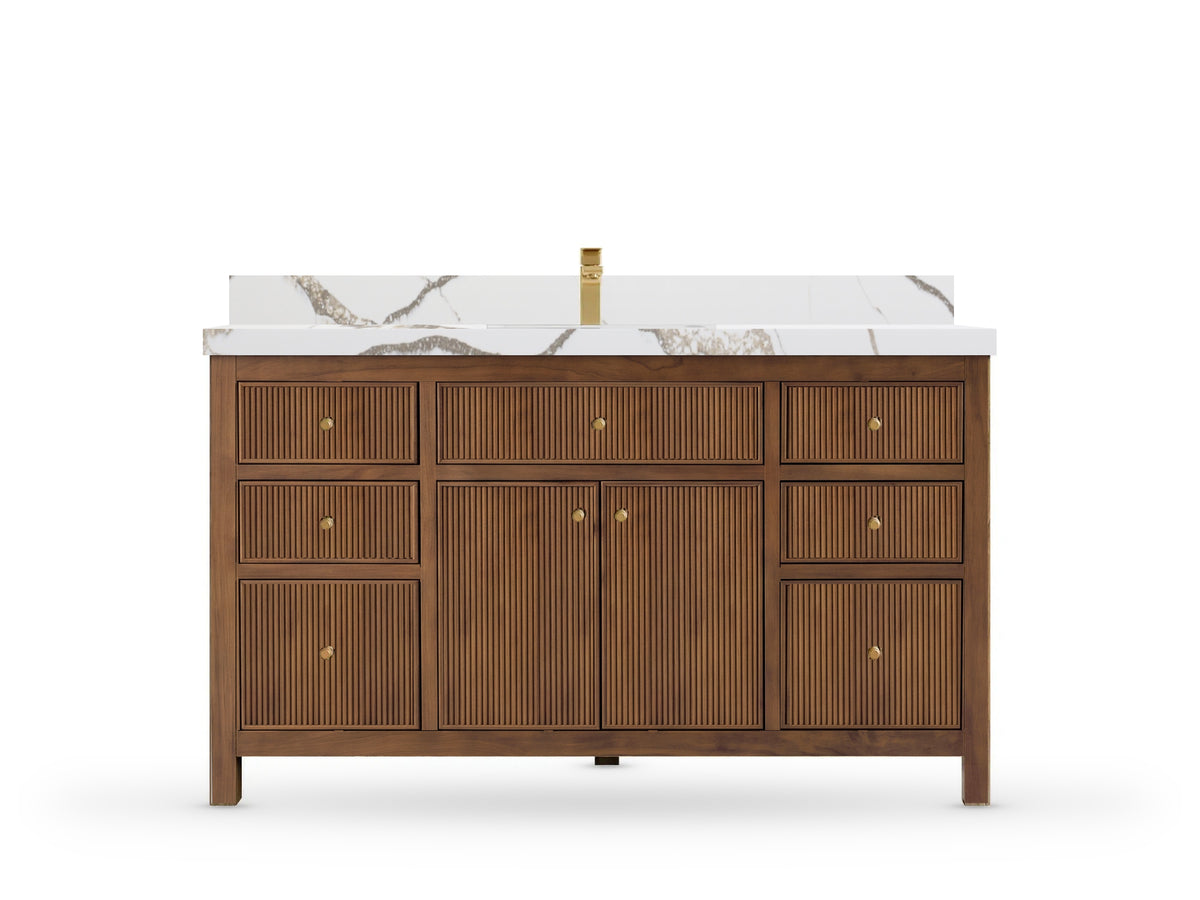
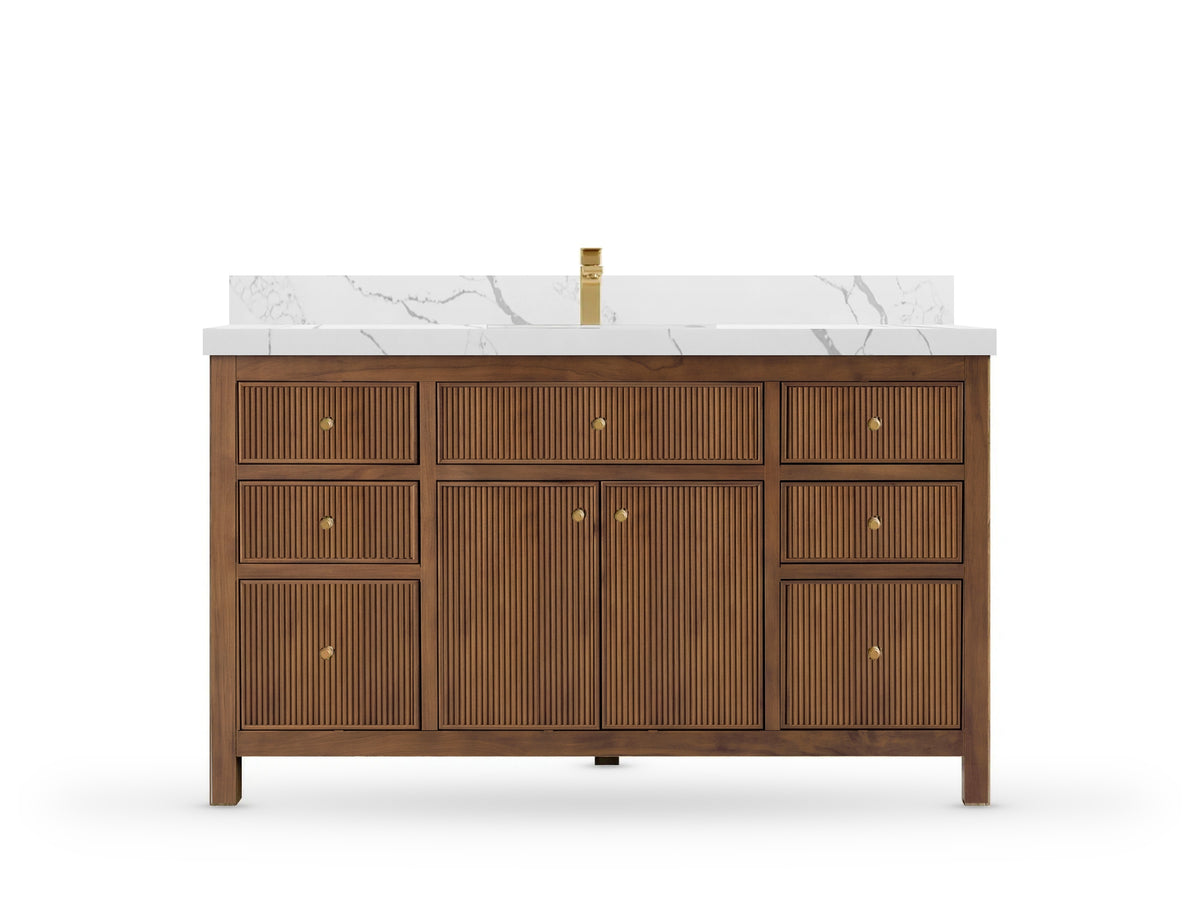
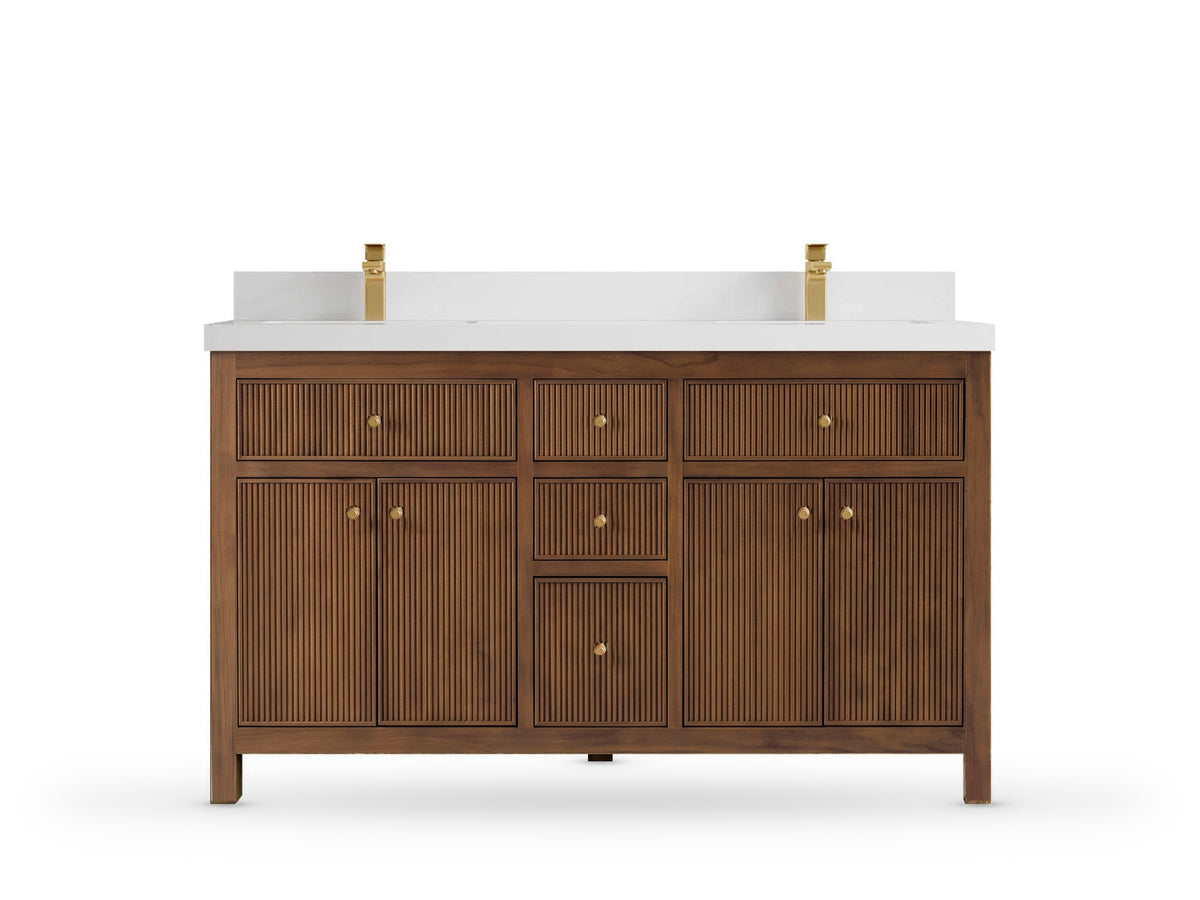
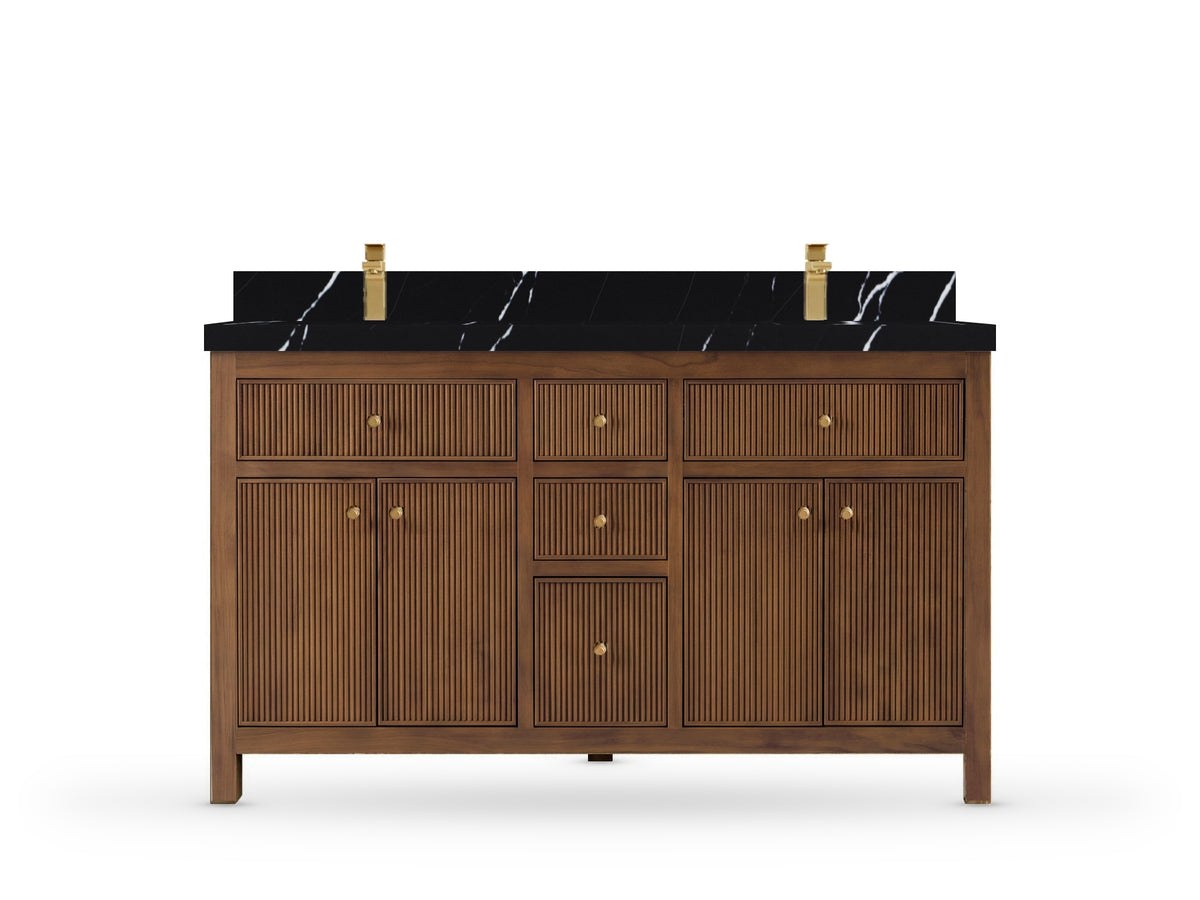
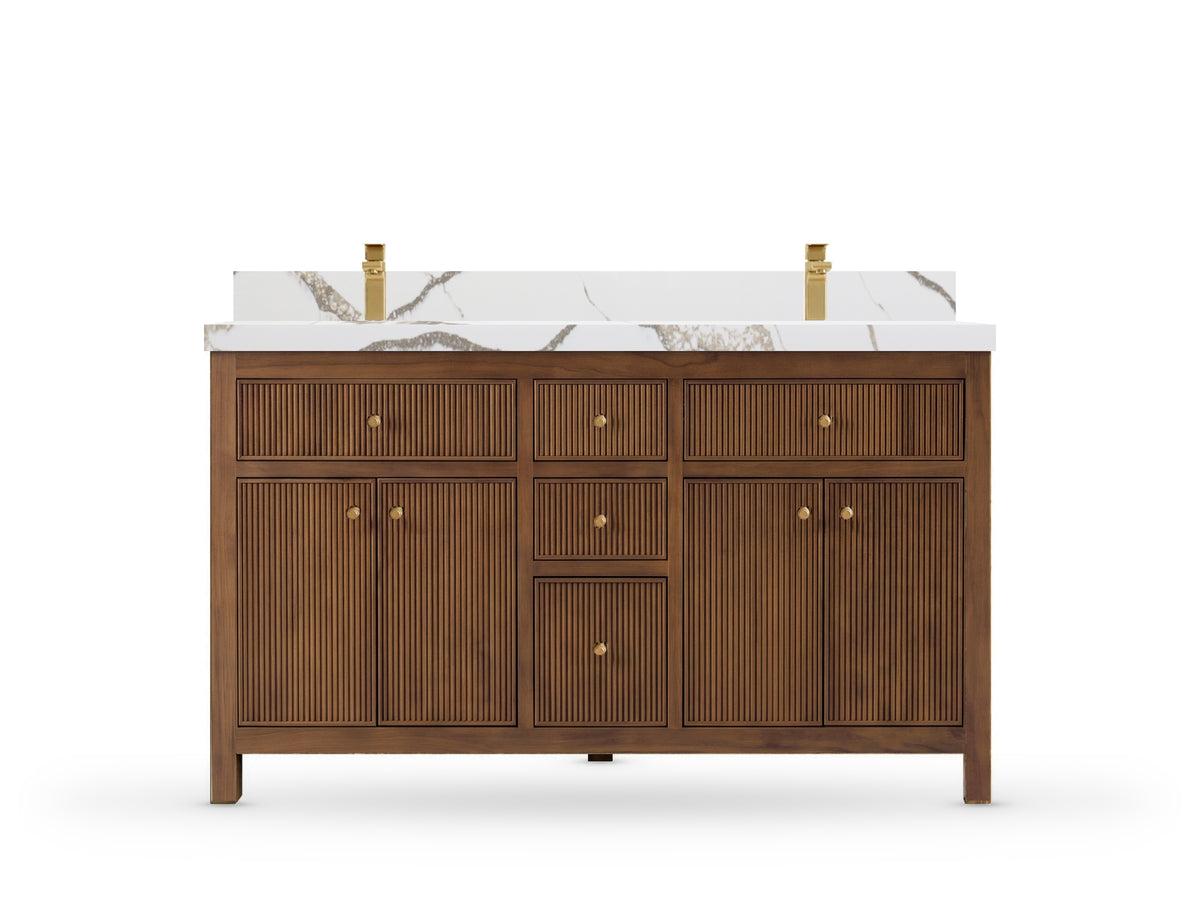
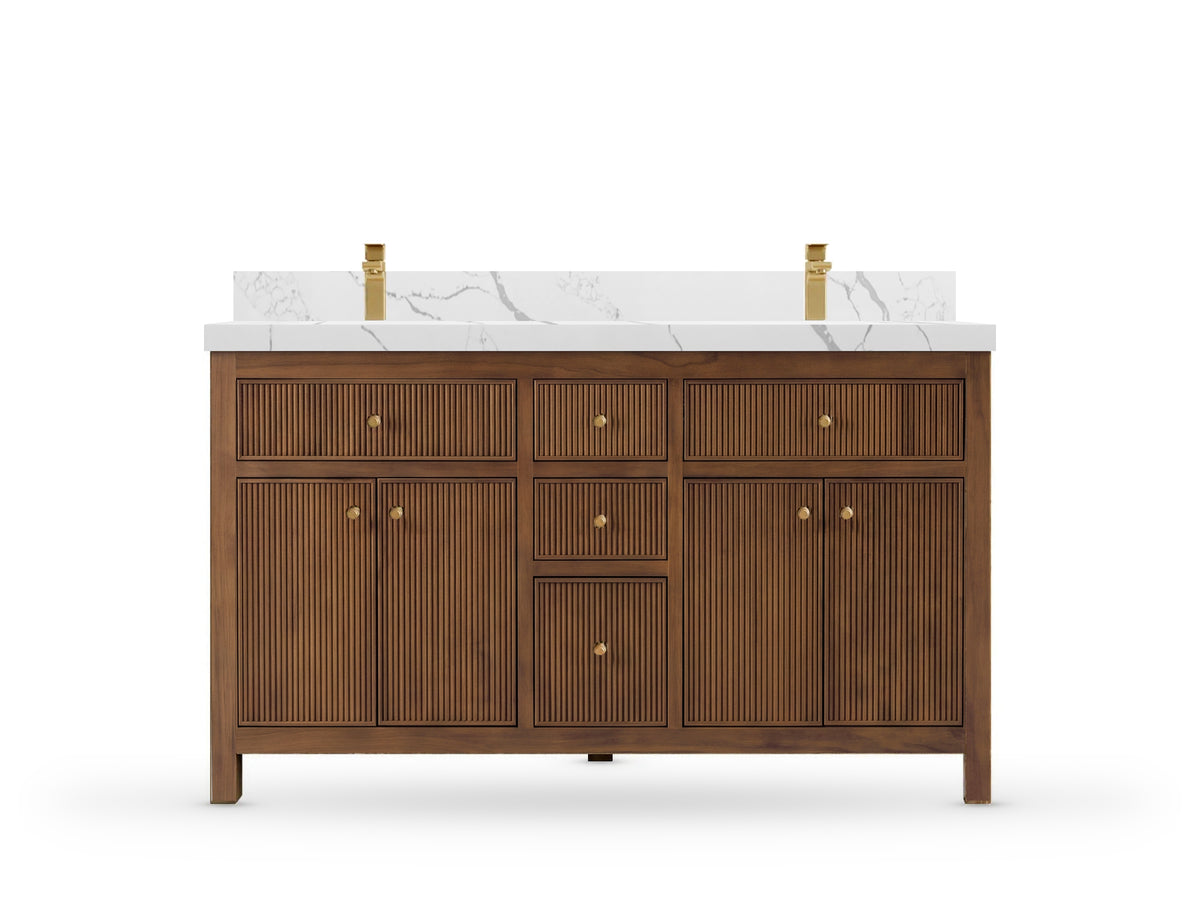
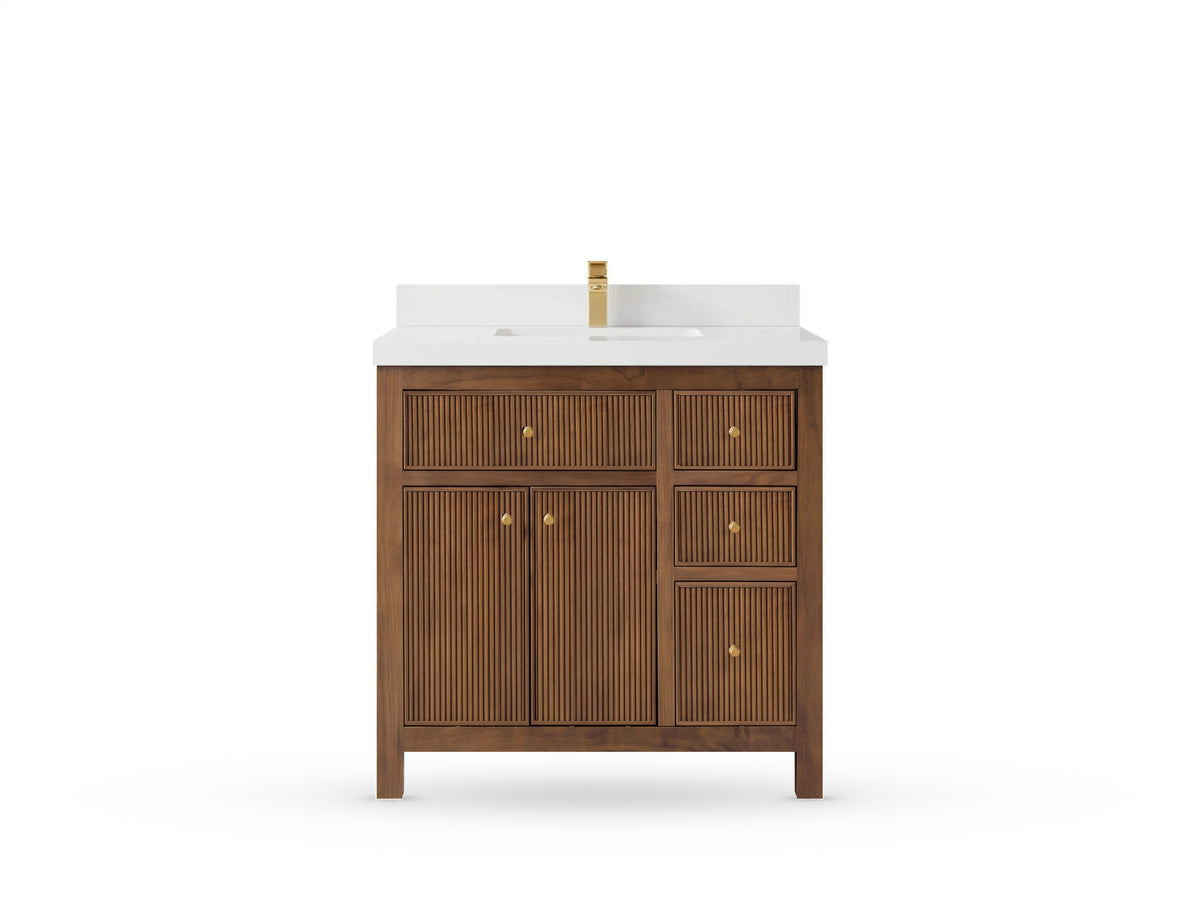
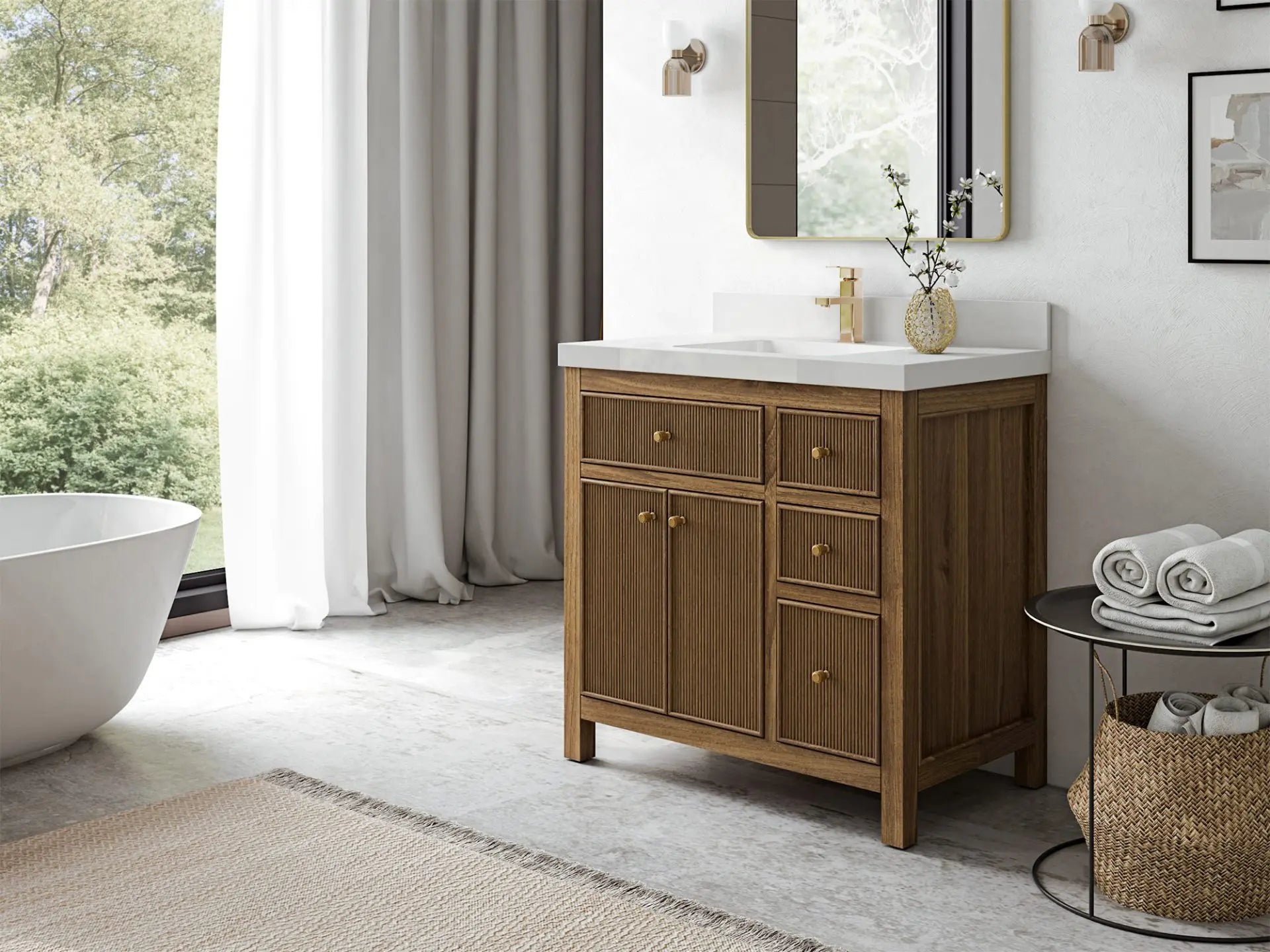
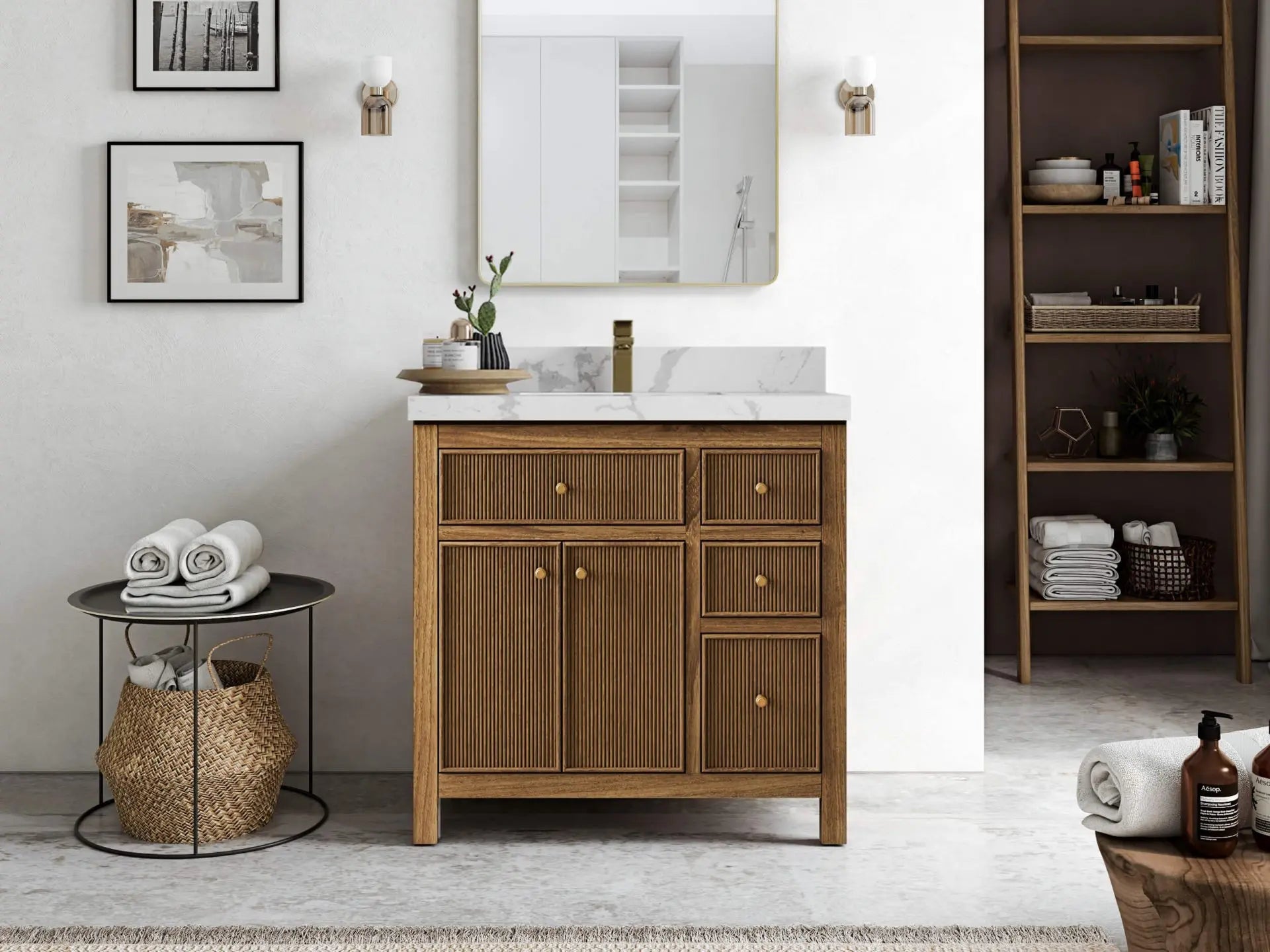
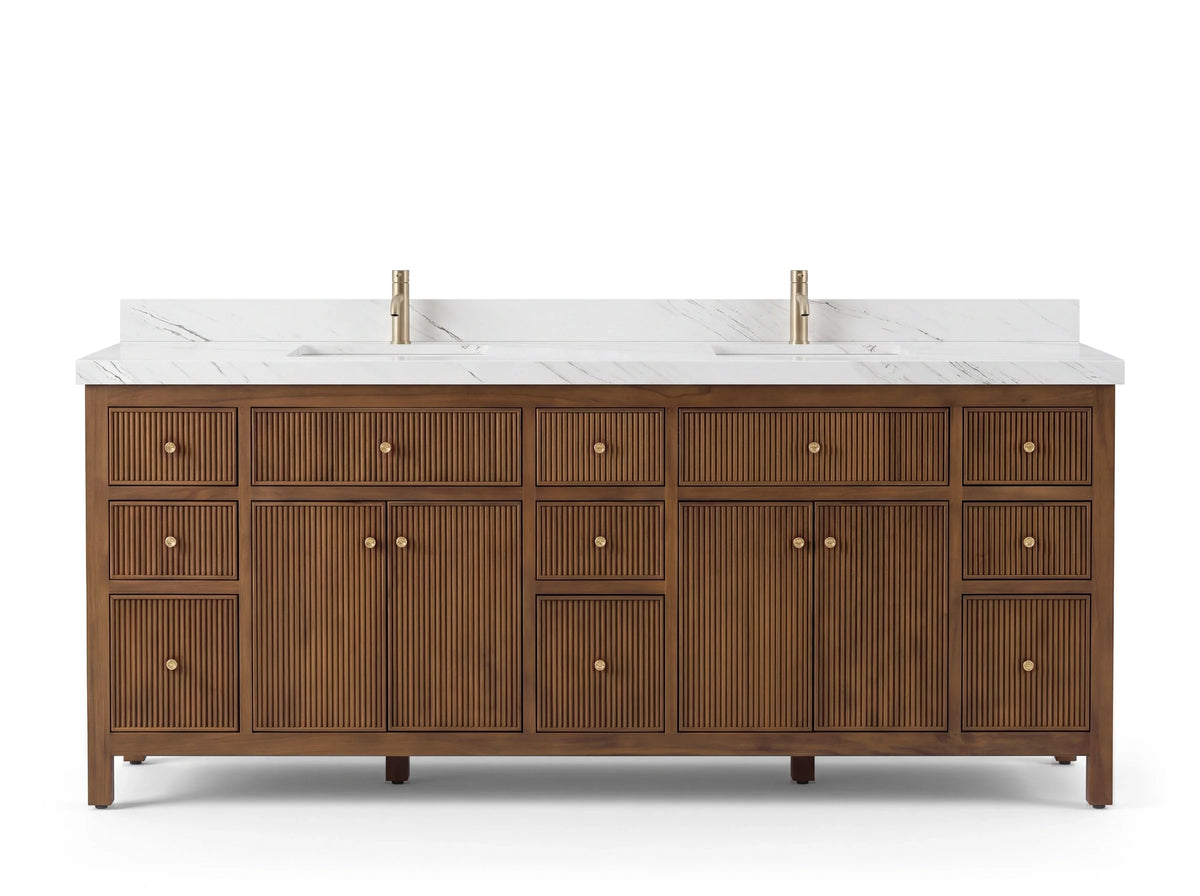
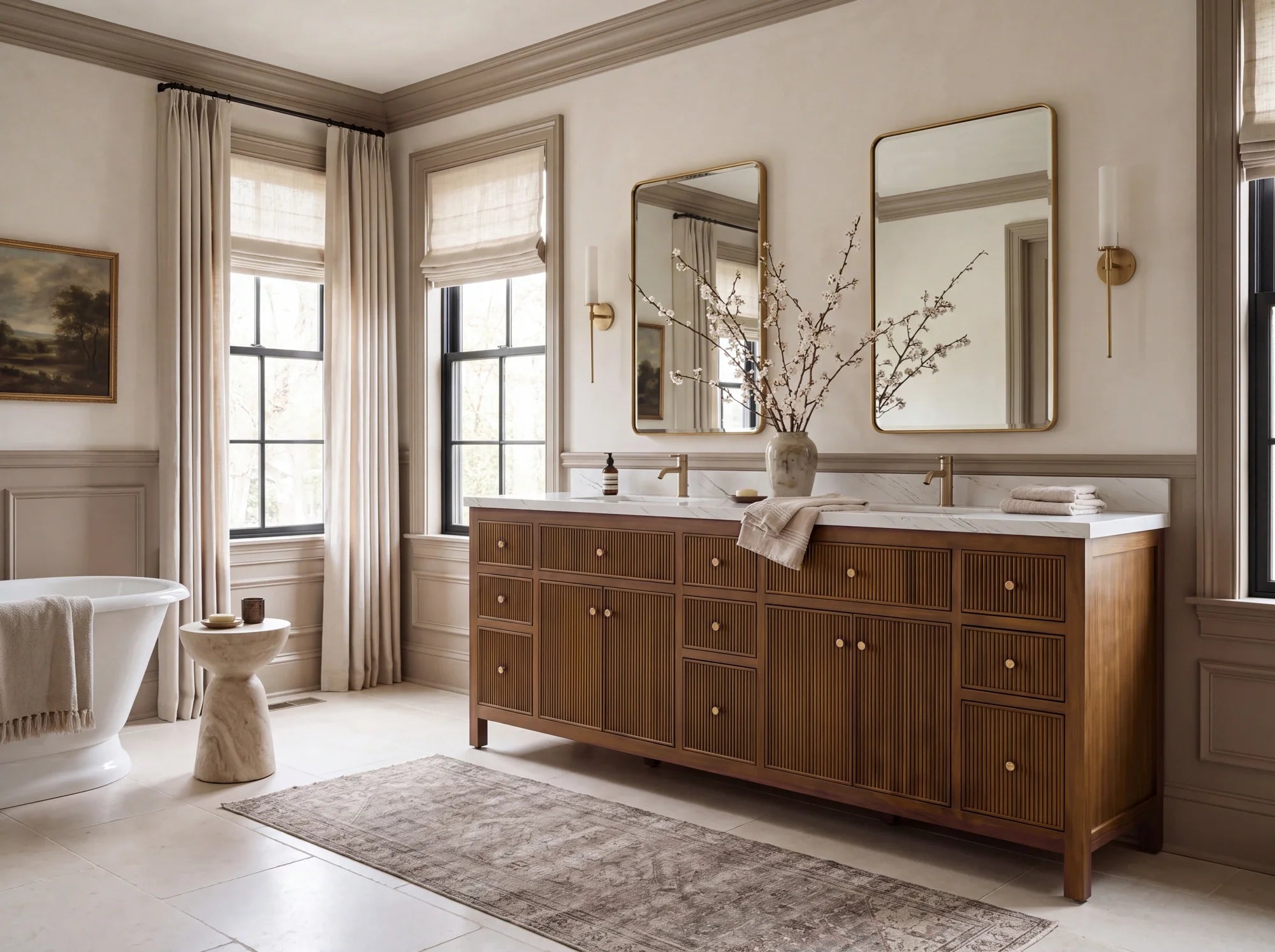
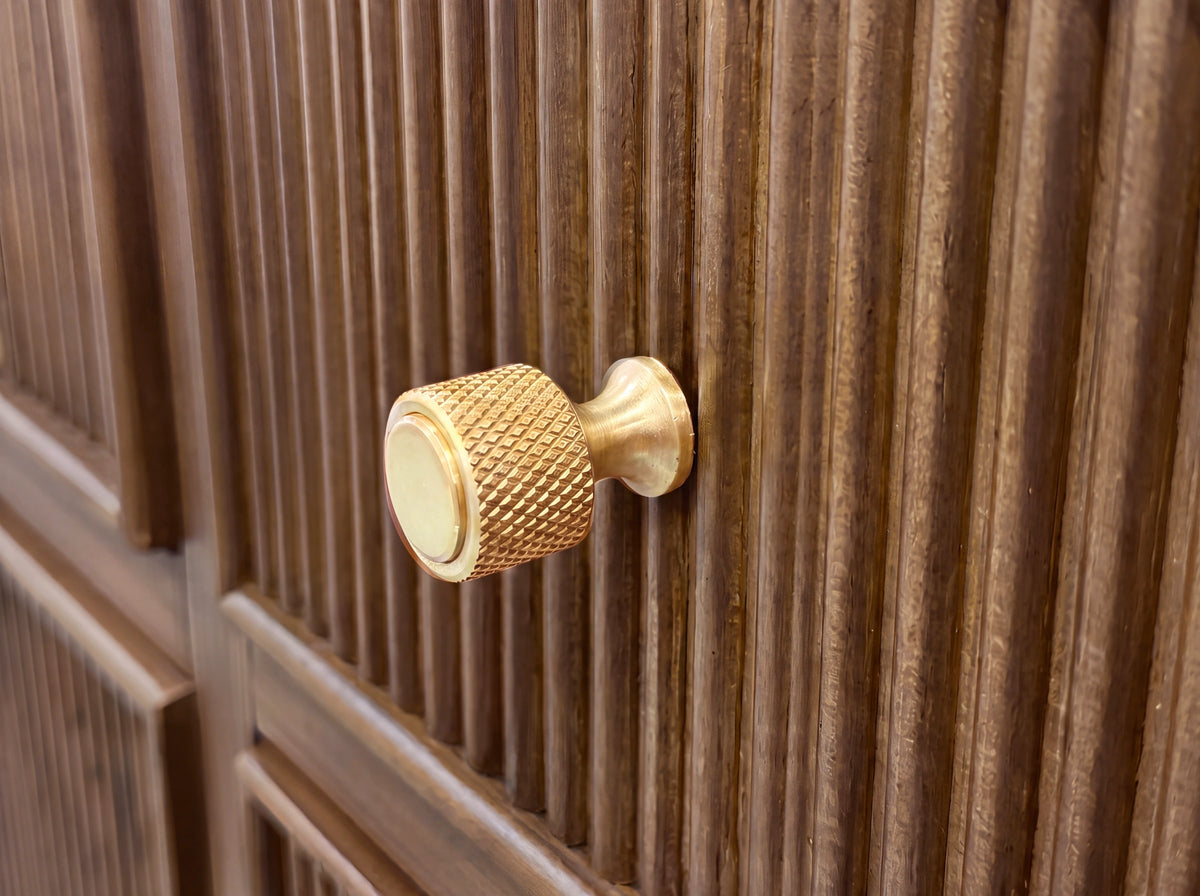
Fluted bathroom vanities use repeated vertical lines to give a cabinet front depth and rhythm without relying on applied ornament. You will also see the word reeded used for closely related designs. In strict woodworking language, fluting describes recessed channels and reeding describes raised rounded lines, but product styling can blur that distinction. Use the close-up photos on each product page to judge the actual profile.
Choose the texture, not just the label
The spacing and depth of the vertical detail affect how the vanity reads in the room. Fine, closely spaced lines create a quieter texture; broader ribs cast stronger shadows and make the front more architectural. Curved corners, slab sides, legs and floating installation can change the effect again. Compare front and angled views, especially when matching the vanity with wall paneling or patterned tile.
Single or double sink
This collection includes single- and double-sink layouts in compact and wide sizes. Single-sink models preserve more continuous counter area and can work in powder rooms or secondary baths. Double-sink models serve shared bathrooms but require two plumbing positions and enough mirror and lighting width.
Shop by exact width when the wall is already measured: 24-inch vanities, 36-inch vanities, 48-inch vanities, 60-inch vanities, 72-inch vanities and 84-inch vanities. Product availability within a size can change, so confirm the current variants on the page.
Floating versus freestanding fluted vanities
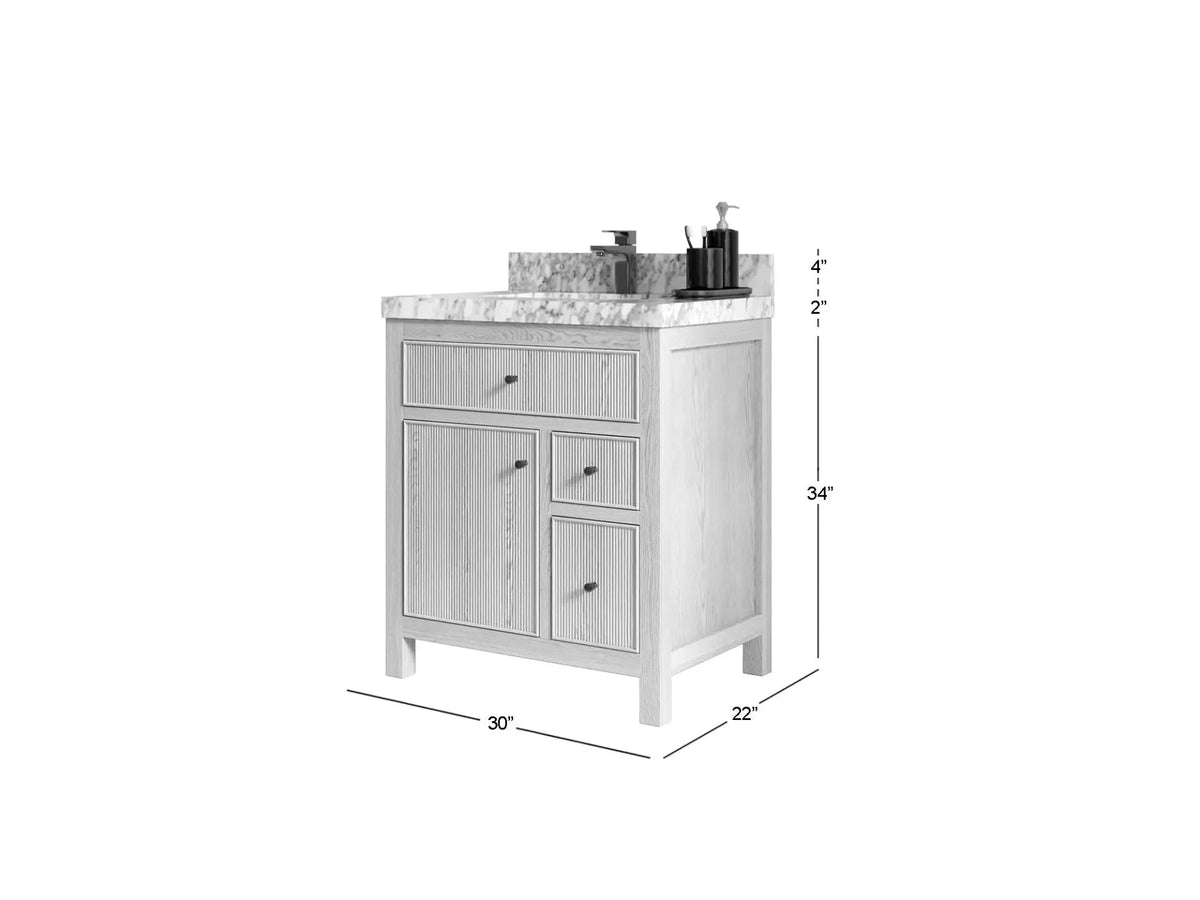
A floating cabinet emphasizes the horizontal line of the countertop and keeps the patterned front visually separate from the floor. It requires a suitable wall and an installation plan for the selected model. A freestanding vanity has a more furniture-like stance and may use legs, a recessed base or a full plinth. Compare the exact cabinet and countertop dimensions rather than assuming two models with the same nominal width occupy identical space.
White oak, teak and painted finishes
Fluted fronts react strongly to color and grain. White oak options tend to keep the grooves visually light, teak tones add warmth, and painted finishes make the shadow lines more uniform. Those are design observations, not universal construction statements. Check each product's material description to learn whether a specific part is solid wood, veneer, plywood or another listed material.
Plan hardware, top and maintenance together
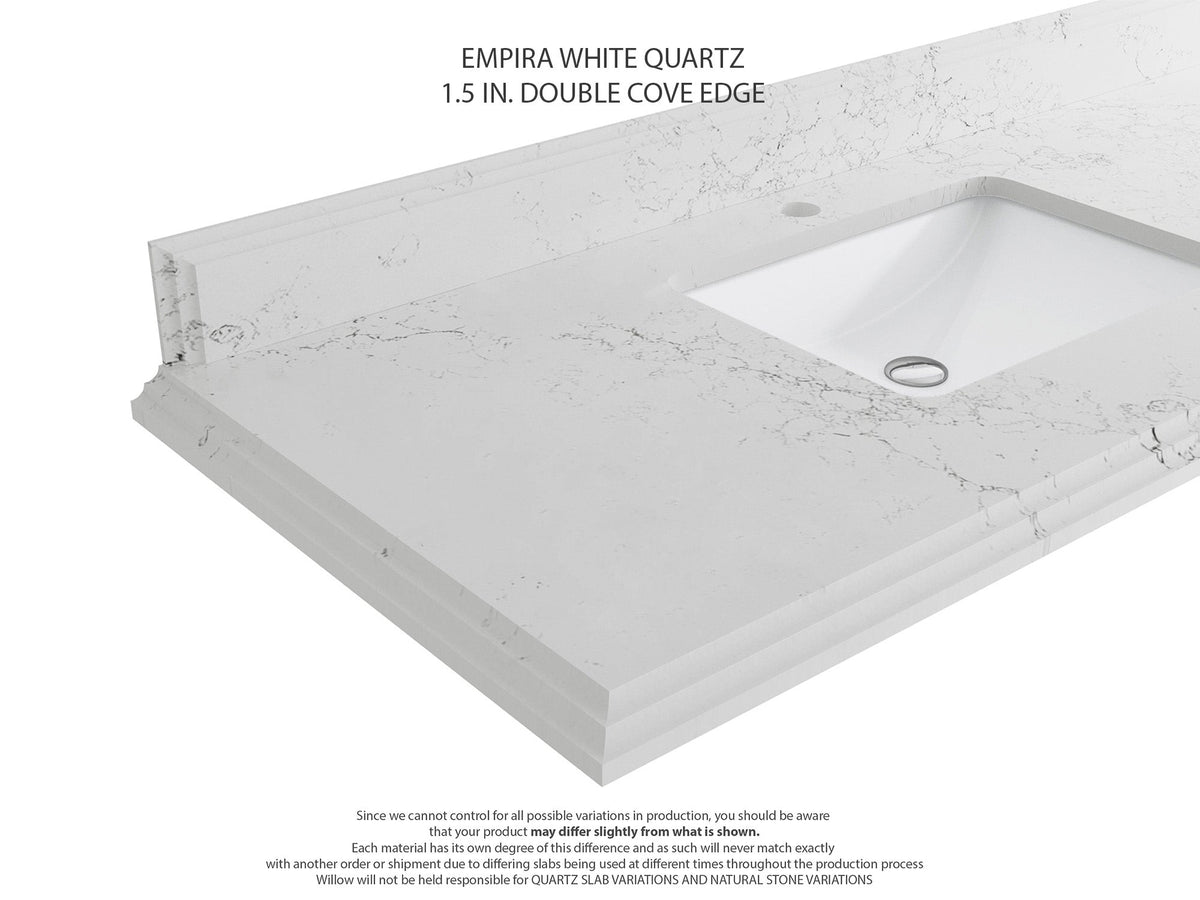
Some fluted doors and drawers use discreet pulls so the texture remains the focus; others use visible hardware as a contrast. Verify what is included and whether alternate hardware is offered for the selected model. Countertop, basin and backsplash choices also vary. For routine care, follow the product instructions and wipe moisture from the grooves with a soft cloth rather than letting residue collect along the profile.
Continue by material with white oak bathroom vanities or teak bathroom vanities. For installation style, compare floating vanities with the full bathroom vanity collection.
Questions & answers