


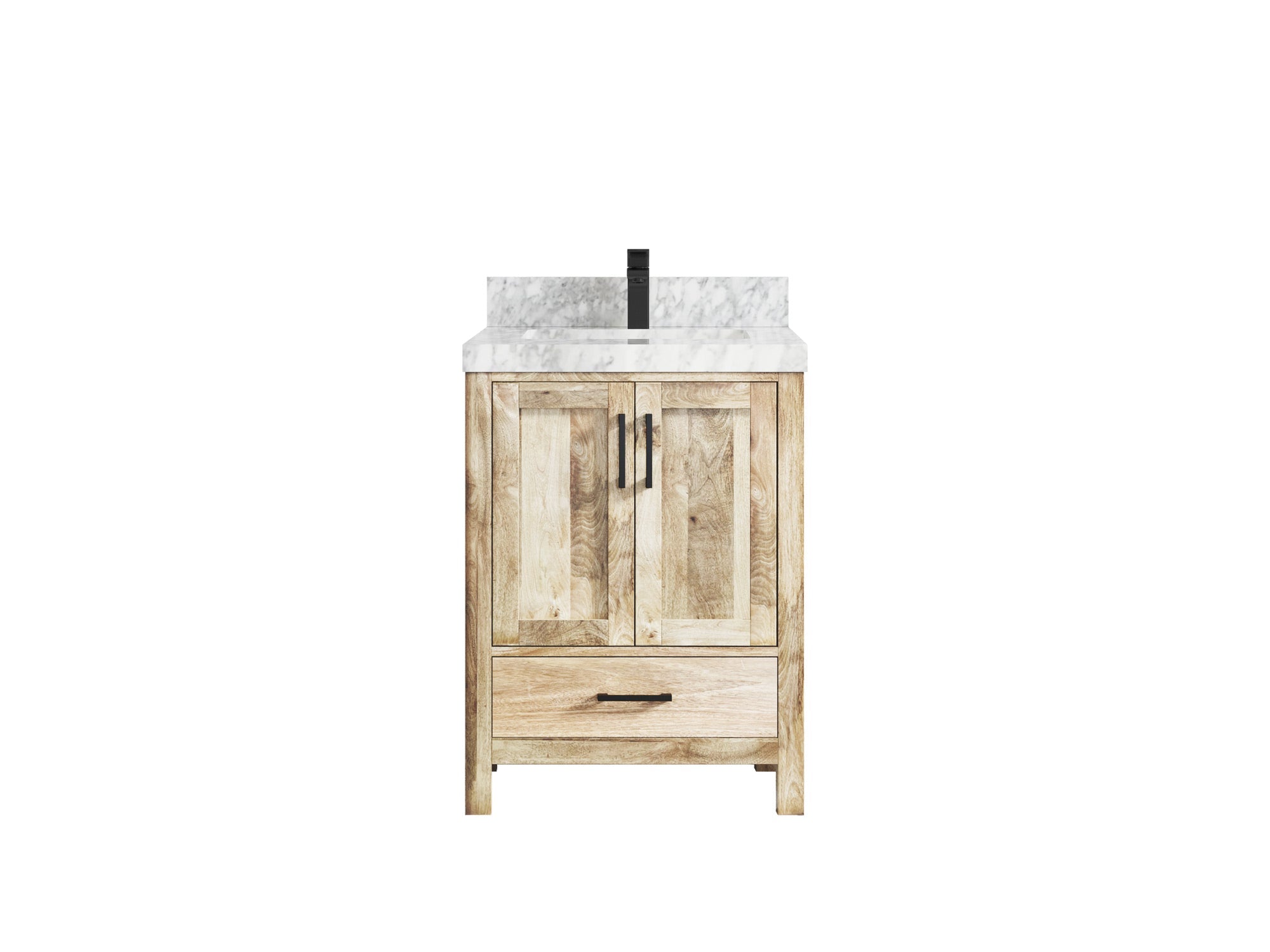
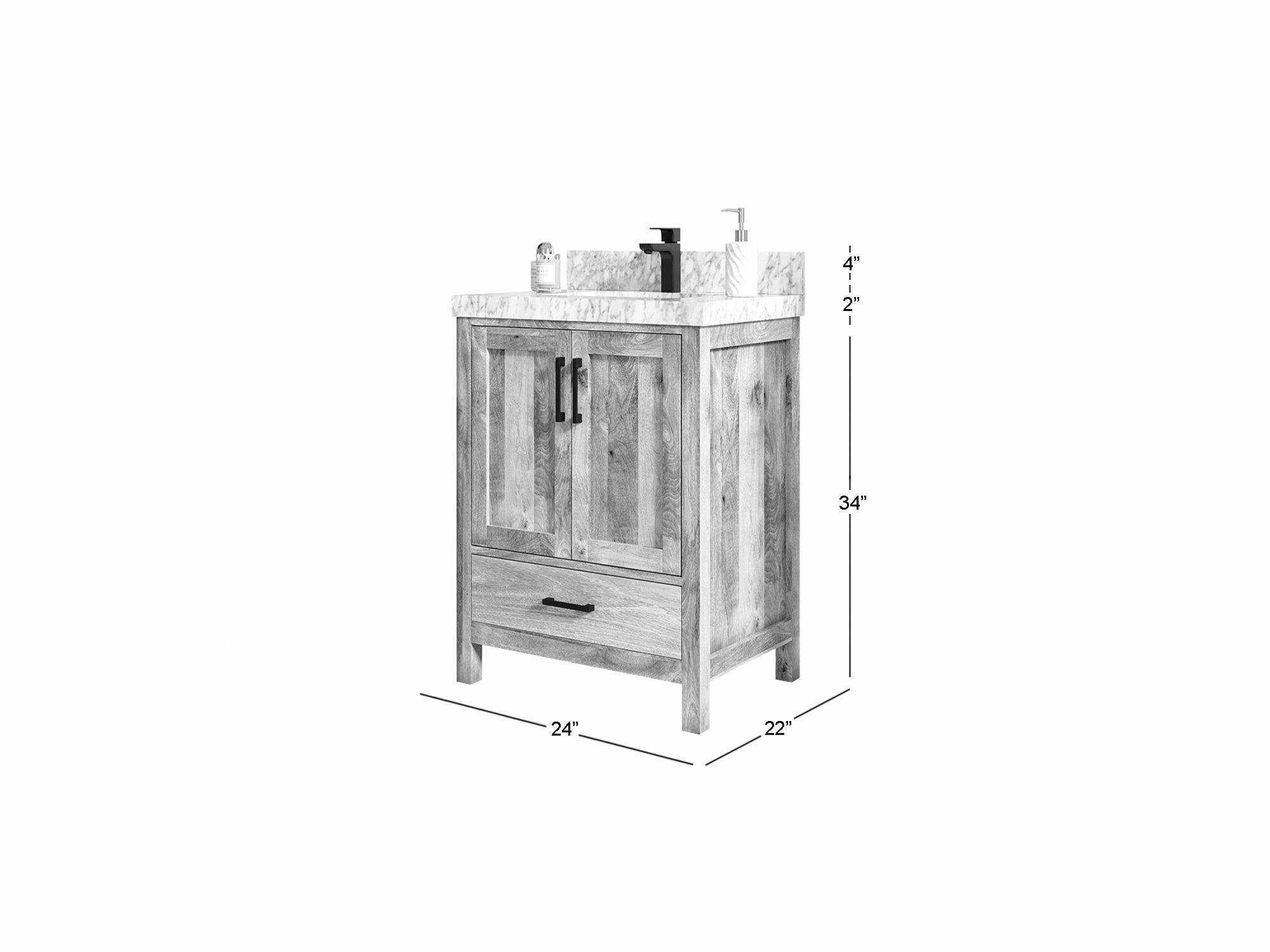
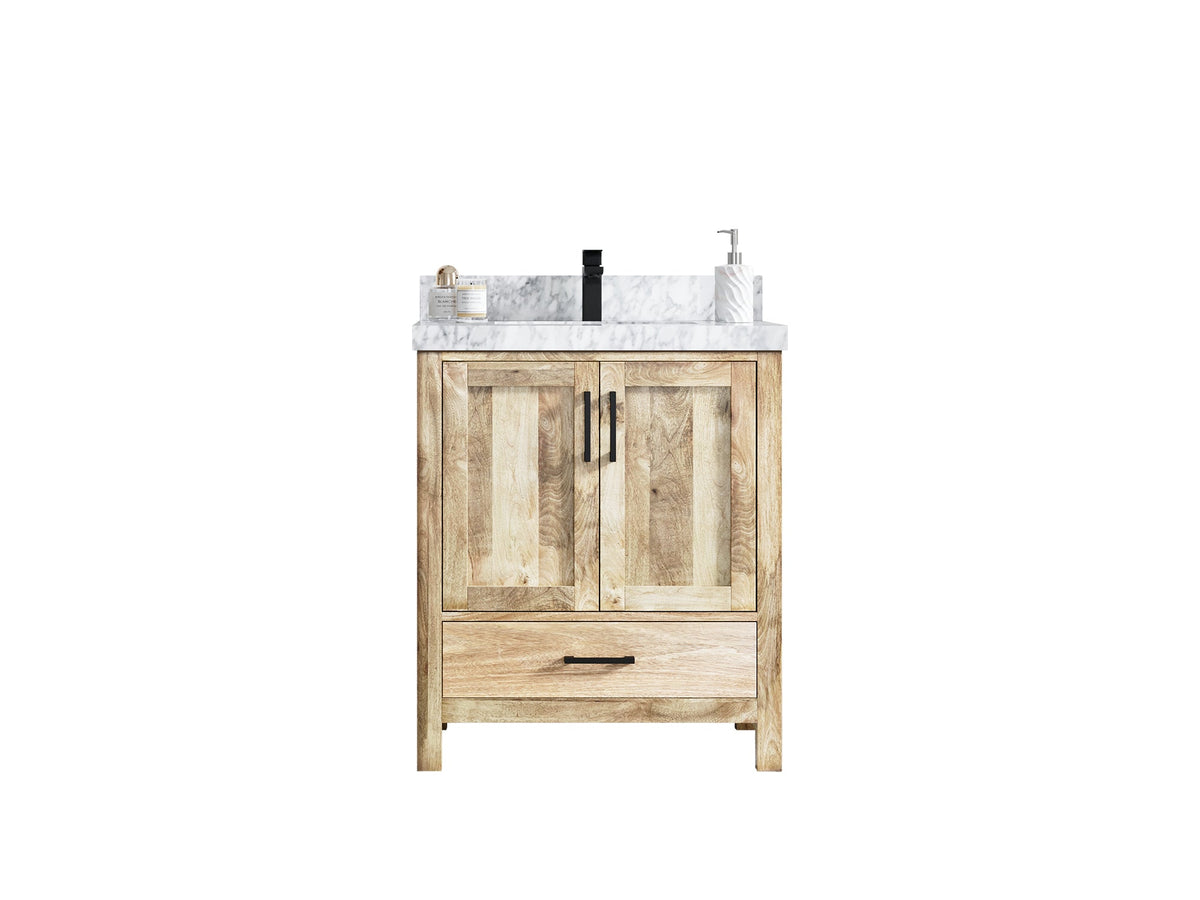
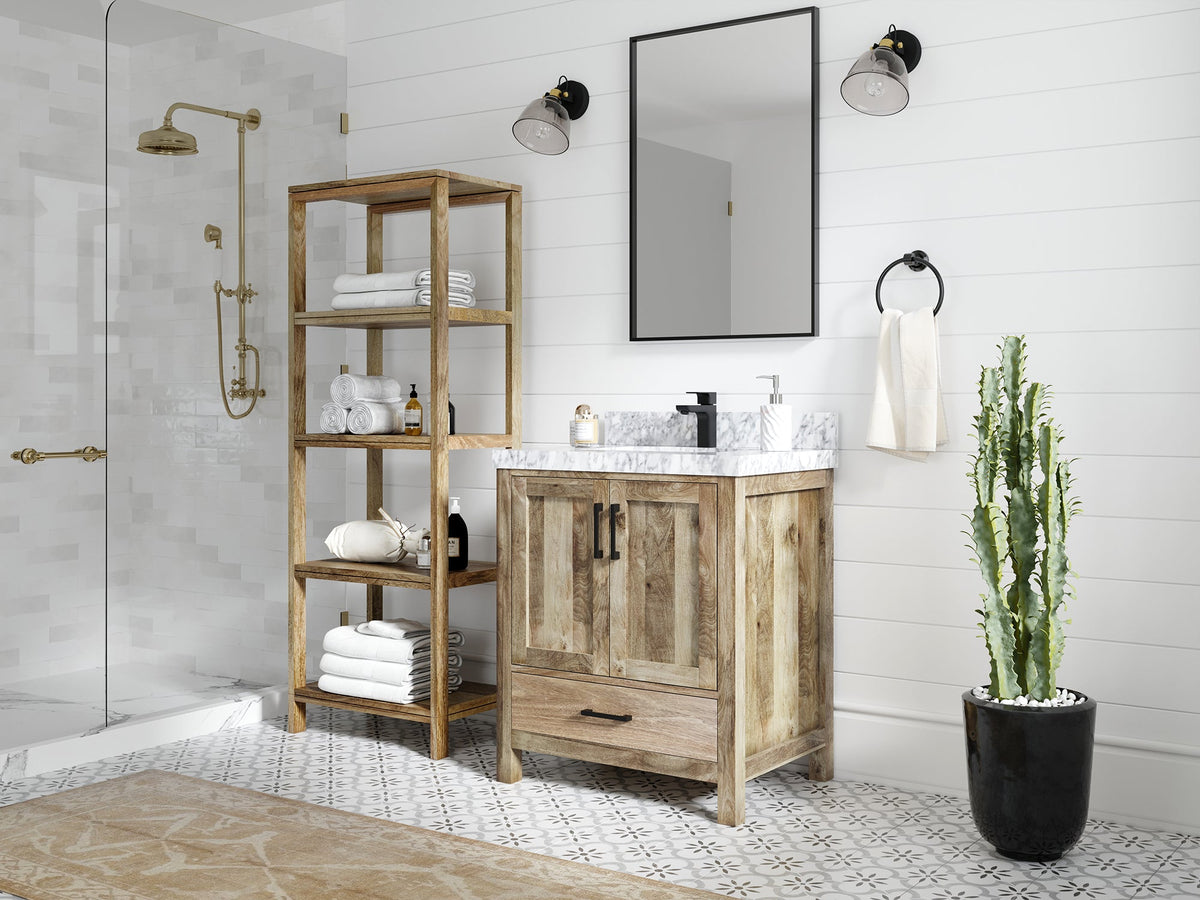
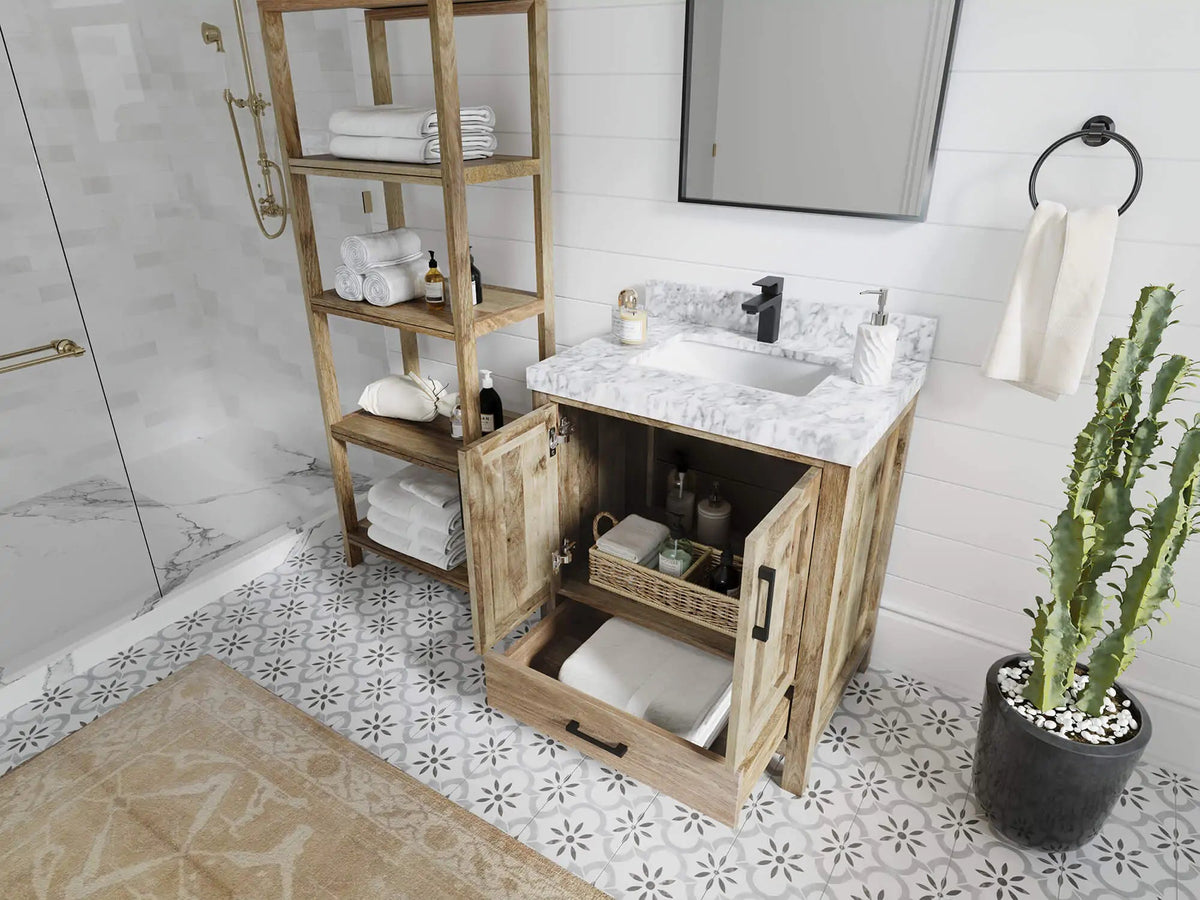
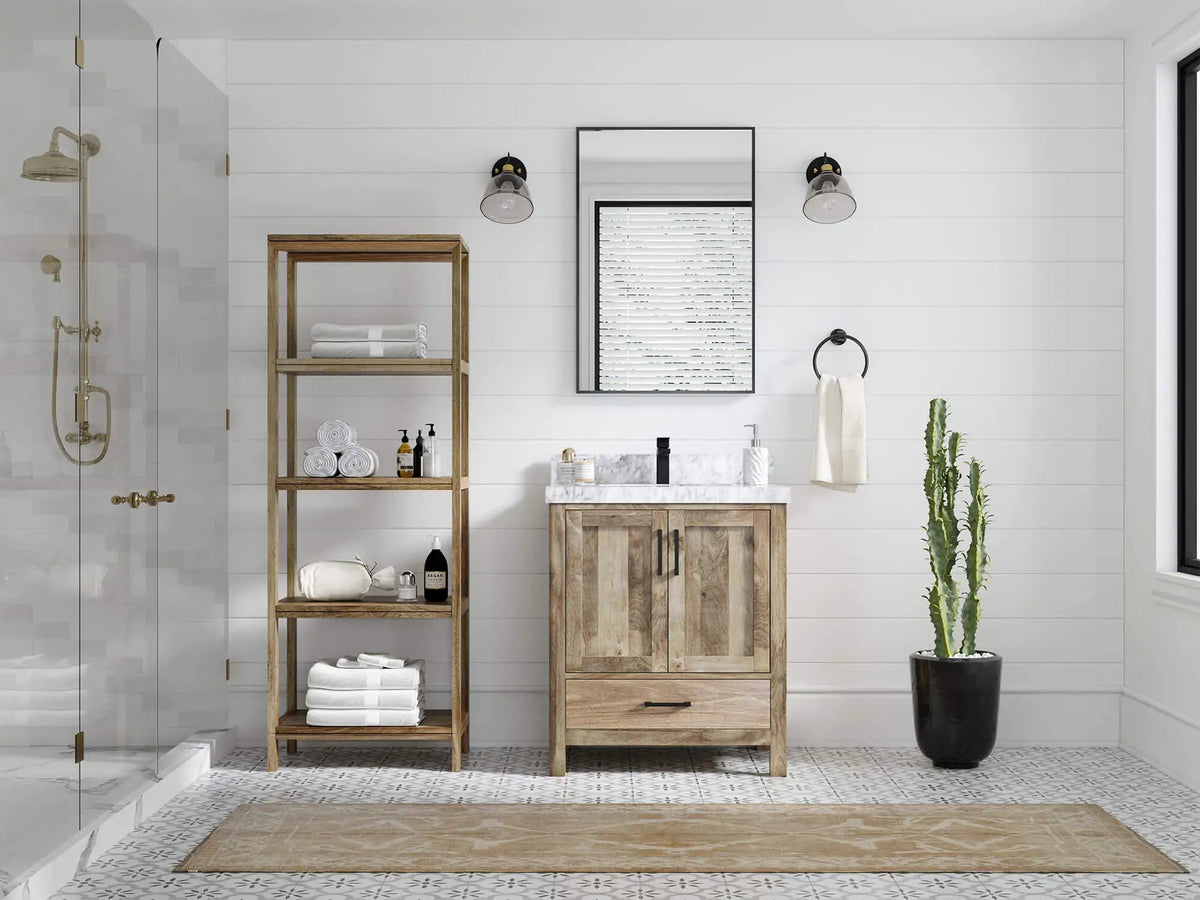
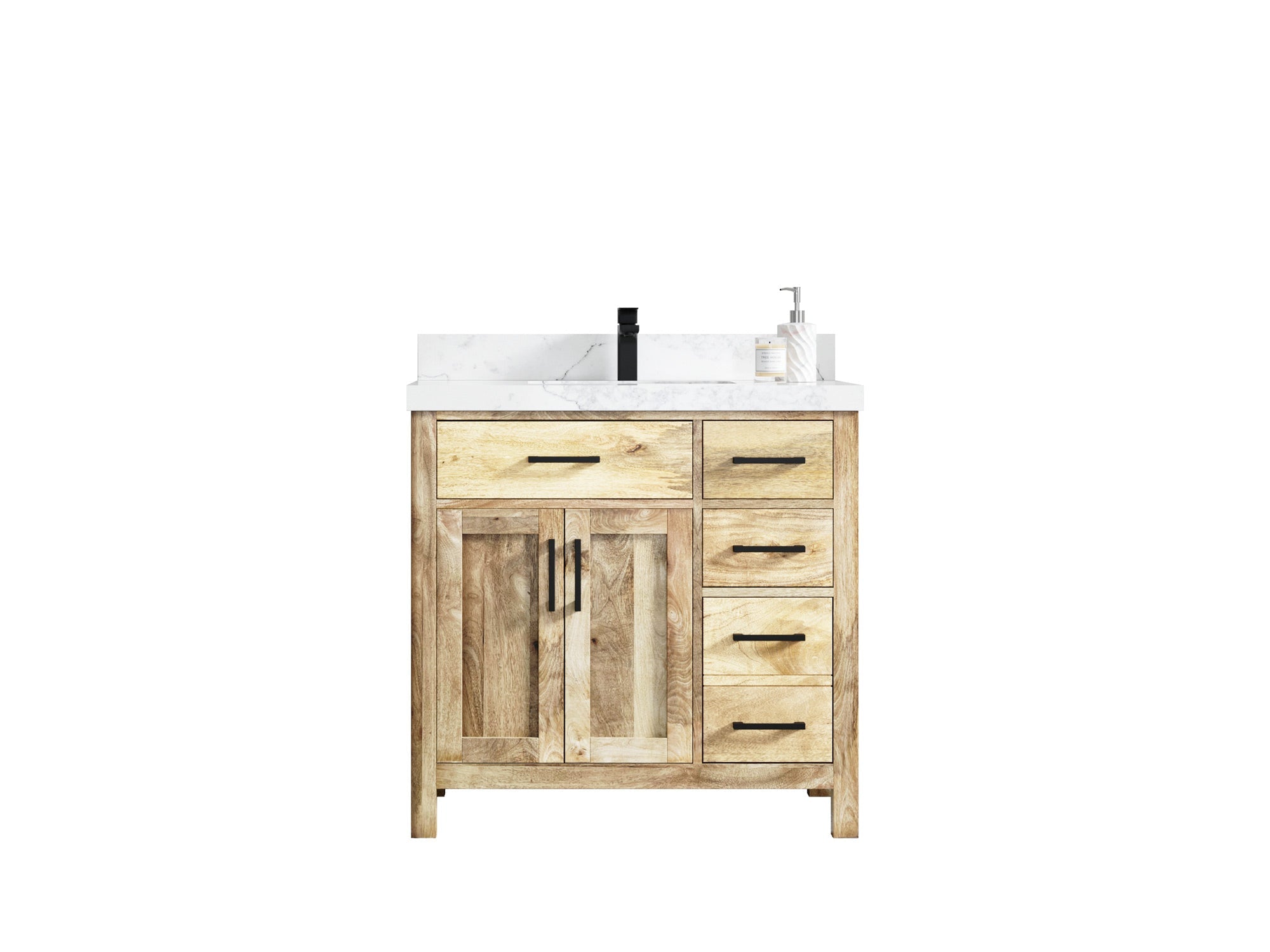
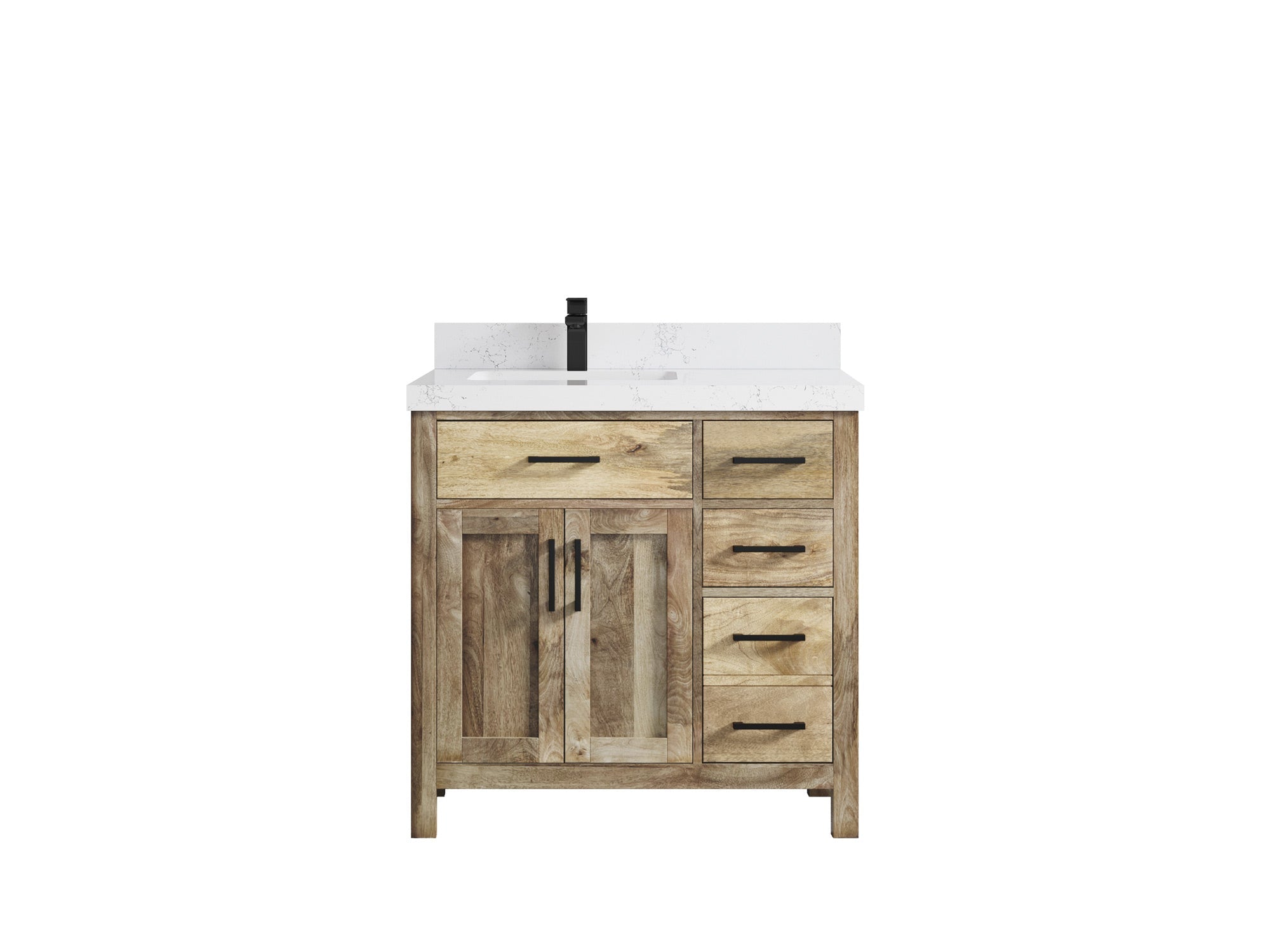
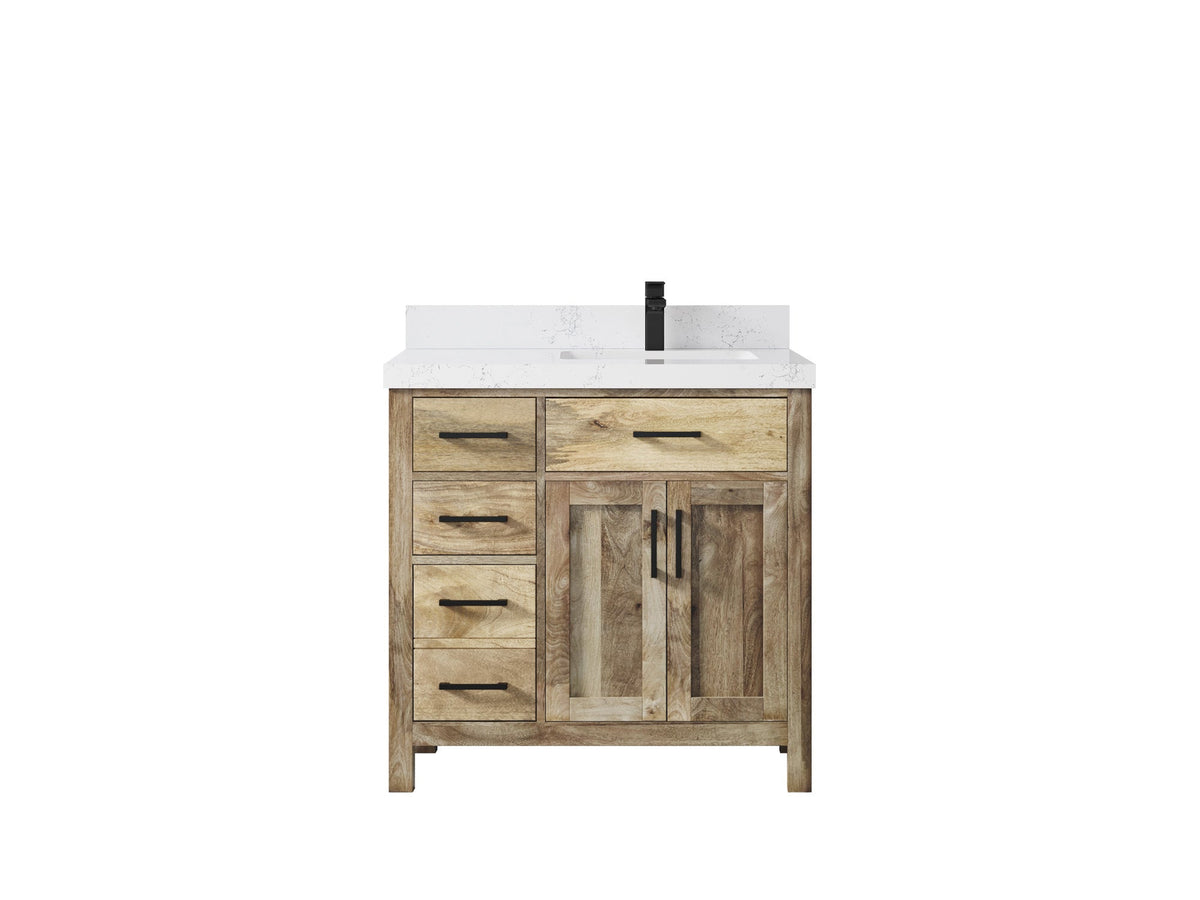
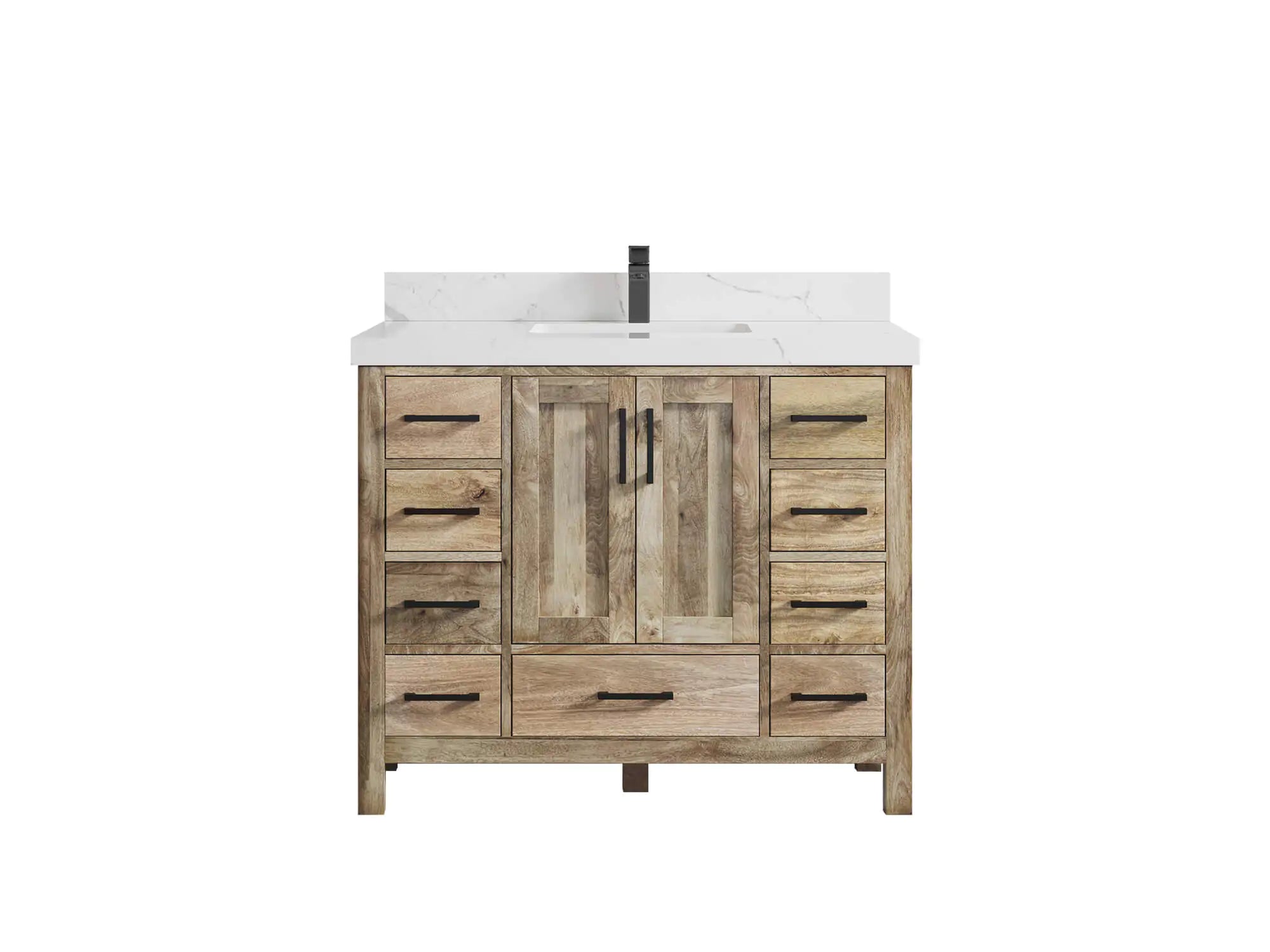
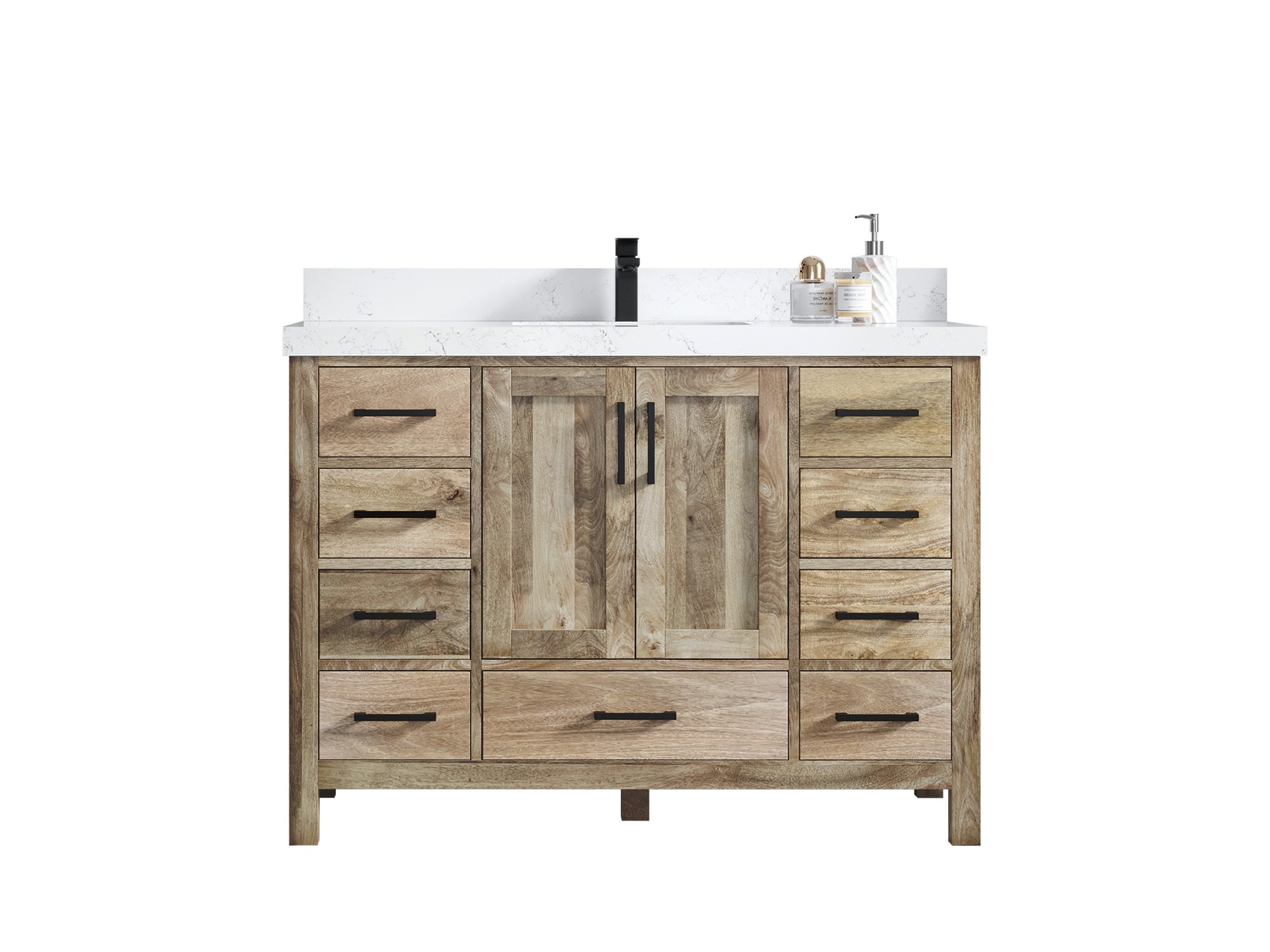
Malibu Mango Wood 30 in.Single sink
In stock · Ships in 7–10 business days

CURATED FOR THIS COLLECTION
Built Beyond the Surface
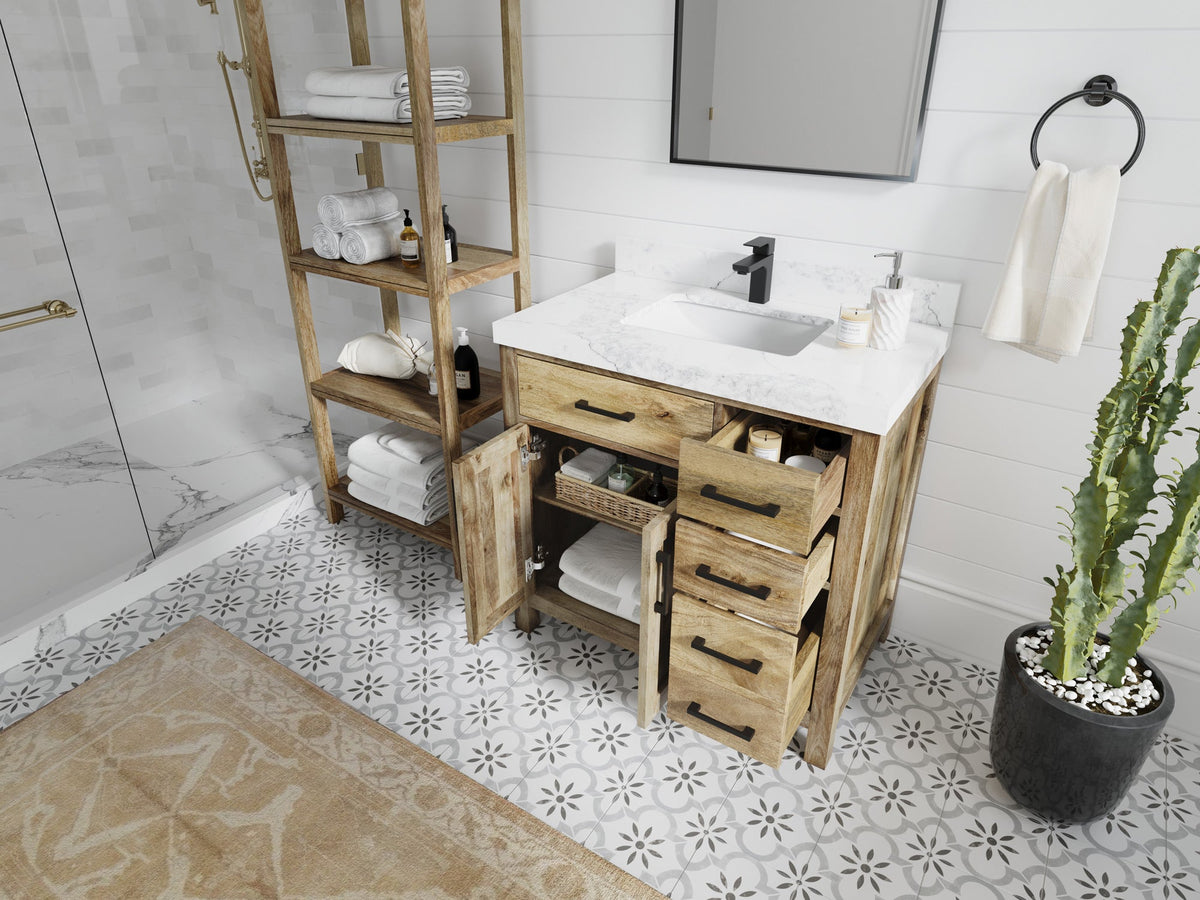
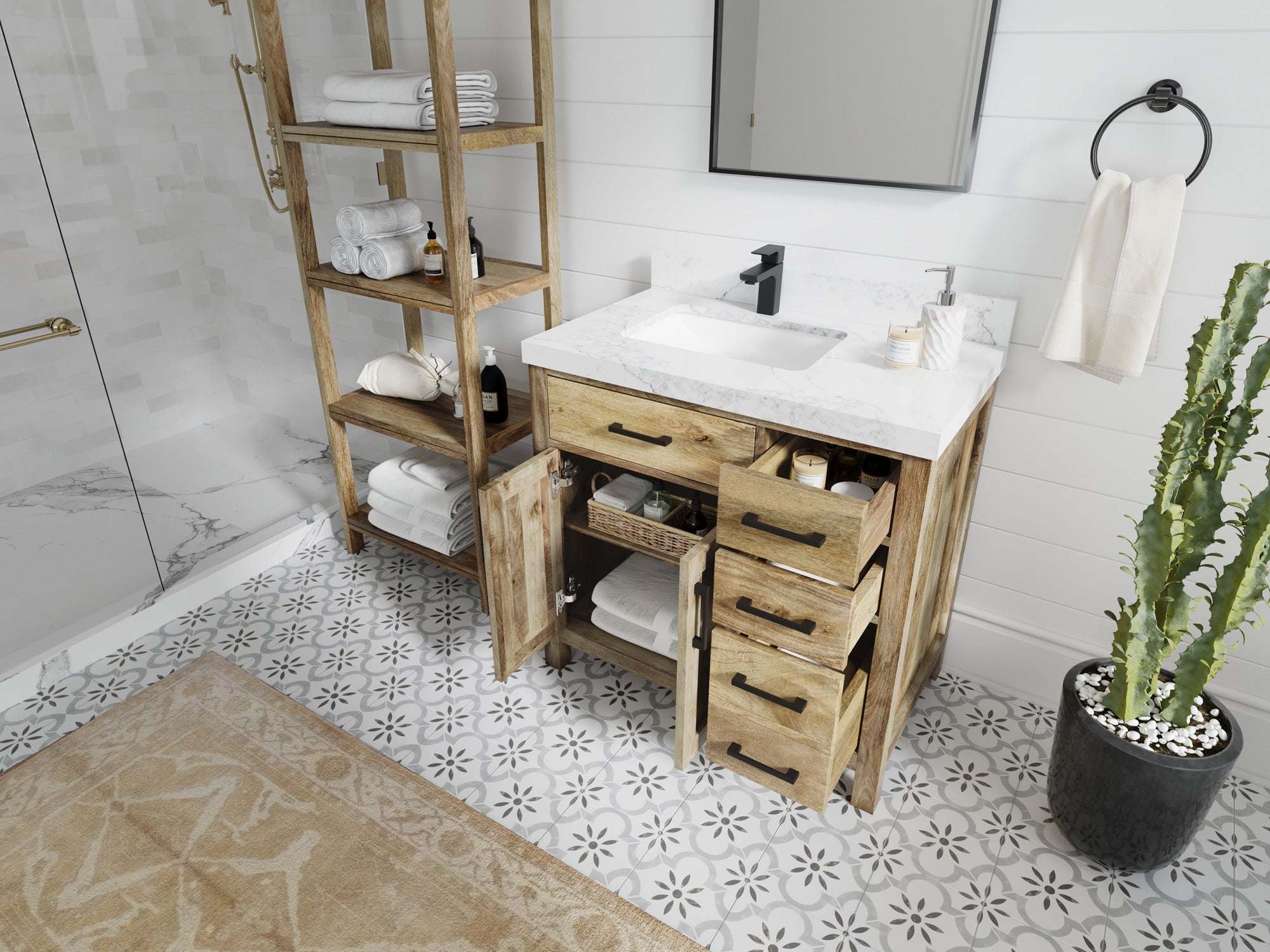
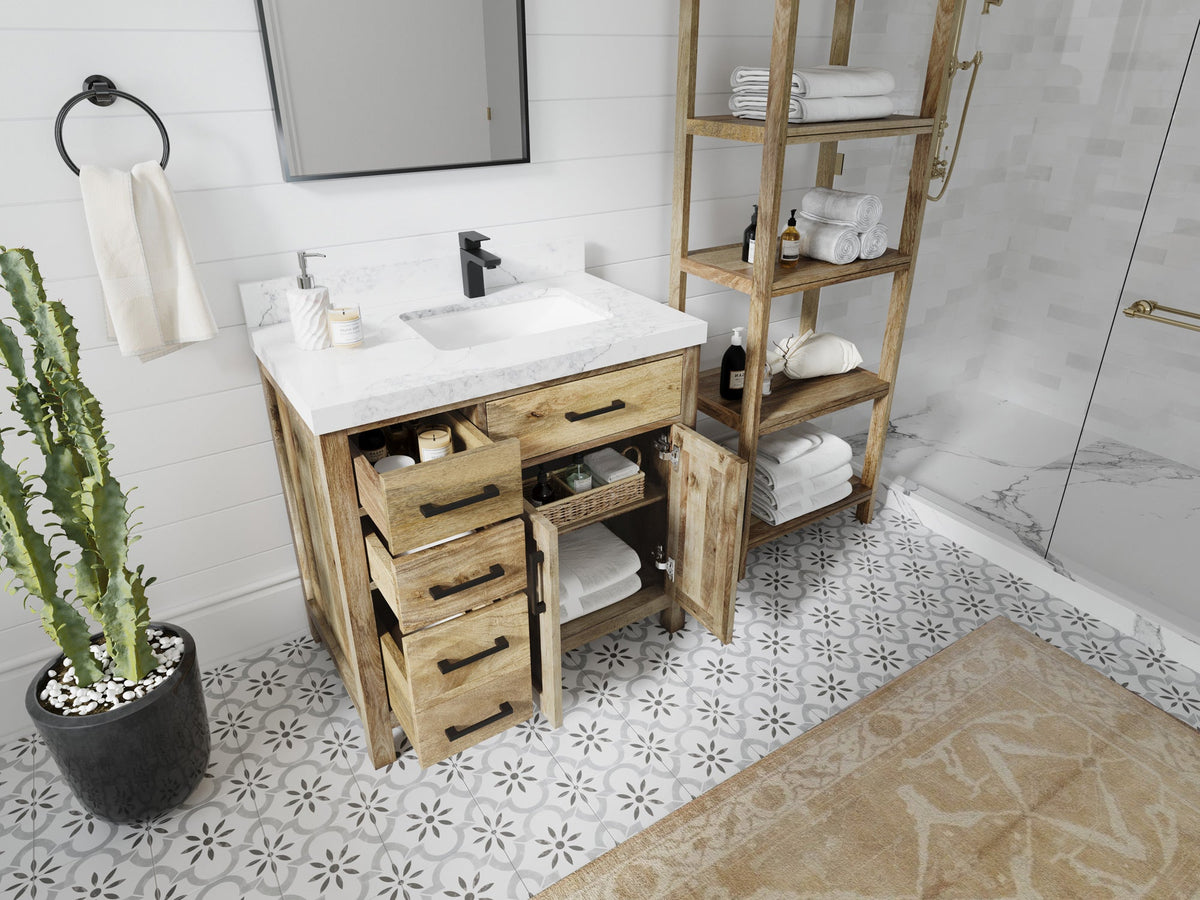
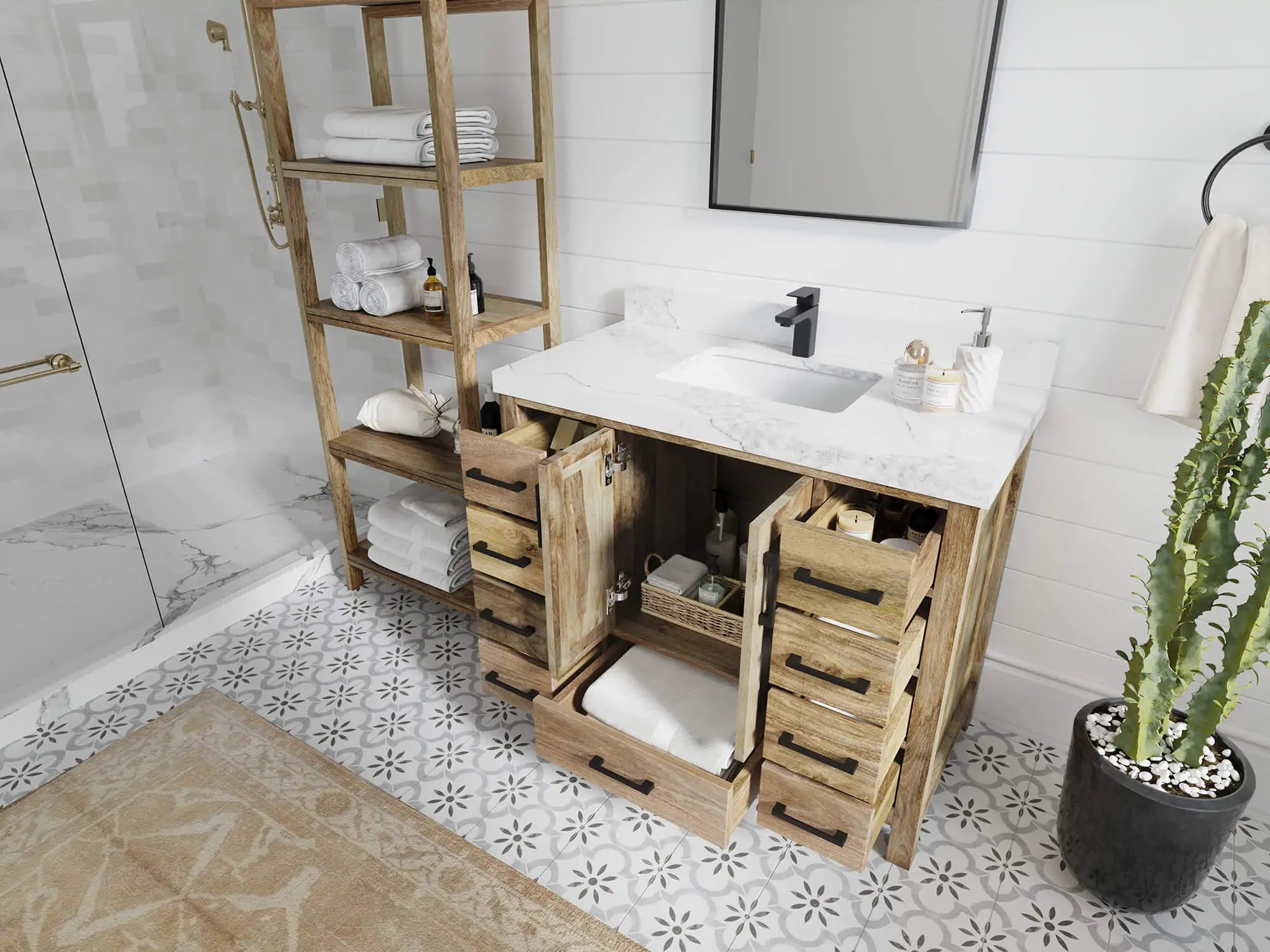
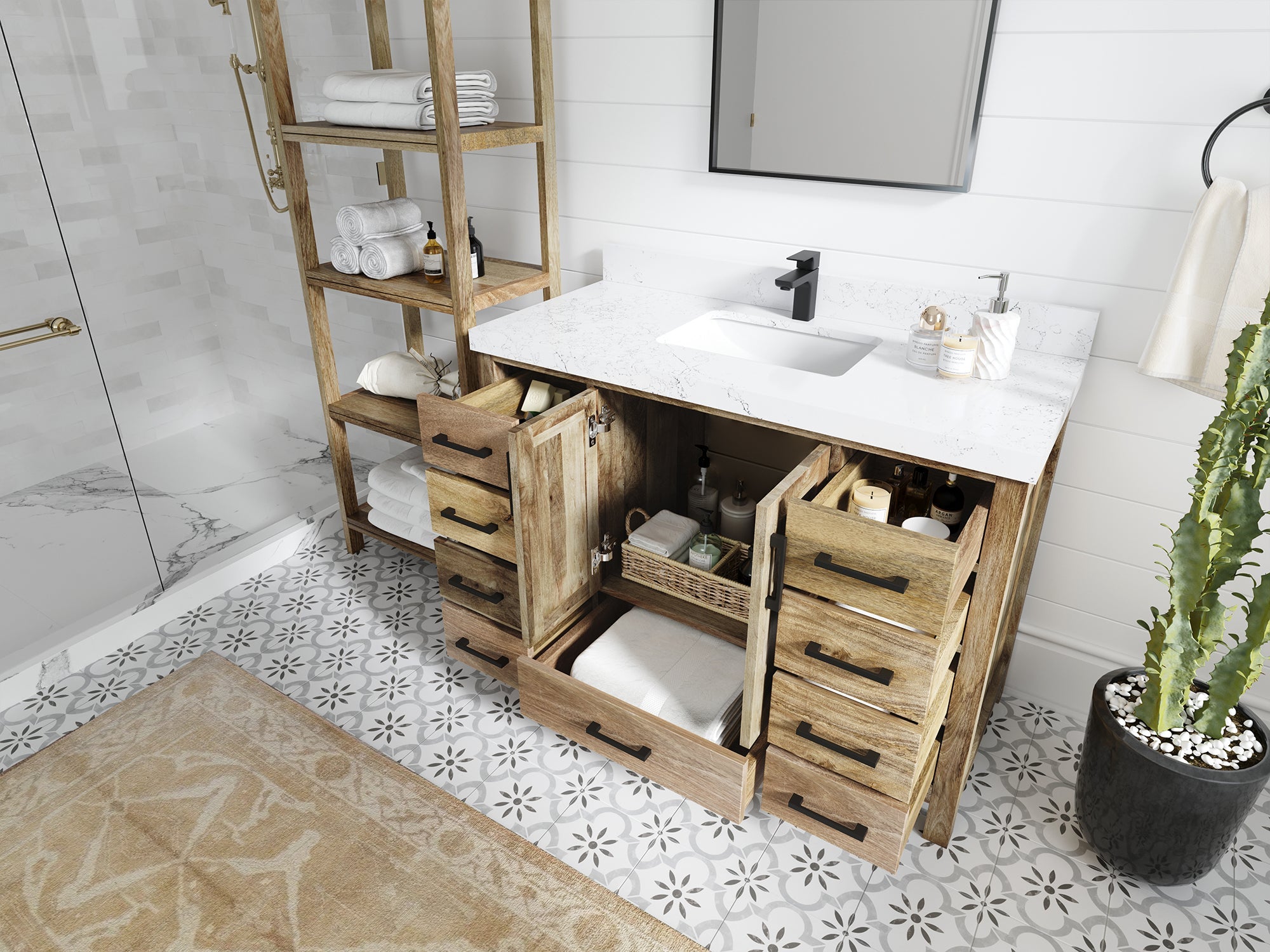
Solid-wood construction, dovetail drawers and considered details made for real bathrooms and daily life.
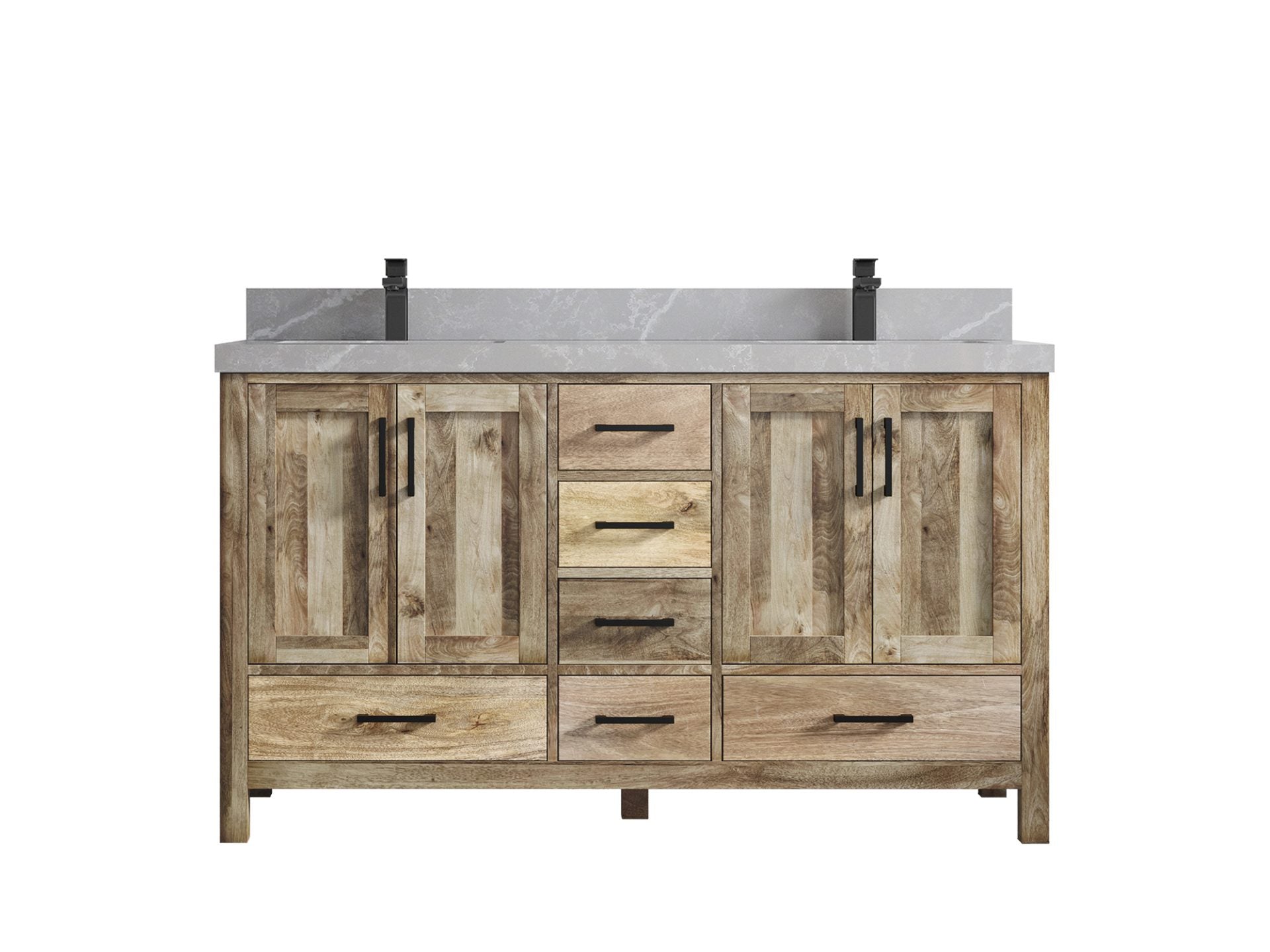
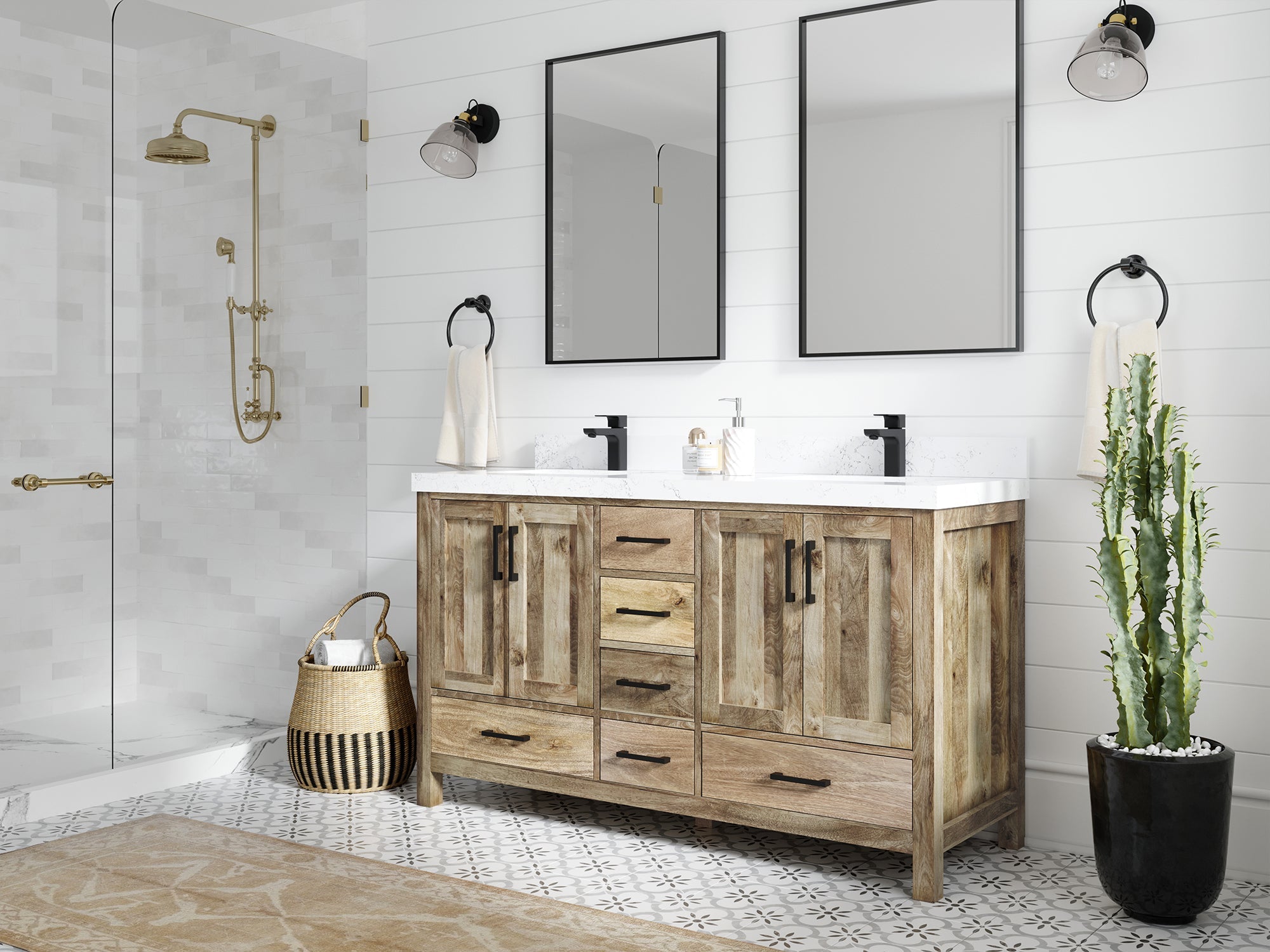
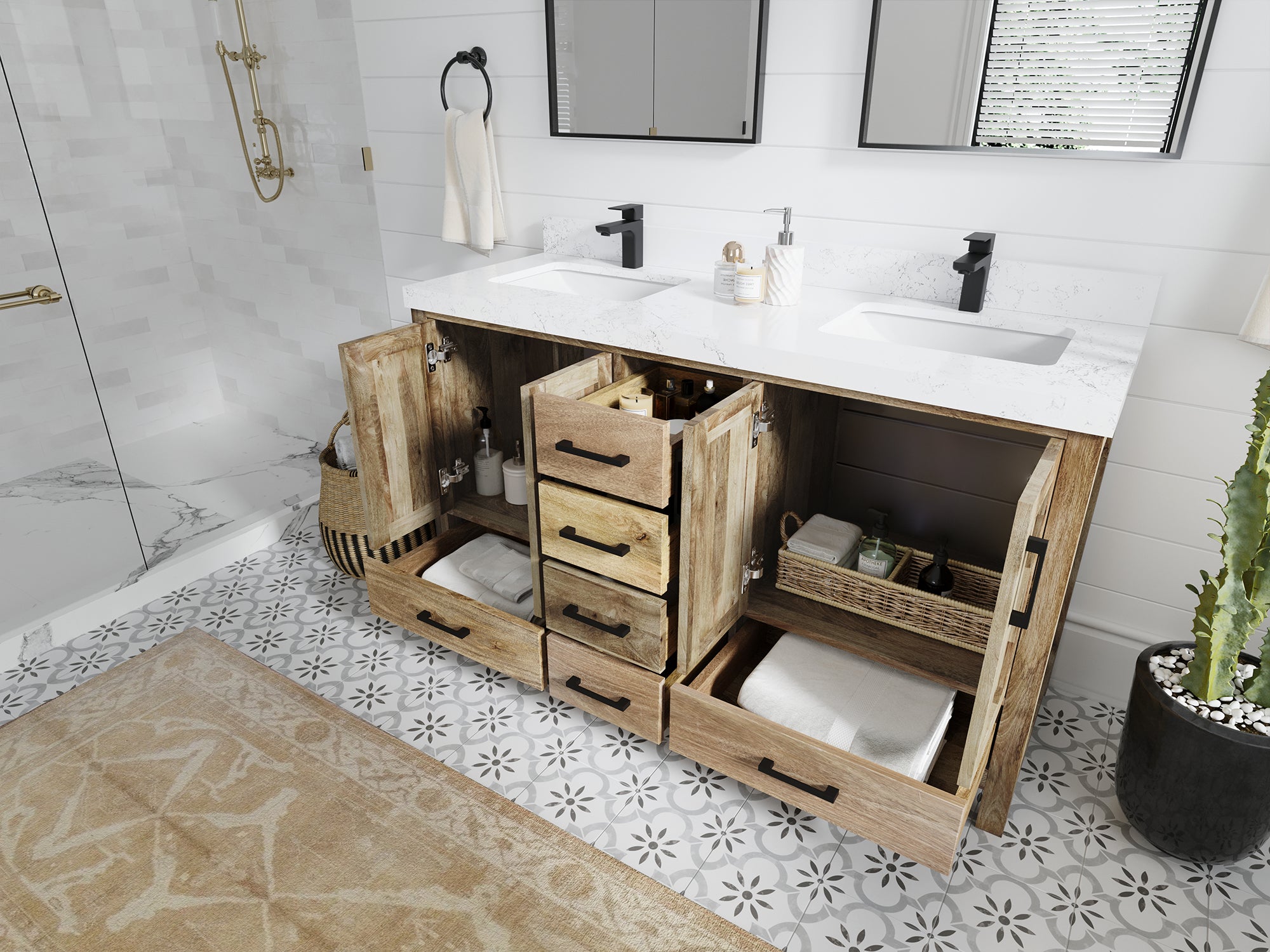
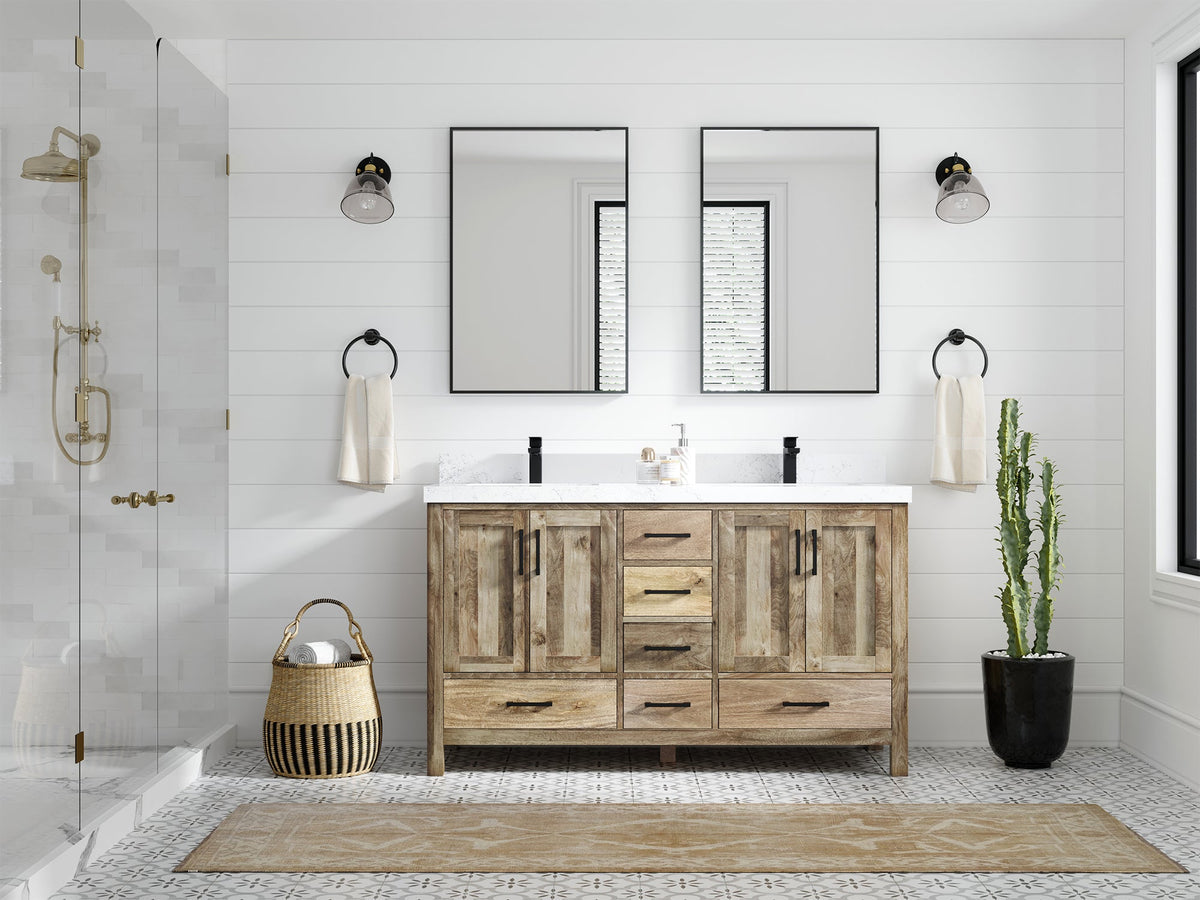
Malibu Mango Wood 60 in.Double sink
In stock · Ships in 7–10 business days
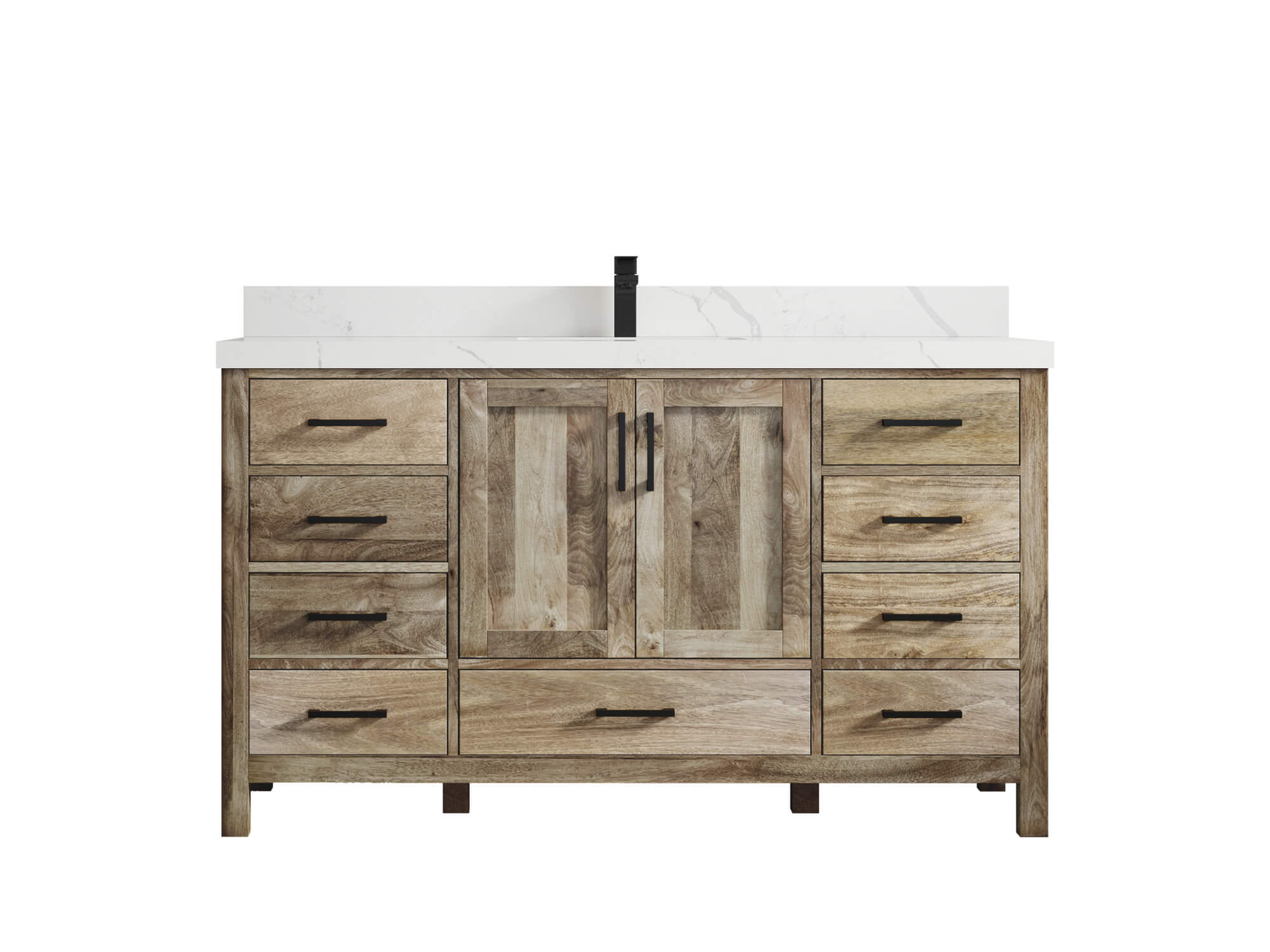
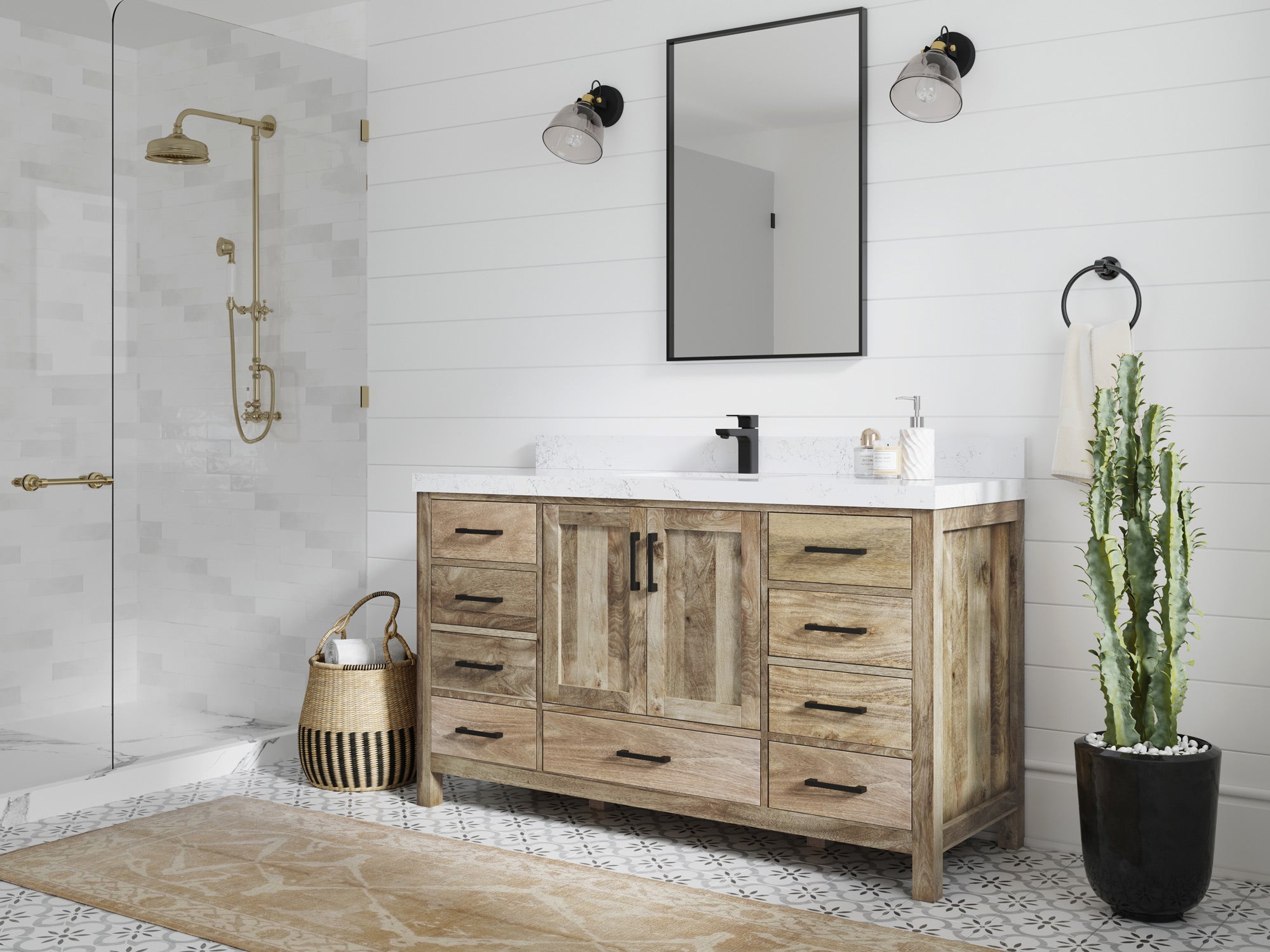
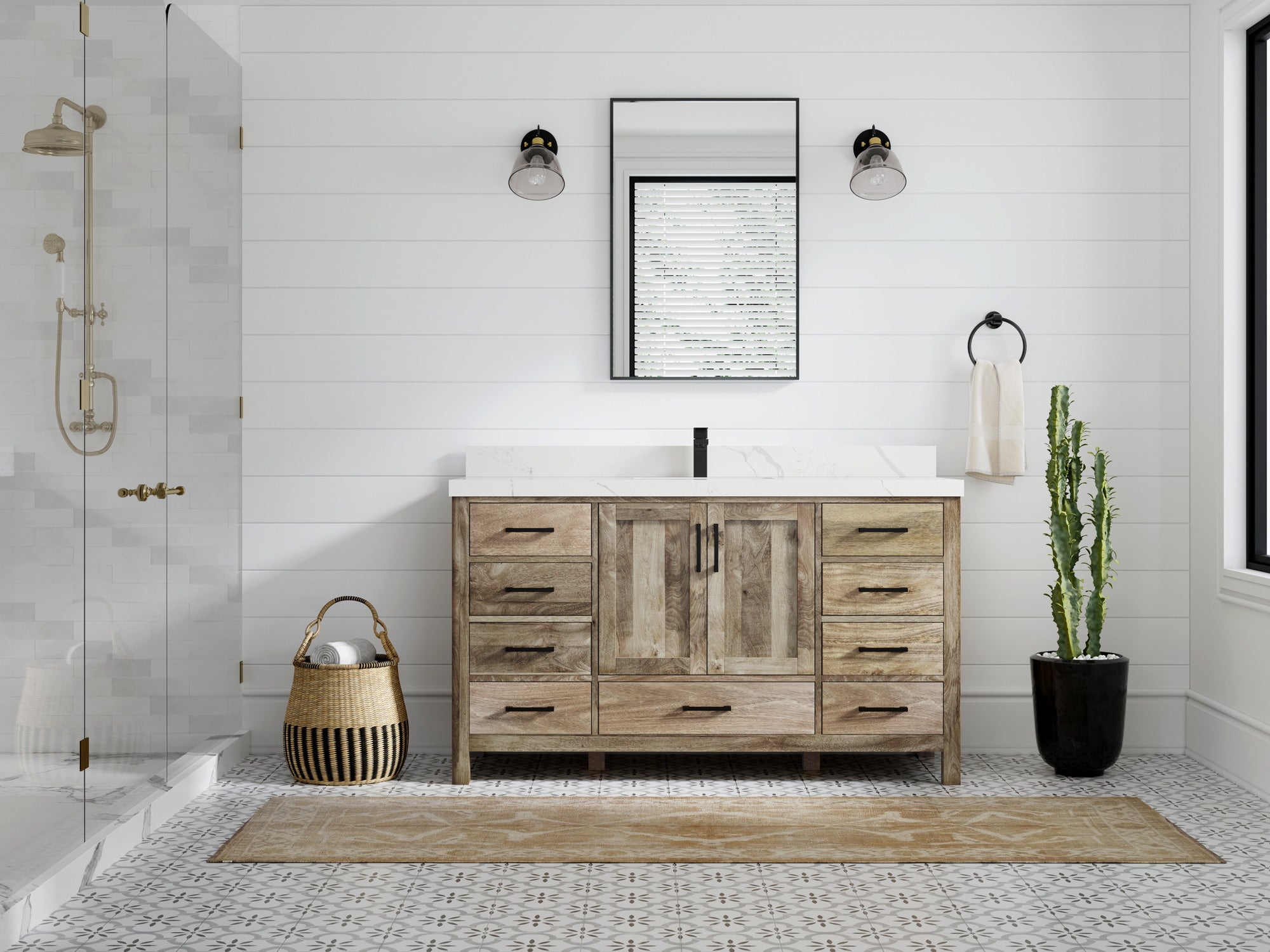
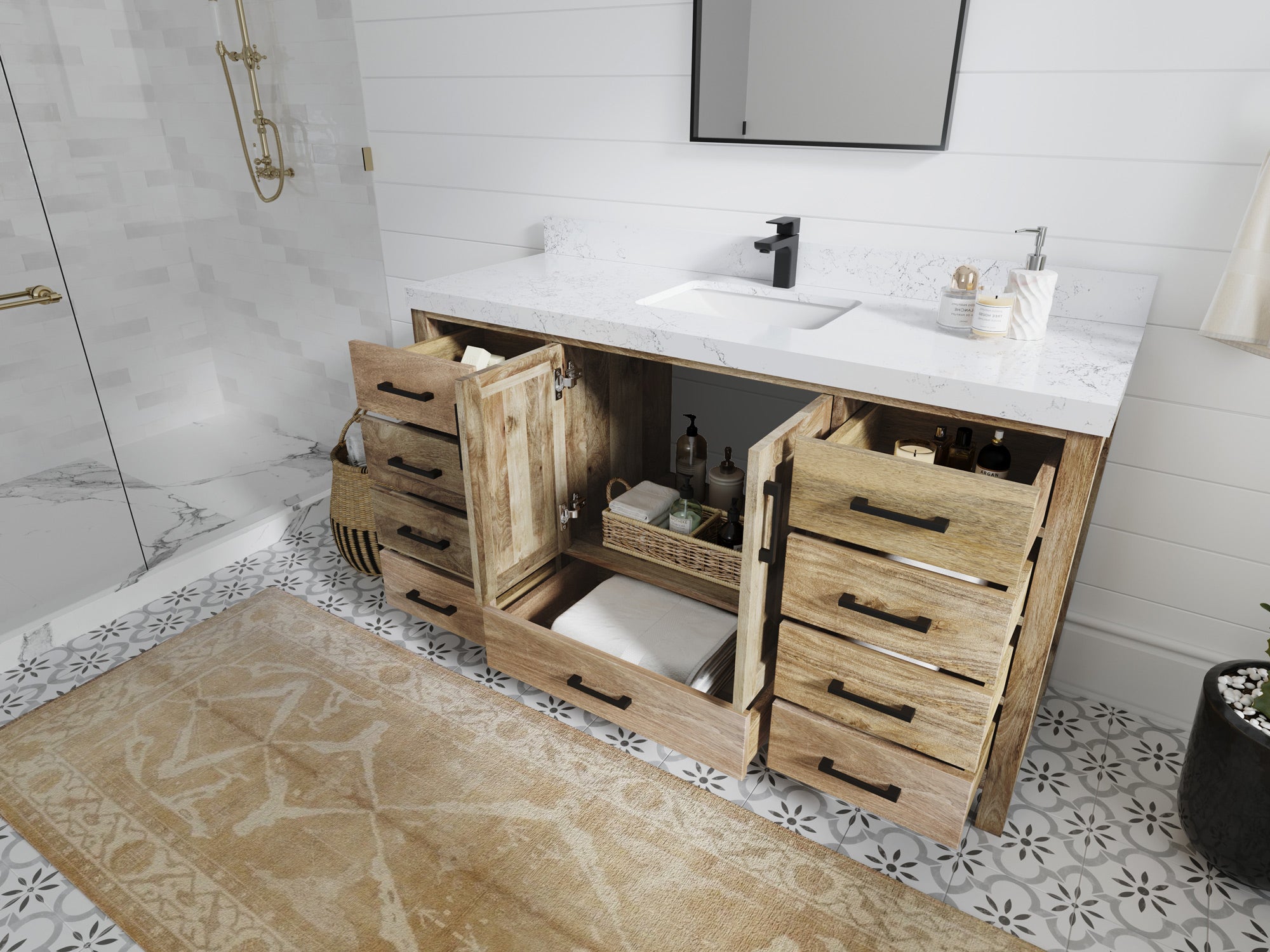
Mango wood introduces a more relaxed and tactile character into bathroom interiors than painted cabinetry or ultra-smooth synthetic finishes. A mango wood bathroom vanity is defined less by uniform color and more by natural variation — visible grain movement, tonal shifts, softened edges, and texture that changes depending on lighting throughout the day.
Unlike flat contemporary cabinets that rely on contrast or glossy surfaces, mango wood creates visual depth through organic imperfection. This gives the vanity a more collected and furniture-inspired appearance, helping the bathroom feel warmer, quieter, and less manufactured.
This collection includes finishes such as Natural Mango and Whitewashed Mango, each offering a different interpretation of mango wood texture and tone.
The Natural Character of Mango Wood
Mango wood does not create a perfectly uniform surface. Its appeal comes from variation — softer grain transitions, natural tonal layering, and subtle irregularities that make each vanity feel less repetitive. This is one of the reasons mango wood has become increasingly popular in interiors focused on warmth and material authenticity.
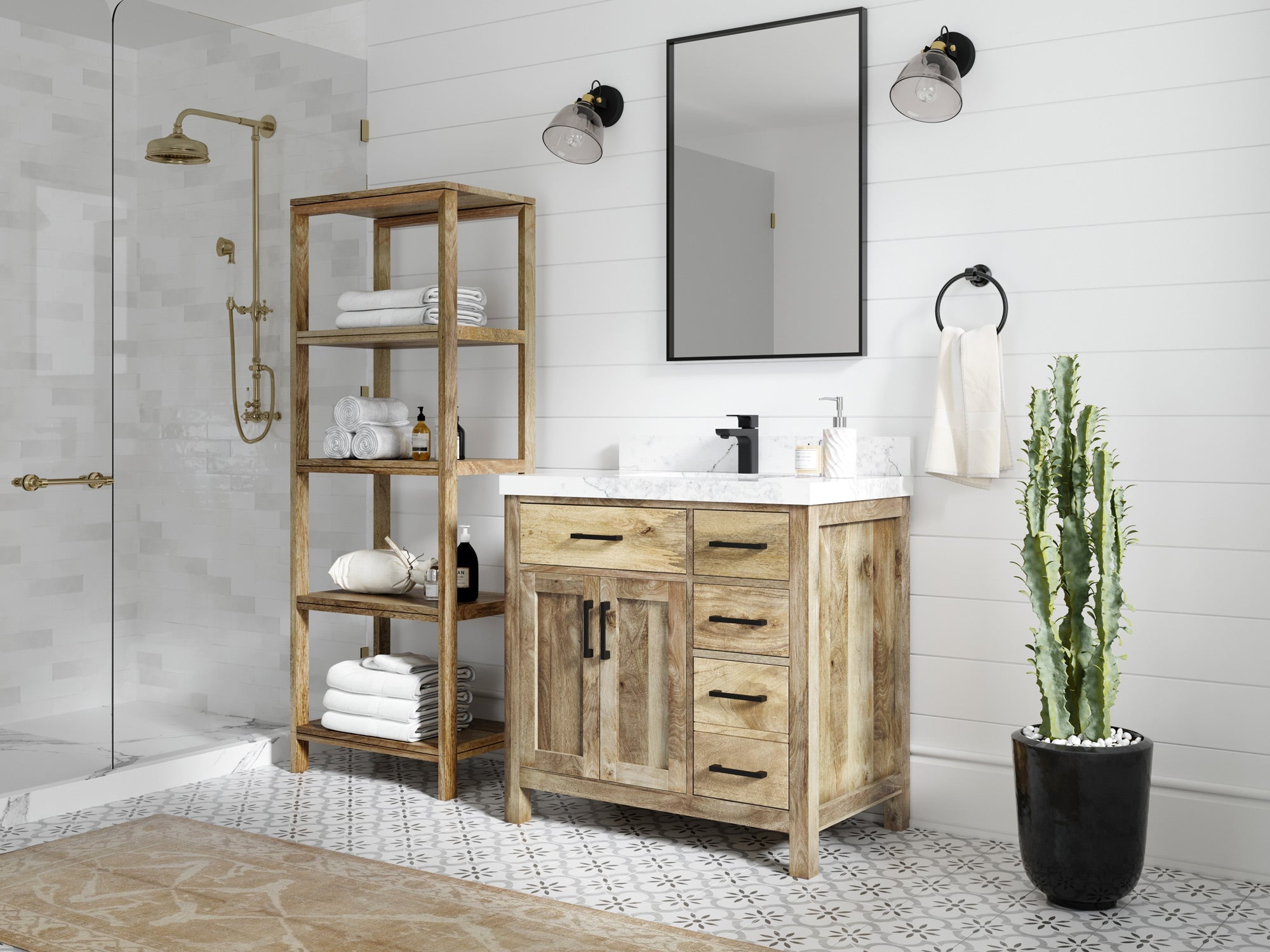
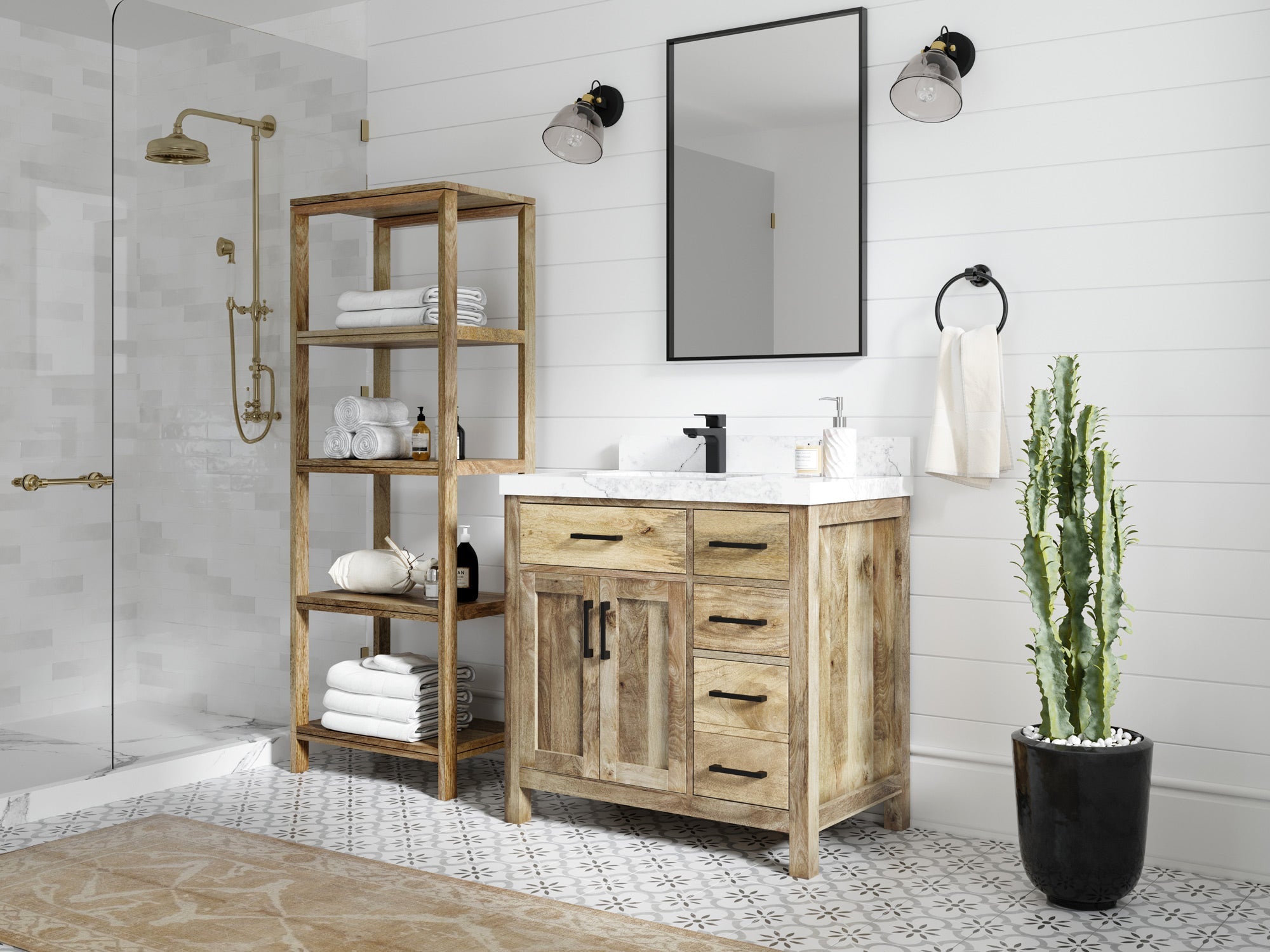
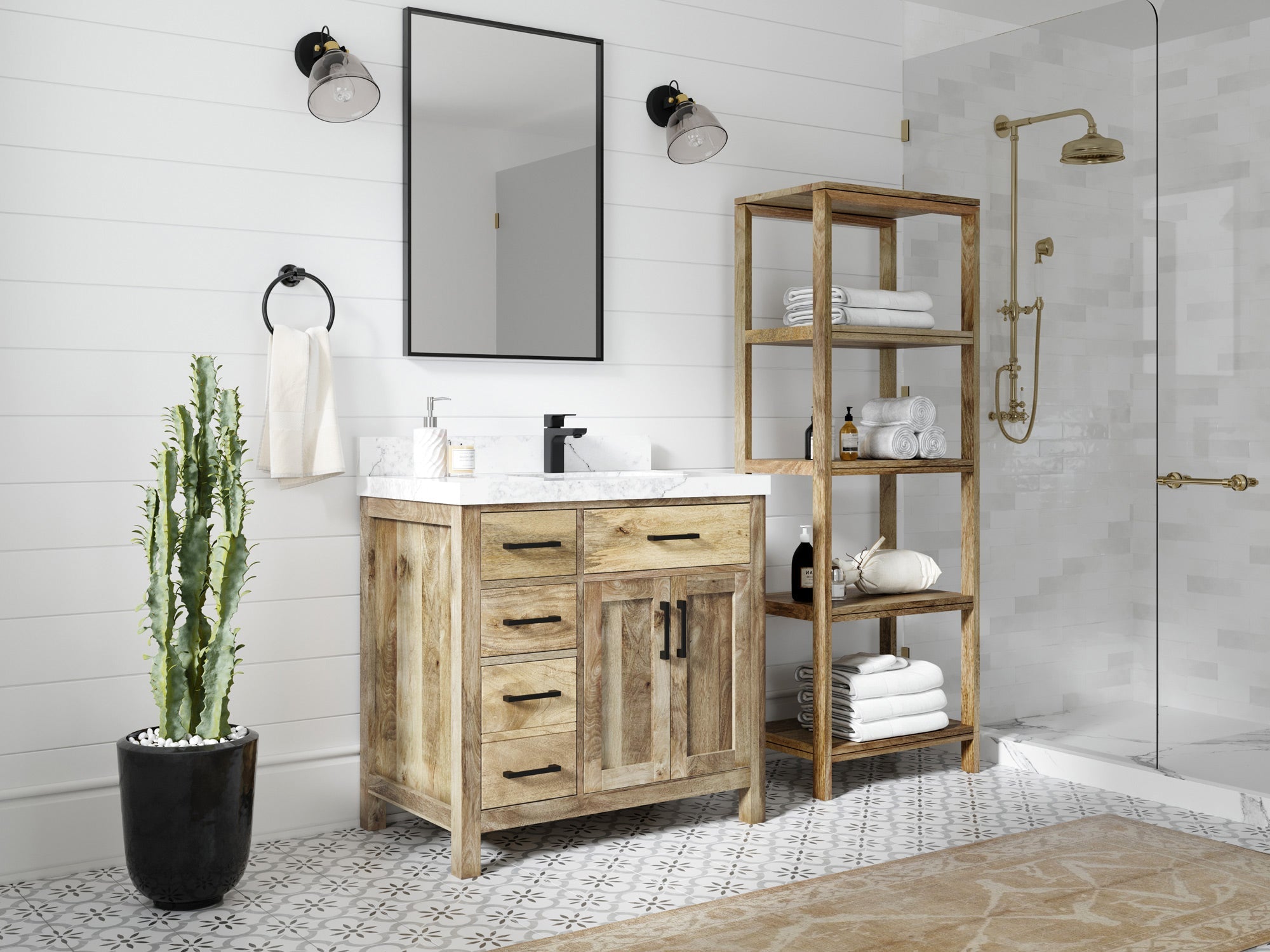
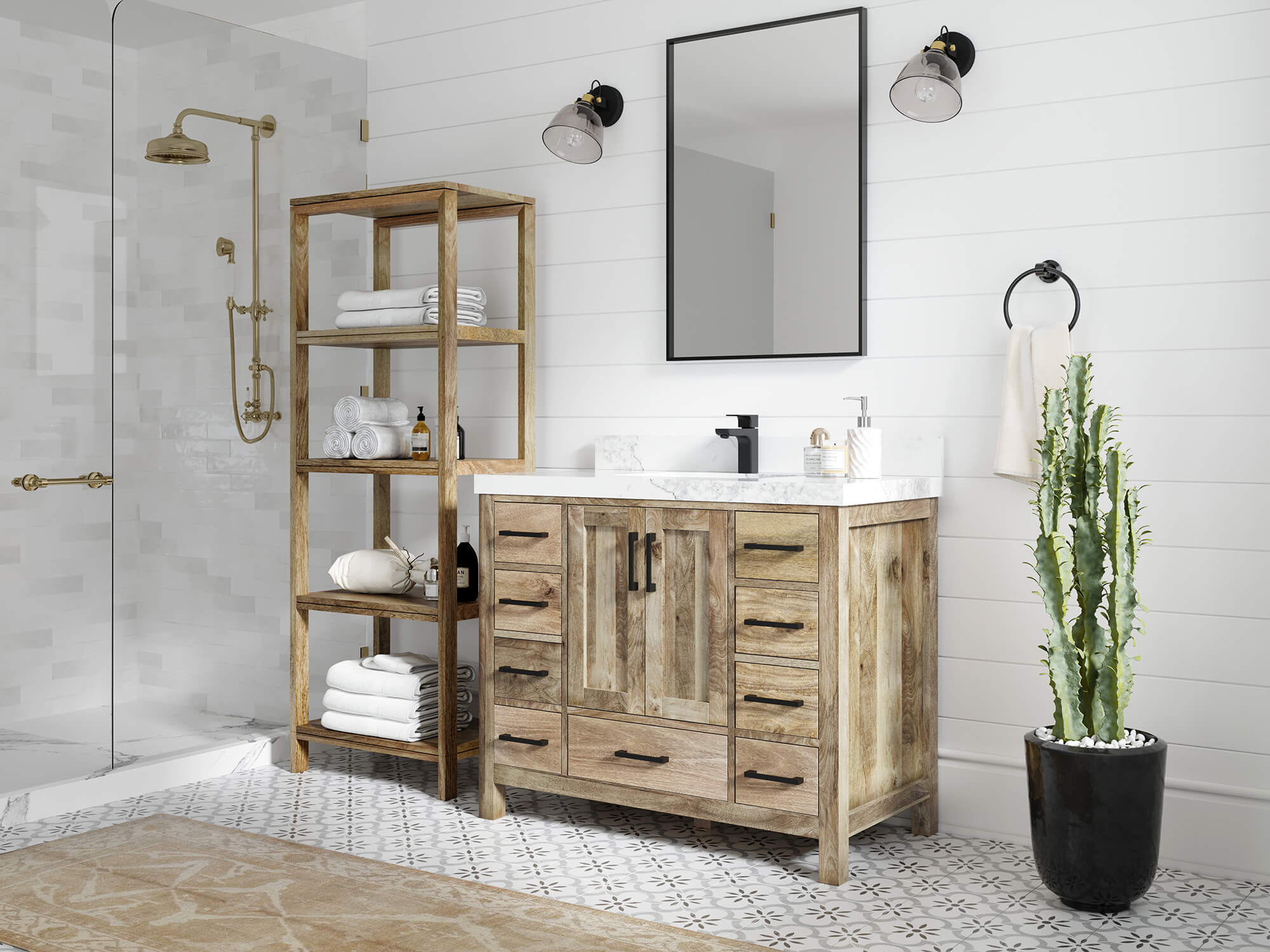
A Natural Mango bathroom vanity emphasizes the richer side of the material. The warmer wood tone allows grain texture to become more visible, especially when paired with directional lighting or stone countertops. In bathrooms with neutral palettes, Natural Mango introduces warmth without relying on darker paint colors.
Whitewashed Mango creates a completely different effect. Instead of highlighting warmth and depth, the finish softens the wood surface and produces a lighter, more relaxed appearance. A Whitewashed Mango vanity works particularly well in bathrooms where the goal is to maintain brightness while still preserving visible wood texture.
Why Mango Wood Feels Different From Standard Bathroom Cabinetry
Most bathroom cabinetry is designed to appear visually controlled and consistent. Mango wood moves in the opposite direction. The texture remains visible, the grain patterns are intentionally noticeable, and the finish feels more connected to natural materials rather than factory-coated surfaces.
This changes how the bathroom itself is perceived. The vanity becomes less of a built-in cabinet and more of a design object integrated into the room. Instead of blending into the wall color, mango wood creates softness through texture and tonal movement.
Bathrooms built around natural materials often feel more comfortable over time because the surfaces interact differently with light, stone, metal, and surrounding textures. Mango wood helps reduce the sterile feeling that can appear in bathrooms dominated by flat white or monochromatic finishes.
Mango Wood in Modern Bathroom Design
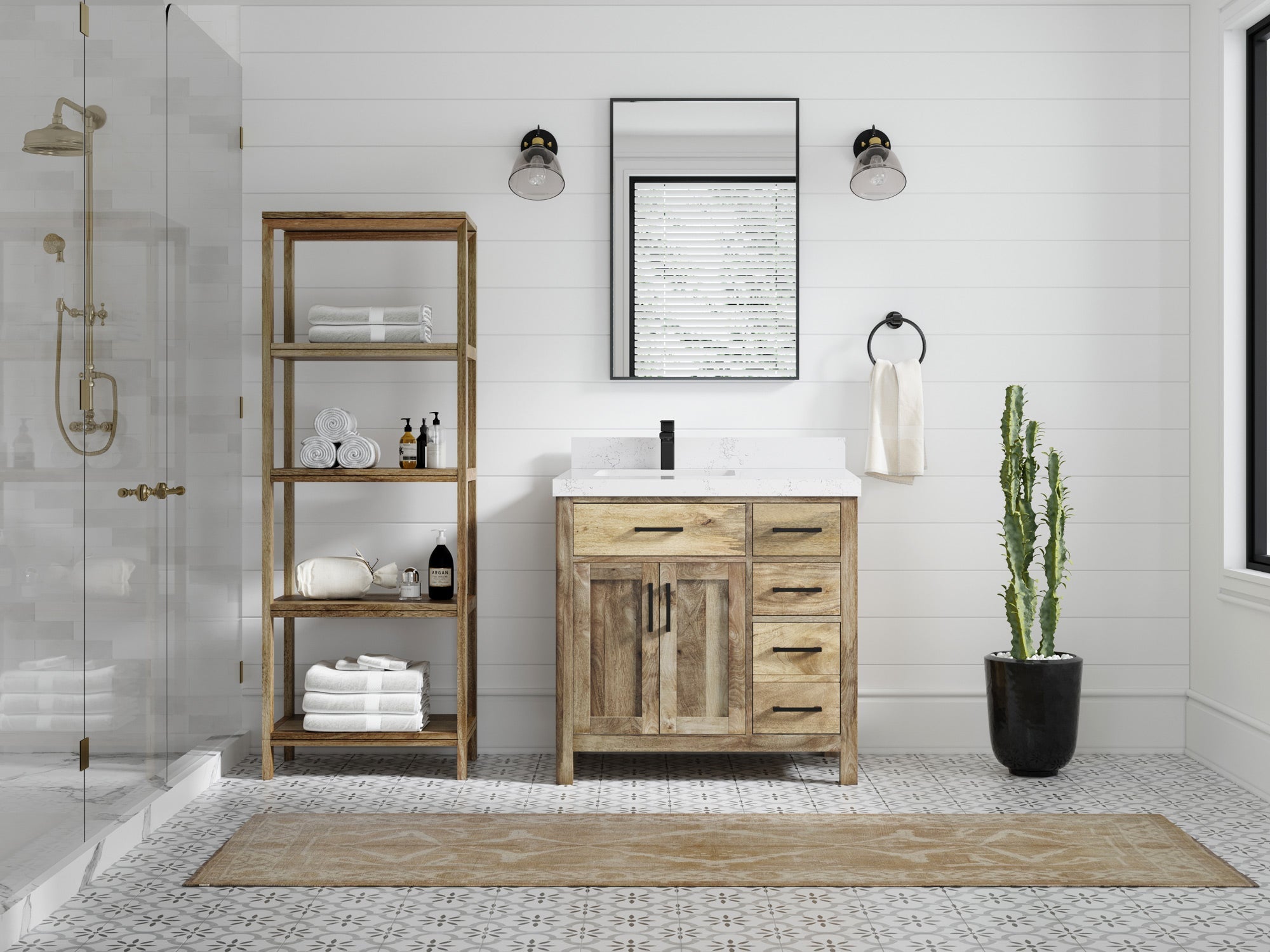
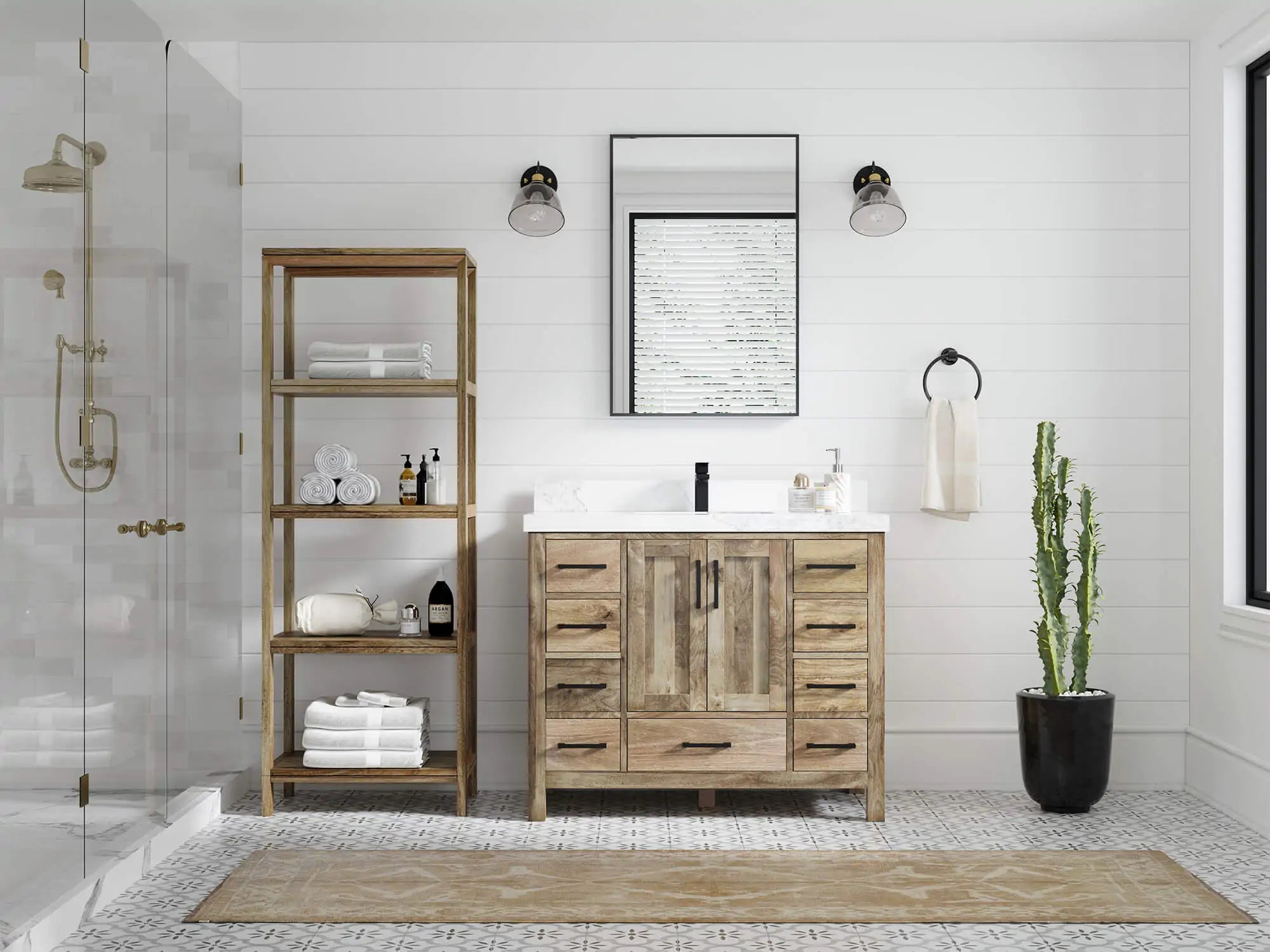
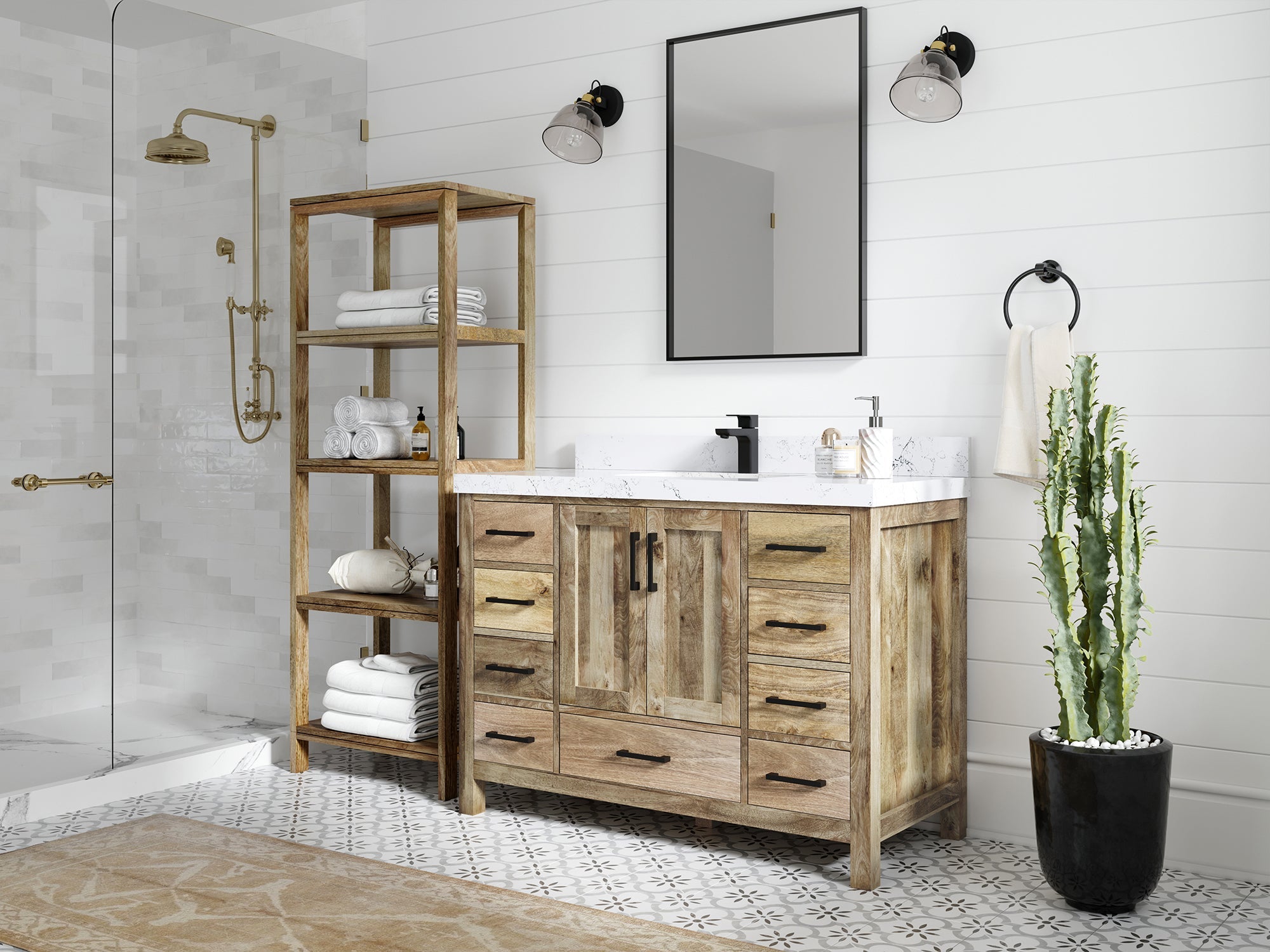
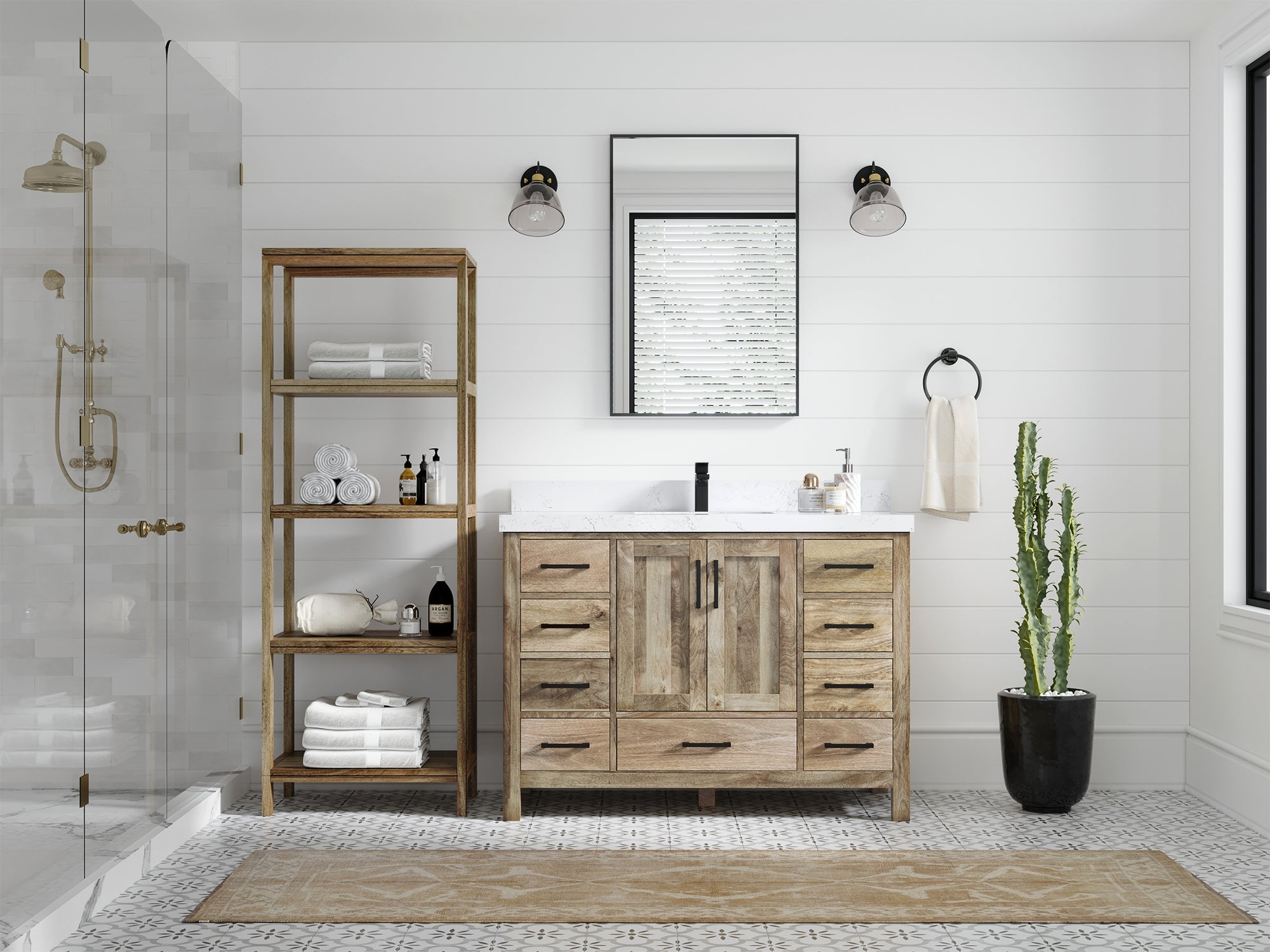
Mango wood works especially well in interiors that combine modern structure with organic materials. Clean-lined sinks, floating mirrors, stone surfaces, and matte hardware create balance when paired with textured wood grain.
A floating mango vanity creates a lighter and more architectural appearance by exposing additional floor space beneath the cabinet. The visible gap below the vanity helps emphasize the natural texture of the wood while making the bathroom feel more open.
Freestanding mango vanities create a heavier and more furniture-inspired effect. In larger layouts, a double sink mango vanity can anchor the room while still maintaining a softer visual atmosphere than painted cabinetry.
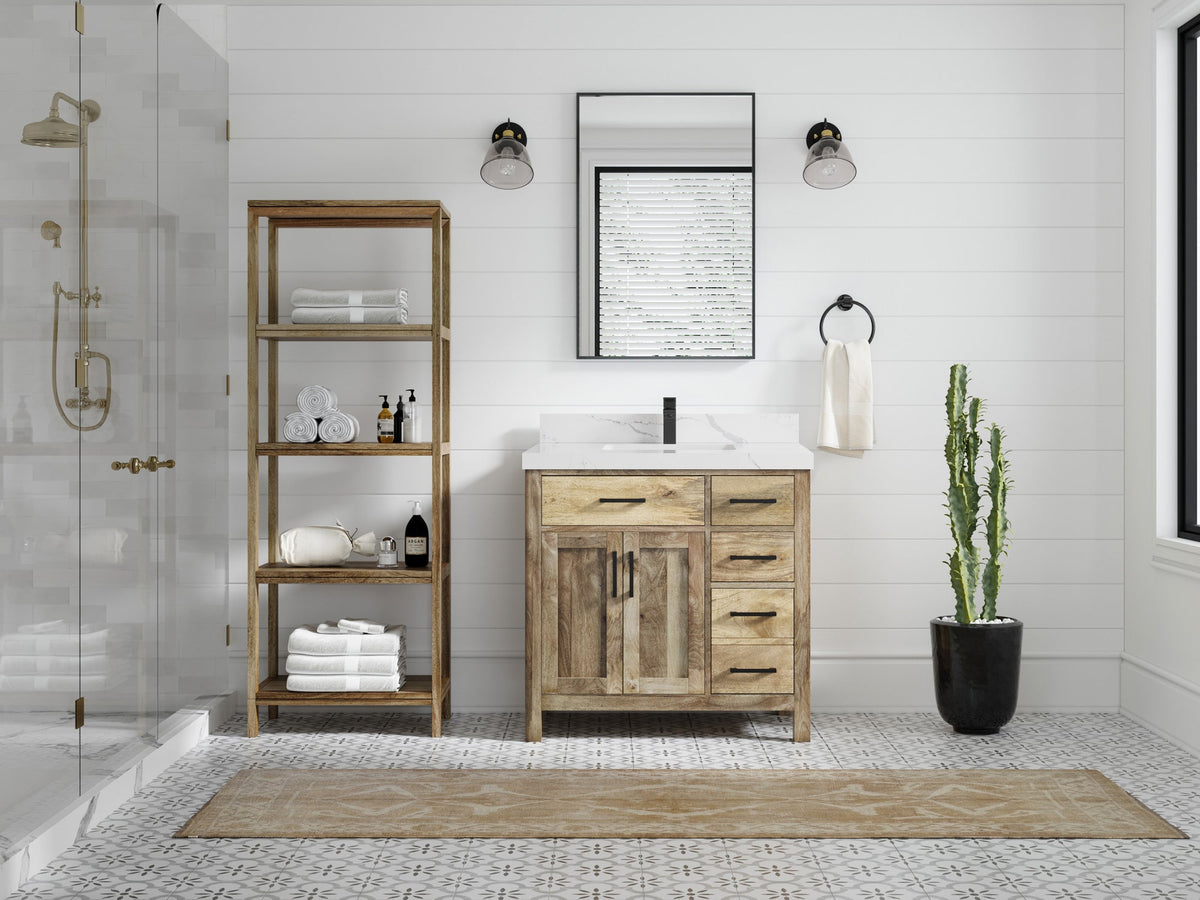
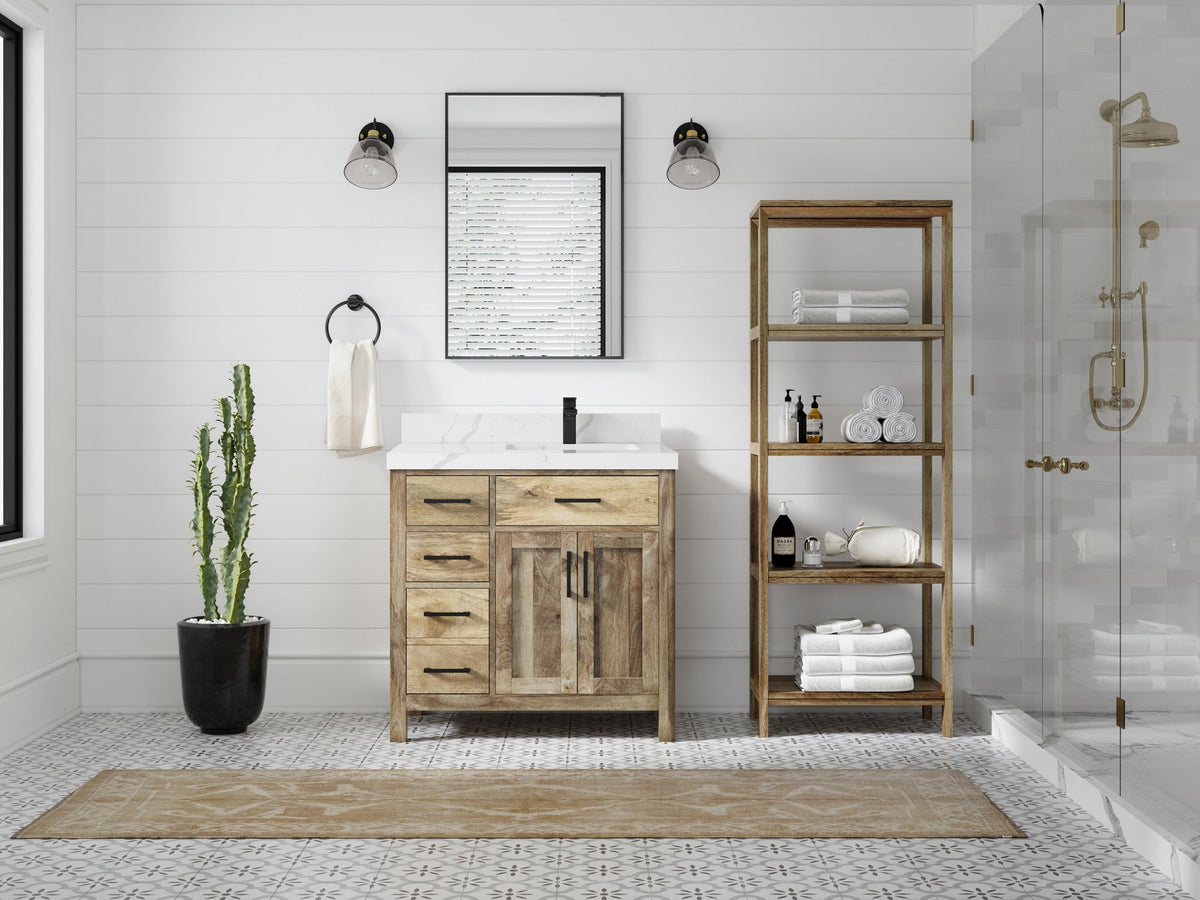
A single sink mango vanity is often more effective in compact bathrooms where texture becomes more important than scale. In smaller spaces, visible wood grain can add enough visual interest without requiring additional decorative elements.
Combining Mango Wood With Other Materials
Mango wood performs differently depending on the materials surrounding it. Against white quartz or marble surfaces, the wood grain becomes more pronounced and warmer. When paired with textured stone or concrete-inspired tile, the vanity takes on a more grounded and architectural appearance.
Brushed brass hardware tends to emphasize the warmth of Natural Mango, while matte black fixtures create sharper definition and stronger contrast. Softer metal finishes such as brushed nickel allow the wood texture itself to remain the dominant visual feature.
Bathrooms inspired by wood bathroom vanities often combine mango wood with layered neutral palettes and indirect lighting to create a calmer atmosphere. In brighter interiors, mango wood can also balance the cleaner appearance of white bathroom vanities. For more contrast-driven spaces, mango textures can work alongside deeper accents inspired by green bathroom vanities or the warmer architectural tones associated with teak wood bathroom vanities.
Shop Mango Wood Bathroom Vanities
Mango wood bathroom vanities focus less on perfect uniformity and more on texture, warmth, and natural visual variation. From the richer grain definition of Natural Mango to the softer appearance of Whitewashed Mango, each finish changes how the bathroom feels as a space.
Explore mango wood bathroom vanities in floating, freestanding, single sink, and double sink configurations to find a layout and finish that complements both the functional and visual direction of your bathroom.
Frequently Asked Questions
Is a mango wood vanity really solid wood?
Yes. The vanities in this collection are built in solid mango, an FSC-certified hardwood, so the grain you see is real rather than a printed pattern. Most mass-market vanities use MDF or particleboard; these do not.
What is the difference between Natural Mango and Whitewashed Mango?
Natural Mango keeps the warmer end of the wood tone, so the grain reads richer and more defined, especially under directional light. Whitewashed Mango softens the surface into a lighter, more relaxed finish while still letting the texture show through. Natural adds warmth to a neutral bathroom; whitewashed keeps a small or dim room feeling bright.
Does mango wood vary from piece to piece?
Yes, and that variation is the point. Grain movement, tonal shifts and small irregularities are natural to the species, so no two mango vanities are identical and none will match a catalog photo exactly. If you want a perfectly uniform surface, a painted finish is the better choice.
How do I care for a mango wood vanity in a bathroom?
Treat it like fine furniture. Wipe spills promptly, keep standing water off the wood, run the exhaust fan during and after showers, and clean with a soft damp cloth rather than abrasive pads or solvent-based cleaners.
What countertops and hardware pair best with mango wood?
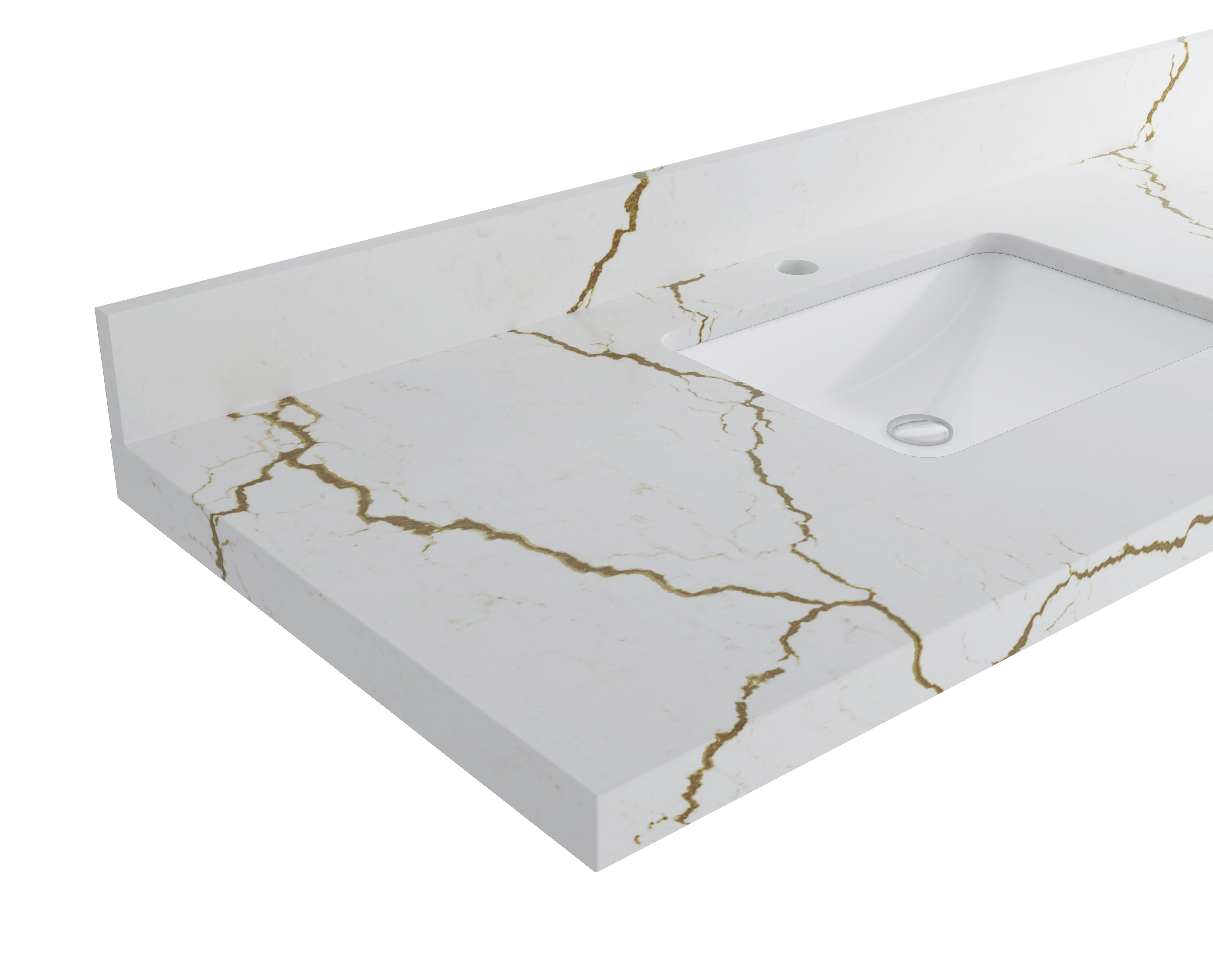
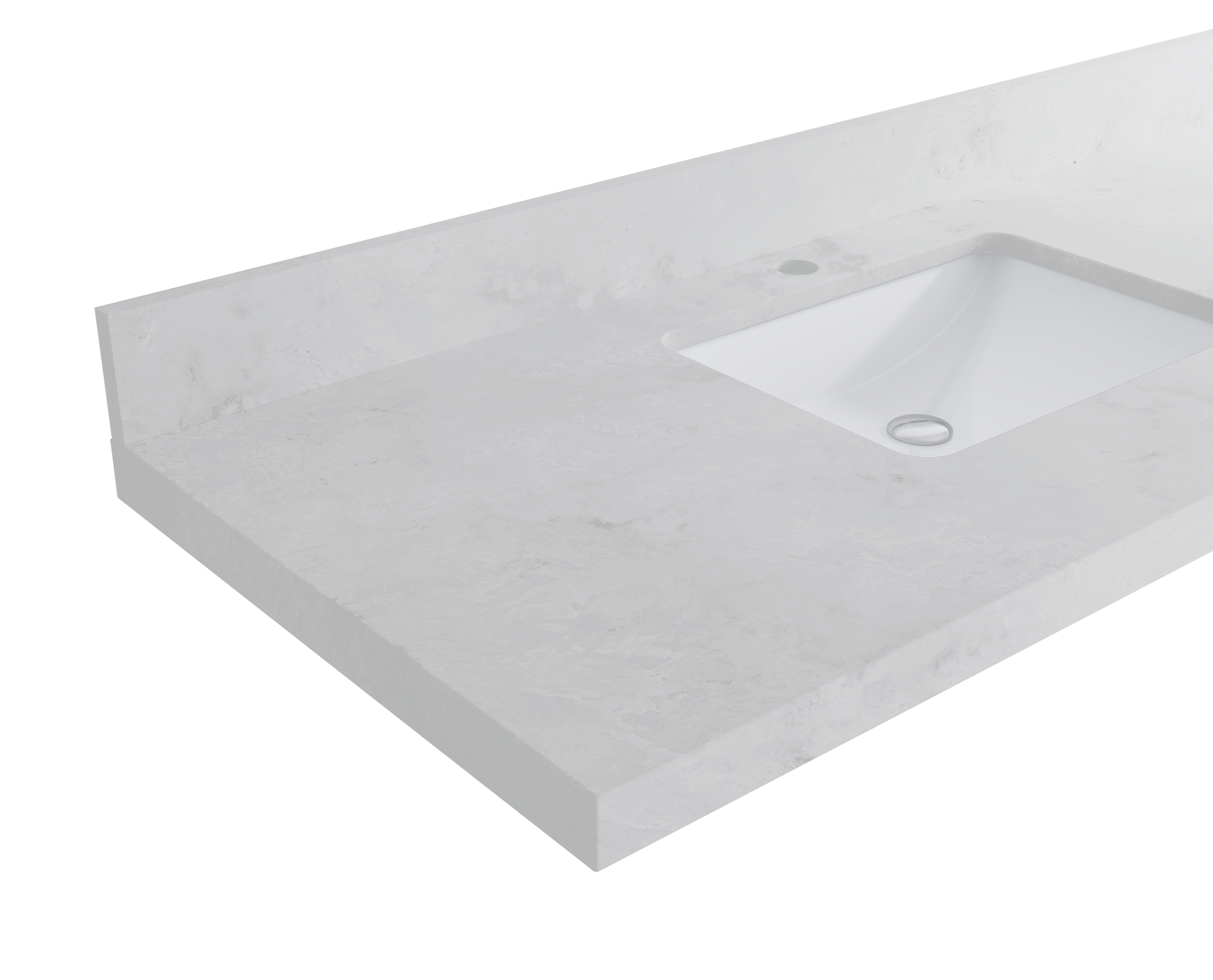
Quartz and natural Carrara marble are the widely selectable tops, with quartzite, travertine or terrazzo on select designs — so the exact stone options depend on the design. A white stone top makes the grain read warmer and more pronounced. Brushed brass emphasizes the warmth of Natural Mango, matte black creates sharper contrast, and brushed nickel lets the wood itself stay the dominant feature.
Related collections
Keep browsing: solid wood bathroom vanities, teak vanities and white oak vanities.
Questions & answers