


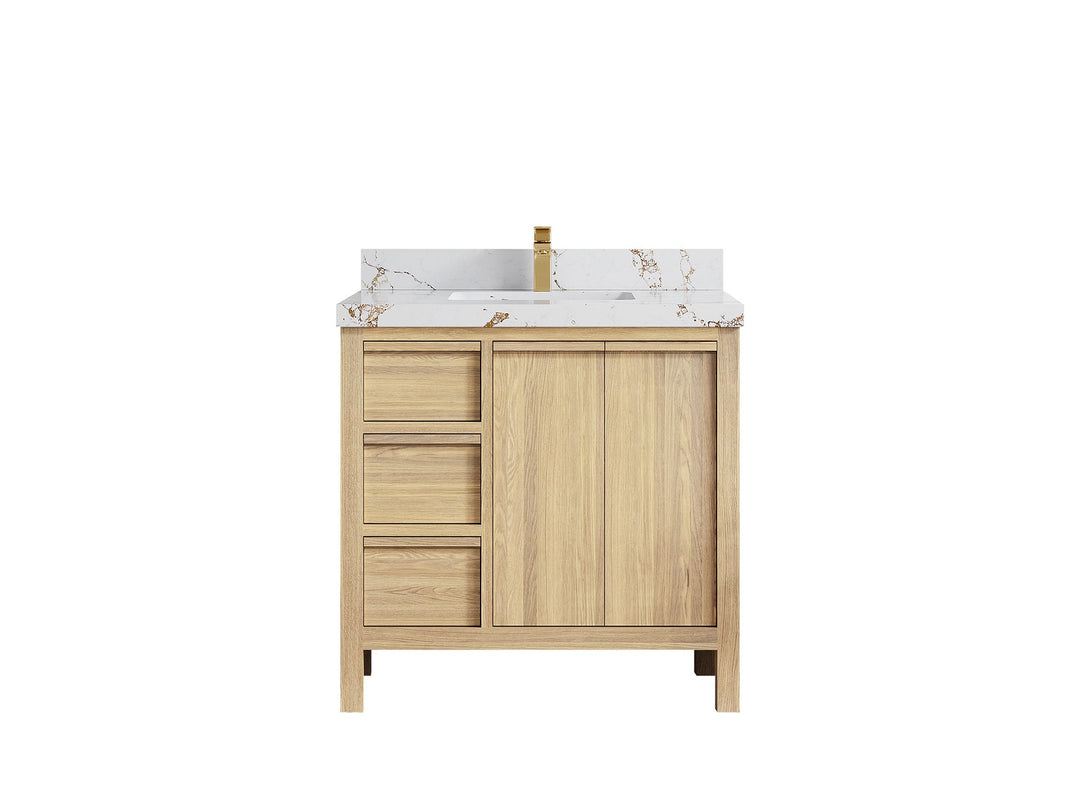
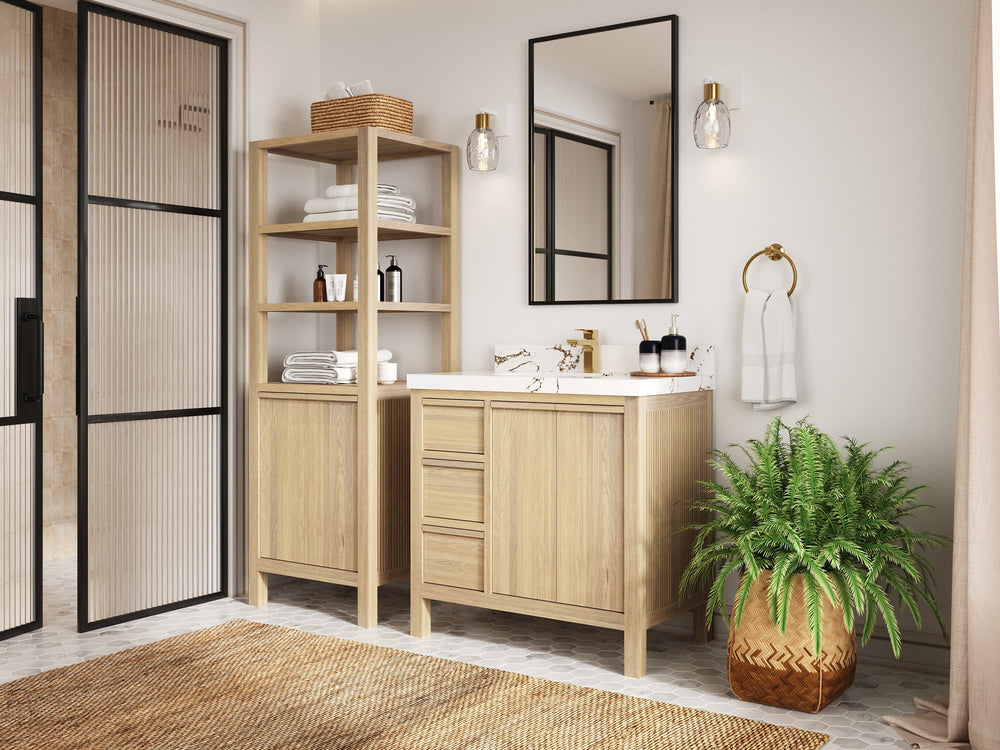


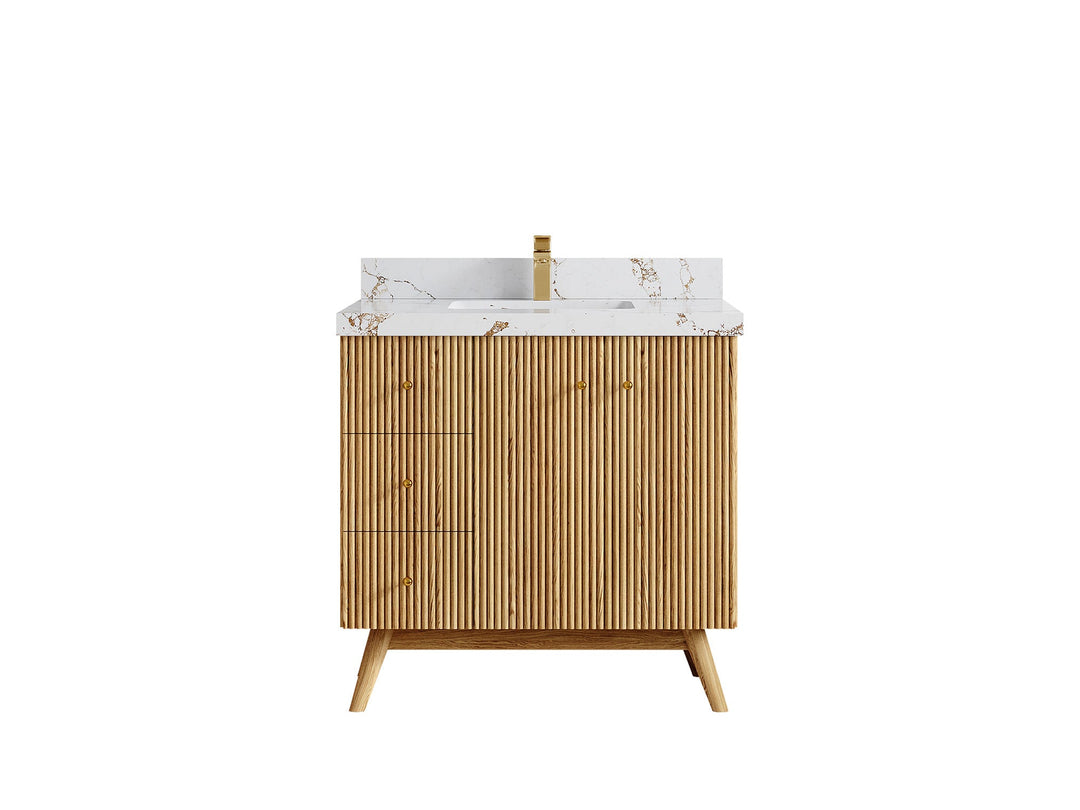
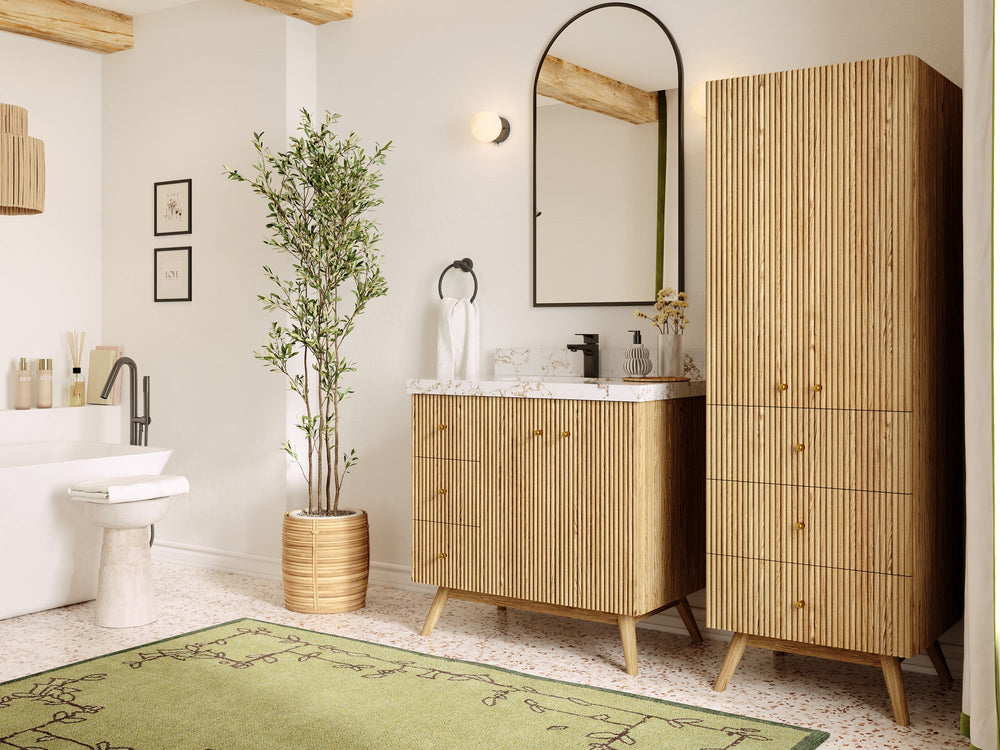


White oak bathroom vanities create a different type of visual atmosphere than darker wood cabinetry or painted finishes. Instead of becoming the strongest contrast element in the room, white oak works by introducing softness, grain texture, and warmth without making the bathroom feel visually heavy. A white oak bathroom vanity often feels lighter, calmer, and more integrated into the architecture of the space itself.
Unlike heavily stained wood tones that dominate the room, white oak reflects more natural light and allows surrounding materials to remain visually balanced. This is one of the reasons white oak has become strongly associated with modern organic interiors, Scandinavian-inspired bathrooms, and minimalist spaces that still need warmth and texture.
This collection includes finishes such as Nordic White Oak, White Oak, and Honey Oak, each creating a different interpretation of oak within bathroom design.
How White Oak Changes the Feel of a Bathroom
Wood tone affects how spacious and open a bathroom feels. White oak tends to soften the visual weight of cabinetry because the grain remains visible without becoming too dark or overly contrasted. This allows the vanity to feel substantial while still preserving brightness throughout the room.
A Nordic White Oak vanity creates one of the lightest and most minimal appearances within the oak palette. The softer tone works especially well in bathrooms that prioritize openness, indirect light, and restrained material palettes. Nordic White Oak often pairs naturally with matte finishes, pale stone surfaces, and minimalist hardware.
White Oak creates a more balanced and versatile appearance. The grain remains visible, but the finish stays neutral enough to work across multiple bathroom styles. A White Oak bathroom vanity can feel modern in one setting and more transitional in another depending on the surrounding tile, lighting, and countertop materials.
Honey Oak introduces additional warmth and depth into the bathroom. Compared with lighter oak finishes, Honey Oak creates a more inviting and furniture-inspired appearance. The warmer undertone works especially well with brass fixtures, textured walls, and layered neutral palettes.
Oak Texture and Material Balance
White oak changes how surfaces interact inside the bathroom. Flat painted cabinetry often creates visual separation between walls, flooring, and fixtures. Oak grain softens these transitions by introducing texture instead of relying only on color contrast.
This becomes especially important in bathrooms designed around natural materials. Stone countertops, textured tile, plaster-style walls, and warm metals tend to feel more cohesive when paired with oak cabinetry because the wood introduces tonal movement rather than a single flat finish.
The visible oak grain also reacts differently to lighting throughout the day. Morning light can make the wood feel softer and brighter, while evening lighting often emphasizes warmth and texture. This changing surface character helps the vanity feel less static compared with synthetic finishes.
Floating White Oak Vanities and Visual Space
A floating white oak vanity creates a cleaner and more open appearance because more flooring remains visible beneath the cabinet. The combination of exposed floor space and lighter oak texture helps bathrooms feel less crowded, especially in narrower layouts.
Floating oak vanities are often used in bathrooms where simplicity is important but the design still needs material depth. Instead of relying on decorative details, the wood grain itself becomes part of the visual composition.
In larger bathrooms, a double sink white oak vanity can create width and structure without introducing the heaviness that darker cabinetry sometimes creates. In smaller layouts, a single sink oak vanity helps maintain openness while still adding texture and warmth.
Why White Oak Remains Relevant in Long-Term Design
White oak remains popular because it avoids extremes. It is neither overly rustic nor excessively modern. This flexibility allows the material to adapt as surrounding trends and finishes evolve over time.
Bathrooms designed around white oak often age more naturally because the material itself already contains variation and texture. Small changes in lighting, hardware, mirrors, or wall color tend to complement the wood rather than compete with it.
Bathrooms inspired by wood bathroom vanities frequently use white oak to create a softer architectural atmosphere. In brighter spaces, white oak can balance the cleaner appearance of white bathroom vanities. In more textured interiors, oak tones can also work alongside finishes associated with teak wood bathroom vanities or the warmer material character of mango wood bathroom vanities.
Shop White Oak Bathroom Vanities
White oak bathroom vanities combine natural texture, lighter wood tones, and long-term design flexibility. From the soft minimalism of Nordic White Oak to the warmer depth of Honey Oak, each finish creates a different atmosphere within the bathroom.
Explore white oak bathroom vanities in floating, freestanding, single sink, and double sink configurations to find a layout and finish that fits both the practical needs and visual direction of your space.