


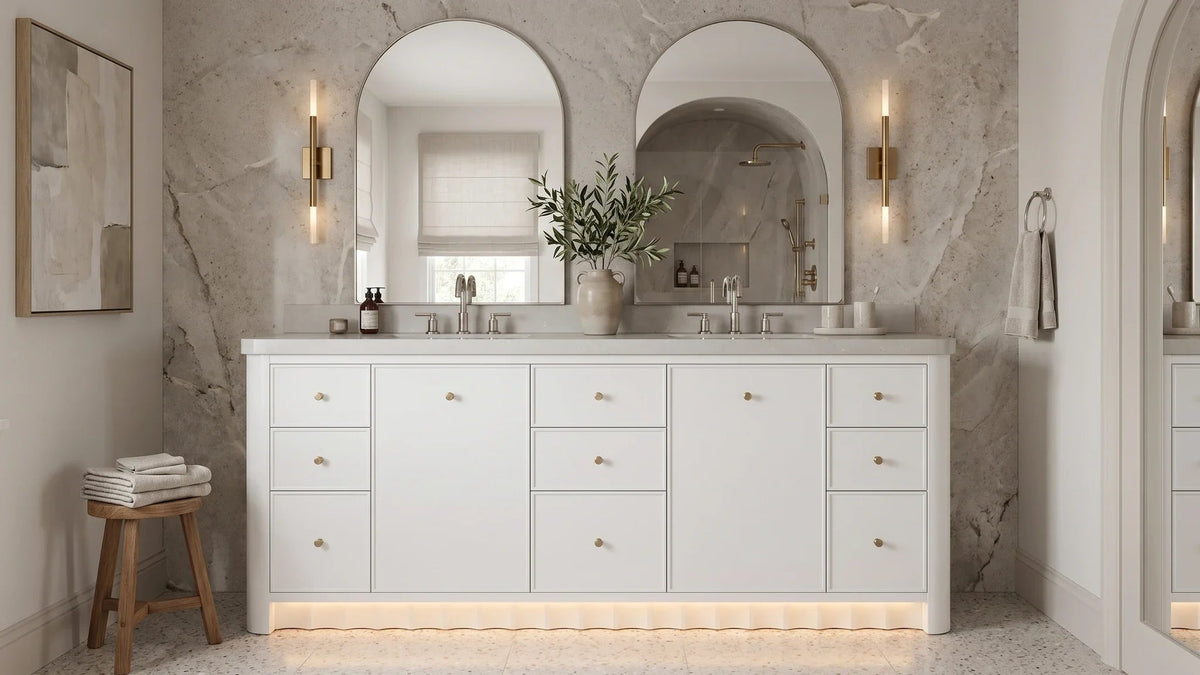
A double vanity turns a shared bathroom from a battleground into a calm, functional space. Here are the best double vanity ideas — from layout and size to finishes, storage and countertops — with solid-wood designs that deliver. (New to sizing? See our vanity size guide.)
Every Willow vanity is built from solid teak, solid white oak, or durable painted birch (mango on select pieces) — never MDF or particleboard — topped with quartz or natural Carrara marble and soft-close storage, so every idea below rests on a foundation built to last.
1. Get the Size and Spacing Right
Double vanities generally start at 60 inches so each basin has usable counter between them; 72 and 84 inches feel truly spacious. Aim for at least 30–36 inches between sink centers so two people have elbow room, and leave 30 inches of open floor in front so the room feels open.
| Width | Best for | Feel |
|---|---|---|
| 60 in | Compact shared and secondary baths | Two basins with modest counter between |
| 72 in | The most popular primary-bath double | Comfortable spacing and real storage |
| 84 in | Large suites | Spacious, with room for a central bank |
2. Warm Wood Over Cold Gray
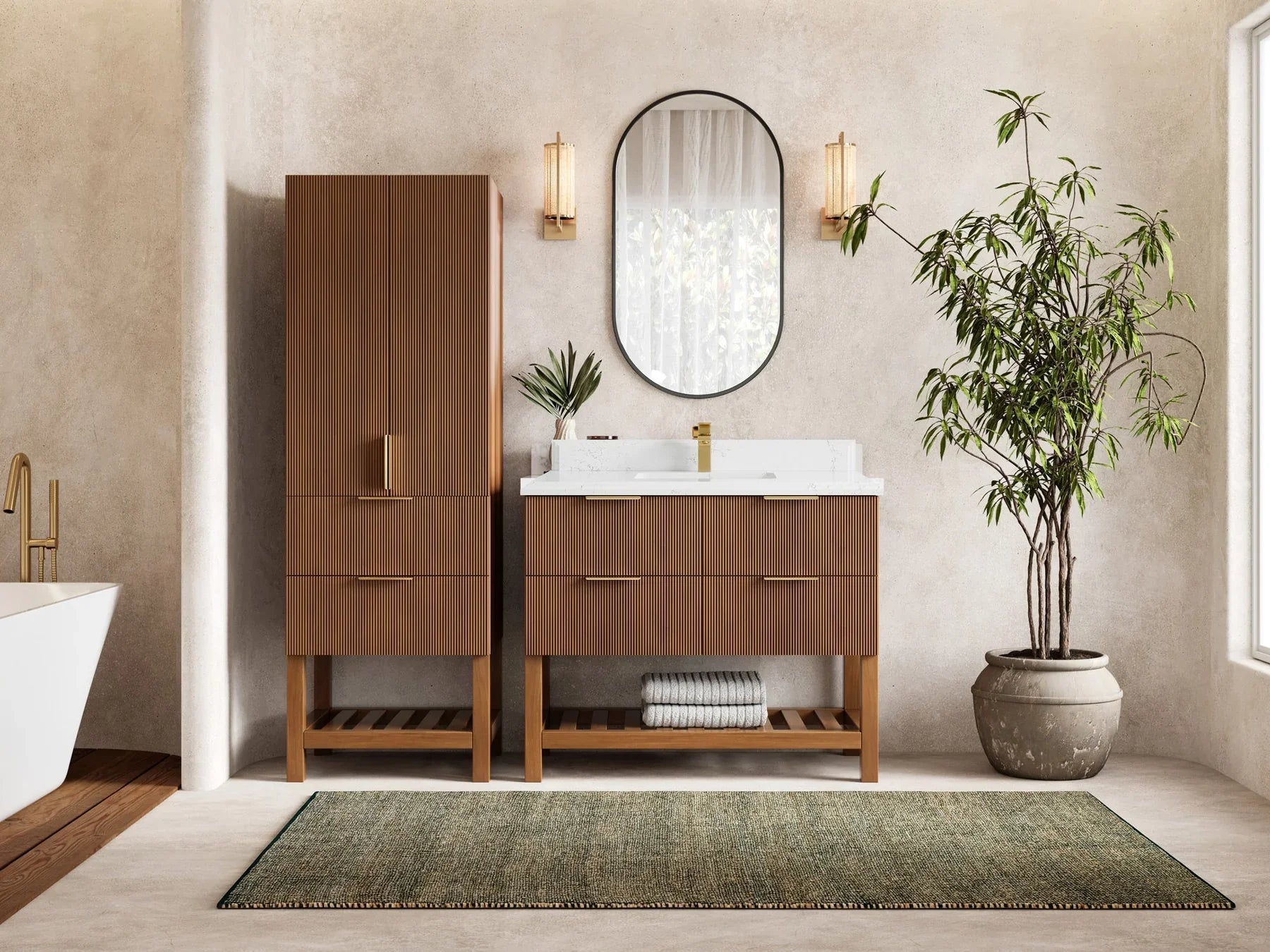
Warmth wins in a shared bath. Natural teak and light white oak double vanities replace the flat gray look and pair beautifully with brass or matte-black hardware. Because every Willow vanity is built from solid hardwood rather than particleboard, the grain is real and the piece can be refinished down the road.
Which Willow Finish Suits Your Look
- Teak: golden and warm with the best natural water resistance — the go-to for a spa feel.
- White oak: pale, contemporary grain that keeps a busy shared bath bright.
- Mango: richly figured character wood that makes a wide double vanity a focal point.
- Birch: smooth and even, a clean base for minimalist and transitional rooms.
3. Reeded and Fluted Fronts
Texture is a lasting favorite — a reeded (fluted) double vanity adds depth and a high-end feel, catching light across the drawer fronts. Our Sonoma reeded line is a best-seller in double-sink widths. Reeding pairs especially well with brass hardware and a stone top with soft veining.
4. Floating Double Vanities for a Larger Feel
Wall-mounted double vanities show the floor underneath, making even a busy shared bath feel open and modern. Floating also makes cleaning the floor easy and lets you show off statement tile. If you prefer a grounded look, a furniture-style vanity with legs delivers the same warmth with a more traditional footprint.
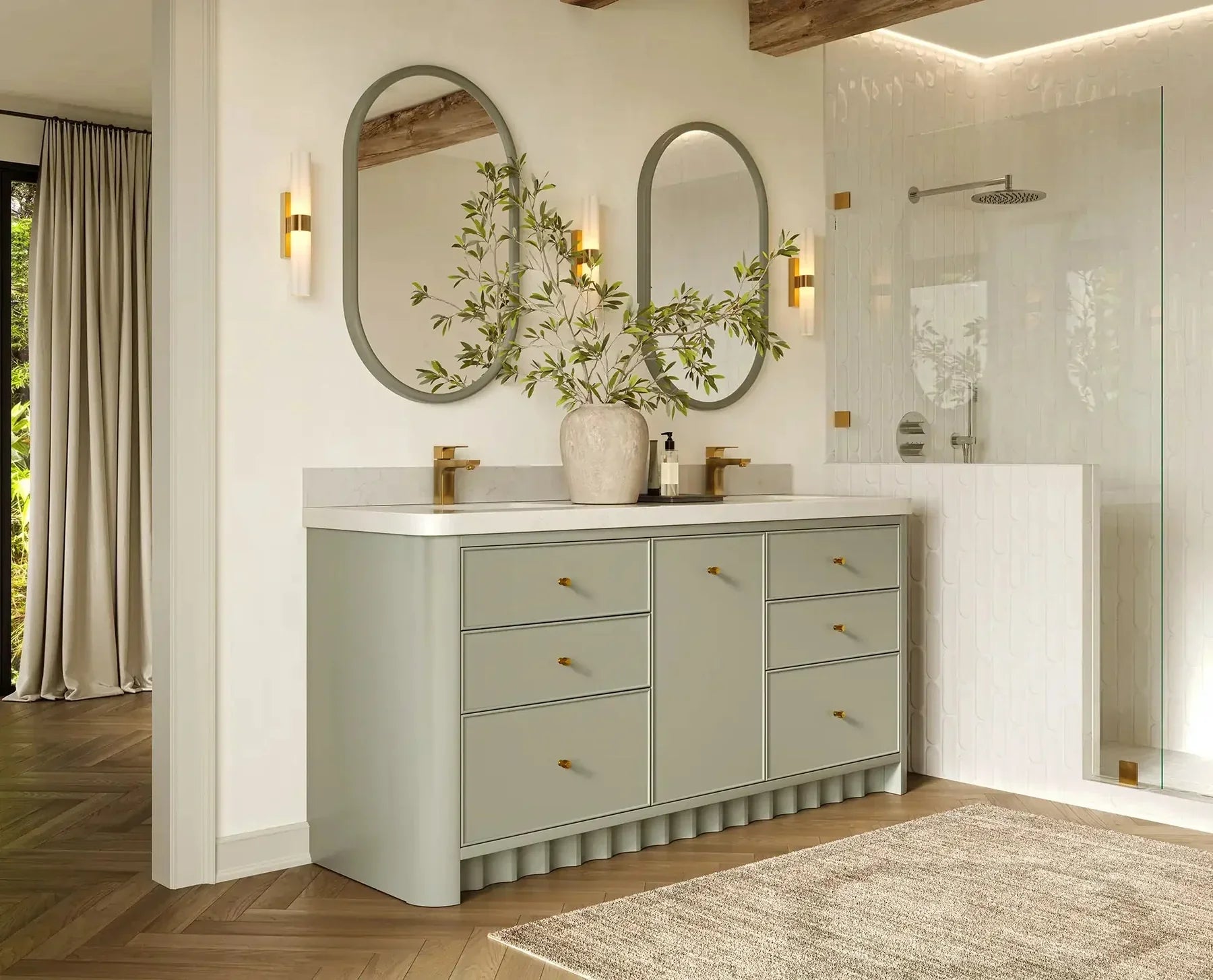
5. Symmetry: Twin Mirrors and Lights
Pair each basin with its own mirror and light, or run one large mirror across the wall to double the light. Symmetry is the signature look of a well-designed double vanity. Keep sconces at eye level and choose warm-white bulbs (2700–3000K) for flattering, even light on both sides. For more layouts, see our master bathroom vanity ideas.
6. Storage That Ends the Clutter
Look for double vanities with a central bank of soft-close drawers between the sinks — the most useful storage real estate in a shared bath. Deep bottom drawers hold hair tools, while drawers that notch around the plumbing keep the under-sink cabinets usable. Dividing the storage down the middle also gives each person a clear his-and-hers zone.
7. Statement Countertops
A wide double vanity is the place for a beautiful top — Calacatta-style quartz for a bright, low-maintenance surface, natural marble for timeless veining, or warm Taj Mahal quartzite that bridges to teak and oak. Carry the stone up as a backsplash for a seamless look. See our guide to the best countertop surfaces.
8. Hardware and Faucet Finishes
Mixed metals work, but keep it intentional: pair unlacquered or brushed brass pulls with a matching faucet for warmth, or matte black for contrast against light oak. Elongated bar pulls suit reeded and modern fronts, while knobs and cup pulls lean transitional. Coordinate the mirror frame with the hardware to tie the whole wall together.
FAQ
What is the best size for a double vanity?
Most double vanities start at 60 inches; 72 inches is the most popular for primary bathrooms, and 84 inches suits large suites. Below 60 inches, a single sink usually works better.
How much space do you need between two sinks?
Aim for at least 30–36 inches between sink centers so two people have elbow room and usable counter space between the basins.
Are double vanities worth it?
For shared and primary bathrooms, yes — they end the morning rush, add storage and counter space, and create a balanced, high-end focal point.
What are the most popular double vanity trends?
Warm solid woods like teak and white oak over cold gray, reeded and fluted fronts, floating wall-mounted designs, symmetrical twin mirrors and lighting, and statement quartz or quartzite tops with matching backsplashes.
Ready to upgrade a shared bath? Start with a solid-wood double — teak, white oak or painted birch, never MDF, with a quartz or Carrara marble top and soft-close storage.
Shop double-sink vanities · 72-inch · 84-inch.
Share:
Best Quartz Countertop Colors for Bathroom Vanities
Bathroom Vanity Lighting Guide: Fixtures, Placement & Bulbs