


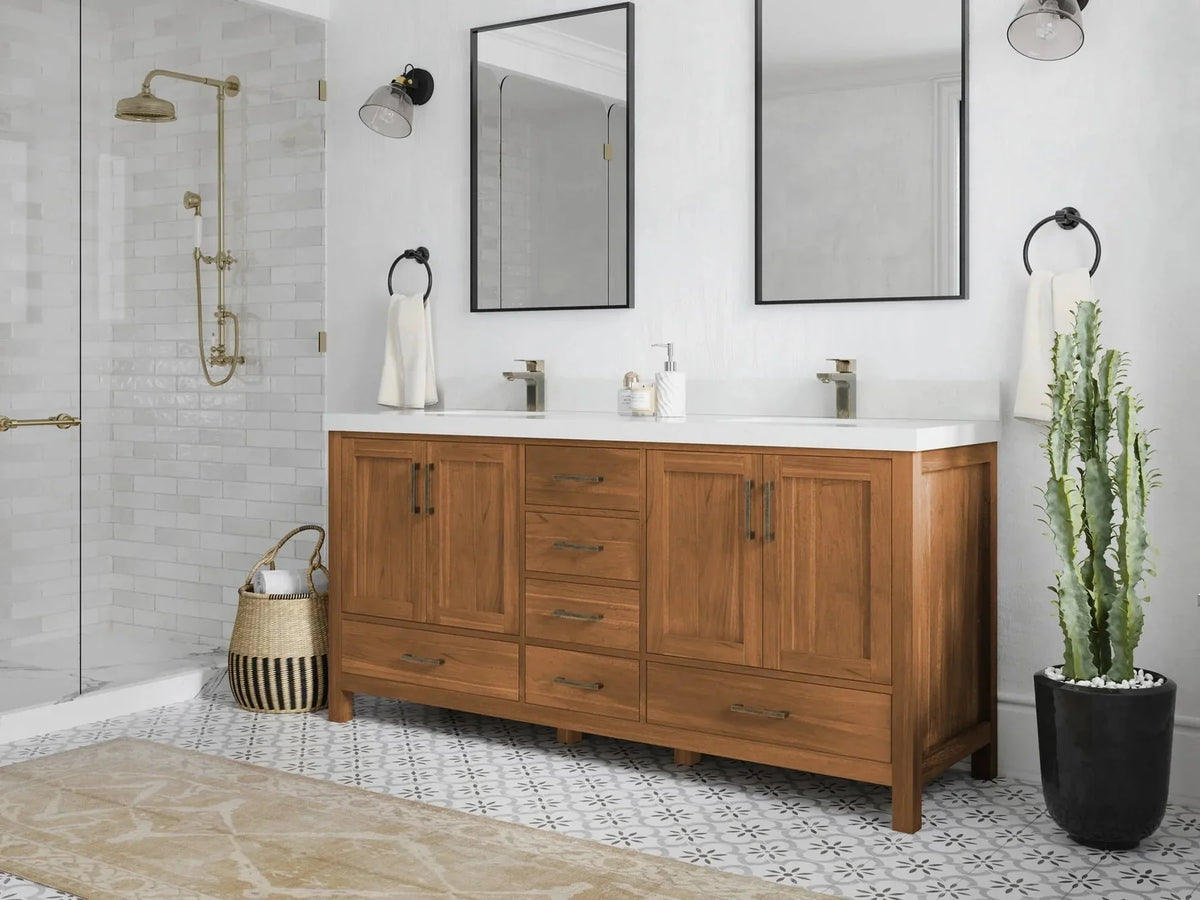
Accent walls do more than decorate a bathroom. They set the visual hierarchy for everything else in the space. It doesn't matter how much you spend on your bathroom accent walls if they don't match the vanity.
Go too neutral and you're playing it safe. Try to match the wall's energy and you risk visual noise. The balance between the wall and the vanity is where most bathroom designs either come together or feel off.
Are you wondering which bathroom vanities go best with accent walls? Read ahead.
Start With the Accent Wall, Not the Vanity

An accent wall always carries visual weight. Pattern, texture, or color immediately pulls focus, which means surrounding elements should respond rather than compete.
Busy walls benefit from restraint, while quieter walls allow for more detail elsewhere. This relationship quietly determines which bathroom vanities feel balanced instead of overpowering.
Patterned vs. Textured vs. Color-Heavy Walls
Tile patterns introduce movement, textured panels add depth, and bold paint creates contrast. Each demands a different response. The more visual activity a wall has, the simpler the cabinetry needs to be. Overdesign usually shows up when both elements fight for attention.
What Accent Walls Reveal About Your Bathroom Style
Accent walls often signal the broader aesthetic. Moroccan and farmhouse styles lean warm and layered, while modern and spa-inspired spaces favor simplicity. That context guides whether sleek or detailed bathroom vanities make sense without needing heavy decoration elsewhere.
Choosing Vanity Materials That Don’t Clash
Material choice often matters more than color. Highly reflective finishes amplify visual noise, especially near bold walls. Softer materials absorb light and help ground the space.
Why Natural Wood Finishes Work Better Than High Gloss
Wood tones introduce warmth without overwhelming the room. A white oak vanity works particularly well because it sits between modern and traditional styles. Which allows accent walls to remain the focal point without the vanity fading into the background.
Painted Vanities and Accent Walls: When It Works, When It Fails
Contrast usually works better than matching. Dark cabinetry can anchor light walls, while pale finishes suit deeper tones. Durability also matters, as poor paint quality becomes more noticeable when surrounded by strong visual elements.
Color Balance Is More Than Matching Shades

Exact color matching often feels flat. Designers focus instead on undertones. Warm walls pair better with warm neutrals, while cool palettes benefit from contrast.
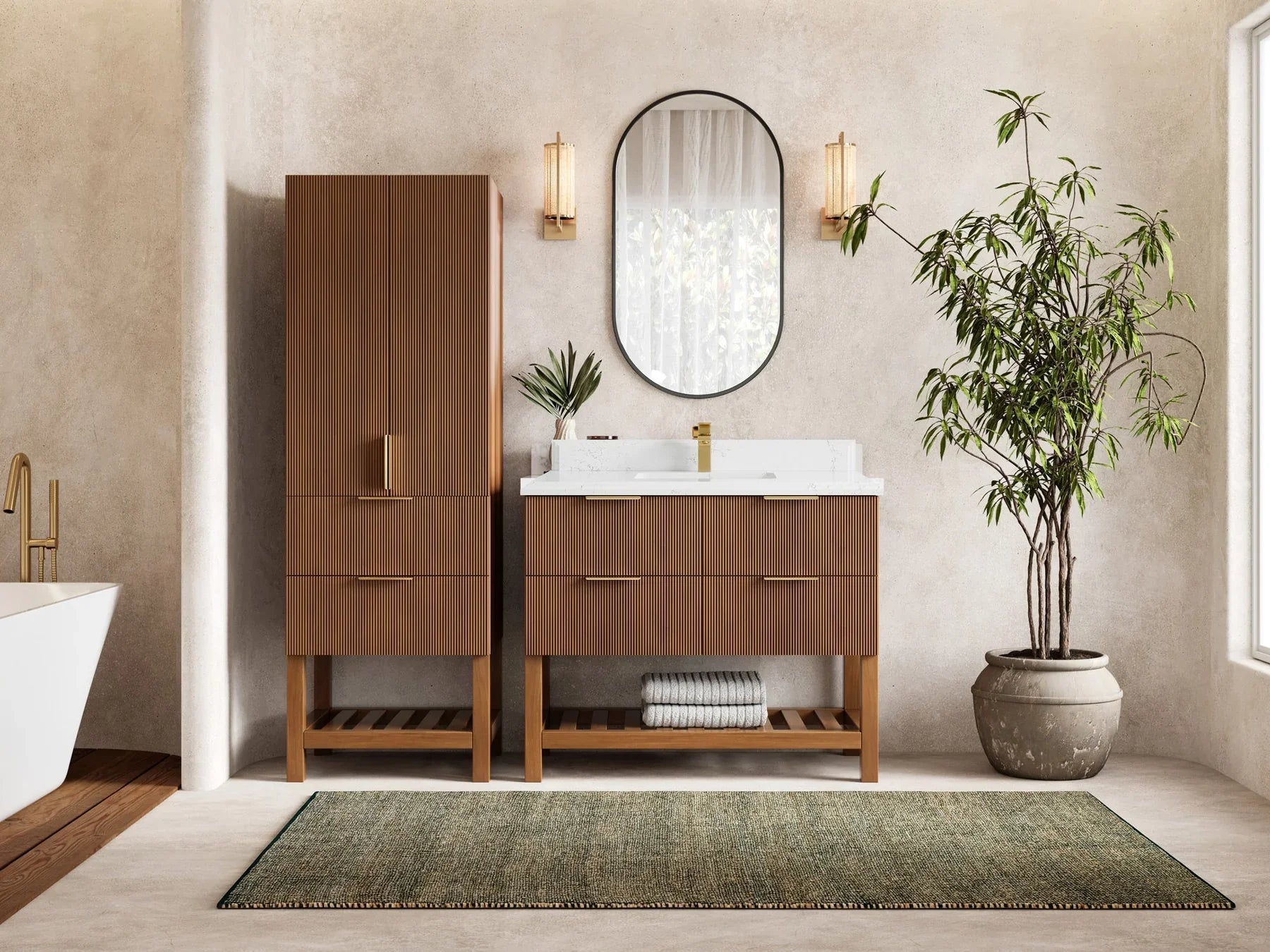
Bold colors like terracotta or emerald gain sophistication when paired with wood or soft matte finishes. A second white oak vanity mention fits naturally here because it tempers intensity without dulling character.
Countertops Can Make or Break the Look
The surface above the vanity often decides whether the space feels cohesive or cluttered. Material, veining, and finish all interact directly with the accent wall.
Picking the Right Bathroom Sink Countertop Finish
Quartz offers consistency, marble adds movement, and solid surfaces calm the eye. Patterned walls usually pair best with subtle veining. A well-chosen bathroom sink countertop supports the wall instead of competing with it.
Integrated Sinks vs. Statement Basins
Integrated designs reduce visual noise when walls are expressive. Sculptural basins work best when the wall plays a supporting role. Balance matters more than drama.
Buying Mistakes That Show Up After Installation
Common mistakes become obvious only after installation:
-
Choosing the vanity before finalizing the wall.
-
Ignoring hardware finishes.
-
Overdesigning both elements.
Restraint usually ages better than complexity.
FAQs About Bathroom Vanities and Accent Walls
Do accent walls limit vanity color choices?
Accent walls narrow options, but they do not restrict them. Strong walls simply require more intentional pairing.
Is a white oak vanity safe for bold accent walls?
Yes. Wood tones soften intensity and prevent bold walls from feeling harsh.
Which bathroom sink countertop works best with patterned tiles?
Subtle finishes with minimal veining usually balance patterned walls best.
Should the vanity or accent wall be the focal point?
One element should lead. When both compete, the space feels unsettled.
In Summary
Strong bathrooms feel intentional because one element leads and the rest respond. Accent walls already carry visual weight, so cabinetry, finishes, and surfaces should support rather than compete.
Material choice, proportion, and restraint is more important than matching colors or trends. When decisions start with the wall and move towards the bathroom vanities, the space settles into balance and stays visually comfortable long after installation.
For designs that balance statement walls with timeless cabinetry, Willow Bath And Vanity offers options that make coordination feel intentional instead of overwhelming. Visit us today!
Explore: white oak vanities · solid wood vanities · black vanities · quartz countertops
Share:
Why Downsizing to a 30-Inch Vanity Can Improve the Whole Bathroom
Why Designers are Swapping Double Sinks for a Big Single Sink Vanity