


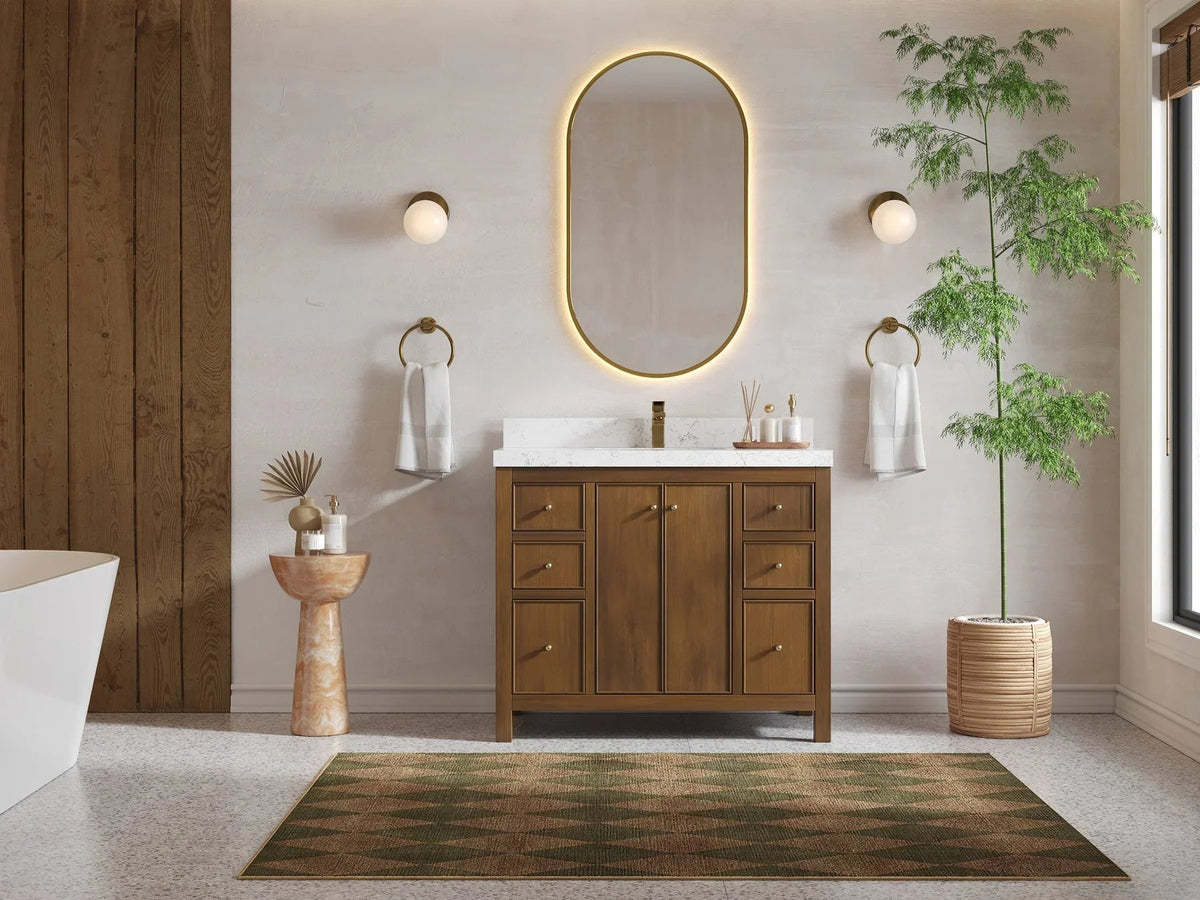
A natural wood vanity already does something many bathroom fixtures cannot. It adds warmth, texture, and character without trying too hard. But problems start when decoration ignores that strength and covers it with plastic organizers, trend-driven accessories or short-life décor.
Zero-waste decorating takes a different path. It focuses on reuse, restraint, and materials that feel natural alongside wood. The result looks intentional and not improsized. Whether the bathroom features a natural wood vanity or not, the same principles apply. Decorate less. Choose better. Let the material speak.

Let the Wood Lead the Design
A natural wood vanity already sets the tone for the bathroom. Its grain, warmth, and texture act as the visual anchor, so decoration should follow its lead rather than compete with it.
Before adding anything, clear the surface completely and look at the wood itself. Notice the colour, the pattern, and the finish. That observation tells you what belongs and what does not.
Decoration works best when it supports the natural wood vanity’s character. Natural materials like stone, ceramic, linen, and clear glass sit comfortably beside timber. Glossy plastics and trend-heavy accessories usually feel out of place and shorten the life of the design.
Turn Everyday Items Into Intentional Decor
Zero-waste decorating starts by rethinking what already exists. Many daily-use items can double as décor when chosen and placed thoughtfully.
A glass jar holding cotton pads or a ceramic cup used for brushes adds function without visual noise. Grouping daily items on a small tray helps the single sink vanity feel organized instead of cluttered. But for a double sink vanity, it creates balance without needing duplicate décor on each side.
The key is restraint. If an item does not serve a daily purpose or improve the look of the space, it does not belong on the counter.
Use Existing Textiles to Add Softness
Bathrooms often generate unnecessary waste through decorative textiles that get replaced quickly. Instead of buying new pieces, repurpose what is already available.
Old linen shirts, scarves, or neutral fabric remnants work well as drawer liners or soft surface accents. Worn towels can be cut into reusable cleaning cloths and stored neatly under the vanity. On larger vanities, especially double vanity setups, a single folded fabric piece can soften the space without overwhelming it. And these small touches add warmth while keeping waste to a minimum.
Add Greenery Without Buying More Stuff
Plants bring life to a bathroom but they do not need plastic pots or frequent replacements. A cutting placed in a reused glass bottle or a small plant that thrives in humidity fits naturally beside wood.
Dried eucalyptus or locally gathered branches offer a low-maintenance option that still feels intentional. Artificial plants tend to clash with natural wood vanity and undermine the calm, grounded look that zero-waste styling aims to achieve.
Reduce Visual Clutter by Changing Products, Not Decor

Often, the biggest source of clutter on a natural wood vanity is packaging. Swapping disposable products for refillable or solid alternatives cleans up both the look and the waste footprint.
Bar soaps, shampoo bars, and refillable glass dispensers reduce plastic while keeping the vanity visually simple. These changes are especially effective in smaller bathrooms, where a single sink vanity can feel crowded very quickly.
Use Wall Space to Keep the Vanity Clear
Zero-waste styling is as much about removal as it is about addition. Moving items off the vanity surface instantly makes the space feel calmer.
Reclaimed wood shelves, vintage hooks, or wall-mounted baskets reduce the need for countertop storage. In bathrooms with a double vanity, shared wall storage also prevents unnecessary duplication of products. When the counter stays mostly clear, the wood becomes the focal point again.
Care for the Wood So It Needs Less Styling
A well-maintained natural wood vanity does not need decorative distraction. Gentle cleaning with mild soap, avoiding harsh chemicals, and occasional conditioning with natural oils or beeswax keeps the surface looking rich and healthy. When the wood looks good on its own, decoration becomes minimal by default.
FAQs
Does zero-waste décor still work in modern bathrooms?
Yes. Clean lines, natural materials, and fewer objects often look more modern than trend-driven décor.
Is this approach practical for everyday use?
Very. Because the focus stays on daily-use items, the vanity remains functional rather than ornamental.
Does it suit both double and single sink vanities?
Absolutely. The principles stay the same; only the scale changes.
How many items should stay on the vanity top?
Only what gets used every day. Everything else belongs in storage.
Conclusion
Decorating a natural wood vanity with zero-waste materials is not about adding more. It is about knowing when to stop. When the wood is respected and the surface stays purposeful, the bathroom feels calmer, cleaner and more intentional.
This approach works just as well for a wide double sink vanity as it does for a compact single vanity. The difference is not size. It is discipline. Fewer objects. Better materials. Thoughtful placement.
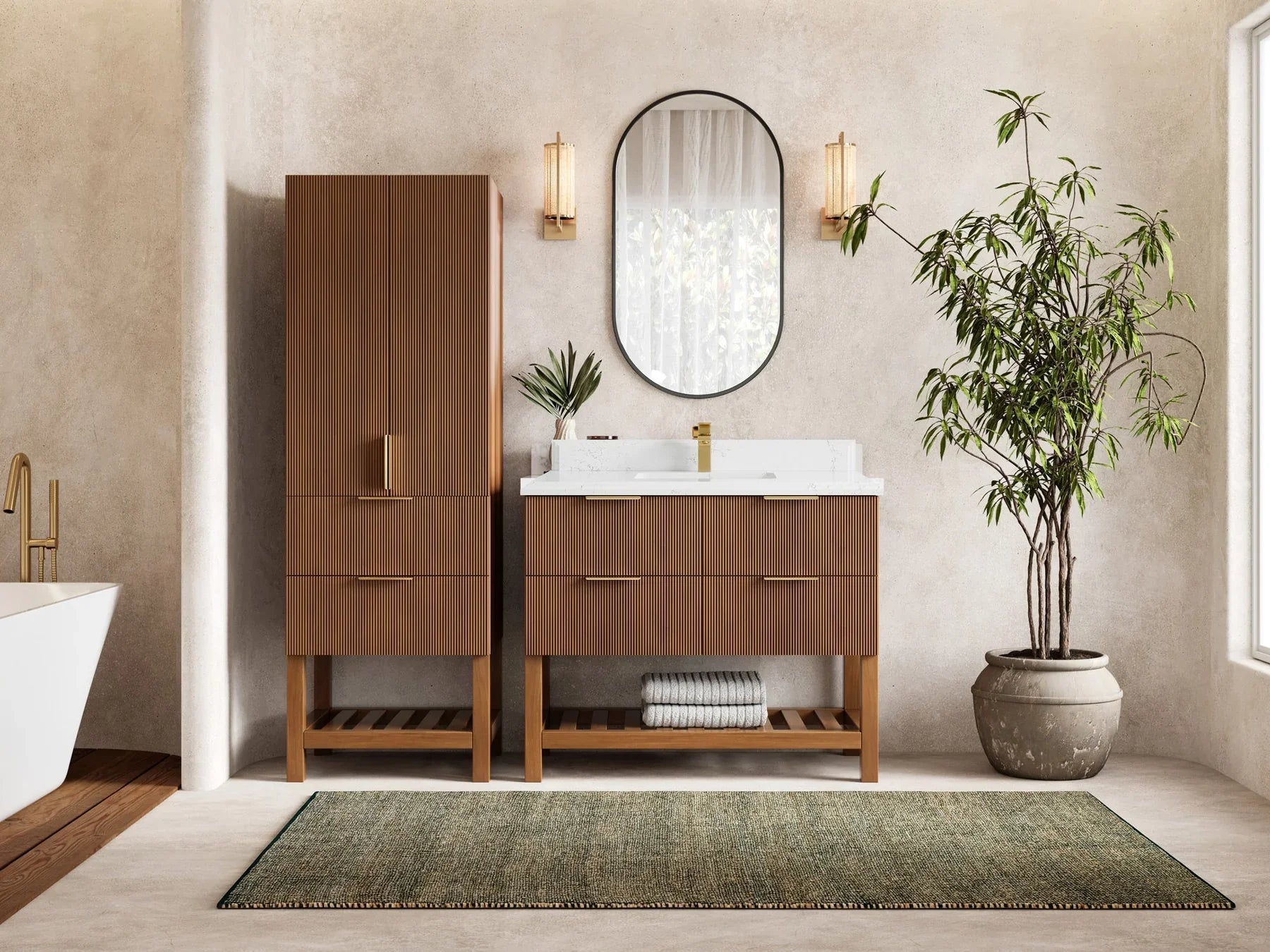
When the natural wood vanity itself is built with longevity and quality in mind, sustainable decorating feels natural rather than forced. Willow Bath And Vanity creates natural wood vanities designed to stand on their own, making zero-waste styling a choice that feels effortless, not restrictive. Visit us today!
Share:
Which Abstract Mirror Styles Work Best With Modern Bathroom Vanities
How to Tell If a Bathroom Vanity Is Good Quality