


Taj Mahal quartzite is one of the most popular natural-stone choices for bathroom vanity tops — prized for its warm, creamy color and exceptional durability. If you love the soft look of marble but want a surface that stands up to real, everyday bathroom use, a Taj Mahal quartzite vanity top is worth a close look. Here is what to know before you choose it. (For how it stacks up against every other surface, see our guide to the best countertop surfaces.)
What Is Taj Mahal Quartzite?
Despite the name, quartzite is not the same as engineered quartz. Quartzite is a 100% natural stone — it begins as sandstone and is metamorphosed deep in the earth under intense heat and pressure until the quartz grains fuse into an extremely hard, dense stone. Taj Mahal is a specific quartzite variety quarried in Brazil, recognized for a warm ivory-to-beige field crossed by soft, understated gold and gray veining. Every slab is quarried from natural rock, so the exact veining pattern is one of a kind.
Taj Mahal vs. Marble vs. Quartz
It helps to know how Taj Mahal differs from the two surfaces it is most often confused with:
| Surface | What it is | Durability & care |
|---|---|---|
| Taj Mahal quartzite | Natural metamorphic stone | Very hard, heat- and scratch-resistant; reseal periodically |
| Carrara marble | Natural calcium-based stone | Softer; etches with acids; more upkeep |
| Engineered quartz | Ground stone bound with resin | Non-porous, no sealing; man-made, uniform look |
In short: Taj Mahal gives you a warm, veined look similar to marble, but it is much harder and far more resistant to etching and scratching. And unlike engineered quartz, it is genuine natural stone — which is exactly why no two tops are identical.
The Look and Why It Is Popular
Taj Mahal’s appeal comes down to its warm neutral palette. Where stark white marble or bright white quartz can feel cool and clinical, Taj Mahal reads soft and inviting, with creamy beige tones and gentle veining that add movement without shouting. That warmth is what makes it such a natural companion for real wood. It bridges traditional and modern bathrooms with ease, and because the background is a versatile neutral, it works with almost any wall color, tile, or fixture finish you pair it with.
Durability and How It Compares
Quartzite is one of the hardest natural stones used for countertops — typically harder than marble and highly resistant to scratches and heat. For a bathroom vanity, that means a Taj Mahal quartzite vanity top shrugs off daily use, holds its polished surface for years, and is not easily marked by everyday grooming tools or a hot styling appliance set down briefly. Compared with marble, it is meaningfully more durable and less prone to etching. That said, it is still natural stone: it is slightly porous, so it benefits from periodic sealing to stay its best. It is exceptionally tough, but it is not truly “maintenance-free,” and we would rather be honest about that up front.
Care and Sealing
Caring for Taj Mahal is simple once you know the basics:
- Everyday cleaning: Wipe with mild soap and warm water and a soft cloth. Skip harsh or acidic cleaners — vinegar, citrus, and bathroom scrubs with acid can dull natural stone over time.
- Wipe up standing water and spills promptly, especially anything acidic like whitening toothpaste or cosmetics.
- Reseal periodically — typically about once a year, though it depends on use. Sealing keeps the slightly porous surface resistant to water spots and staining.
Pairing With Solid-Wood Vanities
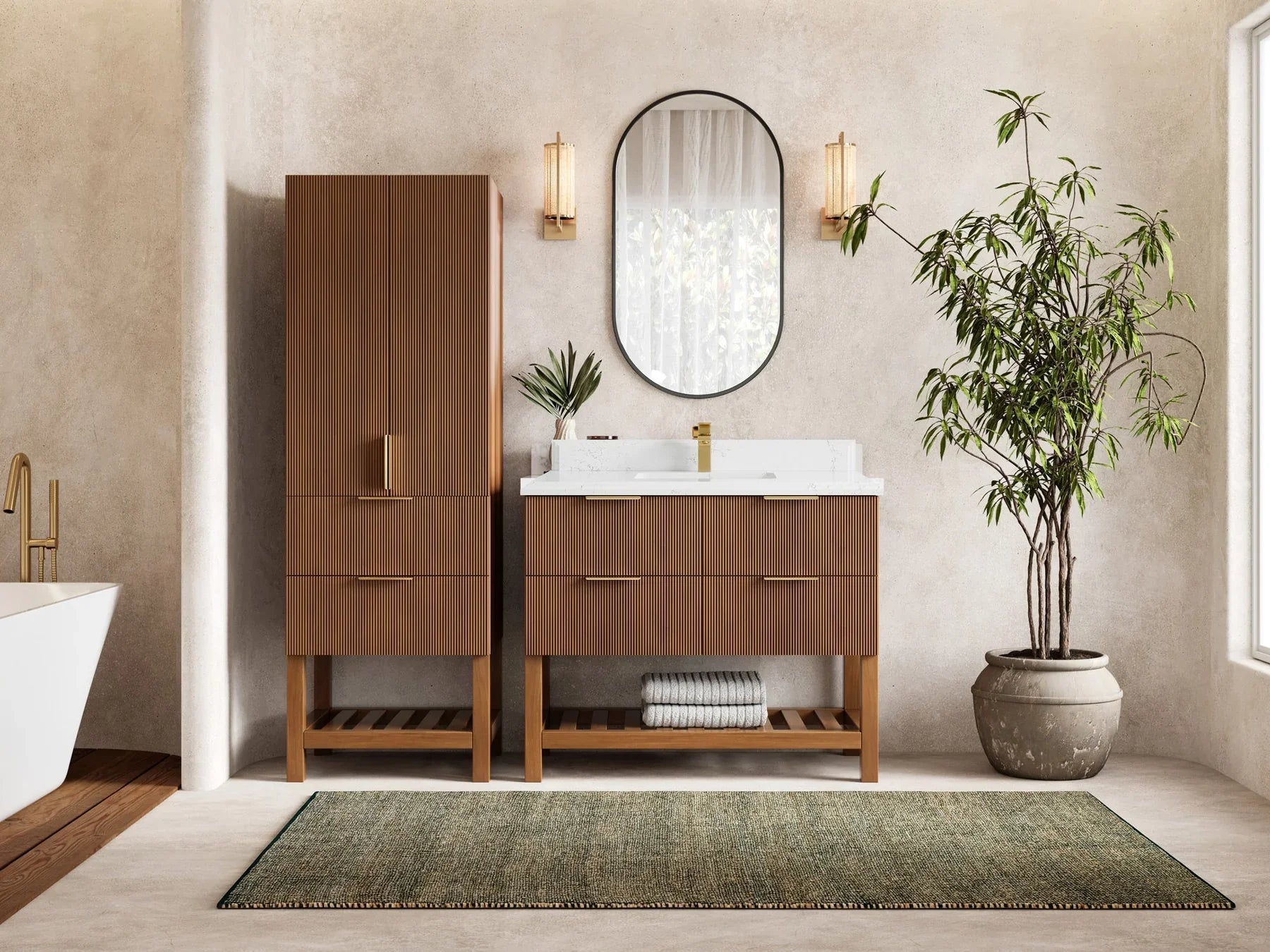
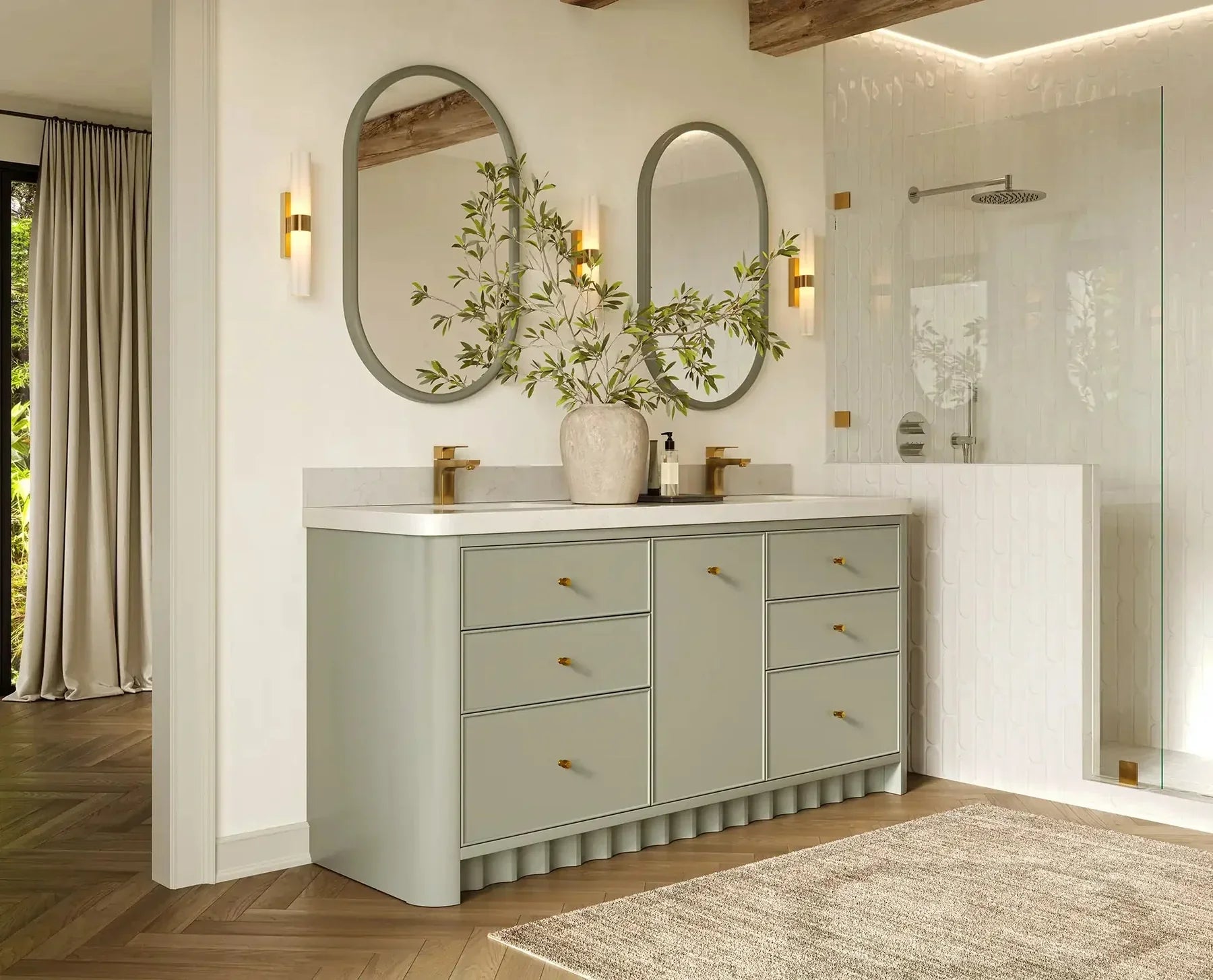
Taj Mahal’s warm tone is a natural match for solid-wood vanities — and every Willow vanity is built from solid teak, solid white oak, or durable painted birch (mango on select pieces), never MDF or particleboard, with a quartz or natural Carrara marble top and soft-close storage. The creamy stone looks especially beautiful on warm teak and bright white oak, and it pairs handsomely with the deeper grain of mango or the softer character of birch. The result is a vanity where the stone and the wood warm each other rather than compete.
One important note on availability: Willow offers genuine Taj Mahal quartzite tops on select vanity sizes and configurations rather than on every model. If you have a specific size or vanity in mind, check the options on that product or reach out and we can confirm whether a Taj Mahal quartzite top is available for it.
FAQ
Is Taj Mahal quartzite the same as marble?
No. It offers a similar warm, veined look, but Taj Mahal is quartzite — a much harder stone that is far more resistant to etching and scratching than marble. Marble reacts readily to acids; quartzite is considerably more forgiving in a busy bathroom.
Is Taj Mahal quartz or quartzite?
It is quartzite — a 100% natural stone — not engineered quartz. Quartzite is harder and more heat-resistant than quartz, but unlike quartz it benefits from periodic sealing because it is natural stone.
Does Taj Mahal quartzite need sealing?
Yes, periodically. Because it is a natural, slightly porous stone, it should be sealed on a regular basis — commonly about once a year — to resist water spots and staining. Between sealings, everyday care is just mild soap and water.
Is Taj Mahal quartzite good for a bathroom vanity?
Yes. It is very hard, heat- and scratch-resistant, and offers a warm, neutral marble-like look that flatters solid wood. Its only real upkeep is the occasional reseal, a small tradeoff for a genuine, one-of-a-kind natural stone top.
Want the softness of marble with the toughness of natural stone? Taj Mahal quartzite is hard to beat — and it looks its best over solid teak, white oak or painted birch, never MDF.
Shop all vanities · teak · white oak.
Share:
Teak vs White Oak Bathroom Vanity: Which Is Better?
Travertine Bathroom Vanity Tops: Pros, Cons & Care