


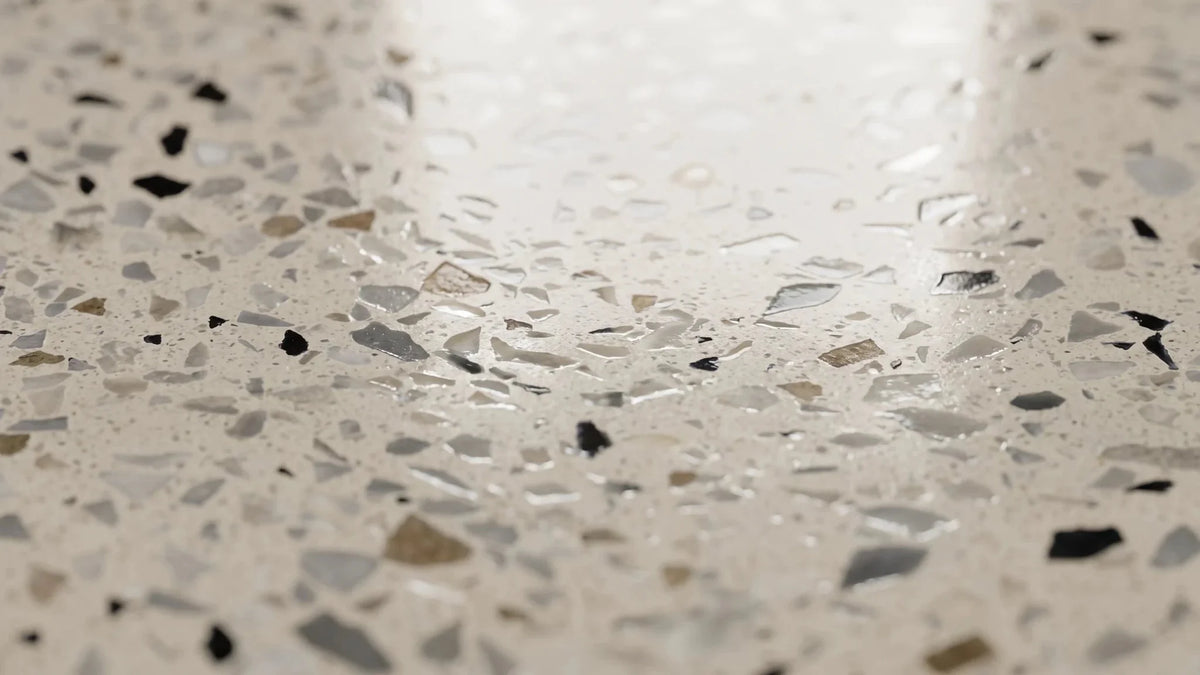
Terrazzo bathroom vanity tops are a playful, design-forward choice that has come roaring back. If you want a surface with genuine personality — flecks of color scattered across a smooth, polished field — a terrazzo top delivers character that plain solid surfaces simply cannot. Here is an honest look at what terrazzo actually is, how it wears, and whether one belongs in your bathroom. To see how it stacks up against quartz and marble, compare every material in our guide to the best countertop surfaces for a bathroom vanity.
What is terrazzo?
Terrazzo is a composite material rather than a single quarried stone. It is made by setting chips or aggregate — typically fragments of marble, quartz, granite, or recycled glass — into a binder, then grinding and polishing the surface smooth so the chips show through as a speckled, confetti-like pattern.
There are two broad families worth understanding before you choose:
- Cement-based terrazzo uses a traditional cementitious binder. It has a matte, earthy depth and a long architectural history, but the cement matrix is more porous and benefits from periodic sealing.
- Resin- or epoxy-based terrazzo uses a polymer binder. It tends to be less porous, allows brighter and more saturated chip colors, and is generally the lower-maintenance option for a vanity top.
Because the aggregate and binder can be mixed in countless combinations, no two terrazzo surfaces look exactly alike — part of the appeal, and something to plan for.
The look, and why it endures
Terrazzo carries a retro-modern, almost joyful character that designers have embraced as a reaction to years of flat, monochrome surfaces. The scattered chips add movement and color at a small scale, so a terrazzo vanity top reads as a considered design statement without overwhelming a compact room. A neutral terrazzo with soft gray and cream chips looks calm and contemporary, while a bolder mix with pink, terracotta, or green flecks brings genuine personality. It suits two lasting trends at once: the return of texture and pattern in the bath, and a broad appetite for materials that feel handcrafted and individual.
Terrazzo binders compared
| Consideration | Cement-based | Resin / epoxy |
|---|---|---|
| Porosity | Higher — needs sealing | Lower — more stain-resistant |
| Color range | Earthy, muted | Bright, saturated |
| Maintenance | Periodic sealing | Low |
| Feel | Matte, architectural | Smooth, polished |
Honest pros and cons
- Pro — durable and hard-wearing. A polished terrazzo surface stands up well to everyday bathroom use.
- Pro — distinctive. The speckled look adds character that solid surfaces and plain stone cannot match.
- Pro — hides small marks. The busy pattern is forgiving of minor dust, water spots, and everyday wear.
- Con — variability. Color and chip distribution vary from piece to piece; the sample you love will not be identical to your finished top.
- Con — porosity depends on the binder. Cement-based terrazzo is more porous and needs sealing; unsealed surfaces can stain.
- Con — acid sensitivity. Terrazzo containing marble or other calcite chips can etch if exposed to acidic cleaners or spills, so gentle care matters.
Care and sealing
Day-to-day care is simple: clean with mild soap, warm water, and a soft cloth, and avoid harsh abrasives or scouring pads that can dull the polish. Skip acidic cleaners such as vinegar or citrus-based products, especially on marble-chip terrazzo, and wipe up spills promptly rather than letting them sit. Sealing depends on the binder — resin-based terrazzo may need little or none, while cement-based terrazzo should be sealed periodically to stay stain-resistant. Follow the specific guidance for your slab; terrazzo is durable, but it is not maintenance-free.
What it pairs with
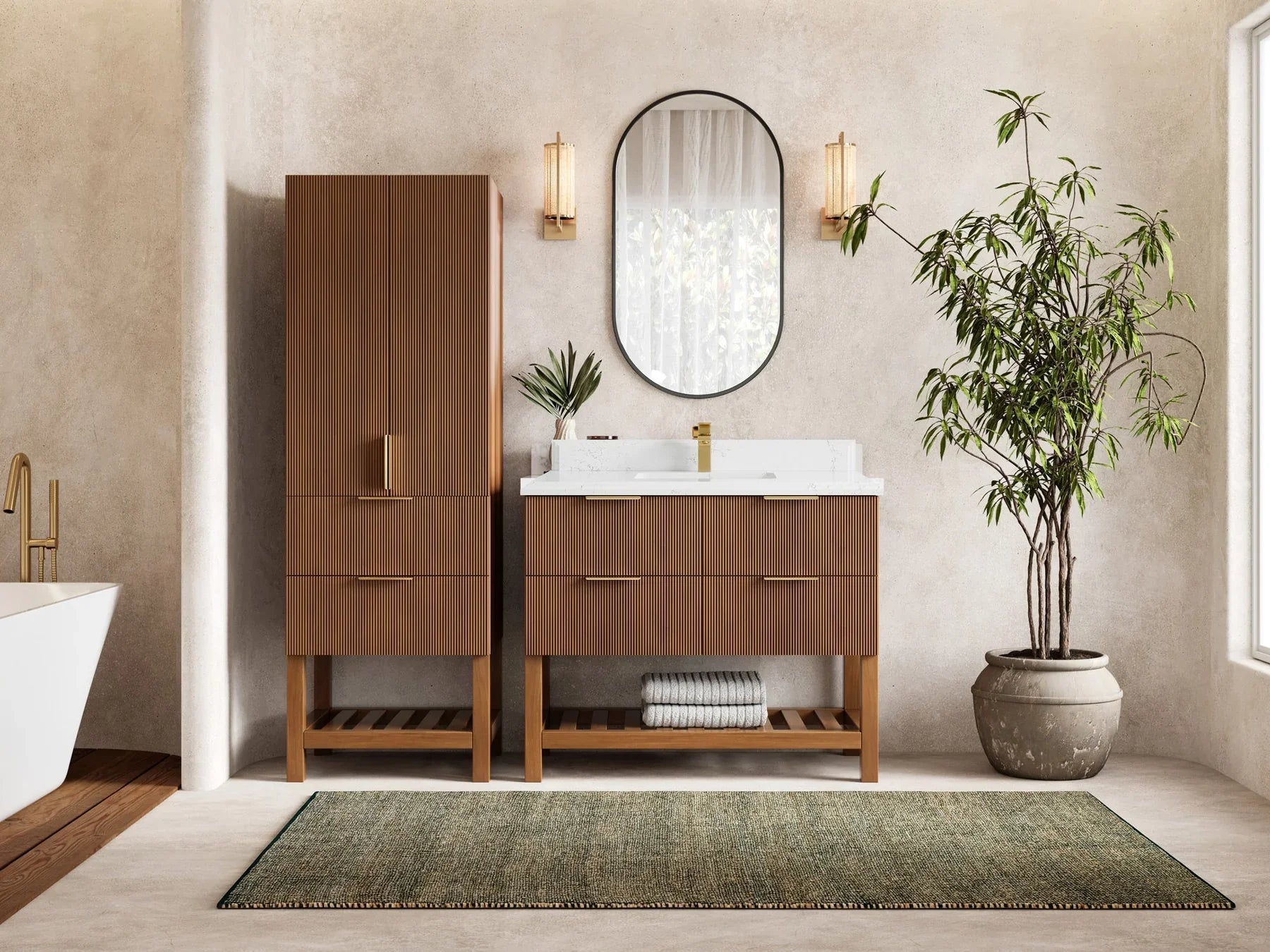
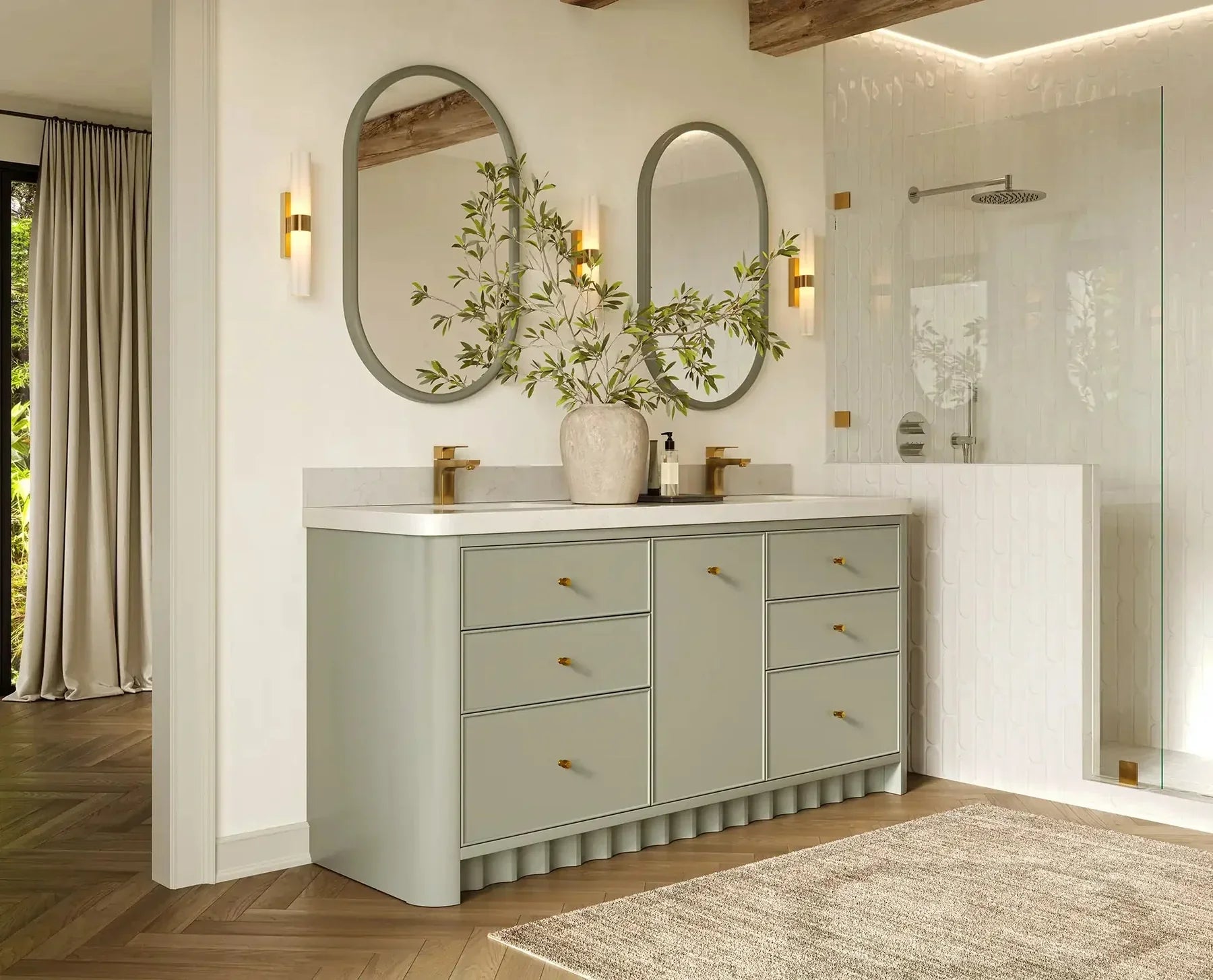
Terrazzo’s speckled texture looks best against clean-lined, warm solid-wood vanities that let the pattern do the talking. Every Willow Bath and Vanity cabinet is built from solid teak, solid white oak, or durable painted birch (with mango on select collections) — never MDF or particleboard — and finished with soft-close storage, so a terrazzo look pairs beautifully alongside our standard quartz and natural Carrara marble tops.
- White oak — its pale, even grain reads fresh and contemporary under a cool gray-and-cream terrazzo.
- Birch — light and understated, it keeps the focus on the terrazzo pattern.
- Teak — warm golden tones balance a bolder, more colorful chip mix.
- Mango — rich, characterful grain that complements earthier, terracotta-toned terrazzo.
Try it against a light white oak vanity, a warm teak vanity, or browse the full range of solid-wood bathroom vanities.
FAQ
Is terrazzo good for a bathroom vanity?
Yes. A terrazzo vanity top is durable and, in resin form, low-maintenance, while adding a distinctive speckled, design-forward look. Cement-based terrazzo should be sealed periodically to stay stain-resistant.
Is terrazzo high-maintenance?
Resin-based terrazzo is quite low-maintenance — just clean with mild soap and water. Cement-based terrazzo needs occasional sealing. Neither is fully maintenance-free, and acidic cleaners should be avoided on any marble-chip terrazzo.
Will my terrazzo top look exactly like the sample?
Not exactly. Terrazzo is made from scattered aggregate, so chip color and distribution vary from piece to piece. Treat any sample as representative of the overall style rather than an exact match.
How does terrazzo compare to quartz or marble?
Quartz is the most uniform and lowest-maintenance, natural Carrara marble offers timeless veining but needs sealing, and terrazzo sits between them with a playful speckled pattern. Our countertop guide walks through each surface in detail.
Love the terrazzo look? Start with a solid-wood base that lets the pattern shine — each Willow vanity is real teak, oak, or painted birch with a stone top and soft-close storage.
Shop solid-wood vanities · white oak · teak.
Share:
Travertine Bathroom Vanity Tops: Pros, Cons & Care
Best Quartz Countertop Colors for Bathroom Vanities