


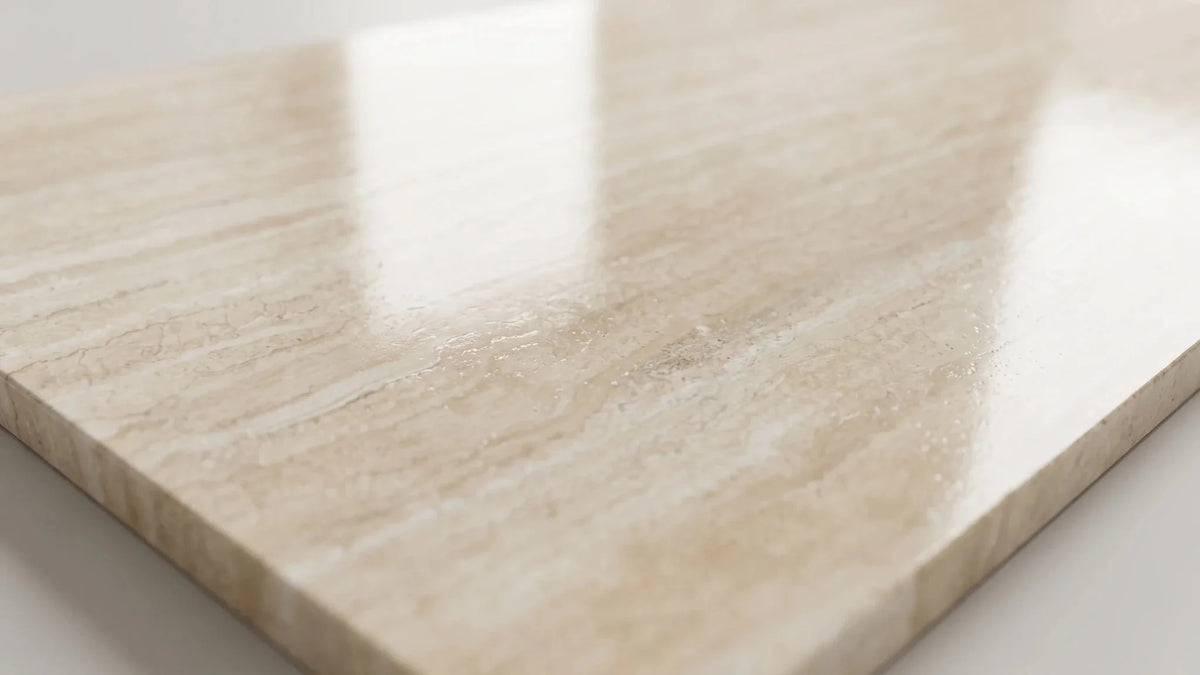
Travertine bathroom vanity tops are riding the move toward warm, natural, tactile materials. A travertine top brings an earthy, quarried-stone character that engineered surfaces cannot replicate — but it also asks for more care than harder stones. Here is an honest look at what travertine is, its pros and cons, and how to keep it looking its best. To weigh it against quartz and marble, see our guide to the best countertop surfaces for a bathroom vanity.
What is travertine?
Travertine is a natural limestone — a calcite-rich sedimentary stone that forms around mineral springs and in limestone caves as mineral-laden water deposits layers over time. That formation gives travertine its signature look: warm tones ranging from ivory and beige to golden honey and walnut, gentle linear movement, and the characteristic small pits and voids that mark its surface.
Those natural pits are part of travertine’s charm, but they matter practically too. Slabs are supplied either filled (voids filled with resin or matching grout for a smoother, more uniform surface) or unfilled for a more rustic, textured look. A honed matte finish is common on vanity tops for a soft, contemporary feel, while a polished finish adds sheen.
Why it is trending
As bathrooms move away from cold, flat surfaces toward spa-like warmth, travertine fits perfectly. Its organic tones and tactile surface pair beautifully with solid-wood vanities and natural textures for the organic-modern look defining today’s bathroom design. Where a decade of bathrooms leaned crisp and clinical, travertine offers something softer, warmer, and more grounded — a material that feels quarried and real.
Pros
- Warm, natural tones that add instant character and calm
- Every slab is unique, with one-of-a-kind movement and coloring
- On-trend, spa-like aesthetic that pairs naturally with wood
- Can be refinished — as a natural stone, minor surface wear can often be honed out by a professional
Cons and care
Travertine is a genuinely beautiful stone, but it is not maintenance-free. Go in with clear expectations:
- Porous. Travertine absorbs liquids more readily than quartz or quartzite, so it needs sealing to resist staining.
- Softer. It is a softer stone than granite or quartzite and can scratch or chip more easily under hard impacts.
- Acid-sensitive. Because it is calcite-based, travertine can etch — dull spots left by acids — from contact with vinegar, citrus, or many common cleaners.
- The pits can catch grime. On unfilled surfaces, small voids can collect toothpaste, dust, and residue and need occasional attention.
How travertine compares
| Surface | Maintenance | Look |
|---|---|---|
| Travertine | Seal & gentle care; can etch | Warm, earthy, tactile |
| Carrara marble | Seal periodically; can etch | Cool, veined, classic |
| Quartz | Very low; no sealing | Uniform, engineered |
Care and sealing
Caring for travertine is straightforward but ongoing. Seal the surface on installation and re-seal periodically — a simple water-drop test (if water no longer beads and starts to darken the stone, it is time to reseal) is a good guide. For daily cleaning, use only mild soap and water or a cleaner labeled safe for natural stone, and always avoid acidic or abrasive products. Wipe up spills promptly — especially acidic ones like mouthwash, perfume, or anything citrus — rather than letting them sit. Use a soft cloth rather than scouring pads, and consider a tray under bottles and cosmetics to limit ring marks and etching. With that routine, a travertine top holds up well in a bathroom, which sees far less abuse than a kitchen.
What it pairs with
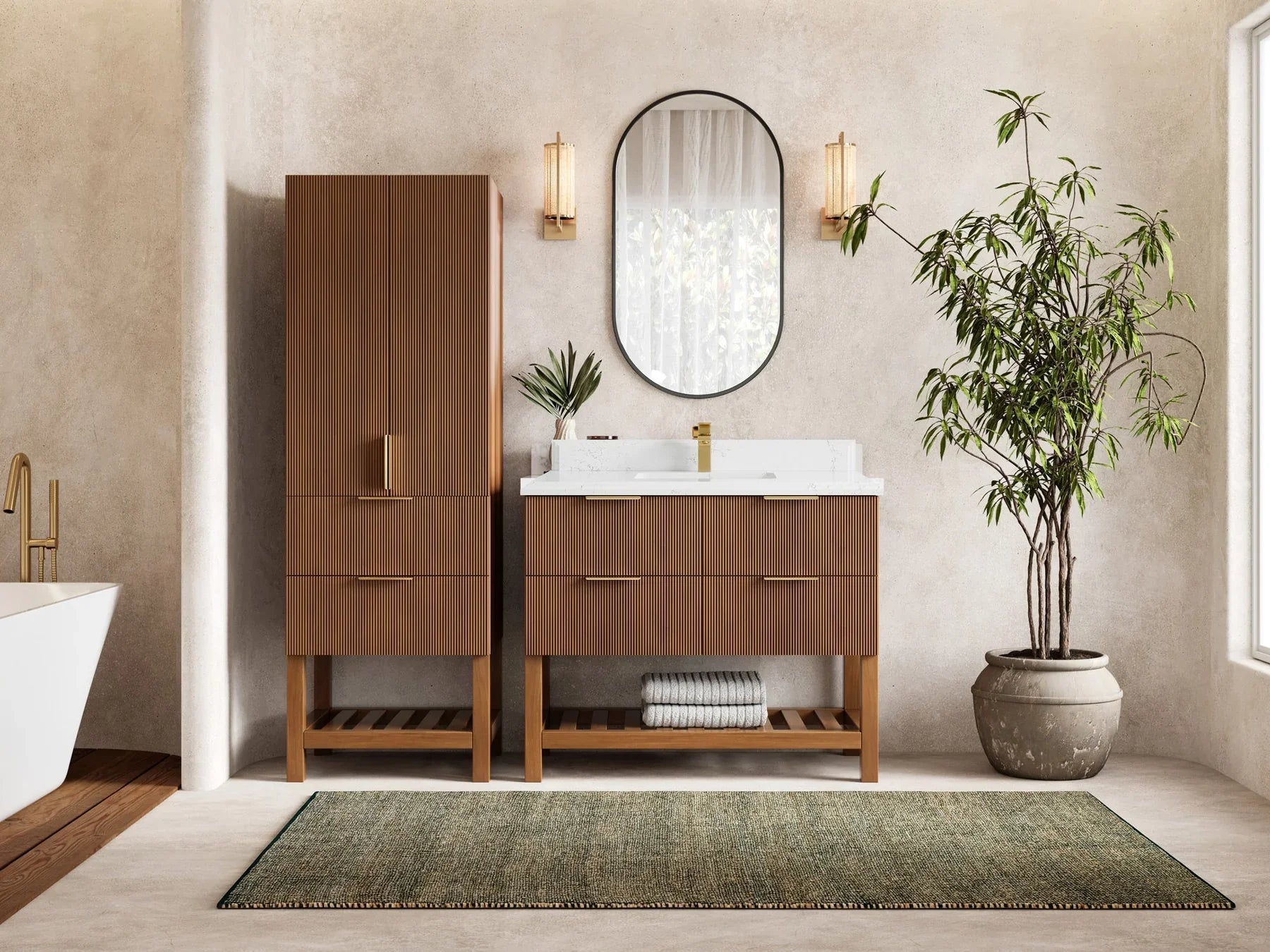
Travertine’s warmth is at its best against solid wood. Every Willow Bath and Vanity cabinet is built from solid teak, solid white oak, or durable painted birch (with mango on select collections) — never MDF or particleboard — with soft-close storage, so a travertine look sits naturally alongside our quartz and natural Carrara marble tops.
- Teak — rich golden warmth that echoes travertine’s honey tones for a cohesive, spa-like look.
- White oak — a lighter, cooler grain that lets travertine’s beige and ivory tones read fresh and airy.
- Mango — characterful grain and warm color that complement travertine’s organic movement.
- Birch — pale and understated, a quiet base that keeps the focus on the stone.
Travertine anchors a calm, organic bathroom vanity beautifully, and looks especially gorgeous on teak and white oak bases.
FAQ
Is travertine good for a bathroom vanity top?
It gives a warm, natural, spa-like look that is very on-trend, but it is porous and softer than quartz or quartzite, so it must be sealed and cleaned gently to prevent staining and etching. For many bathrooms that trade-off is well worth the character it adds.
Does travertine need to be sealed?
Yes. Travertine is porous, so seal it on installation and re-seal periodically, and wipe up spills — especially acidic ones — promptly. It is not a maintenance-free stone.
Will travertine etch or stain?
It can. Being calcite-based, travertine can etch from acidic substances like vinegar, citrus, and some cleaners, and can stain if left unsealed. Using stone-safe cleaners and wiping spills quickly prevents most problems.
Is travertine durable enough for daily use?
With proper sealing and gentle care it holds up well in a bathroom, which sees less abuse than a kitchen. If you want maximum durability with less upkeep, consider quartz or quartzite instead.
Want travertine warmth on a base built to last? Every Willow vanity is solid teak, oak, or painted birch — never MDF — topped with stone and fitted with soft-close storage.
Shop solid-wood vanities · teak · white oak.
Share:
Taj Mahal Quartzite Vanity Tops: Durability, Care & Cost
Terrazzo Bathroom Vanity Tops: The 2026 Trend Explained