


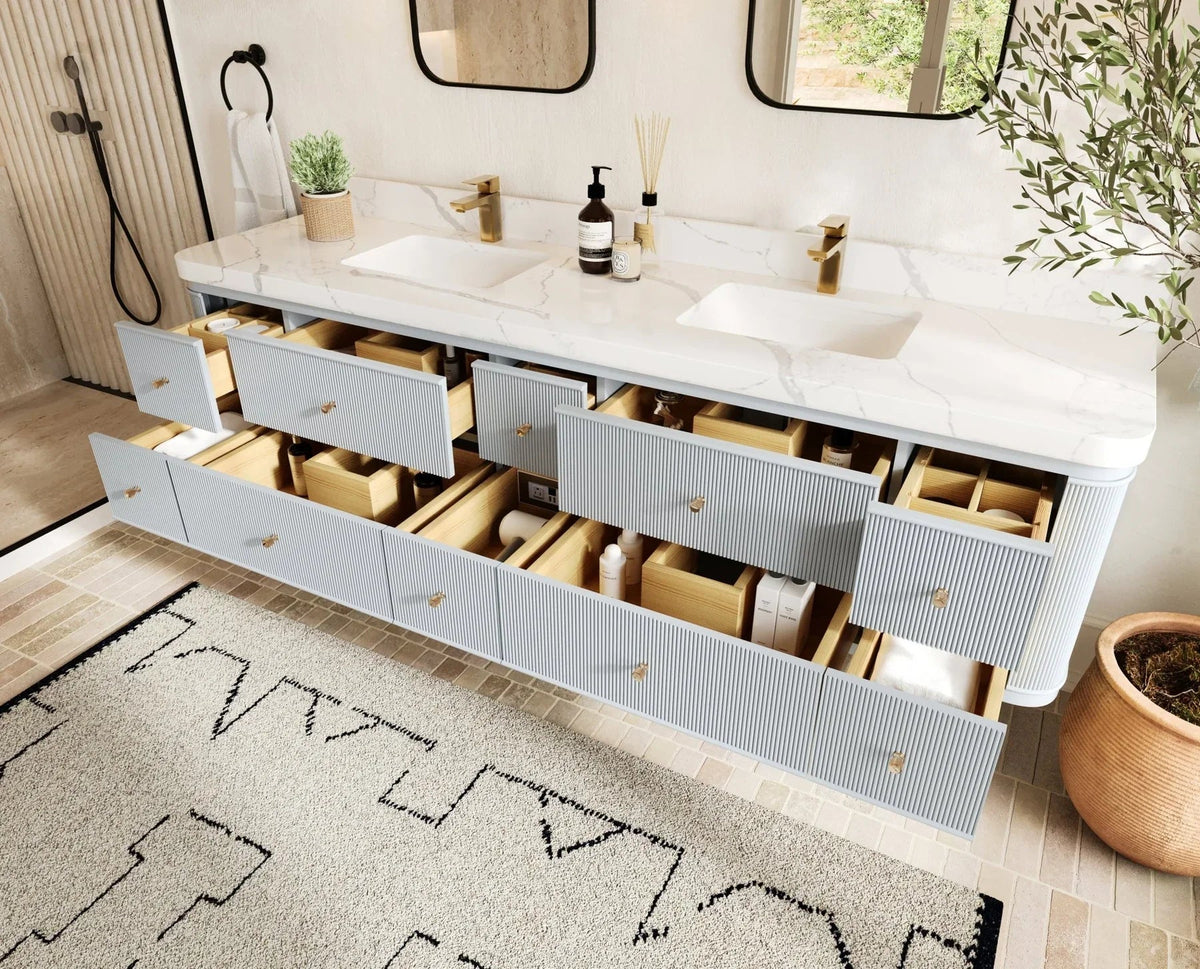
You're shopping for double bathroom vanities and every listing names a different material. Solid wood sounds premium. Plywood sounds practical. MDF sounds like it'll fall apart if you look at it wrong. So which actually lasts?
Material matters more on a double vanity than a single: longer spans, more weight, and two sinks creating moisture at multiple points. Pick wrong and you're watching cabinets sag within two years. Here's how the common materials really compare.
The Materials, Ranked for a Dual-Sink Setup
Solid Wood: Best for Premium, Long-Term Use
Solid hardwood double vanities handle bathroom moisture well when properly sealed, support weight without flexing across a long span, and can be sanded rather than replaced when scratched. The trade-off is price — you pay more up front — but the lifespan (30-plus years) makes it the best value over time. Teak and white oak are especially well suited to humid rooms.
Plywood: A Common Mid-Tier Balance
Plywood's layered construction fights warping and holds weight decently, at a price between solid wood and the cheap stuff. Quality varies wildly, though: low-grade plywood isn't much better than particleboard, and unsealed edges absorb water and delaminate. If you go this route, ask about the grade and edge finishing.
MDF: Smooth for Paint, but Fragile
MDF gives a perfectly smooth painted surface with no grain, but water is its enemy. Once moisture reaches the core it swells and never recovers, and it doesn't hold screws through repeated use. A single plumbing leak can mean replacement — a real risk under two sinks.
Particleboard: Budget-Only
Particleboard keeps the price down and little else. Structural integrity is weak and moisture destroys it fast. It might survive a light-use guest bath, but in a primary bathroom you're replacing it in about three years.
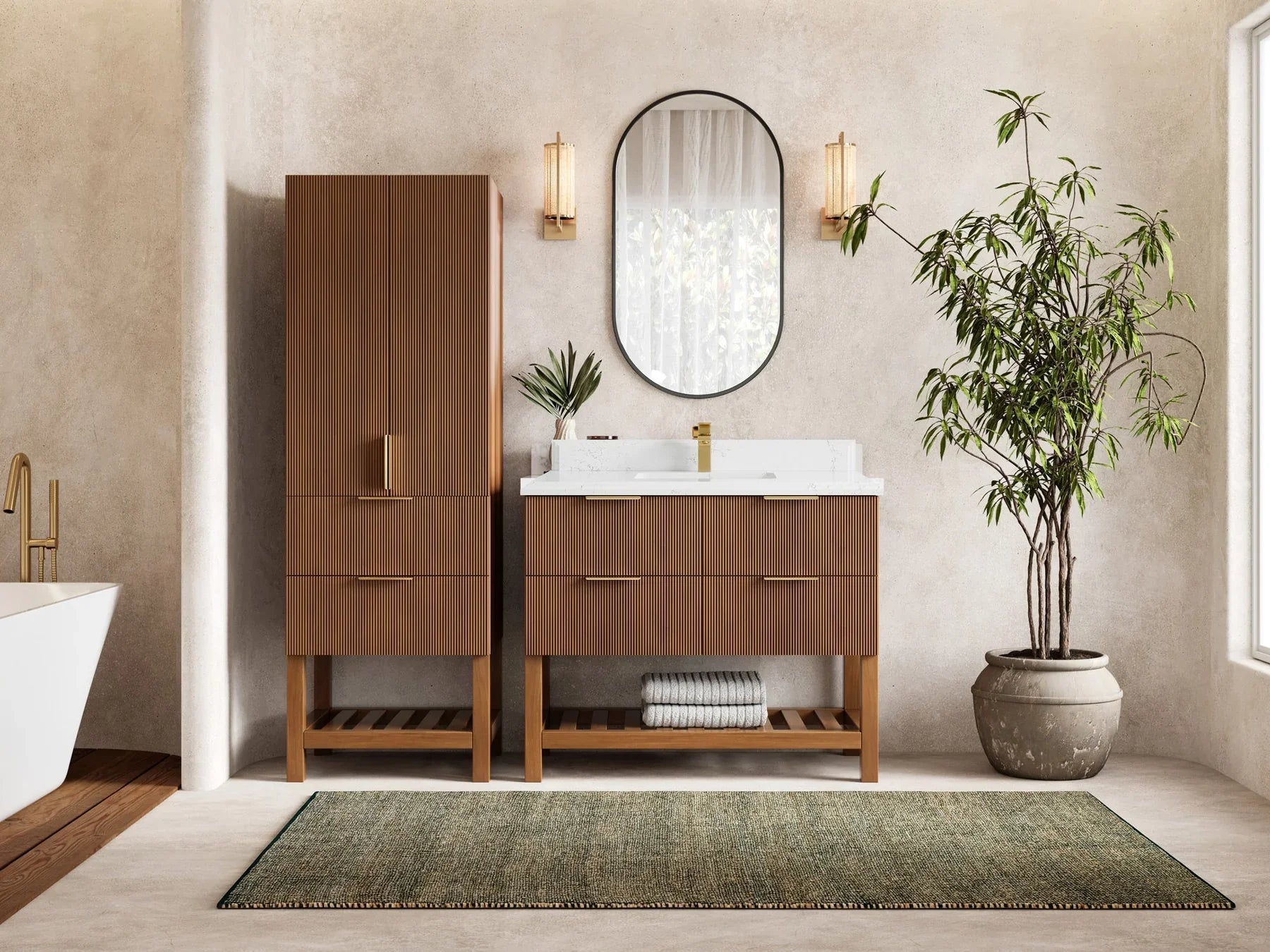
For reference, every Willow vanity is built from solid teak, solid white oak, or durable painted birch — never MDF or particleboard — so those last two categories are what to avoid elsewhere, not what we sell.
Match the Material to the Size
The wider the vanity, the more the material has to work. (Not sure which width you need? See our bathroom vanity size guide.)
60-Inch Double Vanity

A 60" vanity doesn't stress materials badly — the span isn't long enough to flex under normal use. Solid wood gives the best look and life; quality plywood works if kept dry.
72-Inch Double Vanity

A 72" vanity starts testing limits: more weight from longer cabinets and larger stone tops, and sink placement matters because weak support shows as sagging. Solid wood or high-grade plywood handle it reliably; particleboard becomes risky.
84-Inch Double Vanity

An 84" vanity demands the strongest materials — the span is long enough that cheaper cores flex or sag under stone. Solid wood or high-grade plywood with proper reinforcement, not optional.
A 3-Point Check to Cut Through the Marketing
- Moisture performance: will it survive steam and splashing? MDF and particleboard won't; plywood and solid wood will.
- Maintenance: solid wood needs resealing every few years, plywood needs protected edges, MDF needs constant vigilance around water.
- Lifespan: particleboard ~5 years, plywood ~15, solid wood 30-plus.
And don't accept vague labels — "wood construction" means nothing. Ask what species, what grade, what thickness, and how the edges are finished. Details reveal quality.
FAQ
What is the best material for a double bathroom vanity?
Solid hardwood such as teak or white oak is the best long-term choice — it resists moisture when sealed, supports long spans without flexing, and can last 30-plus years. High-grade plywood is a reasonable mid-tier option; MDF and particleboard are best avoided in a humid, high-use bathroom.
Is MDF or solid wood better for a bathroom vanity?
Solid wood. MDF swells permanently once water reaches its core and doesn't hold screws well over time, which makes it risky under sinks. Solid wood tolerates humidity and can be repaired rather than replaced.
Does vanity material matter more for a double vanity?
Yes. Double vanities have longer spans, more weight, and two moisture points, so a weak core shows as sagging much sooner than on a single. The wider the vanity (72" and 84"), the more it pays to use solid wood or high-grade plywood.
How long does a solid wood vanity last?
With basic care and periodic resealing, a solid hardwood vanity can last 30 years or more — far longer than plywood (about 15) or particleboard (about 5).
Compare the difference for yourself. Willow Bath and Vanity builds every double vanity from solid teak, solid white oak, and durable painted birch — never MDF or particleboard — with a quartz or Carrara marble top.
Shop Double-Sink Vanities · 60" · 72" · 84".
Looking for design ideas as well? Visit our earlier post, "Ideas for Beach-Inspired Bathrooms with a Double Sink Vanity."
Share:
Best Christmas Decor Pieces for Modern Bathroom Vanities
4 Ways to Use Storage Containers for a Clutter-Free Single Sink Vanity