


There is no single best wood for every bathroom vanity. The right choice depends on the room, the look you want, the cabinet construction, the protective finish, and how much moisture the vanity is likely to encounter.
Teak and white oak are common starting points for shoppers who want a natural wood vanity. Mango wood brings more visible color and grain variation. Painted vanities shift the decision toward the underlying cabinet material and the quality of the finish. This guide compares those choices and explains what to verify before buying.
Bathroom Vanity Wood Comparison
| Material or look | Why shoppers consider it | What to verify | Good fit for |
|---|---|---|---|
| Teak | Warm color, visible grain, and a strong reputation for use in humid settings | Protective finish, care instructions, panel construction, and sealed plumbing openings | Primary bathrooms and rooms where steam or splashes are frequent |
| White oak | Distinct grain and a light-to-medium natural appearance that works across several styles | Whether the listing means white oak, oak veneer, or an oak-colored finish; how edges are sealed | Modern, transitional, Scandinavian-inspired, and natural bathrooms |
| Mango wood | Noticeable grain and natural color variation that gives each cabinet more visual character | Finish coverage, care requirements, and how much variation to expect between pieces | Organic, rustic, boho, and warm modern rooms |
| Walnut or dark-walnut look | Deep brown color and a furniture-like appearance | Whether “walnut” describes the wood species, a veneer, or a finish applied to another wood | Darker palettes and high-contrast bathrooms |
| Painted wood | Consistent color and a smooth appearance that can suit traditional or modern cabinetry | The material beneath the paint, edge sealing, touch-up guidance, and warranty terms | Bathrooms built around a specific cabinet color |
The table is a decision guide, not a guarantee of lifespan. Two vanities made from the same named species can perform differently if their construction, finishing, installation, ventilation, and daily care are different.
Teak Bathroom Vanities
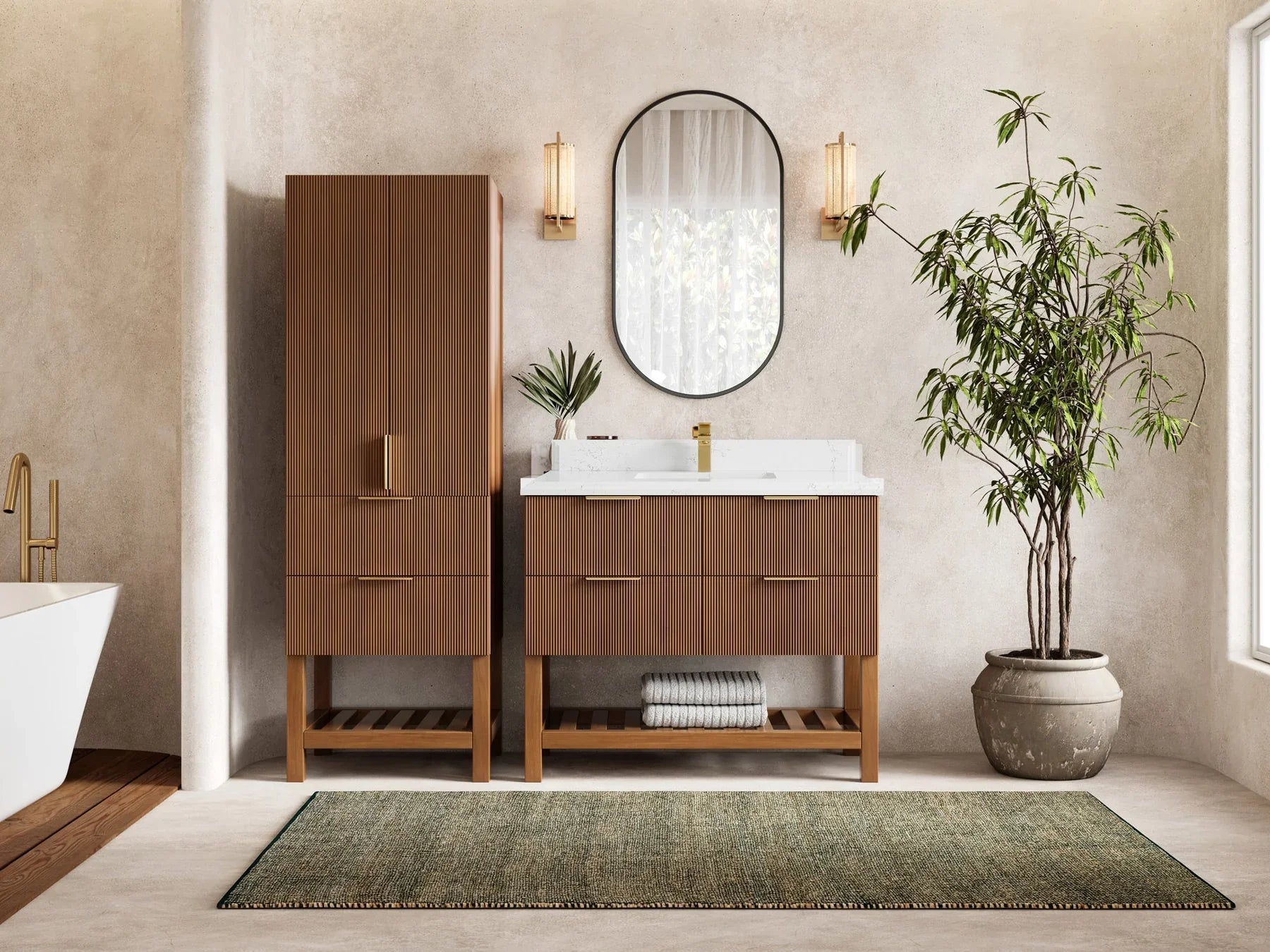
Teak is often considered for bathrooms because it has a long-standing reputation for handling humid environments. Its warm tone and natural grain also let it work as a visual focal point without relying on an ornate cabinet profile.
A teak label alone is not enough to judge a finished vanity. Review the full specification: which components are solid wood, whether any large panels use plywood or another substrate, what protective finish is applied, and whether exposed cuts around plumbing are sealed. These details help explain how the complete cabinet is expected to perform, not just the named wood.
If teak matches your room and maintenance expectations, compare the sizes and configurations in Willow’s teak bathroom vanity collection.
White Oak Bathroom Vanities
White oak is a versatile choice when you want an obvious wood grain without making the vanity feel visually heavy. Depending on the finish, it can look natural and relaxed, pale and contemporary, or warmer and more traditional.
Read product descriptions carefully. “Oak” can refer to more than one species, and “oak finish” may describe color rather than cabinet material. A listing should make clear what the structural parts, doors, drawer fronts, and large panels are made from. The same rule applies to veneer: veneer is a surface layer, so the important follow-up question is what material sits beneath it.
For material and finish examples, browse Willow’s white oak bathroom vanities.
Mango Wood Bathroom Vanities
Mango wood is selected primarily for character. Grain, streaking, and color can vary naturally, so it works well when the goal is a vanity that reads more like an individual piece of furniture than a uniform built-in cabinet.
Variation is part of the appeal, but it should also be part of the buying decision. Product photography may show one example rather than the exact pattern of every cabinet. Confirm the expected range of color variation, the protective finish, and the recommended cleaning routine before purchase.
See current sizes and finishes in the mango wood bathroom vanity collection.
Other Woods You May See in Vanity Specifications
Several other species appear in bathroom furniture and cabinetry. Their names can be useful comparison points, but they do not replace a component-level specification. Exact species, finish, panel construction, and edge protection still need to be confirmed for the individual vanity.
Birch
Birch generally has a finer, quieter grain than oak and is often selected for painted or evenly stained cabinetry. When comparing a birch vanity, check whether birch is used throughout the cabinet or only on selected visible components, and review how the finish is protected around seams and plumbing openings.
Maple
Maple is commonly associated with a smooth, consistent surface and painted cabinet finishes. Surface hardness should not be treated as the same thing as moisture protection: the coating, sealed edges, ventilation, and daily care still determine how the finished cabinet handles bathroom conditions.
Walnut
True walnut is chosen for deep natural color and furniture-like grain. Because “walnut” is also widely used as a finish name, verify whether the listing identifies solid walnut, walnut veneer, or a walnut-colored finish over another material.
Mahogany
Mahogany is associated with warm reddish-brown tones, but the name can cover more than one commercial species. Ask for the exact material description, where it is used in the cabinet, and the finish and care requirements rather than relying on the color name alone.
Mindi
Mindi may appear in furniture-style vanity specifications. If you are considering it, compare the same construction details you would for any other wood: component materials, substrate, finish coverage, sealed cuts, ventilation guidance, and warranty.
Red Oak
Red oak and white oak should not be treated as identical simply because both are sold as oak. Confirm which oak is specified and how the finished cabinet is protected in splash-prone areas. If a product page says only “oak finish,” ask whether that phrase describes the wood or just the color.
Does “Walnut” Mean Solid Walnut?
Not necessarily. In vanity listings, walnut may identify a wood species, a natural veneer, or a dark walnut-colored finish applied to another material. None of those descriptions should be treated as interchangeable.
If the exact species matters to you, look for a component-by-component material description. Ask what the frame, doors, drawer fronts, side panels, bottom, shelves, and back panel are made from. This avoids choosing a vanity based on a color name when your real priority is construction.
Species Is Only Part of the Decision
Shoppers often focus on the species name, but a bathroom vanity is an assembled cabinet. The following details can matter as much as the wood itself:
- Protective finish: A consistent finish helps reduce direct exposure to water and everyday bathroom products.
- Sealed edges and openings: Plumbing holes, back-panel access, seams, and cut edges deserve particular attention because they may sit close to water lines and the drain.
- Panel construction: Large flat panels may use solid wood, plywood, or another core. The specification should identify the material clearly.
- Hardware and joinery: Drawer operation, hinges, fasteners, and cabinet alignment affect how the vanity feels in daily use.
- Ventilation and installation: A working exhaust fan, correct plumbing, and adequate clearance help protect any cabinet material.
Solid Wood, Plywood, Veneer, MDF, and Particleboard
These terms describe different parts of cabinet construction, and they should not be collapsed into a simple “real” or “fake” wood label.
Solid Wood
Solid wood means the named component is cut from lumber rather than made from compressed wood fiber or chips. It can be refinished in some circumstances, but it still needs an appropriate protective finish and normal bathroom care.
Plywood
Plywood is made from bonded layers of wood veneer. Cabinetmakers may use it for broad, flat panels because layered construction can provide dimensional stability. Quality and finishing still vary, so confirm the plywood grade and whether exposed edges are sealed.
Wood Veneer
Veneer is a thin layer of natural wood applied over a core. Veneer by itself does not reveal the quality of the cabinet. A useful specification names both the veneer and the substrate beneath it.
MDF and Particleboard
MDF is made from wood fibers, while particleboard is made from wood particles bonded into panels. Both depend heavily on the surface finish and protected edges. If moisture reaches an exposed or damaged core, swelling can occur. Pay close attention to plumbing openings, bottom panels, seams, and warranty exclusions.
To compare material-led options in one place, browse Willow’s solid wood bathroom vanities.
How to Read a Bathroom Vanity Specification
A strong product specification answers more than “What kind of wood is it?” Use this checklist before placing an order:
- Identify the material used for the frame, doors, drawer fronts, side panels, bottom, shelves, and back.
- Confirm whether a species name refers to solid wood, veneer, or finish color.
- Check whether plumbing openings and exposed edges arrive sealed or need sealing during installation.
- Read the cleaning instructions and note products the finish manufacturer says to avoid.
- Confirm the vanity dimensions, sink configuration, plumbing location, and required wall clearance.
- Review the warranty for water exposure, finish damage, installation, and environmental conditions.
How to Choose the Right Wood for Your Bathroom
1. Start With the Room
A frequently used primary bathroom with regular showers places different demands on a vanity than a lightly used powder room. Consider steam, direct splashes, ventilation, and how quickly water is normally wiped away.
2. Decide How Much Natural Variation You Want
Natural wood can vary in grain and color. White oak can feel quieter and more uniform depending on the finish, while mango wood often presents more noticeable variation. Review multiple product images when available and confirm whether the photographed unit is representative.
3. Match the Finish to the Design
Light finishes can make grain feel subtle and airy. Mid-tone finishes bring warmth. Dark finishes create stronger contrast. Because color names are not construction terms, always read the material specification separately from the finish name.
4. Compare the Complete Cabinet
Do not choose solely from a species ranking. Compare construction, drawers, hinges, countertop compatibility, sink layout, storage, delivery constraints, care, and warranty. The best vanity is the one whose complete specification fits the room and the way it will be used.
Bathroom Vanity Wood Care
- Wipe standing water promptly, especially near seams, drawer fronts, and plumbing openings.
- Use the cleaning method recommended for the vanity’s specific finish.
- Avoid abrasive tools or harsh cleaners unless the manufacturer explicitly approves them.
- Use bathroom ventilation during and after showers.
- Inspect supply lines, drains, and shutoff valves periodically so a small leak does not remain hidden inside the cabinet.
- Follow the manufacturer’s instructions before applying oil, wax, polish, or a new topcoat.
Frequently Asked Questions
What is the best wood for a bathroom vanity?
Teak and white oak are practical starting points for many shoppers, but there is no universal winner. Room humidity, cabinet construction, protective finish, ventilation, maintenance, and design preference all affect the decision.
Is teak or white oak better for a bathroom vanity?
Choose based on the complete vanity rather than the species name alone. Teak is commonly selected for humid settings and a warmer appearance. White oak is often chosen for its visible grain and design flexibility. Compare construction, finish, sealed edges, size, storage, care instructions, and warranty.
Is plywood suitable for a bathroom vanity?
Plywood can be a suitable cabinet material when the grade, bonding, finish, and edge sealing are appropriate for the application. Ask which panels use plywood and how plumbing openings and exposed edges are protected.
Does wood veneer mean a vanity is low quality?
No. Veneer describes the surface layer, not the entire construction. Natural wood veneer over a clearly identified, well-finished substrate can be a deliberate cabinetmaking choice. Verify what is beneath the veneer and where it is used.
How can I protect a wood vanity from bathroom moisture?
Use effective ventilation, wipe up standing water, repair leaks promptly, follow finish-specific cleaning instructions, and confirm that exposed edges and plumbing openings are properly sealed.
Once you have chosen the material, the next step is deciding how it should look and function in the room. Read how to use a wood vanity in a modern bathroom, or compare all solid wood bathroom vanity options.
Share:
How to Measure for a Bathroom Vanity: Width, Depth, Height, Plumbing & Clearance Guide
Standard Bathroom Vanity Dimensions