


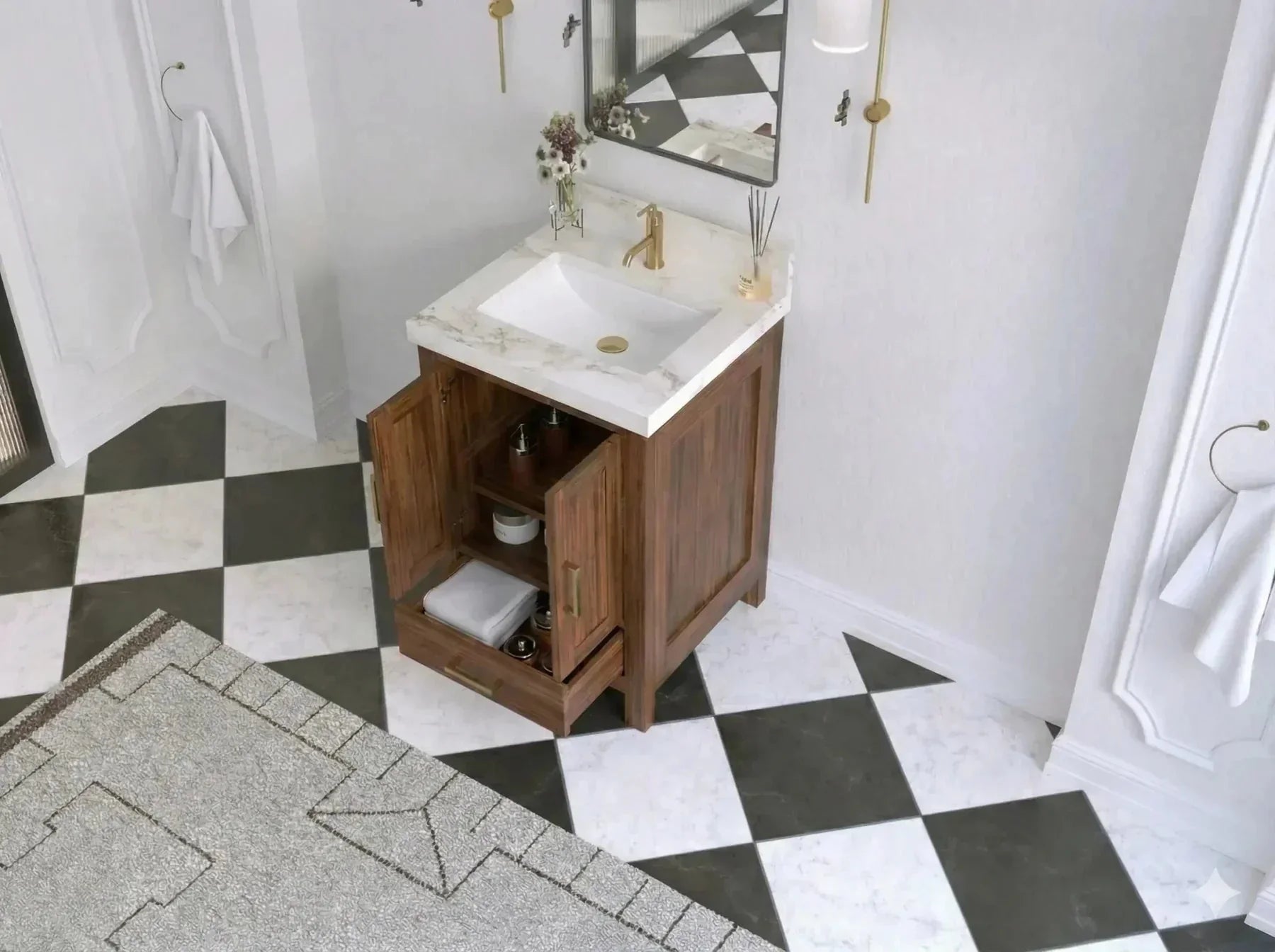
A 24-inch bathroom vanity has very little cabinet volume to waste. The sink bowl, drain, supply lines, and shutoff valves all compete with the storage below, so the choice between drawers and cabinet doors affects what you can reach every day. This guide compares the two inside-the-vanity layouts. If you need shelves, a mirrored cabinet, hooks, or other storage around the vanity, use our separate guide to maximizing storage around a 24-inch vanity.
Quick answer: choose drawers when you want small daily items organized and visible. Choose a door cabinet when you need flexible height for taller bottles or want the simplest route around plumbing. A hybrid layout can work well, but only if the actual drawer and plumbing dimensions fit your routine.
Start With the Sink and Plumbing, Not the Door Style
Two 24-inch vanities can look nearly identical from the front and provide very different usable storage. A deep sink may occupy more of the upper cabinet. A centered drain may interrupt a middle drawer bank, while an offset drain may leave more room on one side. Some drawer systems use a U-shaped cutout around the plumbing; others shorten the top drawer or replace it with a fixed front.
Before comparing storage volume, review the exact vanity and countertop drawings. Confirm the sink position, drain centerline, drawer-box depth, shelf position, and space needed to reach the shutoff valves. Do not assume that every drawer shown on the front is a full-depth working drawer.

Drawers vs. Cabinets at a Glance
| Decision factor | Drawers | Door cabinet |
|---|---|---|
| Daily access | Items come toward you and remain visible | You may need to reach behind front-row items |
| Best item types | Skincare, grooming tools, cosmetics, small towels | Tall bottles, cleaning products, irregular containers |
| Plumbing impact | Requires shortened or shaped drawer boxes | Open cavity can be easier to route around pipes |
| Organization | Built-in separation; dividers add control | Flexible, but usually needs bins or a removable shelf |
| Service access | Confirm drawers can be removed without damage | Valves and trap are often easier to see and reach |
When Drawers Are the Better Choice
Drawers are usually the more convenient choice when the vanity stores many small items used every morning and evening. Opening a drawer reveals the contents from above, which reduces the need to kneel and search at the back of a cabinet. Shallow dividers can separate dental care, skincare, hair accessories, and spare supplies without stacking one category on another.
Advantages of drawers in a compact vanity
- Visibility: the back of the drawer is easier to see than the back of a low cabinet.
- Defined zones: dividers keep small items from migrating into one mixed container.
- Reach: full-extension hardware brings stored items out toward the user.
- Counter control: frequently used items can return to a dedicated place quickly.
Tradeoffs to inspect before buying
The top drawer may be shallow, shortened, or shaped around the sink and drain. Tall bottles may need to lie down, and a decorative front may not indicate a usable drawer. Check the interior measurements and hardware rather than counting drawer fronts in a photograph. Also verify that a removable drawer does not block reasonable access to the P-trap and shutoff valves.
When a Door Cabinet Is the Better Choice
A door cabinet provides one flexible cavity beneath the sink. That can be useful when you store a small waste bin, taller cleaning bottles, toilet-paper packs, or containers that do not fit a shallow drawer. The open interior may also make unusual plumbing positions easier to accommodate.
Advantages of a cabinet layout
- Flexible height: taller and irregular items are easier to place.
- Plumbing tolerance: bins and organizers can be arranged around the trap and valves.
- Simple service access: opening the doors can expose the plumbing without removing drawer boxes.
- Adaptability: removable shelves and stackable bins can change as storage needs change.
Tradeoffs to plan around
Without an organizer, a cabinet can become one deep pile. Items at the front conceal items at the back, and the lowest shelf requires more bending. Use leak-resistant, removable bins rather than permanently boxing in the plumbing. Keep the shutoff valves accessible and leave room to inspect for moisture.
Could a Hybrid Layout Work?
Some 24-inch vanities combine a narrow drawer bank with a small door compartment or use one U-shaped drawer above a deeper drawer. A well-planned hybrid can separate small daily products while preserving a taller zone. The drawback is that each section becomes very narrow. A hybrid is valuable only when the usable interior dimensions match the items you actually store.
Make a quick inventory before shopping. Measure the tallest bottle, widest organizer, and any appliance that must fit. Then compare those measurements with the manufacturer's interior specifications. The word “hybrid” does not guarantee that every visible compartment is useful.
A Five-Step Decision Workflow
- List only the items that must live inside the vanity. Move bulk refills and spare towels out of the decision if they will be stored elsewhere.
- Separate small daily items from tall or irregular items. A list dominated by small products favors drawers; a list dominated by tall containers favors a cabinet.
- Map the plumbing. Record drain and supply-line positions and compare them with the exact cabinet drawing.
- Check working hardware. Confirm full-extension and soft-close features where offered, drawer removability, hinge clearance, and whether every front opens.
- Test access. Picture reaching the deepest item and the shutoff valves after the vanity is installed against a wall.
What to Measure Before Ordering
- Finished wall width, including baseboard or trim conflicts.
- Vanity cabinet width, countertop overhang, depth, and finished height.
- Door swing or drawer extension in relation to the toilet, shower, and entry door.
- Drain centerline, supply-line positions, shutoff-valve access, and trap depth.
- Usable drawer-box width, height, and depth or cabinet shelf dimensions.
Nominal size is not the same as finished size. Use the exact model drawing and local installation requirements before ordering or changing plumbing. For wider planning context, see the bathroom vanity size guide, then compare current models in the verified 24-inch bathroom vanity collection.
Frequently Asked Questions
Are drawers or cabinets better in a 24-inch bathroom vanity?
Drawers are usually better for small daily items because they improve visibility and access. A door cabinet is usually better for tall bottles, irregular containers, and flexible plumbing clearance. The better choice depends on the usable interior dimensions of the exact vanity.
Do vanity drawers lose space to the plumbing?
They can. The sink bowl, drain, and P-trap may require a shortened top drawer or a U-shaped cutout. Review the exact drawer-box and plumbing drawings because a front panel does not always represent a full-depth drawer.
Can a 24-inch vanity have both drawers and a cabinet?
Yes. Some models use a narrow drawer bank beside a door compartment or shaped drawers around the plumbing. A hybrid works best when each compartment is wide and deep enough for the items you plan to store.
Which layout makes shutoff valves easier to reach?
A door cabinet often provides the most direct view of valves and the trap. Drawers can also allow service access if they are designed to be removed. Confirm the access method before installation.
How do I organize a door cabinet without blocking plumbing?
Use shallow, removable bins or a removable shelf positioned around the pipes. Avoid permanent organizers that cover shutoff valves or make it difficult to inspect for leaks.
Where should extra storage go if the vanity is full?
Use the wall and nearby surfaces rather than forcing bulk supplies into the cabinet. A mirrored cabinet, shallow shelves, hooks, and other compact options are covered in the separate guide to storage around a 24-inch vanity.
Keep the two decisions separate: choose drawers or doors based on what must fit inside the cabinet. Plan vertical and external storage only after the vanity footprint, mirror, lighting, and clearances are known.
Browse 24-inch vanities or continue to the 24-inch external storage guide.
Share:
Why a 35 Inch Bathroom Cabinet in Alpharetta is the Designer's Choice
The 5-Category Rule: A Life Hack for Organizing Your Bathroom Vanities Forever