


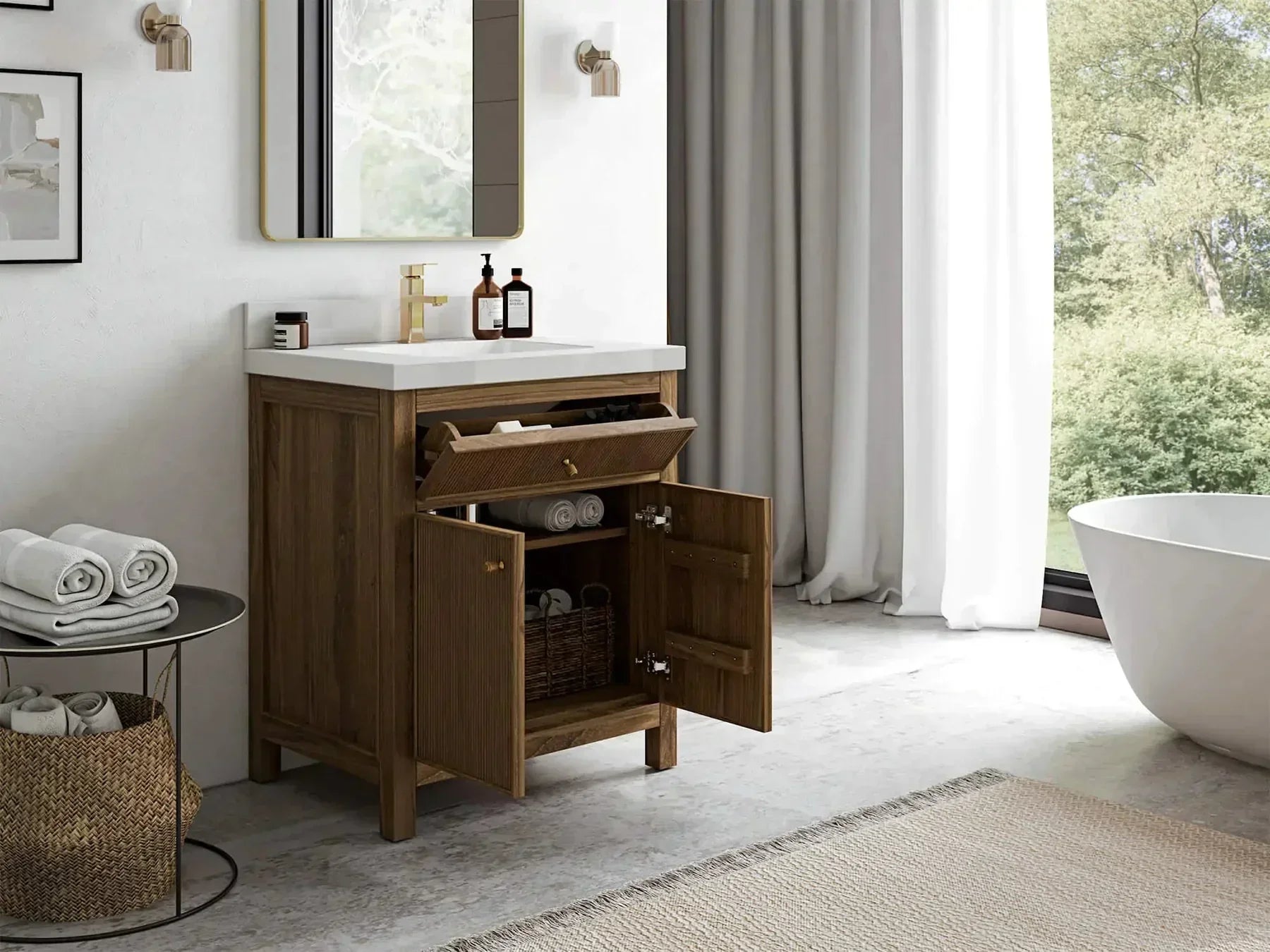
Many people have placed a hot hair straightener or curling iron on the bathroom counter without thinking twice, only to wonder later if the surface has been damaged. Heat exposure is a daily reality in many bathrooms, and choosing the right bathroom sink countertop can make a significant difference to its long-term appearance and durability.
Heat resistance helps prevent more than surface marks. It also supports easier maintenance, protects the finish, and contributes to a longer lifespan. This guide explains which materials perform best, what to avoid, and how to choose the right option for your home and budget.
Table of Contents
-
-
Why Heat Resistance Matters in a Bathroom Sink Countertop
-
Everyday Sources of Heat You Might Overlook
-
-
Compare the Most Heat-Resistant Countertop Materials
-
Quartz
-
Granite
-
Porcelain
-
Solid Surface and Laminate
-
-
Don't Choose Based on Heat Resistance Alone
-
Look at the Full Performance Package
-
-
How to Match the Right Material to Your Bathroom
-
For Busy Family Bathrooms
-
For Luxury Bathroom Remodels
-
For Budget-Friendly Renovations
-
-

Why Heat Resistance Matters in a Bathroom Sink Countertop
Bathrooms experience more heat than many homeowners realise. Styling appliances, steam, and heated beauty tools expose countertops to repeated temperature changes throughout the day. Over time, some materials may discolor, weaken or lose their finish if they cannot cope with regular heat exposure.
A quality bathroom sink countertop should also resist moisture, staining, and everyday wear, as these factors work together to determine long-term performance rather than acting independently.
Everyday Sources of Heat You Might Overlook
Common heat sources include:
-
Hair straighteners.
-
Curling irons.
-
Heated styling tools.
-
Steam from hot showers.
-
Heated beauty appliances.
Although brief contact may not always cause immediate damage, repeated exposure can gradually affect surfaces that are less resistant to heat.
Compare the Most Heat-Resistant Countertop Materials
Choosing the right material involves balancing heat resistance with maintenance, durability, and overall value.
Quartz
Quartz remains one of the most popular choices for modern bathrooms because it offers impressive durability and very little maintenance.
It handles moderate heat well during normal daily use but is not intended for direct contact with extremely hot styling tools. Using a protective mat or heat-resistant holder remains the safest approach.
Homeowners searching for bathroom countertop options often choose quartz because it combines attractive appearance with reliable everyday performance.
Granite
Granite is naturally formed under extreme temperatures, making it highly resistant to heat.
It also performs well against scratches and normal wear. Periodic sealing helps maintain its appearance and protect the surface from moisture and staining, but overall maintenance remains relatively straightforward.
Porcelain
Porcelain has become increasingly popular because of its exceptional resistance to both heat and moisture. Its non-porous surface also provides excellent stain resistance while offering a clean, contemporary appearance suitable for many bathroom styles.
Solid Surface and Laminate
Solid surface materials and laminate usually cost less than natural stone or porcelain.
They perform well in bathrooms where styling appliances are stored carefully rather than placed directly on the countertop while still hot. Although these materials provide good value, they require greater attention when exposed to heat.
The most suitable material depends on how you use your bathroom each day rather than simply choosing the product with the highest heat resistance.
Don't Choose Based on Heat Resistance Alone
Heat resistance is important, but it should never be the only factor influencing your decision. A countertop that performs well in one area but falls short elsewhere may not provide the best long-term value.
Look at the Full Performance Package
When comparing materials, also consider:
-
Water resistance.
-
Scratch resistance.
-
Ease of cleaning.
-
Maintenance requirements.
-
Colour consistency.
-
Repair options.
-
Expected lifespan.
The ideal bathroom sink countertop balances all of these qualities while matching your daily routine. Choosing a material that performs consistently across several areas usually provides greater satisfaction than selecting one feature alone.
How to Match the Right Material to Your Bathroom
Different households place different demands on their bathroom surfaces. Choosing a countertop that suits your lifestyle often produces better results than simply following current design trends.
For Busy Family Bathrooms
Bathrooms used by several family members benefit from materials that are durable, easy to clean, and capable of handling frequent styling routines.
Surfaces that resist scratches, moisture and moderate heat help reduce maintenance while keeping the bathroom looking tidy despite everyday use.
For Luxury Bathroom Remodels
Premium renovations often focus on materials that maintain their appearance for many years.
Natural stone and high-quality porcelain remain popular because they combine impressive durability with finishes that complement luxury bathroom designs while supporting long-term property value.
For Budget-Friendly Renovations
Not every renovation requires the most expensive material.
If you're comparing discounted bathroom vanities, it is worth balancing purchase price with overall performance. Spending slightly more on a durable countertop may reduce future maintenance or replacement costs, making it a more economical choice over time.
Questions to Ask Before Buying a Bathroom Sink Countertop
Before making your final decision, ask the supplier:
-
Has the material been tested for heat resistance?
-
Does it require regular sealing?
-
What warranty is provided?
-
How should hot styling tools be used safely?
-
What maintenance is recommended?
-
Can damaged sections be repaired or replaced?
Clear answers make it easier to compare materials with confidence rather than relying solely on appearance.
Conclusion
Heat resistance plays an important role in choosing the right bathroom sink countertop, but it should always be considered alongside durability, moisture resistance, maintenance, and the way your household uses the space every day. Taking the time to compare different materials helps you make a more informed investment that continues to perform well for years.
If you're ready to explore quality countertop options, the team at Willow Bath and Vanity can help you compare materials, review samples, and choose a surface that suits both your style and practical needs. Visit us today.
FAQs
What is the most heat-resistant material for a bathroom sink countertop?
Porcelain and granite are generally considered among the most heat-resistant options. Both handle high temperatures well while offering excellent durability for everyday bathroom use.
Can quartz countertops handle hot hair tools?
Quartz tolerates moderate heat, but placing very hot styling tools directly on the surface is not recommended. A heat-resistant mat provides extra protection.
Is granite better than quartz for bathroom countertops?
Granite offers greater natural heat resistance, while quartz usually requires less maintenance. The better choice depends on your priorities and daily bathroom use.
Do heat-resistant countertops require special maintenance?
Maintenance varies by material. Some surfaces, such as granite, benefit from occasional sealing, while others require only routine cleaning to maintain their appearance.
Share:
How to Spot Water-Resistant Solid Wood Profiles in Traditional Bathroom Vanities
Why White Oak Became a Modern Bathroom Classic: Grain, Durability & Care