


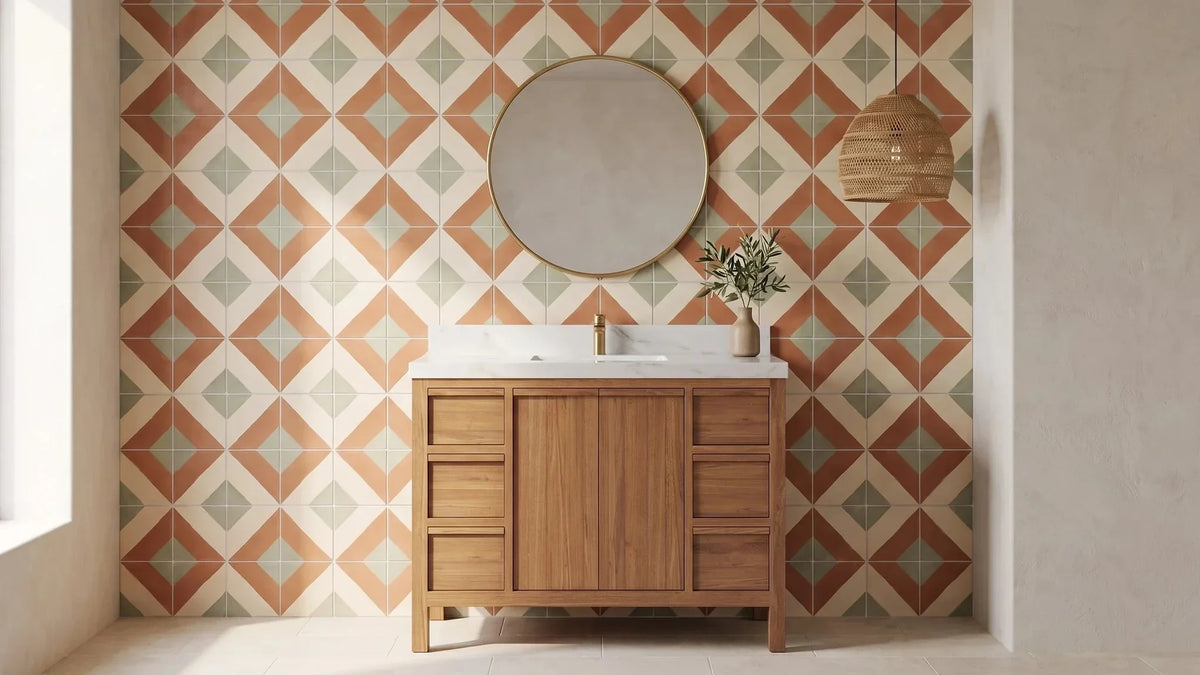
One of the most common bathroom design mistakes is investing in a beautiful teak bathroom vanity and then surrounding it with heavily patterned tiles that compete for attention. Teak is often selected for its rich grain, natural warmth, and premium appearance. Yet those qualities can easily get lost when multiple bold design elements occupy the same space.
Instead of creating a luxurious retreat, the bathroom can feel visually crowded. Understanding how tile choices interact with wood grain can help homeowners create a more balanced and timeless design before making costly purchasing decisions.

What Makes a Teak Bathroom Vanity the Focal Point?
The Natural Grain Is the Feature You're Paying For
The distinctive grain pattern is one of the main reasons homeowners choose a teak bathroom vanity. Teak naturally contains variations in color, texture, and movement that create visual depth without requiring additional decorative elements.
Unlike manufactured finishes, no two teak pieces look exactly alike. This uniqueness gives the vanity character and contributes to its premium appeal.
Why Designers Often Let Teak Take Center Stage
A teak bathroom vanity already introduces texture and pattern into a bathroom. Designers often treat it as the focal point because it naturally draws the eye.
When several surfaces compete for attention at the same time, the room loses visual hierarchy. Strong design relies on allowing one feature to stand out while surrounding elements provide support.
How Busy Tile Patterns Compete With Teak Wood Grain
Pattern Against Pattern Creates Visual Noise
Bold mosaics, dramatic geometric designs, and heavily veined stone-look tiles can overwhelm the natural beauty of wood grain. When both surfaces demand attention, the eye struggles to determine where to focus. This competition often makes even expensive materials appear less effective than they would individually.
The Bathroom Can Feel Smaller Than It Is
Busy patterns add visual activity. In compact bathrooms, excessive activity can make the space feel crowded and confined. The more patterns introduced into a room, the less open and calming it tends to feel.
Expensive Materials Can Look Less Premium
Luxury finishes work best when they are given space to be appreciated. A high-end teak bathroom vanity can lose some of its visual impact when surrounded by equally dominant patterns.
Tile Styles That Actually Complement Teak Bathroom Vanity Grain
Large Format Tiles Create Balance
Large-format tiles help reduce visual clutter by minimizing grout lines. With fewer interruptions across walls and floors, the natural beauty of the vanity becomes more noticeable. These tiles work particularly well in contemporary and transitional bathroom designs.
Soft Stone-Look Finishes Work Well
Subtle stone-inspired finishes often pair beautifully with a white oak bathroom vanity because both materials introduce warmth without competing for attention.
Popular choices include:
-
Limestone-look tiles
-
Travertine-look finishes
-
Soft concrete-look surfaces
-
Muted stone textures
These finishes provide texture while maintaining visual balance.
Best Color Pairings for Teak
Teak pairs especially well with:
-
Warm whites
-
Soft grays
-
Sand tones
-
Beige palettes
-
Muted earth-inspired colors
These colors create cohesion while allowing the wood grain to remain the visual highlight.

When Patterned Tiles Can Still Work With Teak
Limit the Pattern to One Area
Patterned tiles are not automatically a bad choice. The key is limiting them to specific areas, such as:
-
Shower feature walls
-
Recessed niches
-
Decorative backsplashes
-
Accent sections
Controlled use creates visual interest without overwhelming the room.
Keep Scale and Color Consistent
A natural wood bathroom vanity works best when surrounding colors share similar undertones. Matching warm tones helps different materials feel connected. Avoid combining multiple bold patterns within the same sightline. Simplicity often creates a more sophisticated result.
What to Check Before Buying a Teak Bathroom Vanity and Tiles Together
View Samples Side by Side
Materials often look different under showroom lighting than they do at home. Always compare samples together before making a final decision.
Natural daylight provides the most accurate representation of how finishes will work together.
Consider Long-Term Style Appeal
Design trends change quickly, but wood remains consistently popular. A bathroom vanity with sink featuring genuine teak often stays relevant longer when paired with understated tile choices.
Simple backgrounds also make future design updates easier.
Think Beyond Individual Products
Bathrooms function as complete environments rather than collections of separate products.
When evaluating options, consider how the vanity, tiles, lighting, mirrors, hardware and accessories will work together. A cohesive design almost always feels more expensive than a room filled with competing statement pieces.
Conclusion
The natural grain of a teak bathroom vanity is often its greatest design asset. Allowing that grain to remain the visual focal point creates a bathroom that feels balanced, sophisticated, and timeless. Rather than competing with bold tile patterns, calmer backgrounds help showcase the warmth and character that make teak so desirable. Before making a purchase, compare tile samples directly against vanity finishes to see how they interact.
Explore premium teak bathroom vanity options from Willow Bath and Vanity to create a stunning centerpiece for your next bathroom project. Visit us today.
FAQs
What tile color works best with a teak bathroom vanity?
Warm neutrals, soft whites, beige tones and subtle grays generally complement teak without competing with its natural grain.
Are patterned tiles always a bad choice with teak?
No. Patterned tiles can work well when used as accents rather than across large surfaces.
Do large-format tiles make a bathroom look bigger?
Yes. Fewer grout lines create a cleaner visual appearance that can make the room feel more spacious.
Share:
36-Inch Offset Sink Bathroom Vanity: Left vs Right Guide
Willow Vanity Colors & Finishes: Every Shade and Its Designer Paint Match