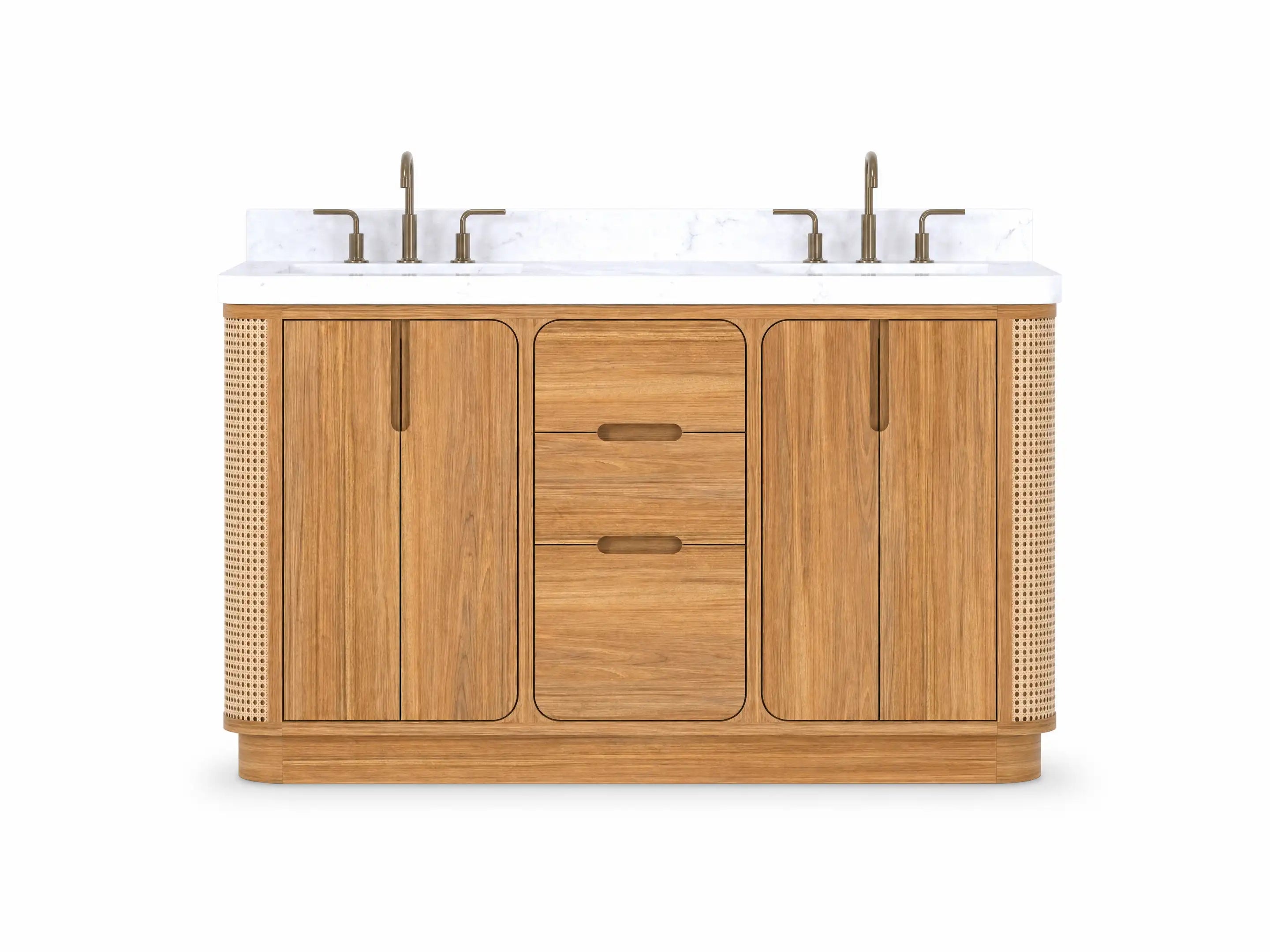
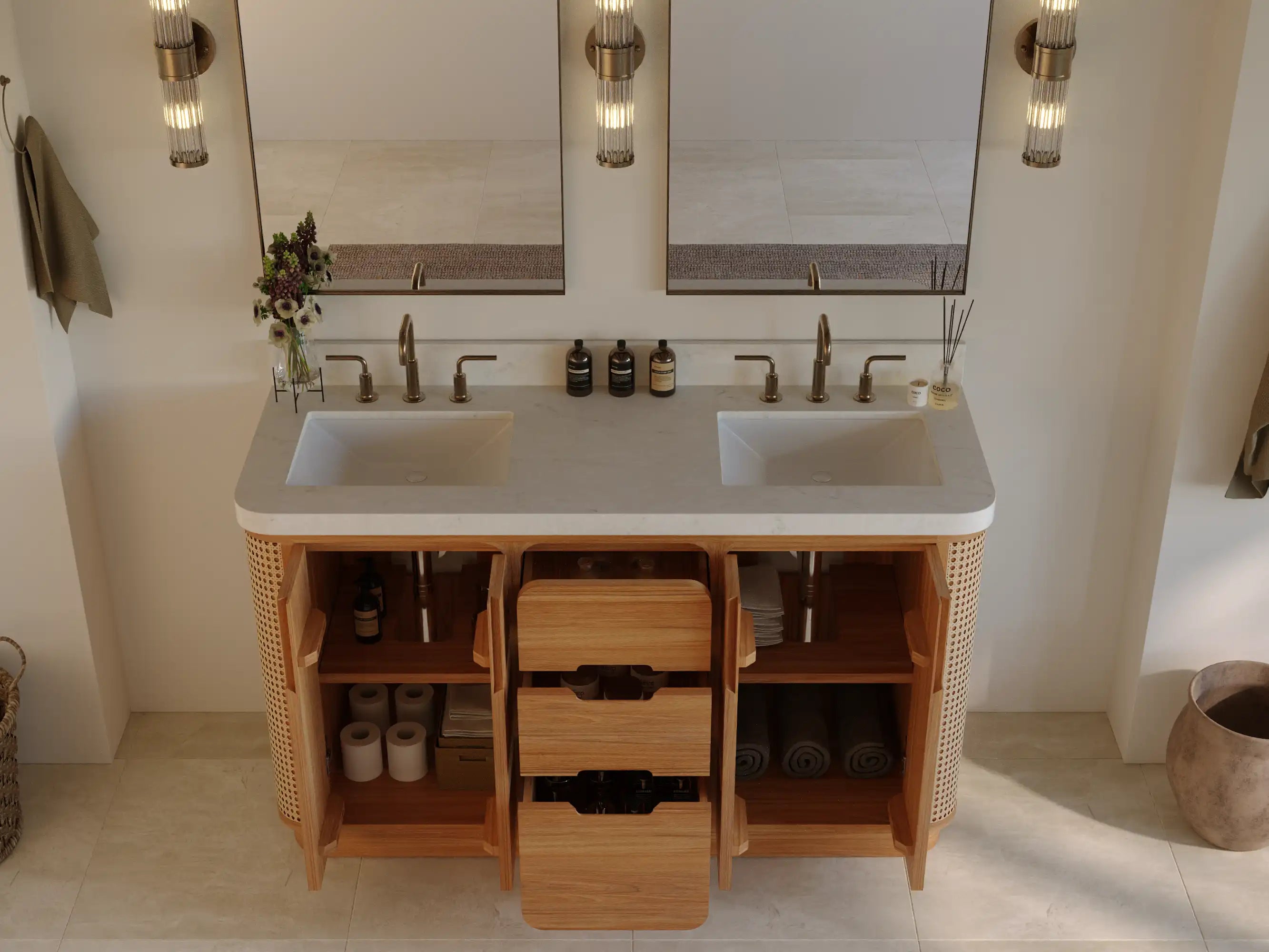
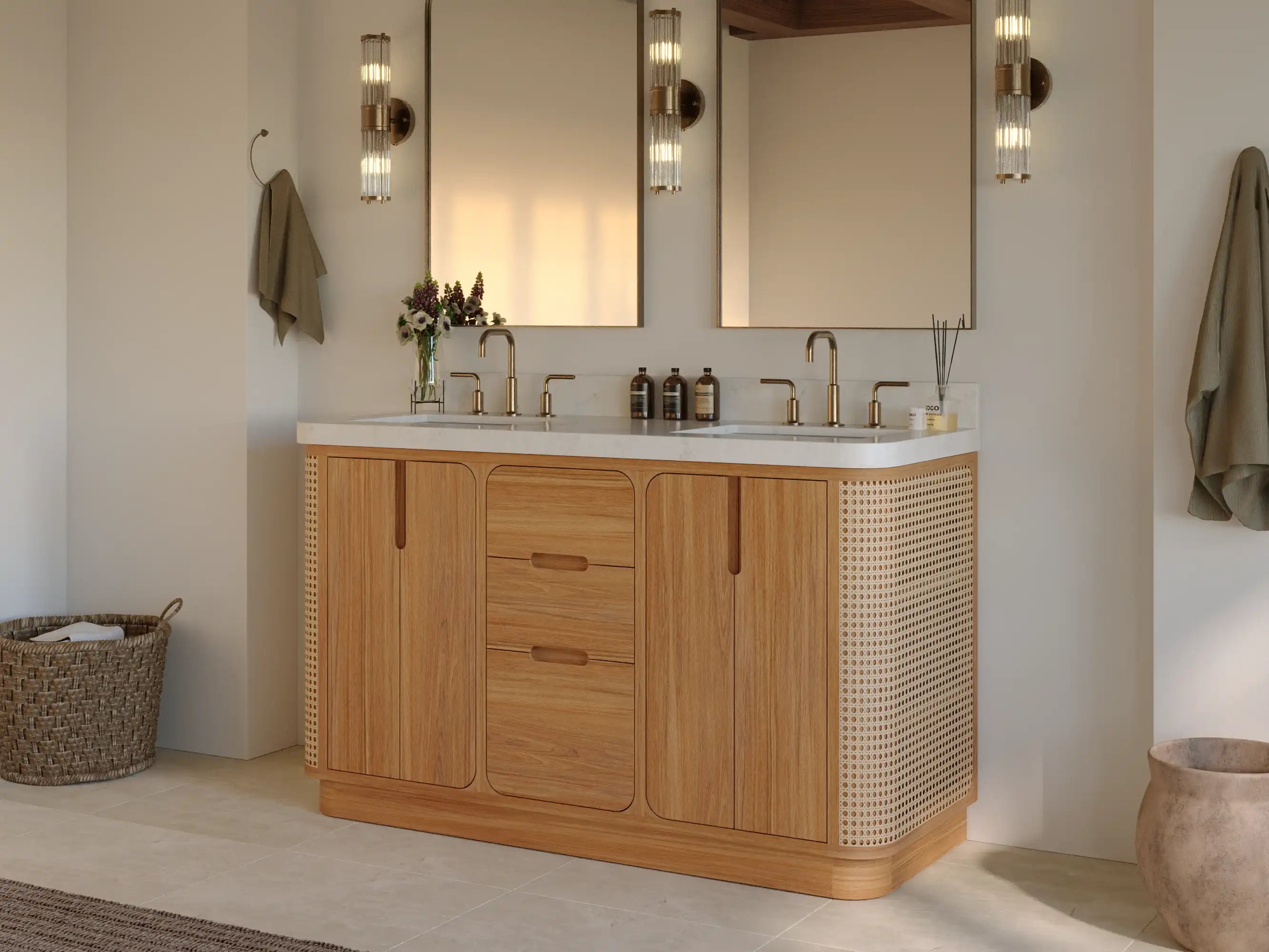
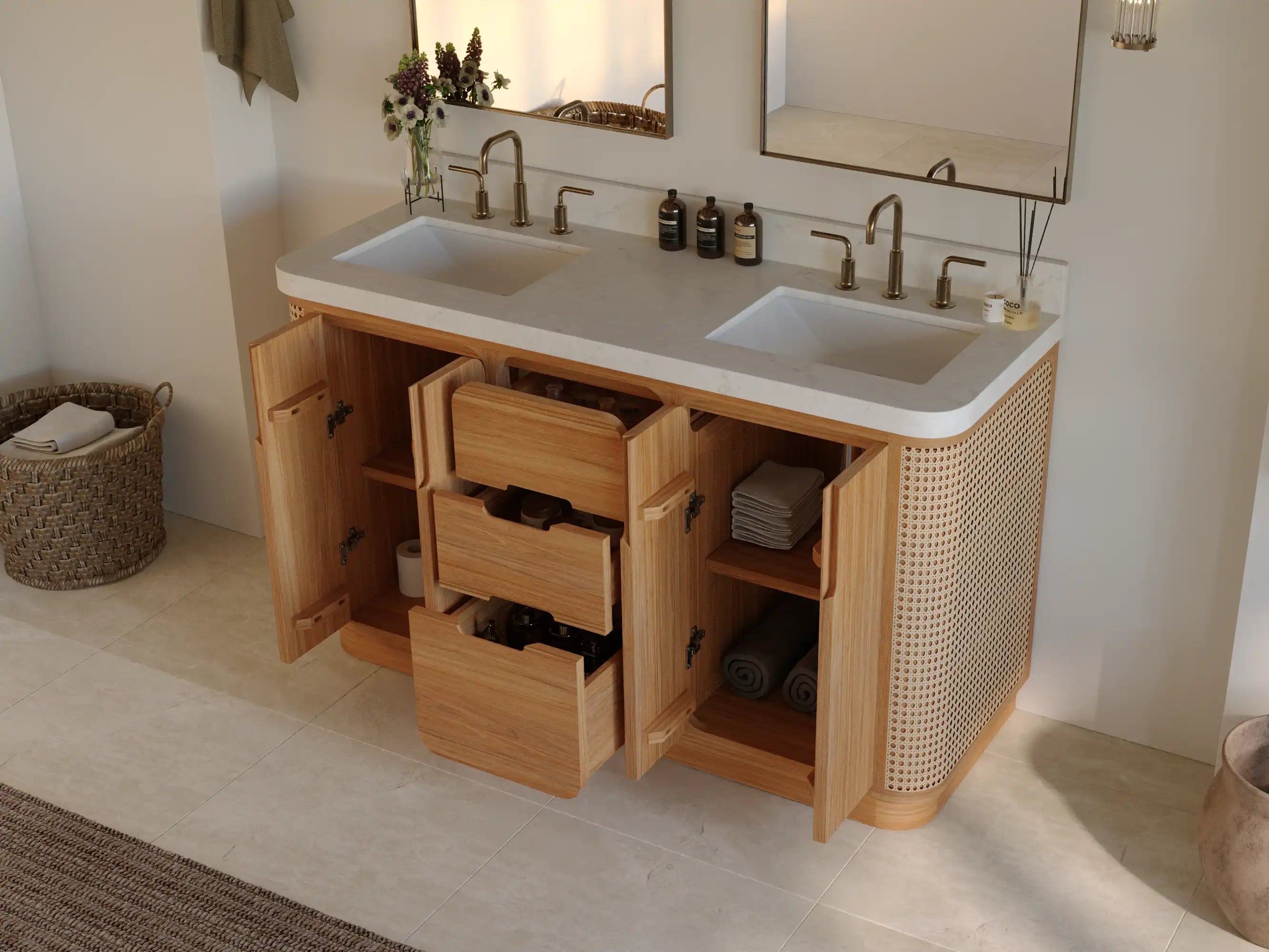
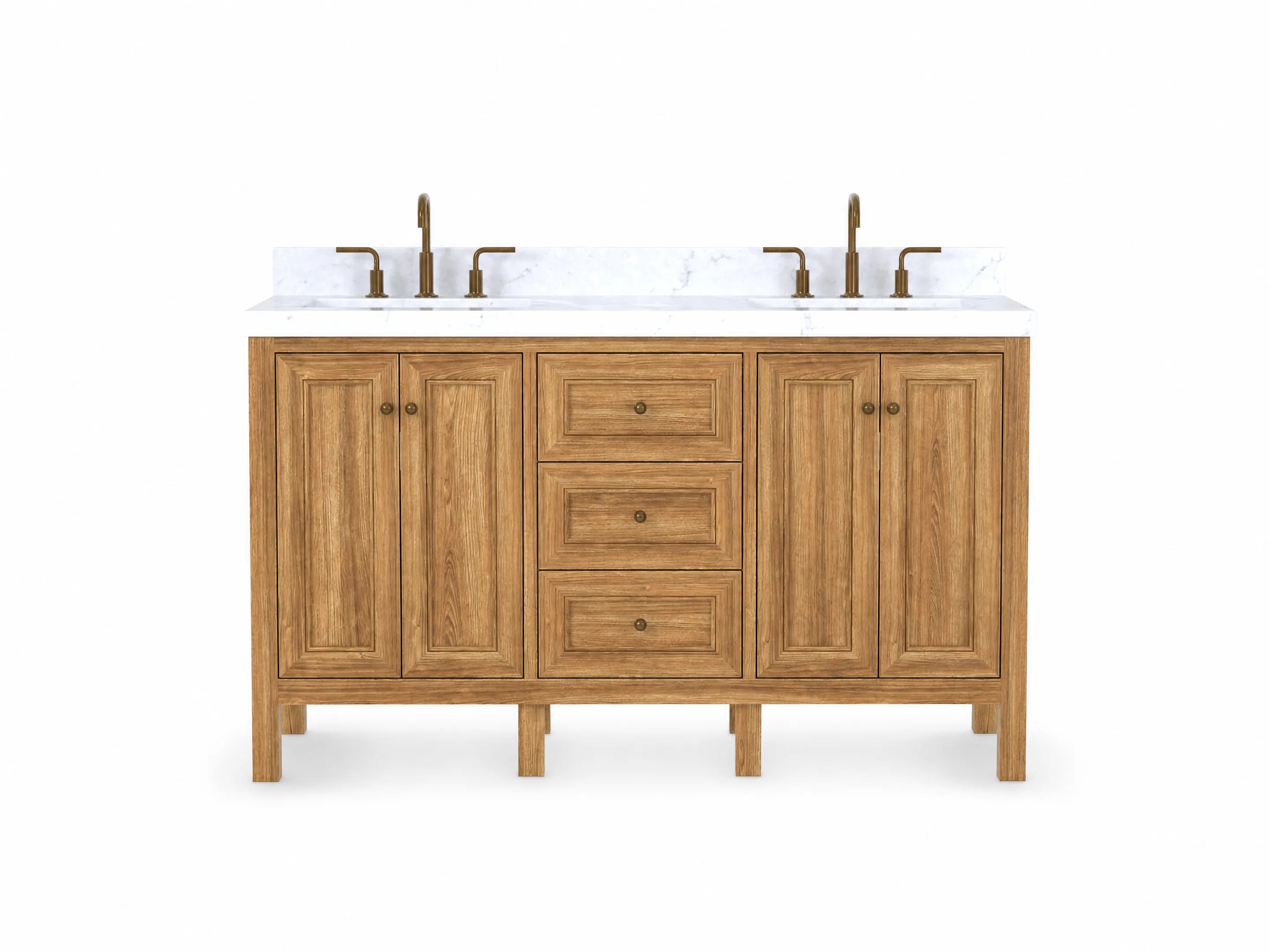
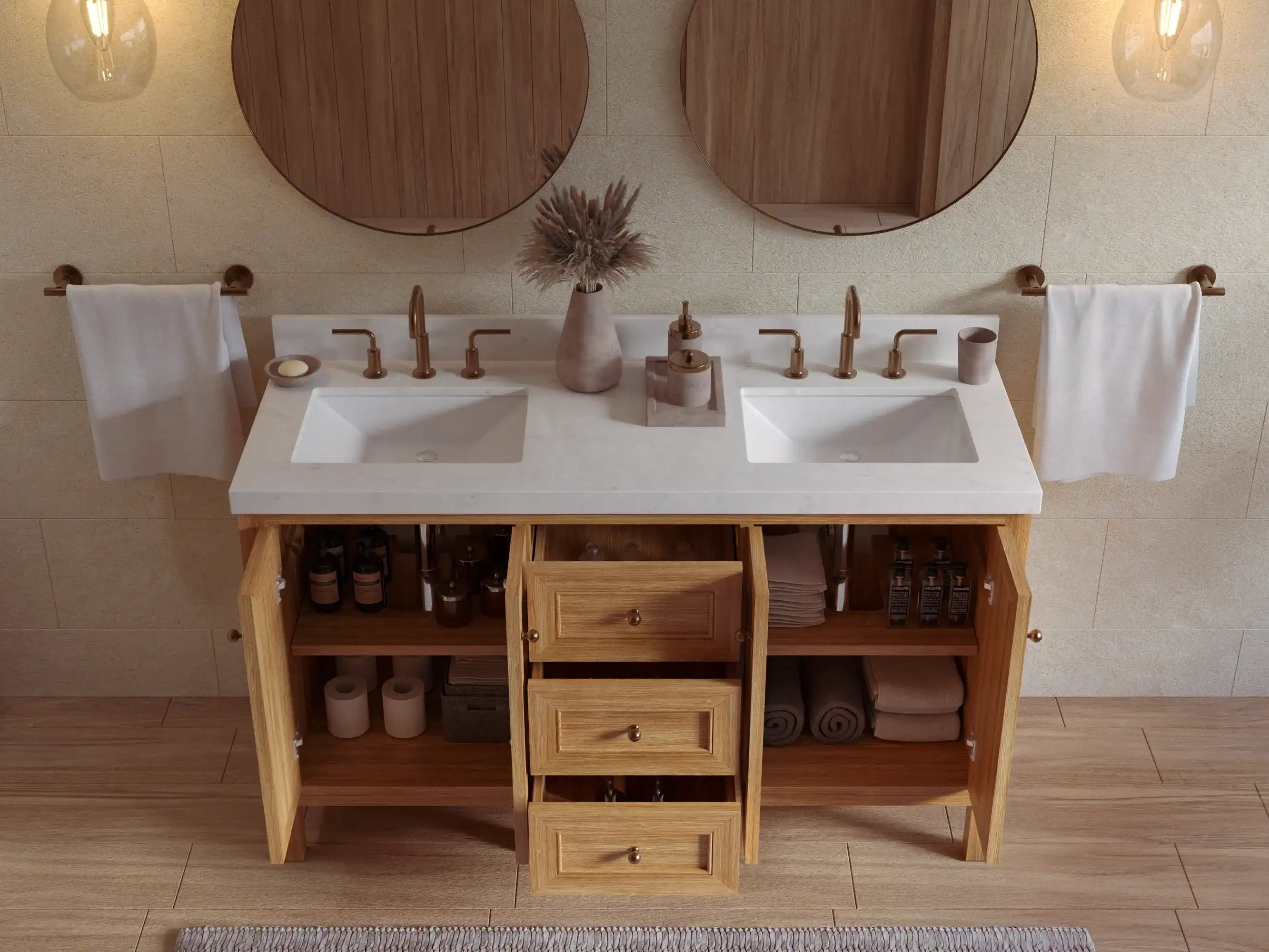
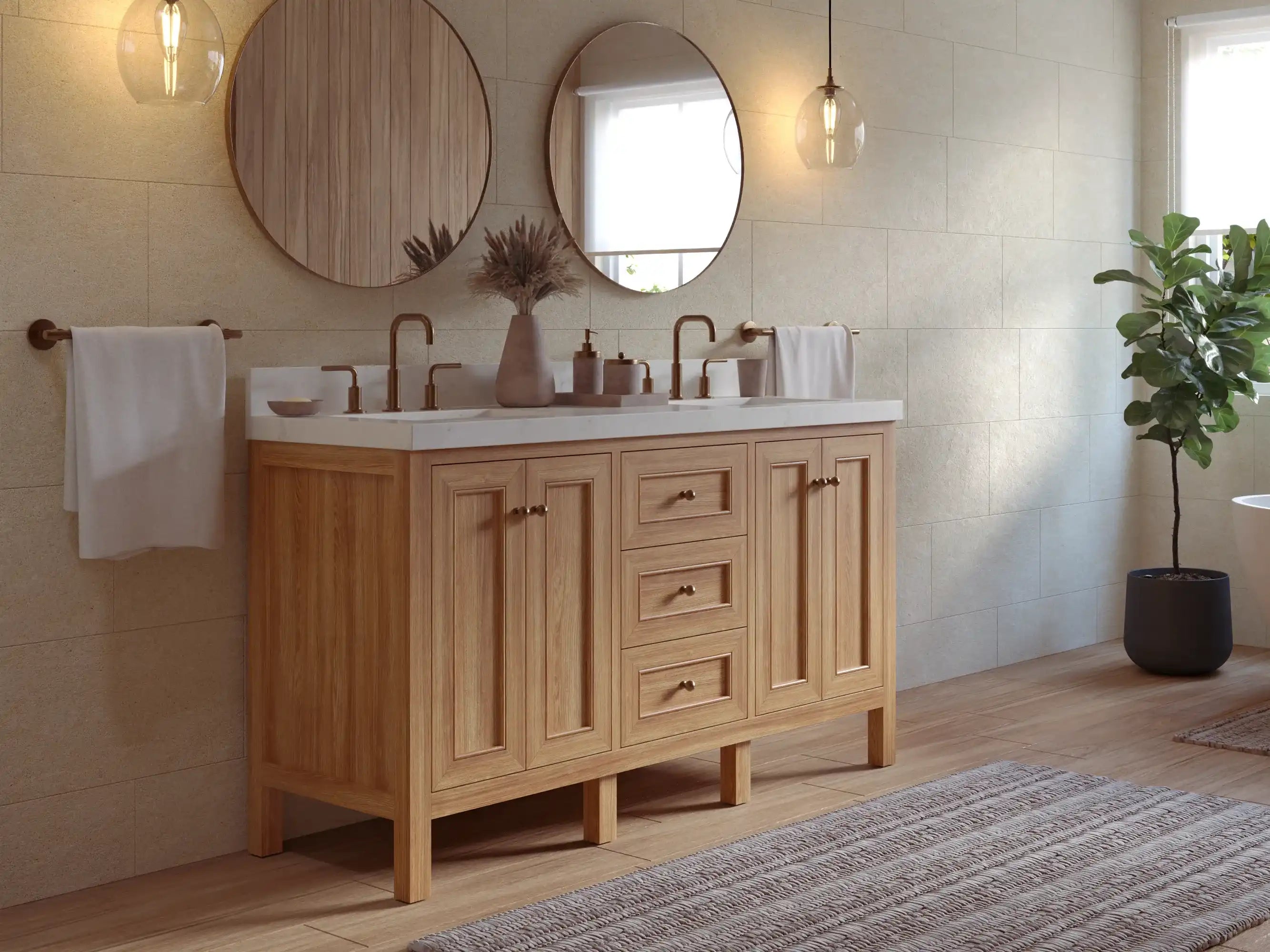
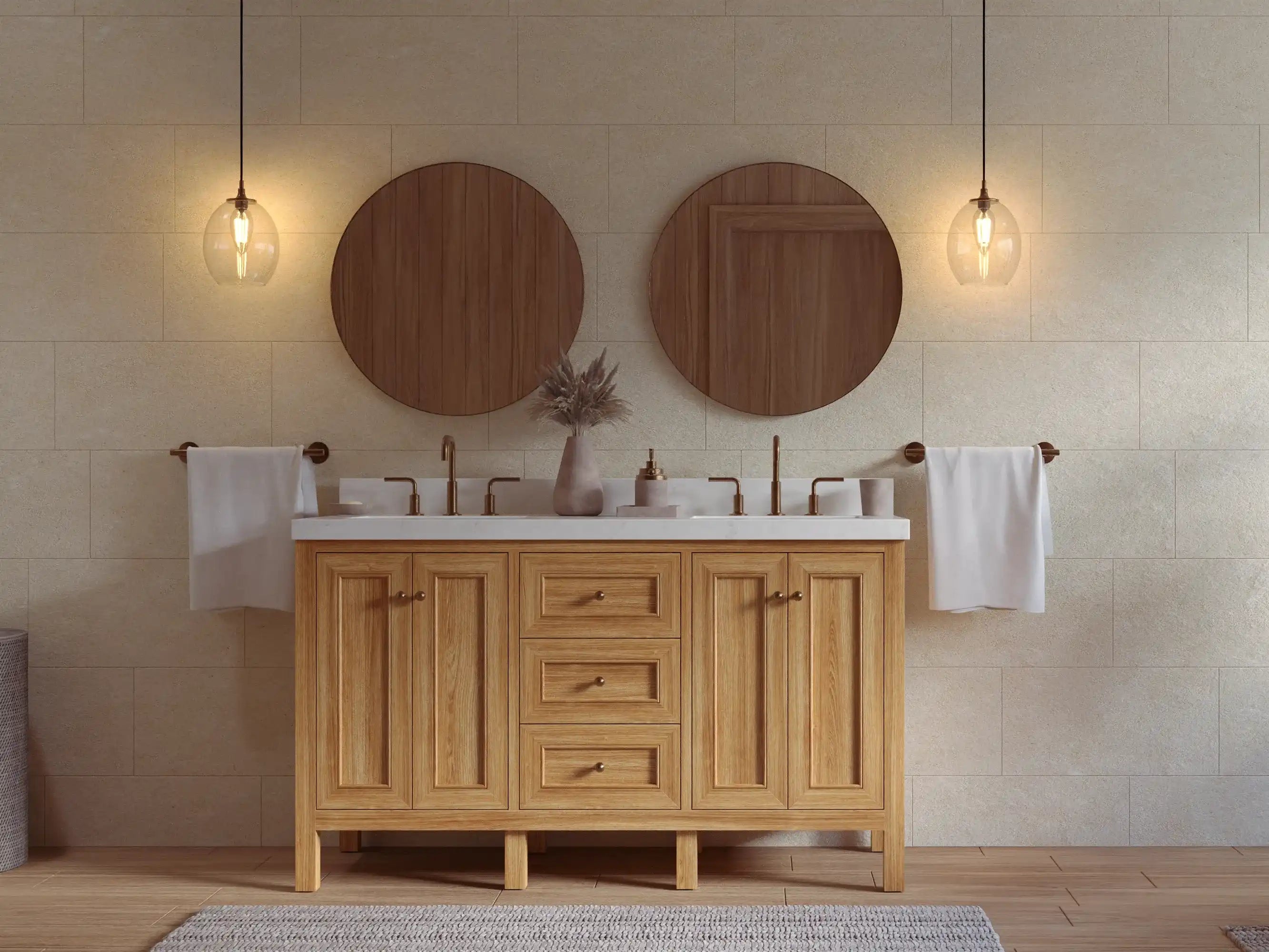
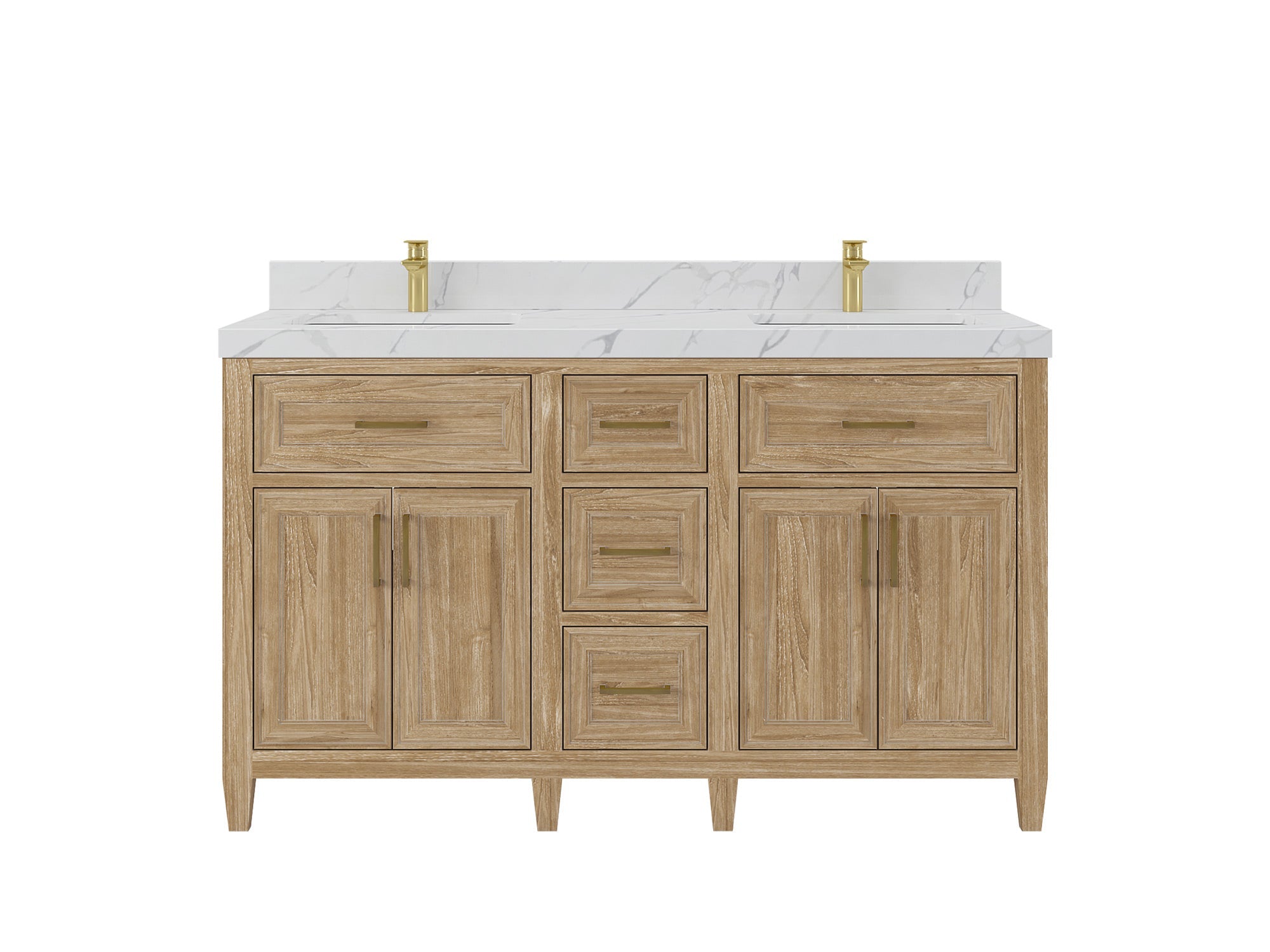
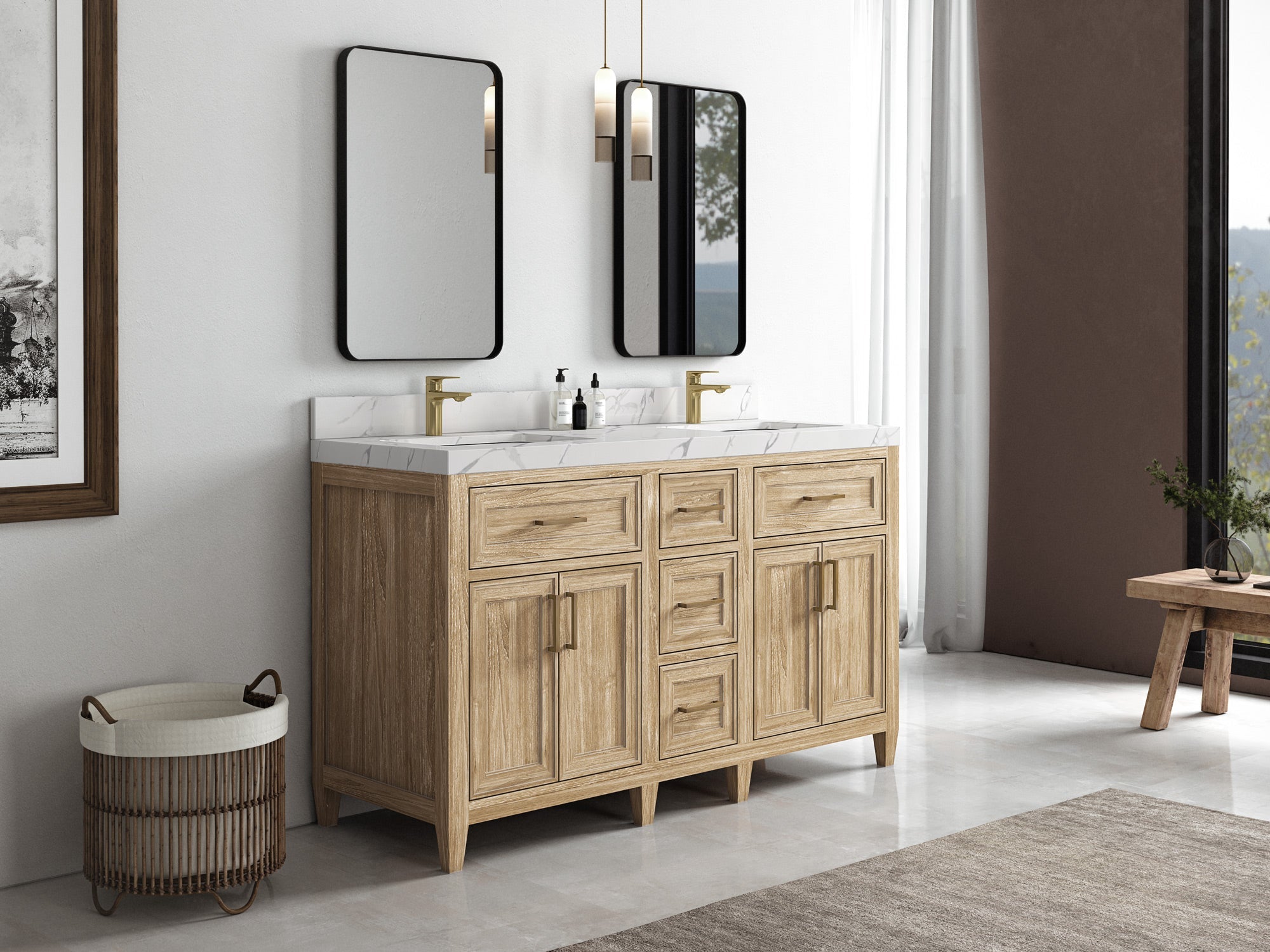
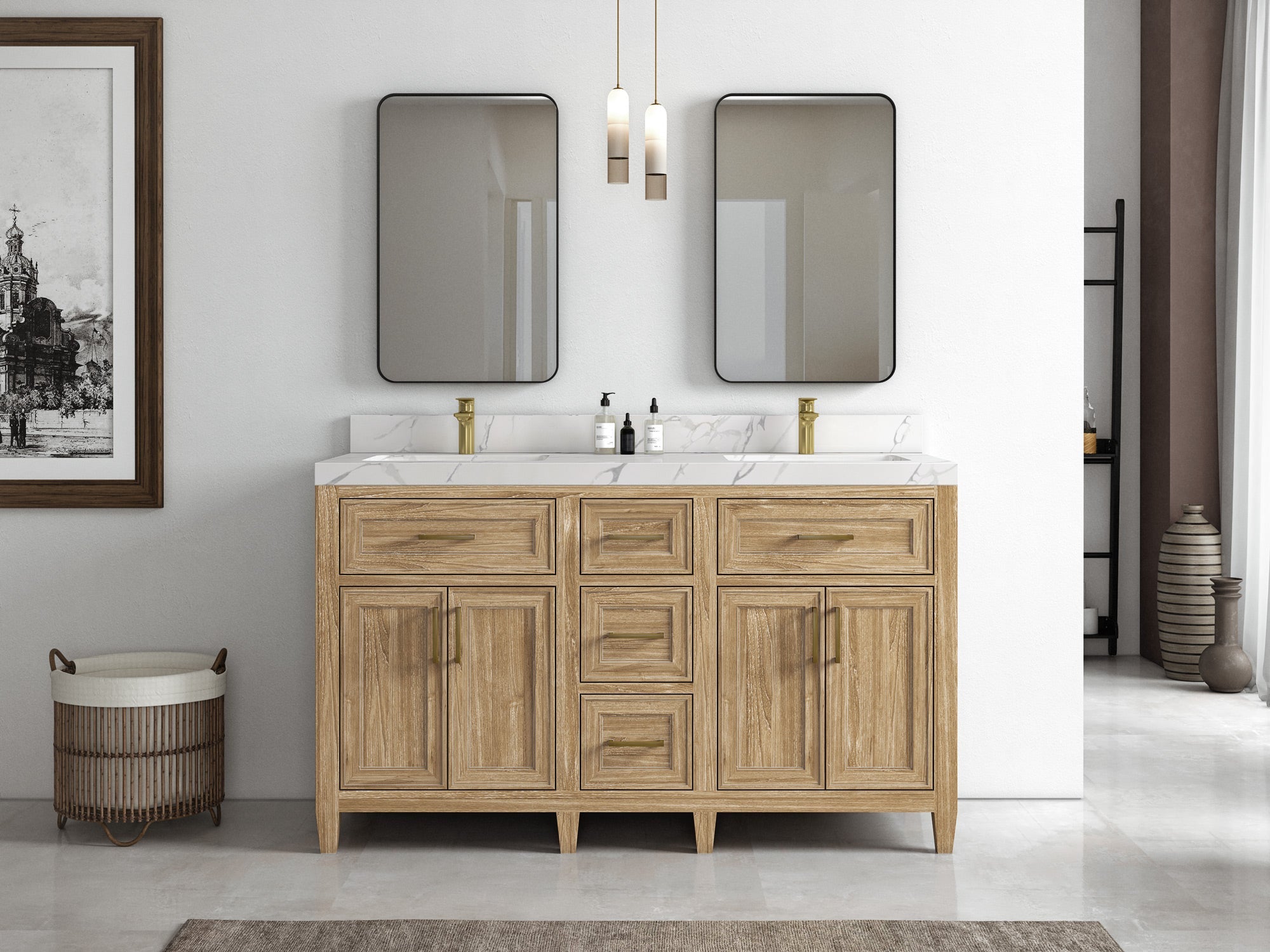
Willow's Teak 60 collection gathers our 60-inch solid teak bathroom vanities in one place. Sixty inches is the sweet-spot width: wide enough to give a single sink a generous, uninterrupted counter, yet roomy enough to carry two basins when you want a double. Every vanity here is built from solid teak, one of the densest, most naturally water-resistant hardwoods you can put in a wet room, never MDF or particleboard. You'll find floating and freestanding designs across the Madison, Elizabeth, Charlotte, Malibu, Manhattan, Parker, Atlanta, Hampton, Catalina, and Sonoma lines, in finishes from Light Natural and Golden Teak to Dark Natural and a Dark Walnut tone.
Sizing a 60-inch vanity
Sixty inches is where you get real flexibility. As a single-sink vanity, the extra span gives you a wide, usable countertop and room for two people to stand at the mirror together. As a double, like the Manhattan or the reeded Catalina, 60 inches is about the practical minimum for two sinks that don't feel cramped, with a little counter left between them for daily use. Every Teak 60 vanity is 22 inches deep, a standard depth that clears most doorways and keeps comfortable walking room in a mid-size bathroom. Measure your wall run and your door swing first: if 60 inches feels tight, a 48-inch model may sit better, and if you have the wall for it, a 72-inch adds storage.
Floating, freestanding, and finishes
This collection carries both mounting styles. Wall-mounted (floating) models like the Madison, Hampton, and Sonoma leave the floor visible underneath, which makes a smaller bathroom read larger and simplifies cleaning; just confirm your wall can carry the load and that plumbing can exit through the wall. Freestanding models such as the Charlotte, Malibu, and Catalina rest on the floor and hide plumbing behind the base, making them the easier swap when you're replacing an existing vanity without moving pipes. If you want texture rather than a flat front, the reeded Catalina and Sonoma add vertical fluting. Finishes span the natural range of teak, from light and golden tones to deeper dark-natural and walnut, so the wood grain stays the star.
Why teak holds up, and simple care
Teak earns its place in bathrooms because its natural oils resist humidity and moisture far better than most woods, which is exactly what a bathroom demands. It's a genuine solid hardwood, responsibly and FSC-certified sourced, never MDF or particleboard, so the piece can be sanded and refreshed over years rather than chipping at the edges like laminate. Care is straightforward: wipe spills promptly, avoid standing water at the seams, and clean with mild soap instead of harsh chemicals. Depending on the design, tops come in quartz, quartzite, marble, travertine or terrazzo with a mitered or cove edge, so you can match the counter to the look you want.
Keep exploring by size in our 60-inch vanities, or step down to 48-inch if space is tight. Browse the full teak collection, our double-sink vanities, and the wider range of solid wood vanities. For countertop options, see our vanity countertops guide.
Teak 60 vanity FAQ
Is this real solid wood or a veneer over board?
These are solid teak vanities, a true hardwood chosen for how well it handles bathroom humidity, never MDF or particleboard. That construction is why a teak vanity can be refinished and last for years, rather than swelling or delaminating like laminate.
Can a 60-inch vanity really hold two sinks?
Yes. Sixty inches is the practical starting width for a comfortable double, and lines like the Manhattan and Catalina are offered in a two-basin layout. If you'd rather have one large sink and more counter space, most lines here also come as a single.
Should I choose a floating or a freestanding model?
Floating (wall-mounted) models like the Madison, Hampton, and Sonoma leave the floor visible and make a smaller bathroom feel larger, but they need a wall that can carry the load and plumbing that exits through the wall. Freestanding models such as the Charlotte, Malibu, and Catalina rest on the floor and hide the plumbing, which makes them the easier swap when you are replacing an existing vanity without moving pipes.
What countertops are available on these vanities?
Depending on the design, tops come in quartz, quartzite, marble, travertine or terrazzo, finished with a mitered or cove edge. Quartz is the easiest to live with day to day, while natural stones like marble trade a little upkeep for a classic veined look.
Is 60 inches the right width, or should I size up or down?
Sixty inches suits a generous single or a comfortable double and is 22 inches deep, a standard depth for a mid-size bathroom. Measure your wall run and door swing first: if 60 inches feels tight, look at a 48-inch model, and if you have the wall for it, a 72-inch adds storage.