


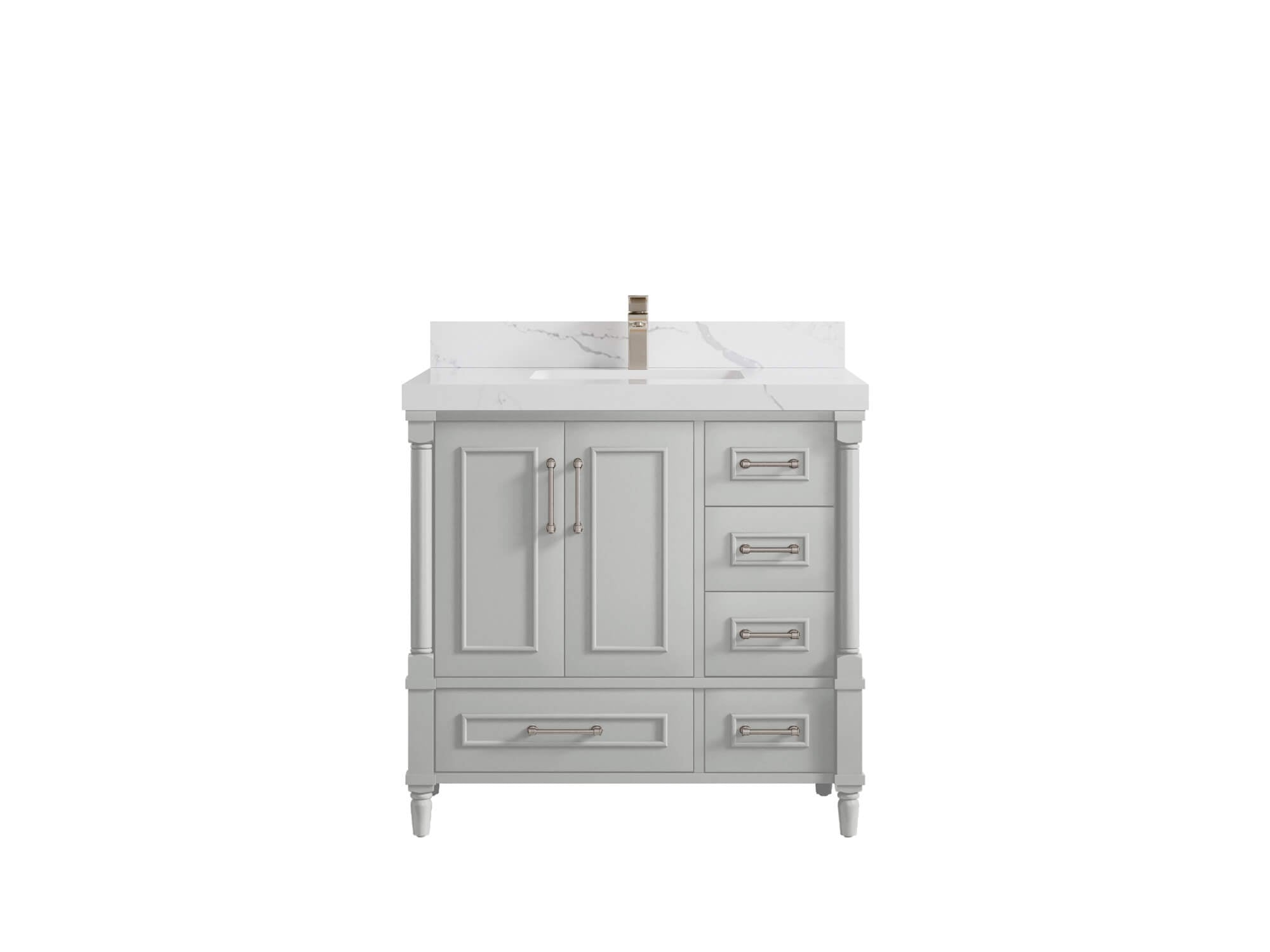

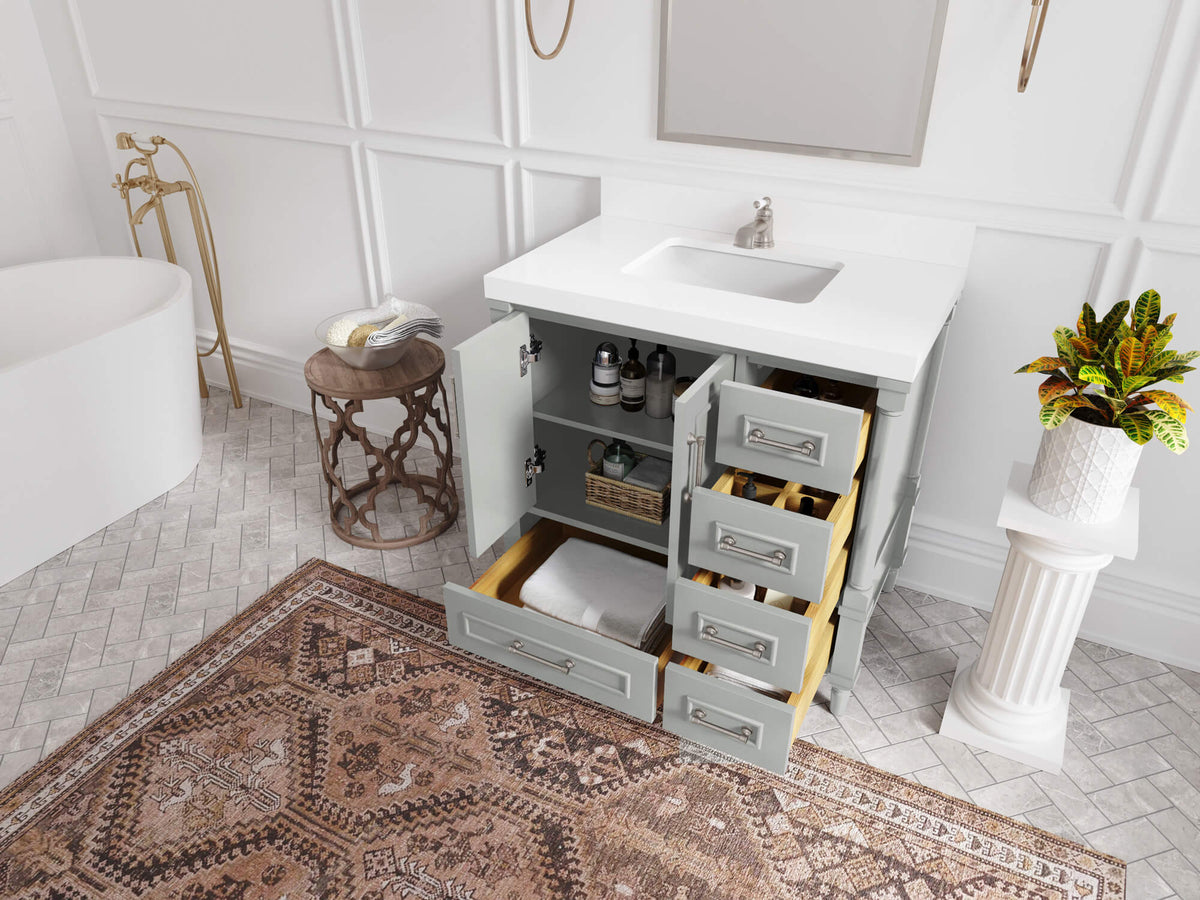

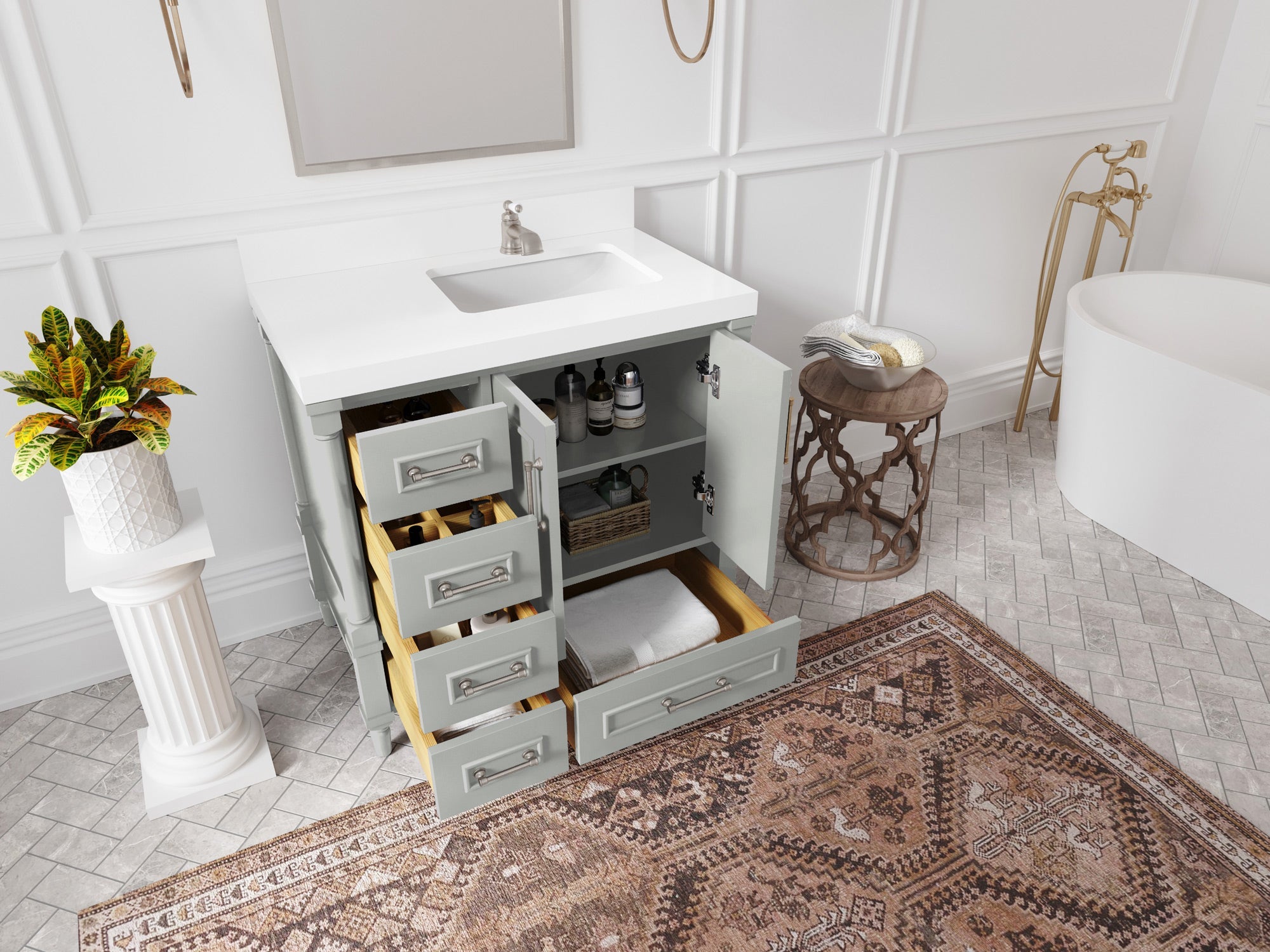
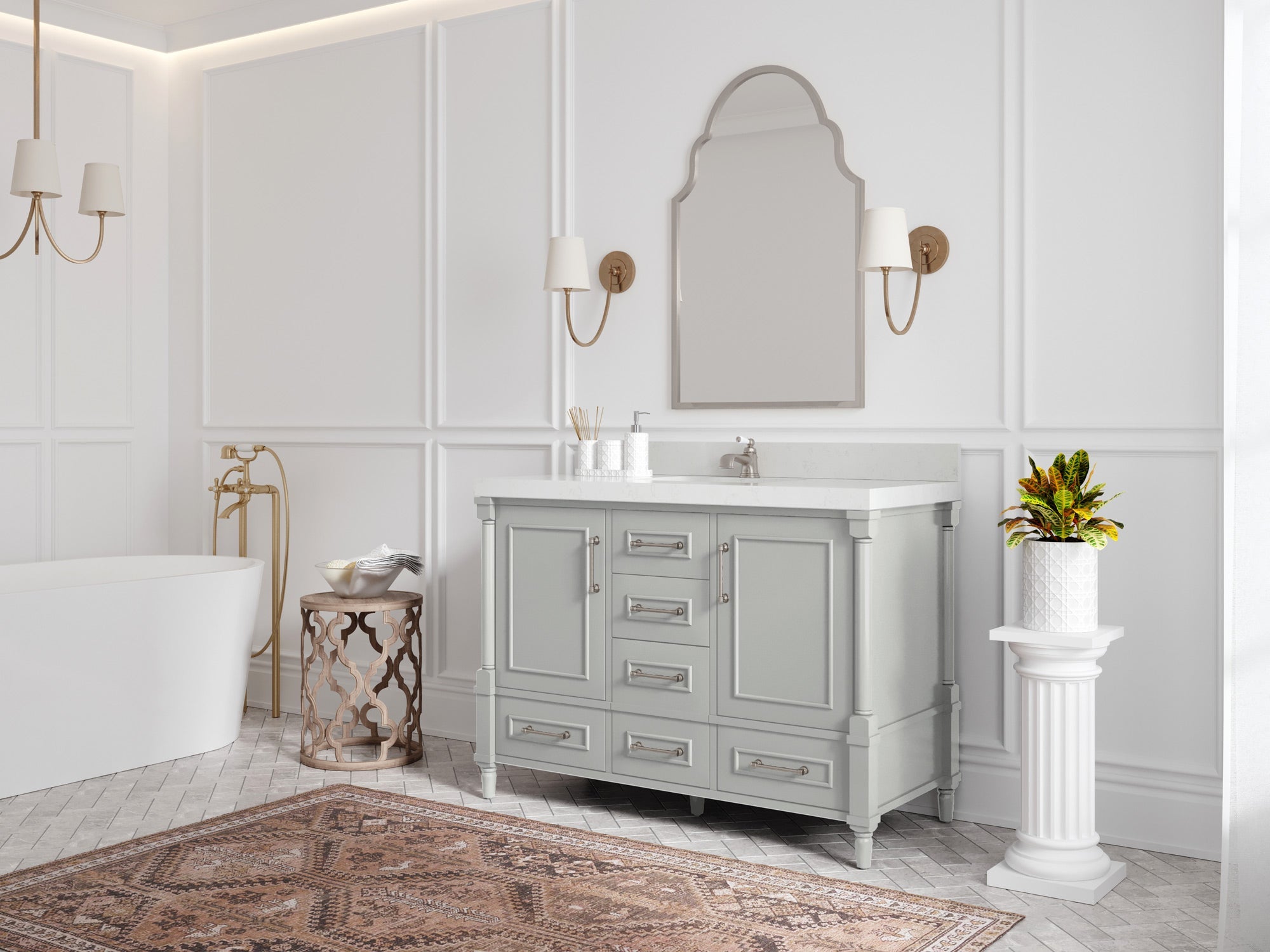
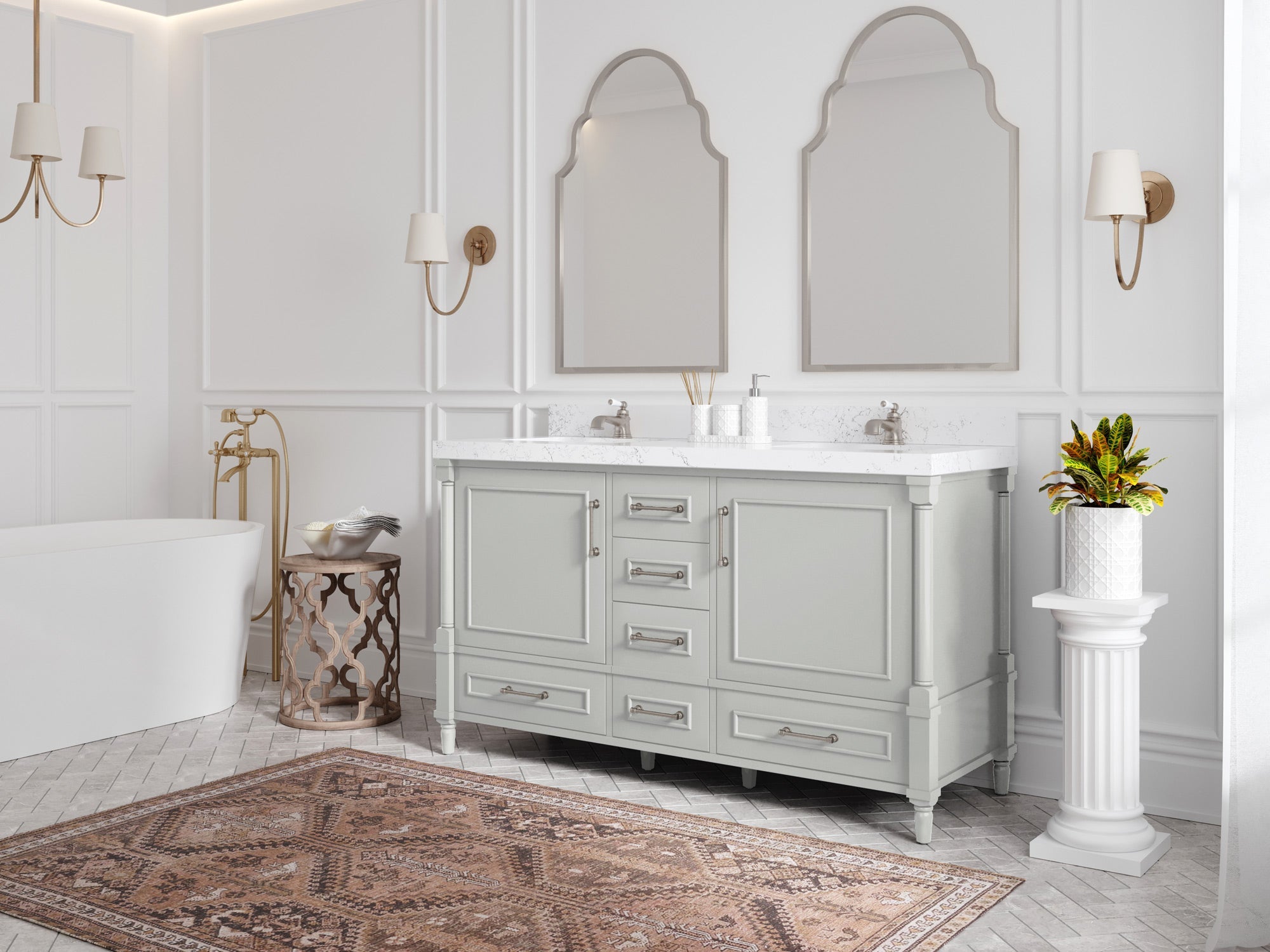
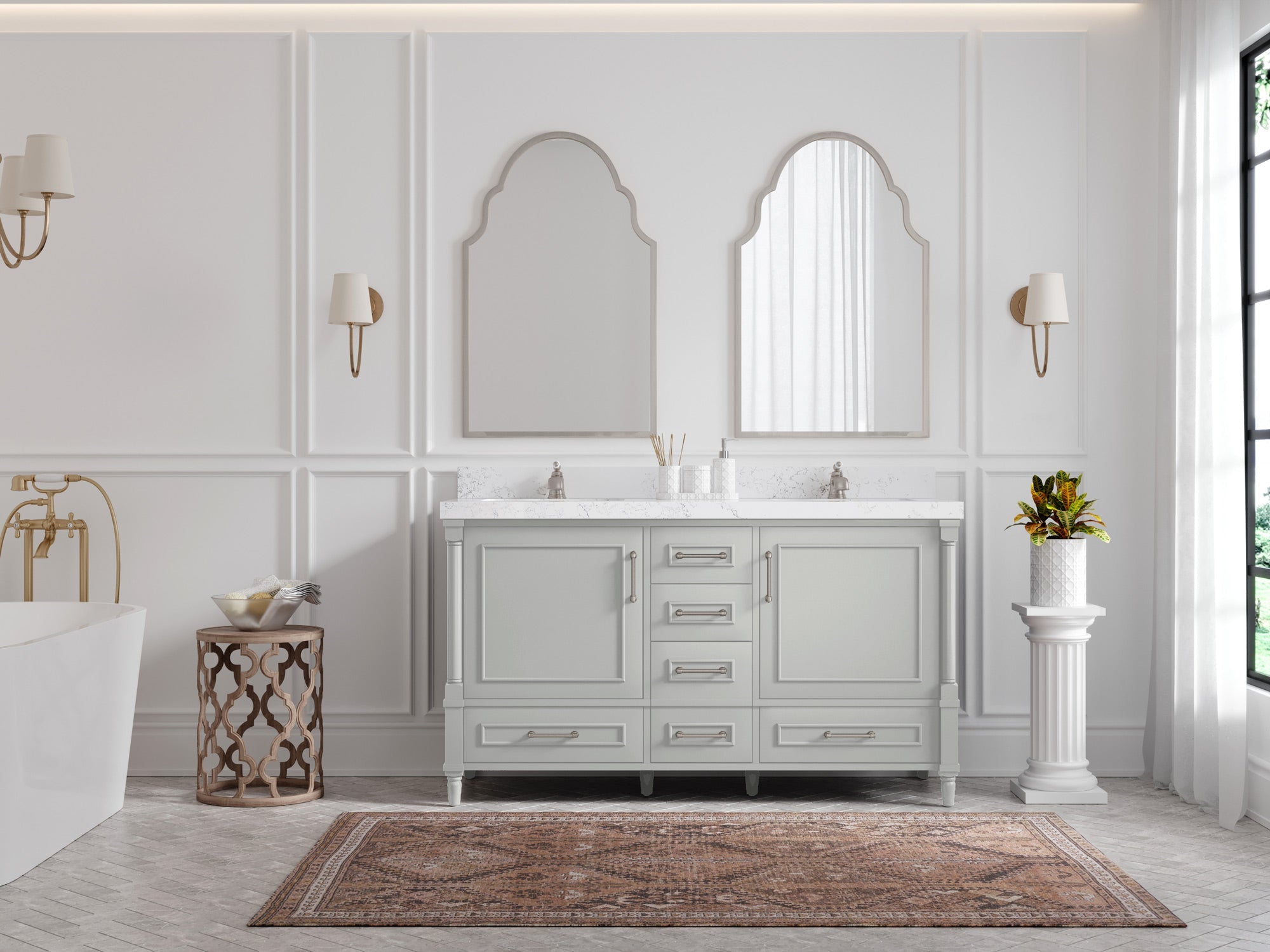
Aberdeen 36 in. — Coventry GrayCenter sink
In stock · Ships in 7–10 business days


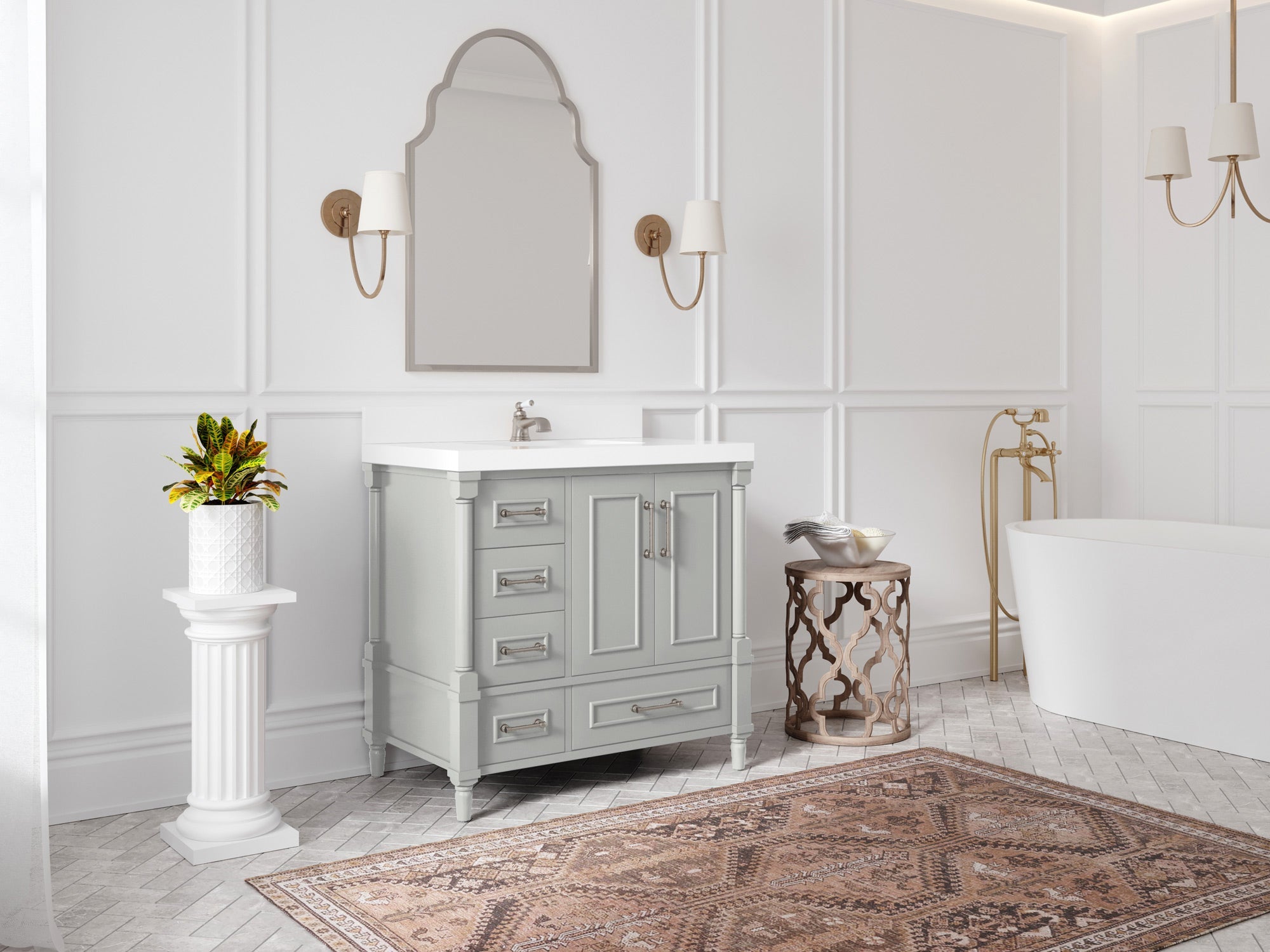
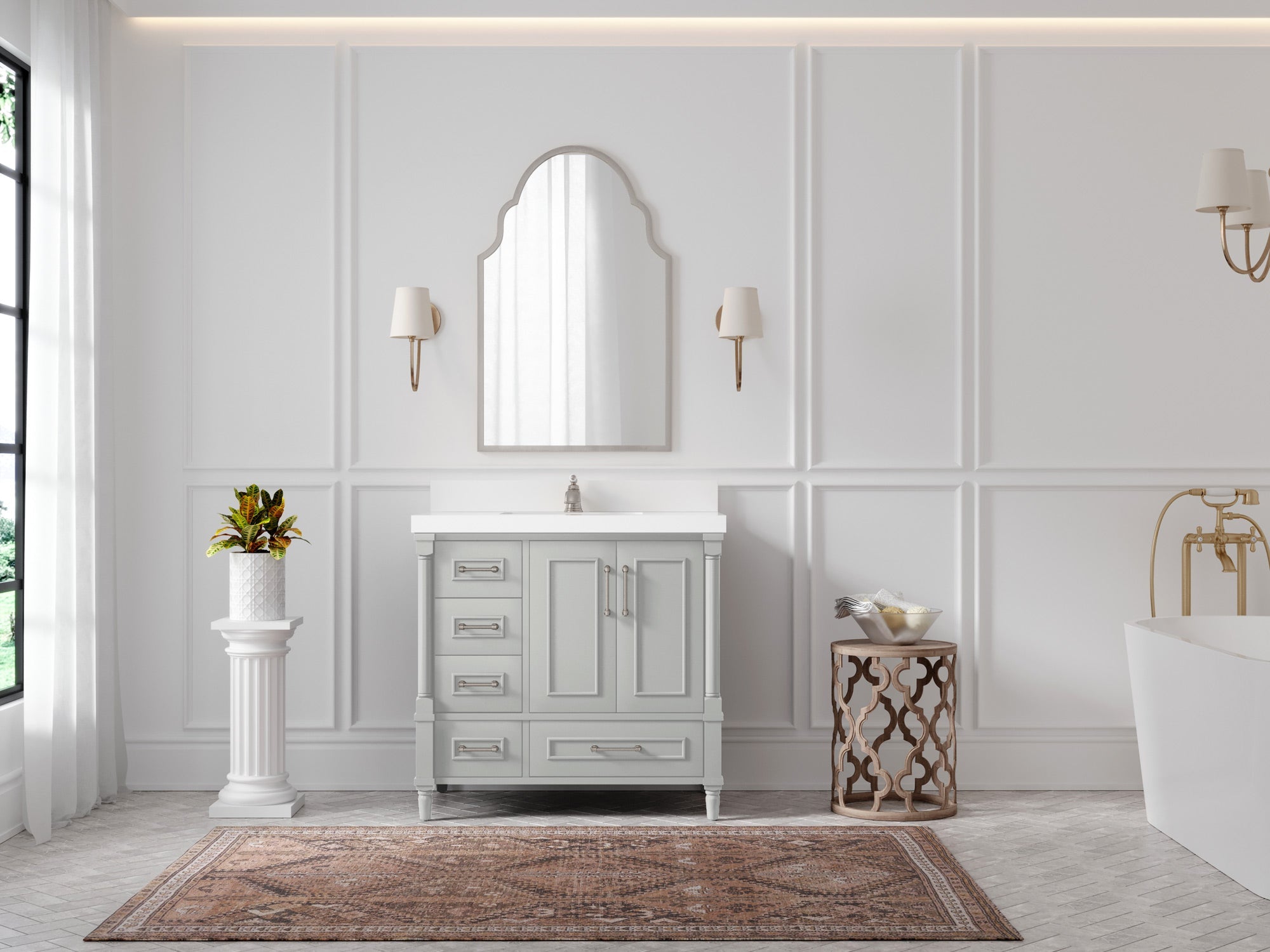


Aberdeen 36 in. — Coventry GrayLeft-offset sink
In stock · Ships in 7–10 business days






CURATED FOR THIS COLLECTION
Built Beyond the Surface
Solid-wood construction, dovetail drawers and considered details made for real bathrooms and daily life.


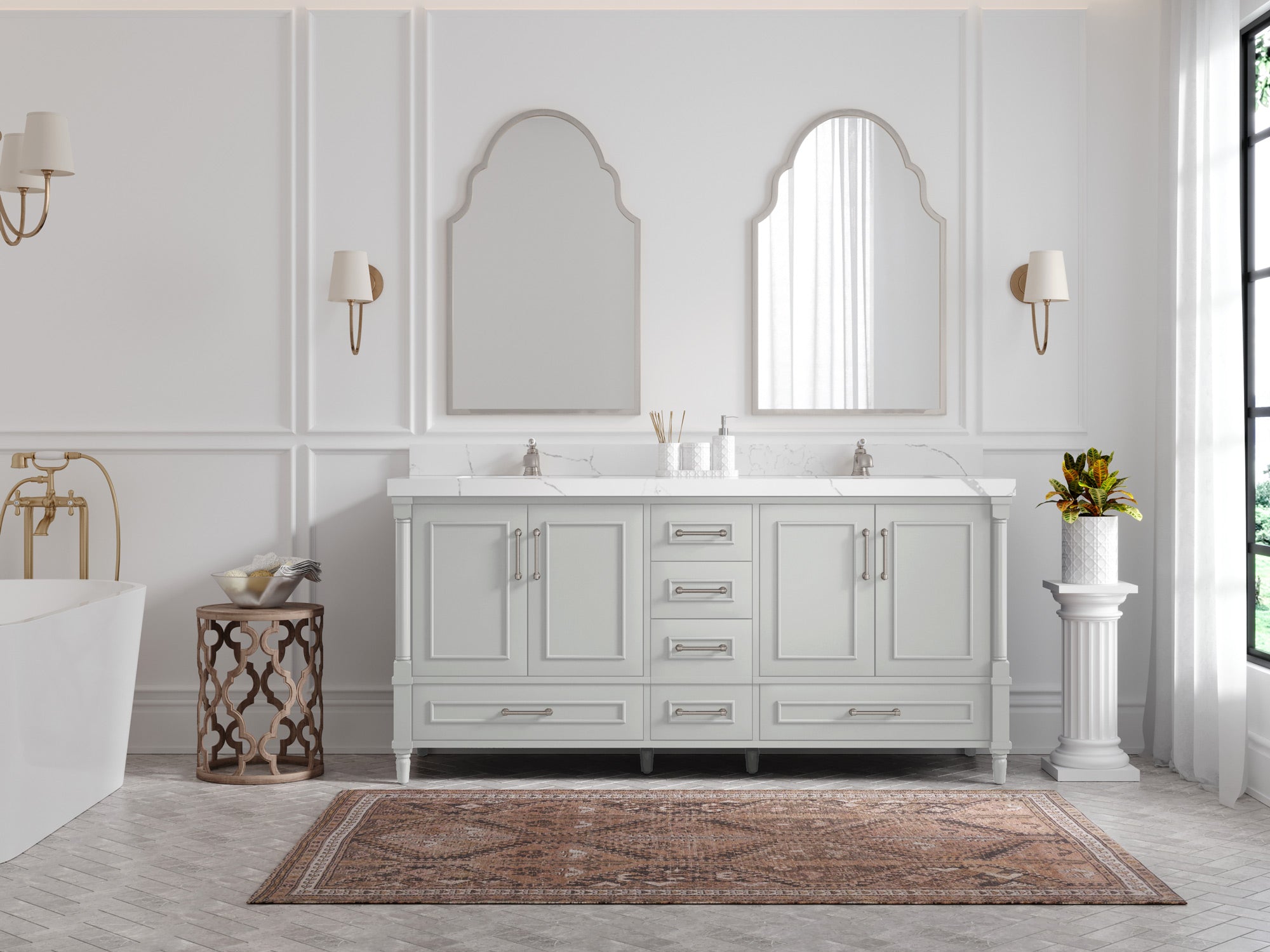
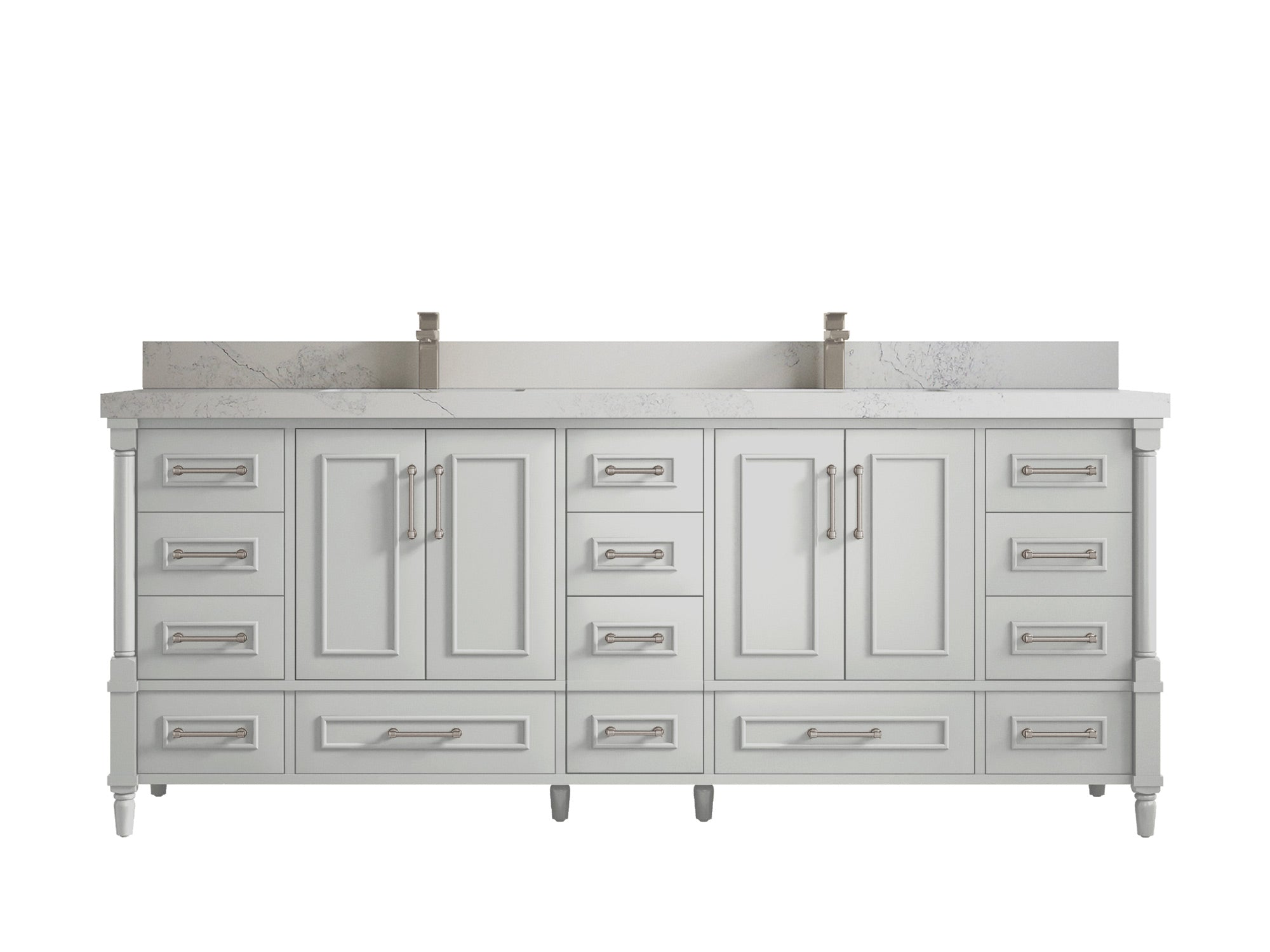


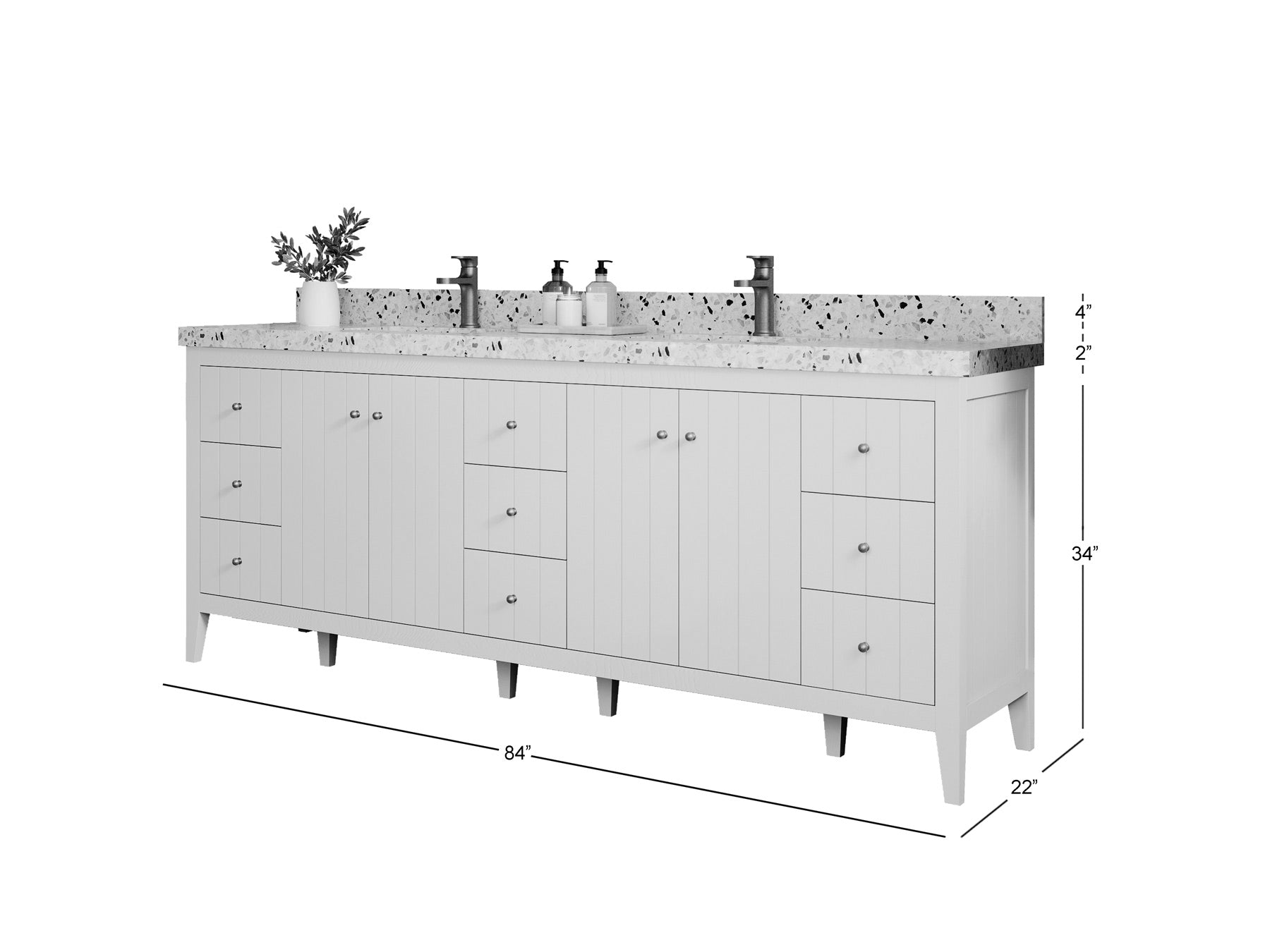


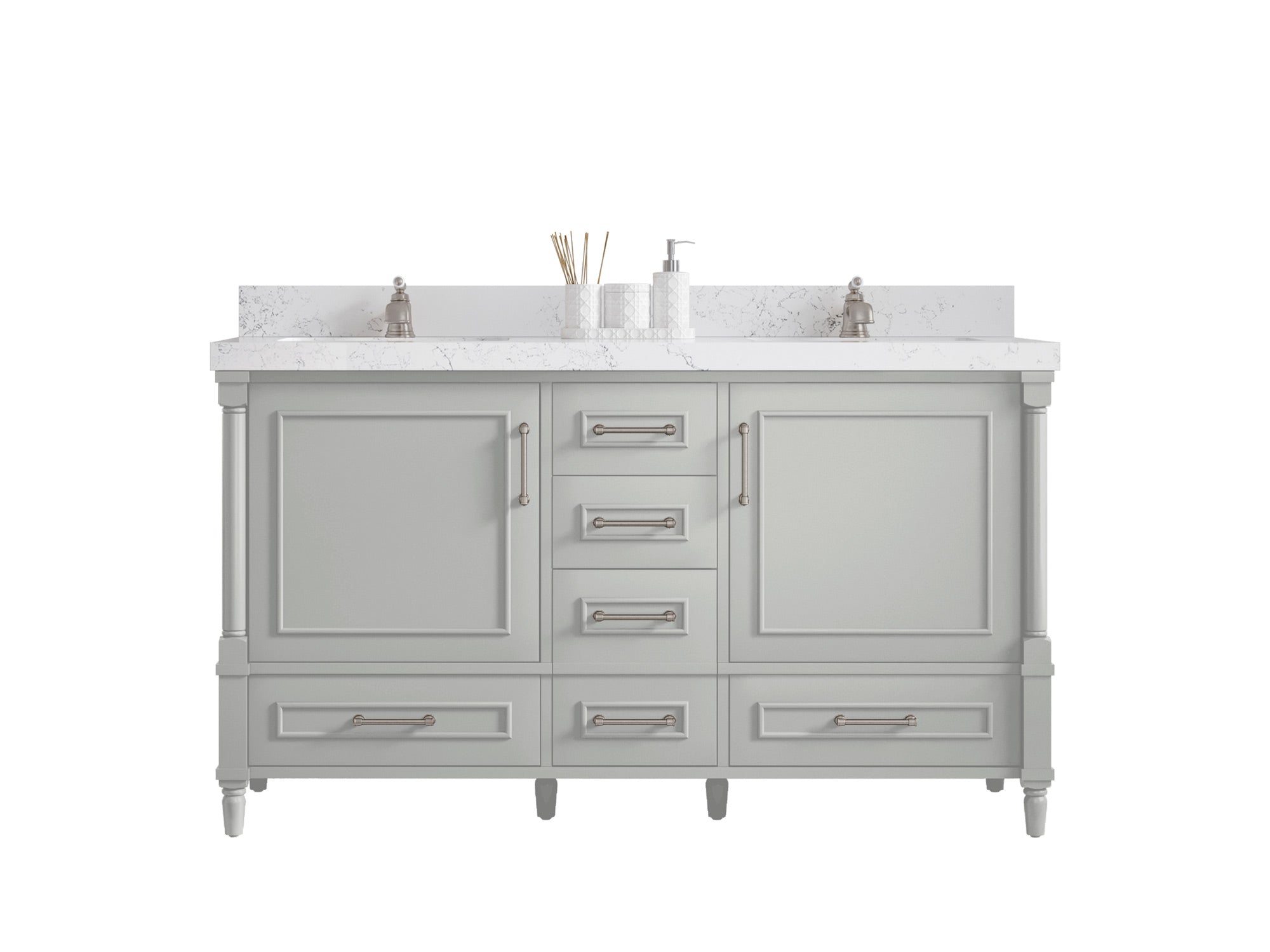
Atlanta 84 in. — Coventry GrayDouble sink
In stock · Ships in 7–10 business days
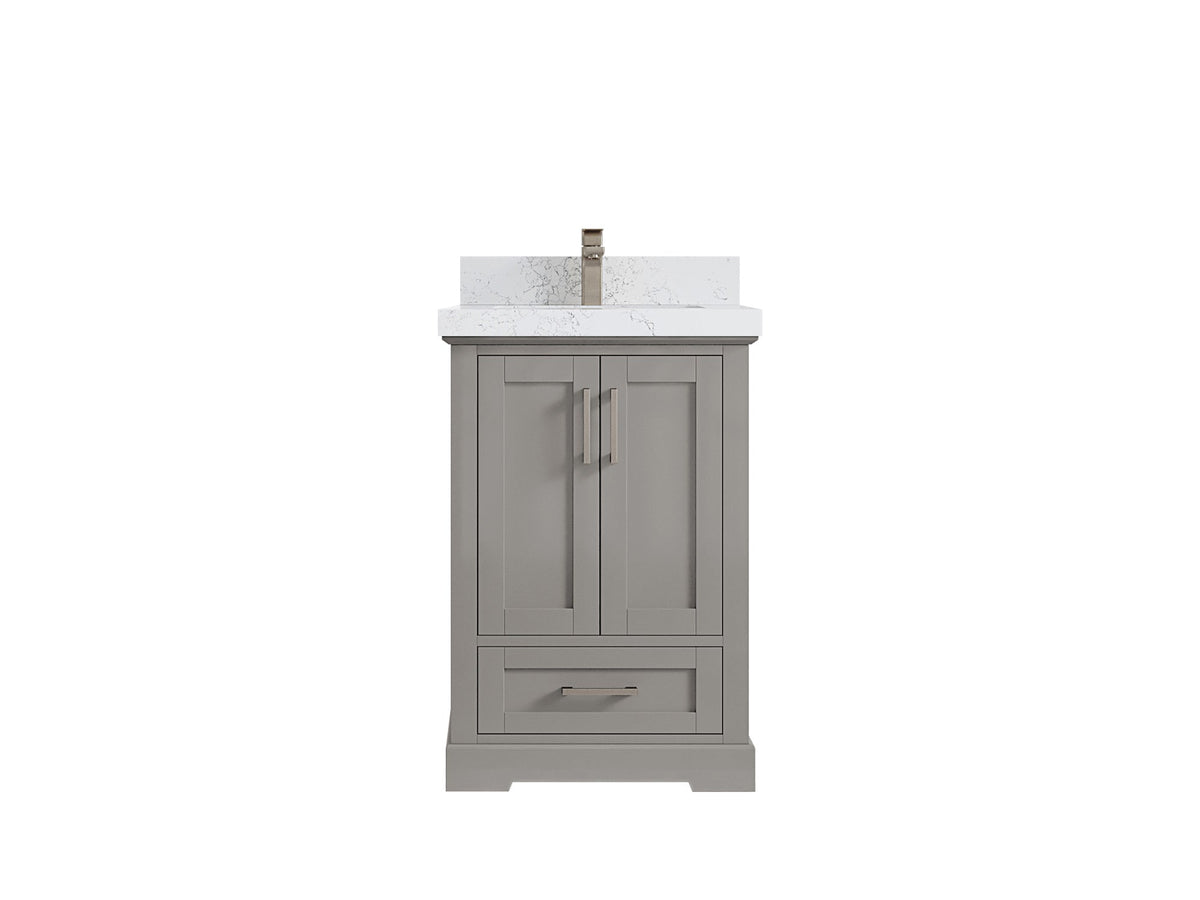
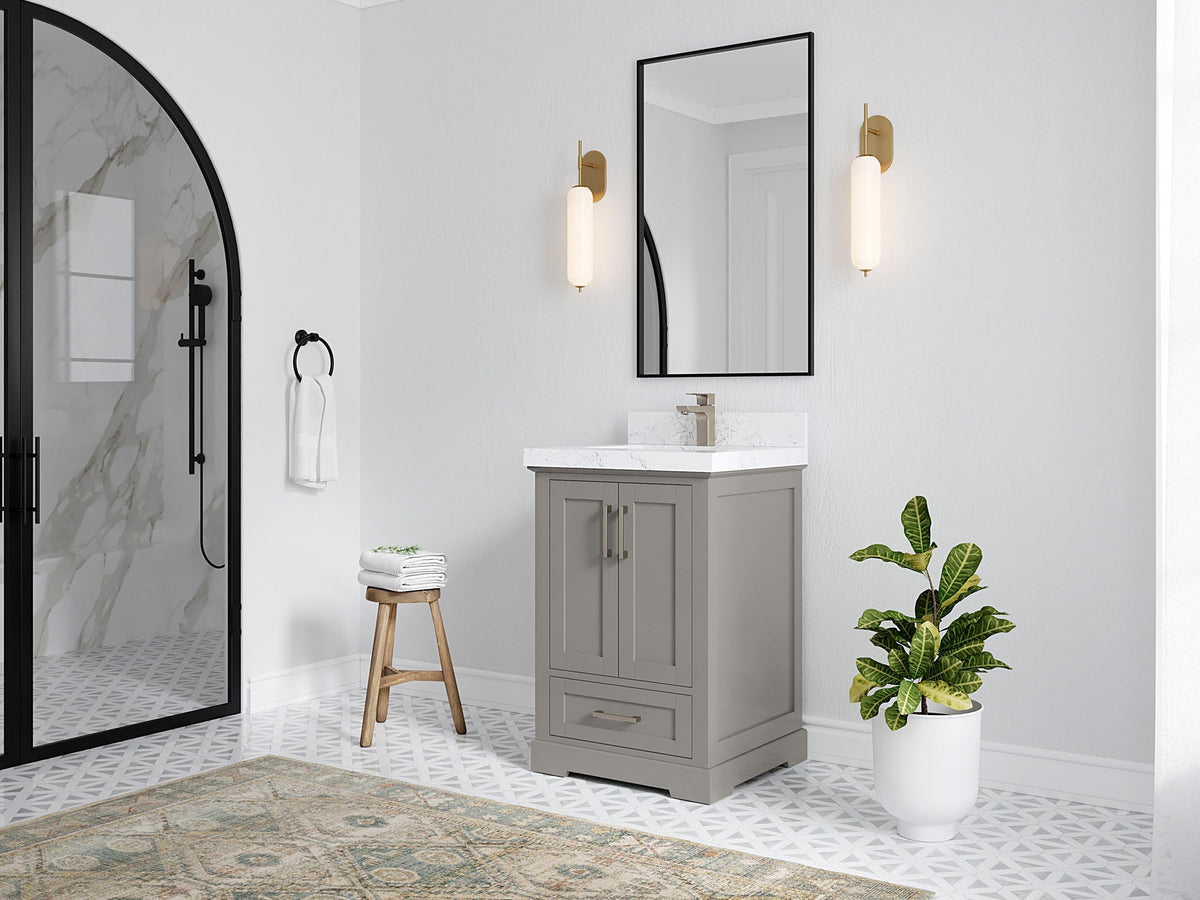
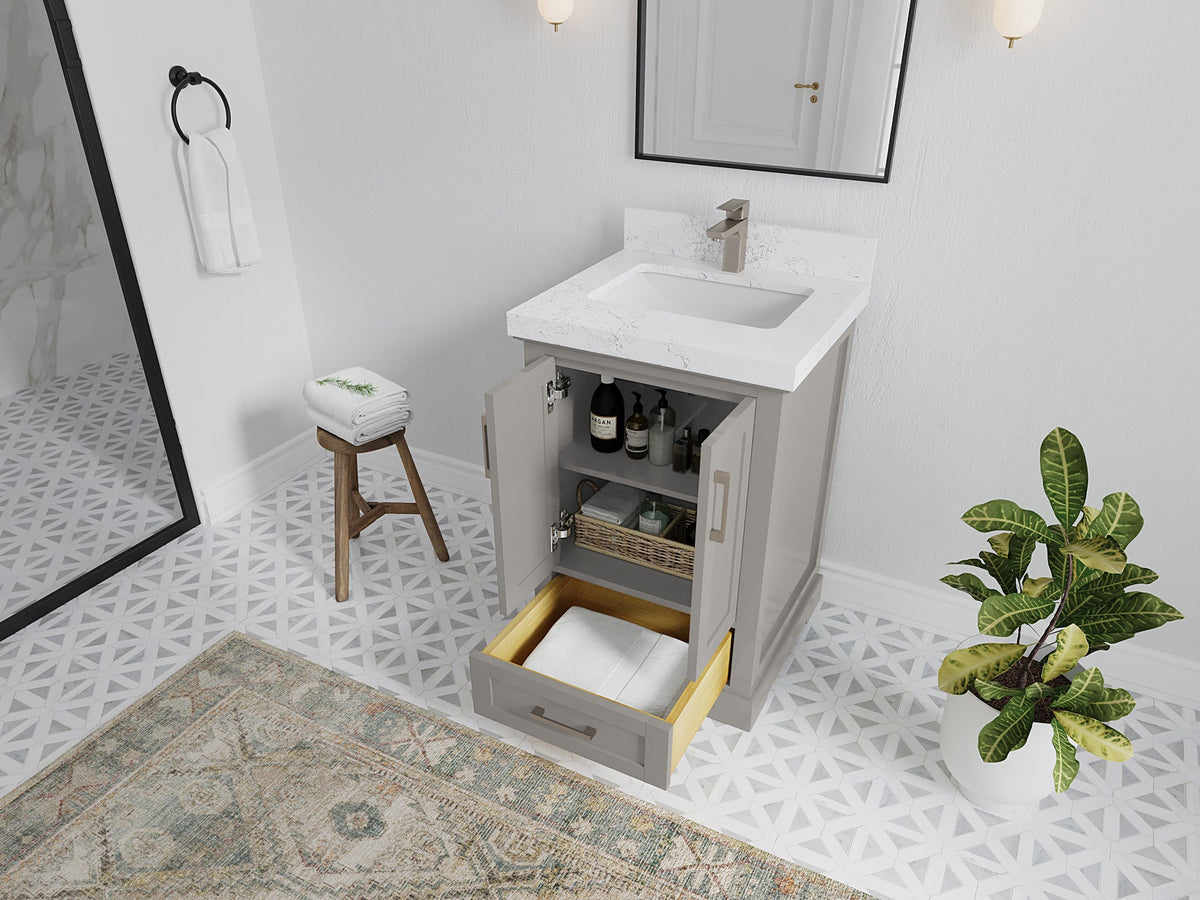
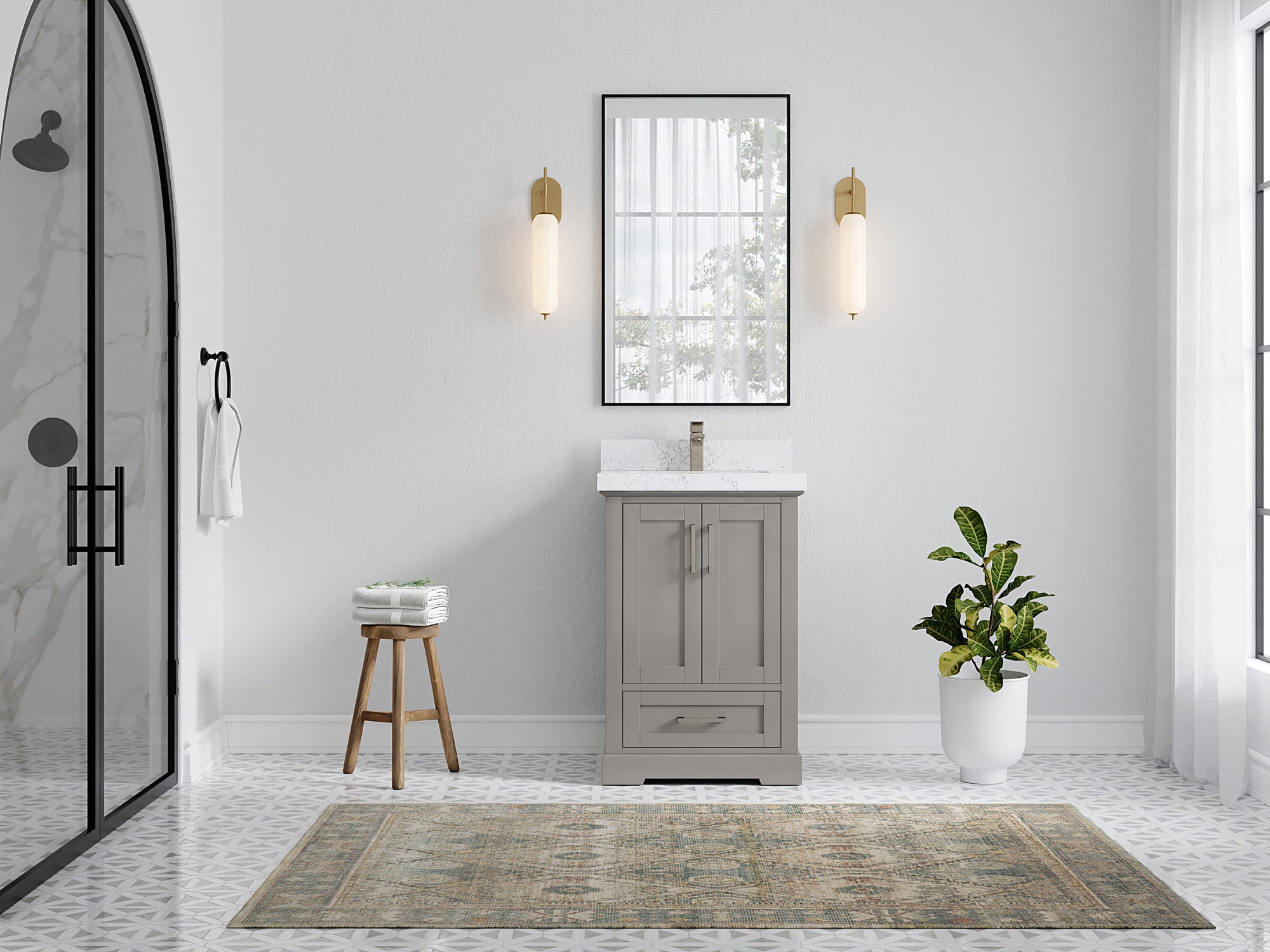
Boston 24 in. — Elephant Skin GraySingle sink
In stock · Ships in 7–10 business days
Our gray bathroom vanities bring cool, contemporary calm to your bath — from soft greige to deep charcoal. Each is painted over kiln-dried birch hardwood — never MDF or particleboard, so the finish stays rich and the cabinet stands up to bathroom humidity for years.
Gray: the versatile neutral
A gray vanity pairs effortlessly with white quartz or marble tops, brass, chrome or matte-black hardware, and almost any tile. Light grays keep a small bathroom airy, while charcoal makes a refined, modern statement in a primary bath.
Gray also solves a problem that white and wood cannot. White cabinets show every water mark and can feel clinical; natural wood commits the room to a warm palette. Gray sits in between — it hides daily use better than white, and it lets you decide whether the bathroom reads warm or cool depending on which end of the range you choose.
Finding your gray: greige to charcoal
Not all grays behave the same way, and the shade you pick changes the room more than the cabinet style does:
- Greige — gray with a warm beige undertone. The most forgiving choice, and the one that works alongside wood floors, brass fixtures and warm-white walls without clashing.
- Dove and light gray — soft, cool and quiet. Keeps a small bathroom feeling open, and reads almost as a neutral rather than a color.
- Mid-gray and slate — enough depth to be clearly a color decision, still light enough not to weigh down a mid-size room.
- Charcoal and deep gray — the near-black end of the range. Dramatic against white quartz and pale tile, and the shade that makes brass or matte-black hardware look most deliberate.
If you are matching a wall color, look at the vanity finish in your own bathroom light before committing — gray shifts more than any other neutral depending on whether the light is warm, cool or north-facing.
Real wood beneath every finish
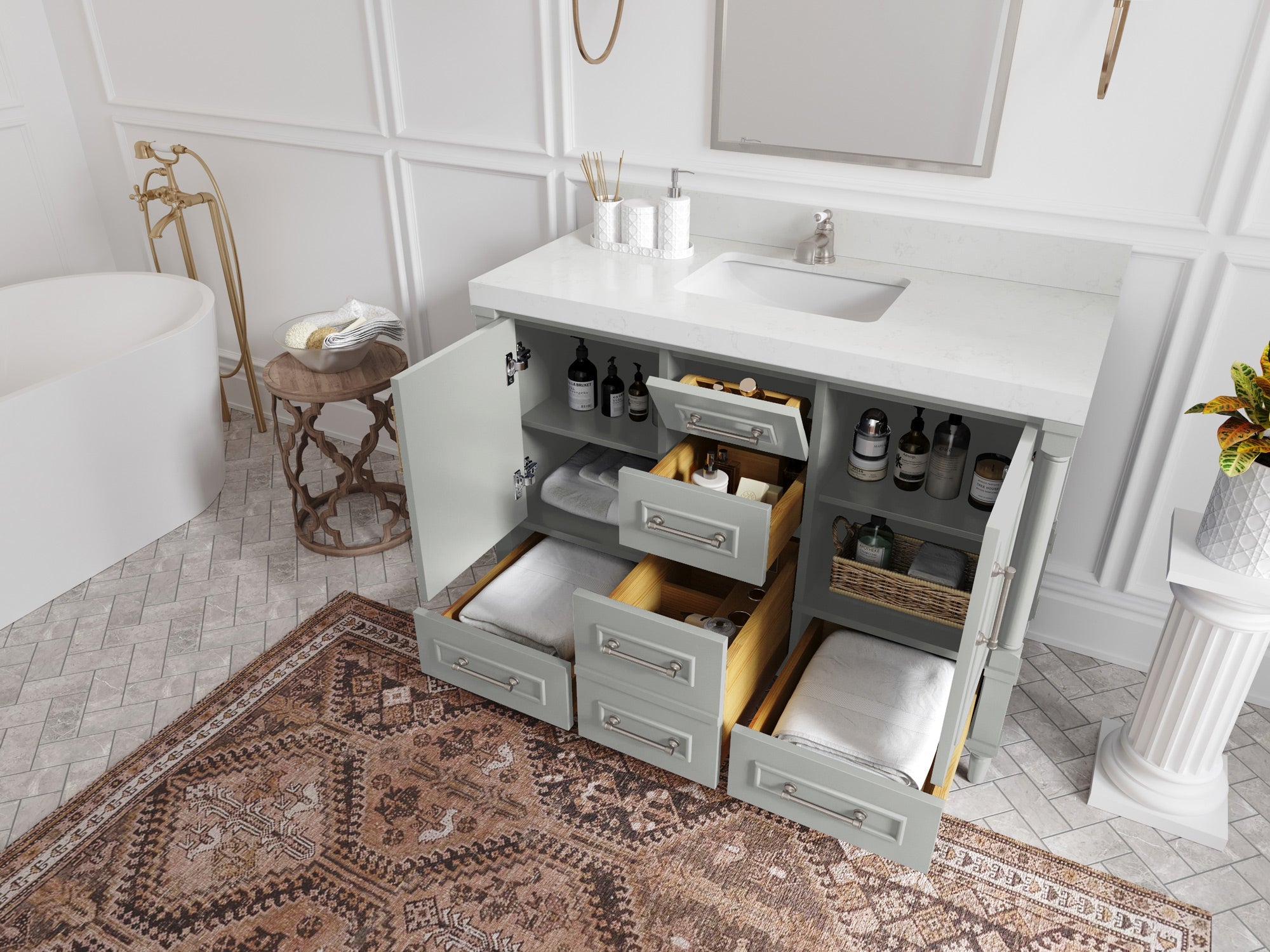
- Painted gray finishes over kiln-dried birch hardwood — never MDF or particleboard
- Quartz or marble tops with backsplash
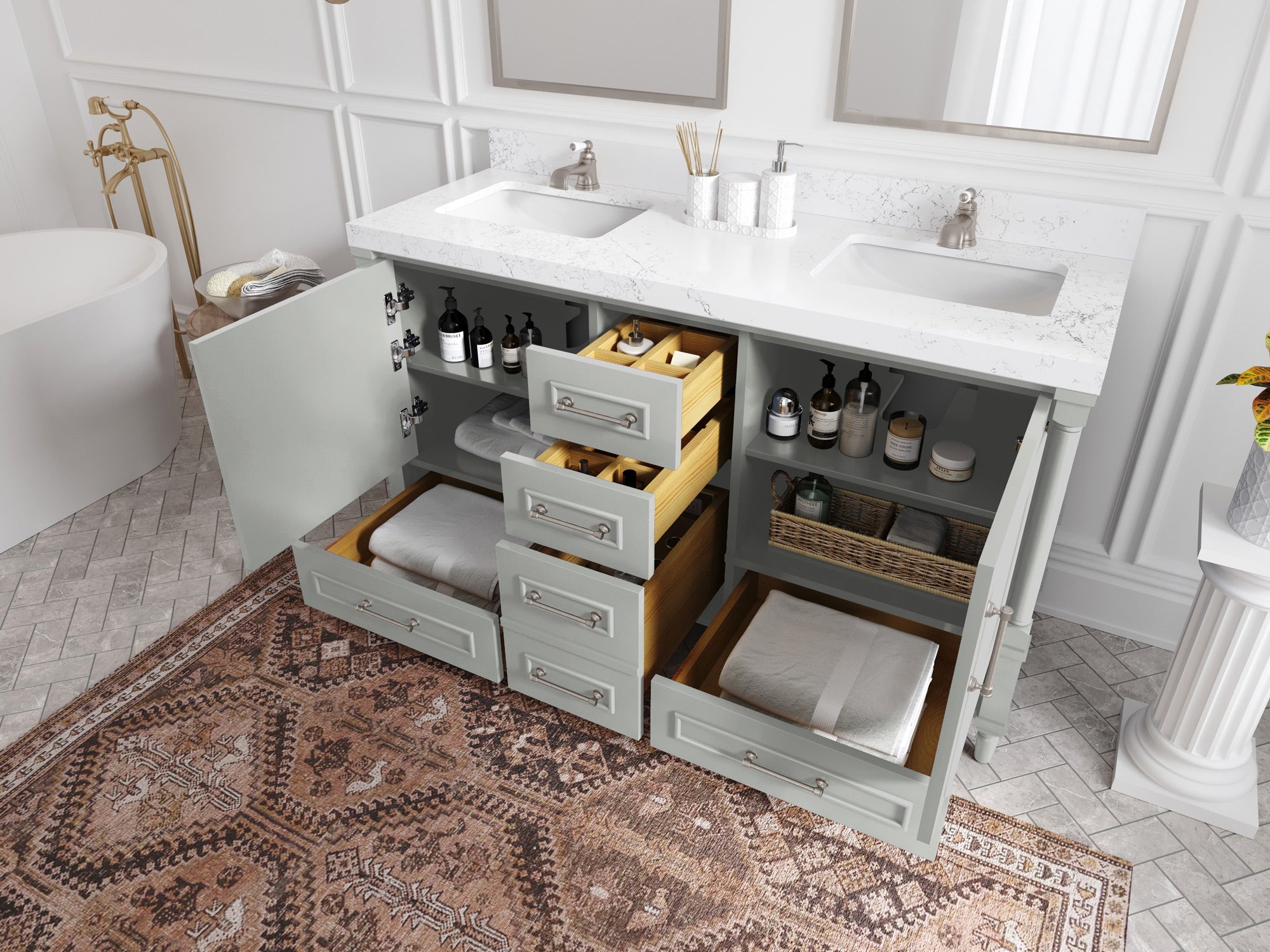
- Soft-close dovetail drawers and concealed hinges
- Single-sink, double-sink, freestanding and floating styles
This is the part that decides how long a painted vanity lasts. Most mass-market vanities use MDF or particleboard under the paint — identical in a photograph, but the base panel swells and the paint lifts once steam and the occasional plumbing drip get into it. Birch does not fail that way, which is why these cabinets are built from it.
See our gray vanities in person at our Norcross or Alpharetta showrooms near Atlanta, or order online with fast, fully insured shipping. Related: birch vanities · black vanities · solid wood vanities.
Frequently asked questions
What shades of gray are available?
The range runs from warm greige through dove and light gray, into mid-gray and slate, and down to deep charcoal. Greige is the most forgiving — its beige undertone lets it sit alongside wood floors and brass fixtures without clashing. Cool light grays keep a small bathroom feeling open. Charcoal is the boldest, and looks most striking against a white quartz top and pale tile. Gray shifts noticeably with the light in a room, so consider whether your bathroom gets warm or cool daylight before choosing between the warm and cool ends of the range.
What is underneath the gray paint?
Birch — real hardwood, kiln-dried before the cabinet is built and FSC-certified, with solid birch frames and doors and natural wood veneer over marine-grade, moisture-resistant plywood on the larger panels. There is never MDF or particleboard in it. That is the whole reason to buy a painted vanity from a furniture-grade maker: paint hides the substrate completely, so the only way to know what you are getting is for the seller to tell you. Most mass-market vanities use MDF or particleboard, which swells and delaminates in a humid bathroom.
Will a gray vanity make a small bathroom feel smaller?
Not if you pick the right end of the range. Light gray and greige reflect nearly as much light as white and keep a small room feeling open, while hiding water spots and daily wear far better than white does. Charcoal will visually shrink a small bathroom — but that can be the point in a windowless powder room, where a dark cabinet with a bright stone top and good lighting reads as intentional and expensive rather than cramped. In a mid-size or primary bath, any shade in this collection works.
What countertop and hardware suit a gray vanity?
The countertop is stone, never wood. Quartz and natural Carrara marble are the widely selectable options, with quartzite, travertine or terrazzo available depending on the design, each with a coordinating backsplash and a mitered or cove edge. White quartz is the safest and most requested pairing across every gray shade. For hardware, brass and unlacquered brass warm up a cool gray, matte black sharpens it and reads modern, and chrome or brushed nickel keeps the whole piece cool and quiet. Hardware finish is set by the design, so check the product page for the specific vanity.
How do I keep a painted gray finish looking new?
Wipe it with a soft, damp cloth and mild soap, then dry it. Avoid abrasive cleaners, scouring pads and ammonia-based sprays, which attack the protective finish rather than the wood underneath. Do not leave standing water on the base or around the basin cutout, and ventilate the room after hot showers. Gray is more forgiving than white with toothpaste splashes and water marks, but the same basic care keeps the color even and the sheen consistent for years.
Questions & answers