








CURATED FOR THIS COLLECTION
The Character of Solid Teak
Natural grain, furniture-grade construction and a finish chosen to hold up beautifully in daily use.
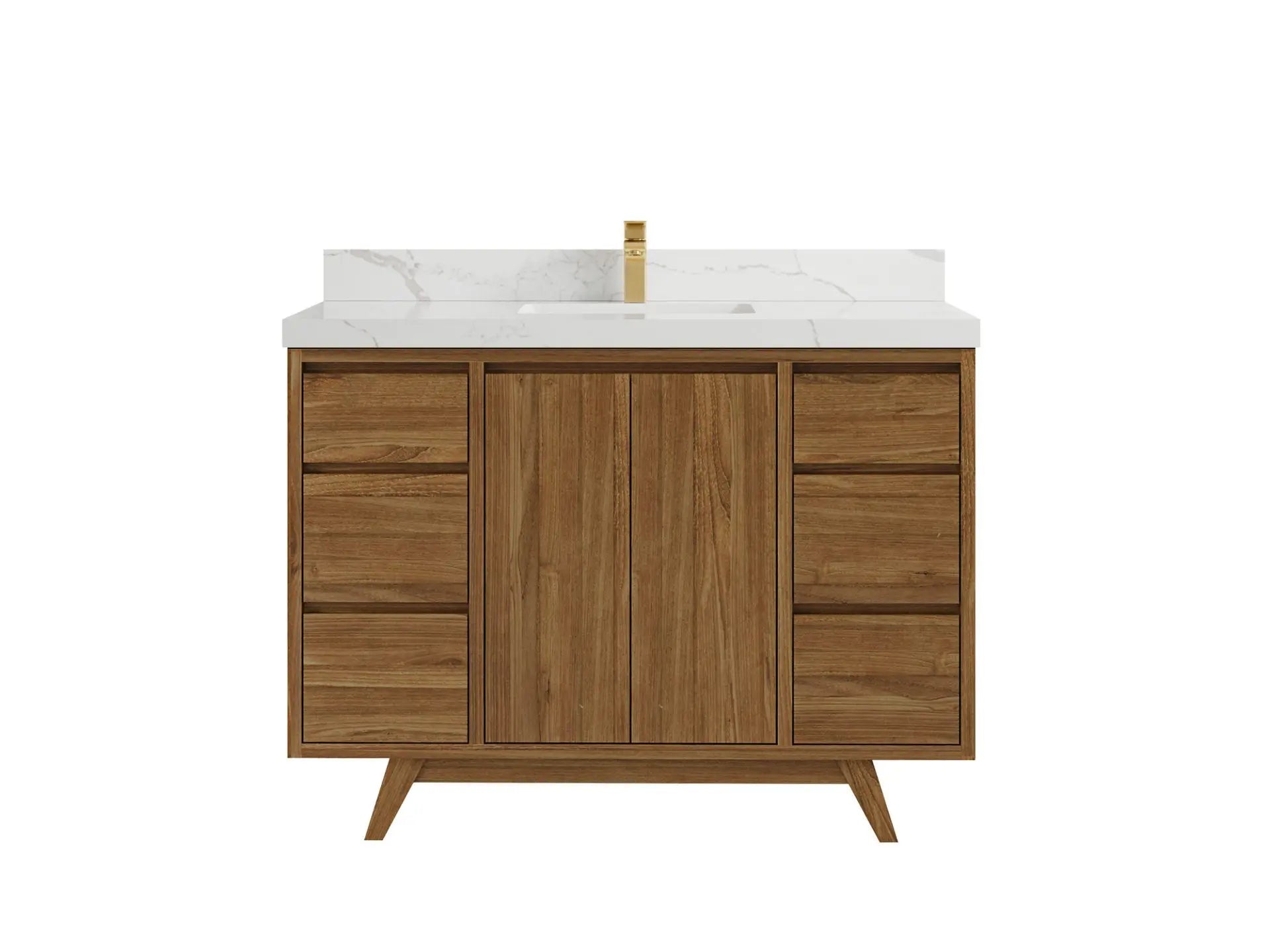

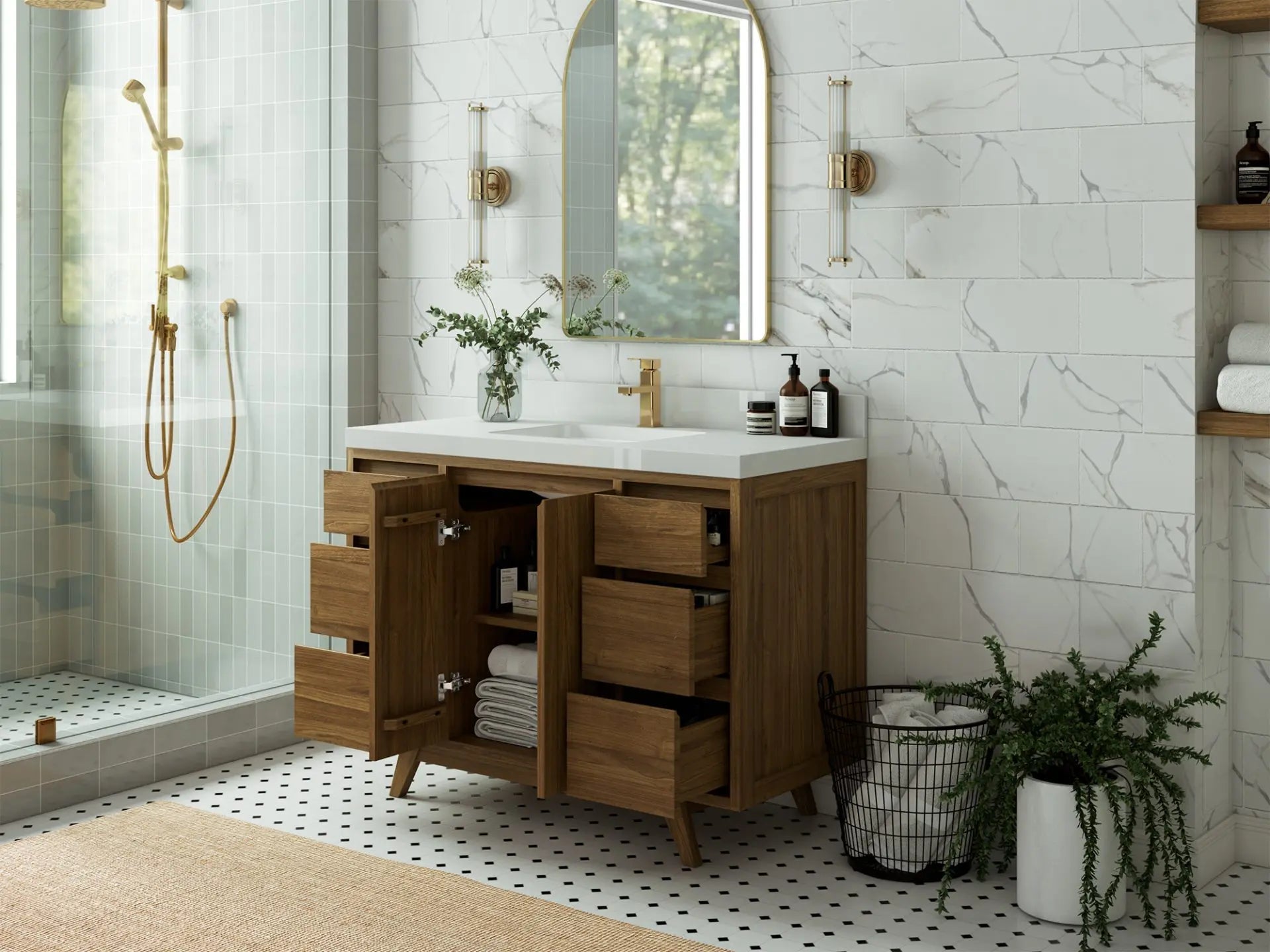
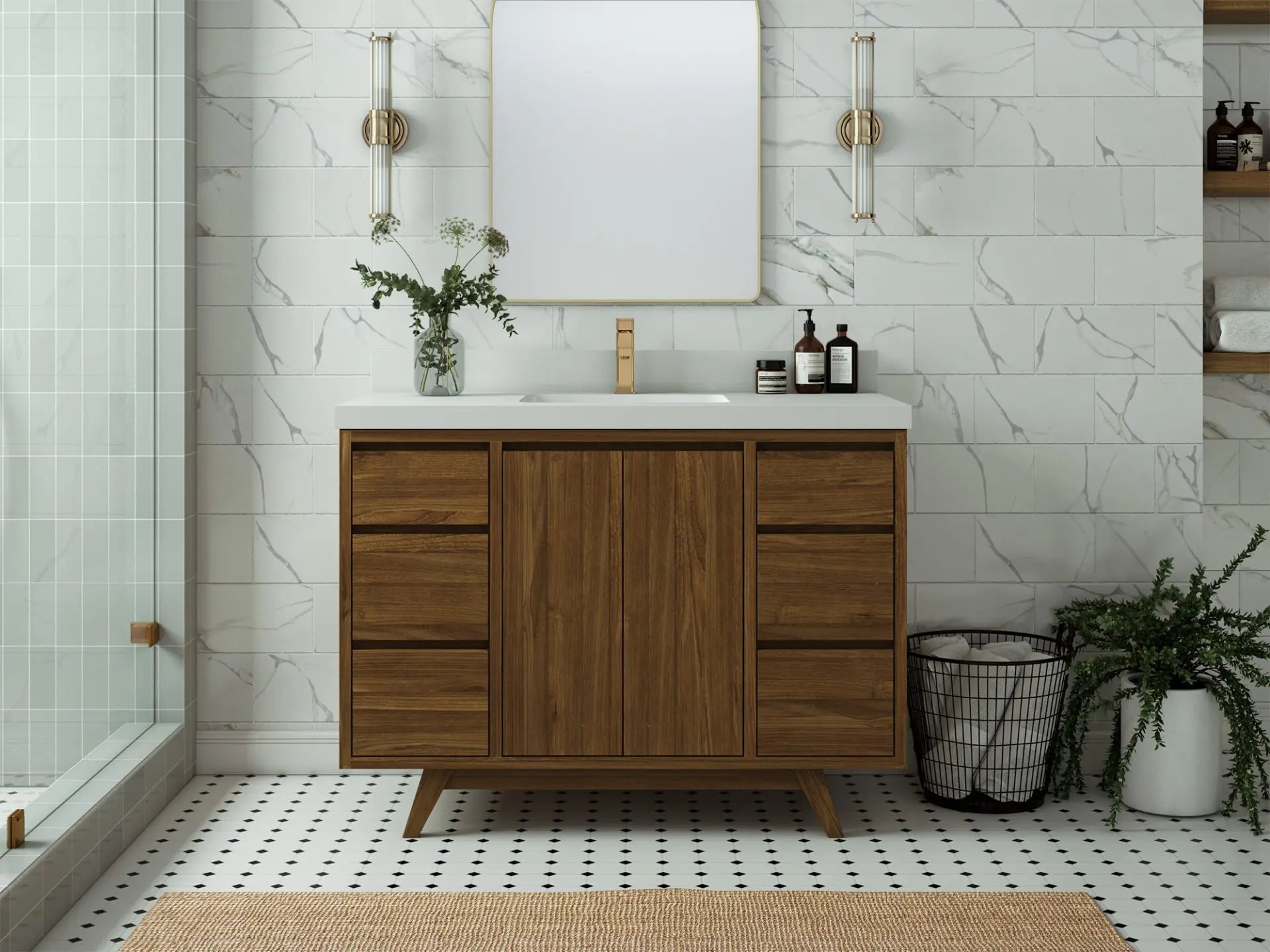

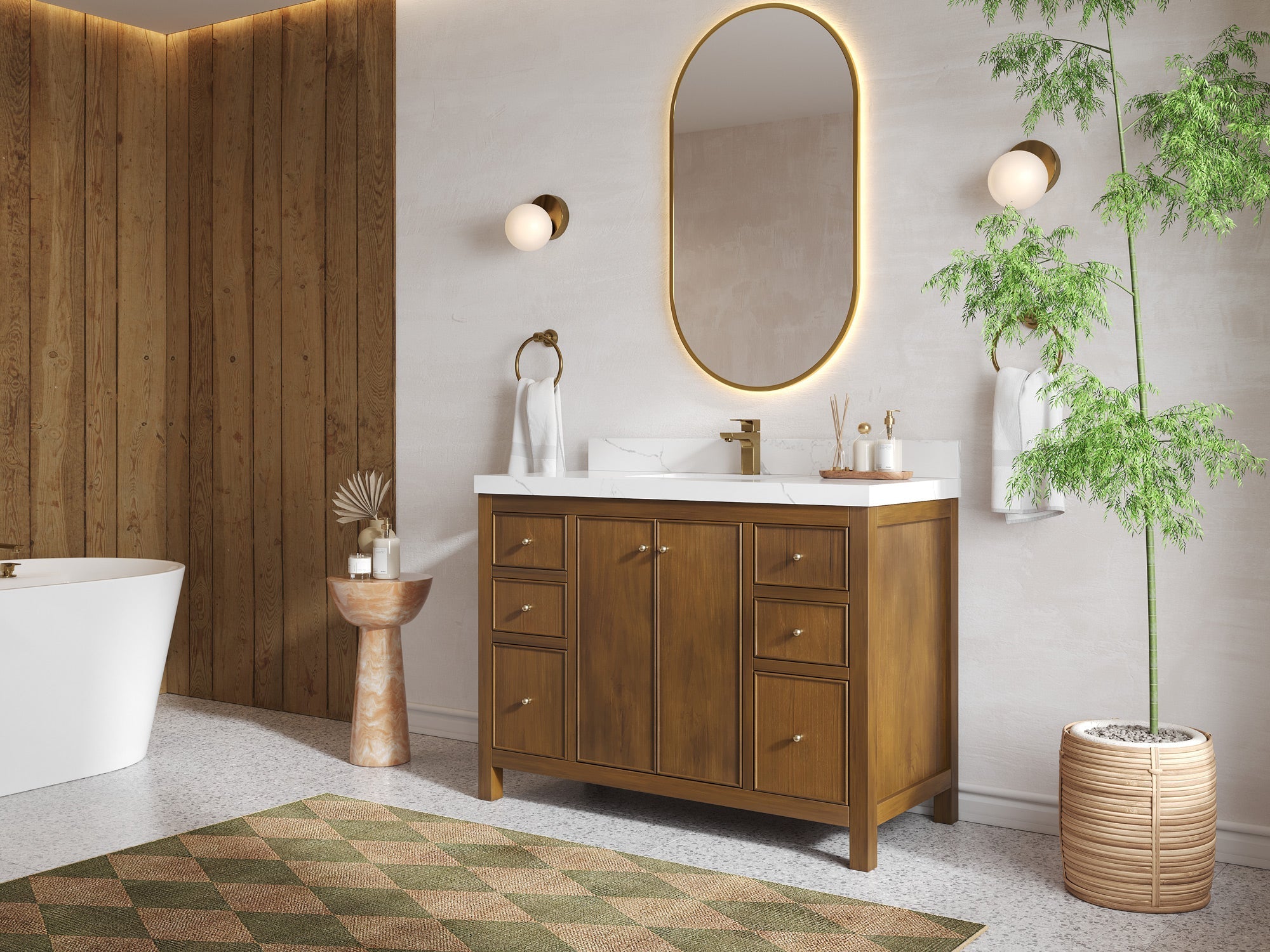
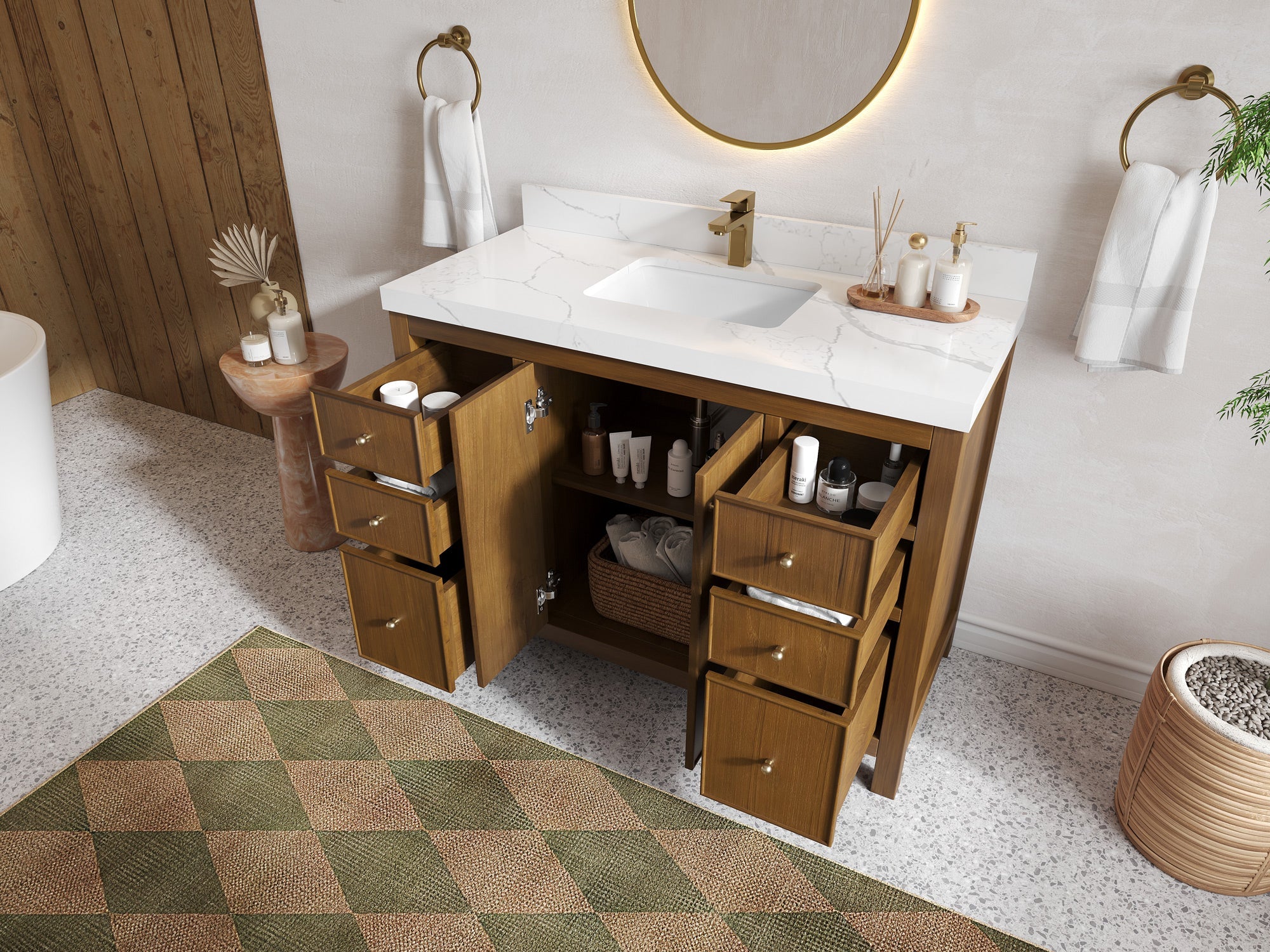
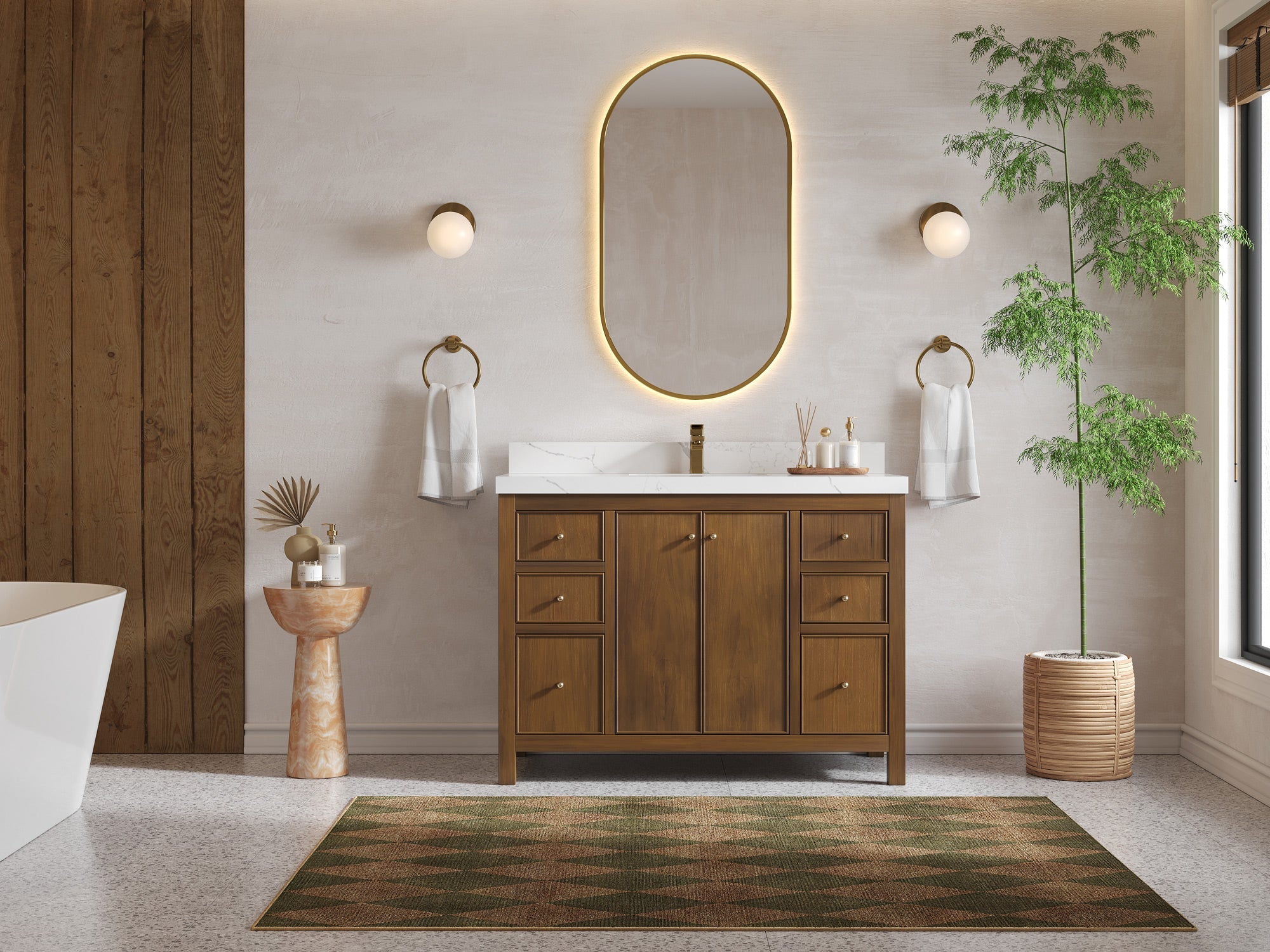
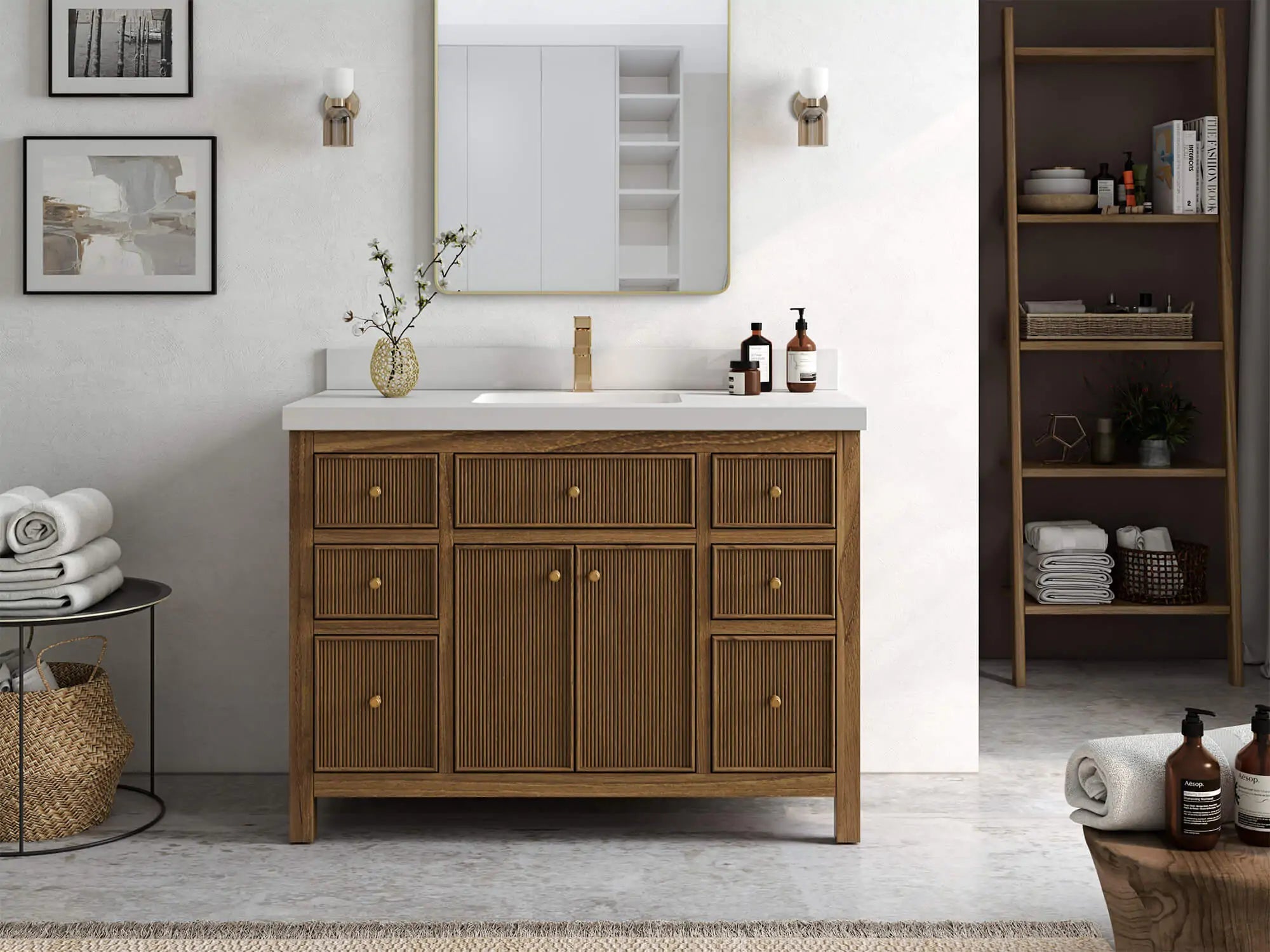
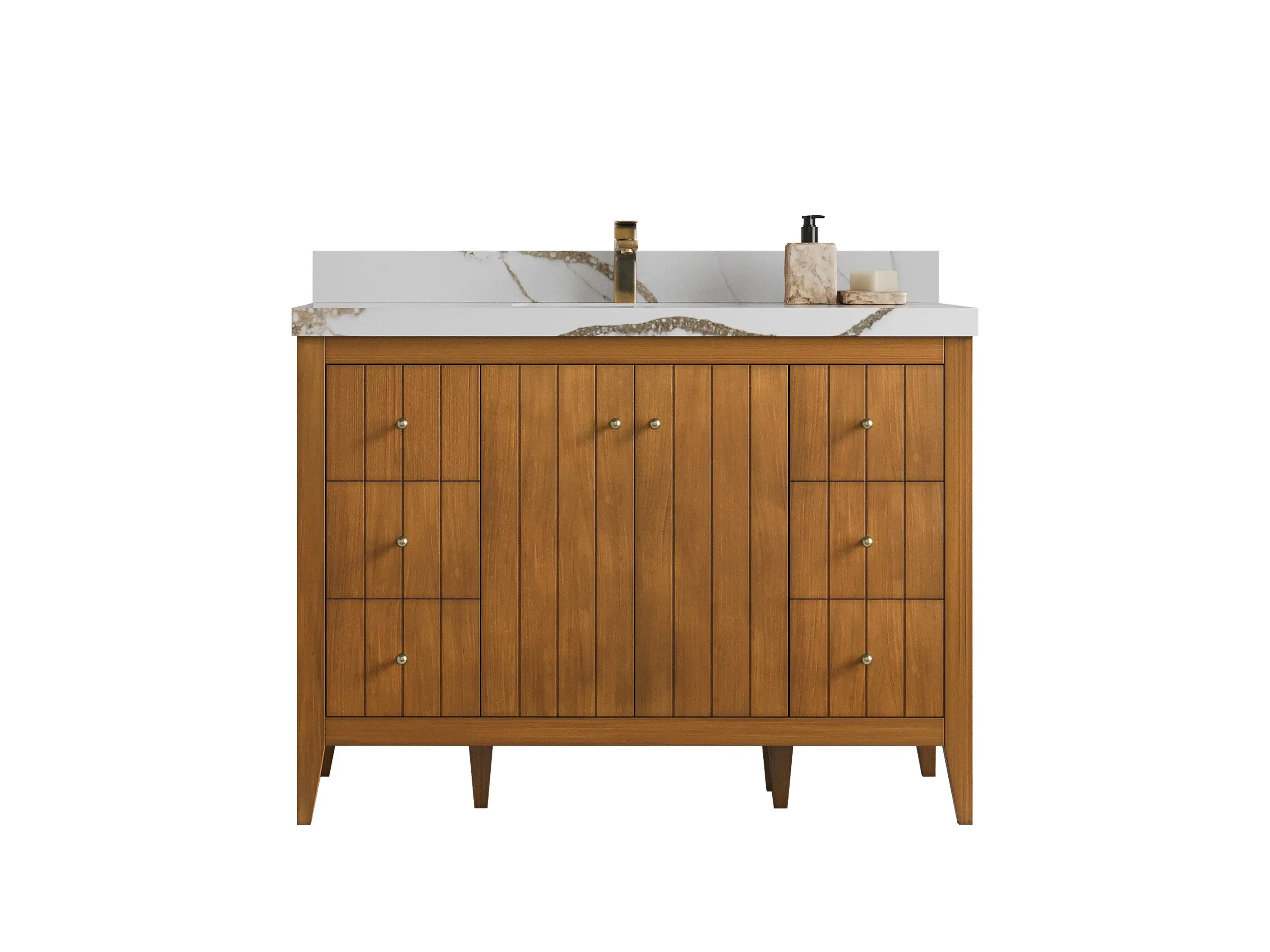
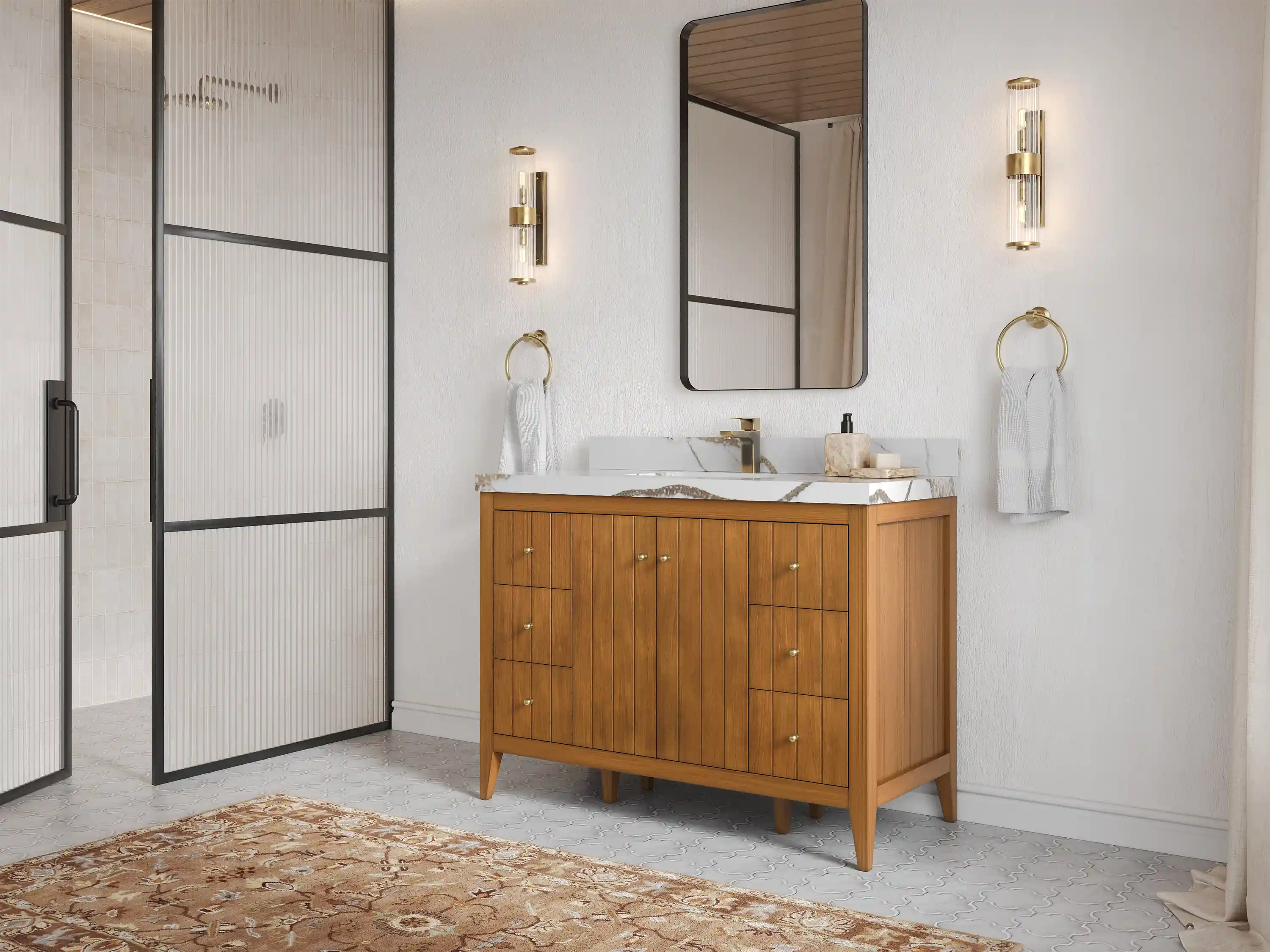
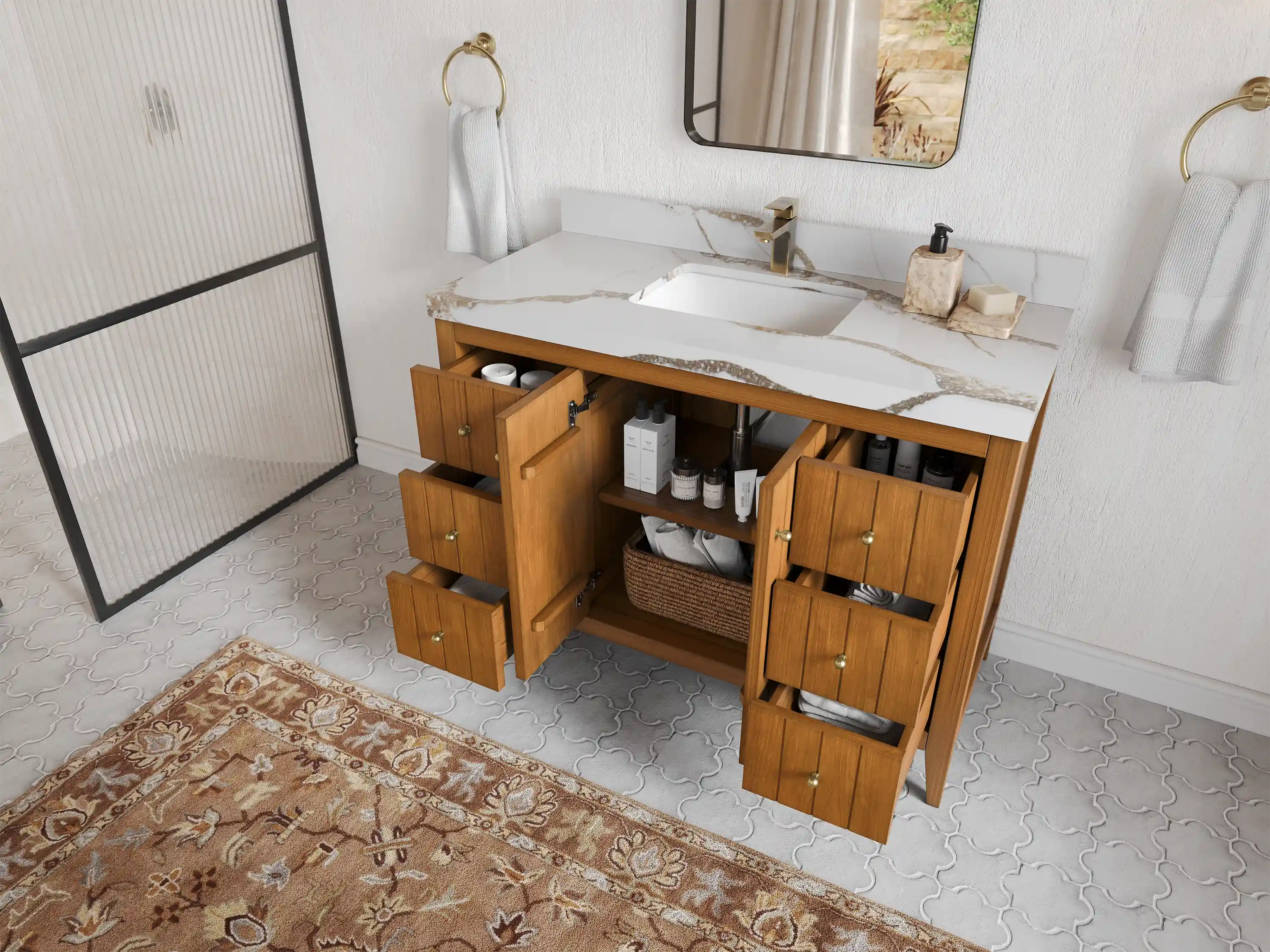
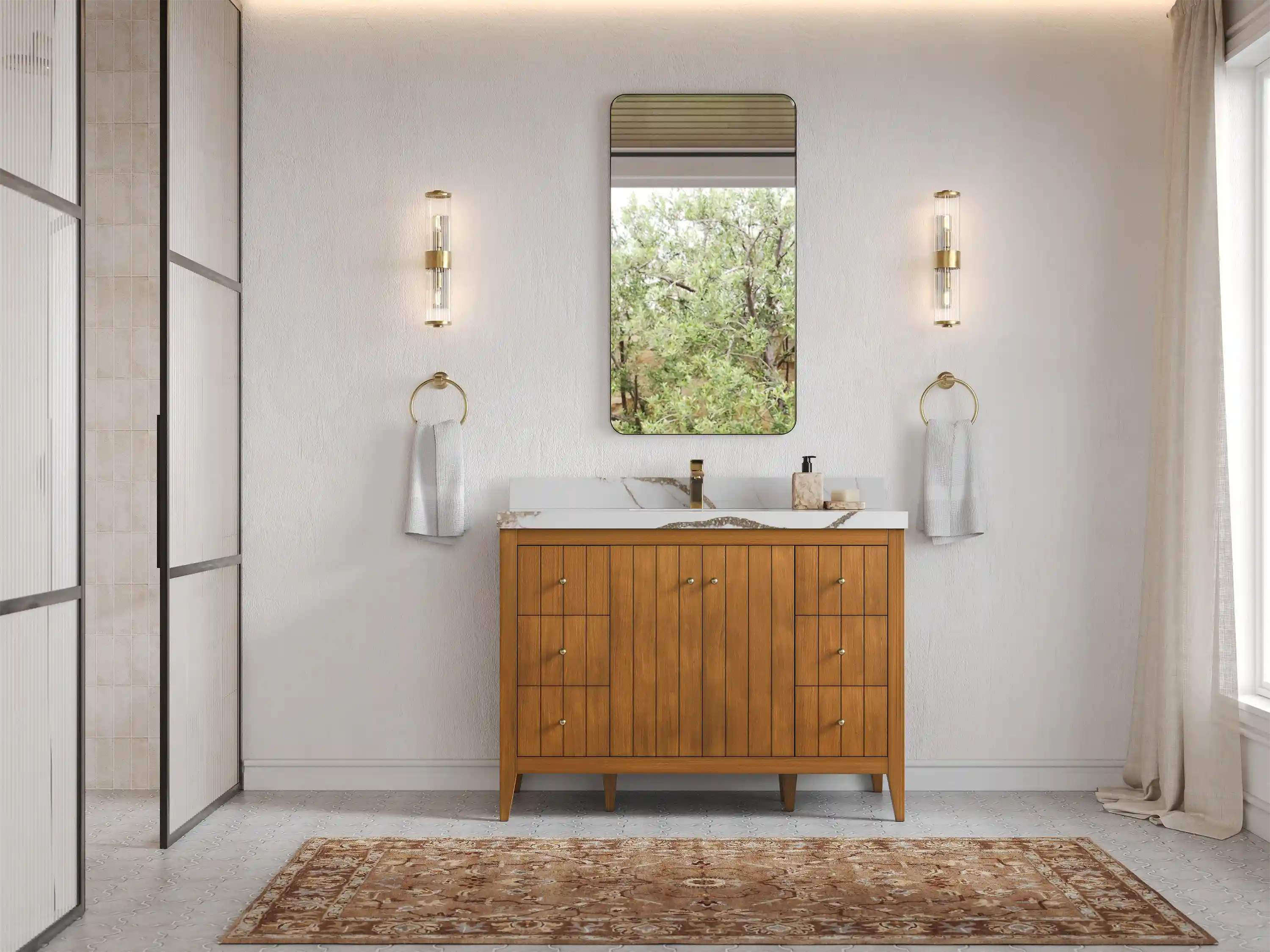
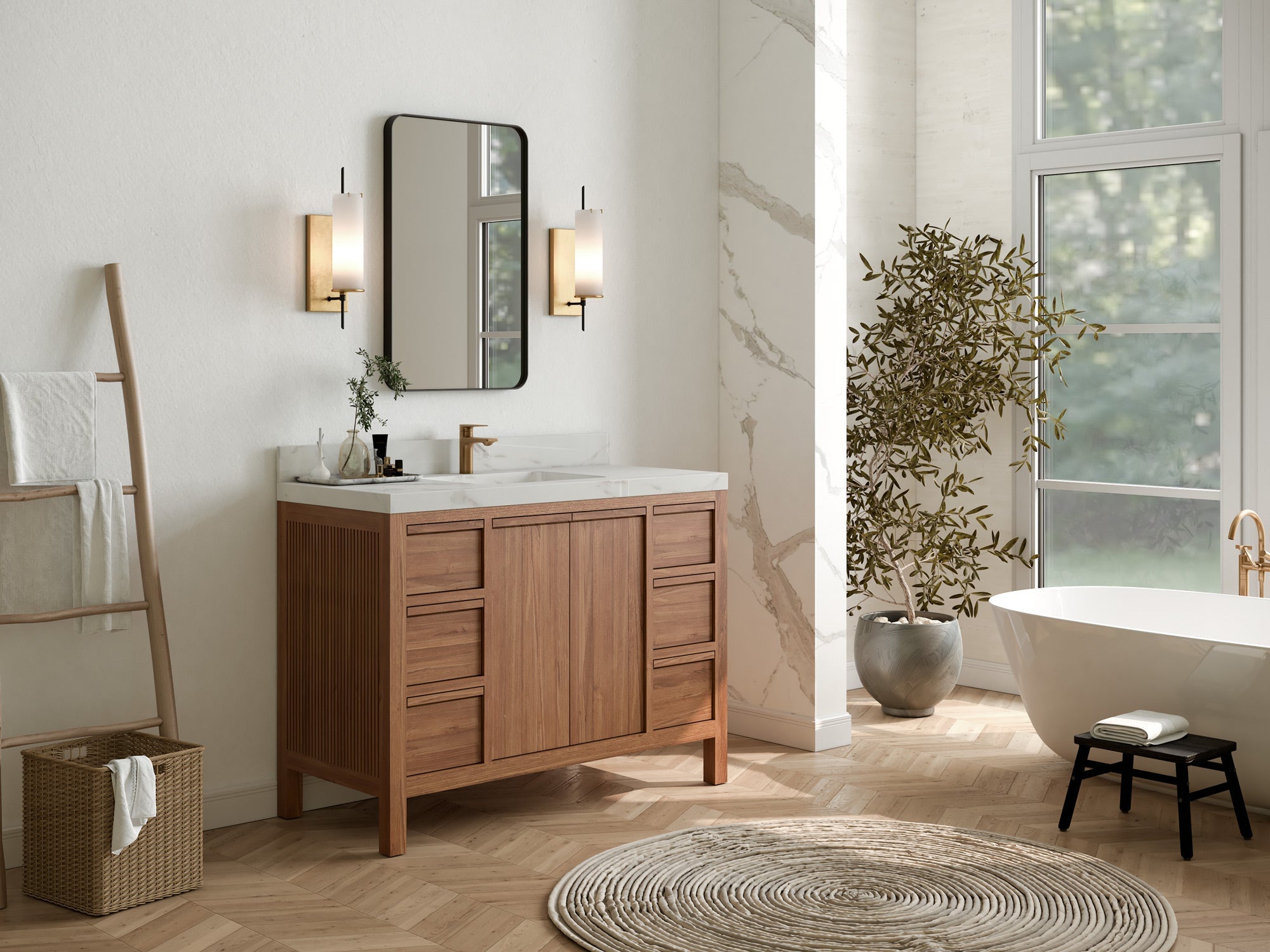
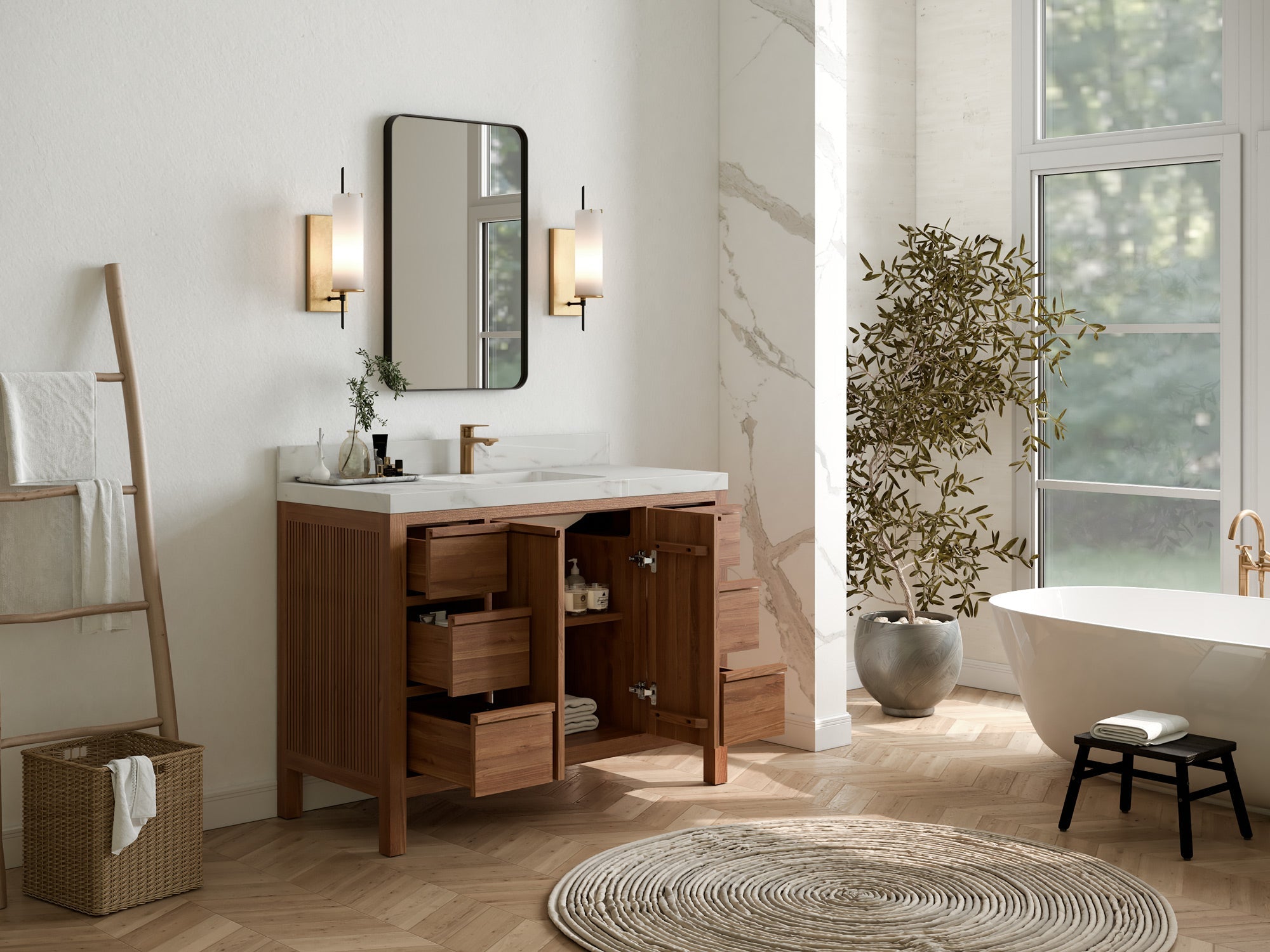
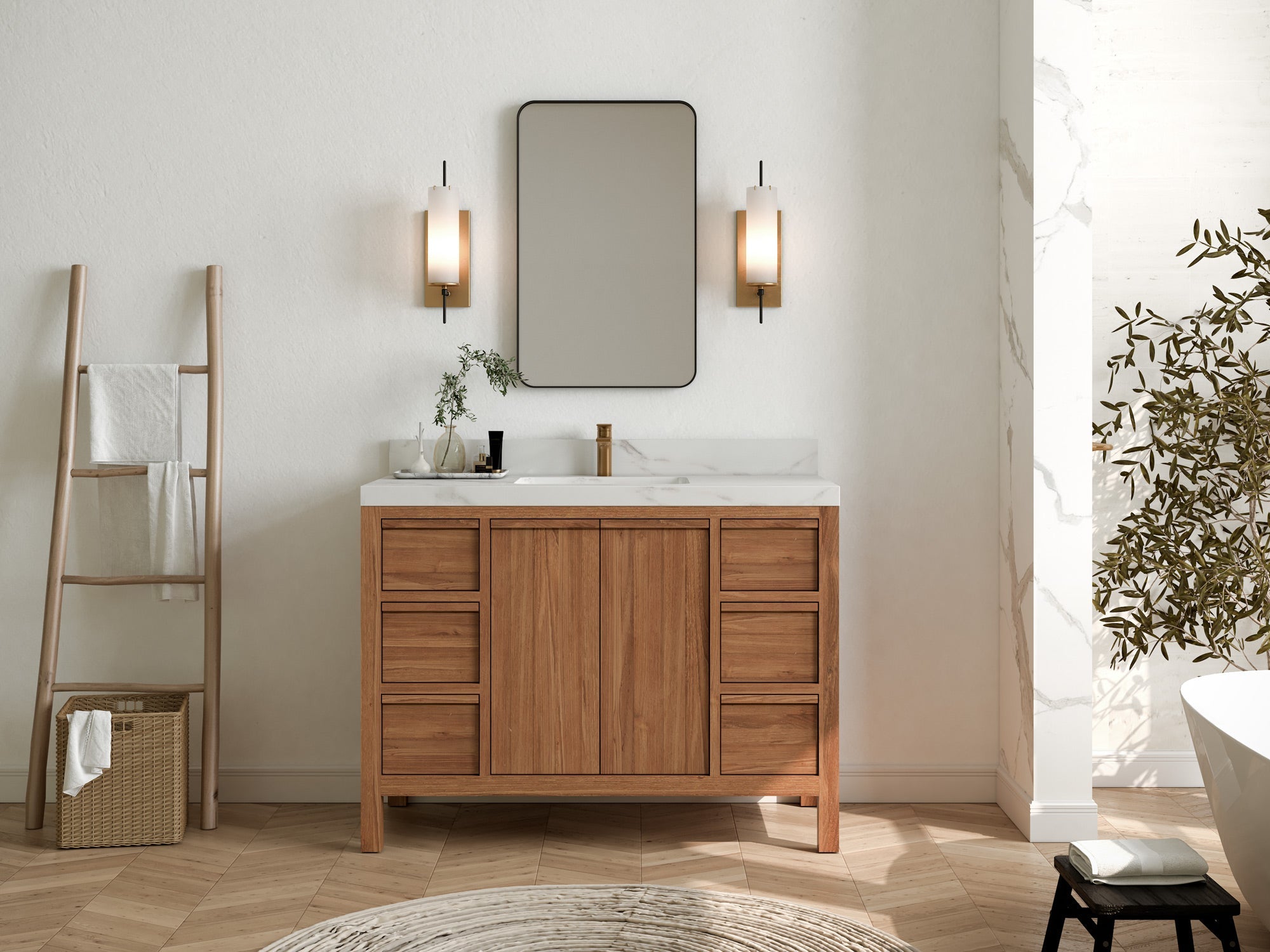
Chicago Teak 48 in.Single sink · Recessed-panel doors with rounded molding
In stock · Ships in 7–10 business days
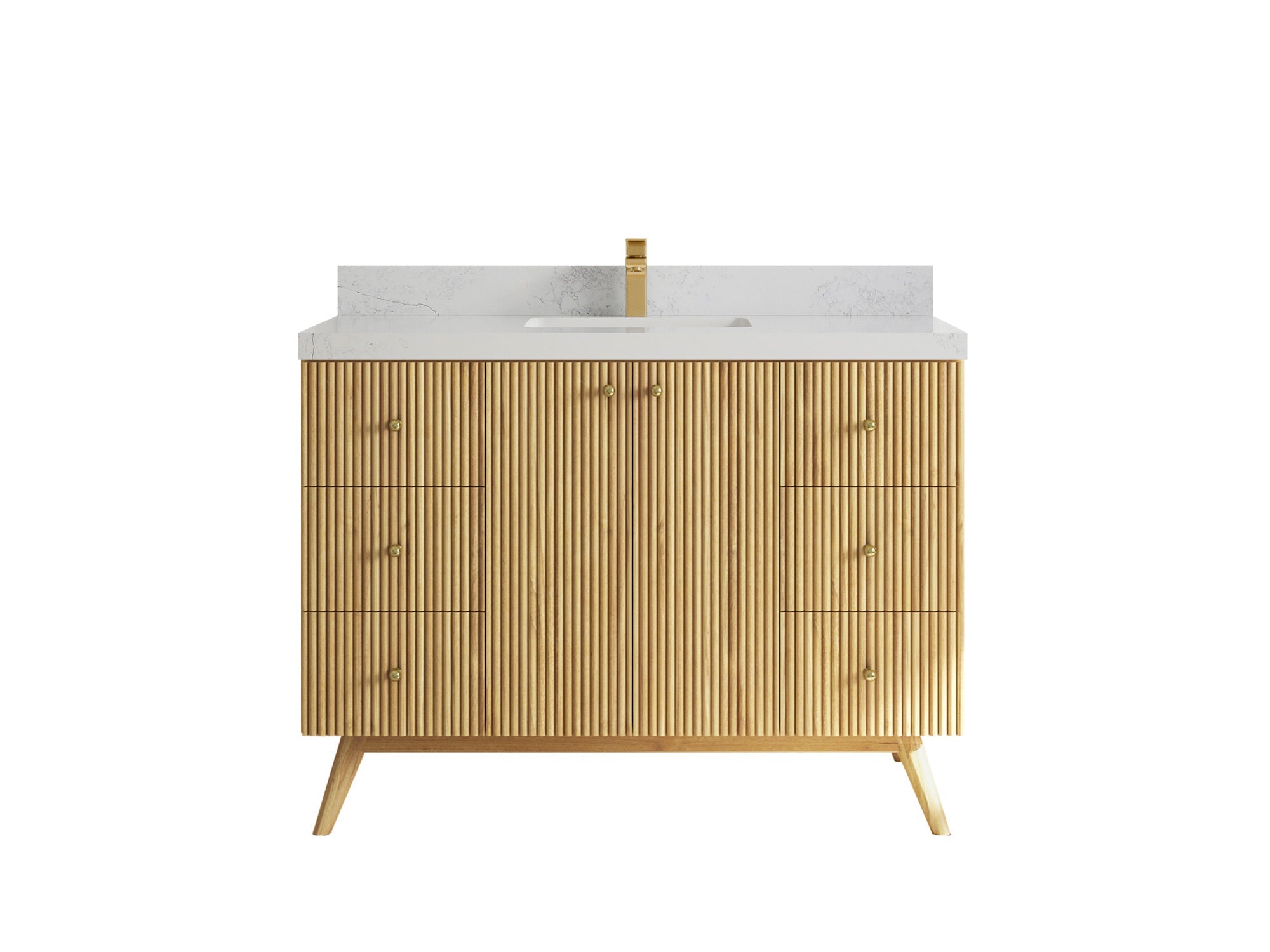
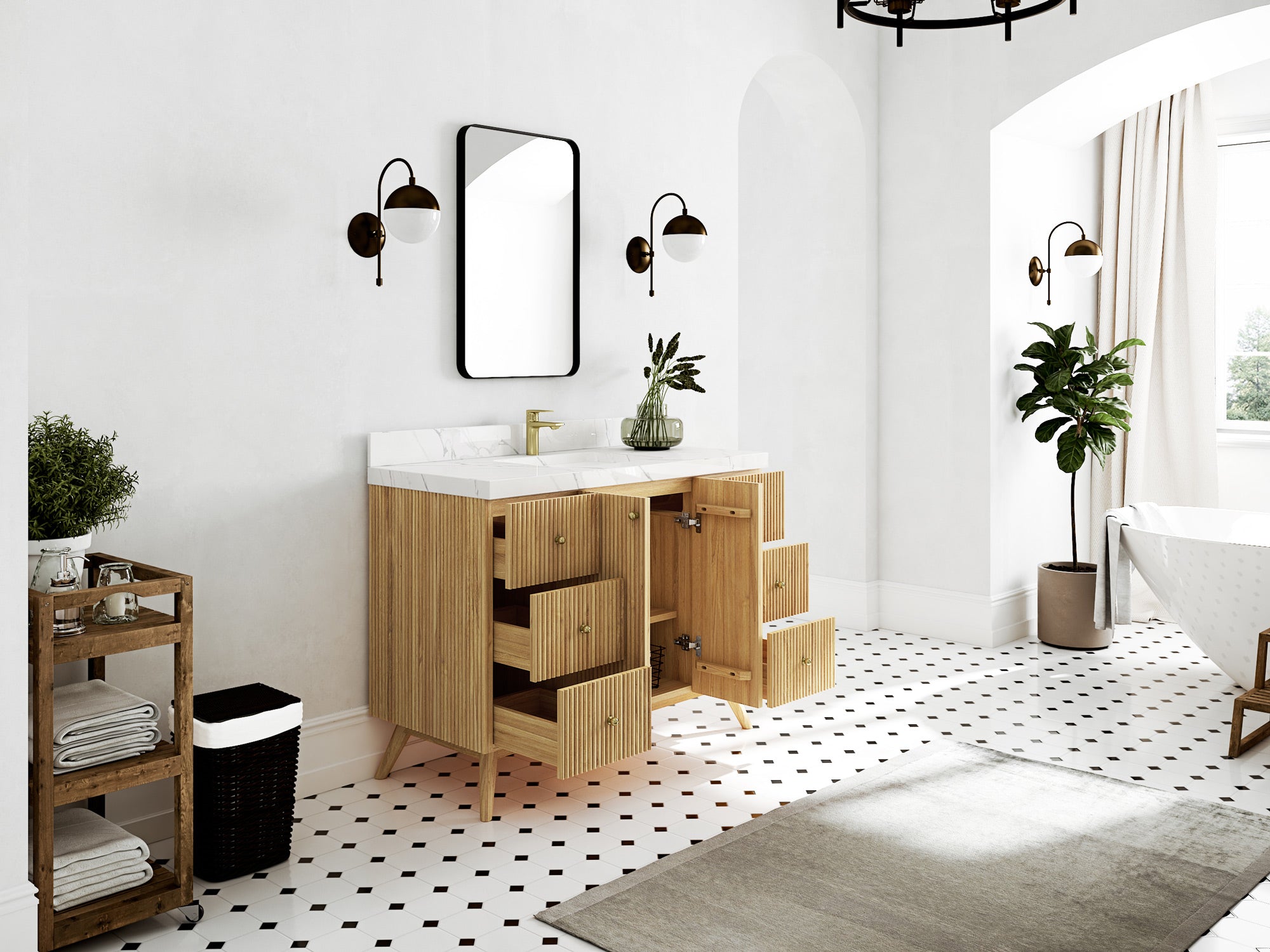
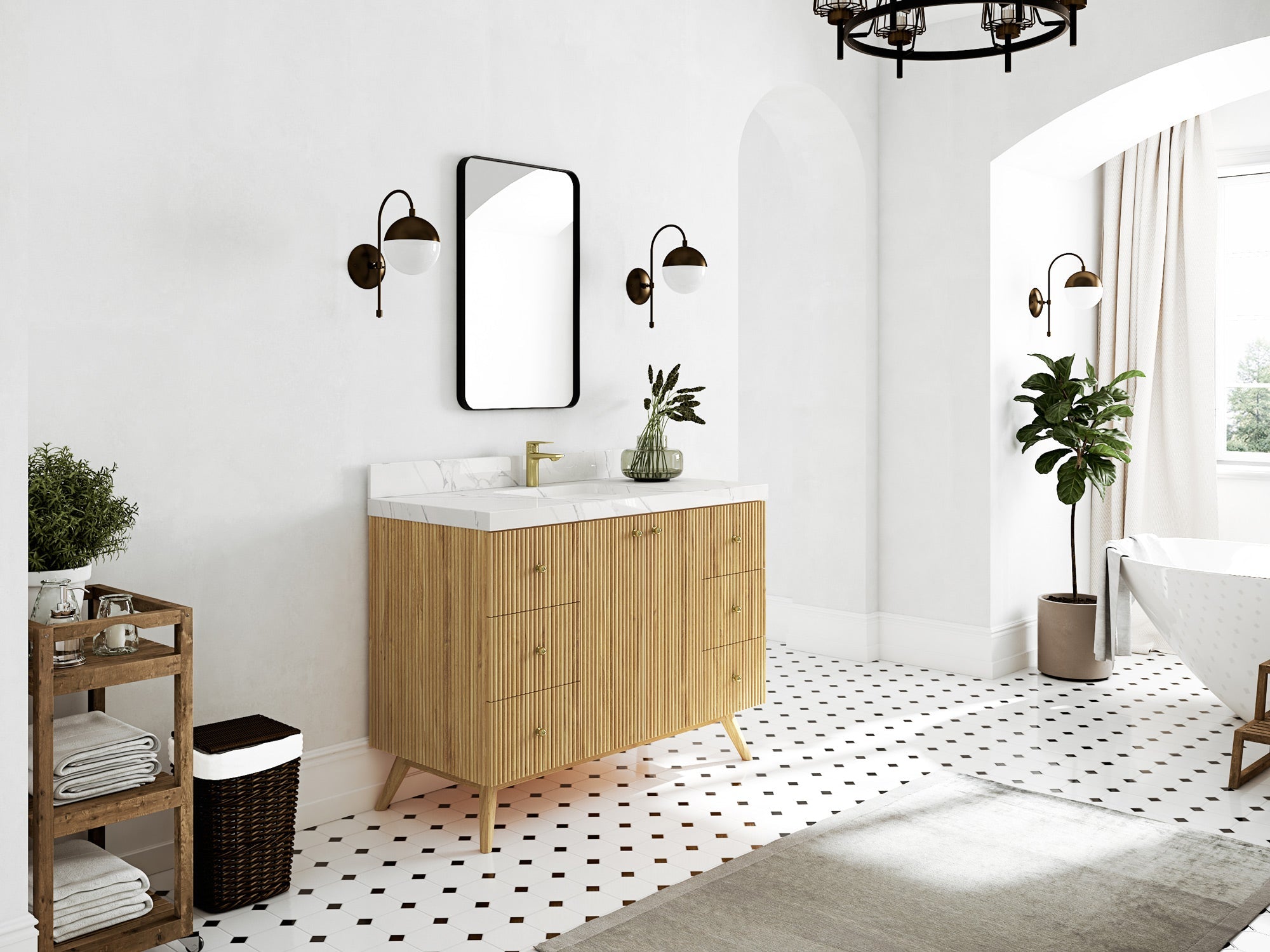


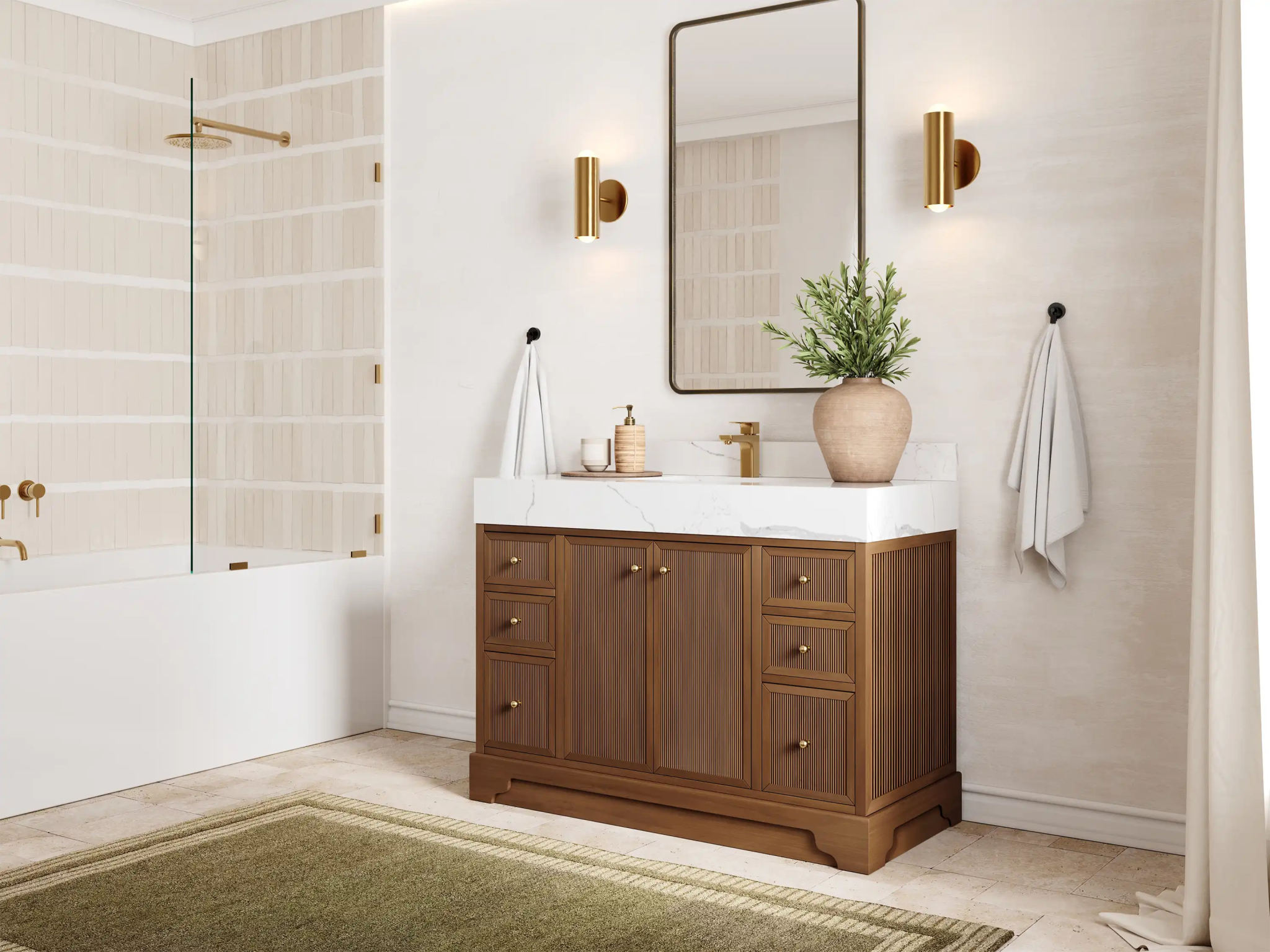
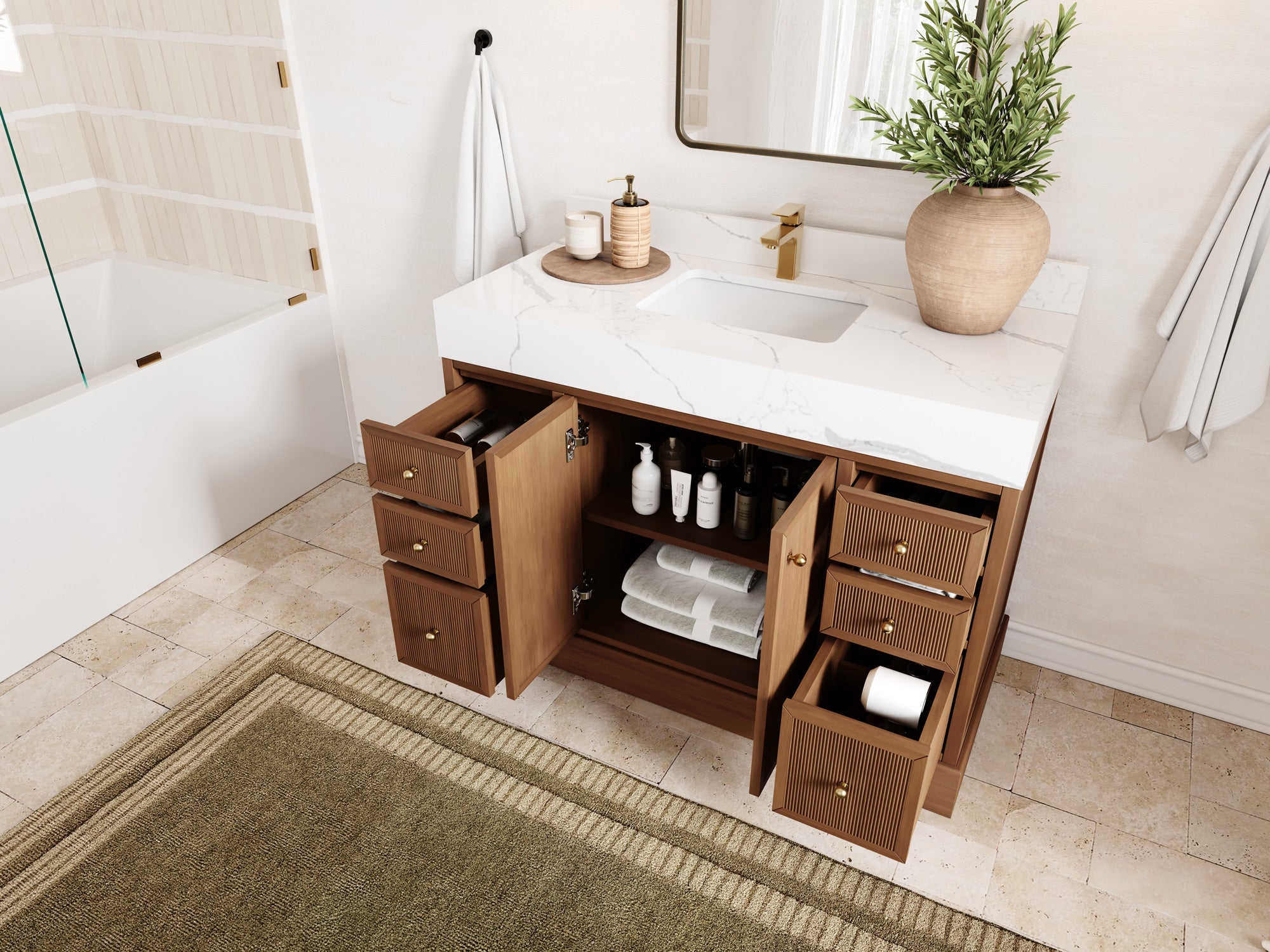
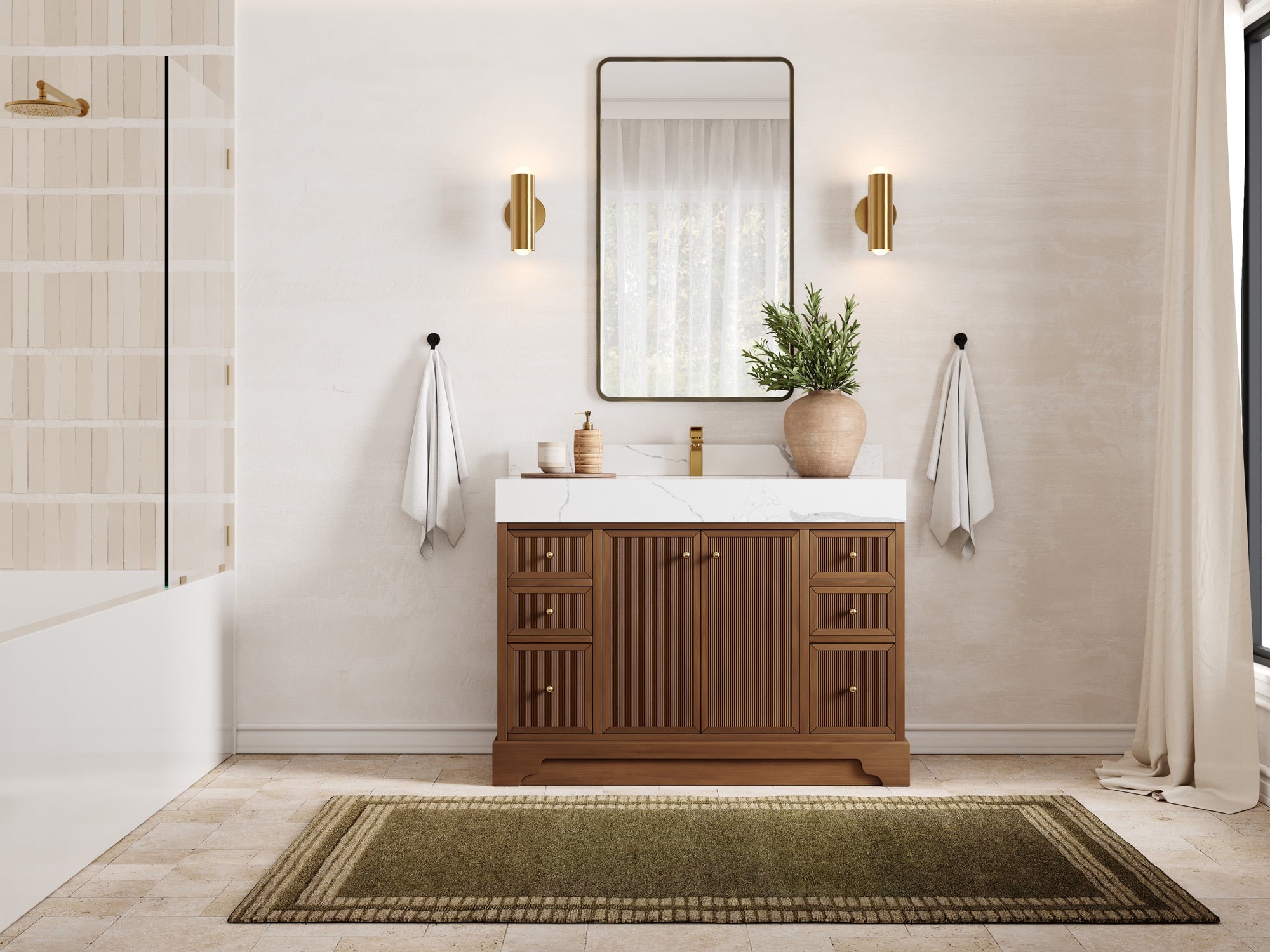
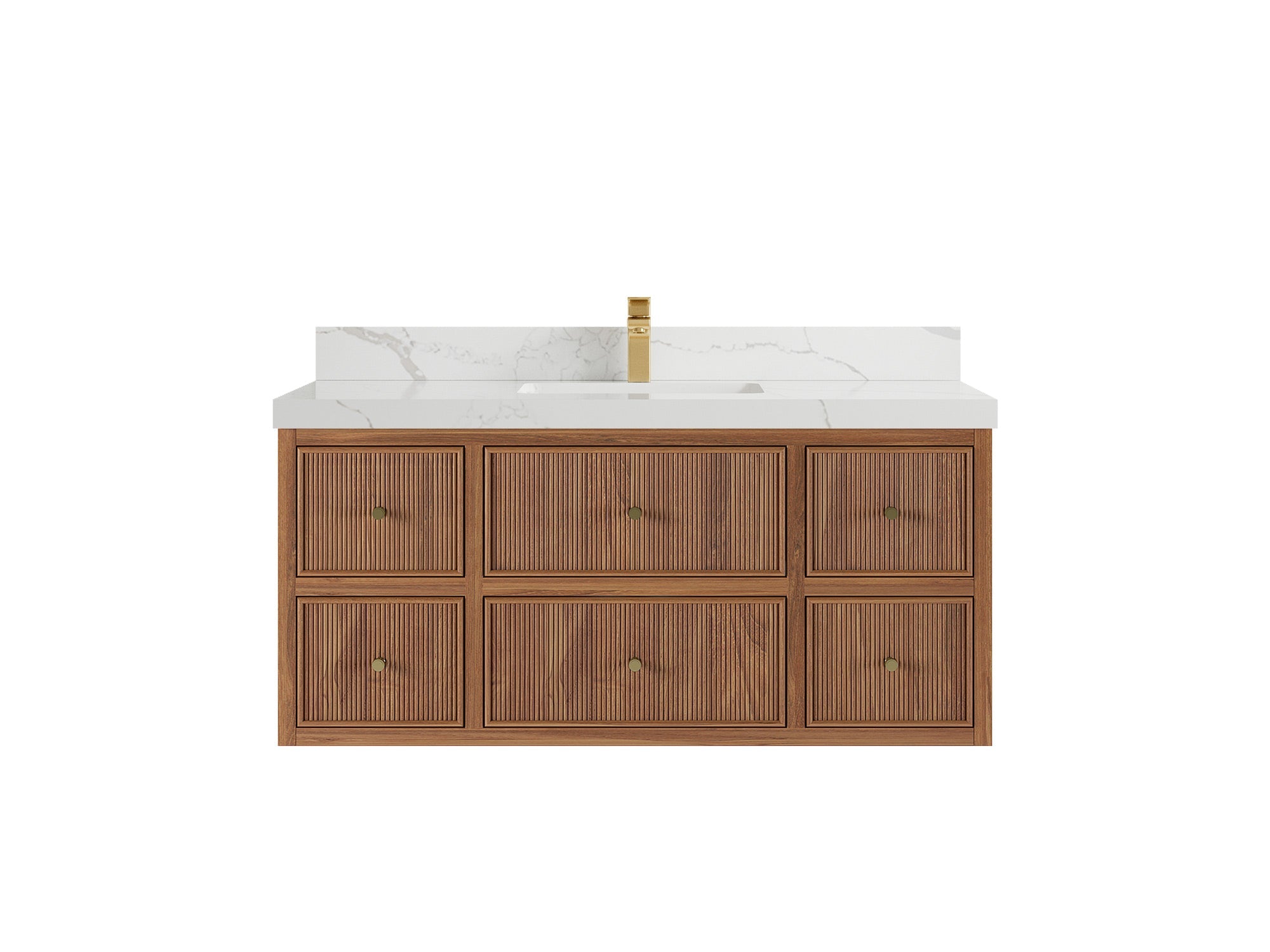
This collection gathers Willow's 48-inch teak bathroom vanities, 22 inches deep, mostly single-sink, with a Madison and a Hampton Floating model offered as 48-inch doubles. Forty-eight inches is the generous single: wide enough that the counter beside the basin becomes genuinely useful storage rather than a ledge, and wide enough that the cabinet below holds a household's worth of bathroom supplies, while still fitting the wall of an ordinary family bathroom. Teak is a dense, naturally oily hardwood that copes with bathroom humidity better than almost anything else you can put in a wet room, and it is never MDF or particleboard. The Sonoma, Madison, Atlanta, Elizabeth, Hampton, Manhattan, Catalina, Pasadena, Charlotte, Chicago, Santa Monica, Austin and Alys lines are represented.
What 48 inches actually buys you
The jump from 36 or 42 inches to 48 is the last one that most bathrooms can make without a rethink of the whole room. What you gain is asymmetric: the counter grows by a foot over a 36-inch vanity, and because a basin only needs so much room, nearly all of that goes to usable surface. The cabinet grows with it. What you give up is floor, so check the vanity against your door swing, your shower enclosure and the toilet before committing, and remember the vanity is 22 inches deep as well as 48 wide. Forty-eight inches is also the point where people start asking about two basins, which is worth addressing directly.
Single or double at 48 inches
Two of the models here are 48-inch doubles, and they exist because some bathrooms genuinely have no more wall. But 48 inches is the absolute minimum for two basins: each sink gets around two feet, the counter between them is narrow, and the cabinet below has to work around two sets of plumbing. If the wall allows 60 inches, a 60-inch double is a noticeably better piece of furniture to live with. If it does not, and two sinks matter more to you than counter space, the 48-inch doubles do the job. For most people at this width, the single-sink layout is the better use of the run.
Floating, freestanding and front details
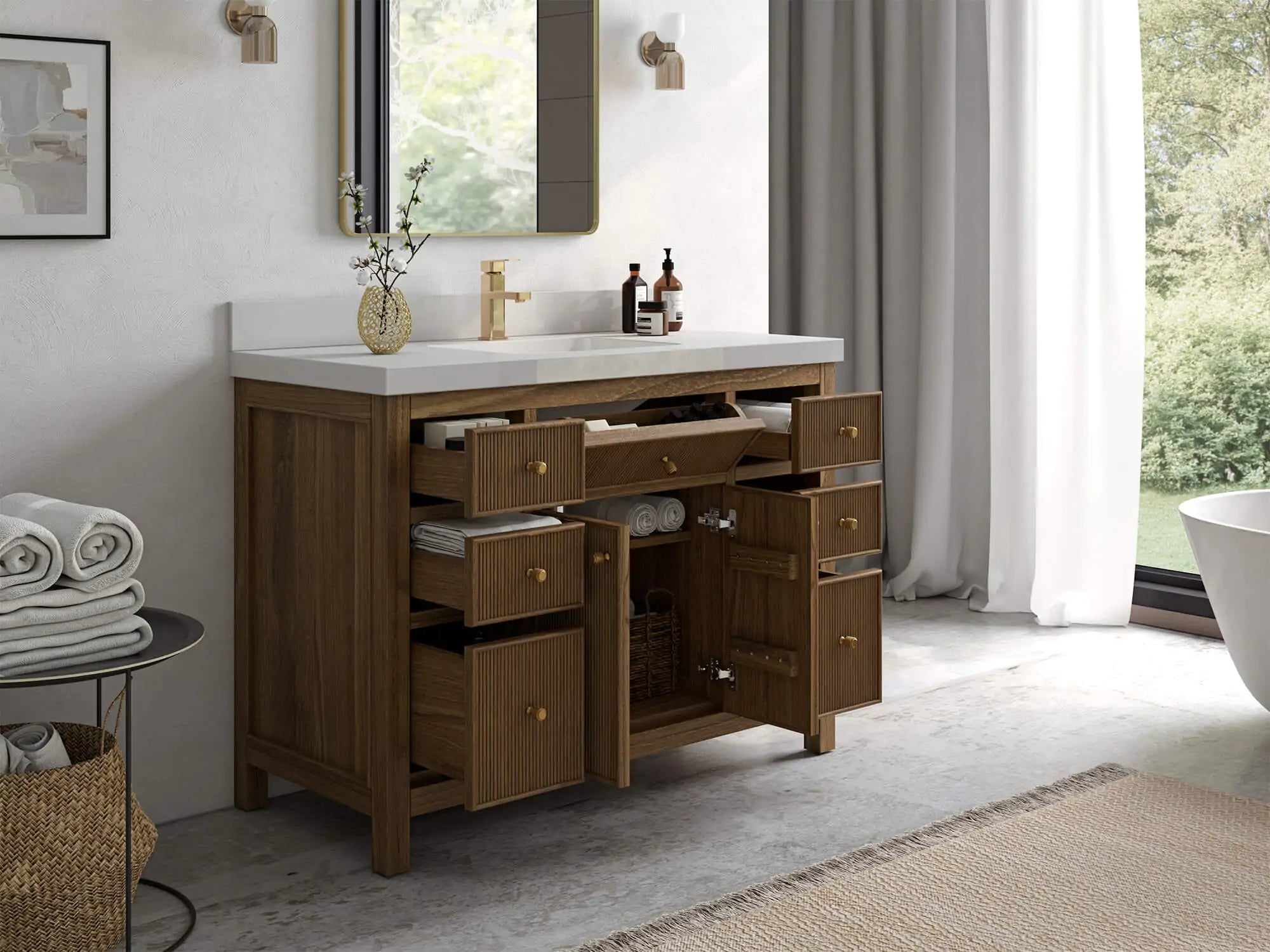
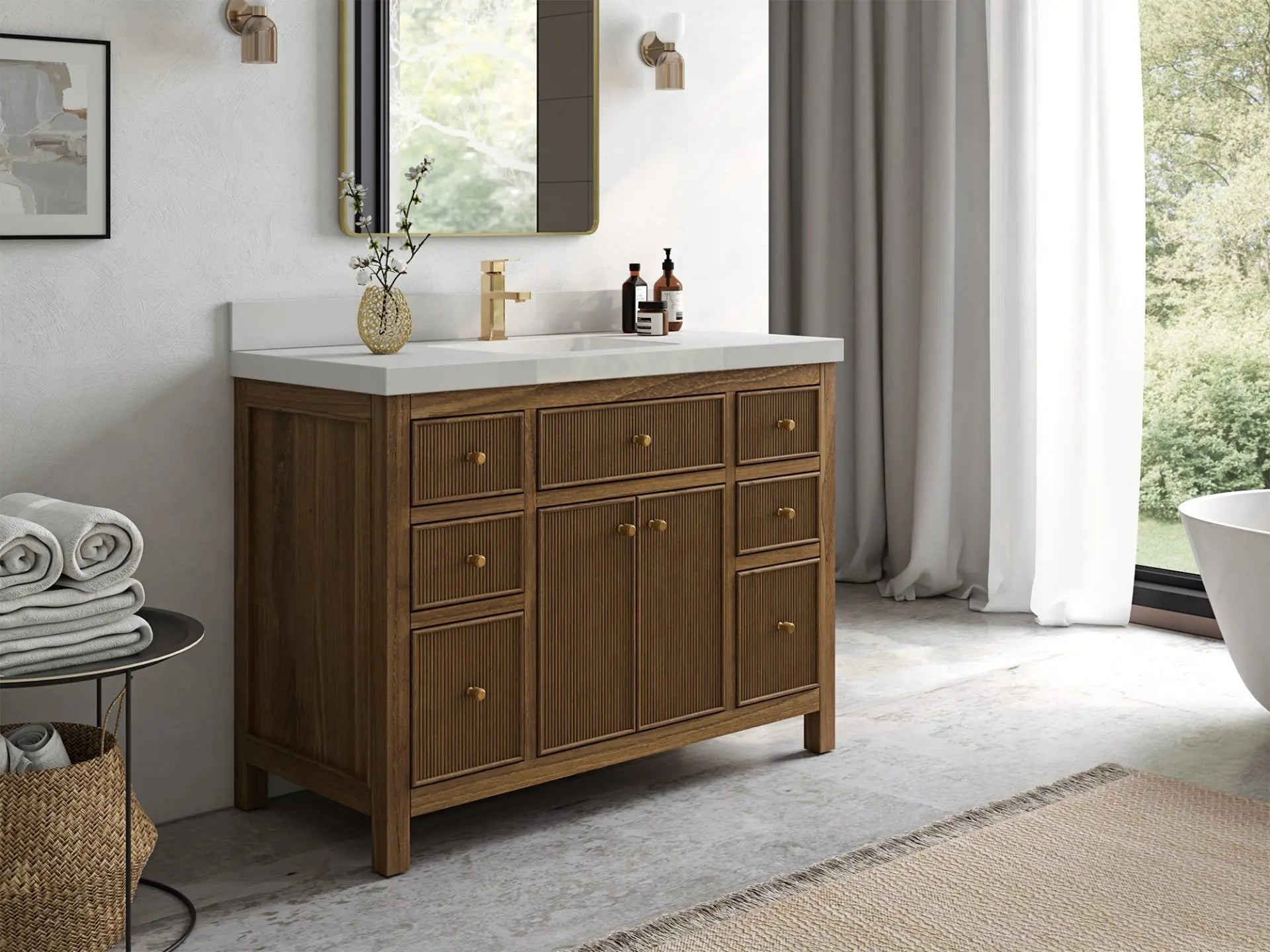
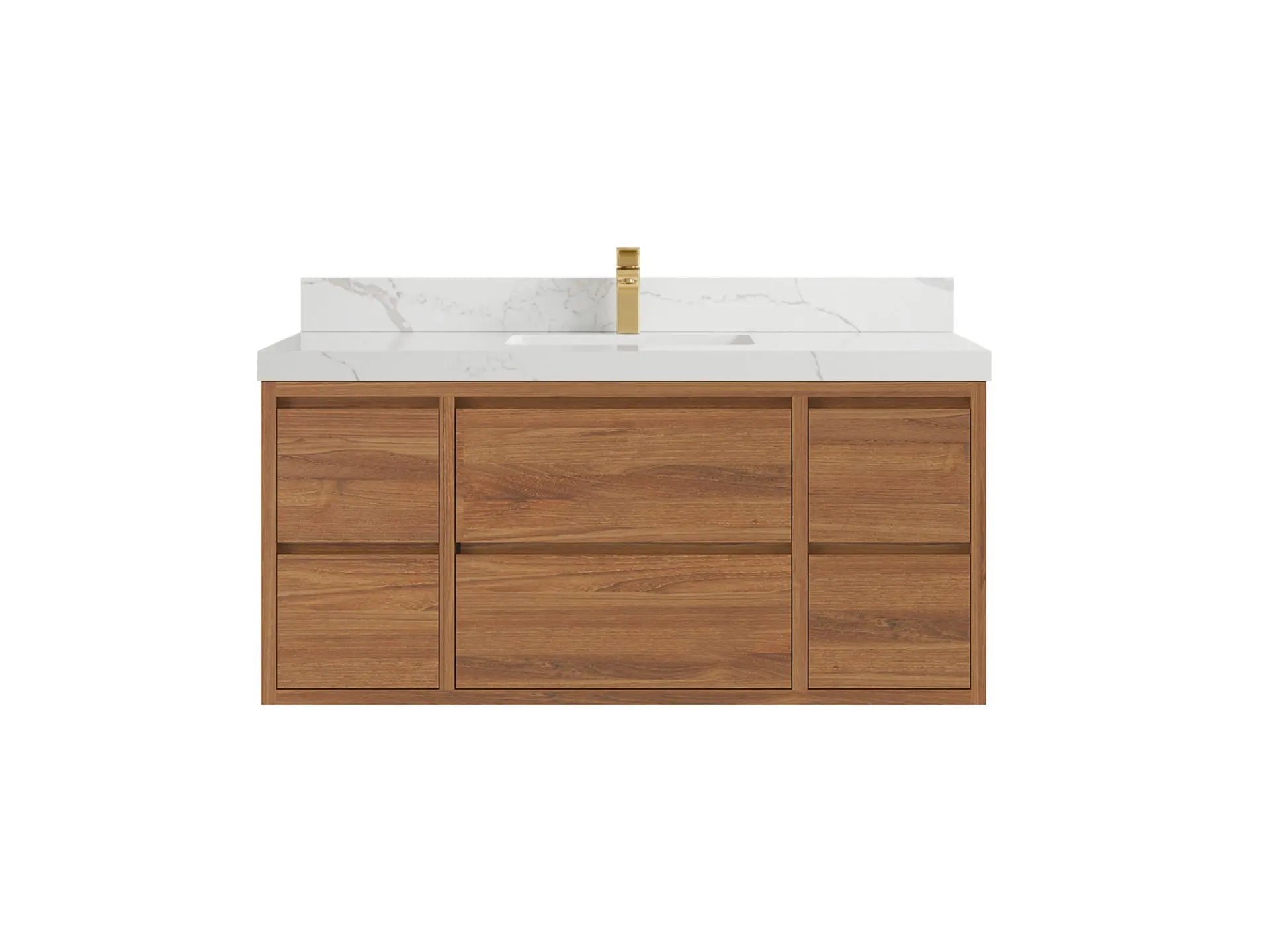
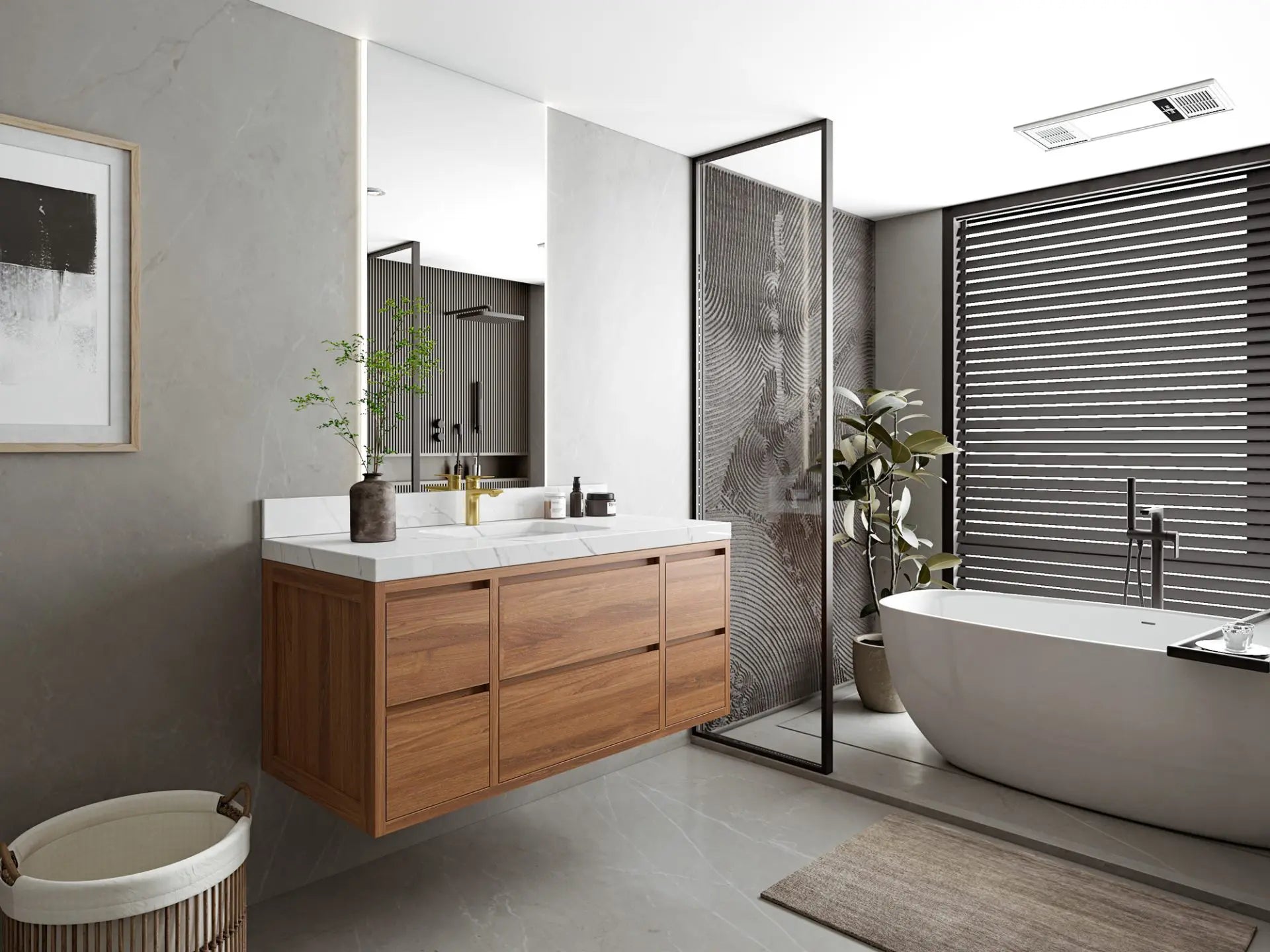
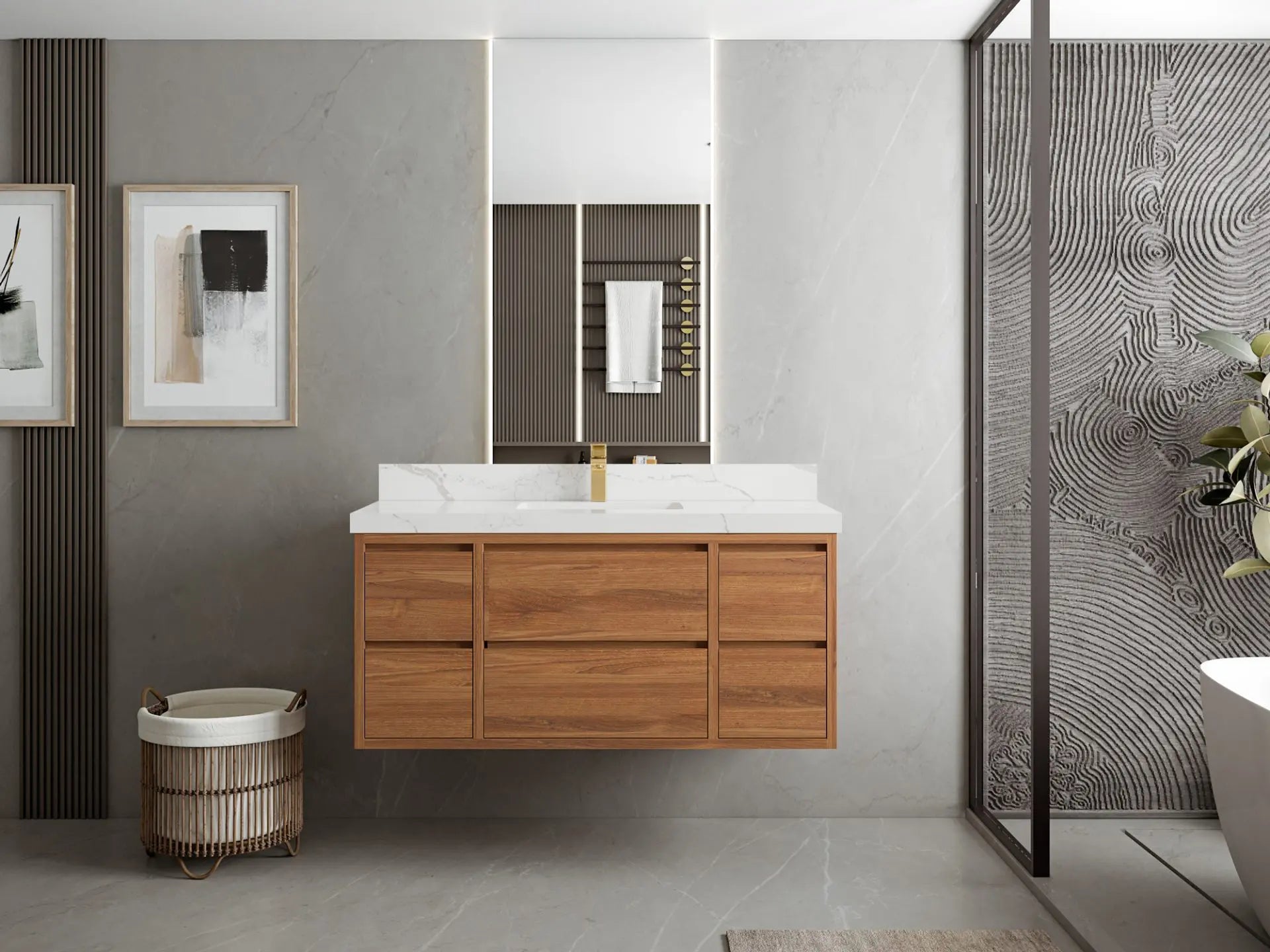
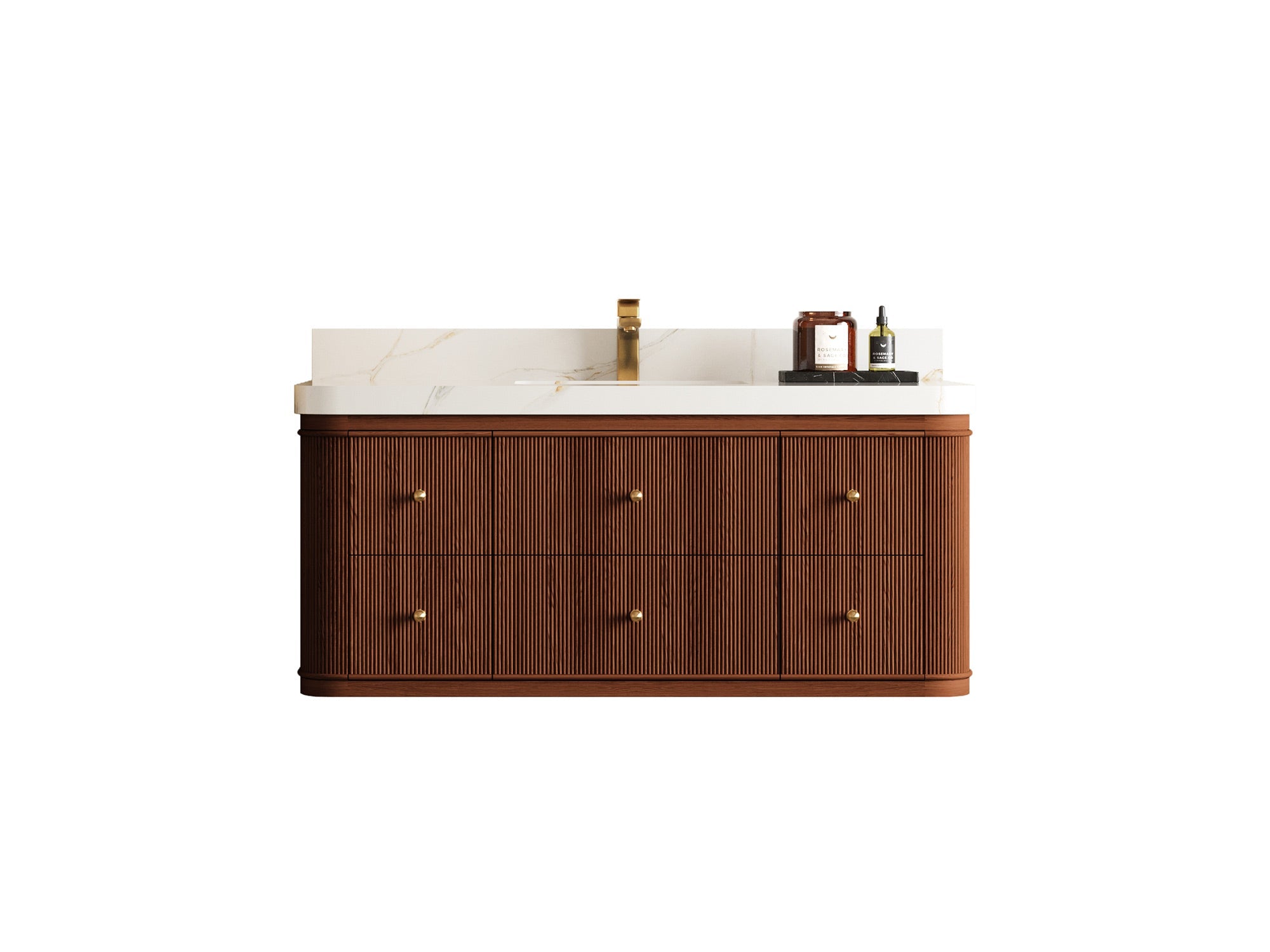
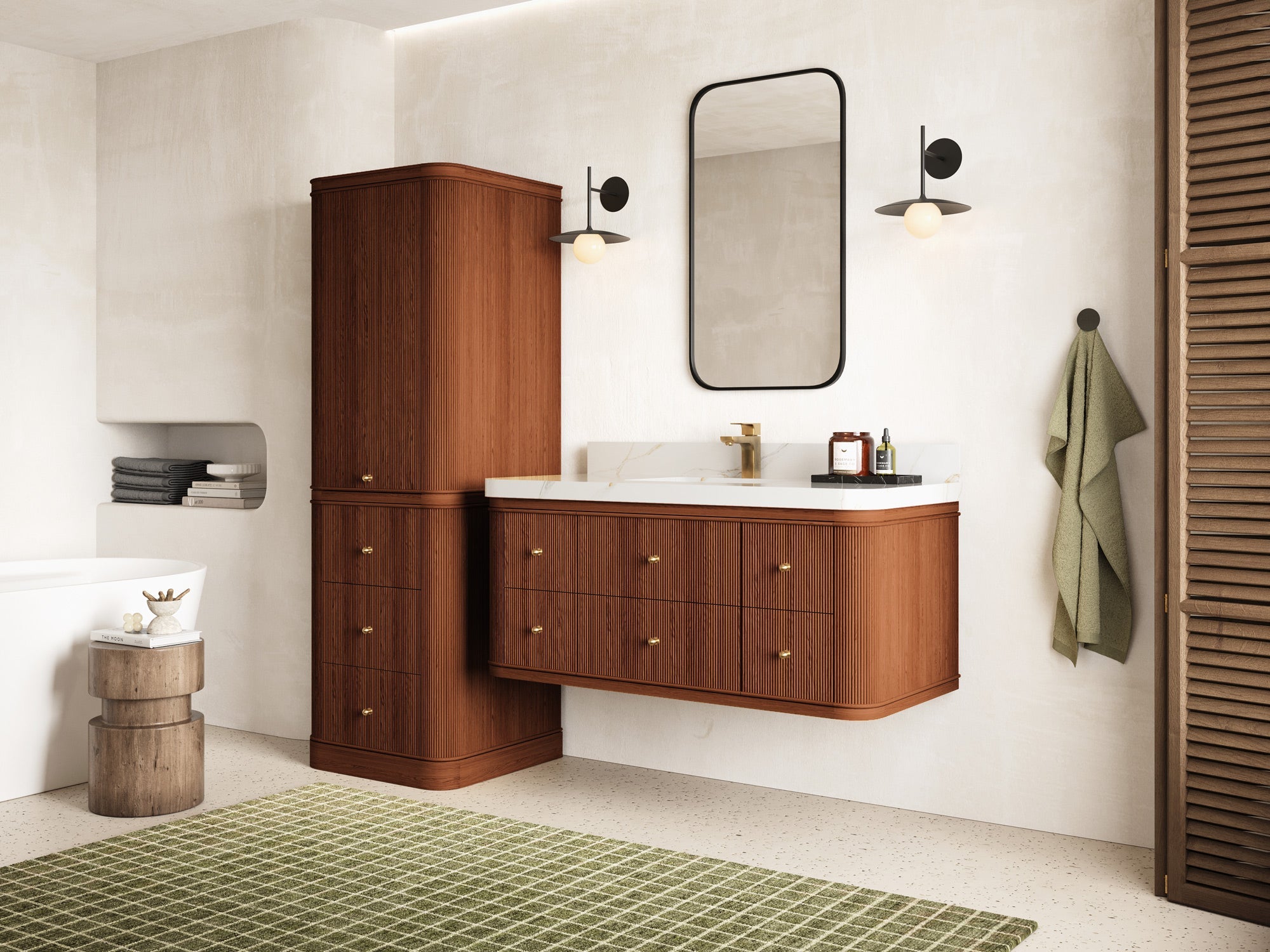
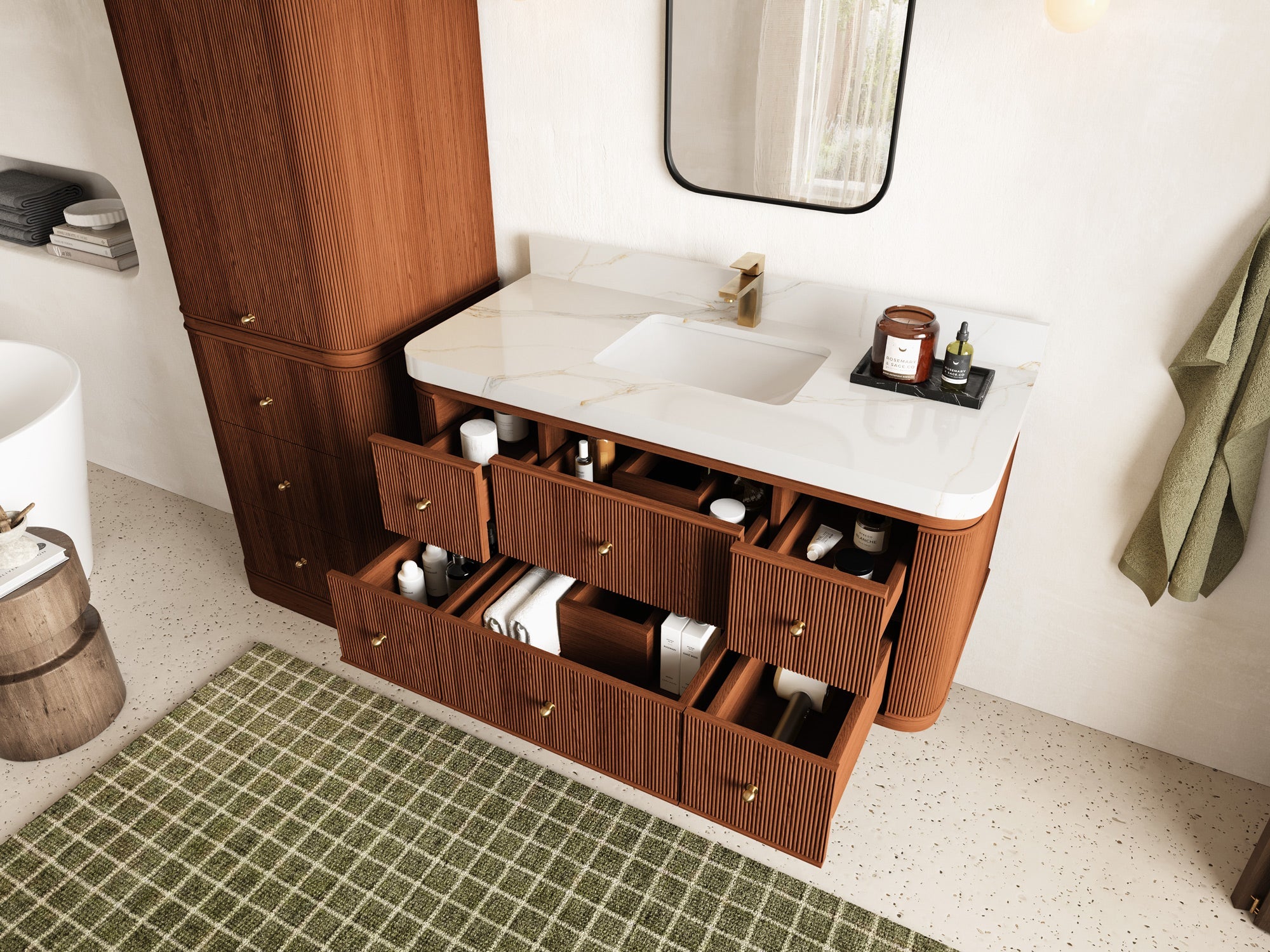
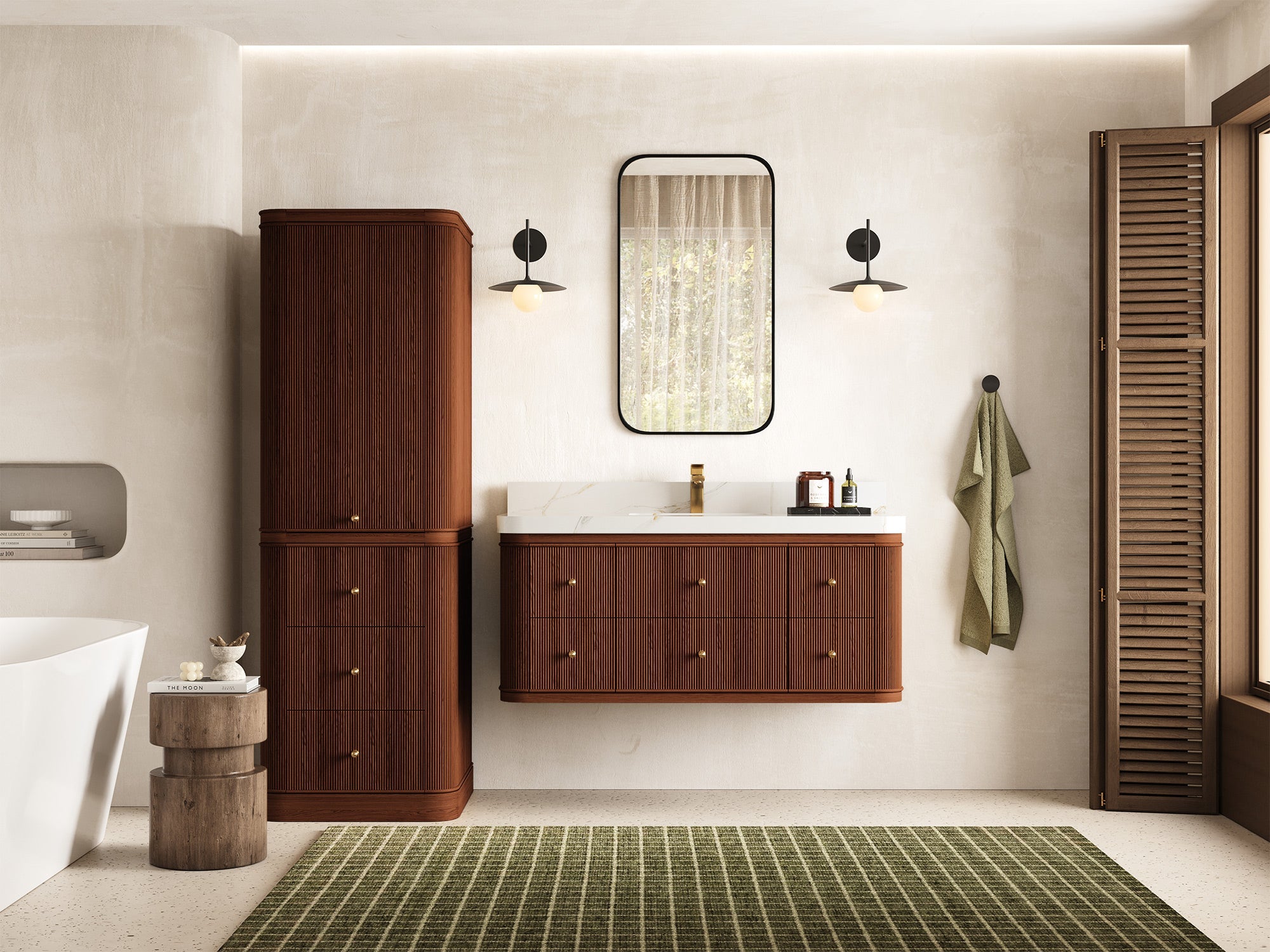
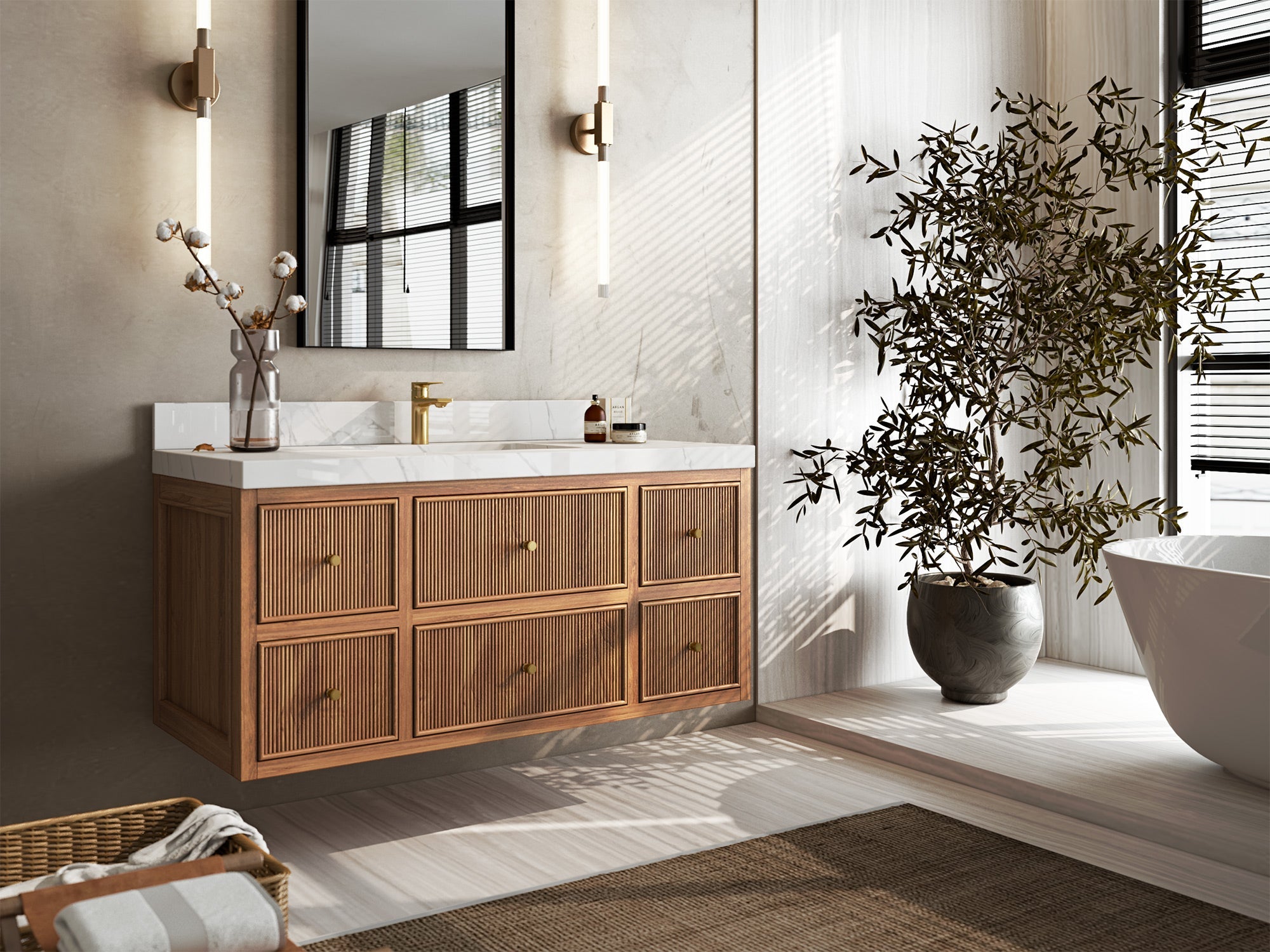
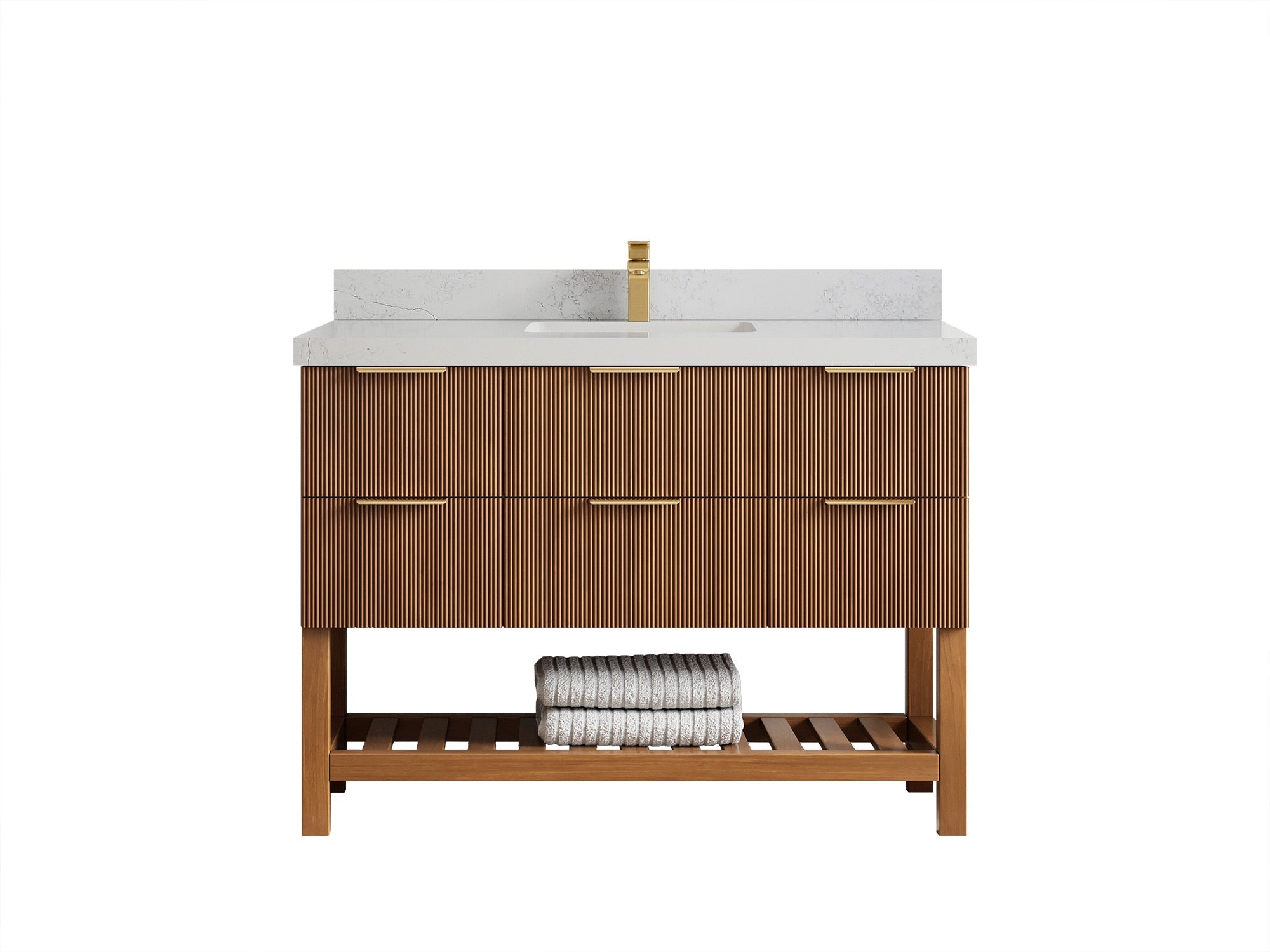
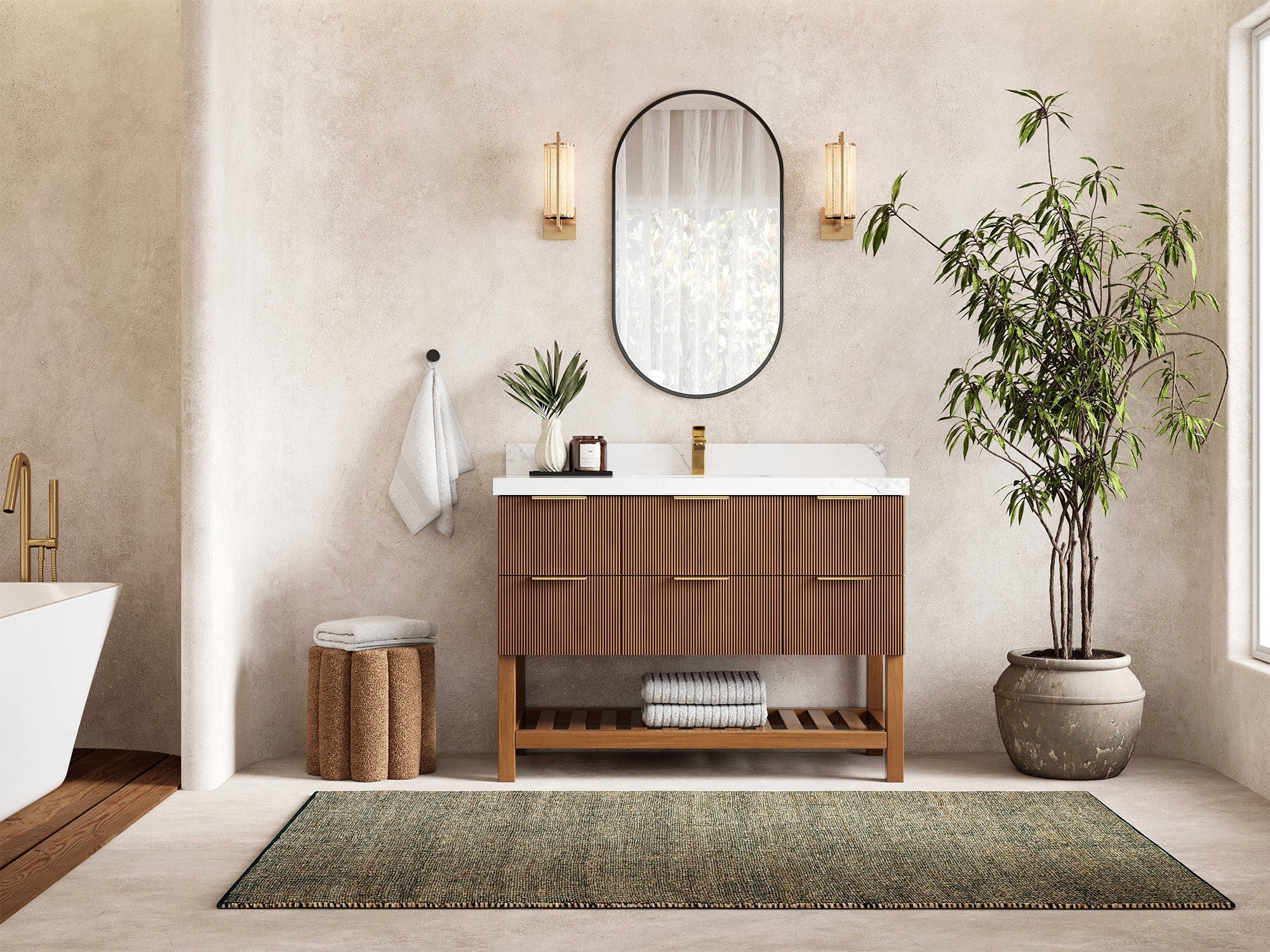
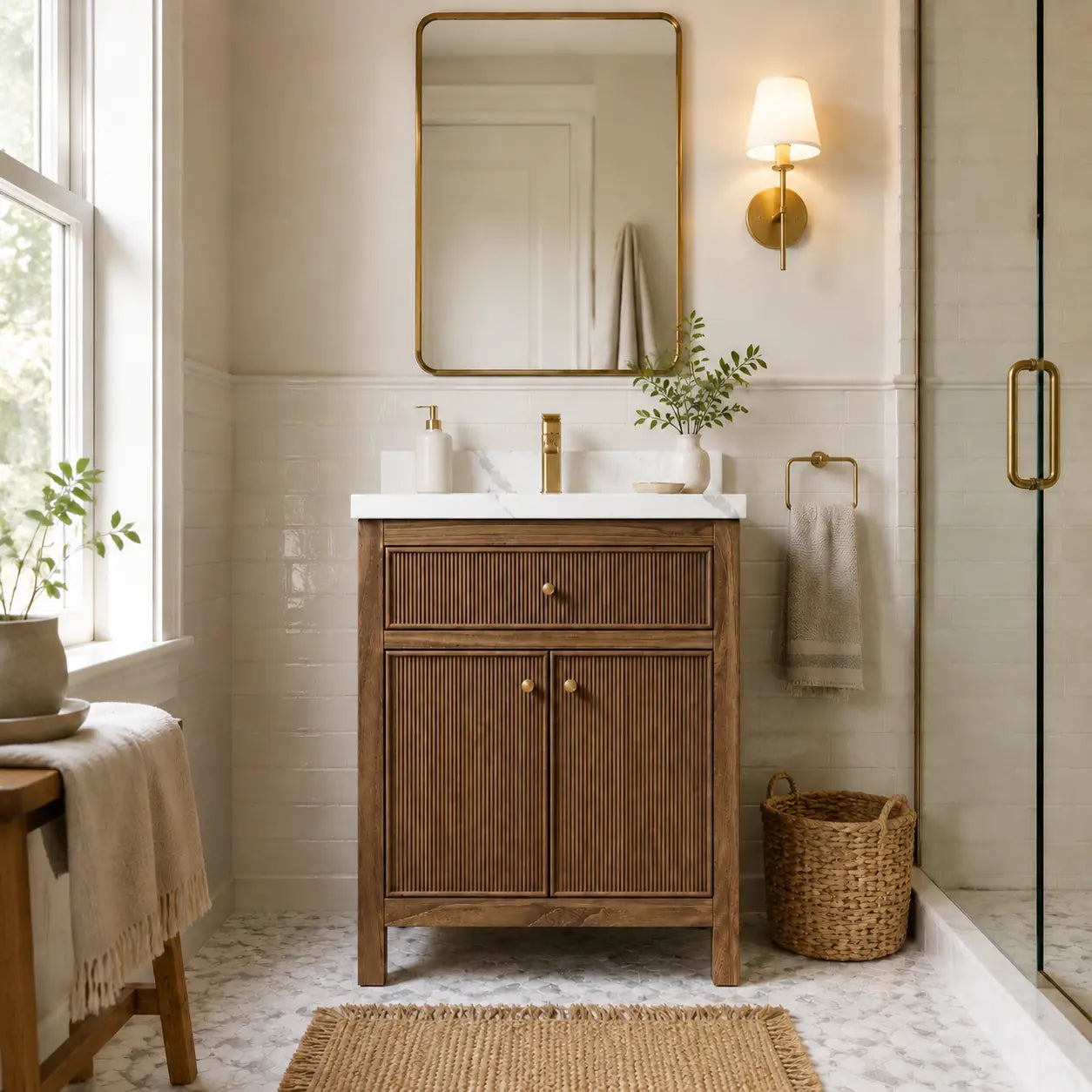
The Madison Floating, Sonoma Reeded Floating and Hampton Floating models mount to the wall and leave the floor visible underneath. At 48 inches that matters more than at smaller sizes, because a cabinet this wide sitting on the floor carries real visual weight; wall-hung, the exposed floor keeps the room feeling open. Floating models need a wall that can carry the load and plumbing that exits through the wall rather than the floor. The freestanding models, including Charlotte, Elizabeth, Manhattan, Pasadena, Atlanta and the Catalina, rest on the floor and conceal the plumbing behind the base, the simpler swap when you are replacing an existing vanity. Sonoma and Catalina are reeded and Atlanta is fluted, with vertical channels across the fronts; the other lines are plainer, letting the teak grain do the work.
Teak, and how to look after it
Teak's natural oils are the reason it spent more than a century on boat decks, and the reason it belongs in a bathroom: it resists moisture and movement where softer woods swell. It is a genuine hardwood, responsibly and FSC-certified sourced, never MDF or particleboard, so the cabinet can be cleaned, sanded and refreshed over the years instead of chipping at the edges the way laminate does. Wipe spills rather than letting water stand at the seams or around the faucet base, and use mild soap instead of abrasive or solvent cleaners. One note on materials: the Chicago Veneer model is finished in teak veneer rather than a solid teak front, so check that product page if solid teak specifically matters to you.
Countertops and installation
Depending on the design, tops are available in quartz or natural Carrara marble, finished with a mitered or cove edge. At 48 inches there is a lot of stone on show, so the choice carries: a pale quartz contrasts against warm teak and keeps the room light, while Carrara adds grey veining that reads cooler against the wood. The countertop is stone and ships in its own protective box rather than attached to the cabinet, with the undermount basin set at installation. Plan for an installer or plumber on delivery day.
Compare widths in our 48-inch vanities, 42-inch vanities and 60-inch vanities. Browse the full teak range, every single-sink vanity, and our wider solid wood collection. Countertop choices are explained in our vanity countertops guide.
48-inch teak vanity FAQ
Is 48 inches a good size for a single-sink vanity?
It is the most generous single-sink width that still fits an ordinary bathroom wall. Because a basin only needs so much space, nearly all of the extra width over a 36-inch vanity becomes usable counter, with a correspondingly larger cabinet below.
Can a 48-inch vanity take two sinks?
Two 48-inch double-sink models are included here, but 48 inches is the minimum for two basins and the counter between them will be narrow. If your wall allows 60 inches, a 60-inch double is a considerably more comfortable piece to live with.
Are these vanities solid teak or a veneer?
The teak lines here are built in solid teak, a true hardwood chosen for how well it handles bathroom humidity, never MDF or particleboard. The exception is the Chicago Veneer model, which is finished in teak veneer, so check that product page if the distinction matters to you.
Should I choose a floating or a freestanding model?
Floating models such as the Madison Floating, Sonoma Reeded Floating and Hampton Floating leave the floor visible, which counts for more at 48 inches because a cabinet this wide carries real visual weight. They need a wall that can carry the load and plumbing through the wall. Freestanding models hide the plumbing behind the base and are the easier swap.
What countertops are available, and is the sink pre-fitted?
Depending on the design, tops come in quartz or natural Carrara marble with a mitered or cove edge. The countertop is stone and ships in its own protective box rather than pre-fitted to the cabinet; the undermount basin is set during installation.
Questions & answers