




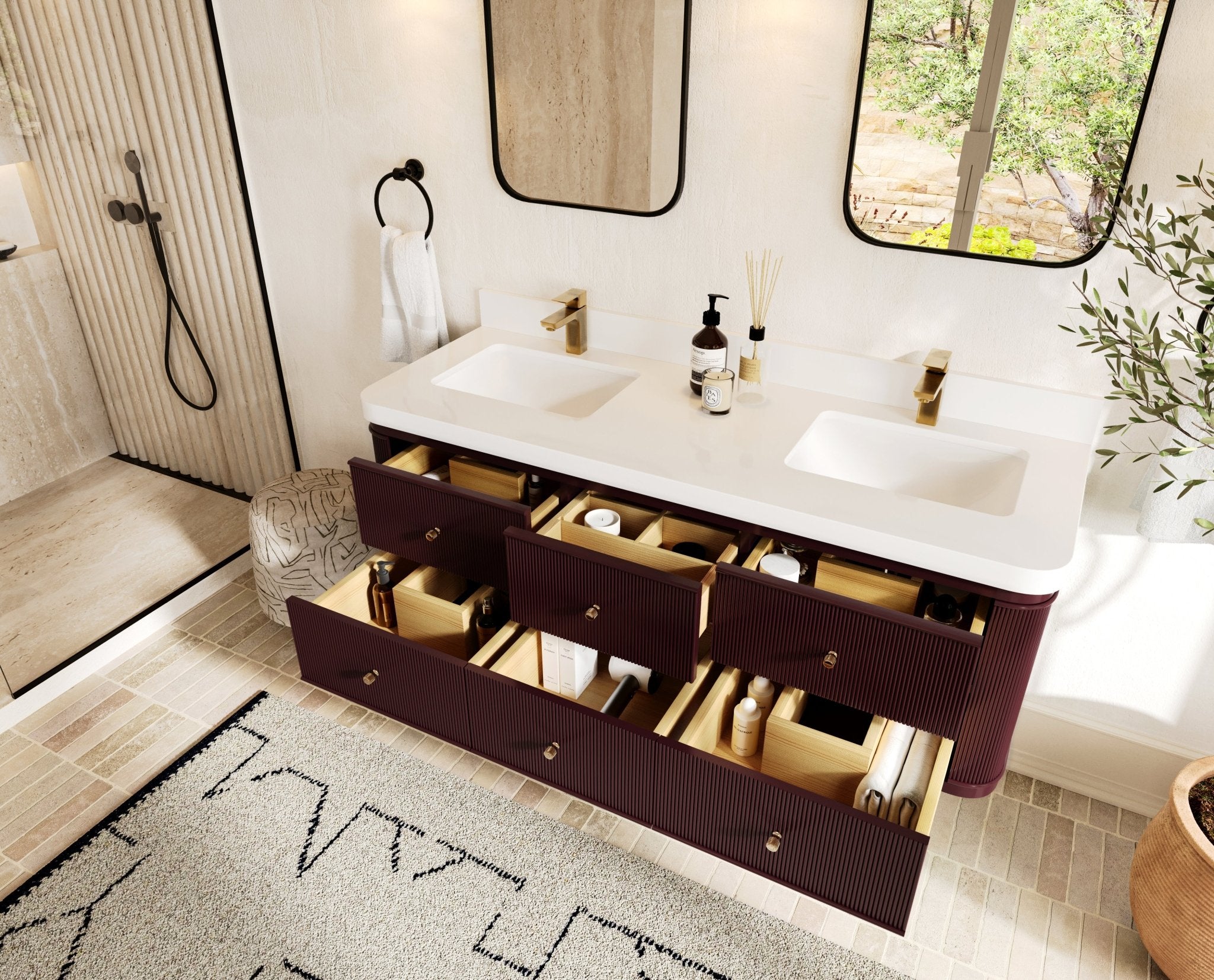
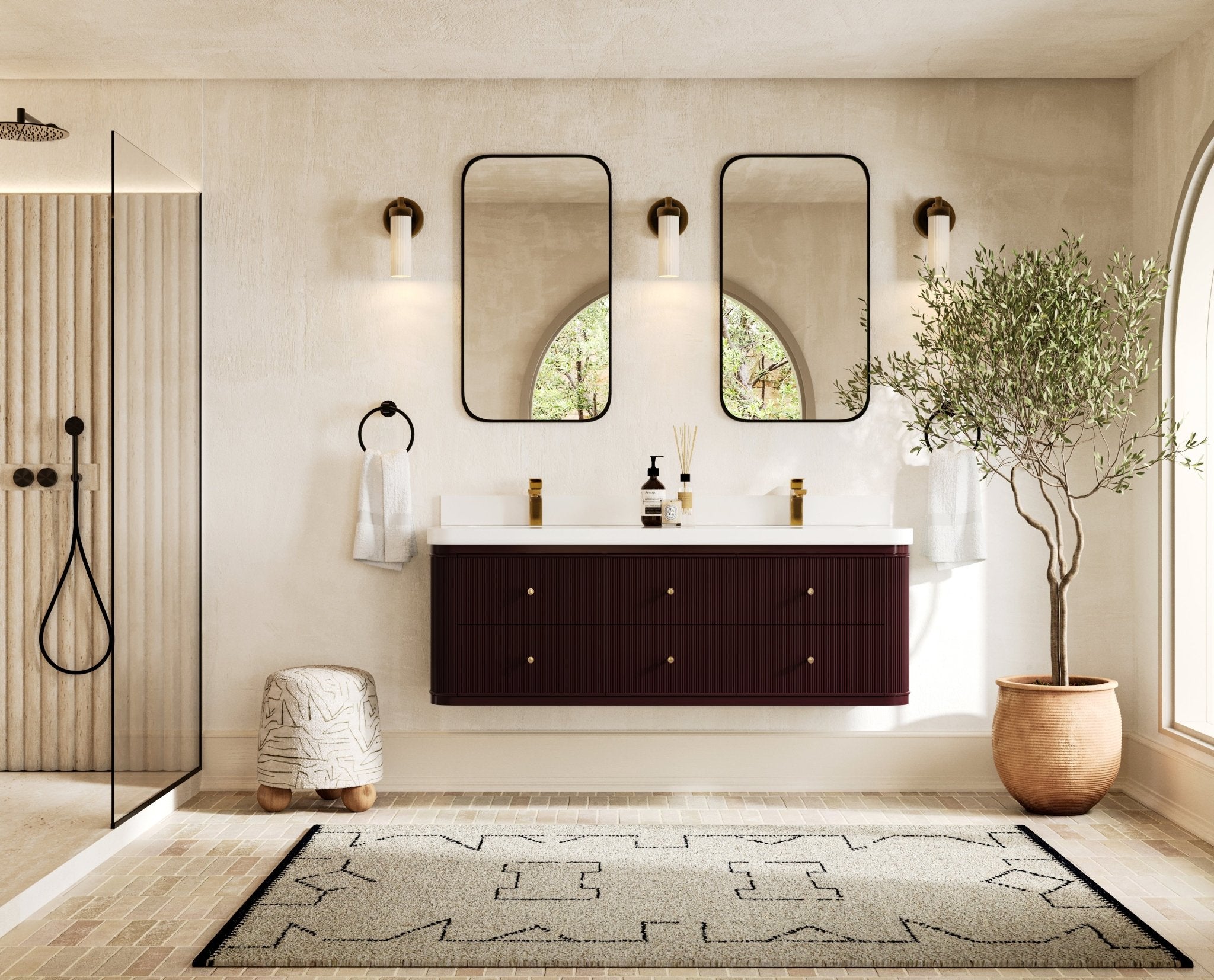

CURATED FOR THIS COLLECTION
Designed Around 60″
A properly scaled 60″ vanity brings useful storage, genuine stone and visual balance to the room.
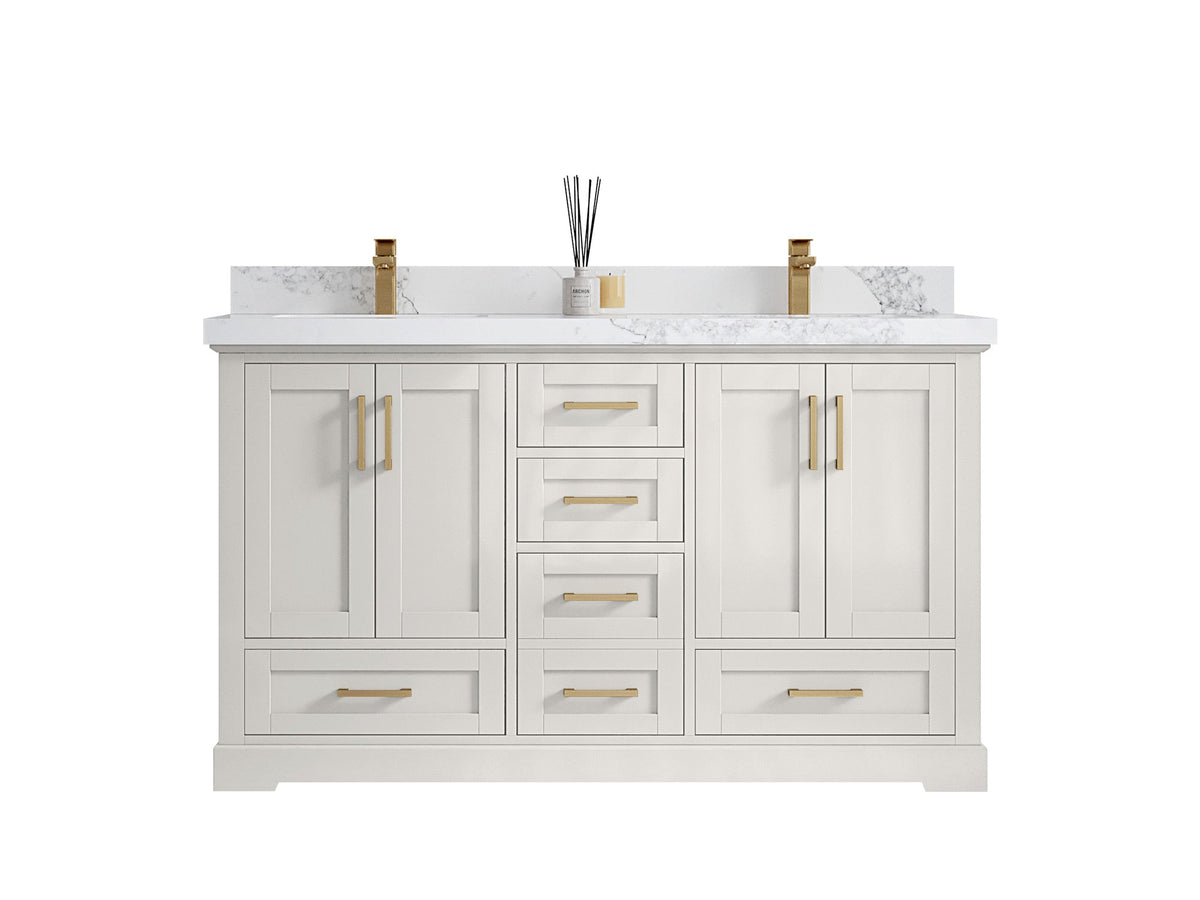
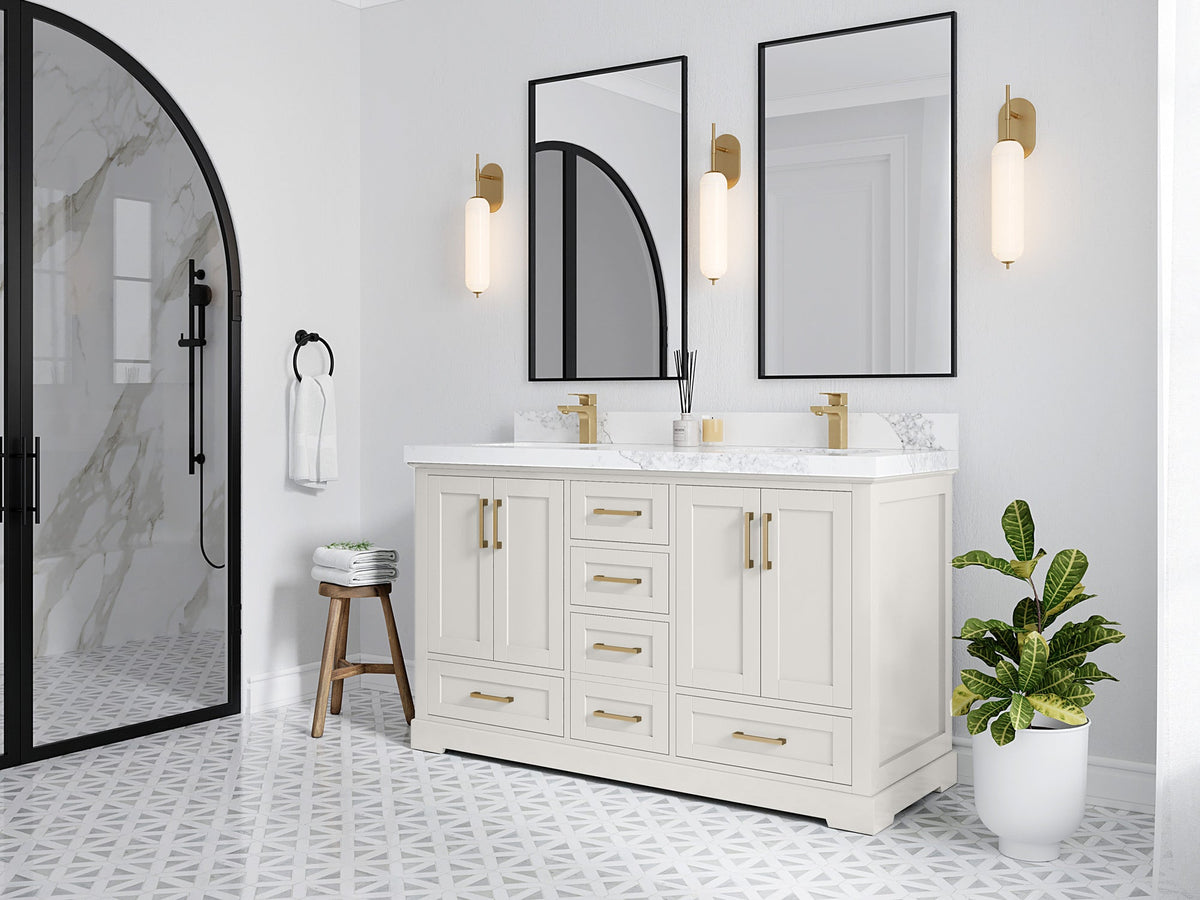
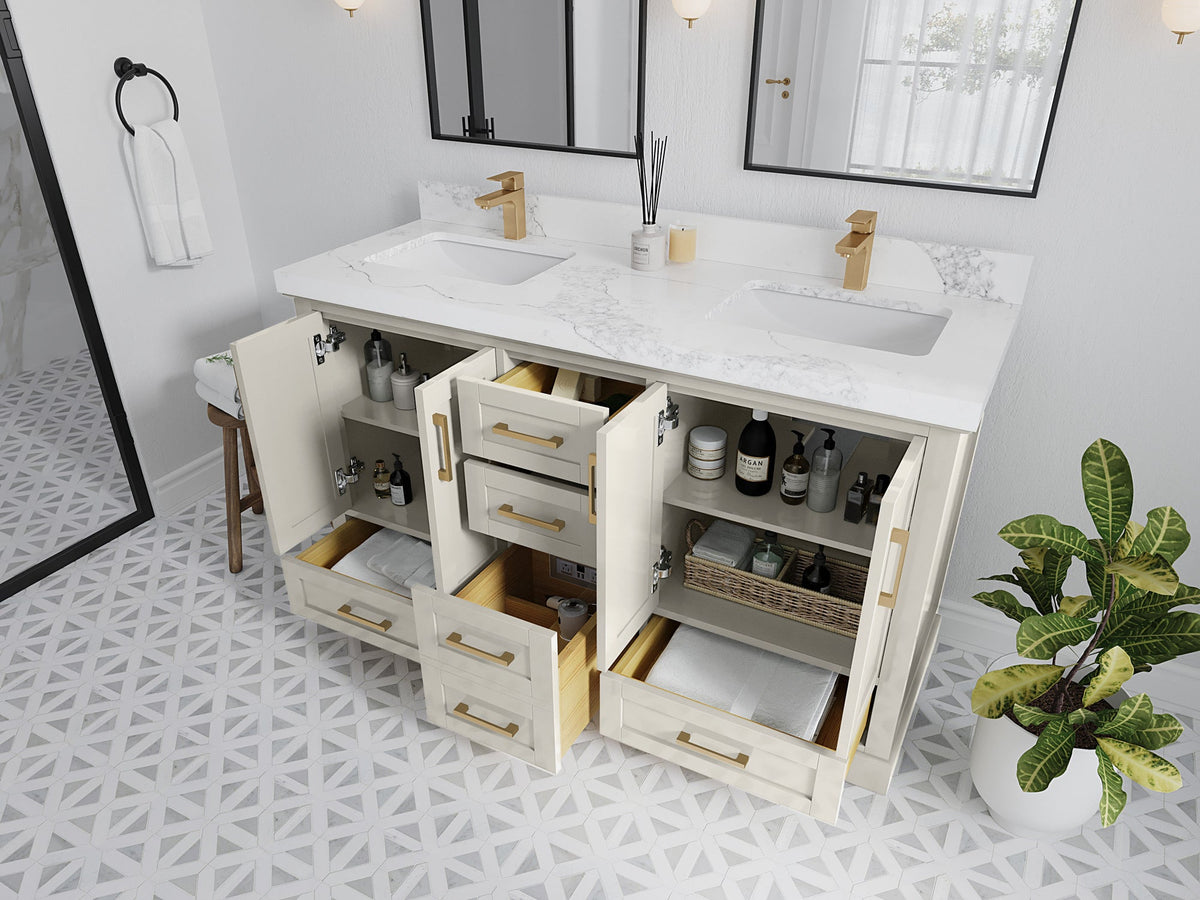
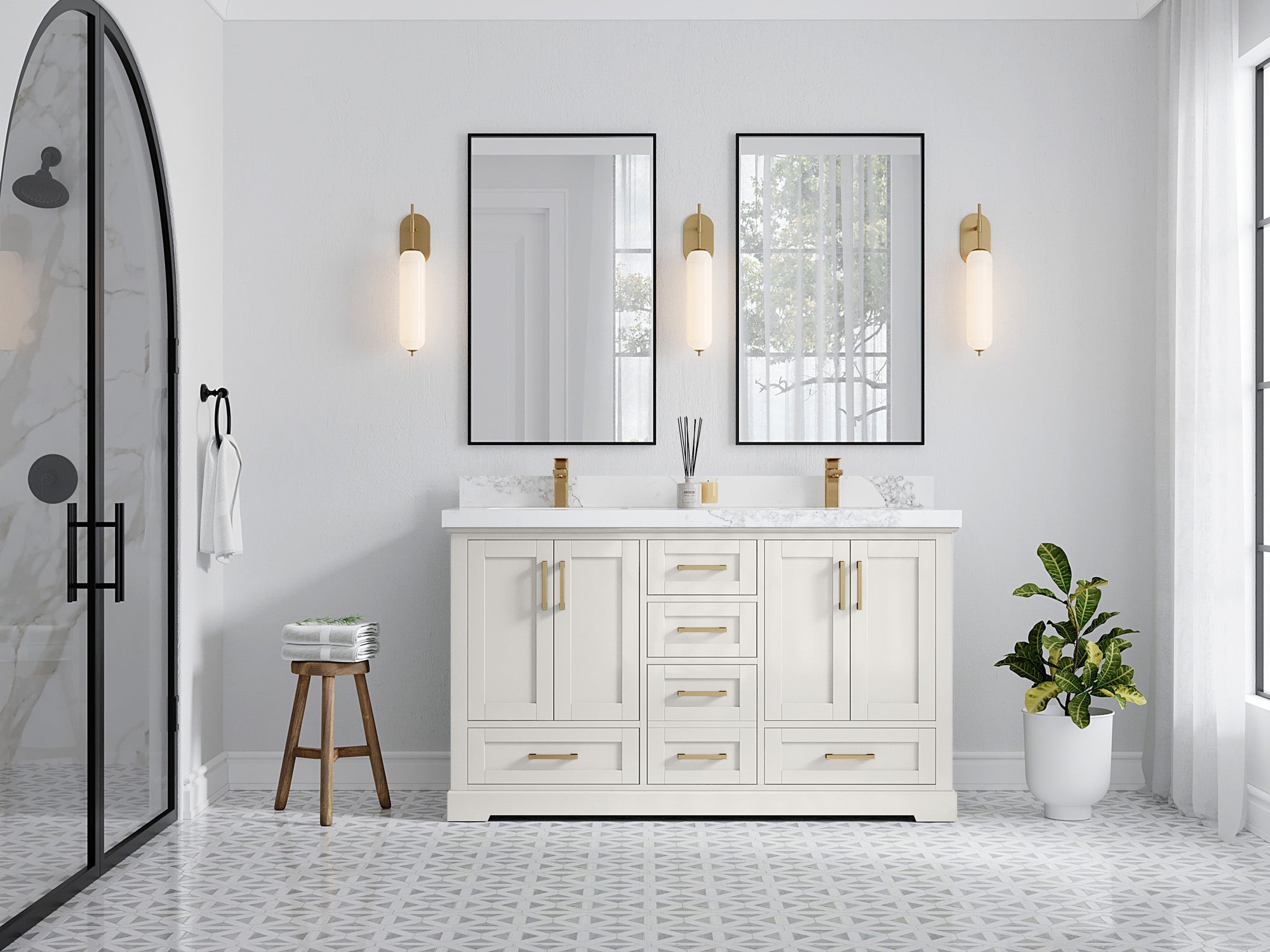
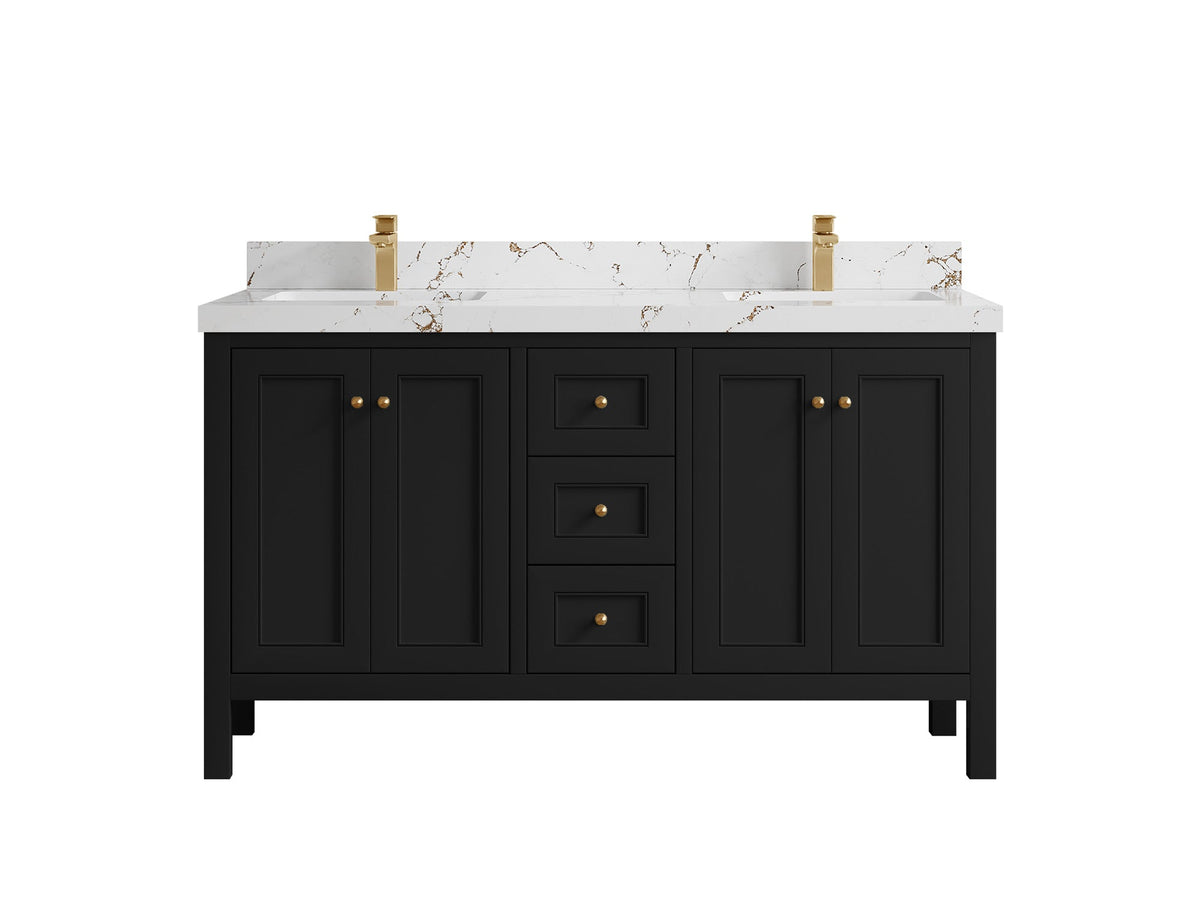
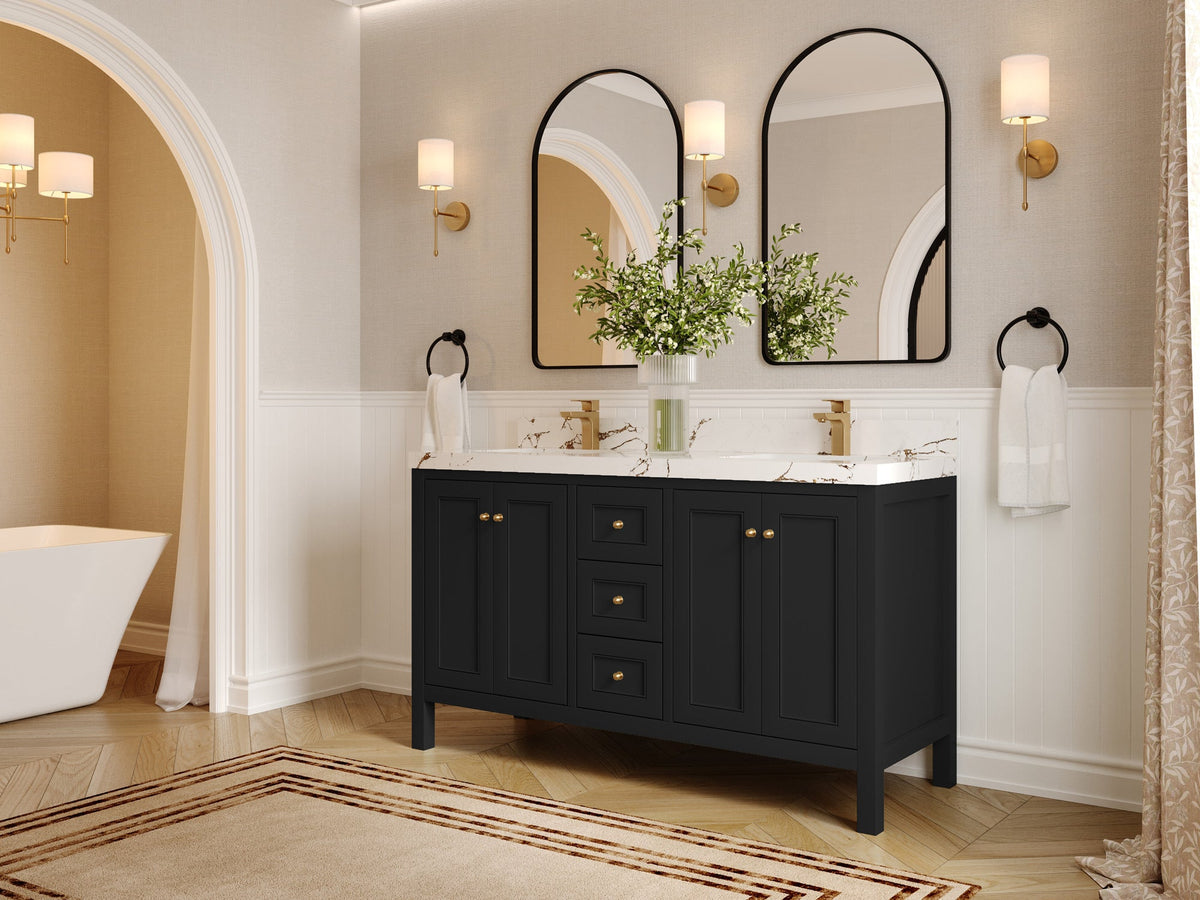
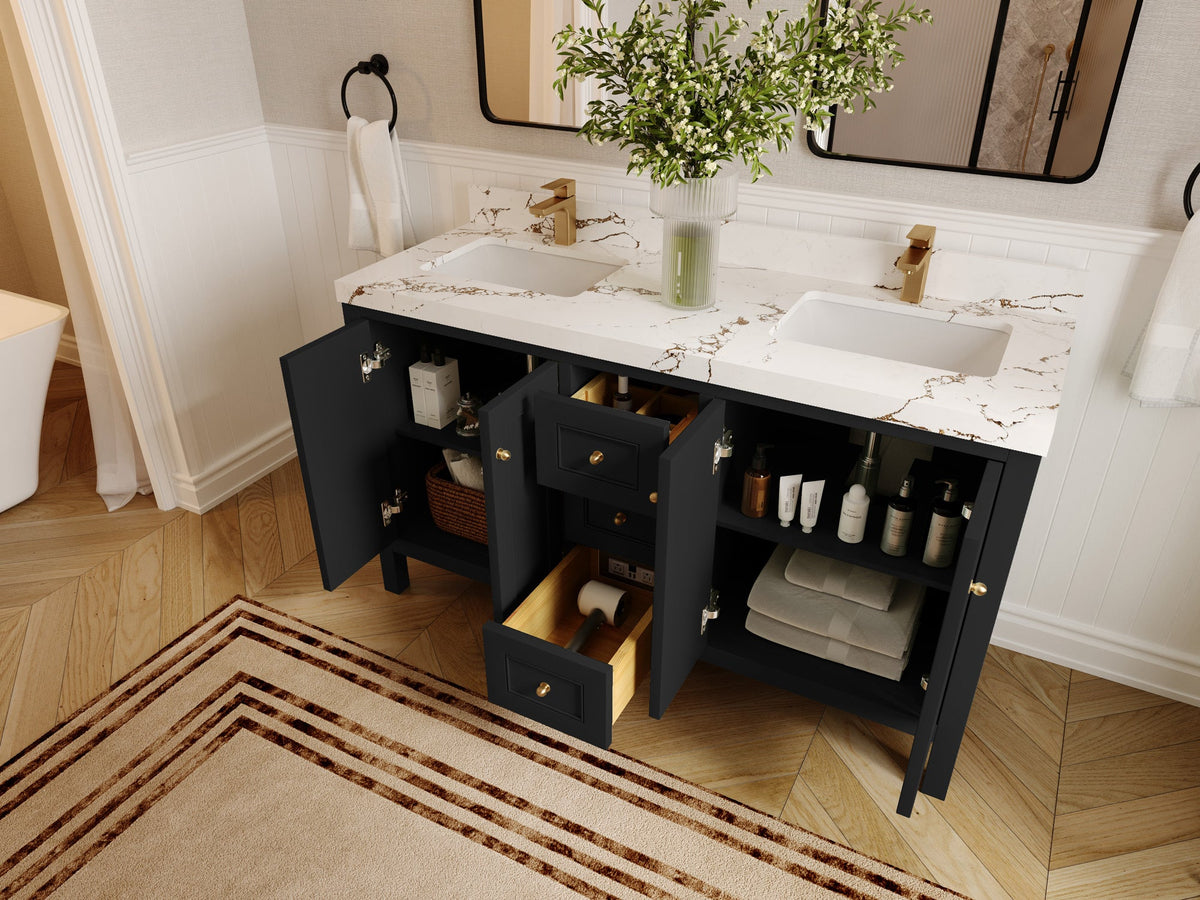
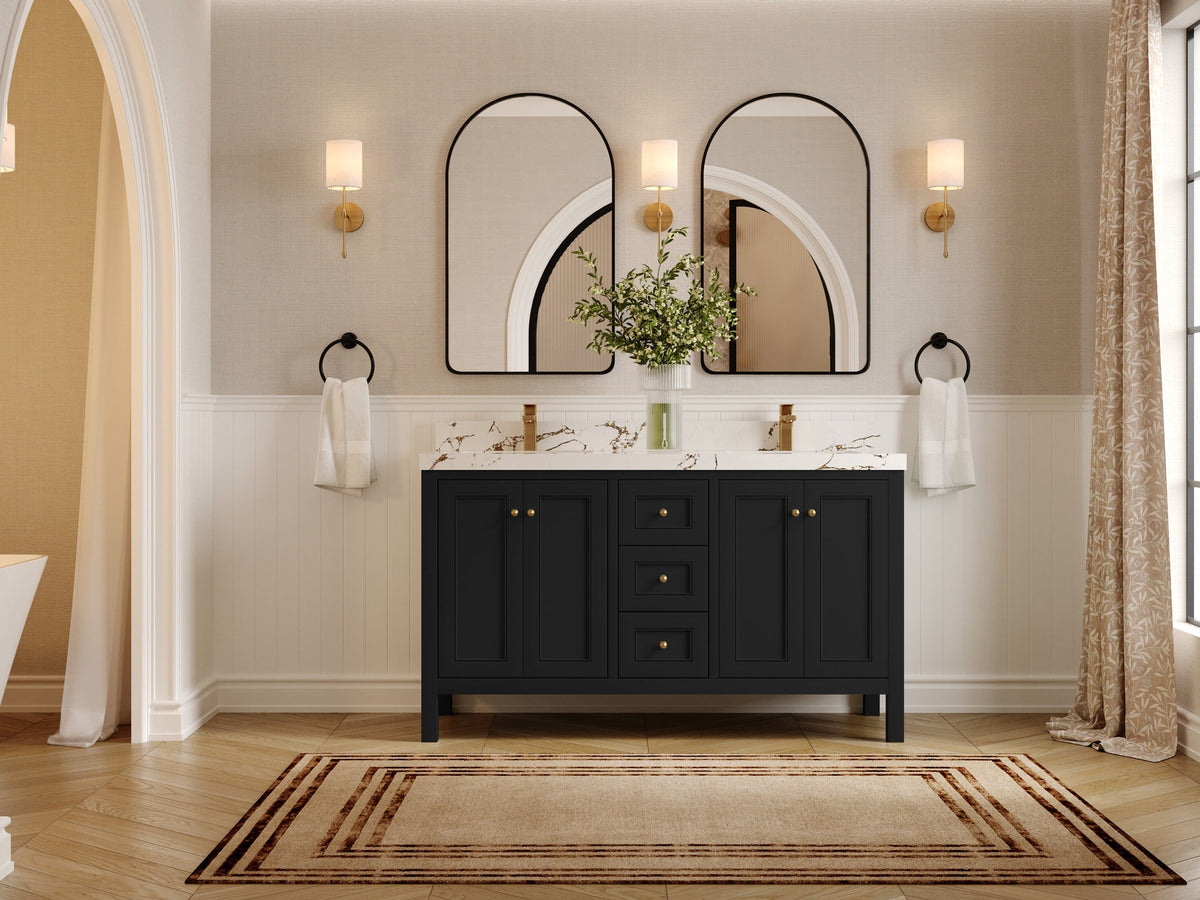
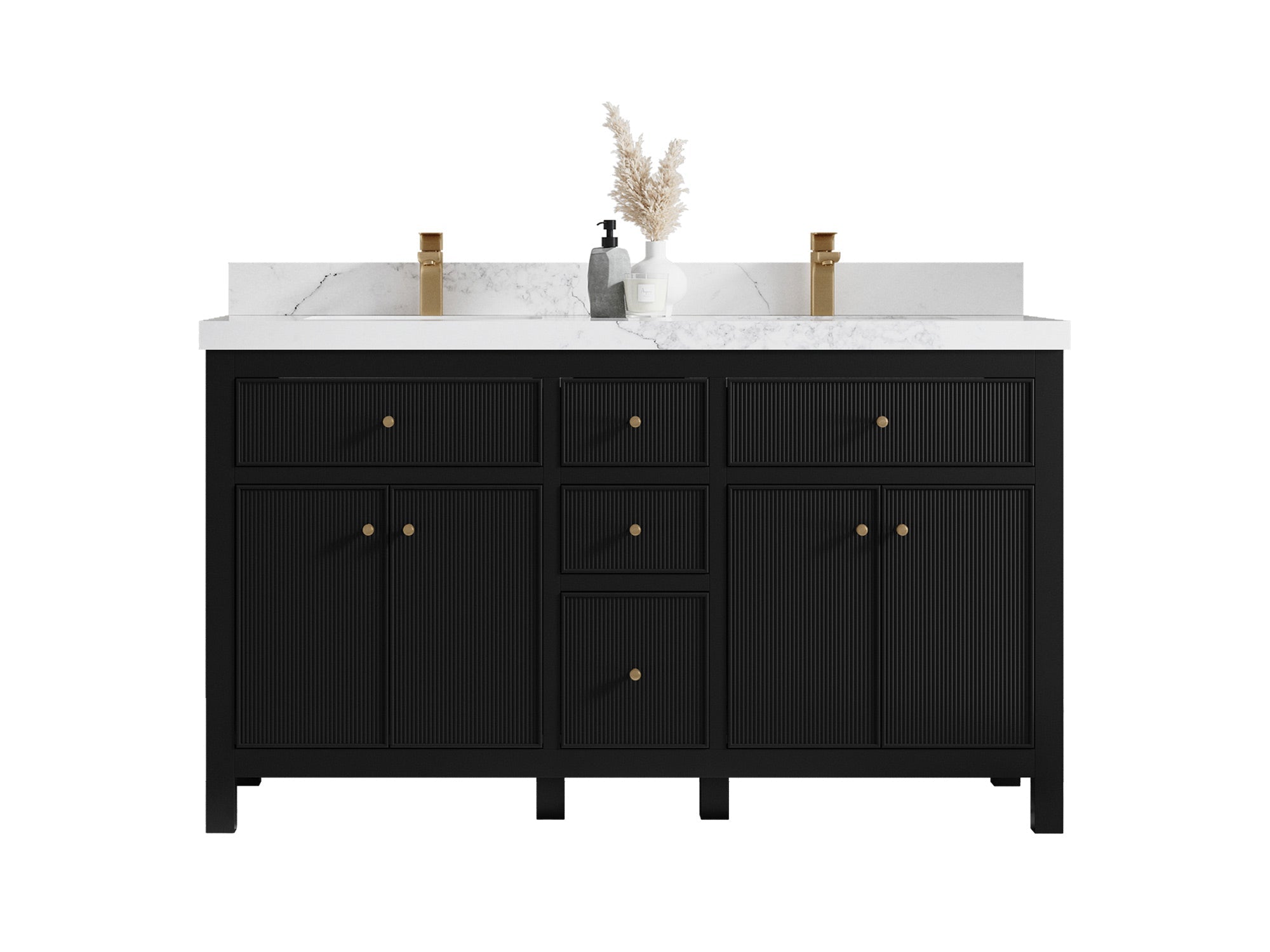
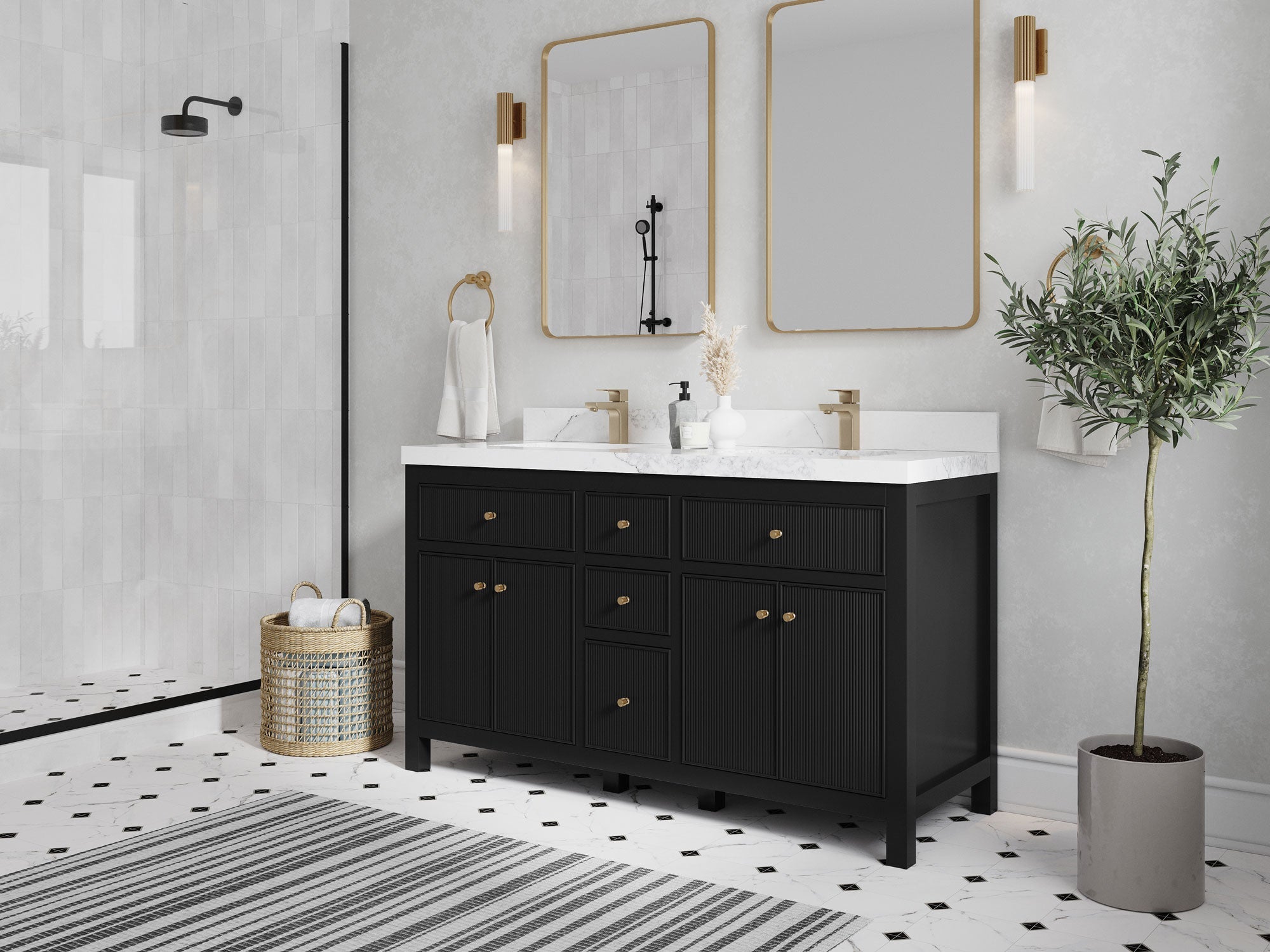
Nashville 60 in.Double sink
In stock · Ships in 7–10 business days
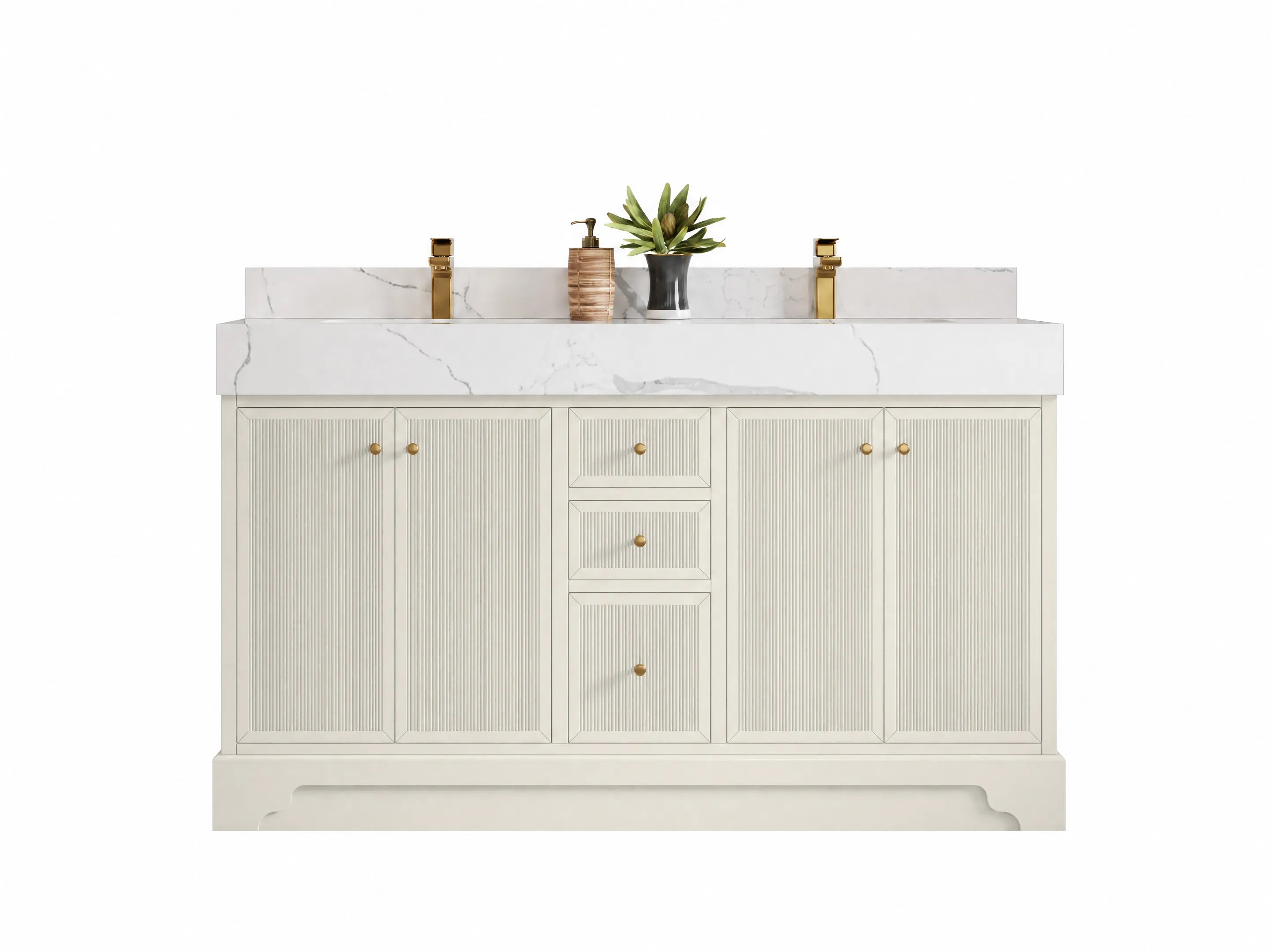


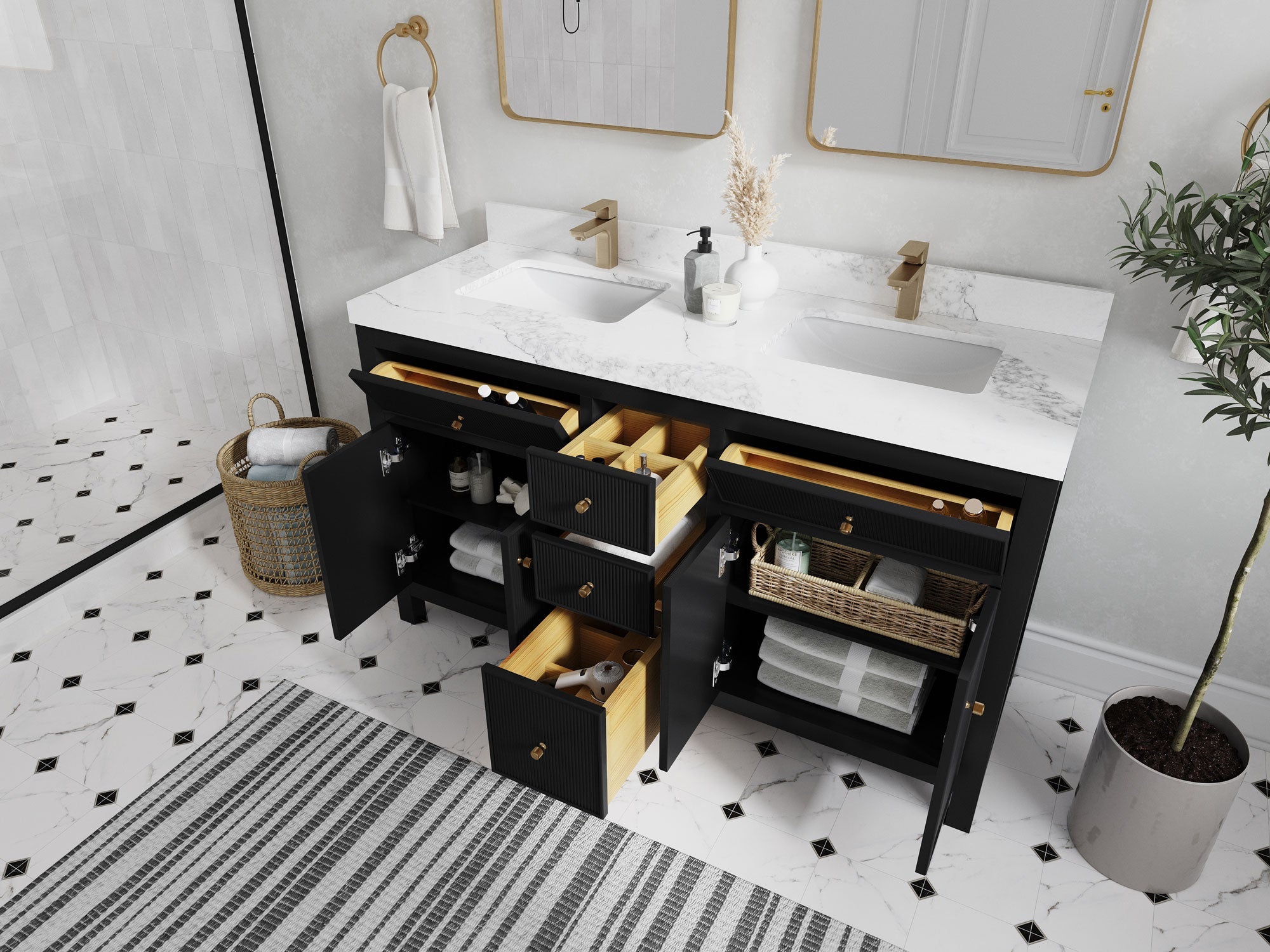
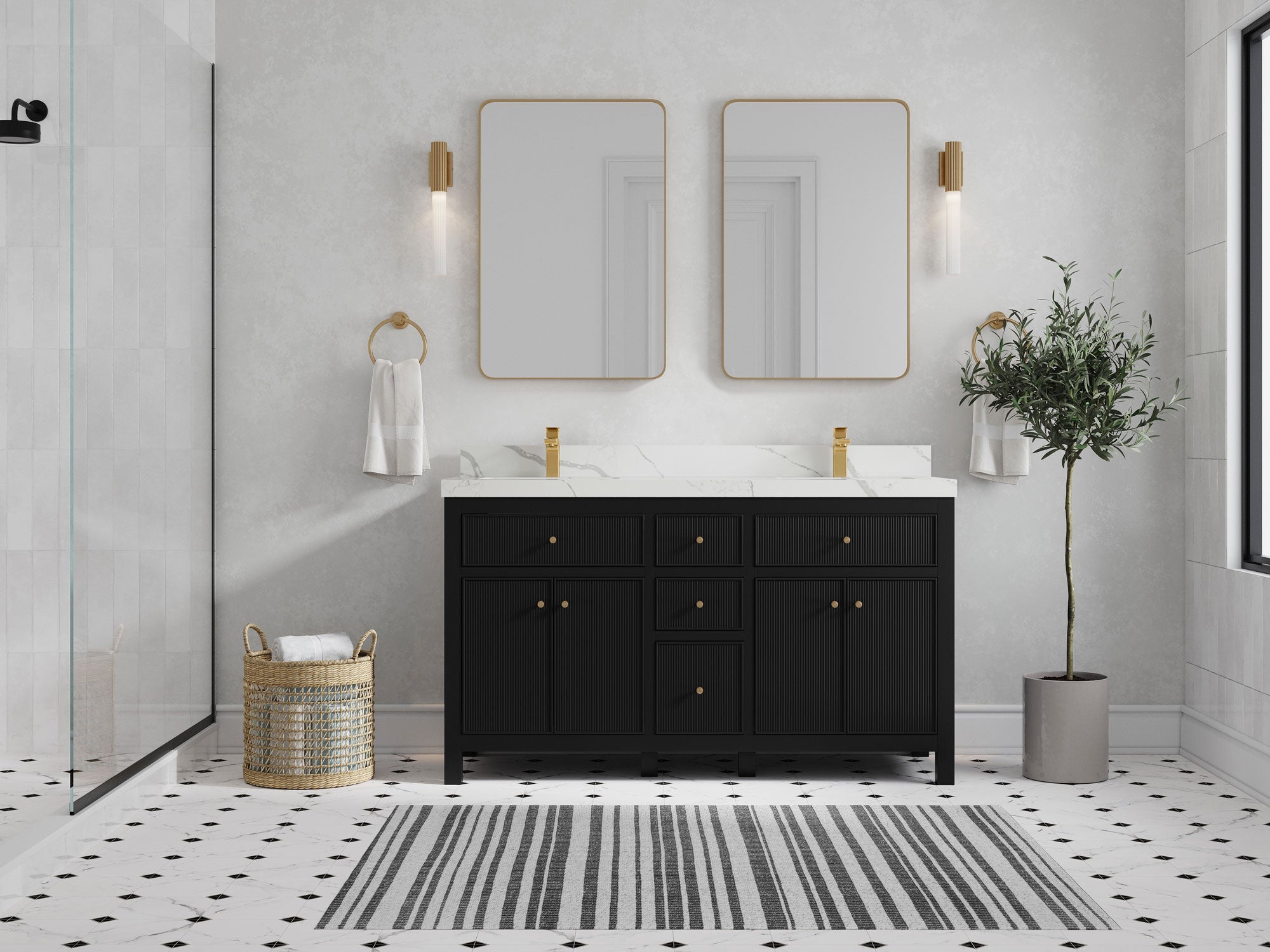
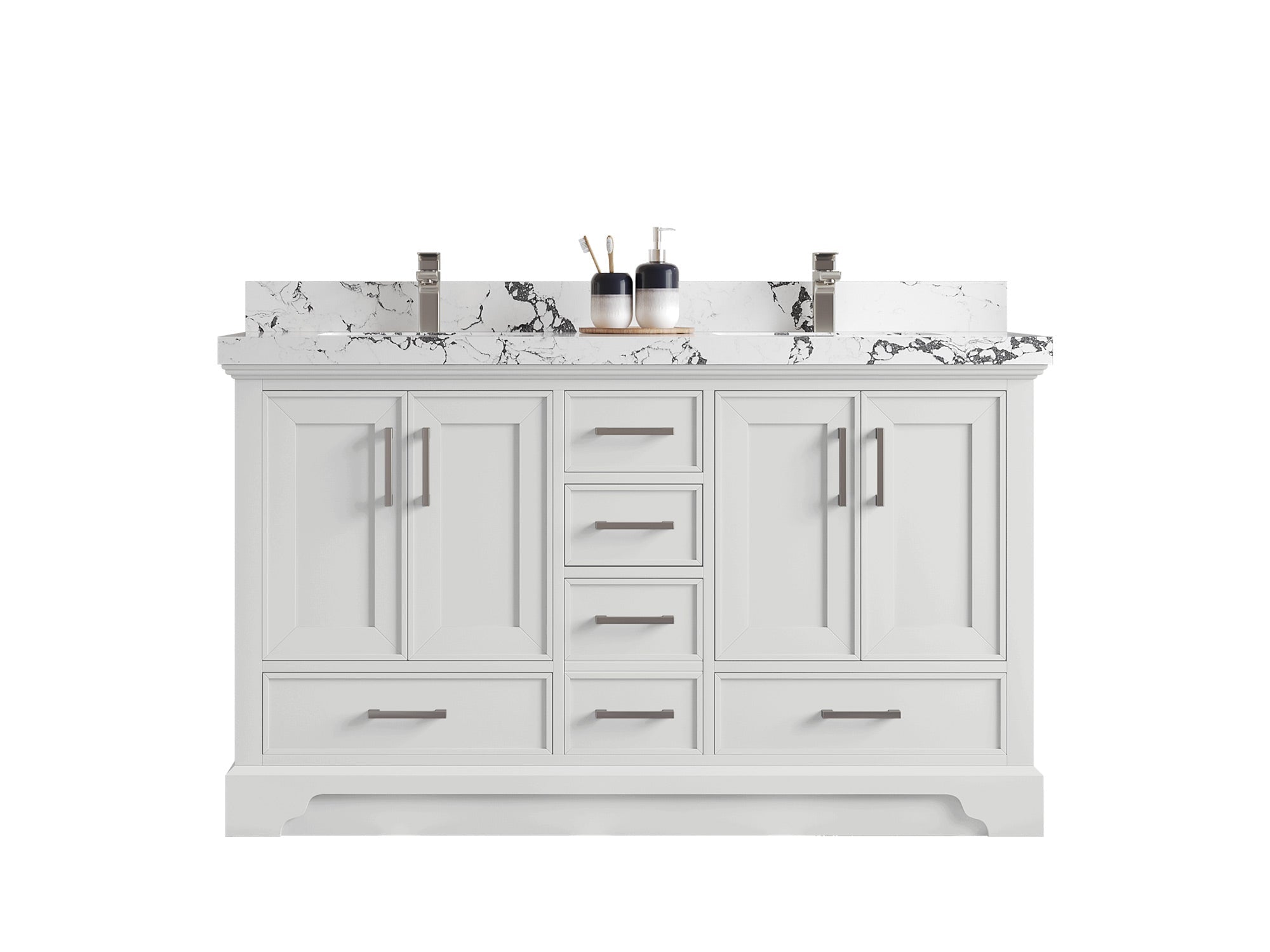
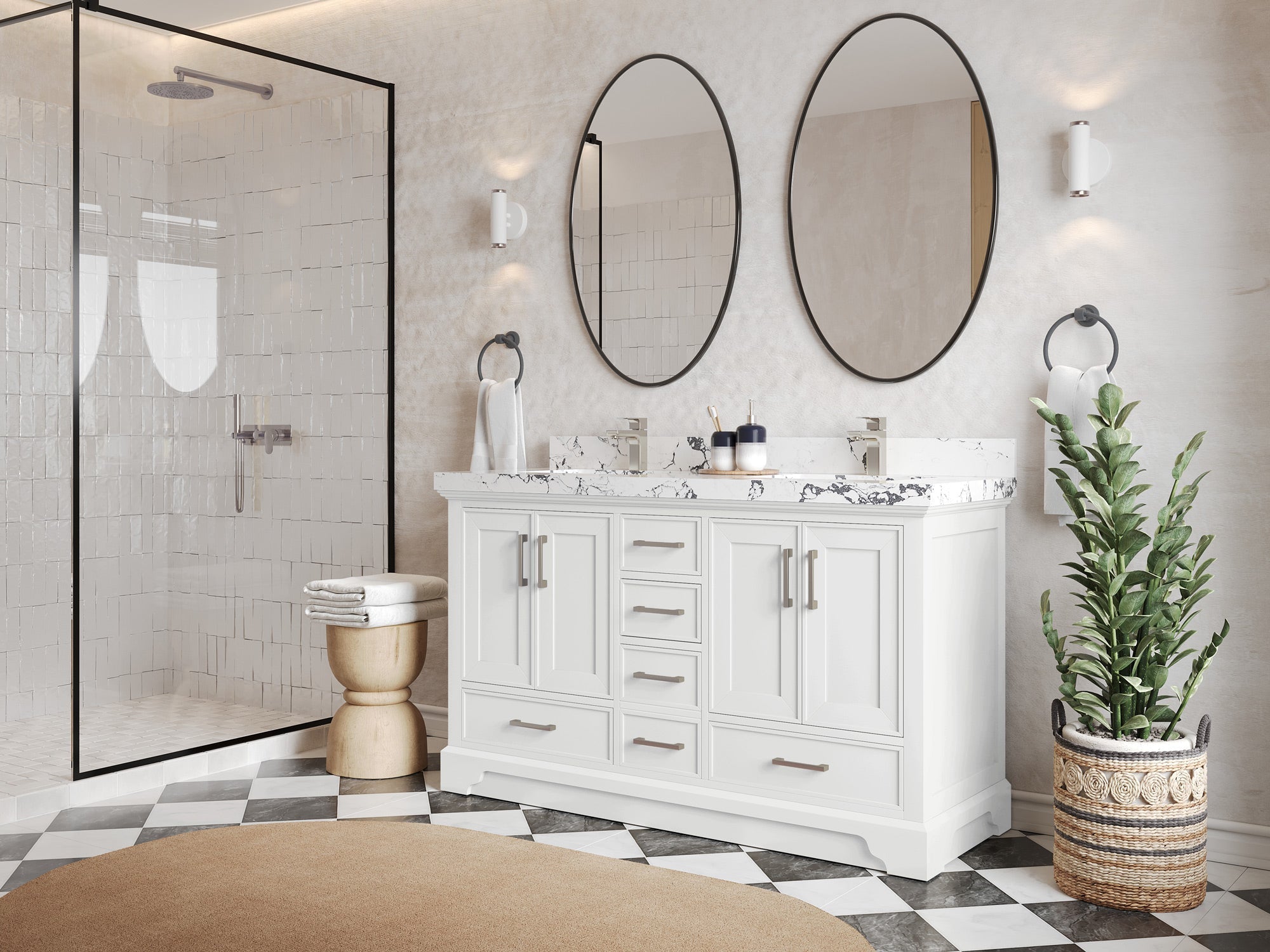
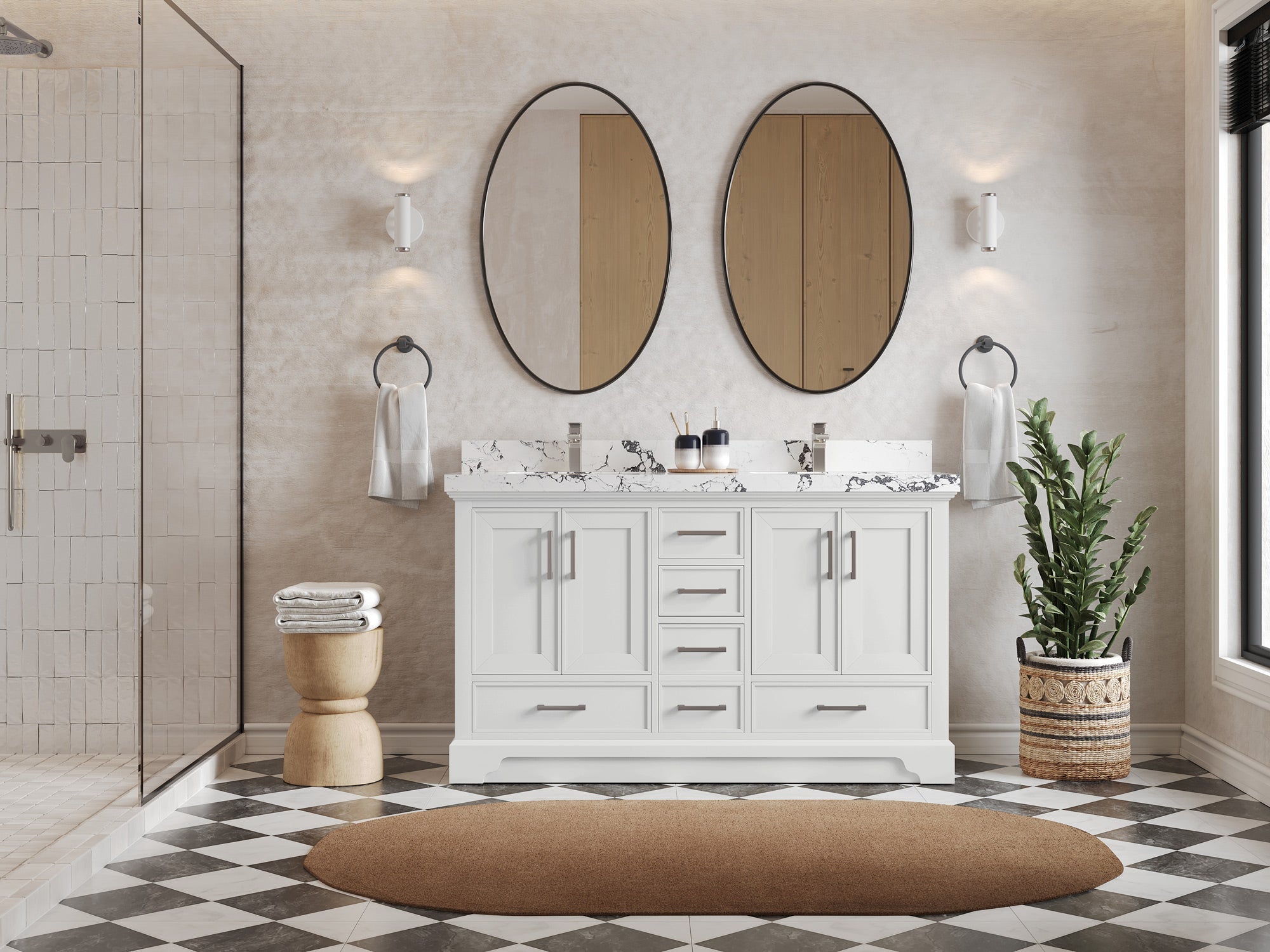
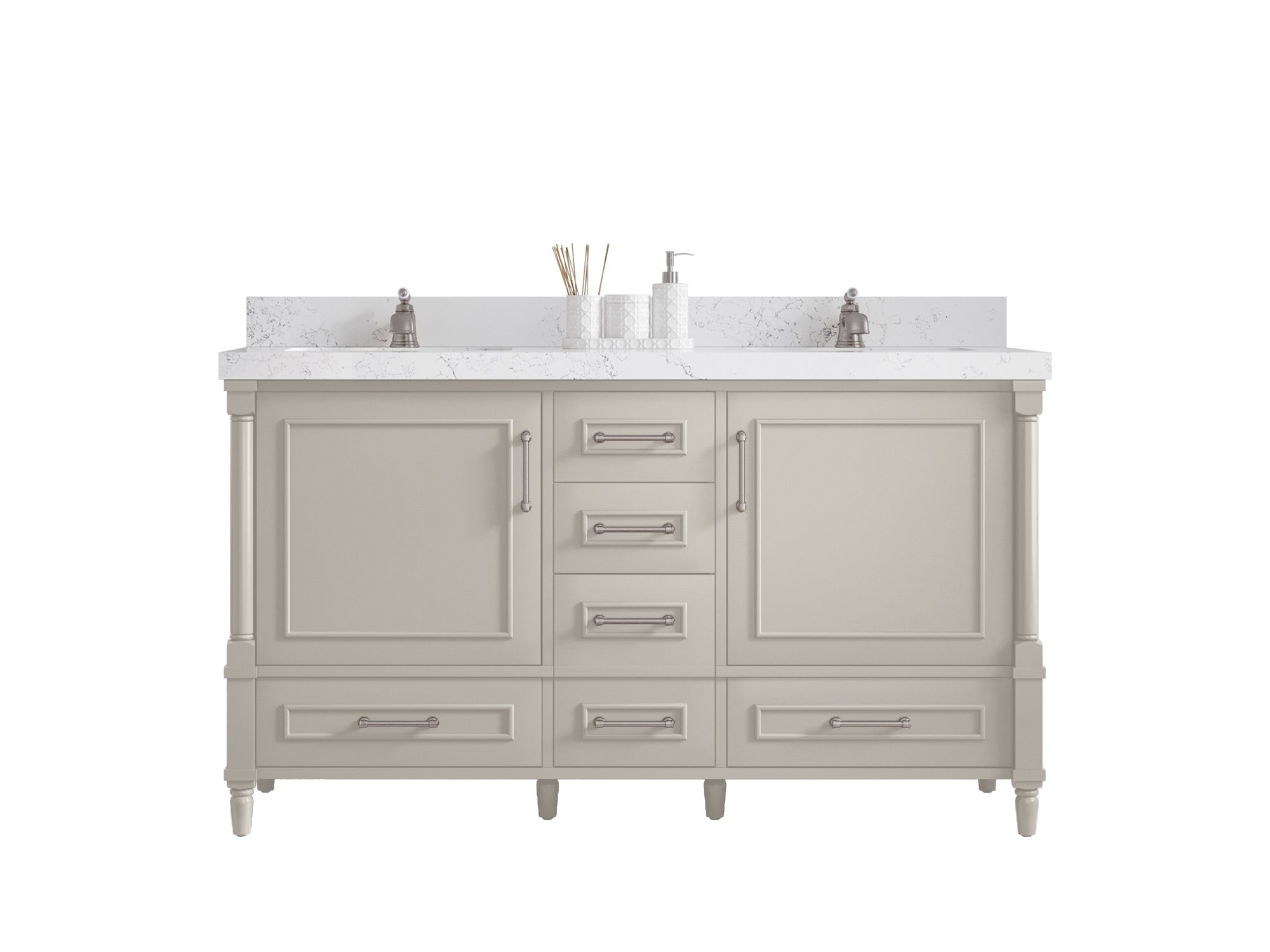
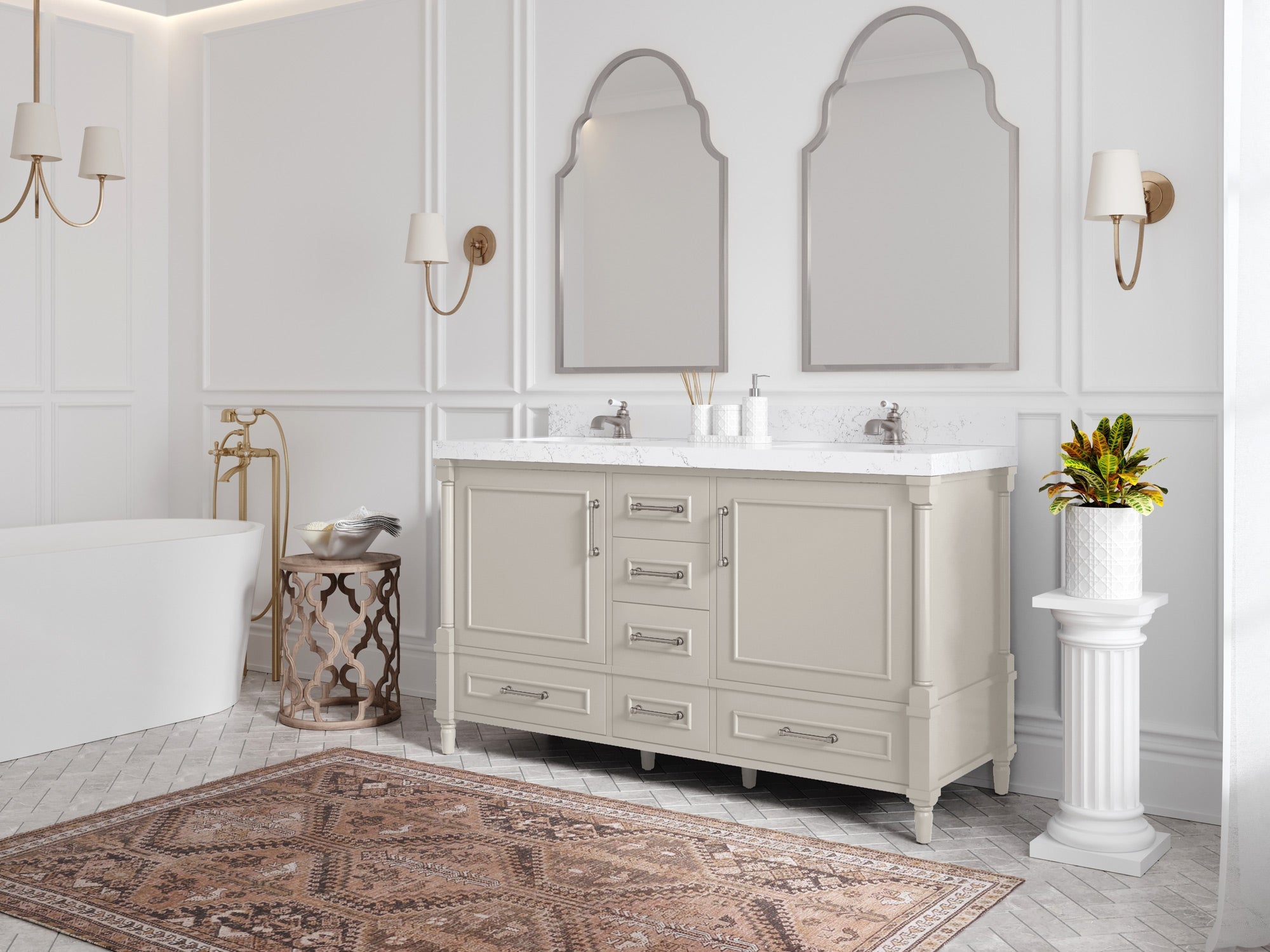
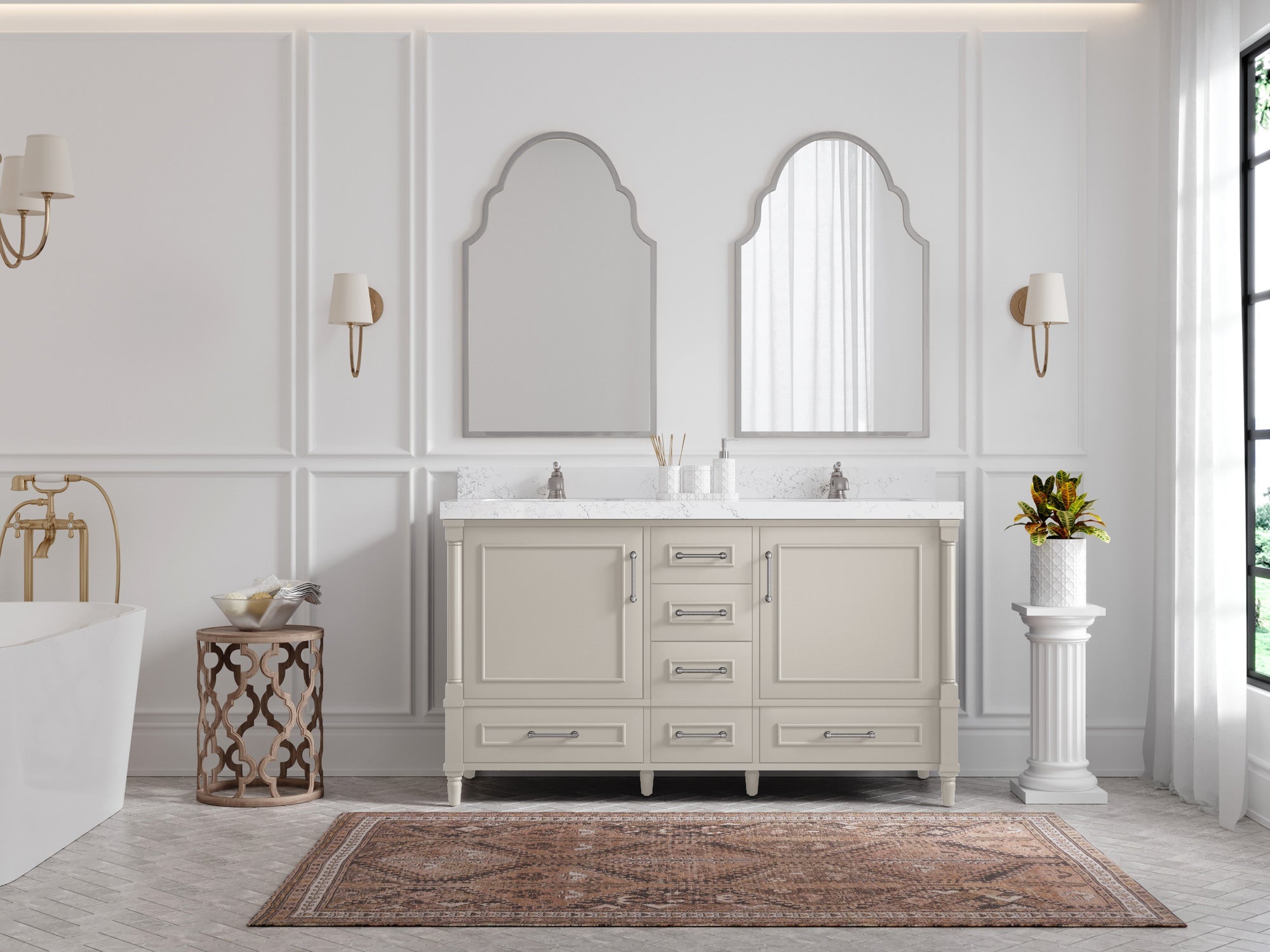
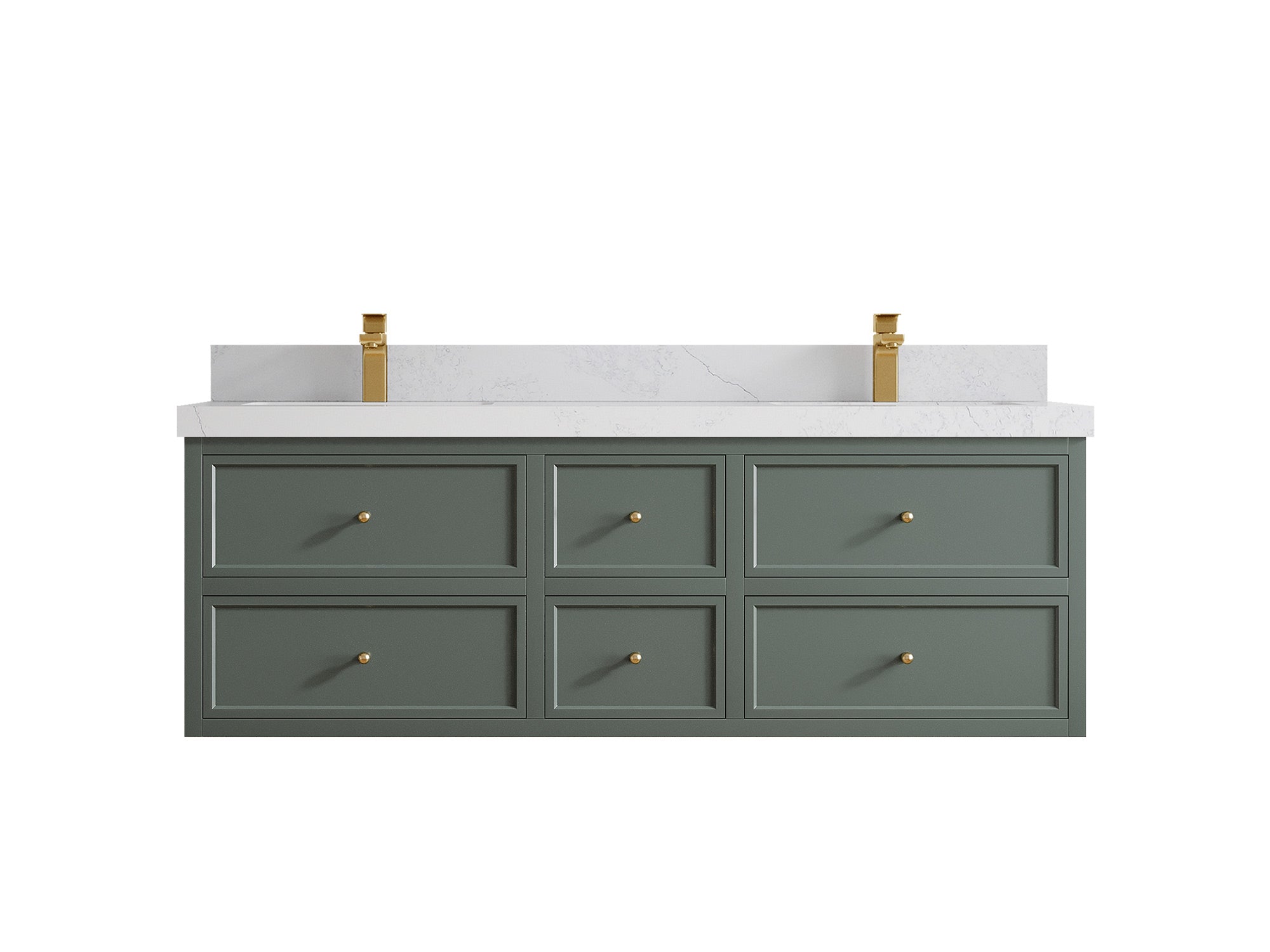
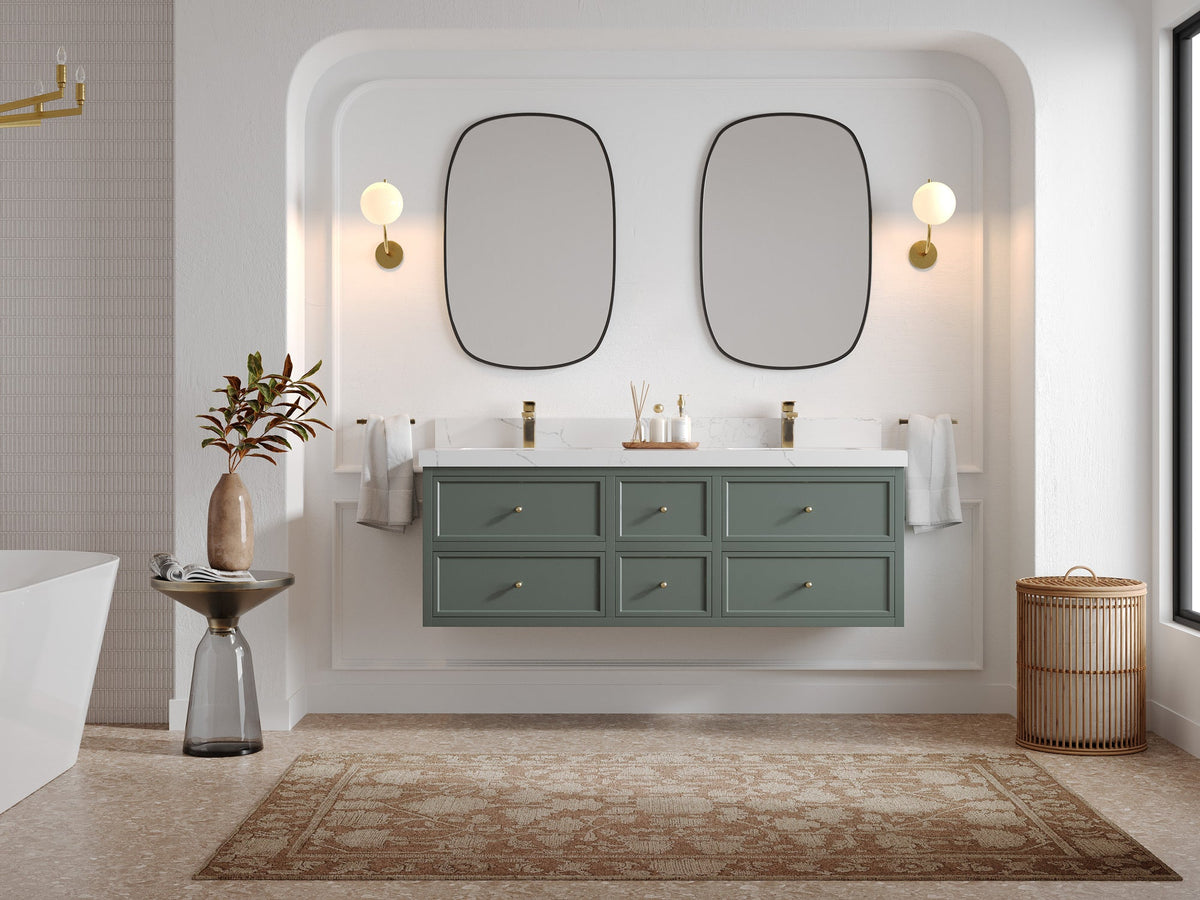
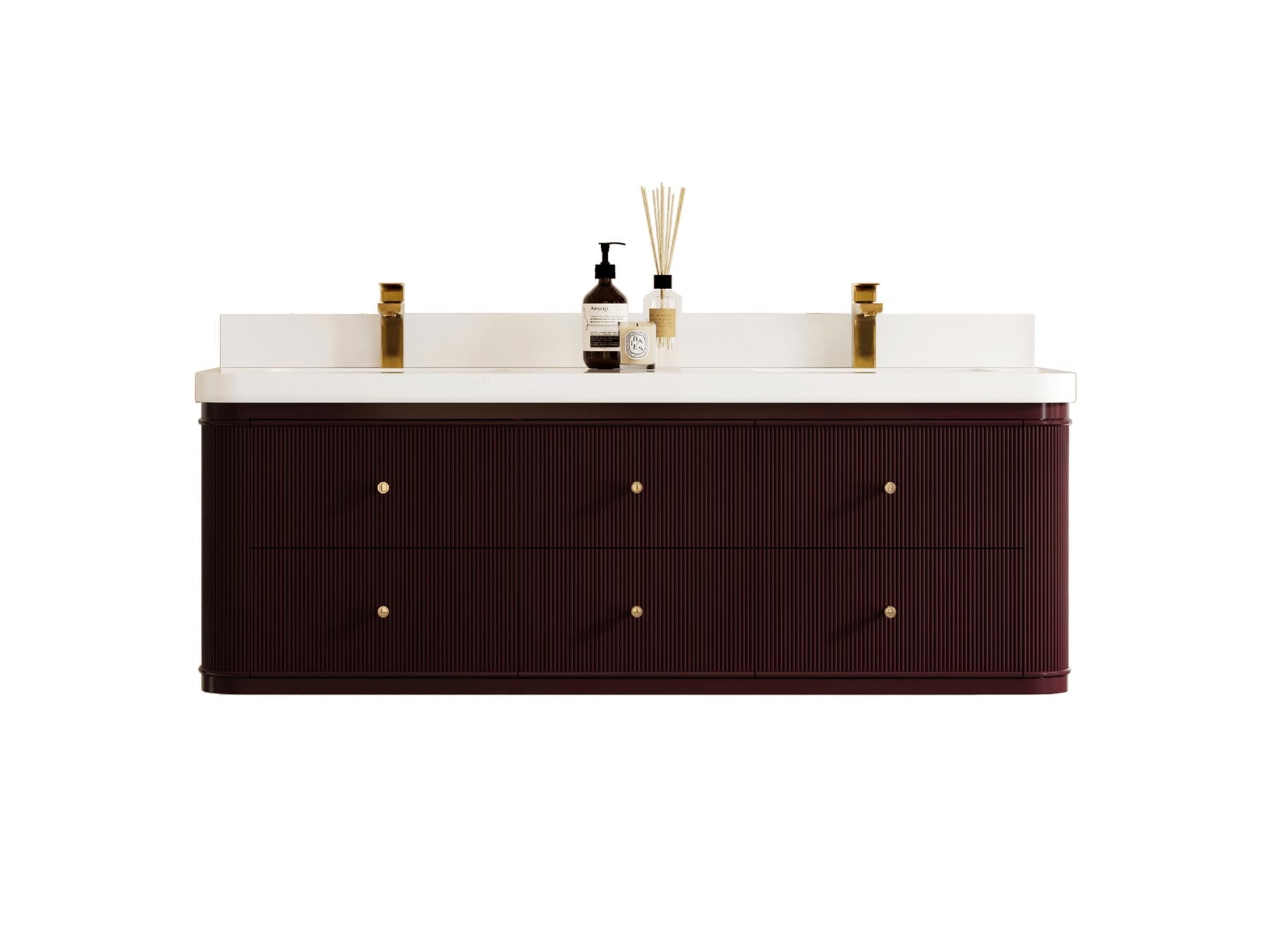
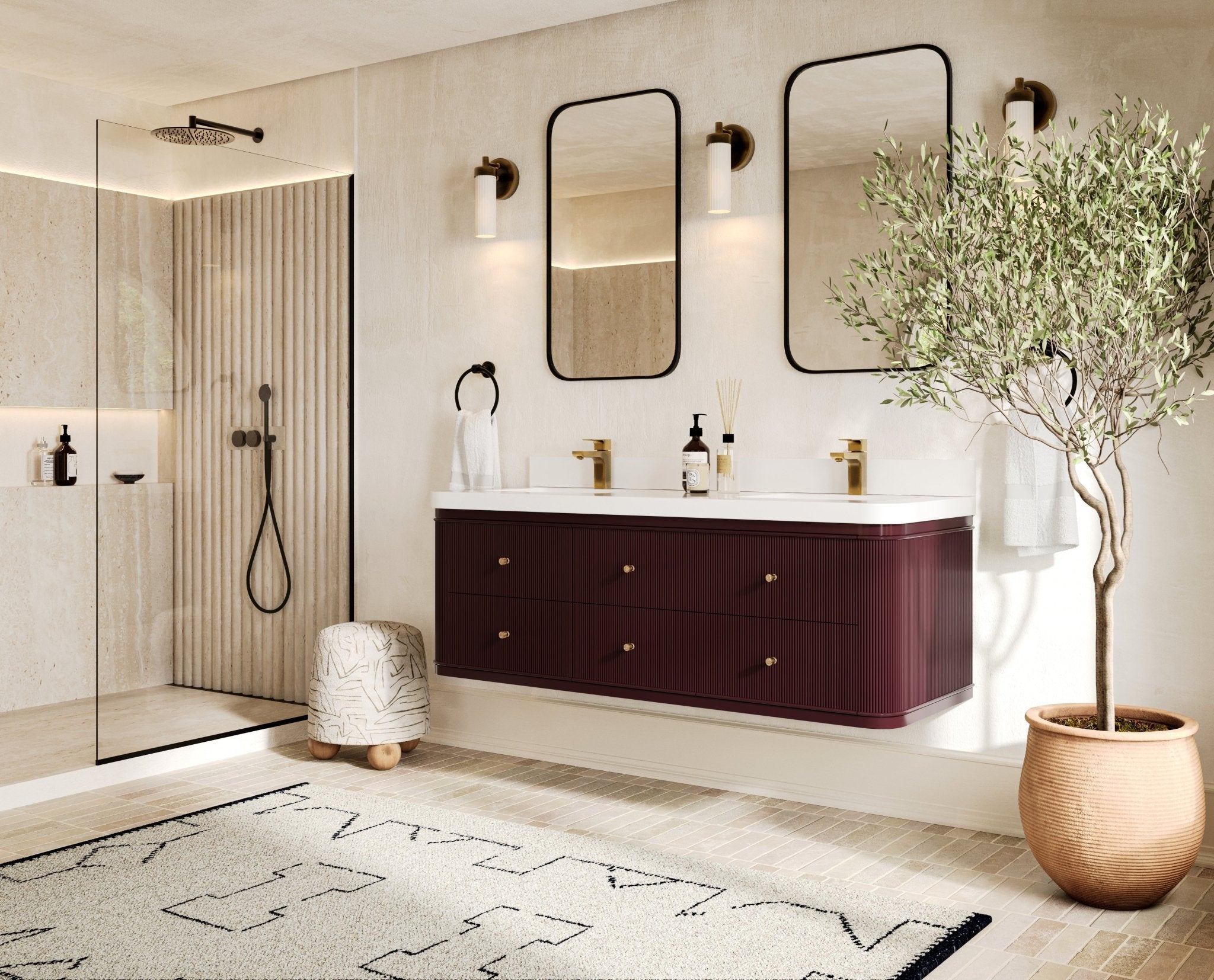
A 60 to 69 inch double sink vanity is the smallest true double — the point where a shared bathroom finally gets two basins without needing a wall it does not have. These 53 vanities are built from birch, never MDF or particleboard, with soft-close storage and a natural stone top, in the width that fits the most common primary-bathroom wall in American homes.
60 inches: the entry point for two sinks
Sixty inches is the practical minimum for a double vanity. Below it, two basins sit too close to share comfortably and you lose the counter between them entirely — at that point a single-sink vanity with a long counter is usually the better room. At 60 to 69 inches, each person gets their own basin and their own storage, with a workable strip of counter in the middle.
Be honest about the trade-off before you choose. A 60 inch double gives you two sinks but modest counter space beside each one. A 60 inch single gives one person a generous run of counter. If two people genuinely use the bathroom at the same time each morning, the double wins. If not, the single is often the more usable bathroom. When the wall allows it, stepping up to 72 inches is the single biggest upgrade in comfort you can make.
Fitting a double into a standard bathroom
Measure the wall opening and subtract clearance at both ends for trim, baseboard or a return wall. Check the swing of the bathroom door and any shower door that opens toward the vanity. Then confirm your plumbing rough-in positions against the basin spacing of the design you want — converting a single rough-in to a double usually means adding a second drain line. Standard depth is 22 inches, and cabinets ship fully assembled, so check hallways and door frames on the delivery path.
Birch construction under a double stone top
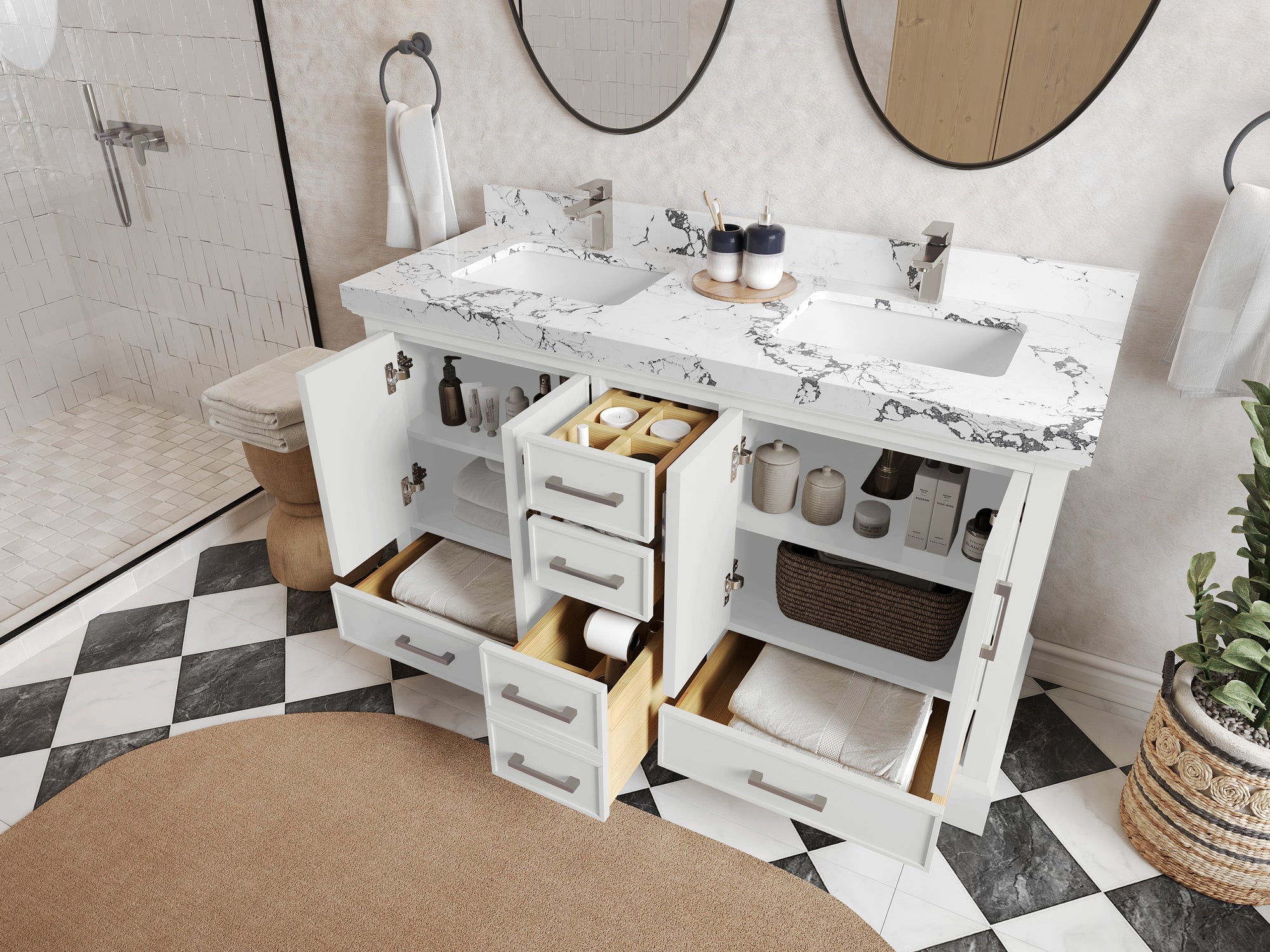
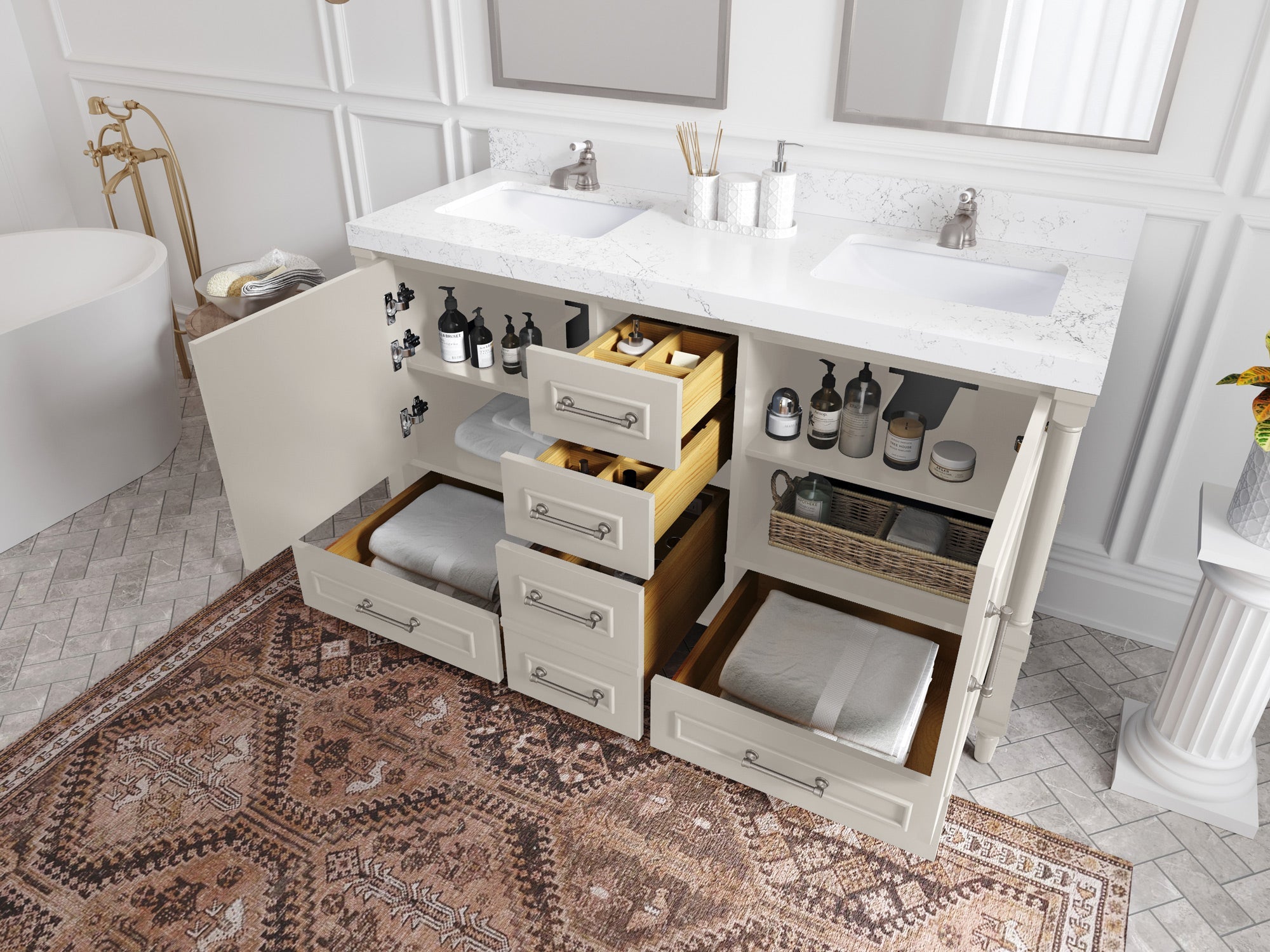
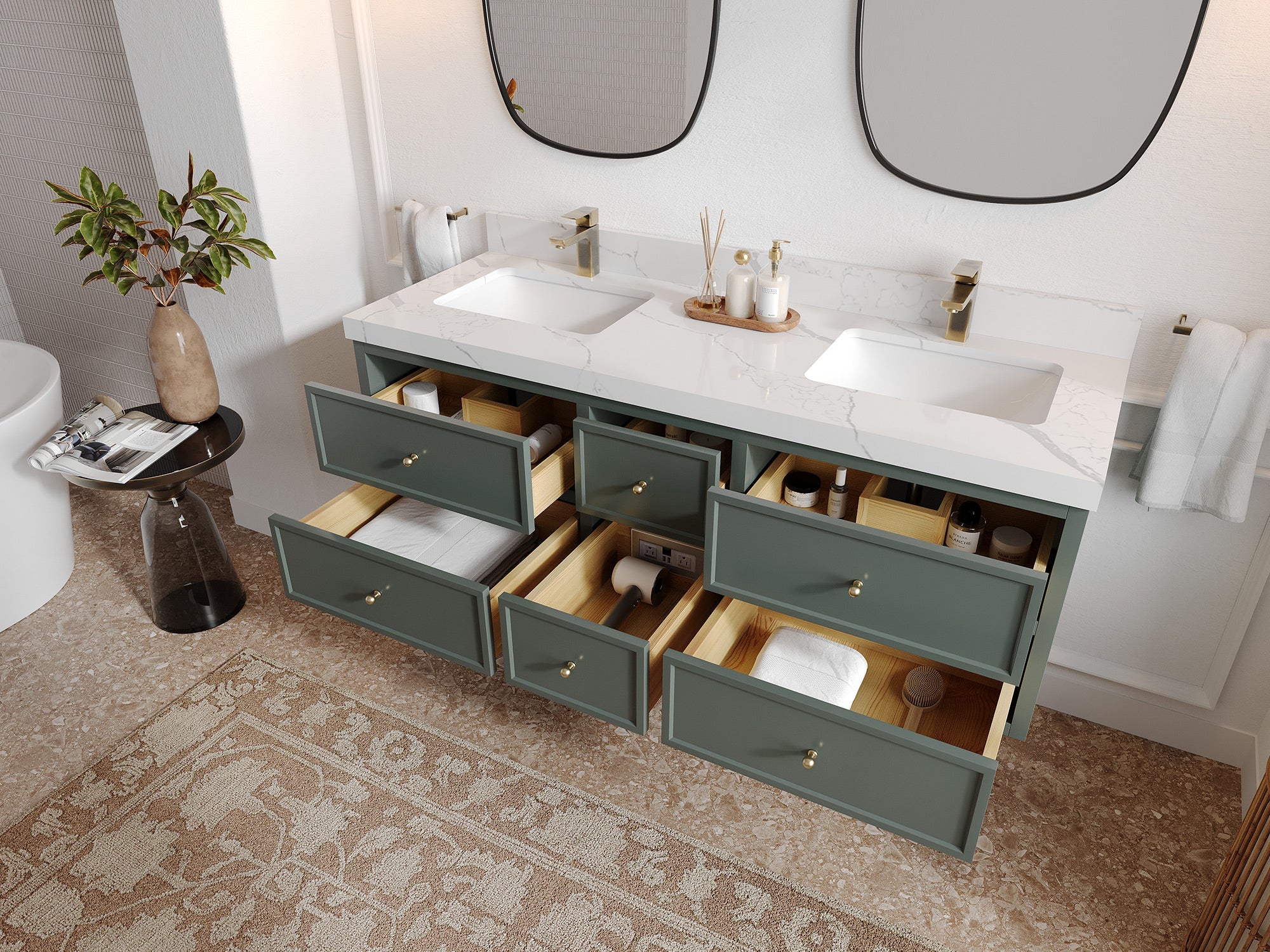
Willow builds these cabinets from birch, a dense, tight-grained hardwood, with solid birch frames and doors, natural veneer over marine-grade plywood on the larger panels and FSC-certified sourcing — never MDF or particleboard — sealed with a durable low-VOC finish.
A double vanity is the hardest-working cabinet in the house: two basins, two sets of plumbing penetrations, and a heavy stone slab spanning the whole width. Most mass-market vanities use MDF or particleboard under the finish, and that core swells wherever water reaches a cut edge — around the drain cutouts first, then the toe kick. Birch holds its shape under the load, grips hinges and drawer slides properly, and can be refinished instead of replaced.
Countertops and finishes
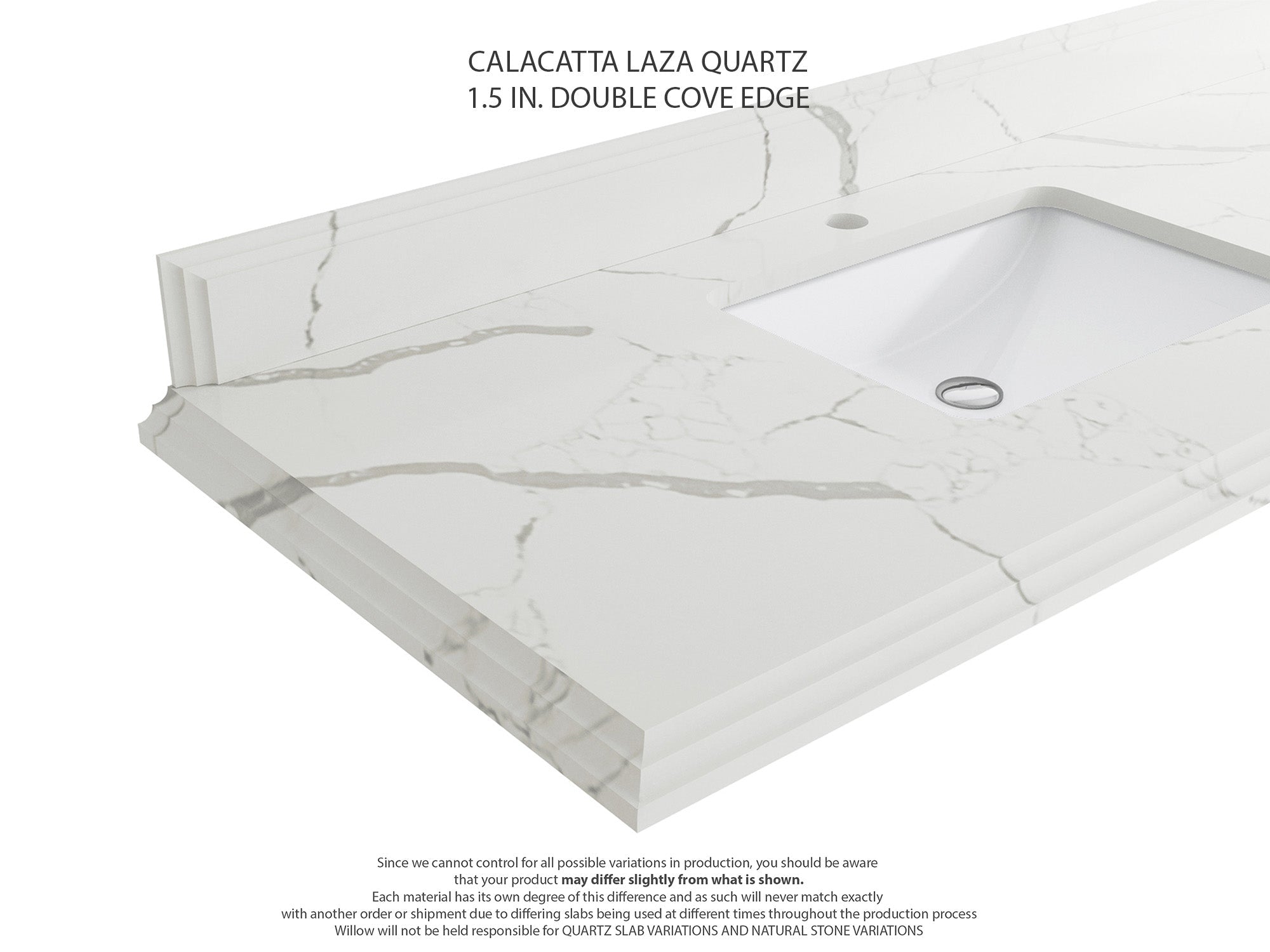
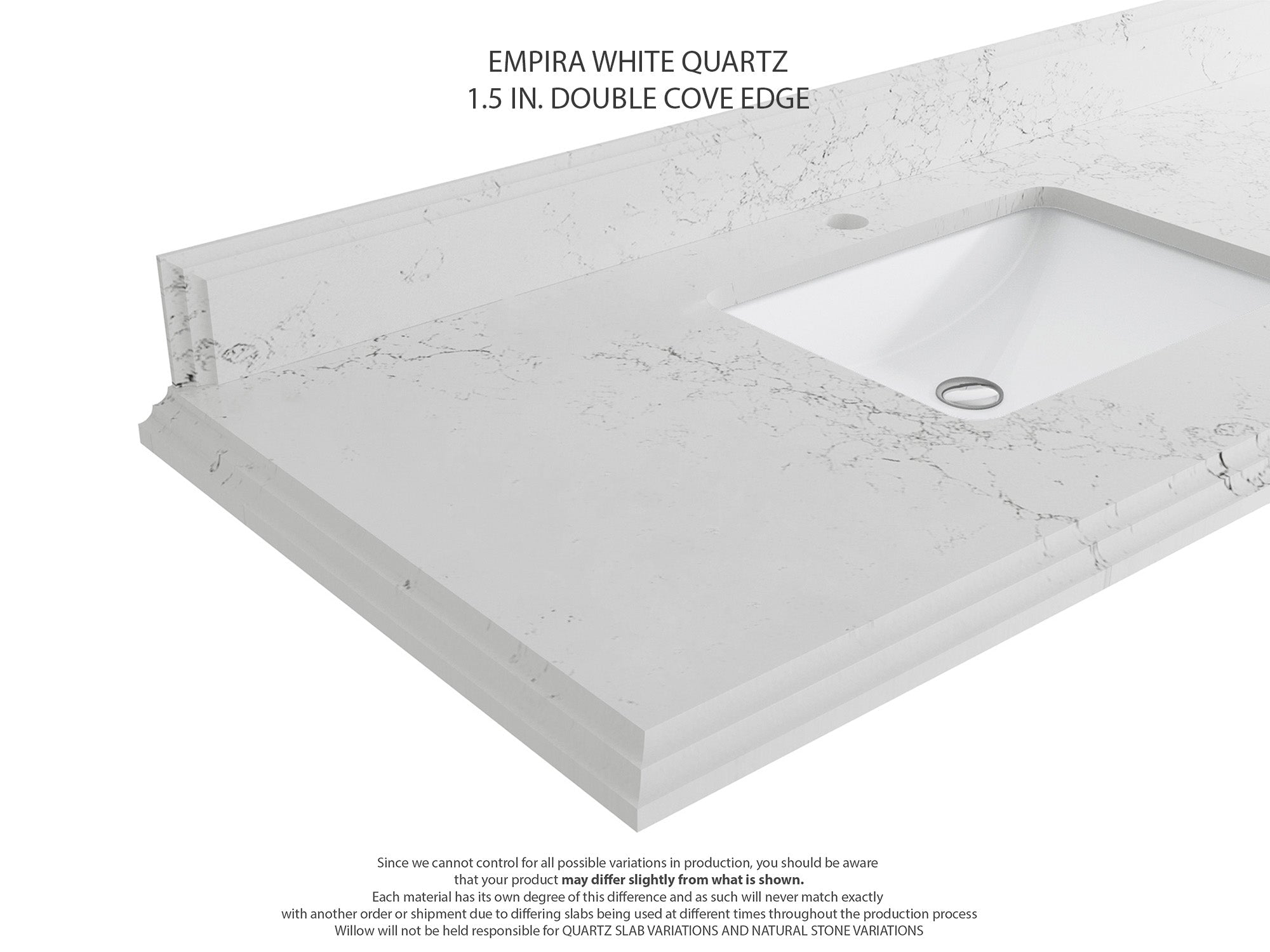
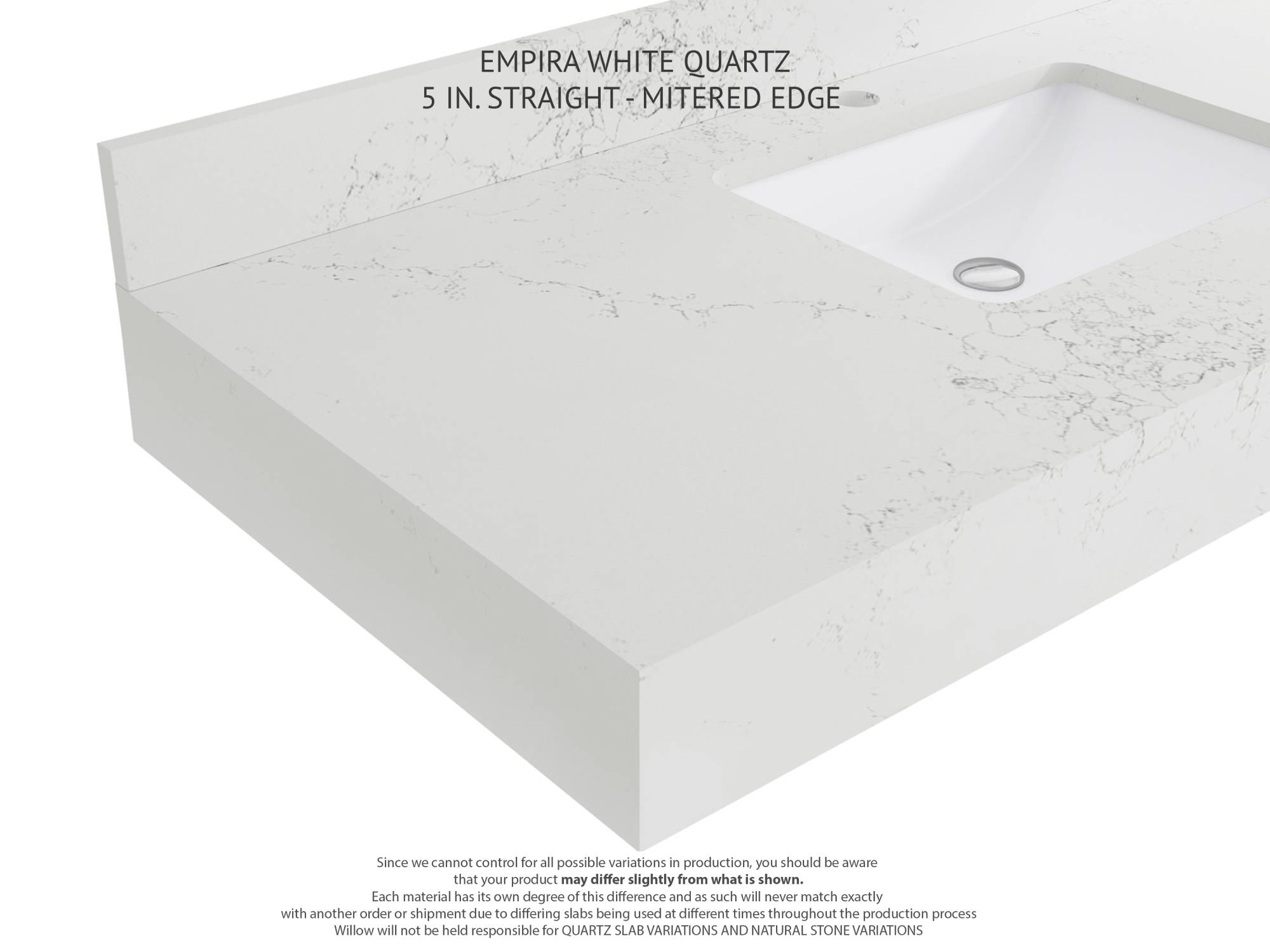
Quartz and natural Carrara marble are the widely available tops here, and select designs also offer quartzite or terrazzo — depending on the design, so check the individual product page for that vanity's options. Every top includes a matching backsplash and your choice of a Mitered or Cove edge. The stone ships in its own protective box and both undermount basins are set during installation.
Explore more
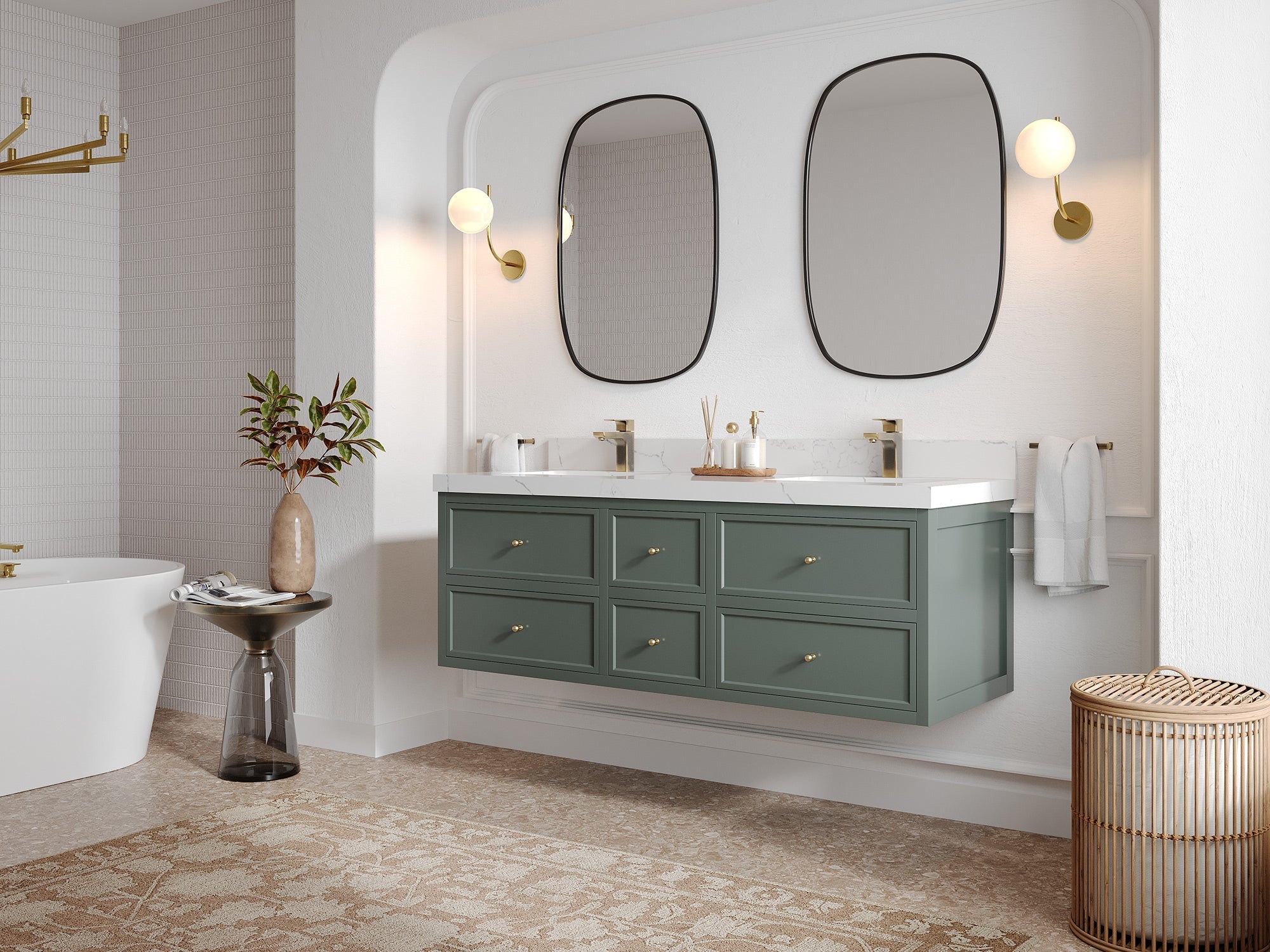
See every width in double-sink bathroom vanities, or the wall-mounted version in floating double vanities. Compare up to 84 inch doubles, or down to 48 inch singles. Prefer natural wood grain to a painted finish? Browse solid wood bathroom vanities in teak, white oak and mango.
Frequently asked questions
Is 60 inches wide enough for a double sink vanity?
Yes, 60 inches is the practical minimum for two basins. Each person gets their own sink and storage, with a workable strip of counter in the middle. If your wall allows 72 inches, that extra width is the single biggest gain in everyday comfort.
Should I get a 60 inch double or a 60 inch single?
Choose the double if two people genuinely use the bathroom at the same time each morning. Choose the single if they do not — at this width a single sink gives one person a much more generous run of usable counter, which many people find more practical day to day.
Can I put a double vanity where a single one was?
Usually, if the wall is wide enough, but plan for plumbing work. A single rough-in normally needs a second drain and supply line added to serve the other basin. Measure the wall opening, allow clearance at both ends, and check the door swings before committing.
Are these vanities real wood?
They are built from birch: solid birch frames and doors, with natural veneer over marine-grade plywood on the larger panels, FSC-certified — never MDF or particleboard. On a double that matters more than anywhere else, because there are two sets of plumbing cutouts where moisture can reach a cut edge, and pressed board swells there first.
What countertops are available?
Quartz and natural Carrara marble are the widely available options, and select designs also offer quartzite or terrazzo depending on the design. Each top includes a matching backsplash and your choice of a Mitered or Cove edge. Check the individual product page for what that vanity offers.
Questions & answers