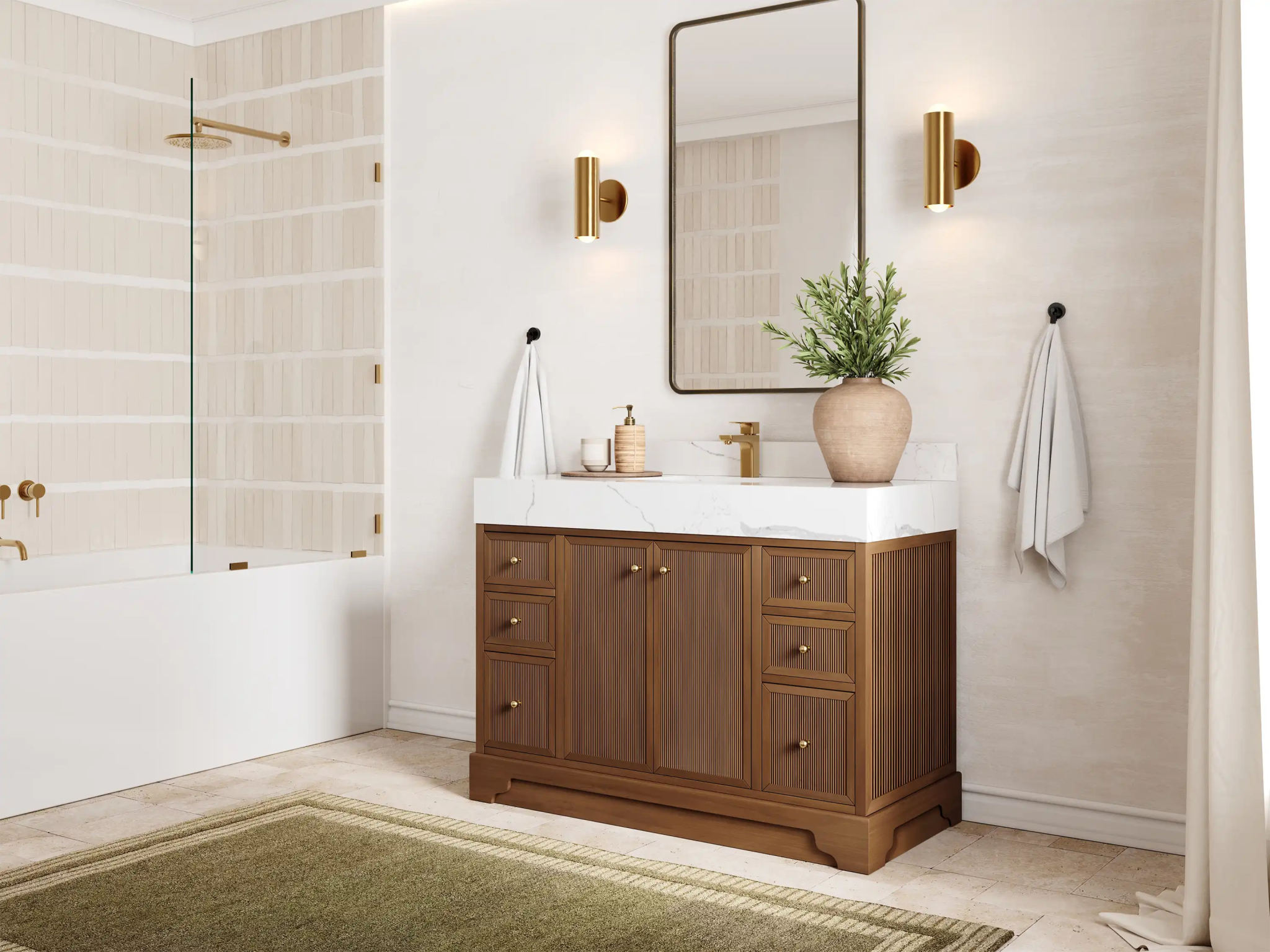
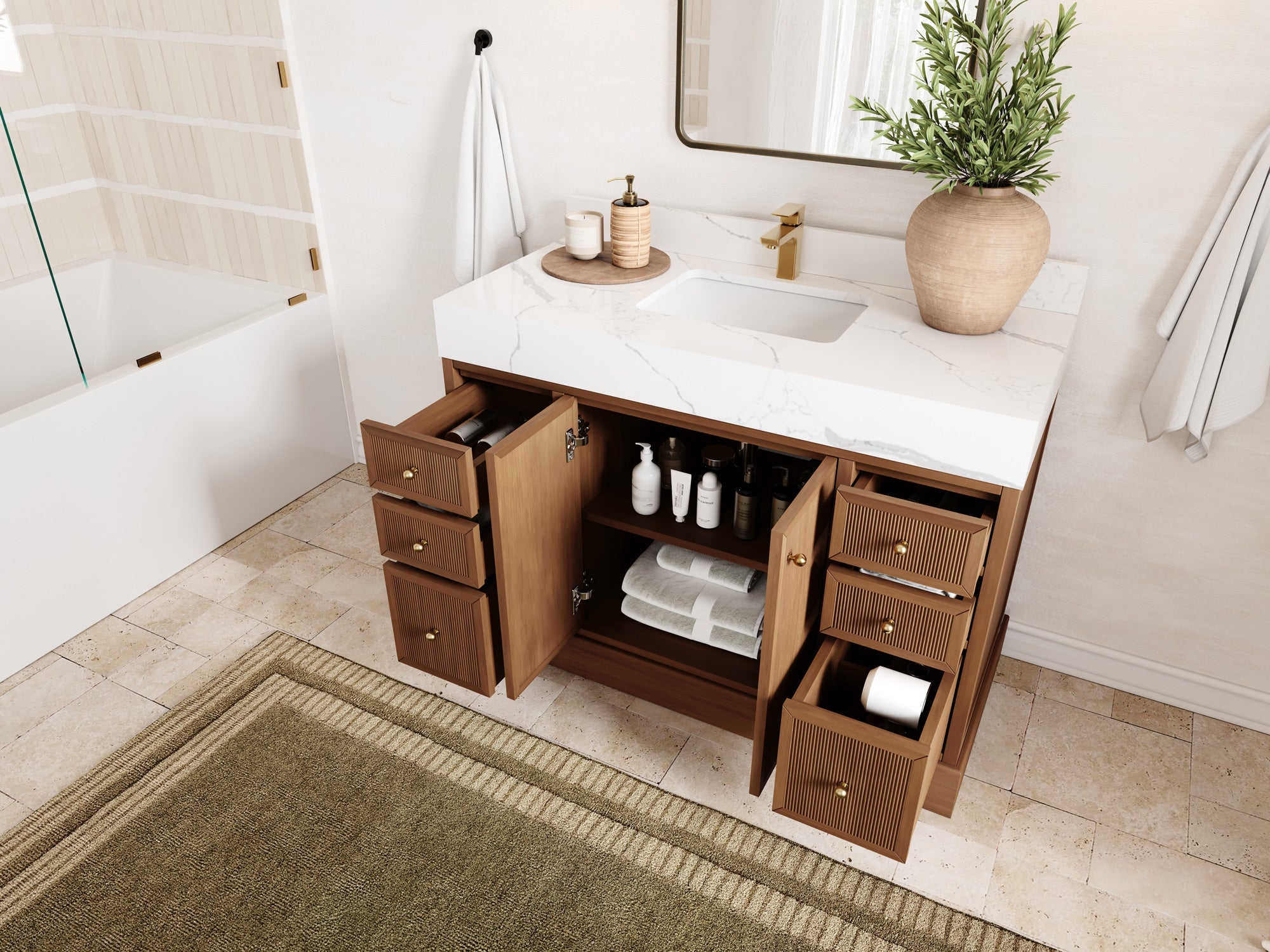
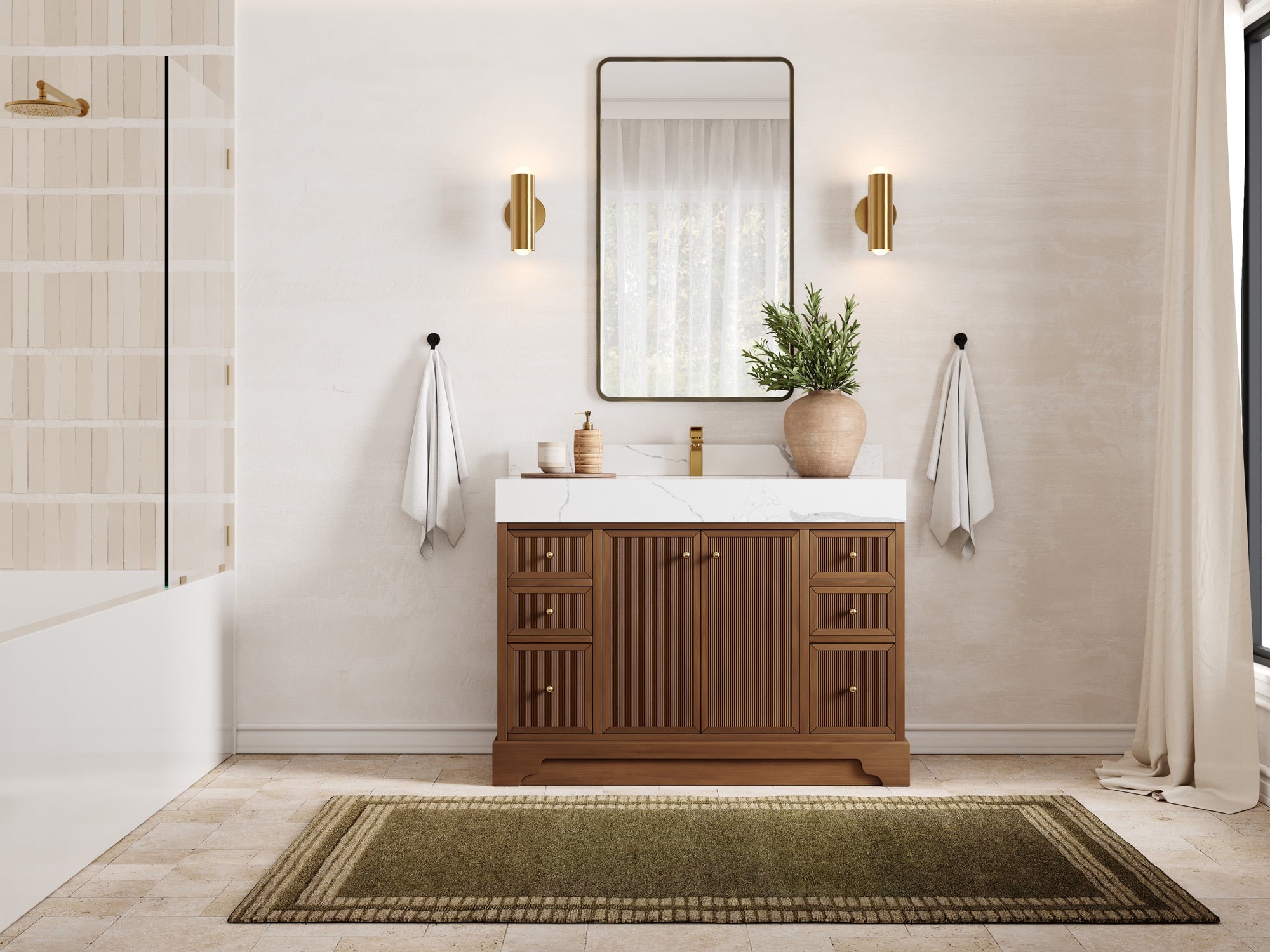
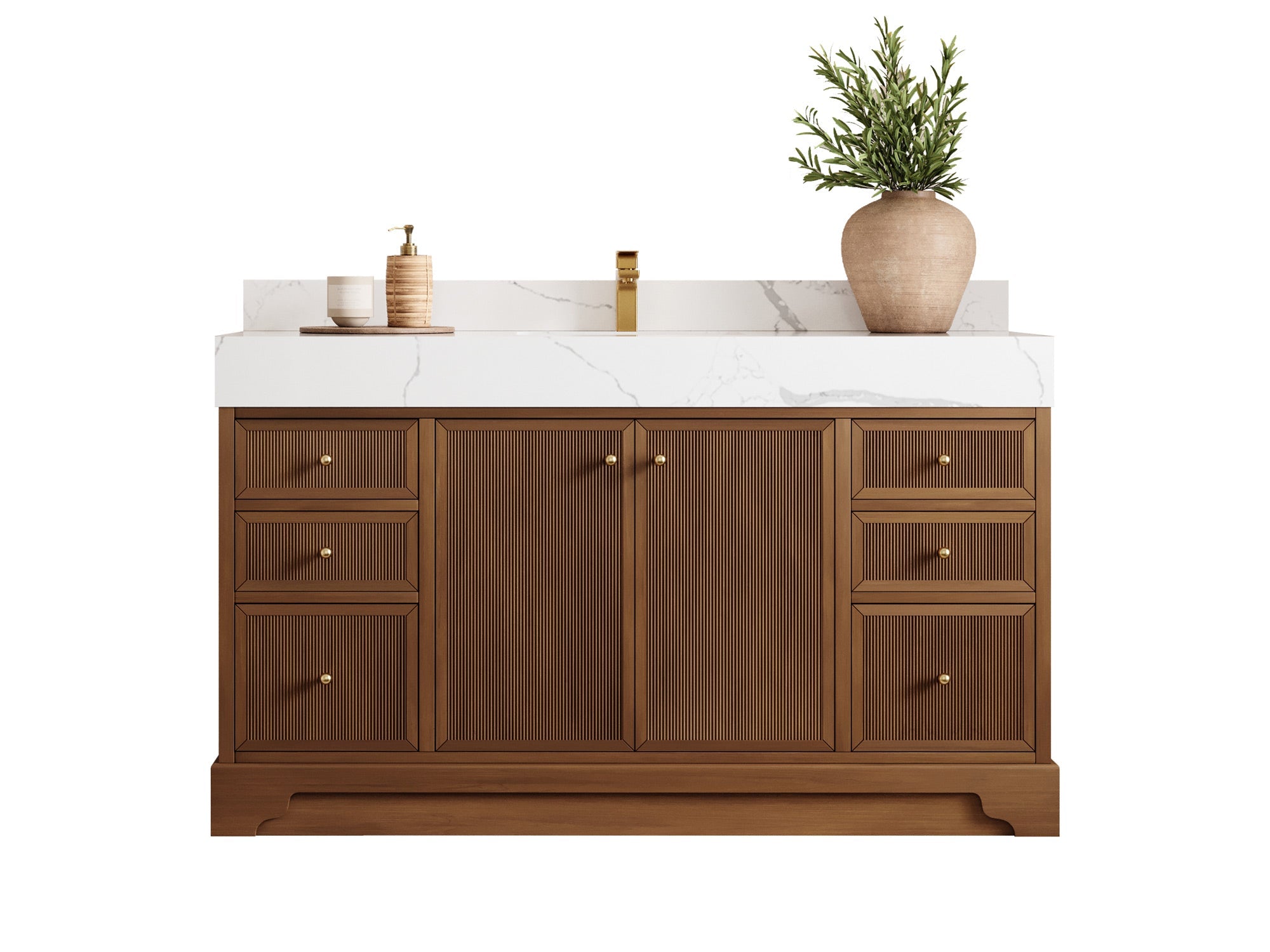
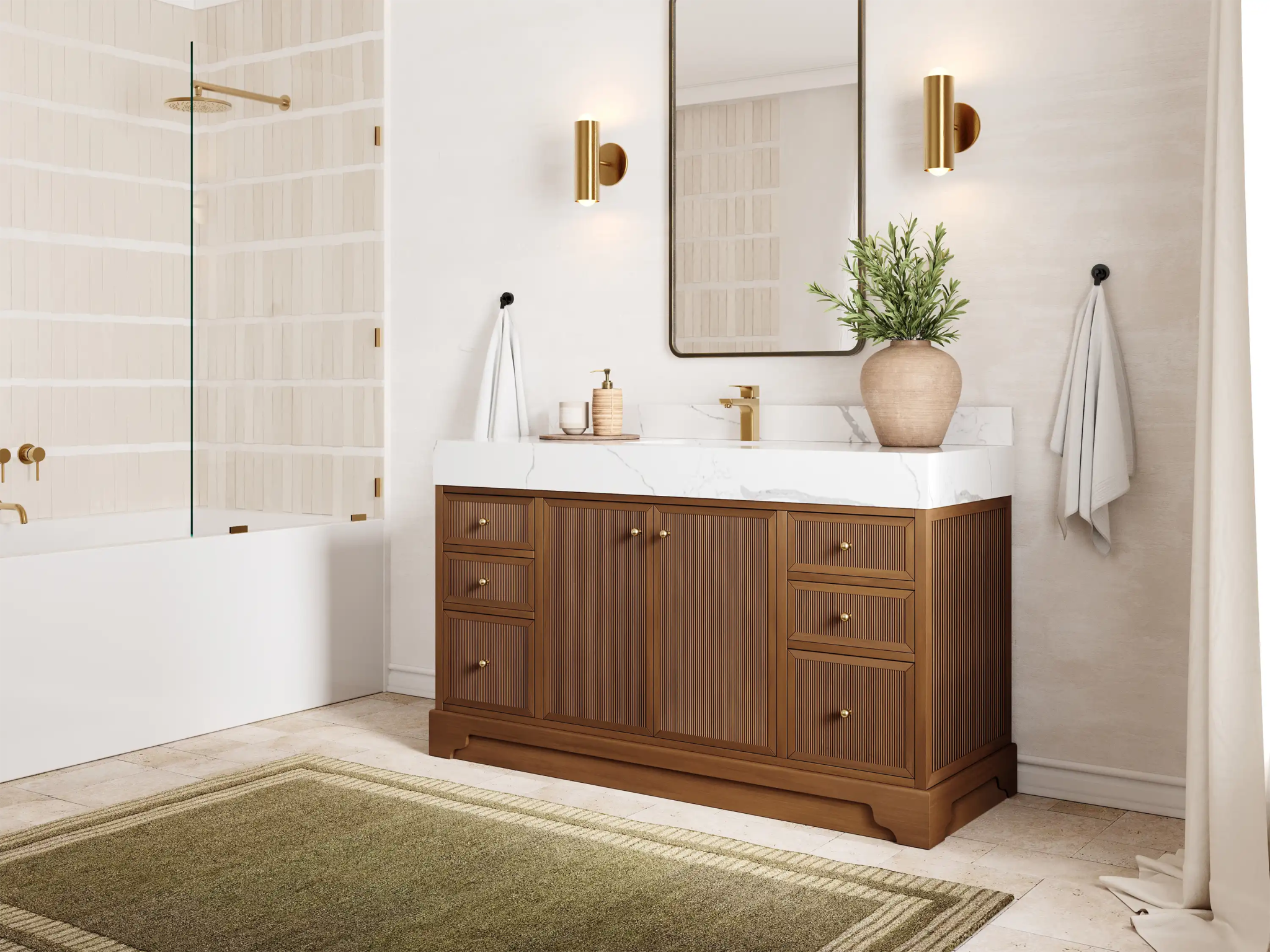
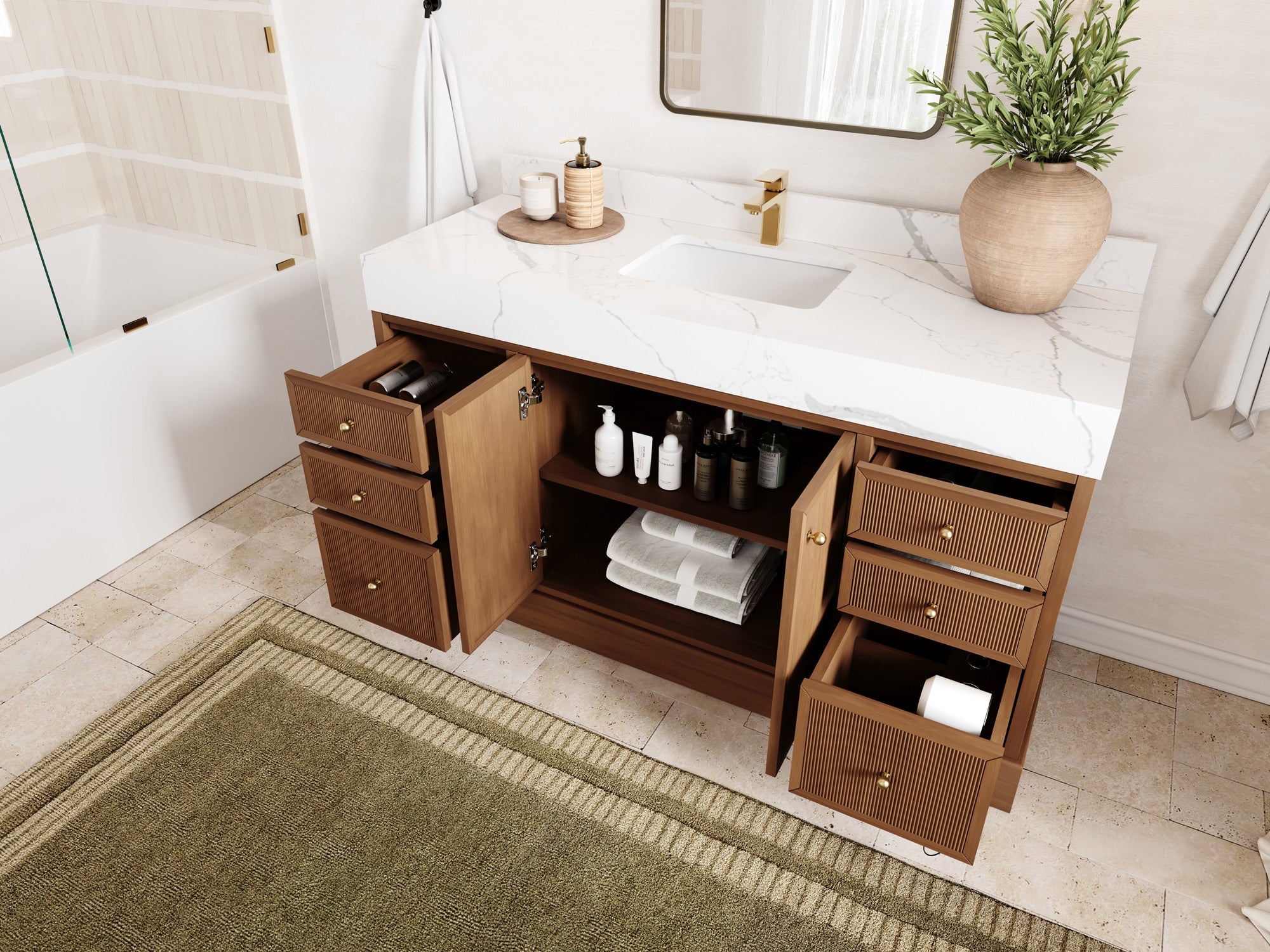
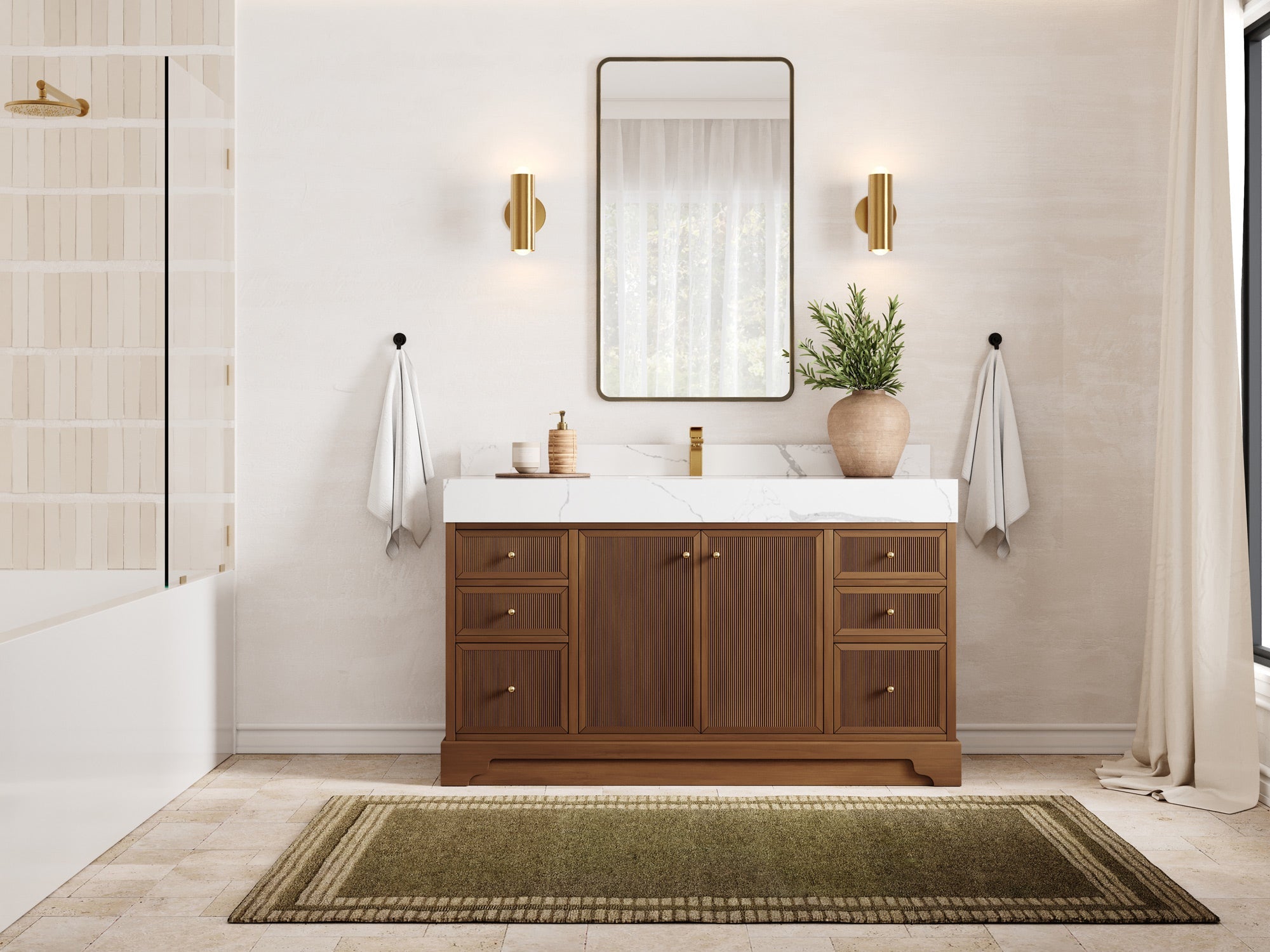
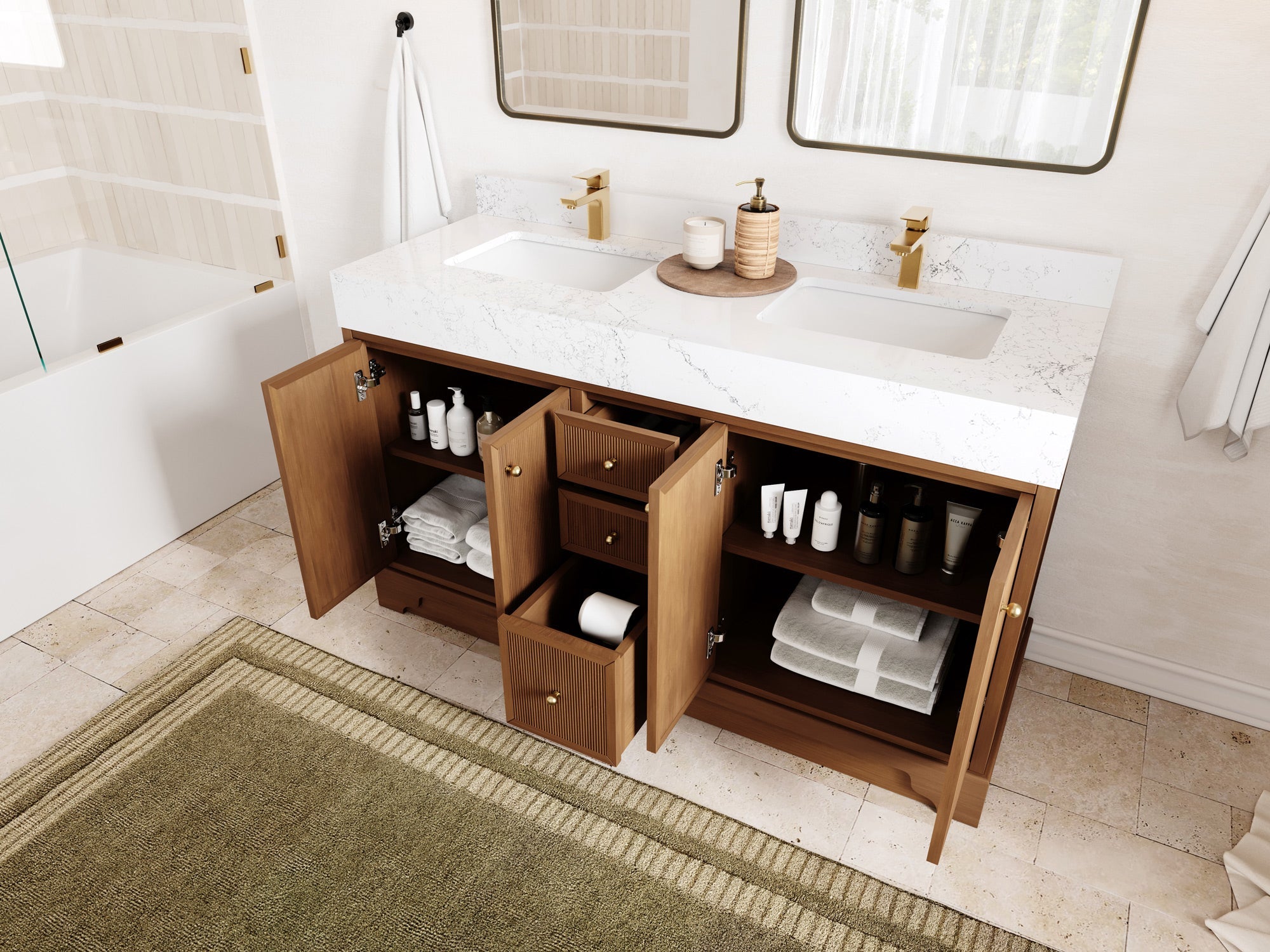
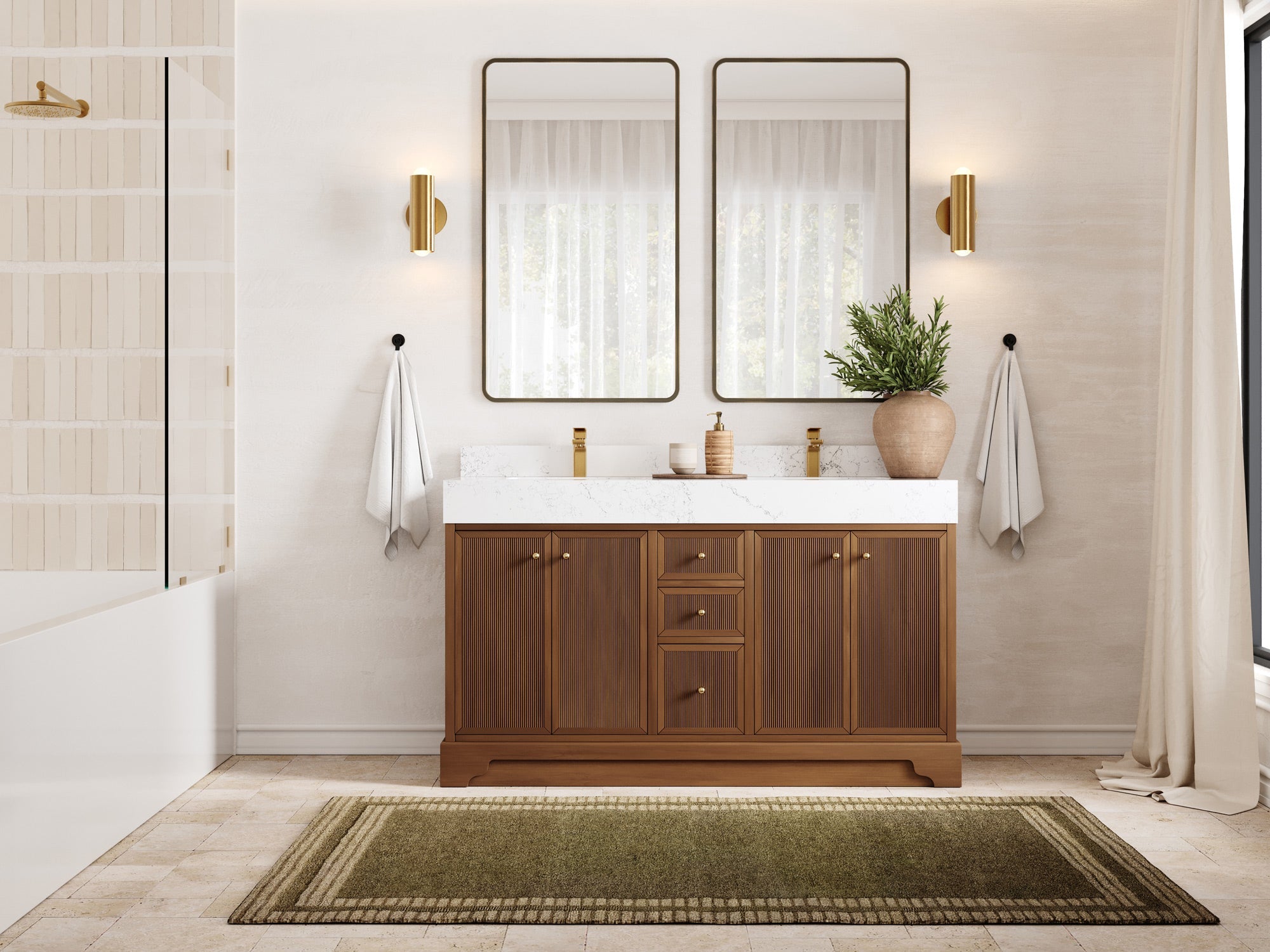
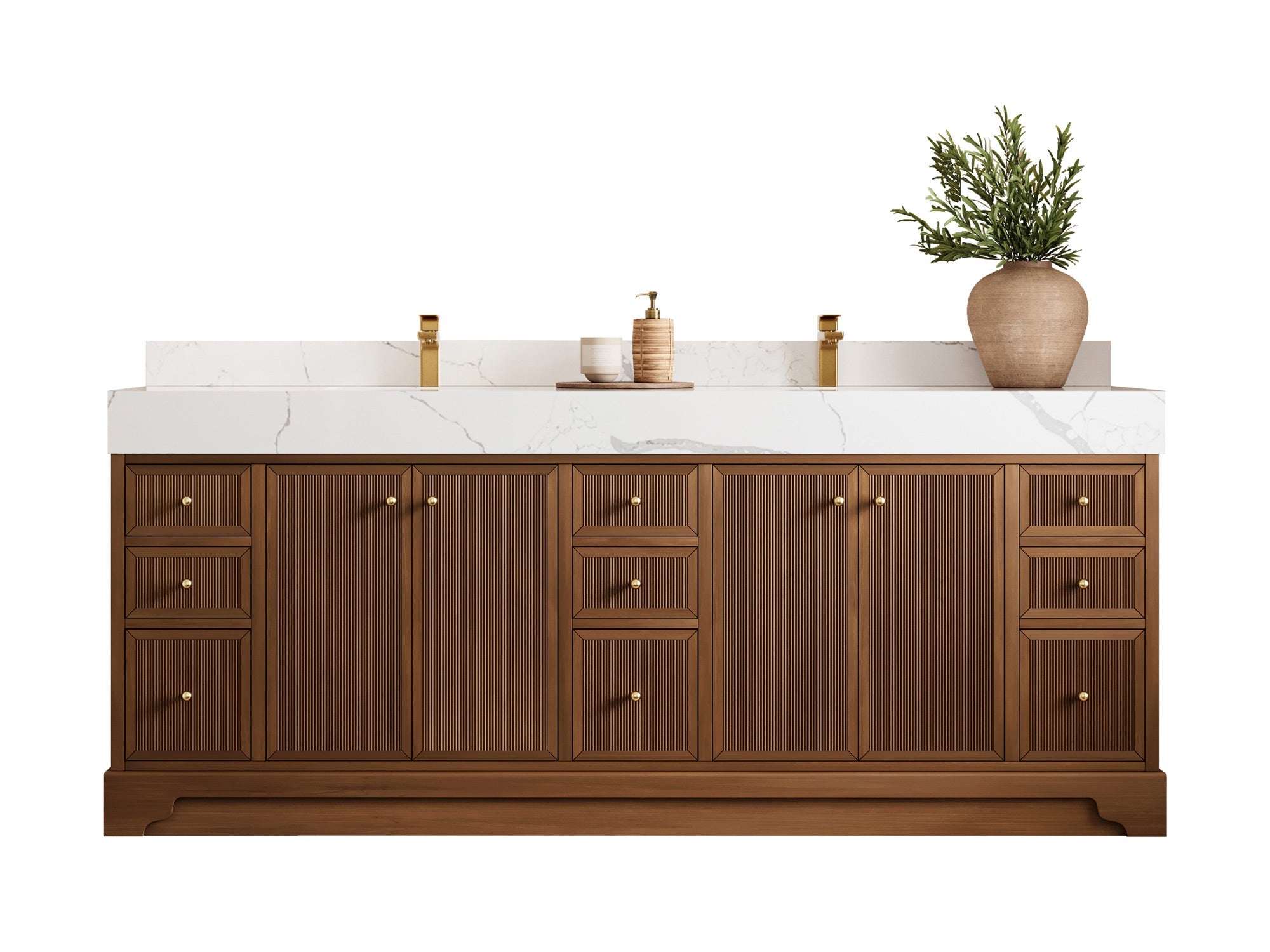
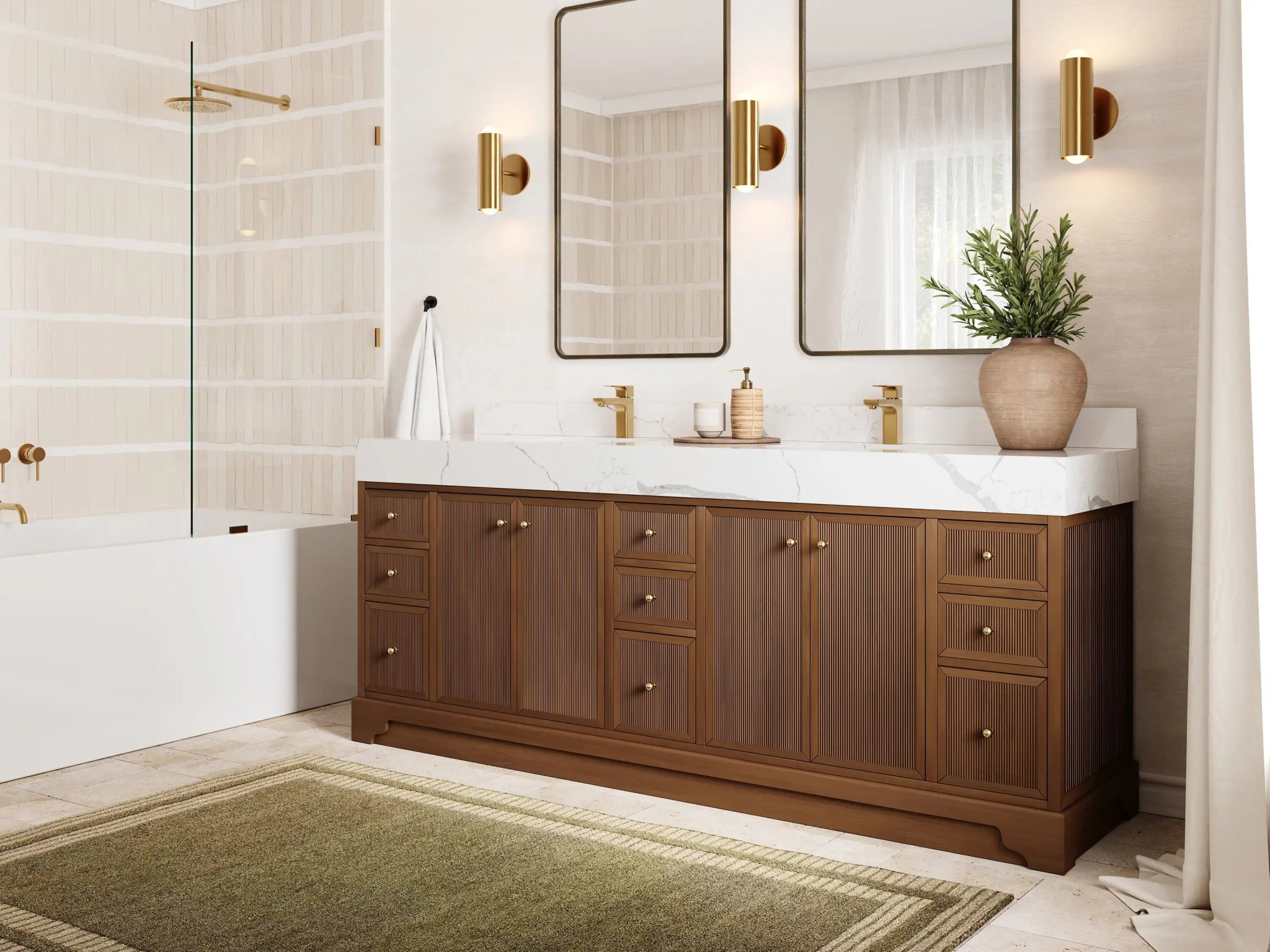
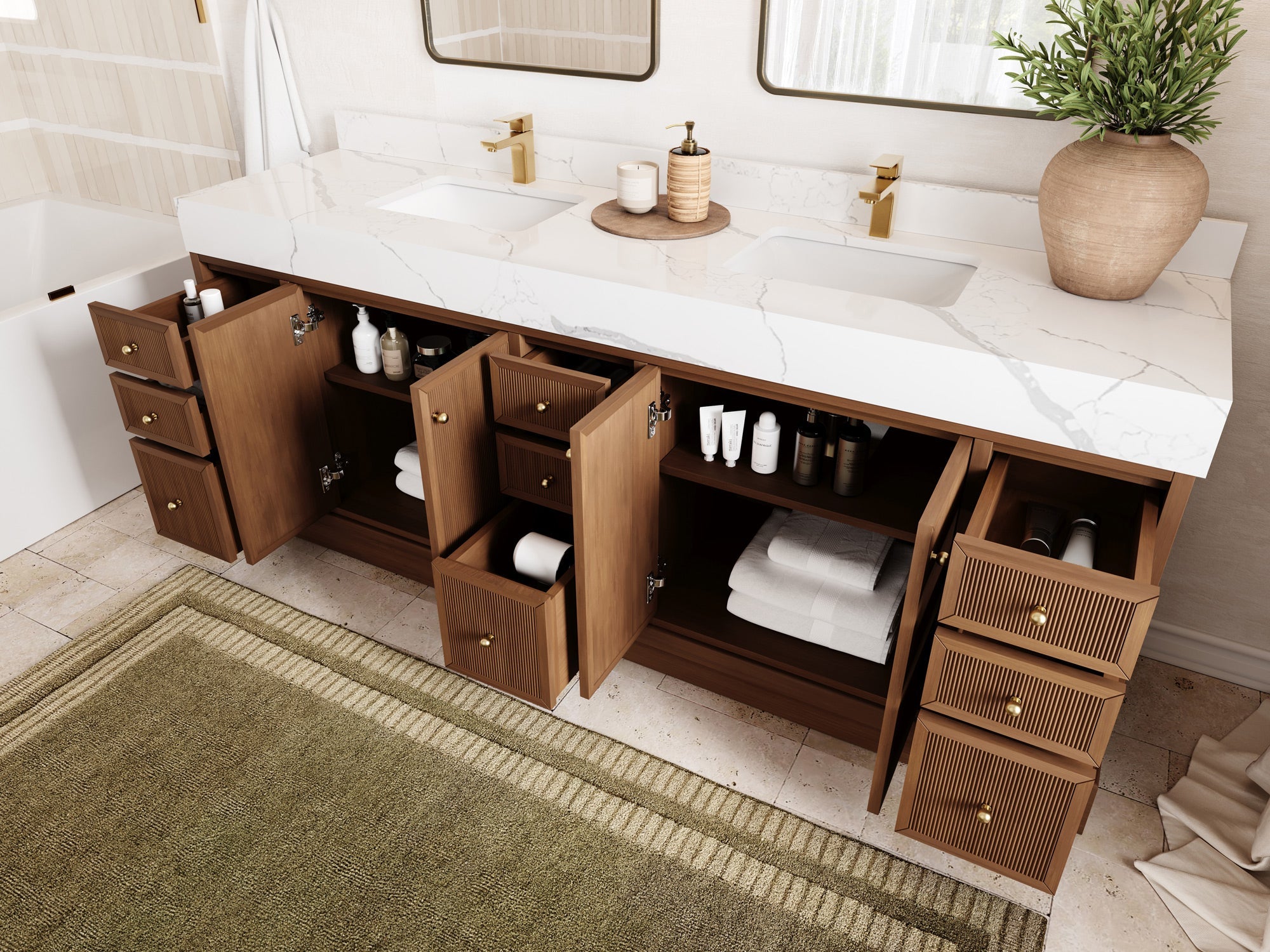
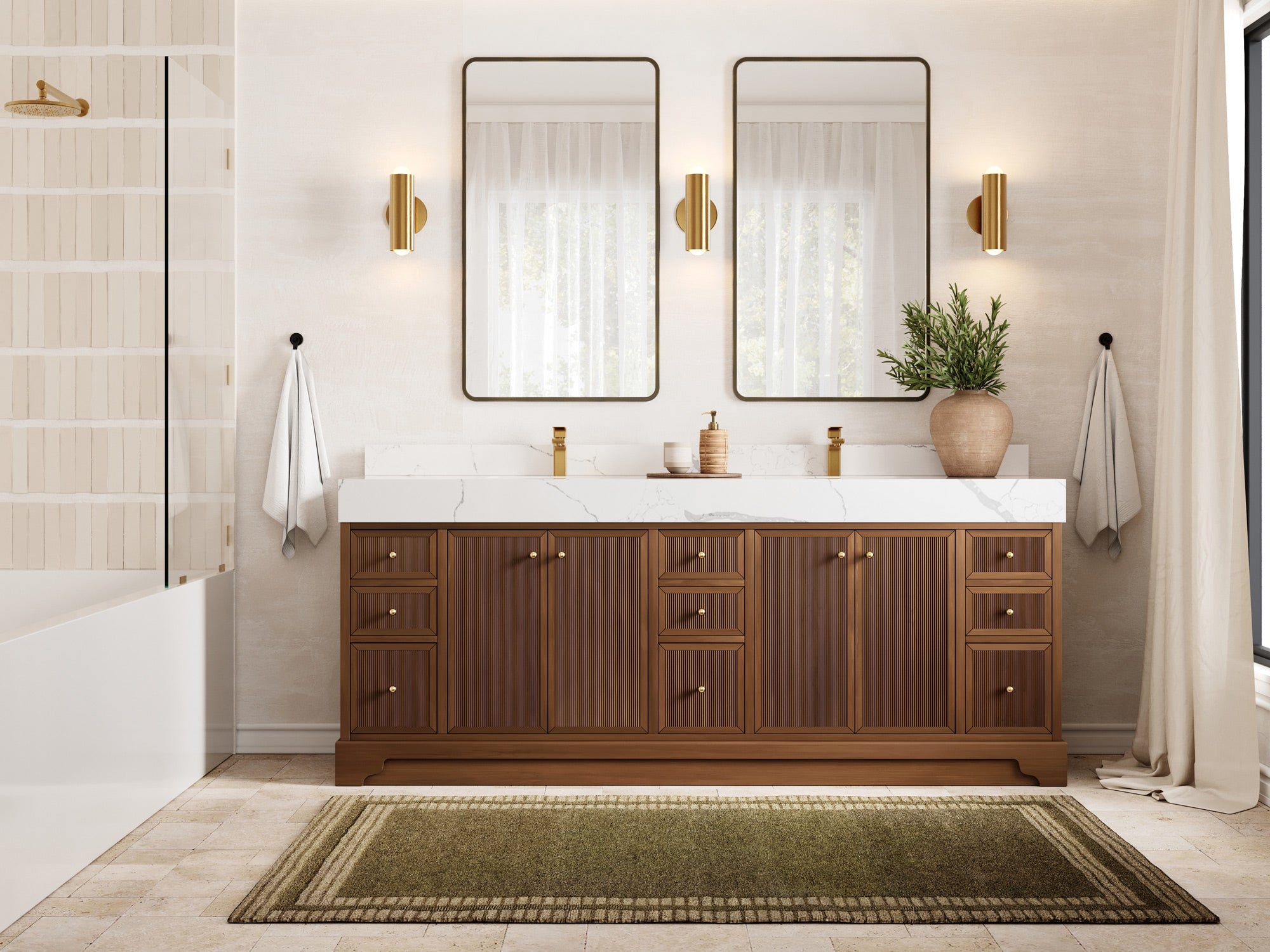
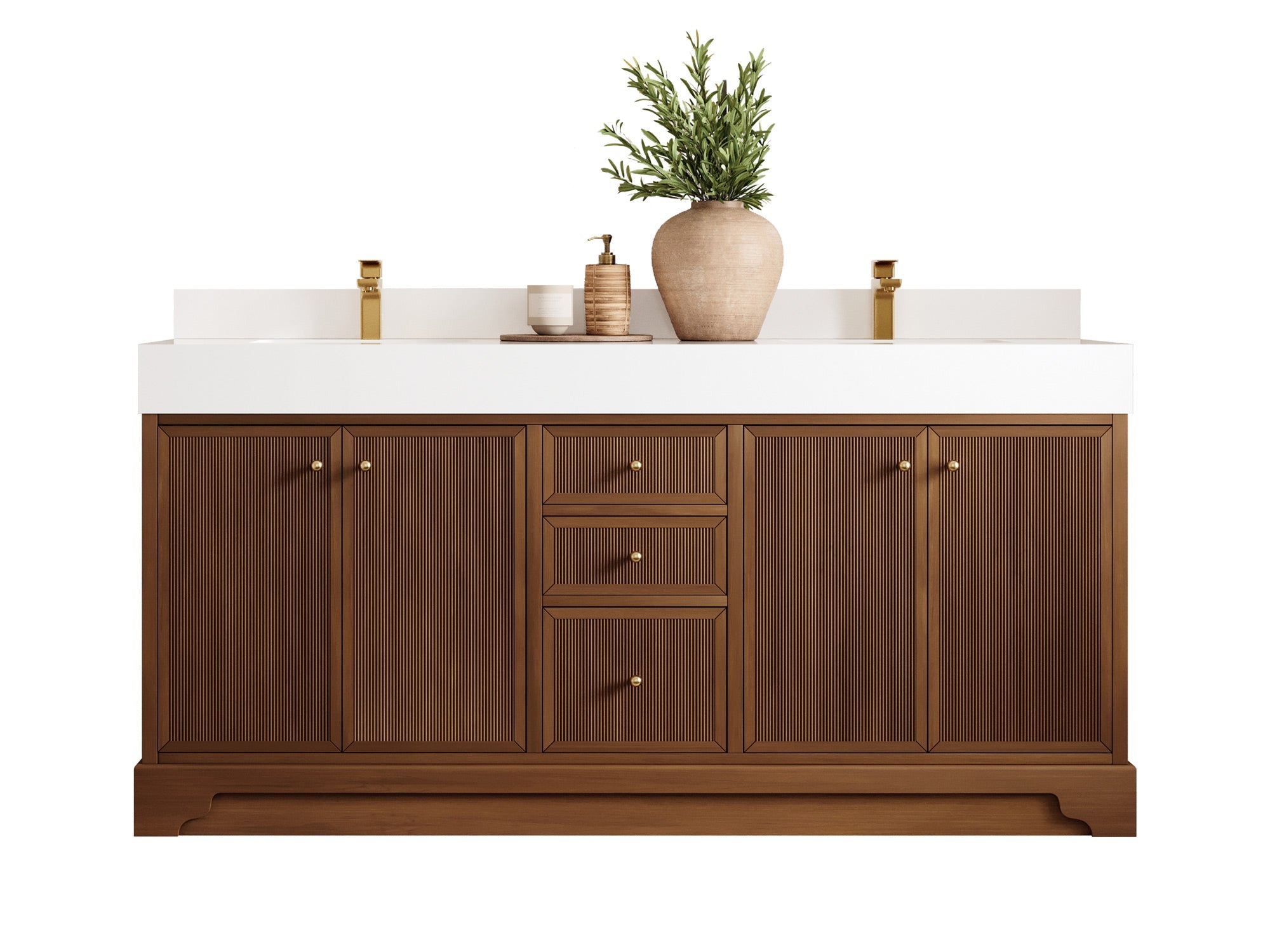
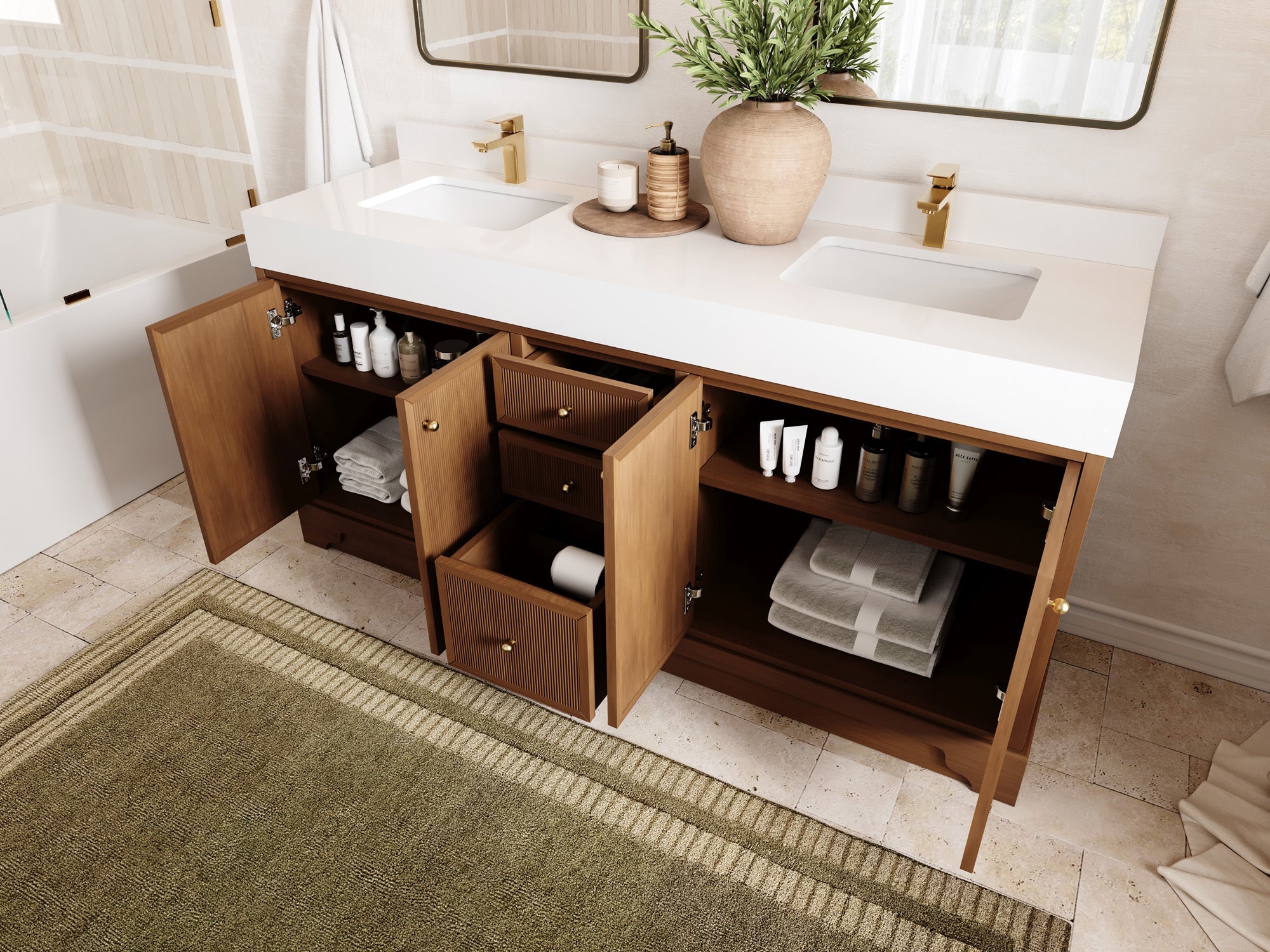
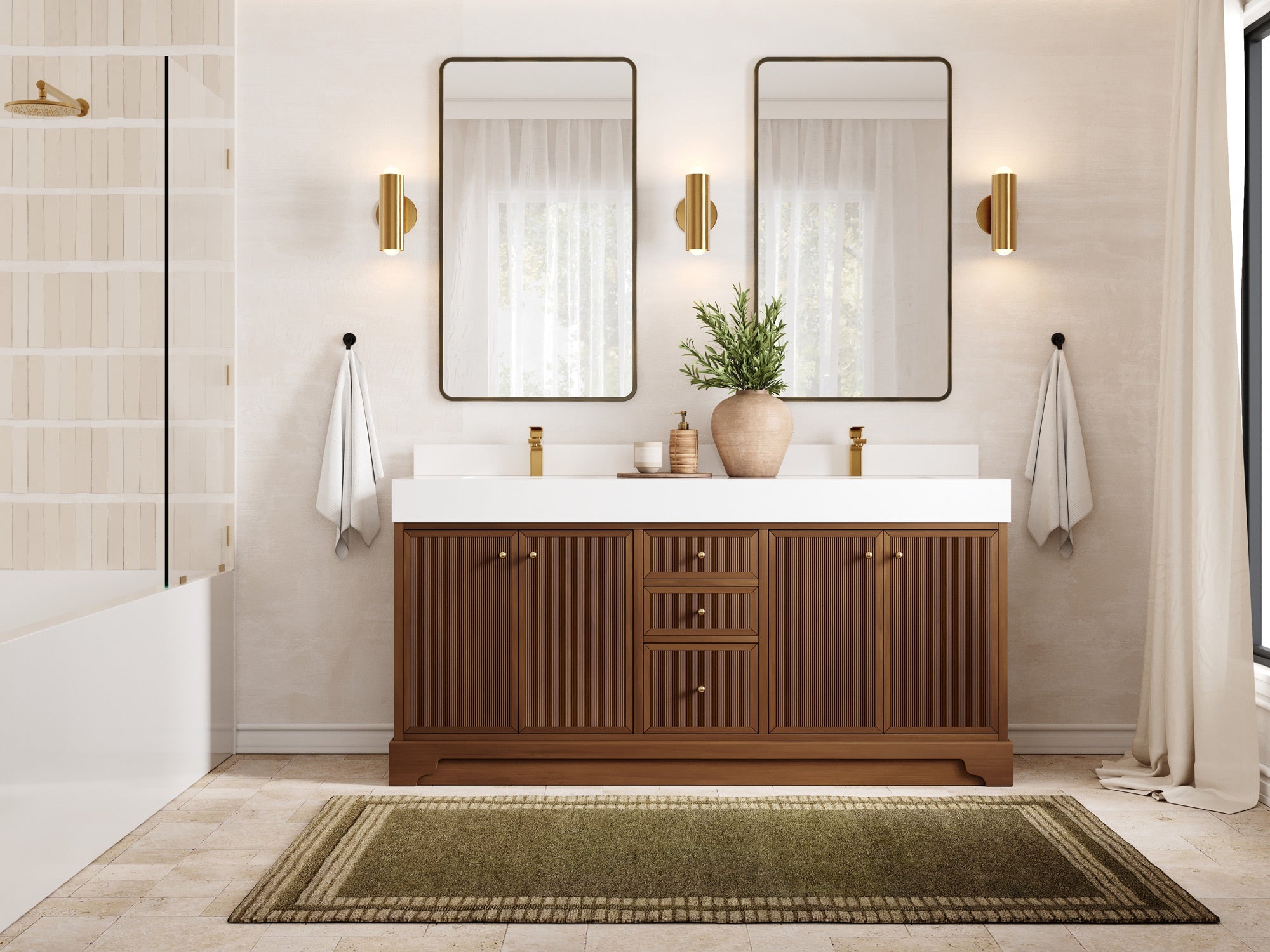
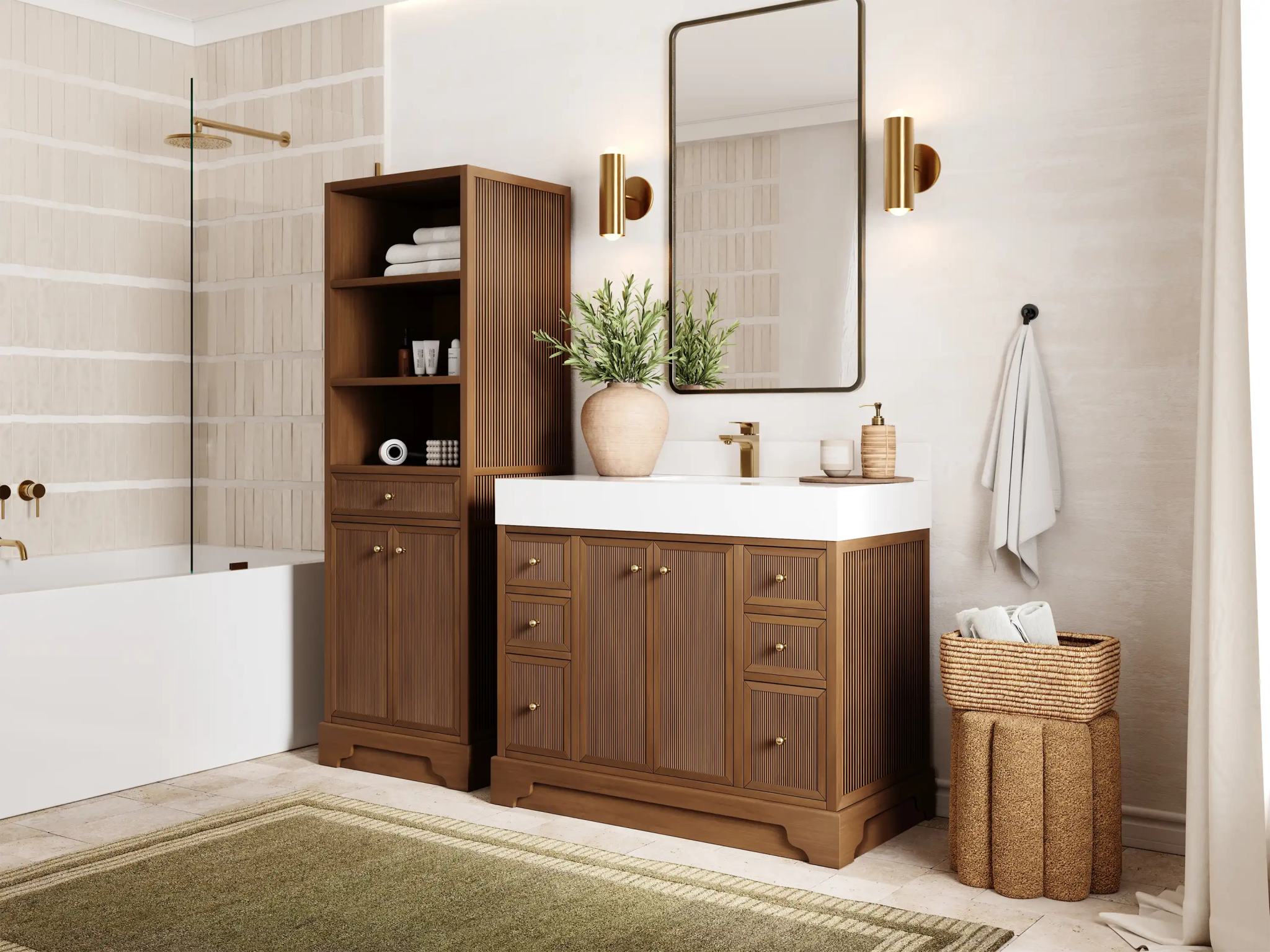
The Manhattan teak collection is the Manhattan design in its warmest form: a freestanding reeded cabinet in solid teak, finished in Golden Teak, under the thick quartz top the line is known for. These 44 vanities are FSC-certified hardwood with soft-close storage, in single- and double-sink widths.
What defines a Manhattan teak vanity
Manhattan is built around a specific look, and the teak version keeps every part of it:
- Fluted, reeded-shaker doors — vertical fluting set inside a skinny shaker frame, so the texture reads as fine ribbing rather than a heavy panel.
- A furniture-style plinth base — freestanding and grounded, sitting like a piece of furniture rather than a boxy cabinet.
- A bold, thick quartz top with a mitered edge and white basins — the deep slab profile is the signature of the line.
- Golden Teak finish — the natural honey-gold tone of the wood, sealed rather than stained over.
Teak is what makes this version different from the rest of the Manhattan collection. Fluting depends on grain: on a tight, oily hardwood like teak the ribs catch light cleanly and stay crisp, and the golden tone gives the texture depth that a painted surface flattens.
Solid teak in a bathroom
These cabinets are solid teak — kiln-dried, FSC-certified hardwood, never MDF or particleboard. Teak has been the wood of choice for boat decks and outdoor furniture for centuries because it is dense, tight-grained and naturally rich in oils, which is exactly the property you want in a room that swings from dry to steamy every day.
Most mass-market vanities use MDF or particleboard under a wood-look surface, and that core swells at the toe kick and around the plumbing cutout once moisture reaches a cut edge. Real teak does not, and if it is ever scratched it can be sanded and refinished rather than replaced. No wood is waterproof — wipe up standing water — but sealed teak handles daily bathroom humidity better than almost anything else.
Sizes and layouts
Manhattan teak runs from compact singles to wide doubles. Single-sink widths suit a guest, family or secondary bathroom — 42 inch, 48 inch and 60 inch are the common choices. For a shared primary or master bathroom, the double-sink versions at 72 inch and 84 inch give each basin its own storage with real counter in between.
Standard depth is 22 inches. Measure the wall opening, allow clearance at both ends, and check the bathroom door swing. Cabinets ship fully assembled with insured delivery, and the quartz top ships in its own protective box with the undermount basins set during installation.
Explore more
See the full Manhattan collection in every finish, or compare other textured fronts in fluted and reeded vanities. For more of the same wood, browse all teak bathroom vanities, or compare hardwoods in solid wood bathroom vanities — white oak for a lighter grain, mango for bolder character.
Frequently asked questions
Is the Manhattan teak vanity real solid teak?
Yes. Manhattan teak vanities are solid teak — kiln-dried, FSC-certified hardwood, never MDF or particleboard. Most mass-market vanities use MDF or particleboard beneath a wood-look surface, which swells once moisture reaches a cut edge.
What countertop comes with a Manhattan vanity?
Manhattan is built around a bold, thick quartz top with a mitered edge and white undermount basins — the deep slab profile is the signature of the line. The top ships in its own protective box and the basins are set during installation. Check the individual product page for the options on that vanity.
What is the difference between Manhattan teak and the rest of the Manhattan line?
The design is the same — fluted reeded-shaker doors in a skinny shaker frame on a furniture-style plinth base. The teak version is built in solid teak with a Golden Teak finish, so the fluting shows natural grain and a honey-gold tone instead of a painted surface.
What sizes does Manhattan teak come in?
The collection spans single-sink widths for guest and family bathrooms through wide double-sink models for a shared primary bath. Measure your wall opening, allow clearance at both ends, and check the door swing; standard depth is 22 inches.
How do I care for a teak vanity?
Wipe with a soft, damp cloth and dry it, skip abrasive cleaners, and do not leave standing water on the wood. Sealed teak handles everyday bathroom humidity well, and if it is ever marked, solid teak can be sanded and refinished.