


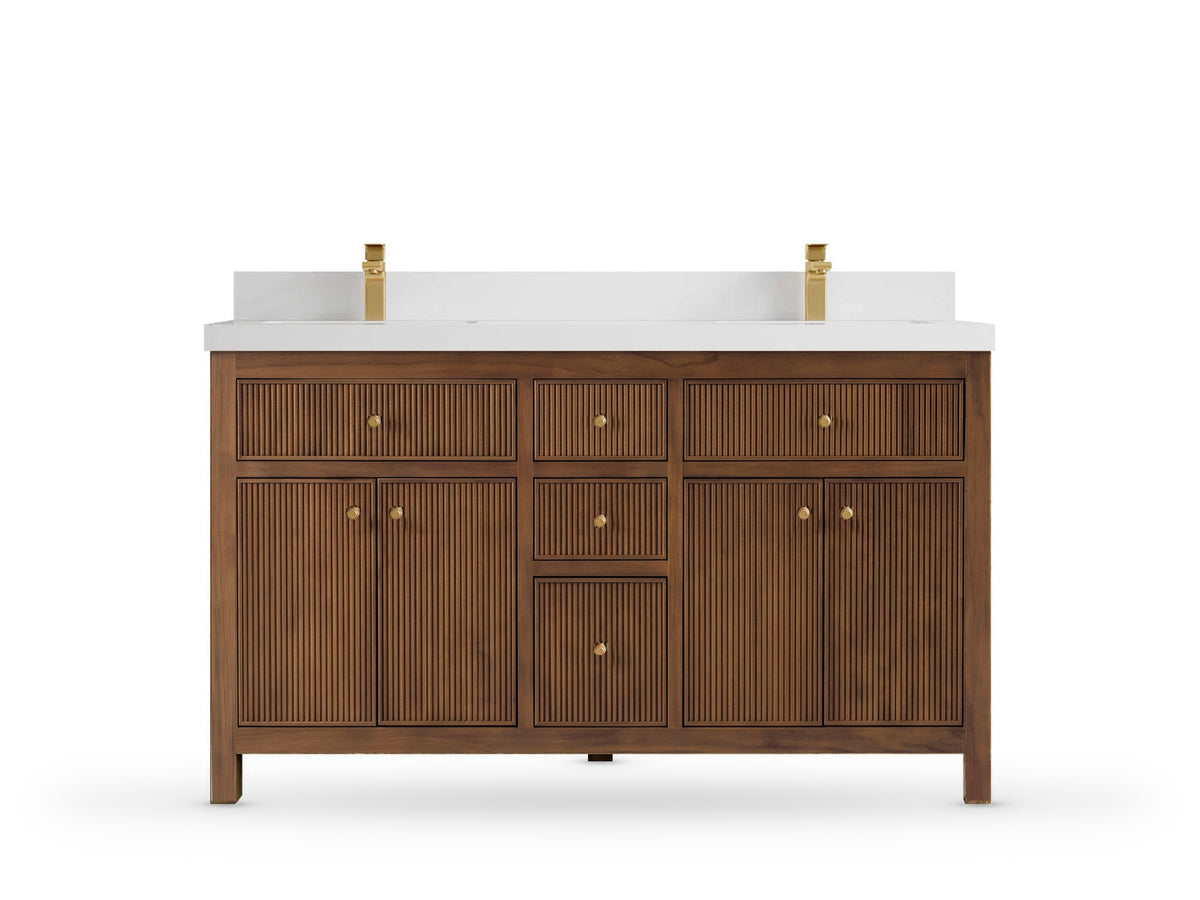
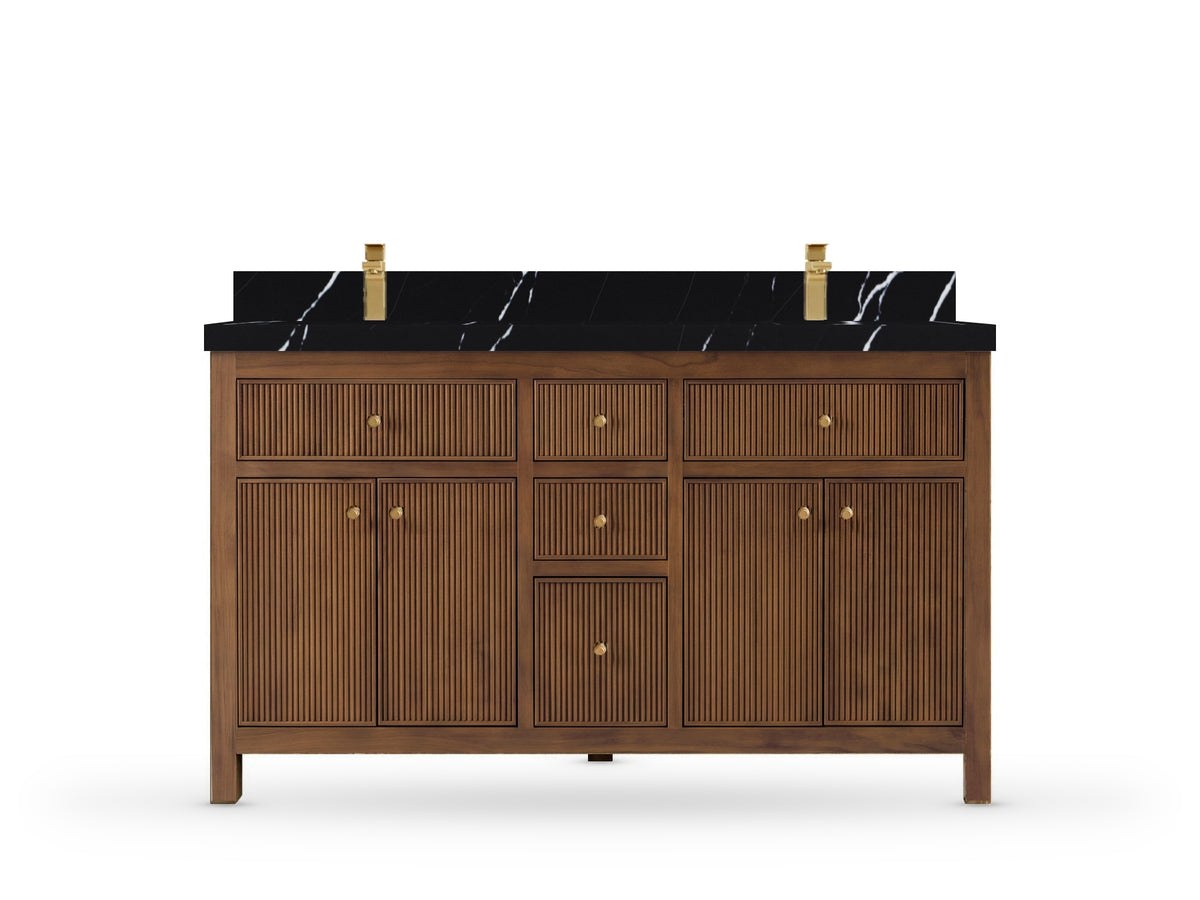
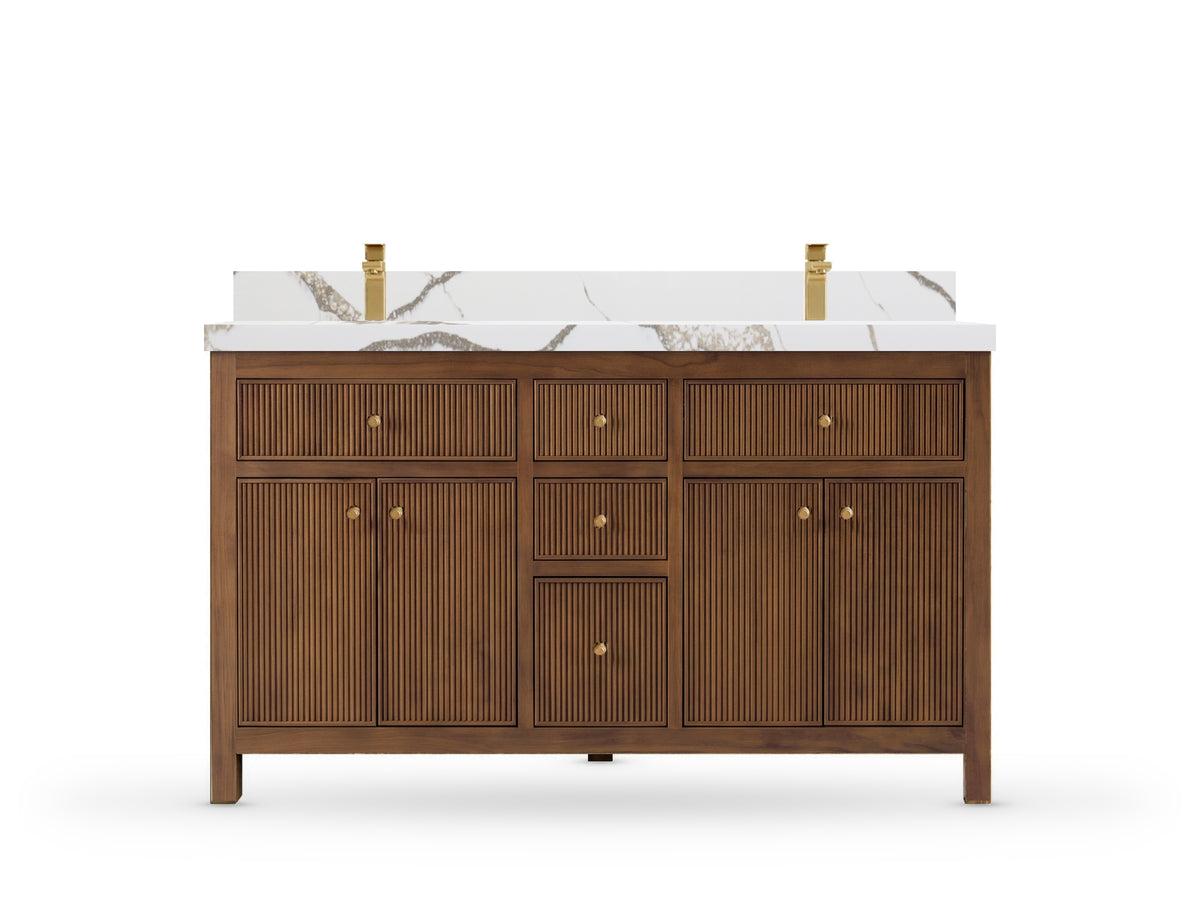
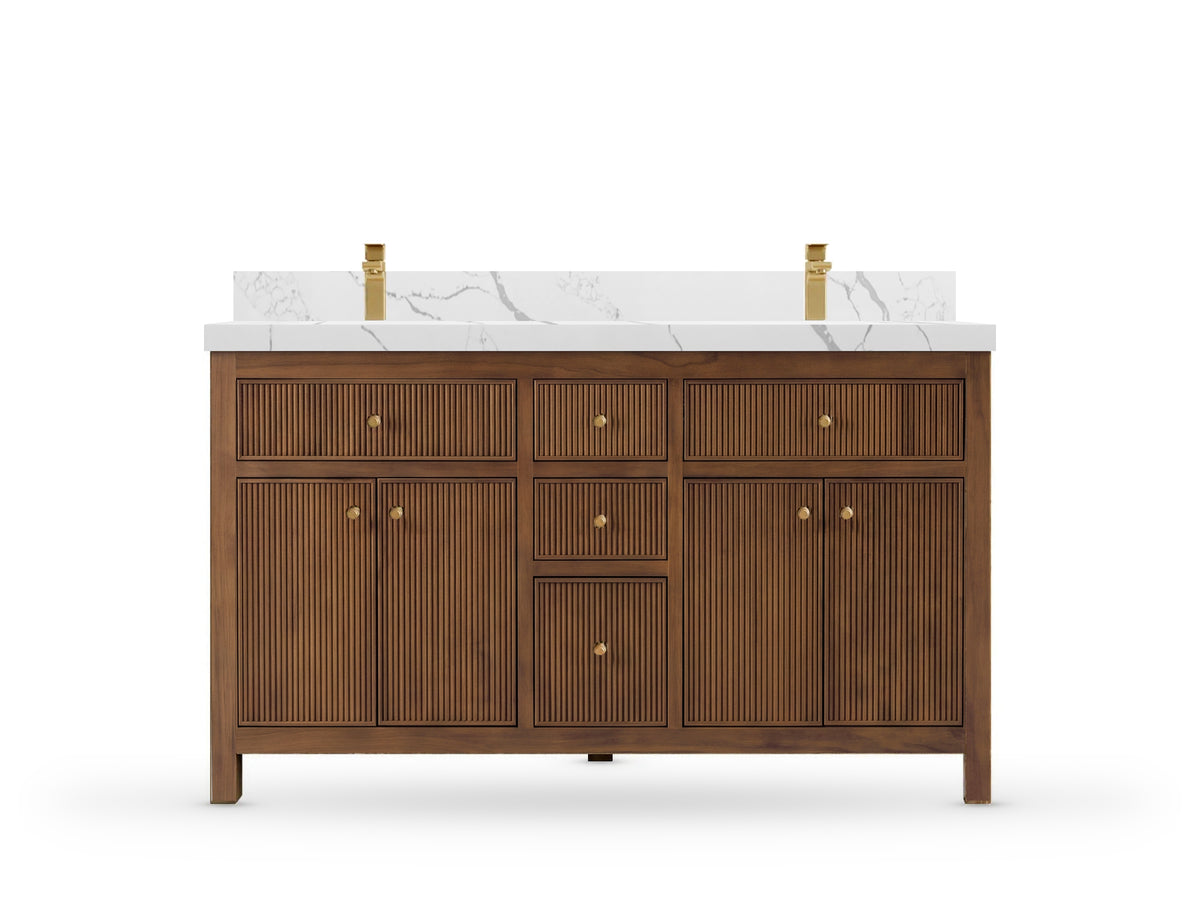
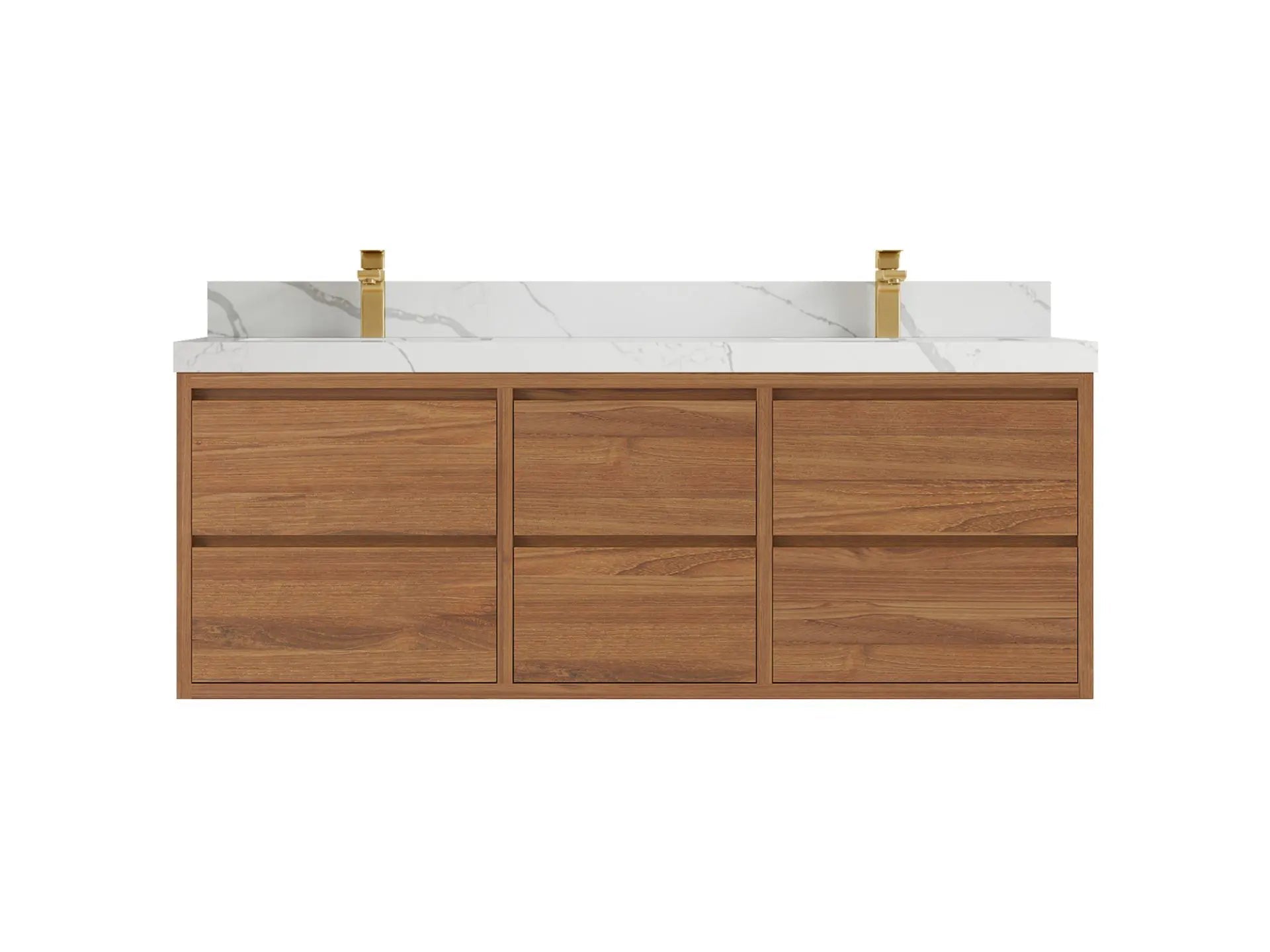


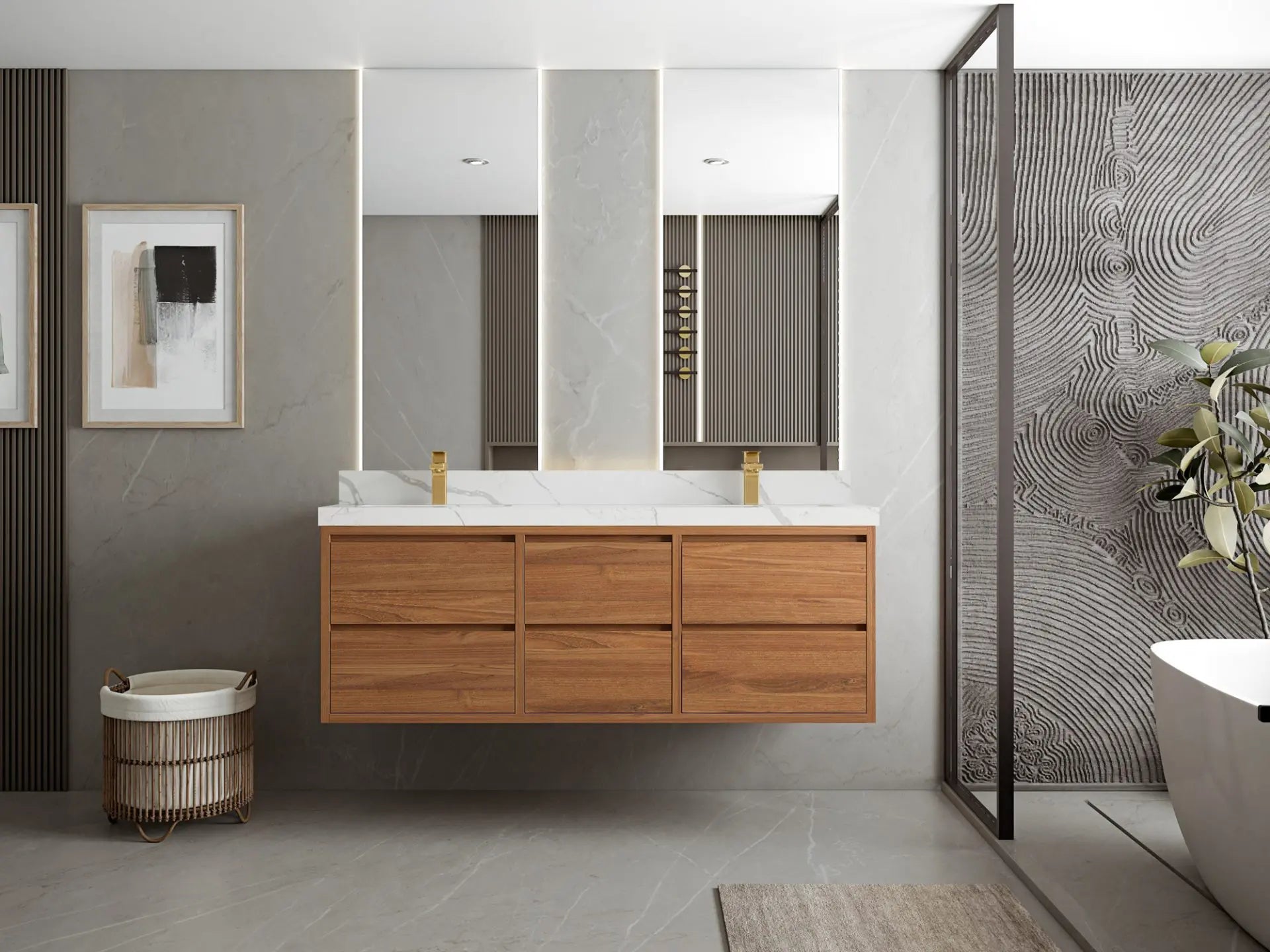
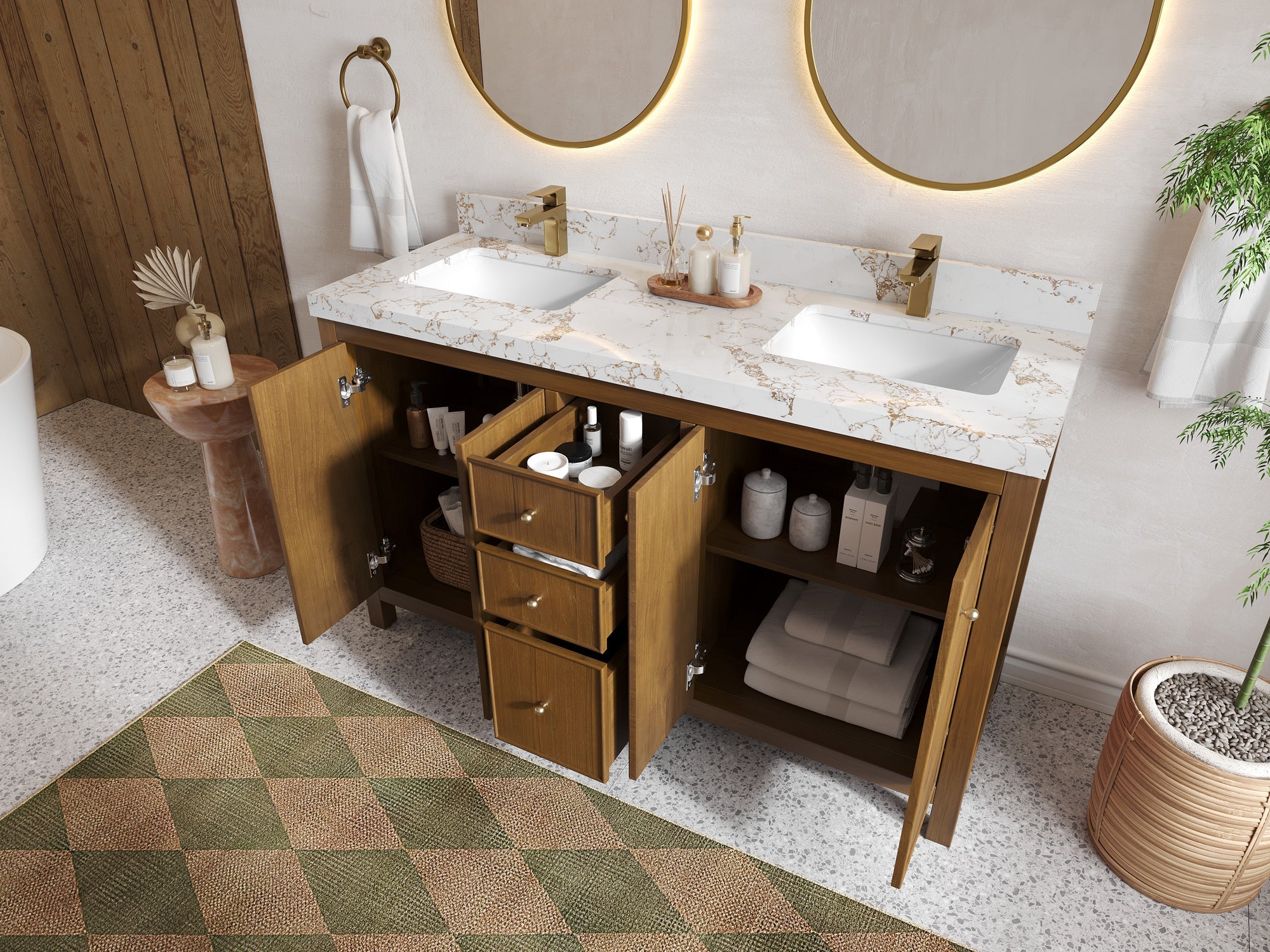
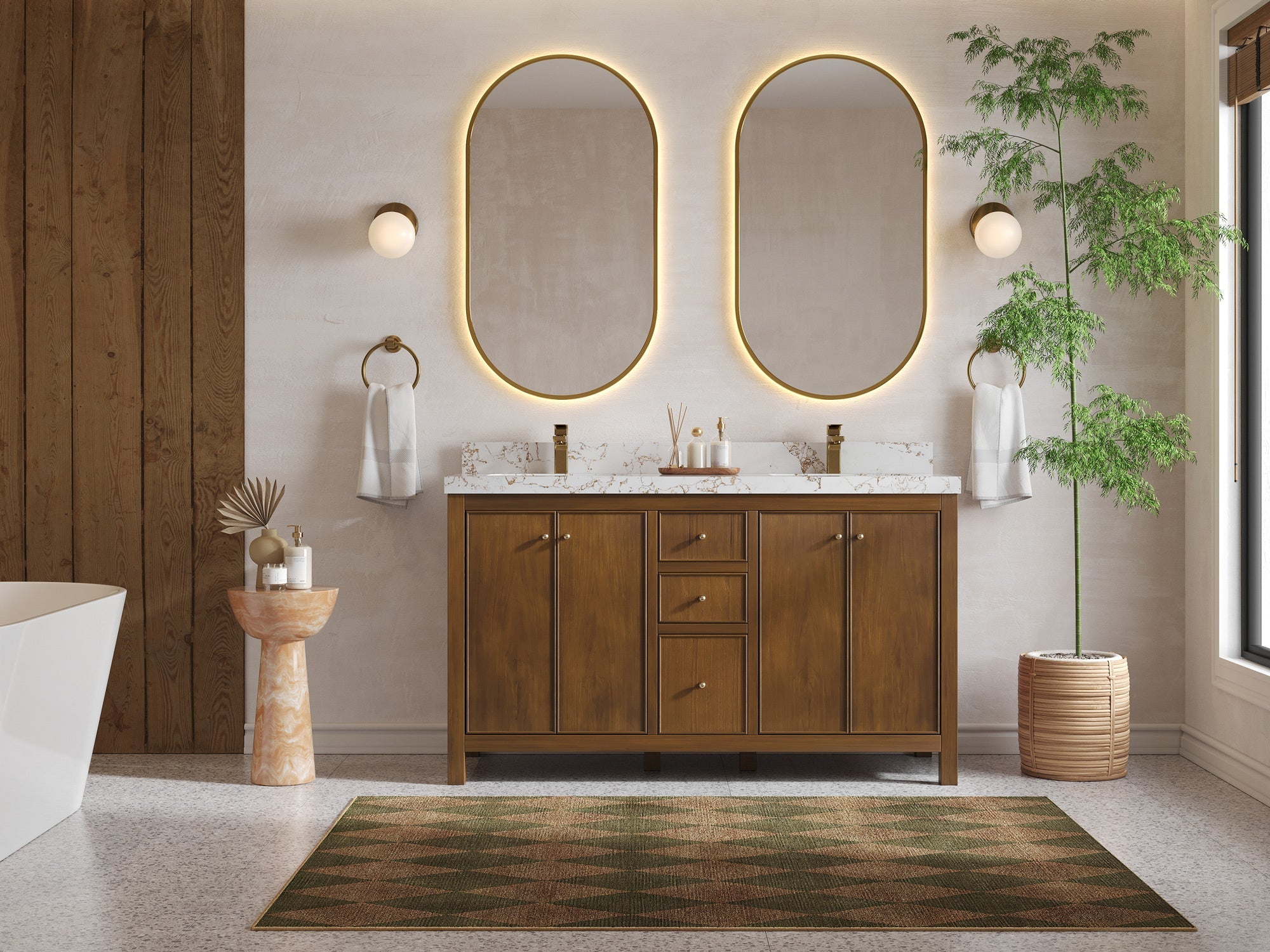
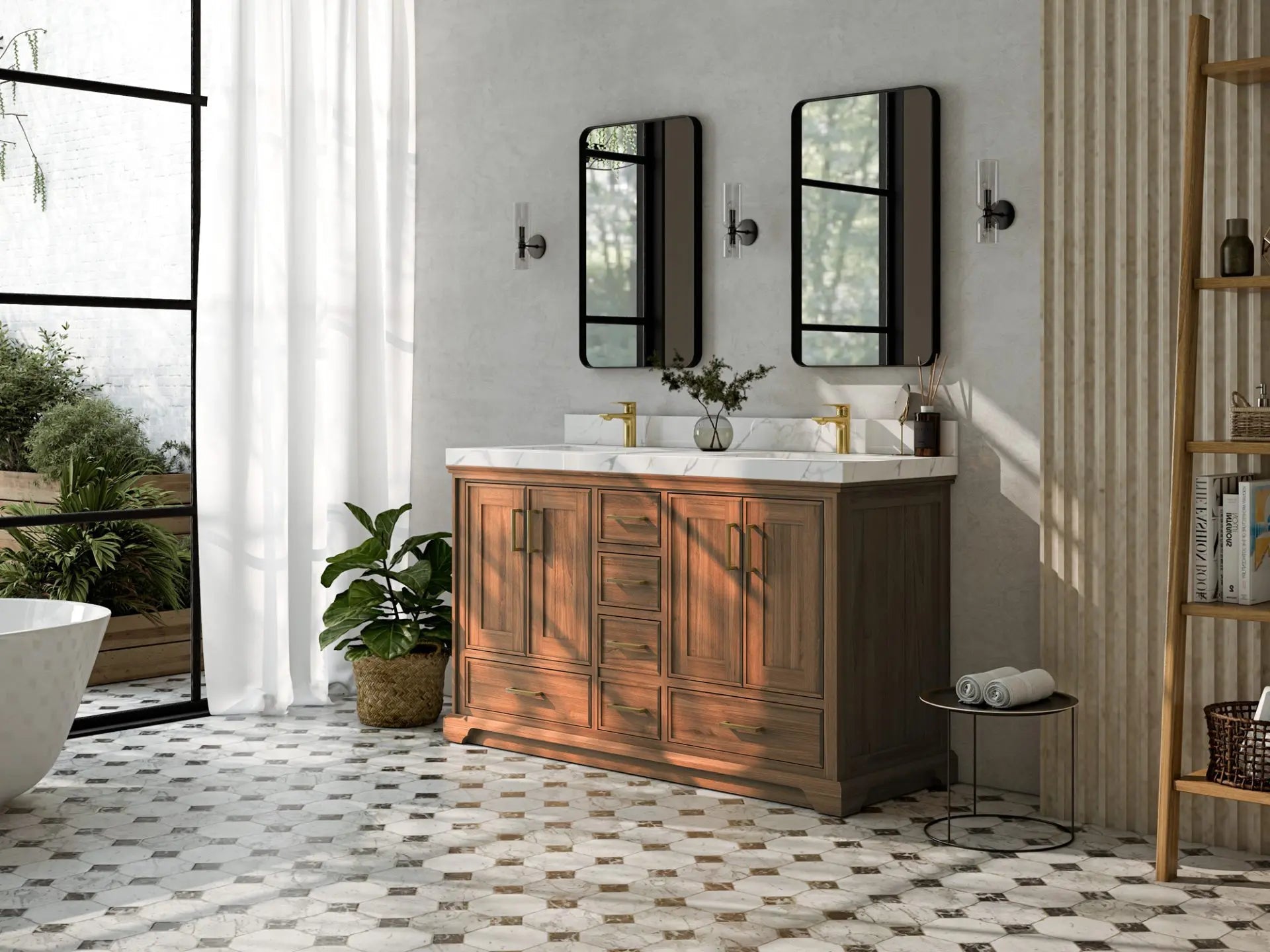
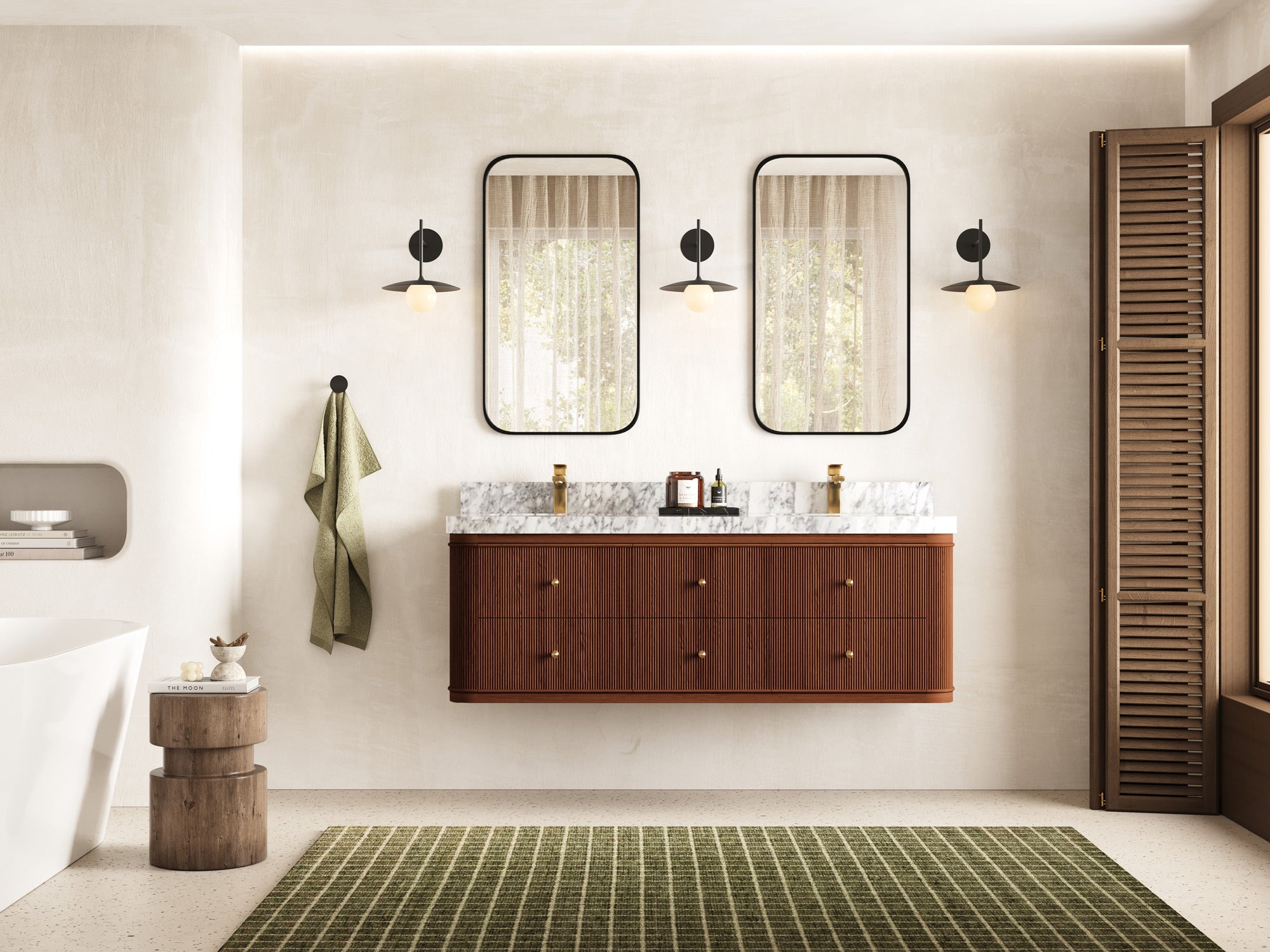
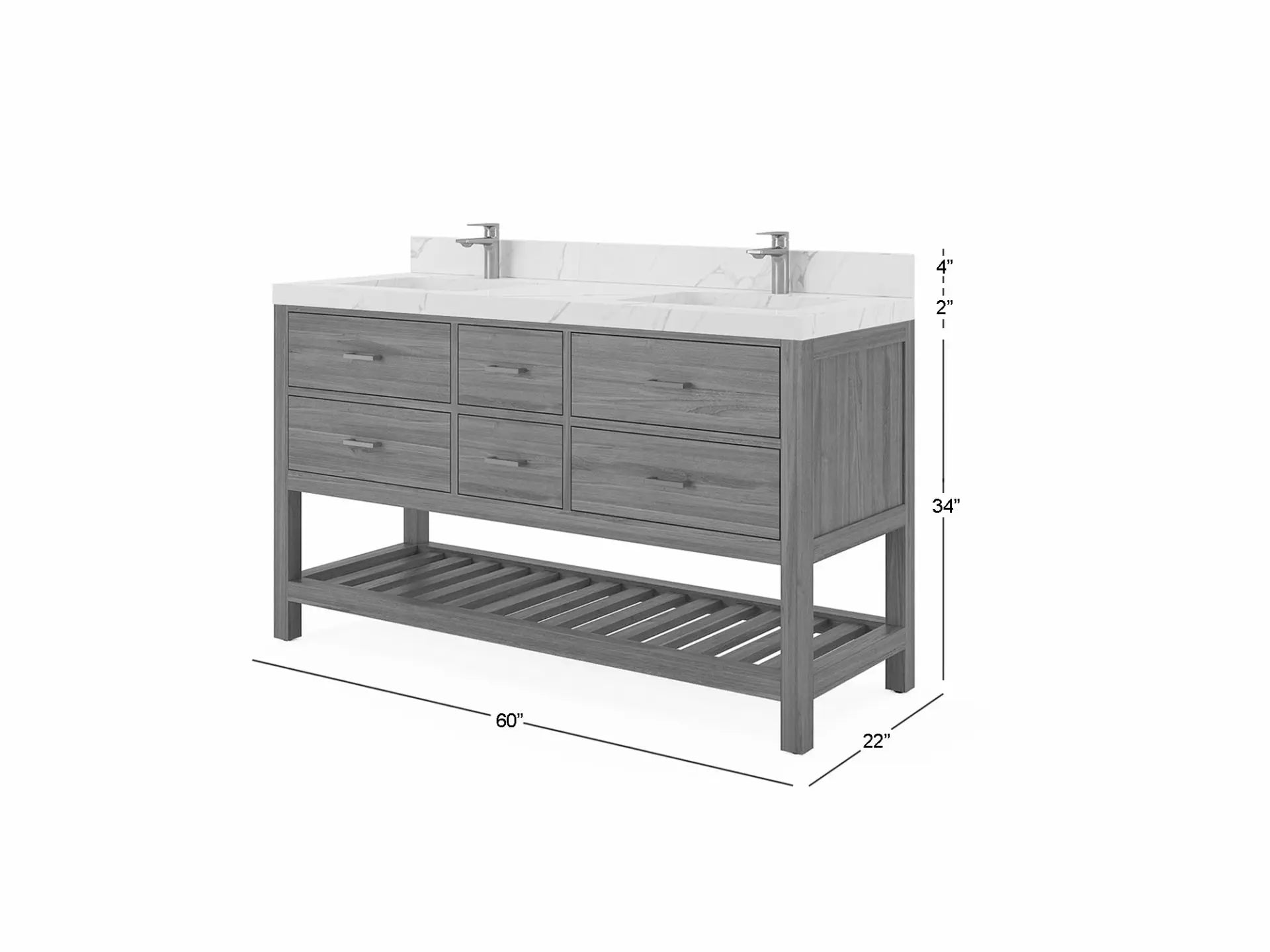
Chicago Teak 60 in.Double sink · Recessed-panel doors with rounded molding
In stock · Ships in 7–10 business days




CURATED FOR THIS COLLECTION
Designed Around 60″
A properly scaled 60″ vanity brings useful storage, genuine stone and visual balance to the room.


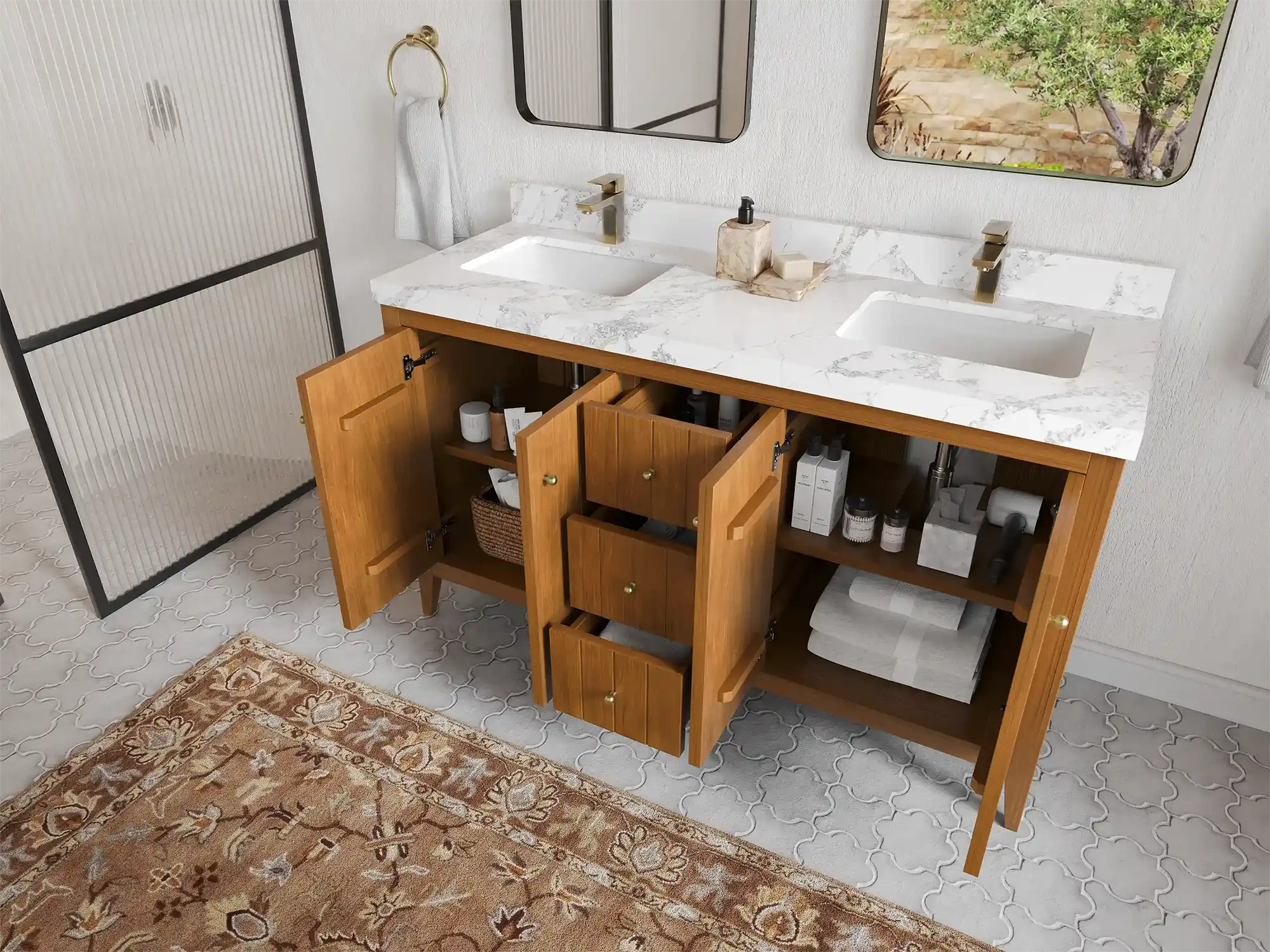

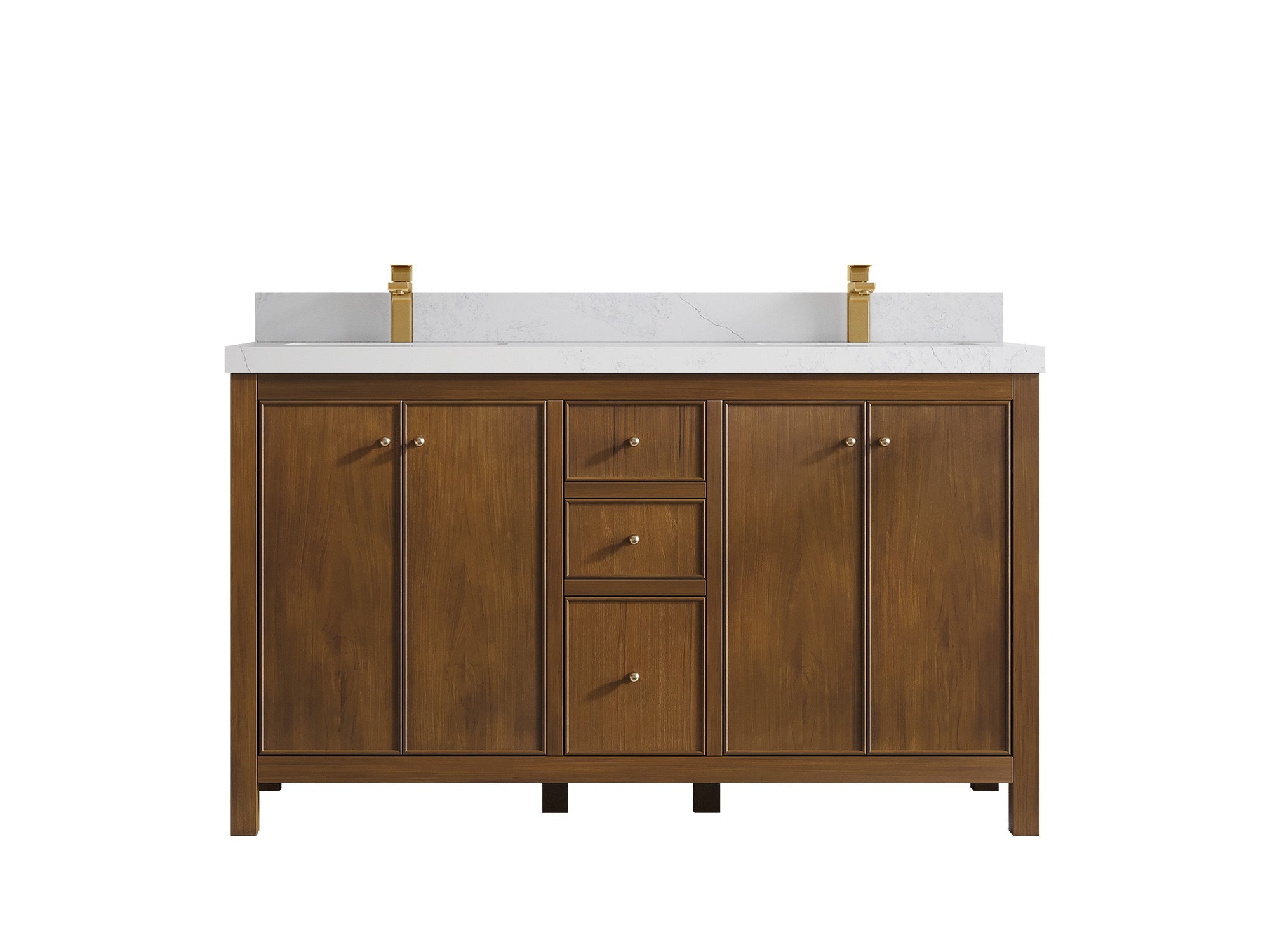
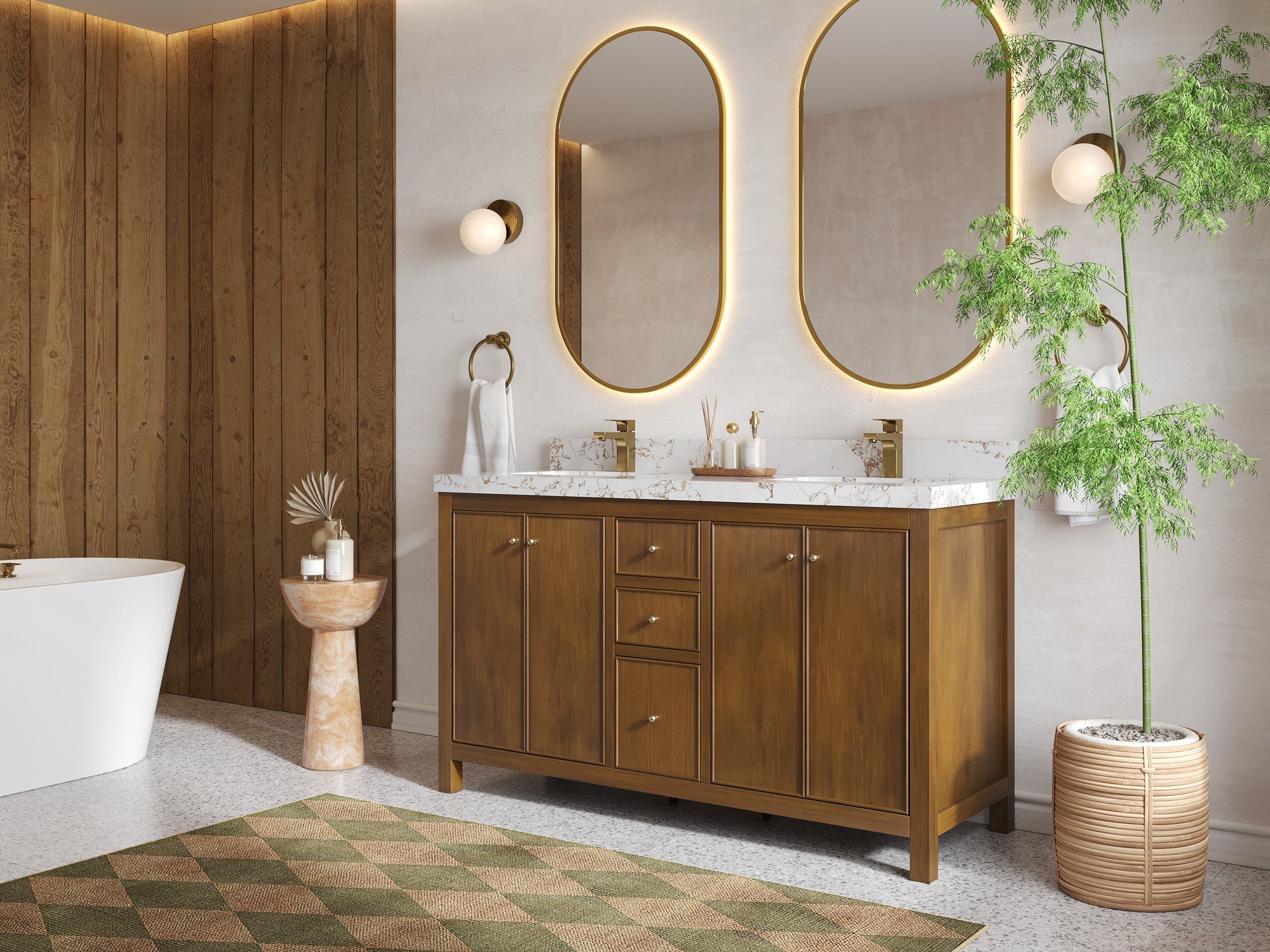
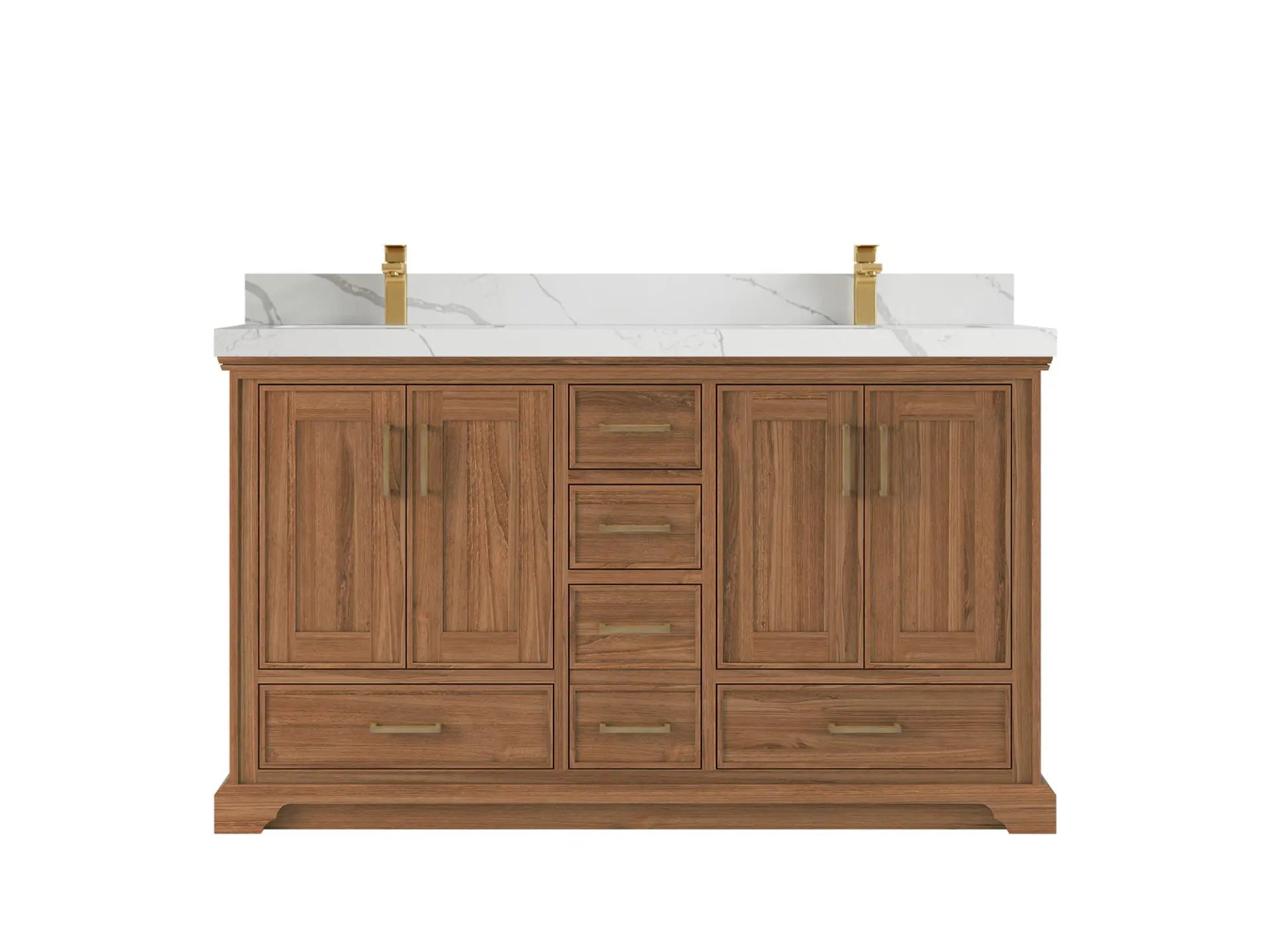
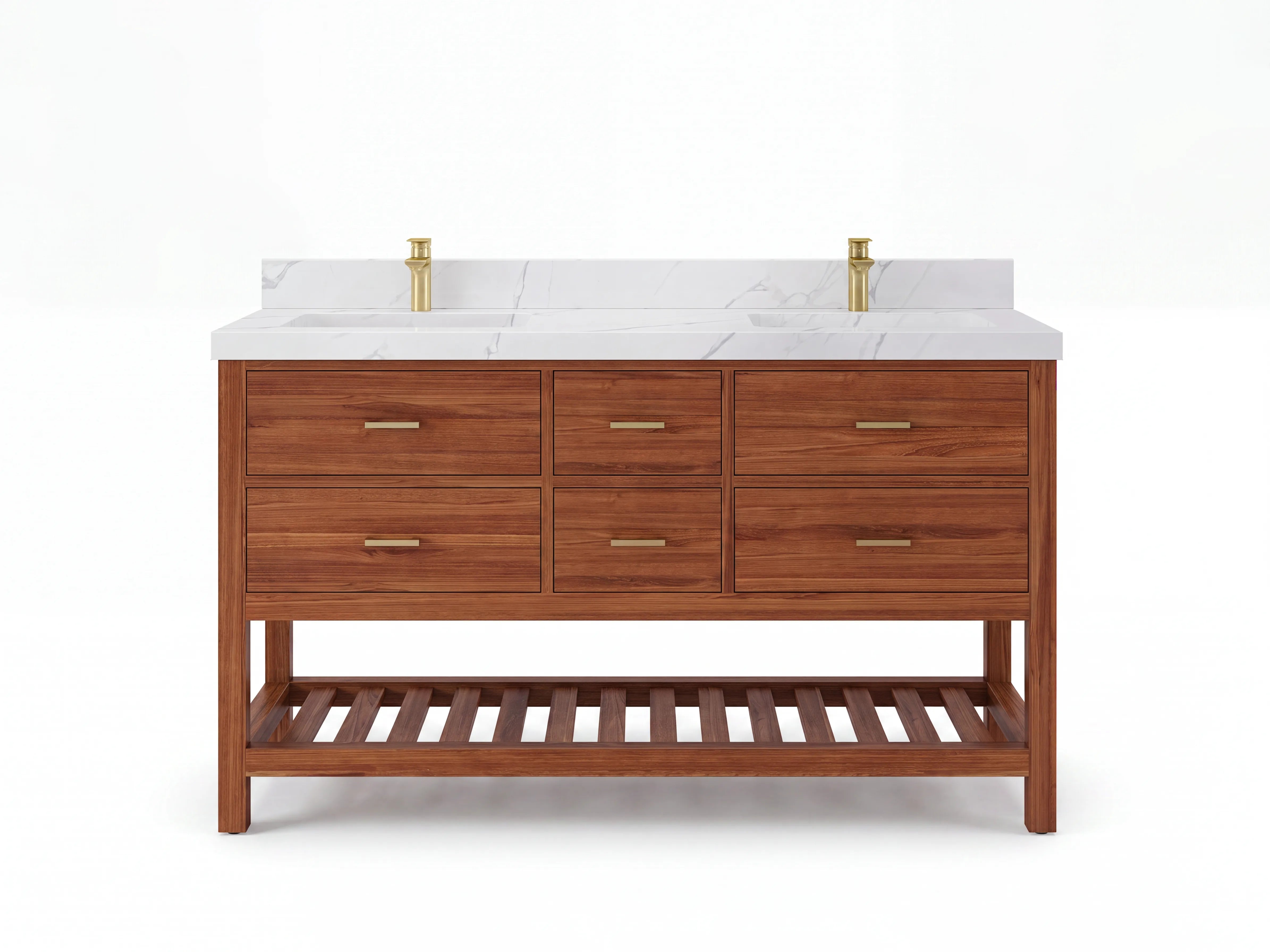
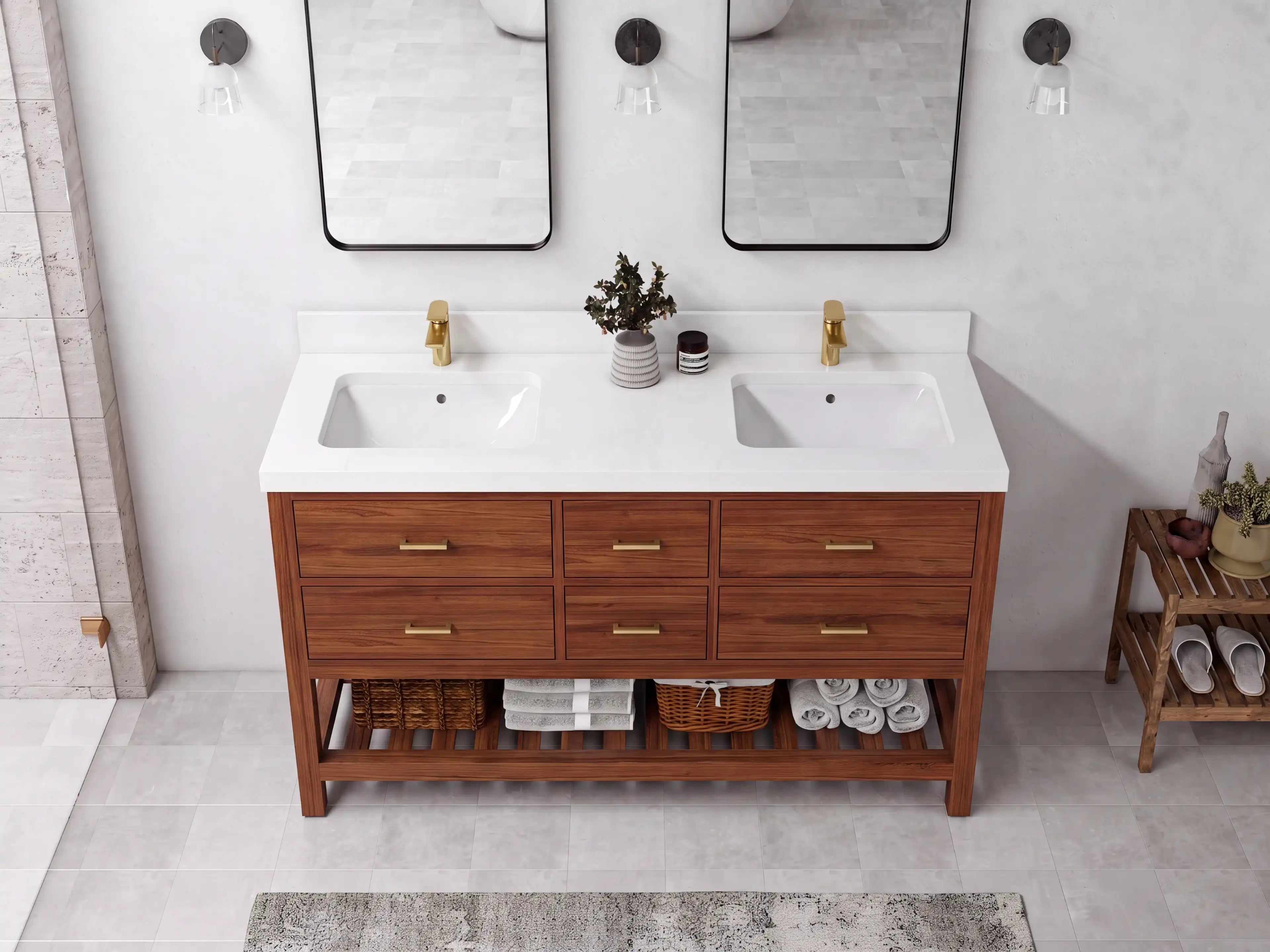
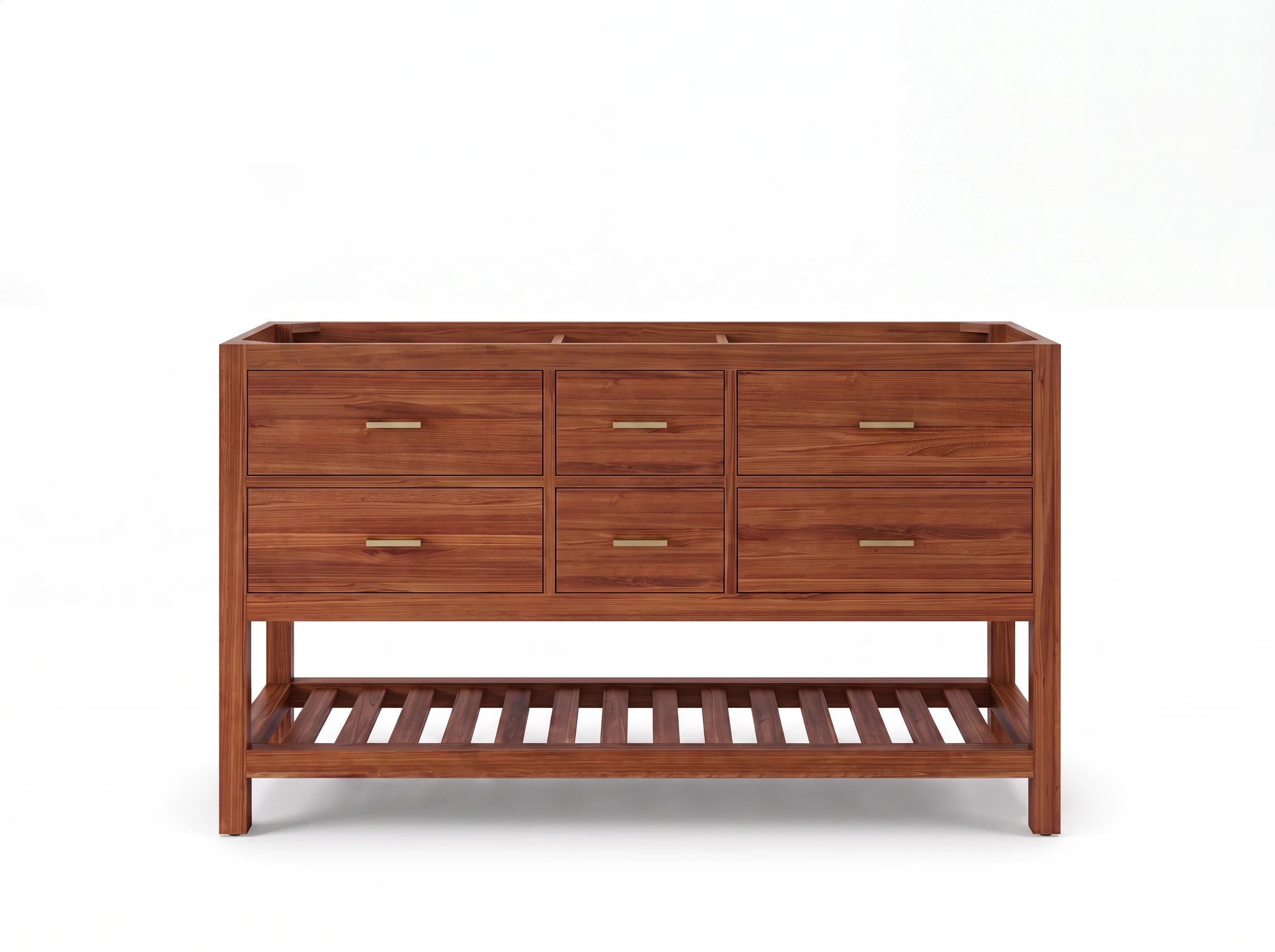
Atlanta Teak Wood 60 in.Double sink
In stock · Ships in 7–10 business days


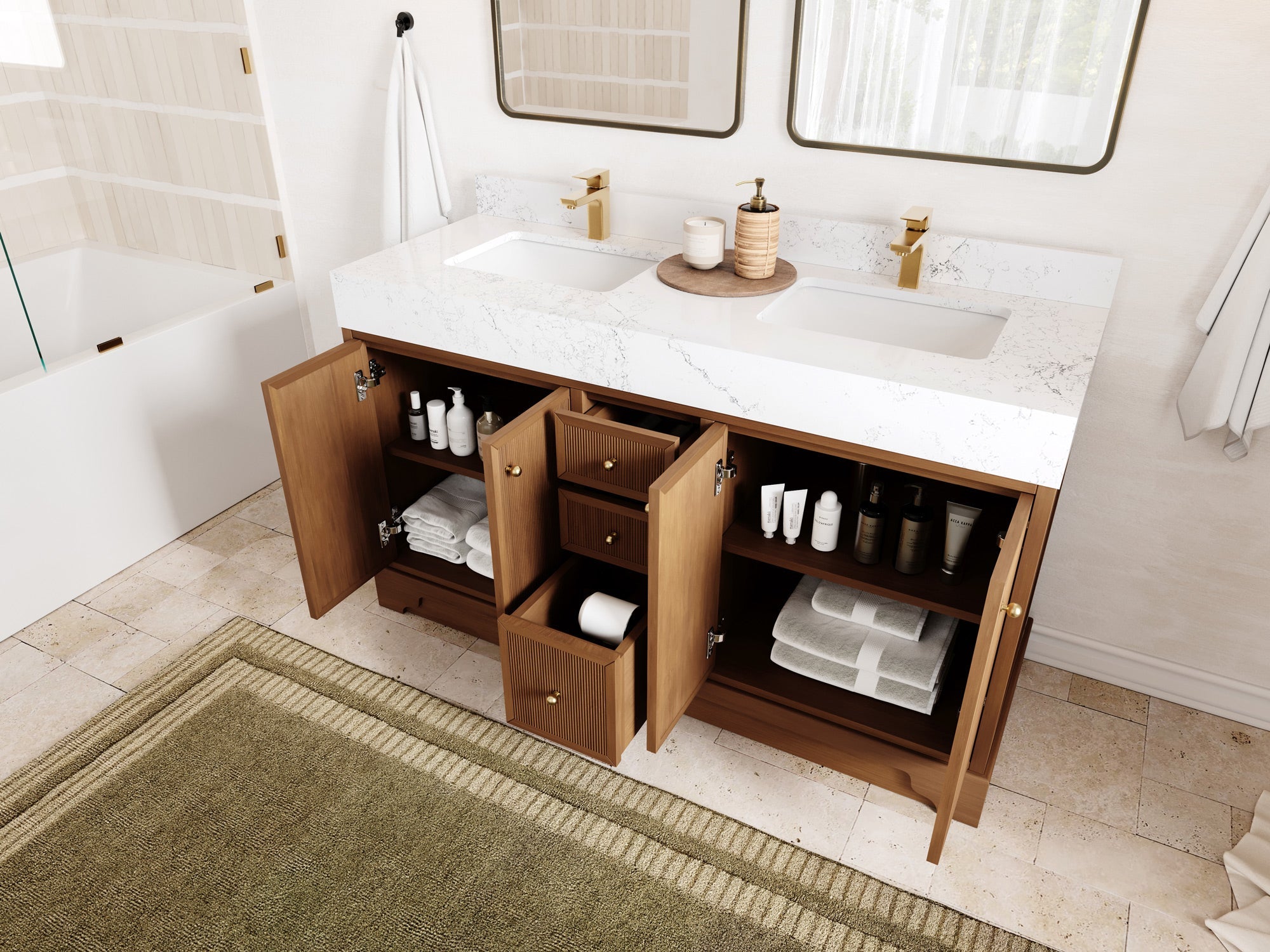
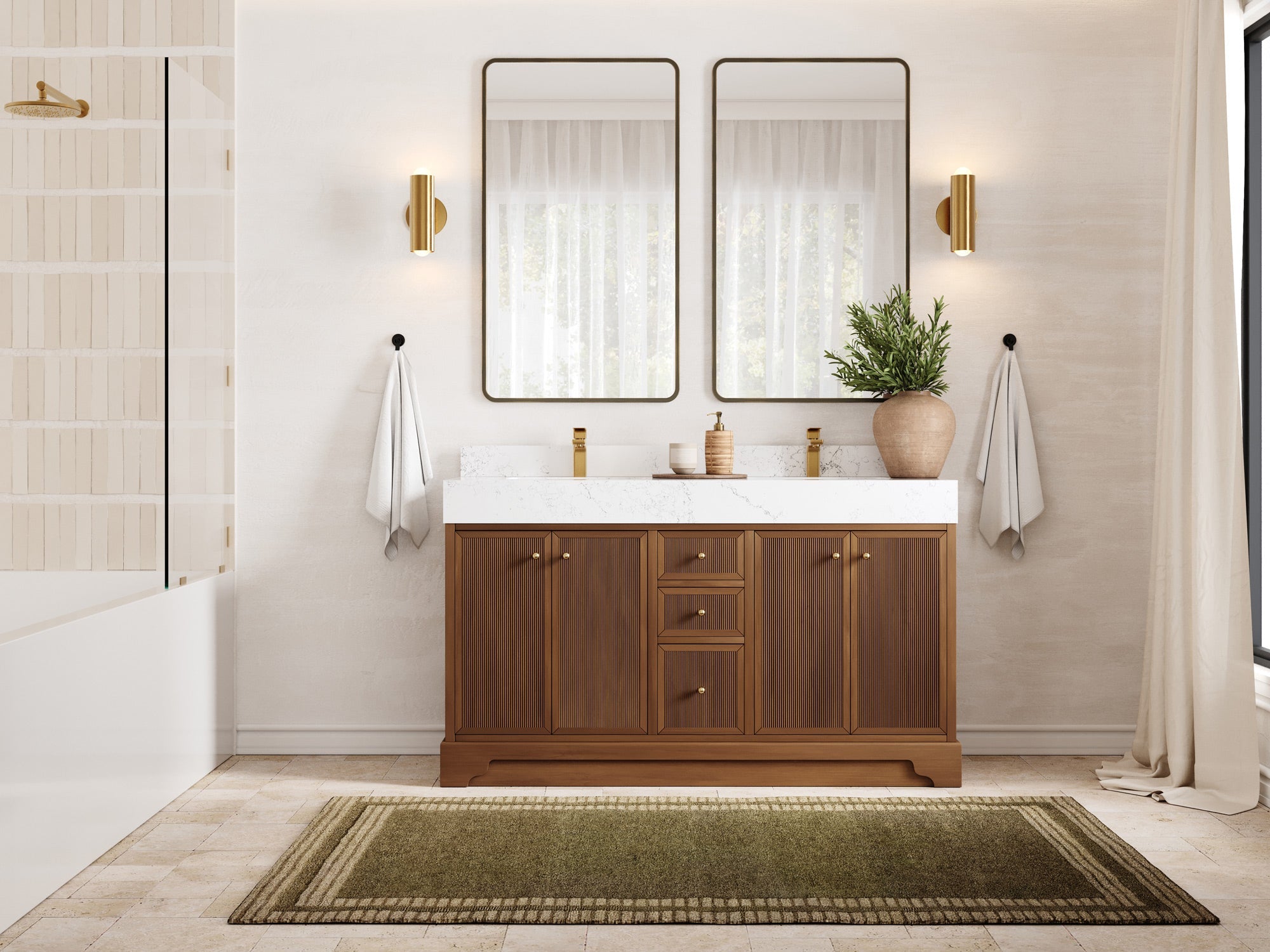
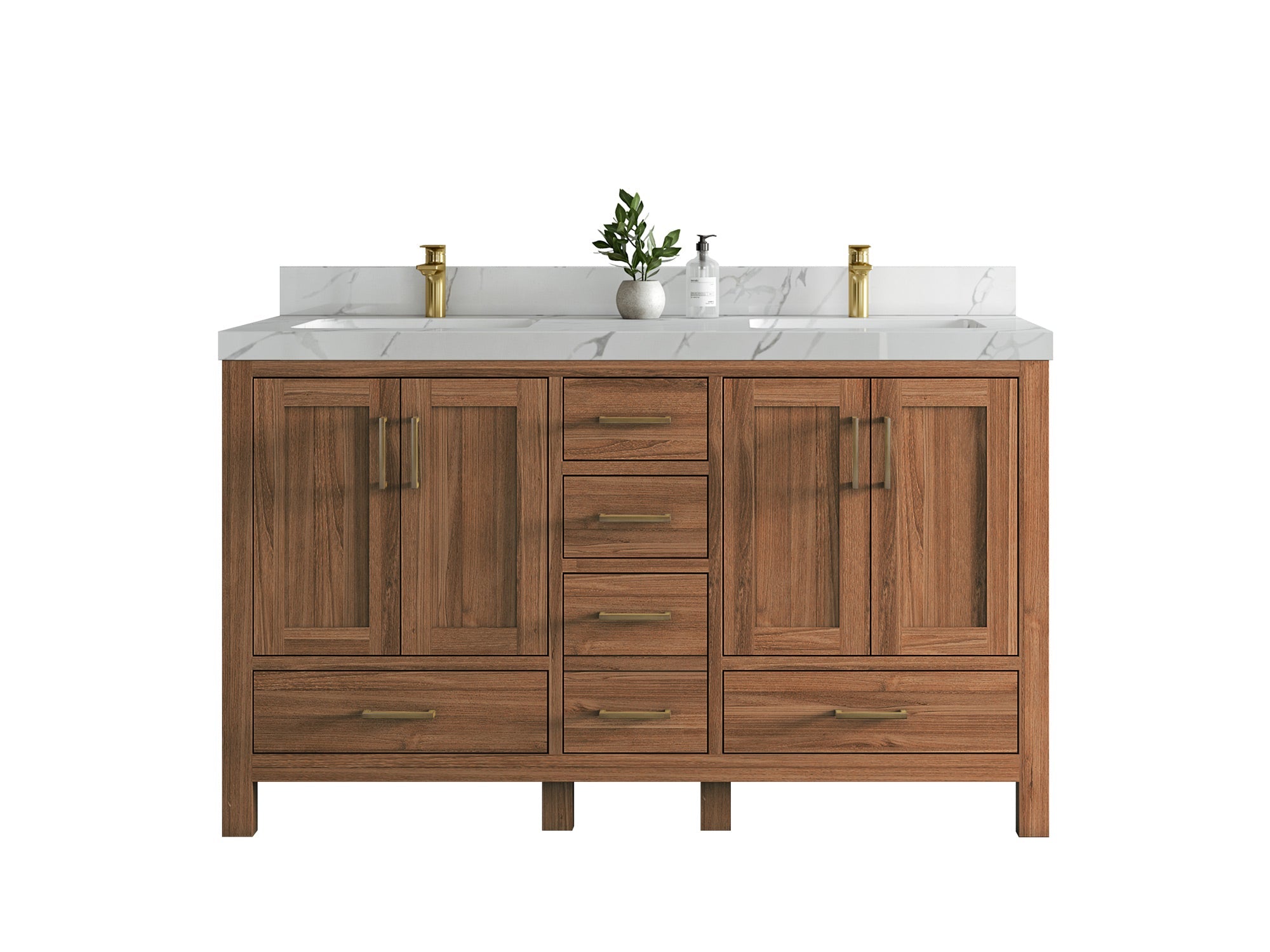
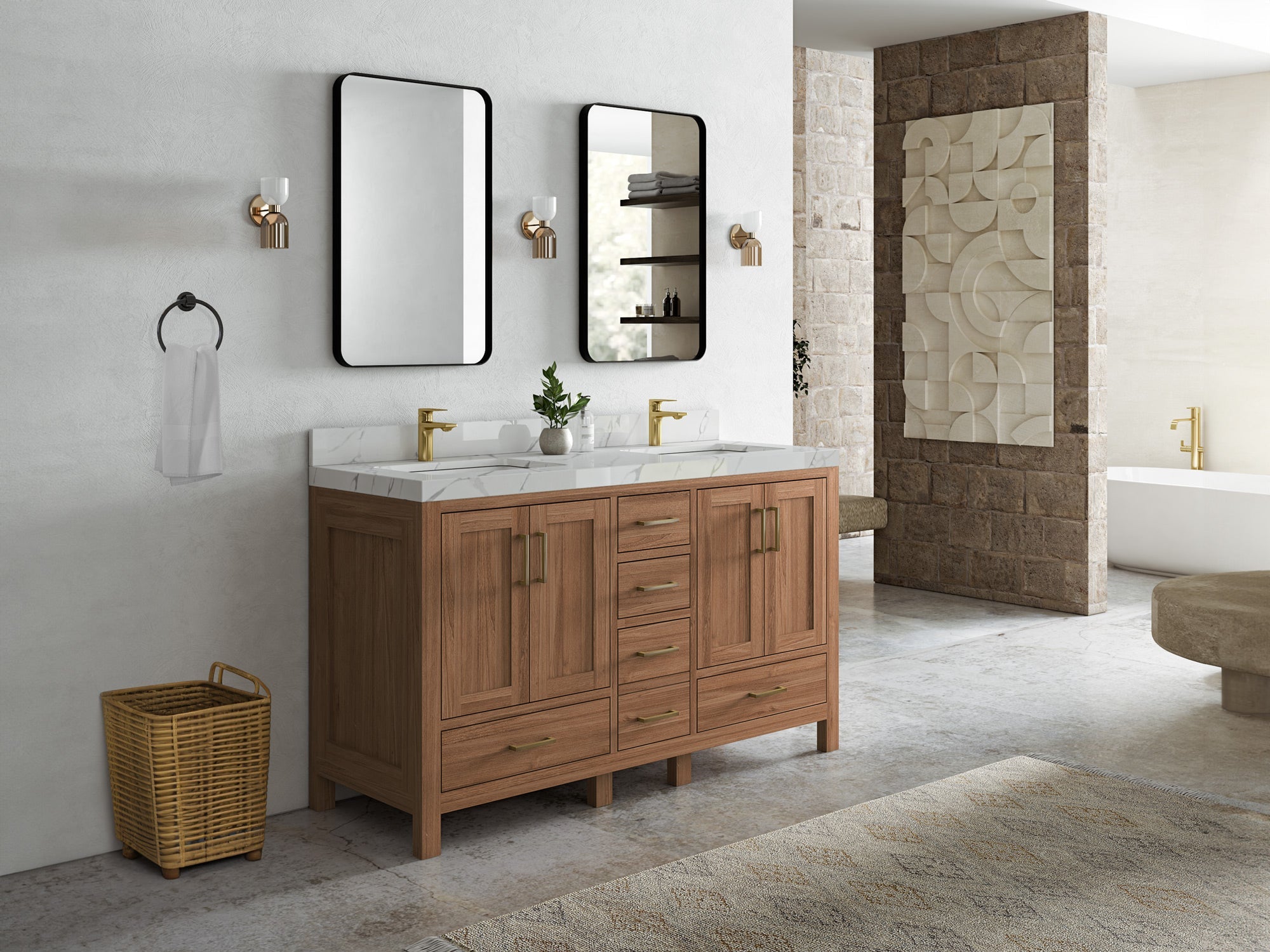
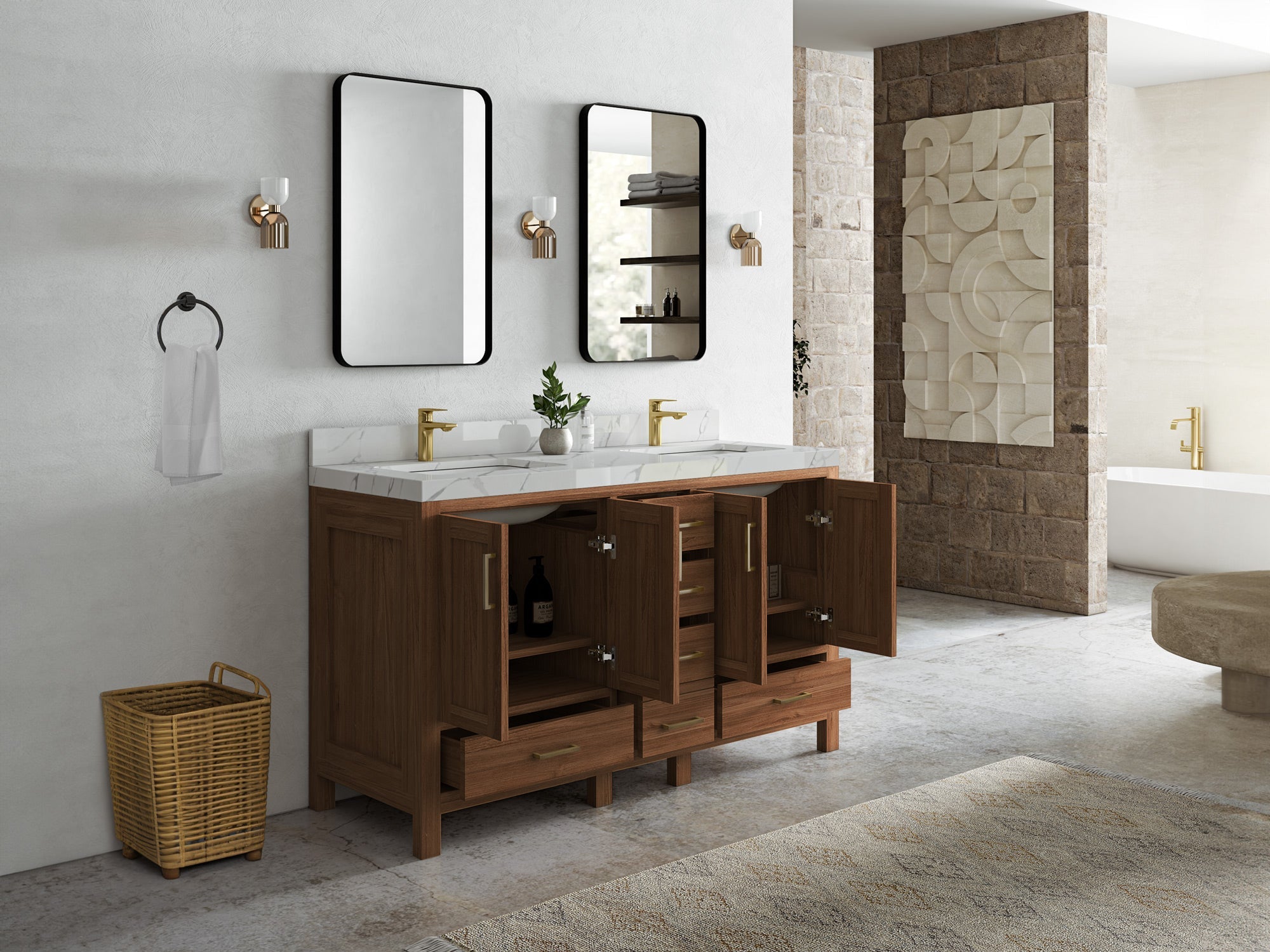
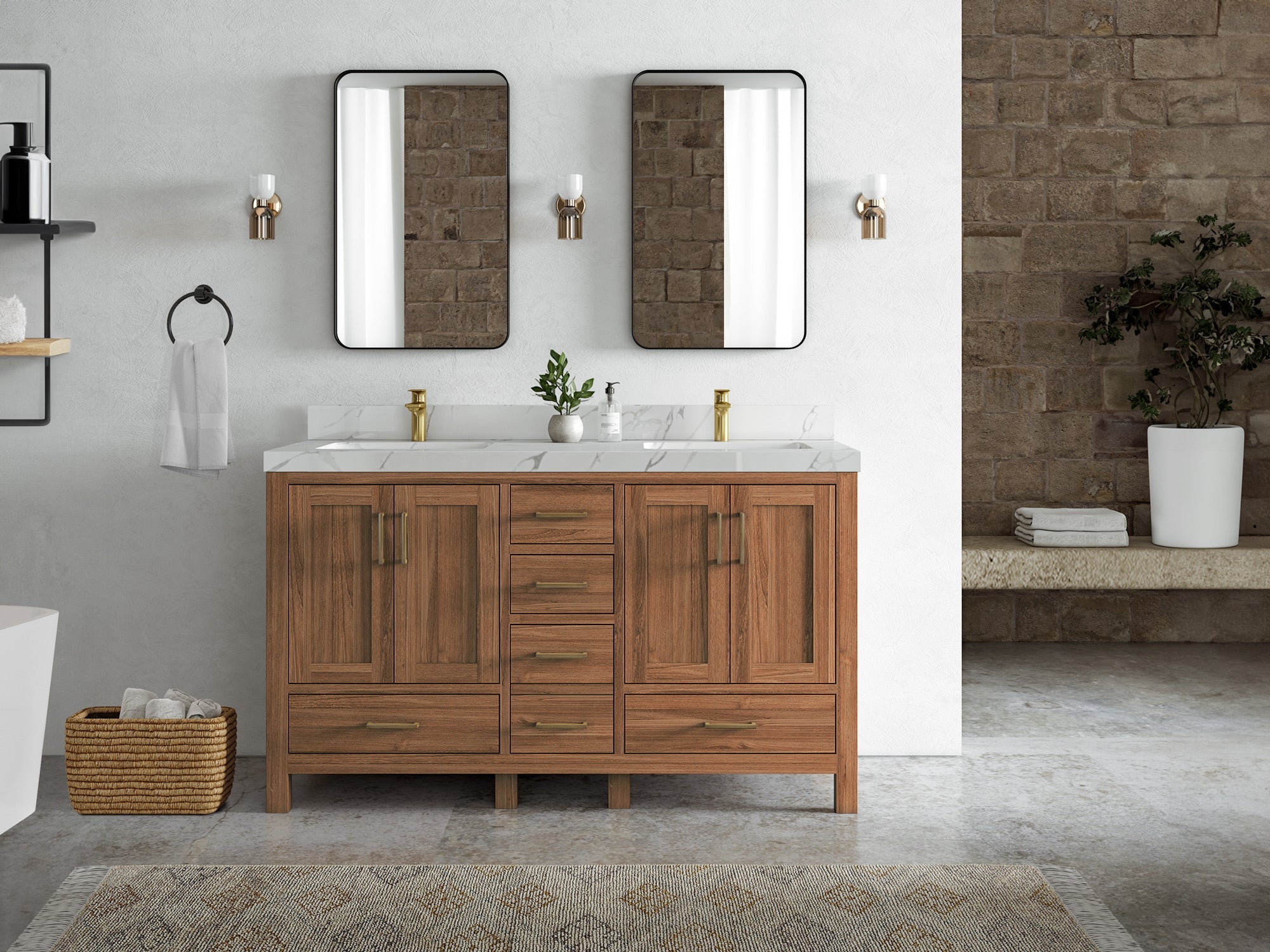
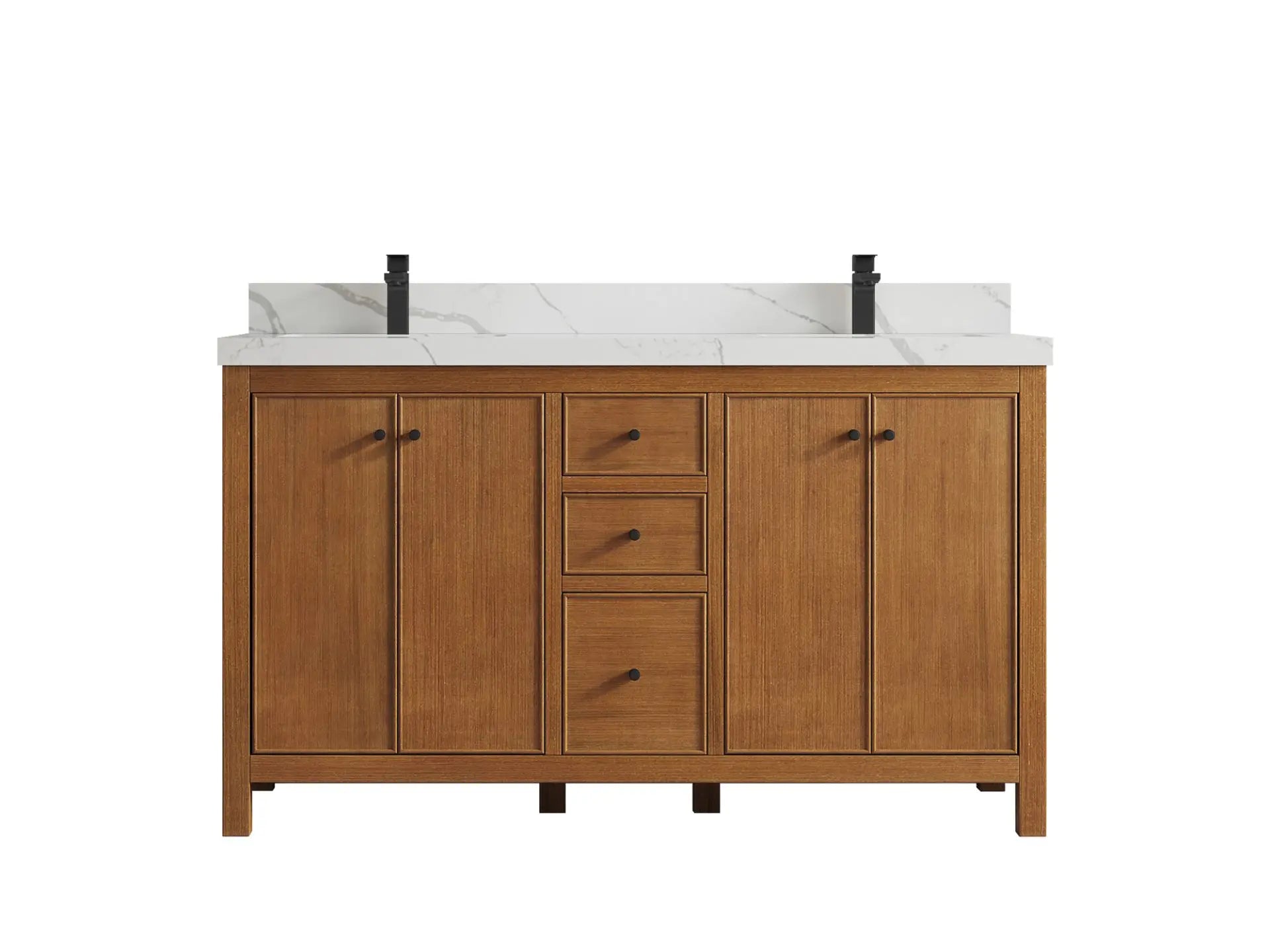
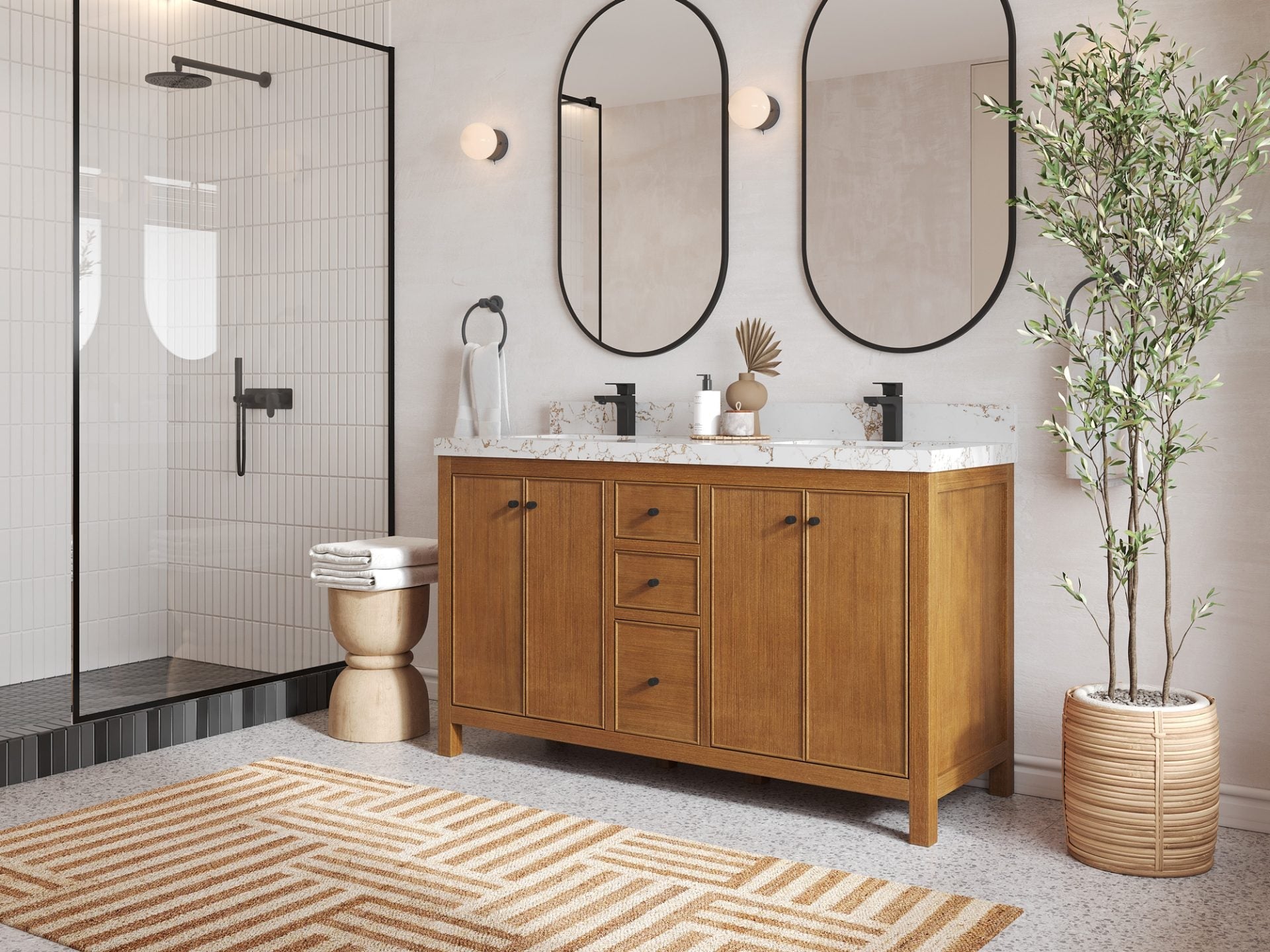
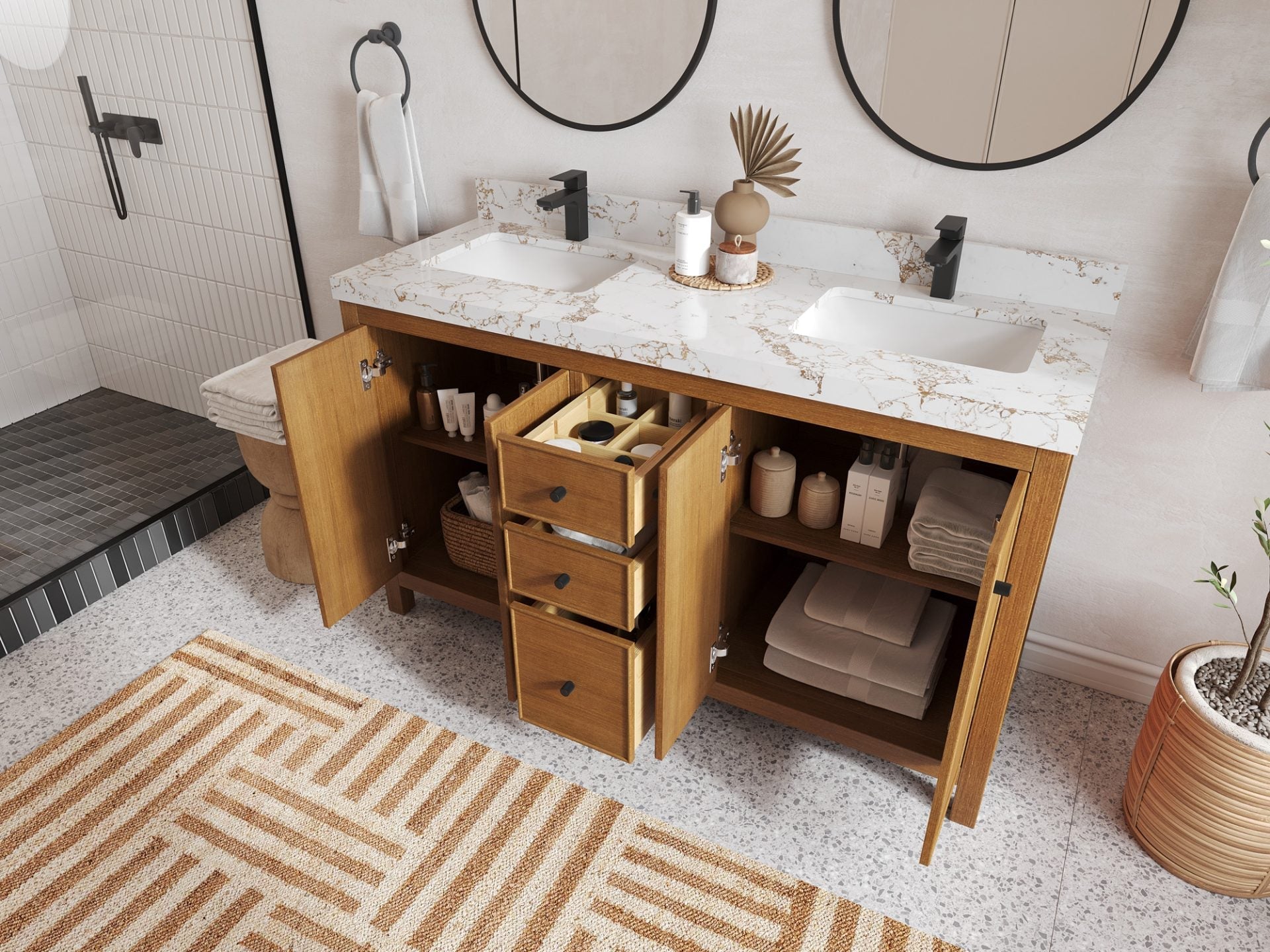
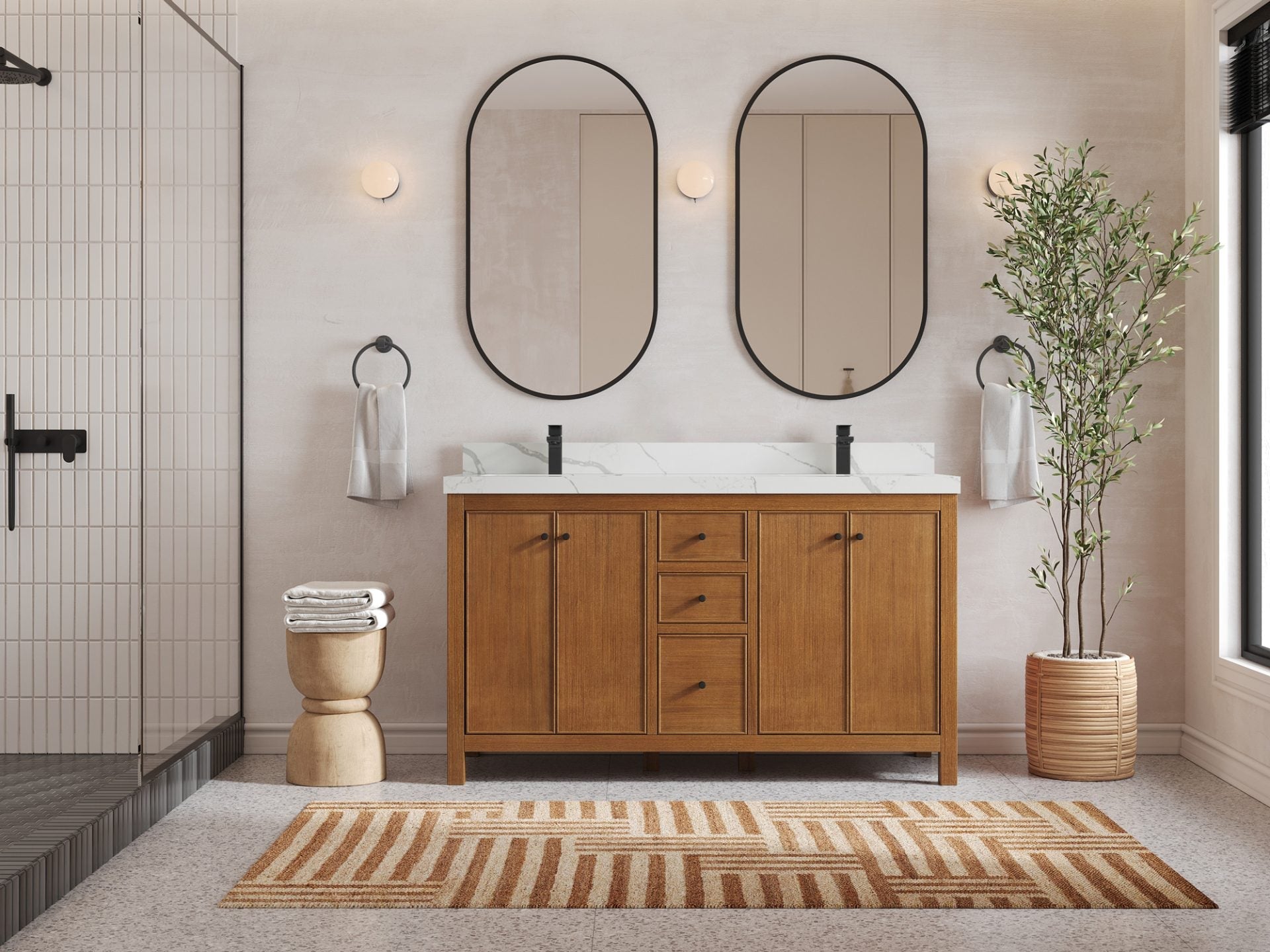
Chicago Teak Veneer 60 in.Double sink · Recessed-panel doors with rounded molding
Sold out
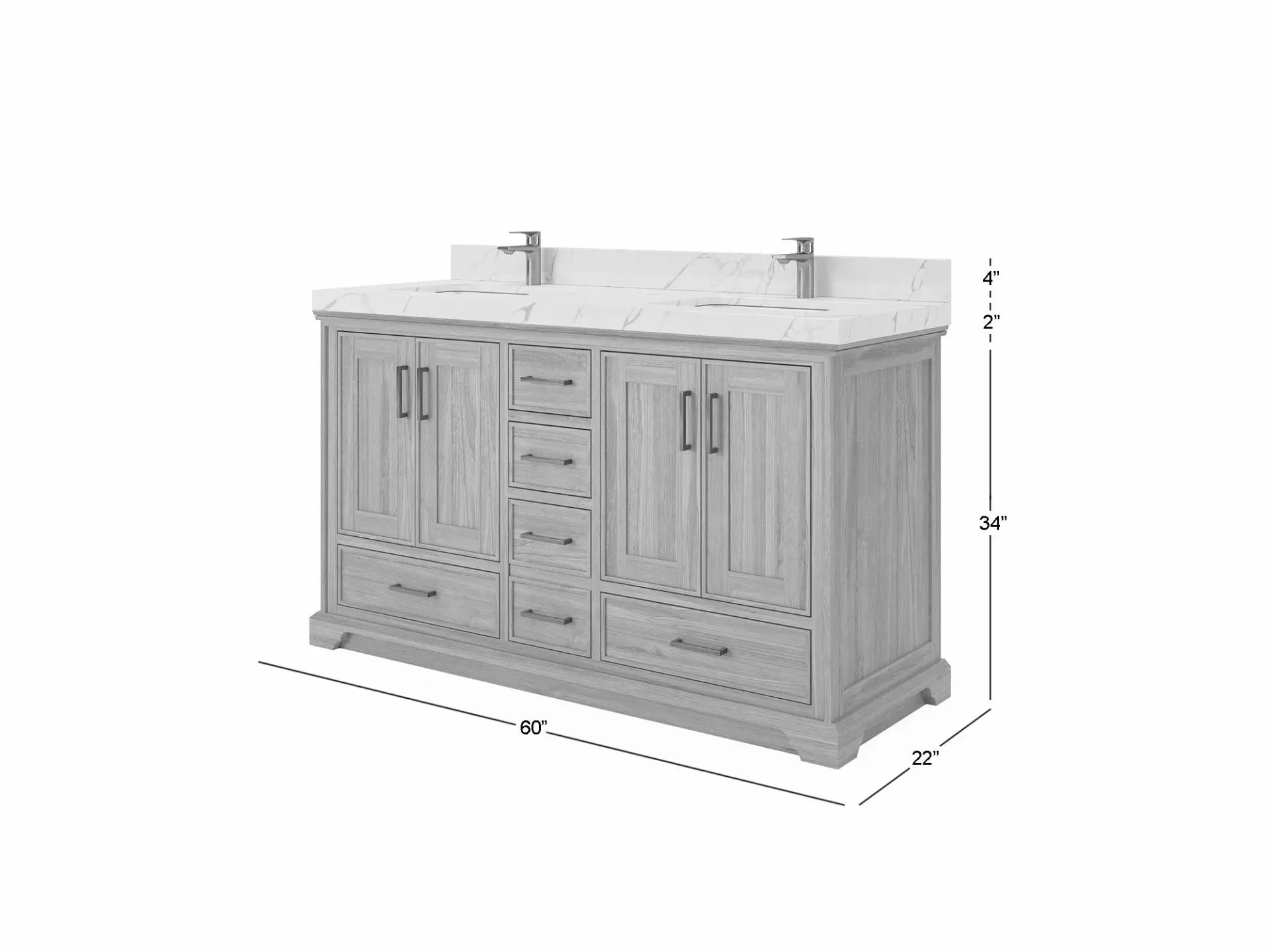
Every vanity in this collection is a 60-inch double-sink model, 22 inches deep, built in teak, with one Manhattan model offered in solid white oak alongside them. Sixty inches is the width at which a double sink starts to make sense: two basins, each with its own working zone, and enough counter left between them to be useful rather than decorative. Teak is a dense, naturally oily hardwood that copes with bathroom humidity better than almost anything else you can put in a wet room, and it is never MDF or particleboard. The Madison, Elizabeth, Charlotte, Chicago, Malibu, Manhattan, Parker, Atlanta, Hampton, Sonoma, Santa Monica, Austin and Alys lines are all represented here.
Planning a 60-inch double vanity
Two sinks change the arithmetic of a bathroom. Sixty inches is the practical floor for a double, and it is worth being honest about what that means: each basin gets roughly half the run, so the counter beside each sink is generous rather than vast, and the strip between them holds a soap dish and not much more. If you want real landing space either side of both basins, 72 inches is the next step up. If you would rather have one basin and a long uninterrupted counter at this same width, the same lines are offered as singles. Plumbing is the other consideration: a double means two drains and two sets of supply lines, so confirm your rough-in before you order.
Floating and freestanding at this width
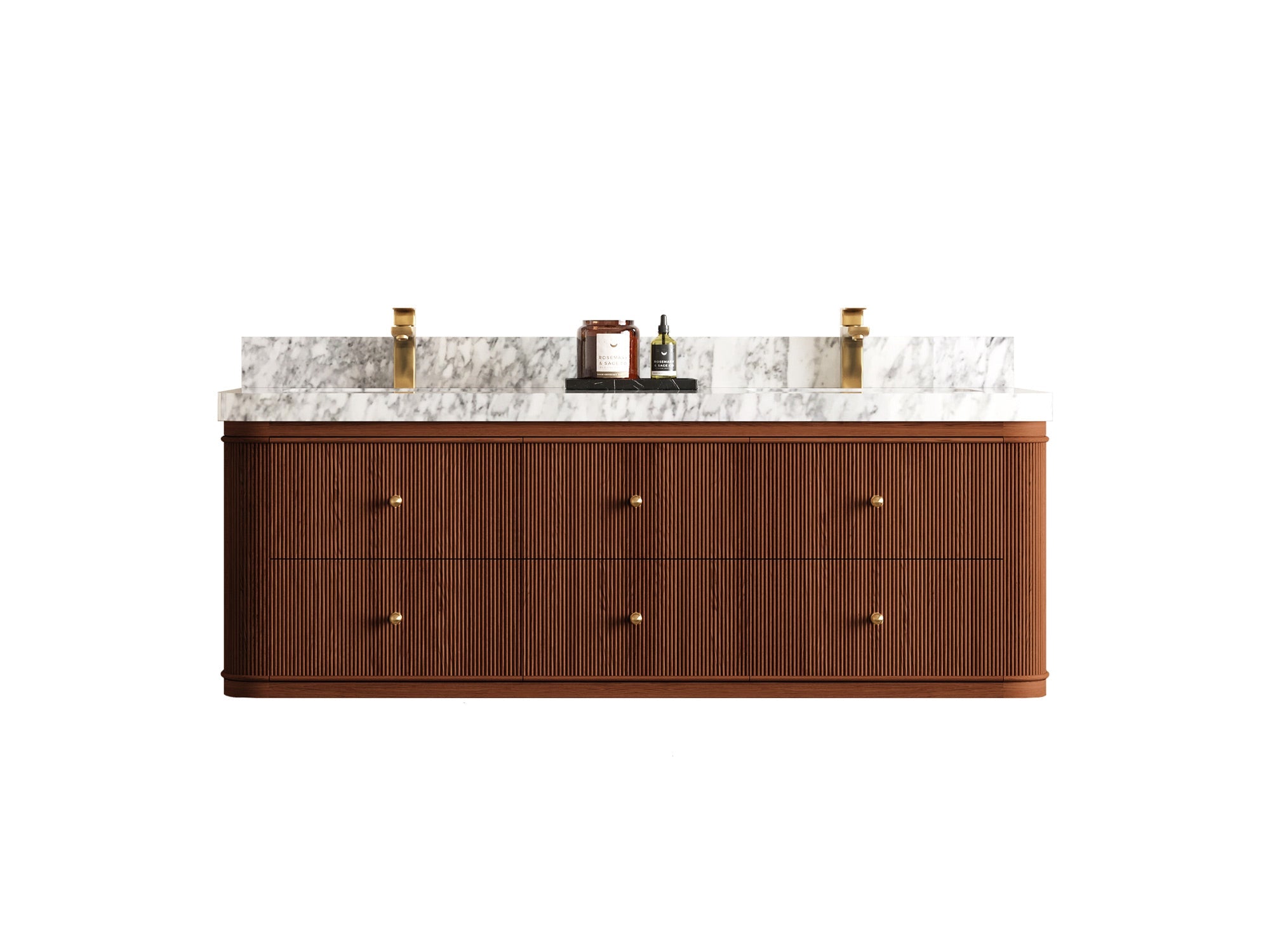
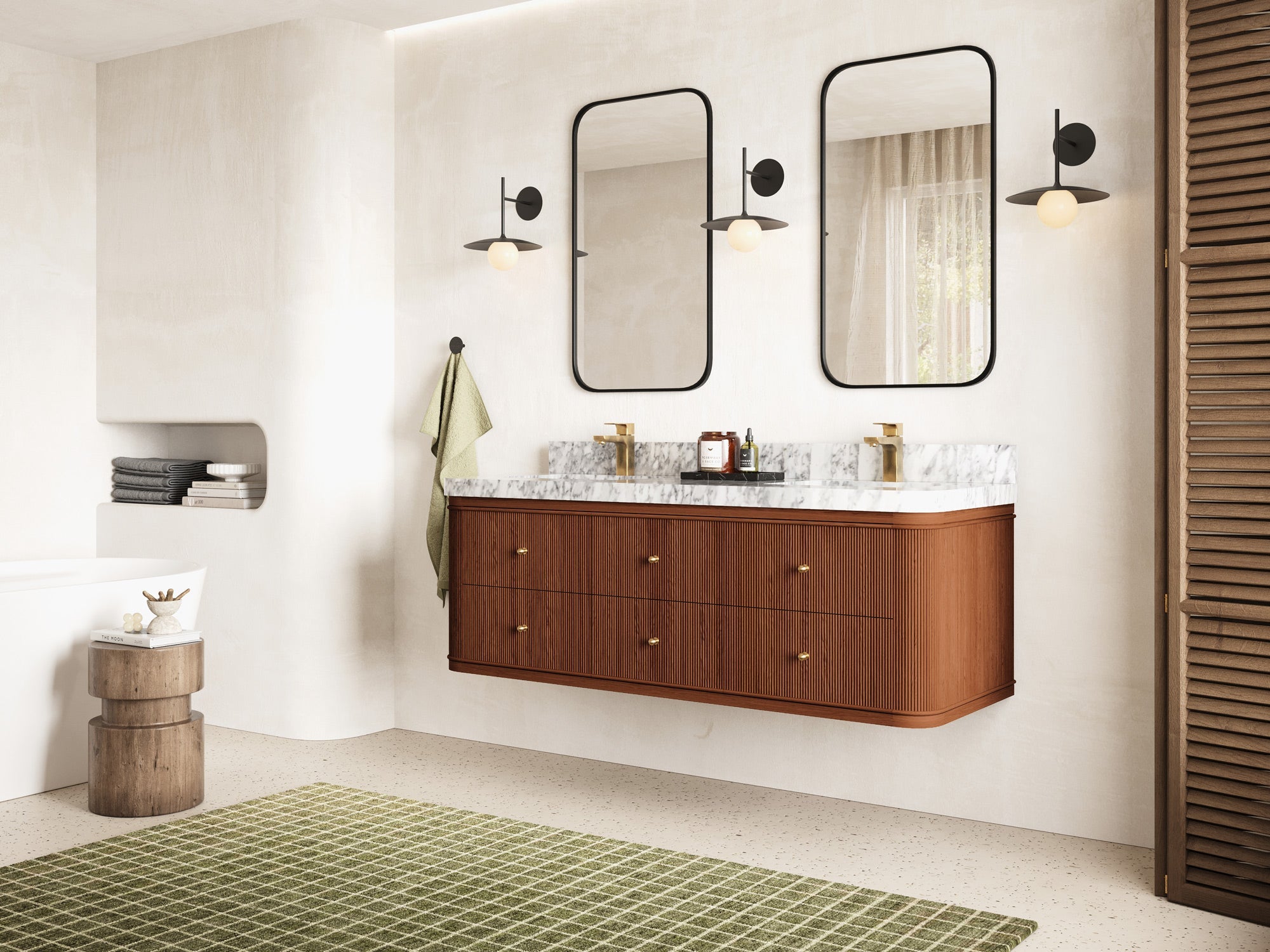
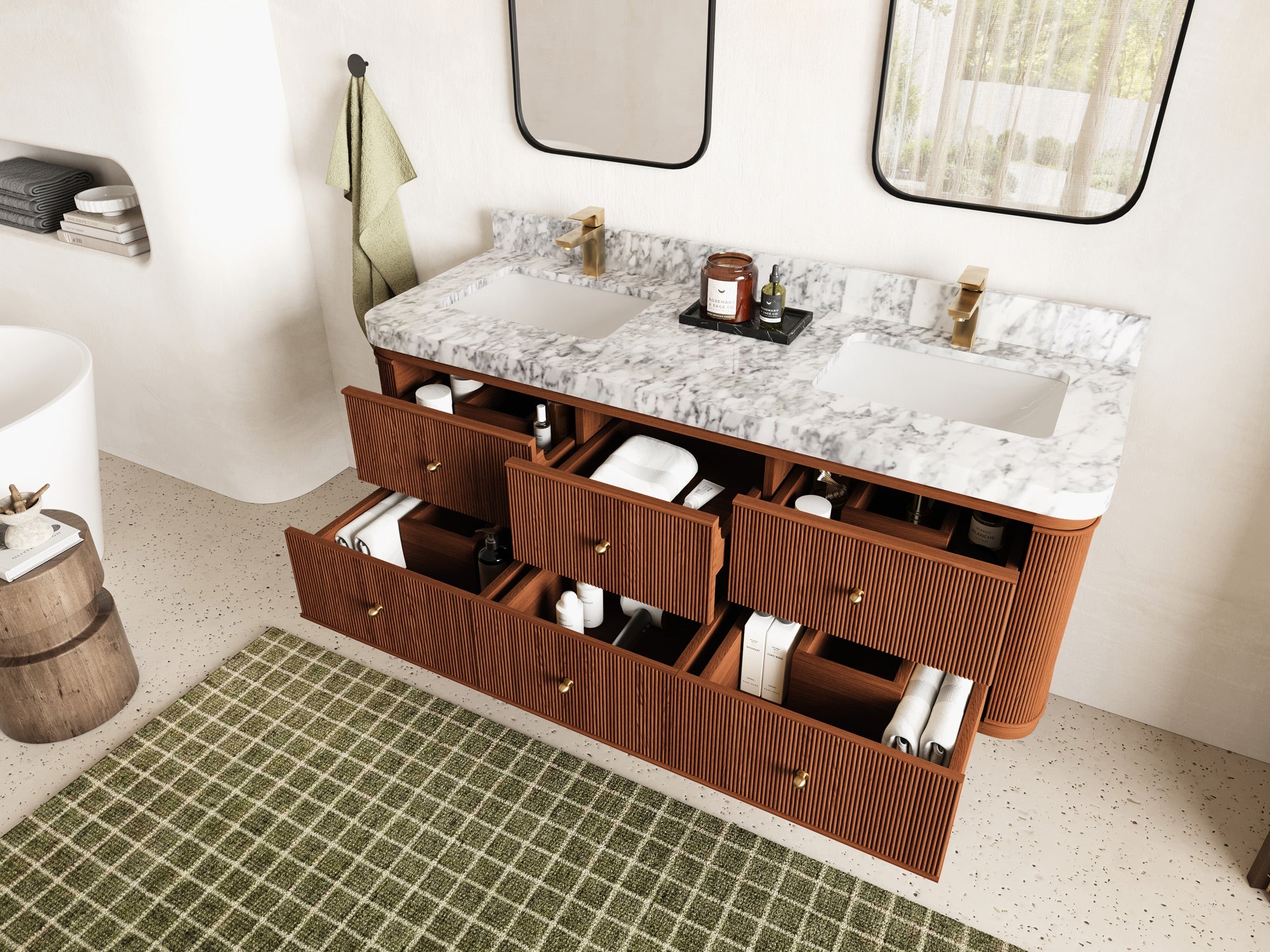
The Madison Floating, Hampton Floating and Sonoma Reeded Floating models mount to the wall, leaving the floor visible underneath. At 60 inches that is a real visual gain, because a wall-hung cabinet of this size would otherwise dominate the room; it also makes the floor easier to clean. Floating models need a wall that can carry the load and plumbing that exits through the wall rather than the floor, which matters more on a double than a single. The freestanding designs, including Charlotte, Malibu, Manhattan, Elizabeth, Parker and Atlanta, rest on the floor and conceal both sets of plumbing behind the base, which makes them the simpler swap when you are replacing an existing double vanity. For texture rather than flat fronts, the Sonoma Reeded and the fluted Atlanta carry vertical detailing.
Teak in a busy bathroom
A double vanity is usually the hardest-working piece of furniture in the house, which is exactly the case for teak. Its natural oils resist moisture and movement where softer woods swell, the same property that put it on boat decks for more than a century. It is a genuine hardwood, responsibly and FSC-certified sourced, never MDF or particleboard, so the cabinet can be cleaned, sanded and refreshed over years rather than chipping at the edges the way laminate does. Care is simple: wipe spills instead of letting water stand at the seams or around the faucet bases, and use mild soap rather than abrasive or solvent cleaners. One note on materials: the Chicago Veneer model is finished in teak veneer rather than a solid teak front, so check that product page if solid teak specifically matters to you.
Countertops and installation
Depending on the design, tops are available in quartz or natural Carrara marble, finished with a mitered or cove edge. Quartz is the lower-maintenance choice and handles toothpaste, cosmetics and daily traffic without fuss, which is worth weighing on a shared vanity; marble trades a little care for veining no engineered stone quite reproduces. The countertop is stone and ships in its own protective box rather than attached to the cabinet, with both undermount basins set at installation. Plan for an installer or plumber on delivery day.
Compare widths in our 60-inch vanities and 72-inch vanities, or see the wider 60-inch teak collection covering both single and double layouts. Browse the full teak range, every double-sink vanity, and our solid wood vanities. Countertop choices are explained in the vanity countertops guide.
60-inch double sink teak vanity FAQ
Is 60 inches wide enough for two sinks?
Yes, and it is the practical starting width for a double. Each basin gets its own working zone with a usable strip of counter between them. If you want generous landing space on both sides of both sinks, look at a 72-inch model instead.
Are these vanities solid teak or a veneer?
The teak lines here are built in solid teak, a true hardwood chosen for how well it handles bathroom humidity, never MDF or particleboard. The exception is the Chicago Veneer model, which is finished in teak veneer, so check that product page if the distinction matters to you.
What plumbing does a double vanity need?
Two basins mean two drains and two sets of supply lines, so confirm your existing rough-in before ordering. Freestanding models conceal the plumbing behind the base, while floating models need the supply and waste to exit through the wall.
What countertops are available, and are the sinks pre-fitted?
Depending on the design, tops come in quartz or natural Carrara marble with a mitered or cove edge. The countertop is stone and ships in its own protective box rather than pre-fitted to the cabinet; both undermount basins are set during installation.
How deep are these vanities?
All of them are 22 inches deep, a standard depth that clears most door swings and leaves comfortable walking room in front of the vanity. Measure your wall run and door swing before ordering.
Questions & answers