


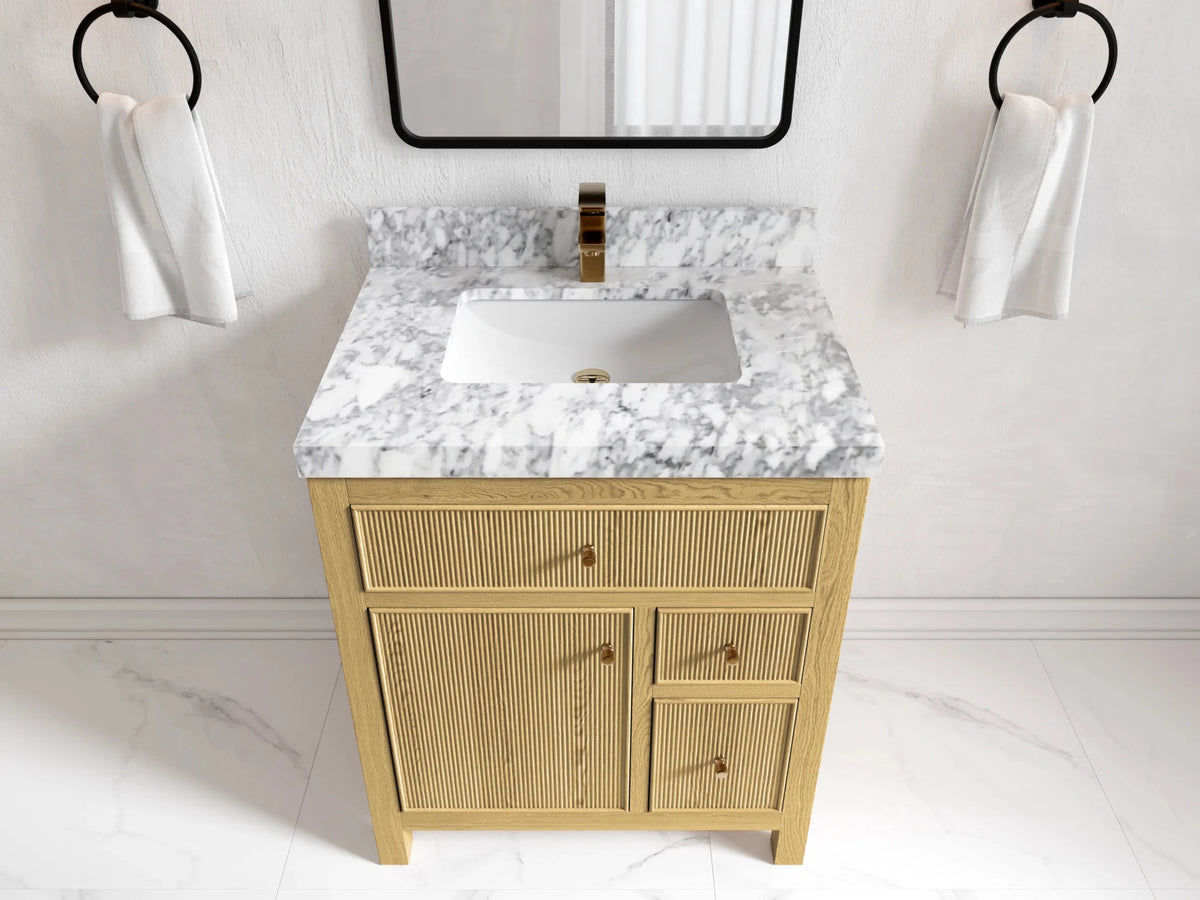
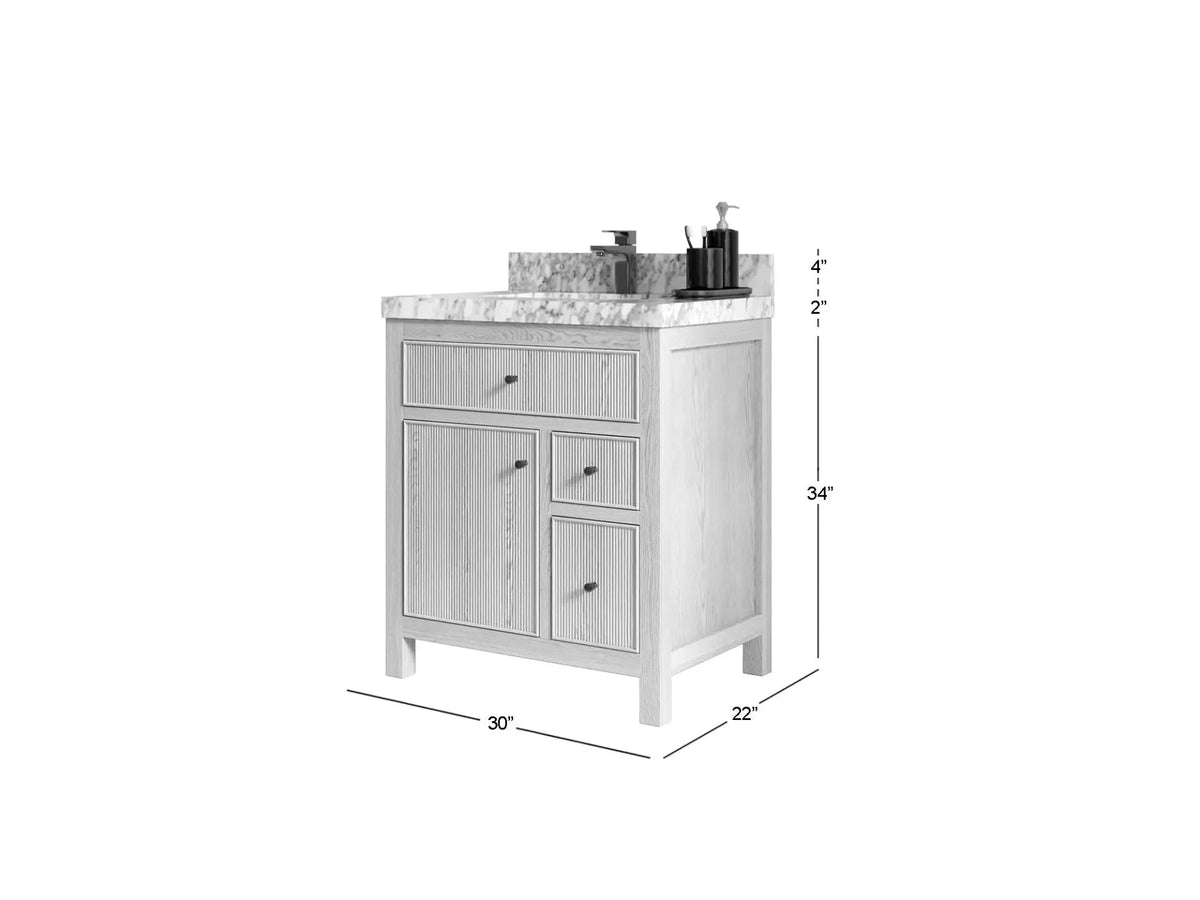
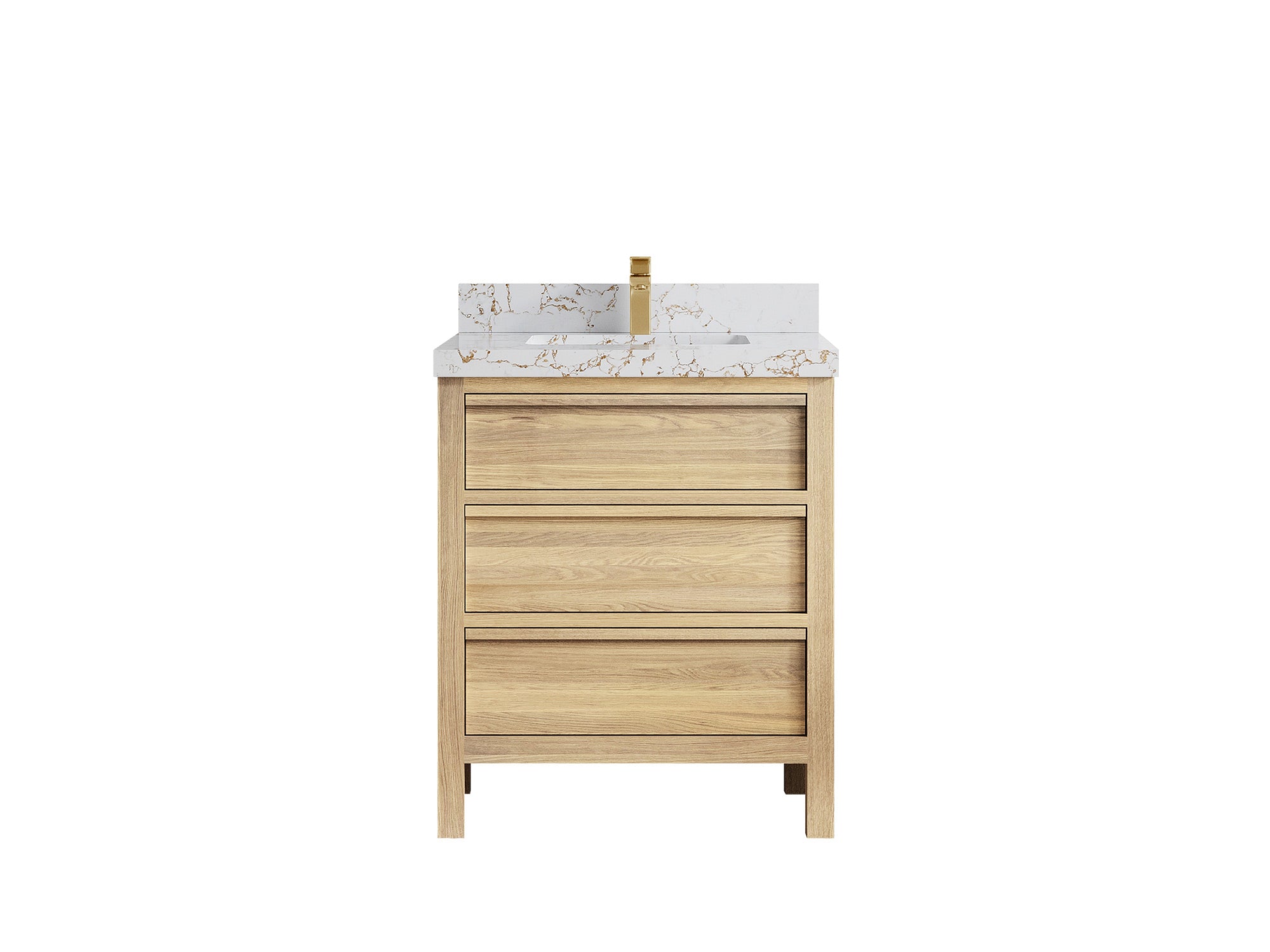
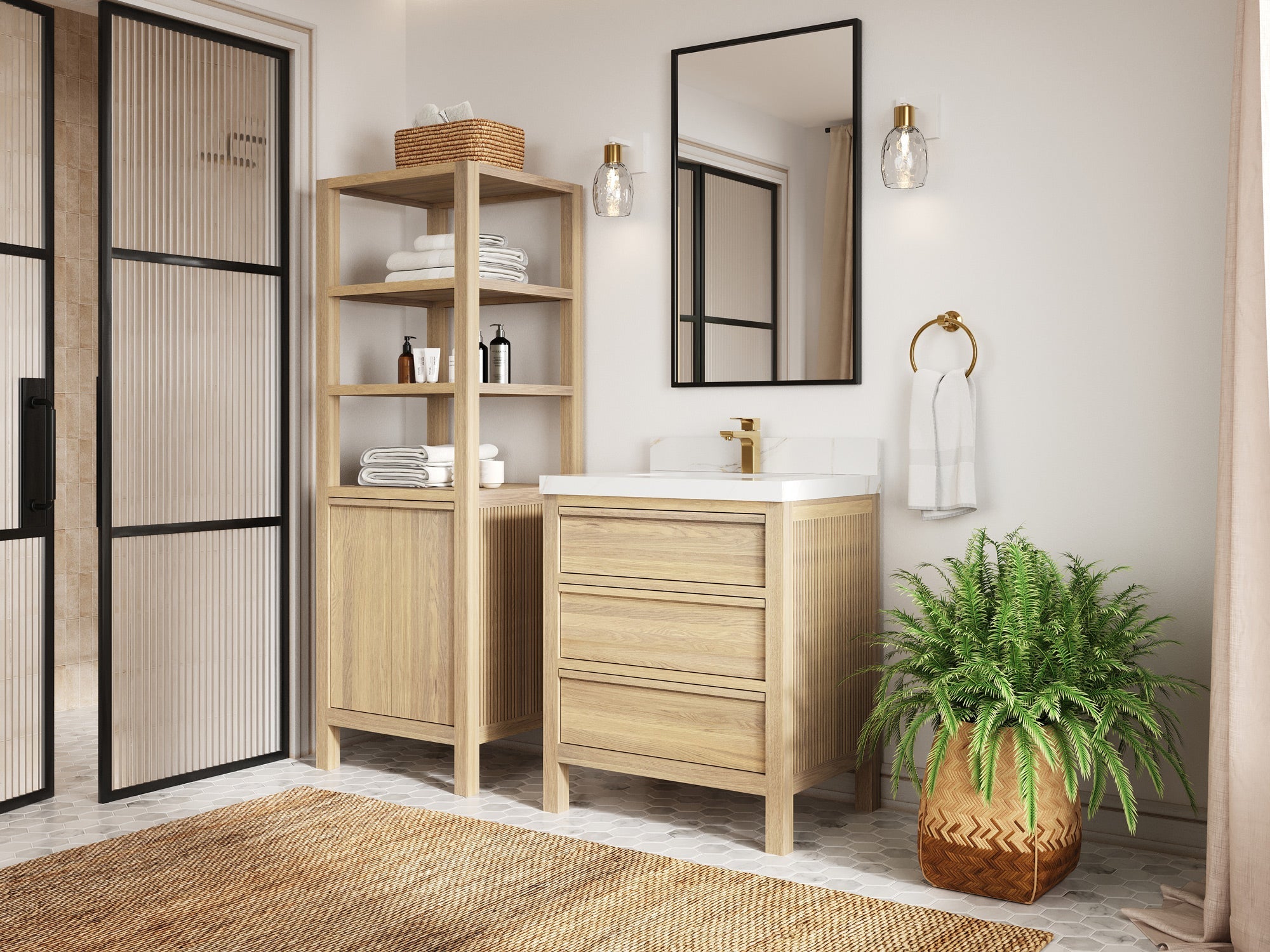
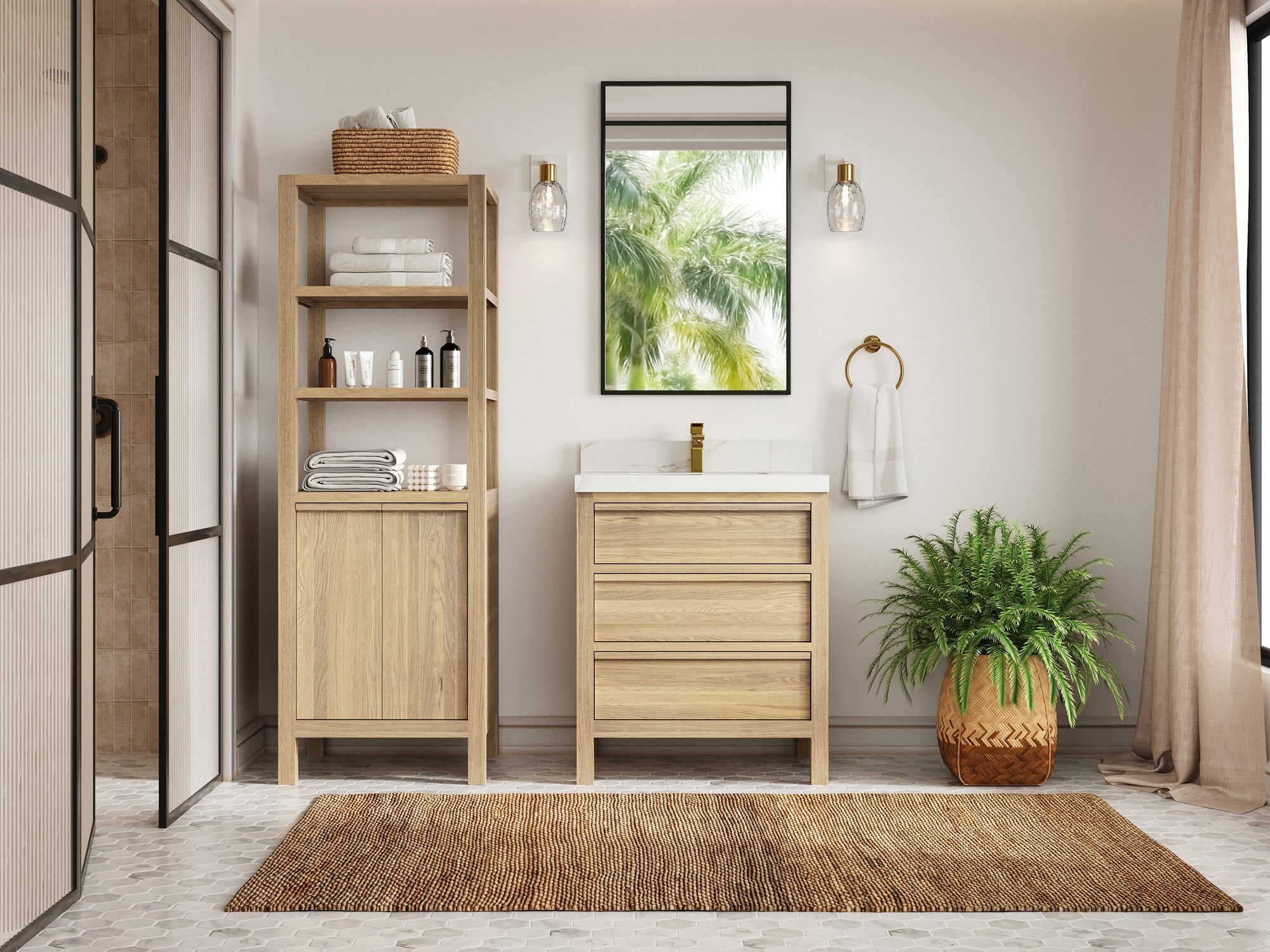
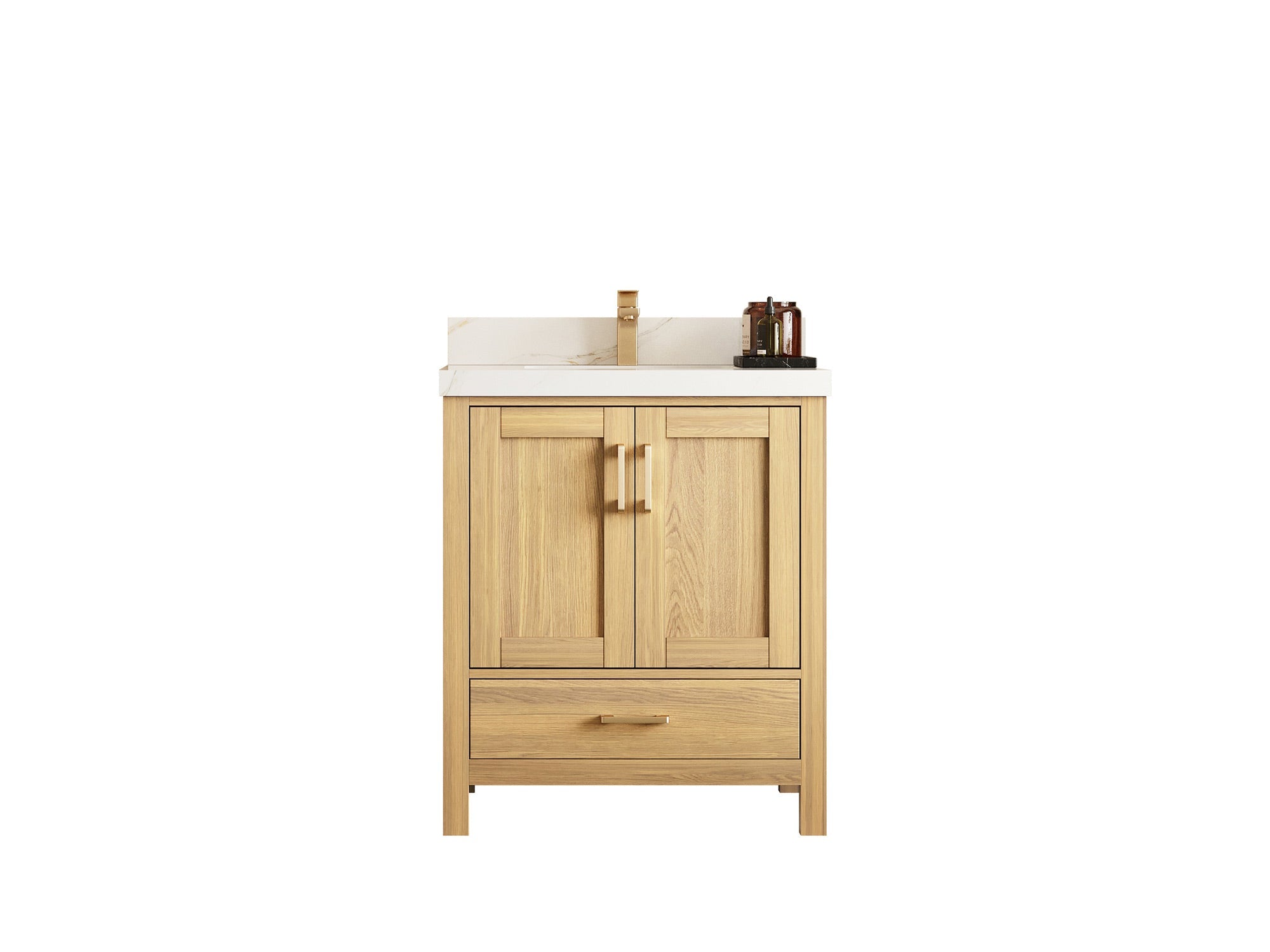
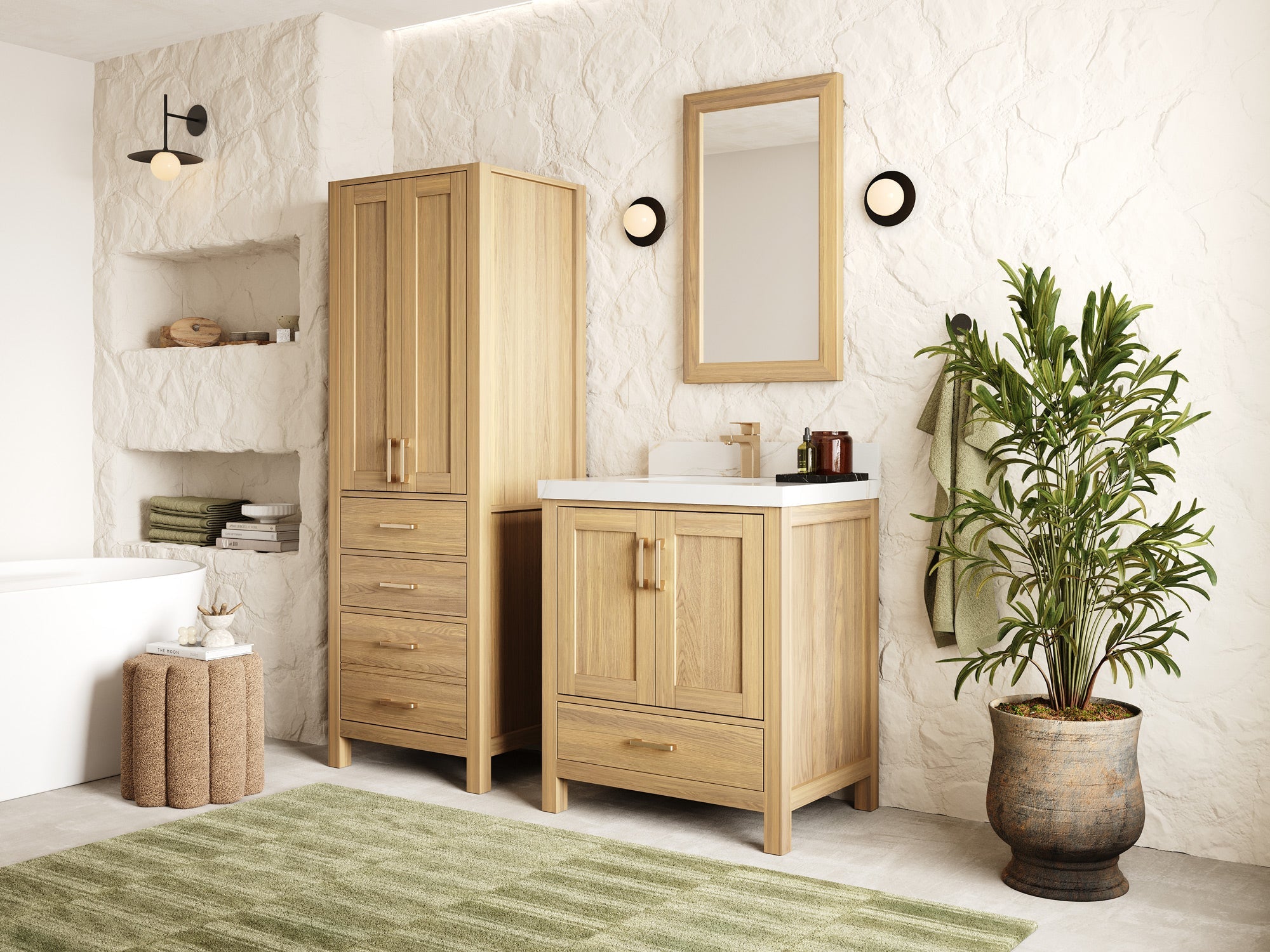
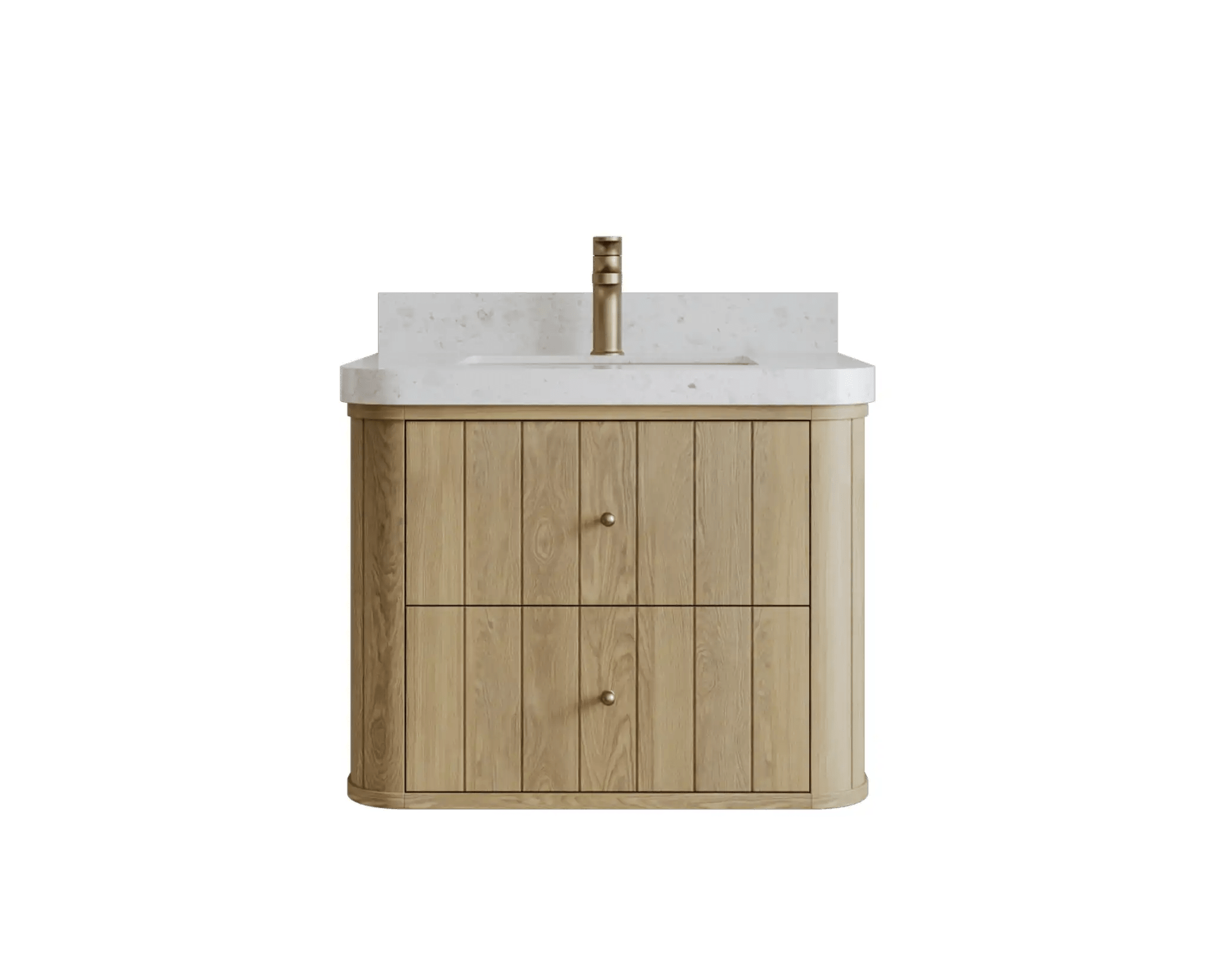
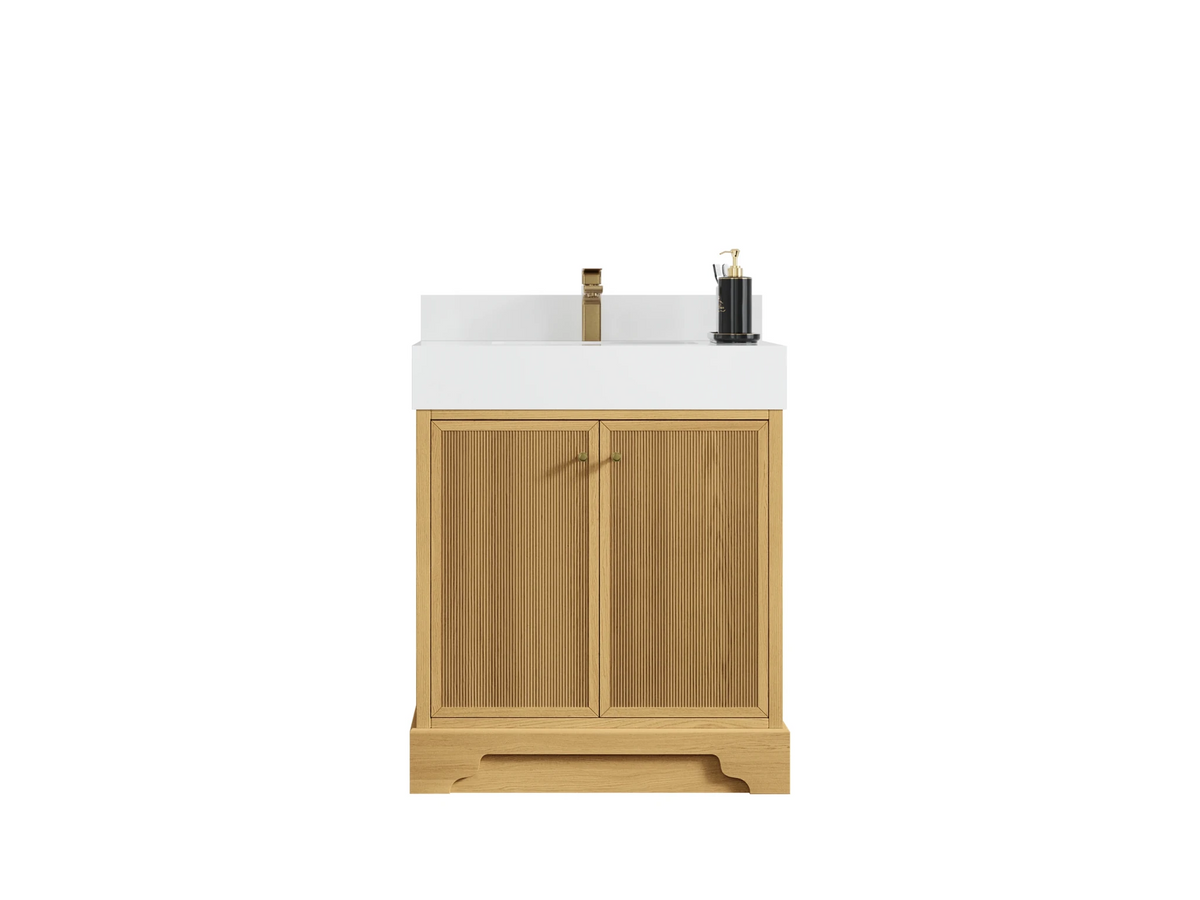
A 30-inch white oak bathroom vanity adds natural grain without visually weighing down a smaller room. Willow’s exact-size assortment includes nominal 30 in. W × 22 in. D single-sink families in freestanding and floating forms, with white-oak, Nordic and warmer honey-toned directions depending on current membership. The material works across Scandinavian, modern, coastal and transitional interiors because the cabinet profile and surrounding finishes determine the final style. Compare grain, storage layout, mounting type and countertop together. Before ordering, verify the exact material statement, finish name, dimensional drawing, plumbing space, stock status and included components on the selected product and variant.


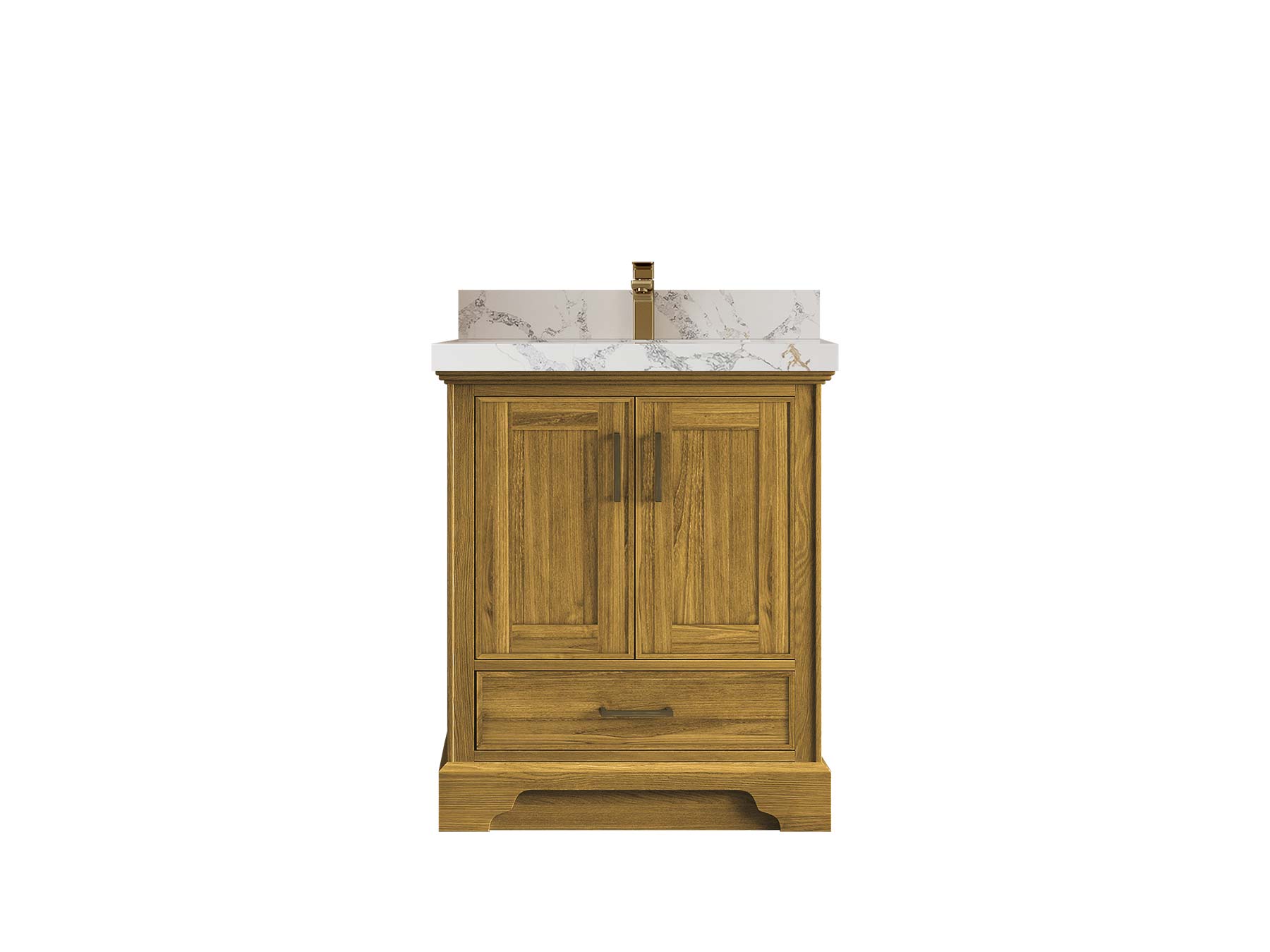

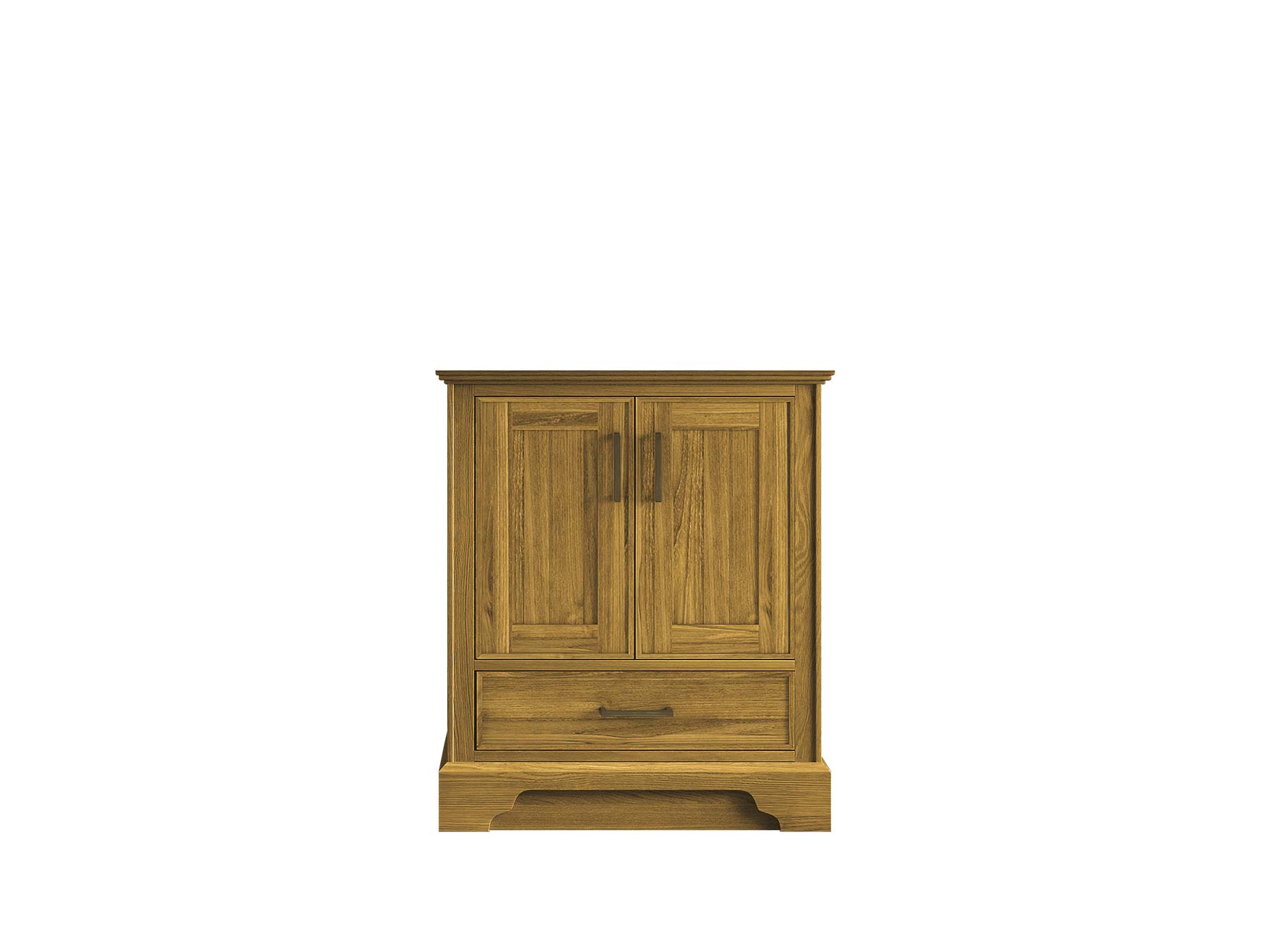
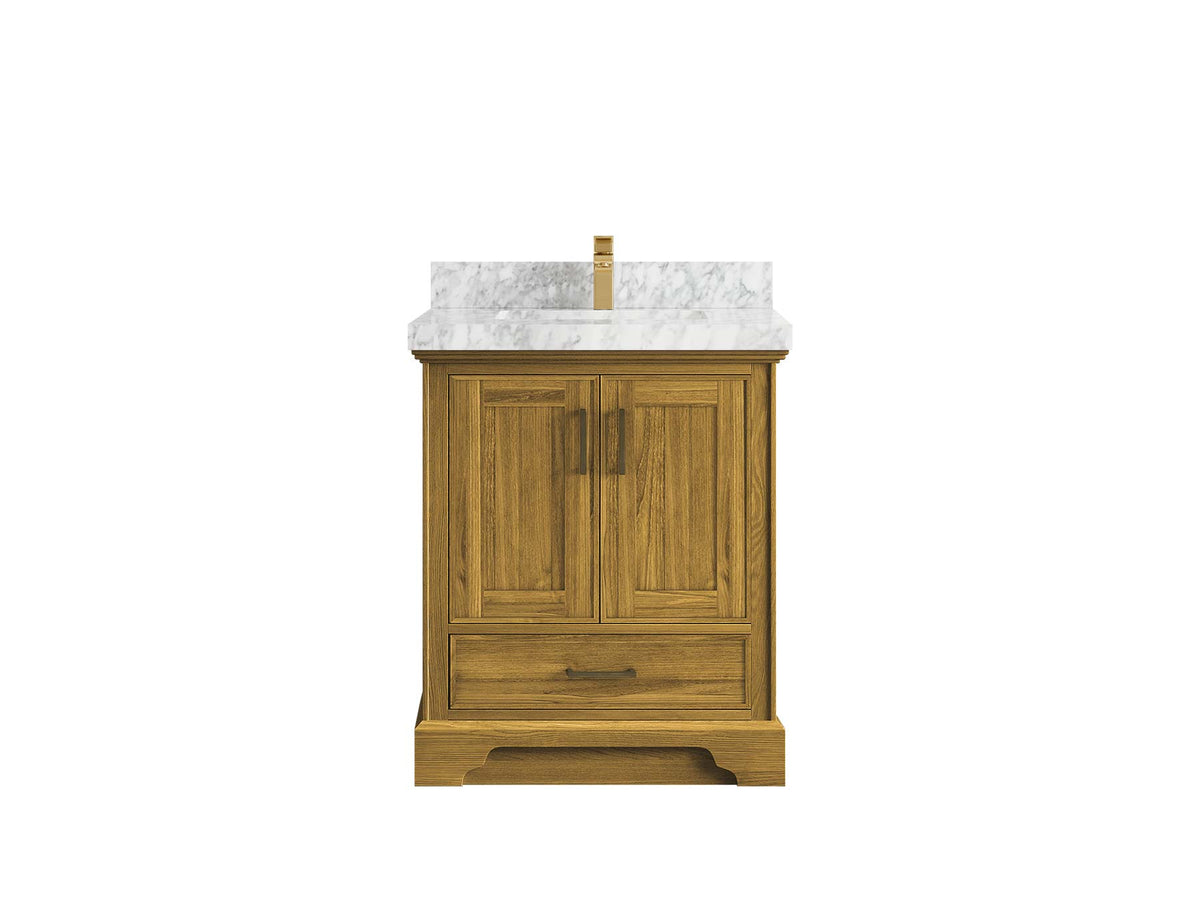
Charlotte White Oak 30 in.Single sink
In stock · Ships in 7–10 business days
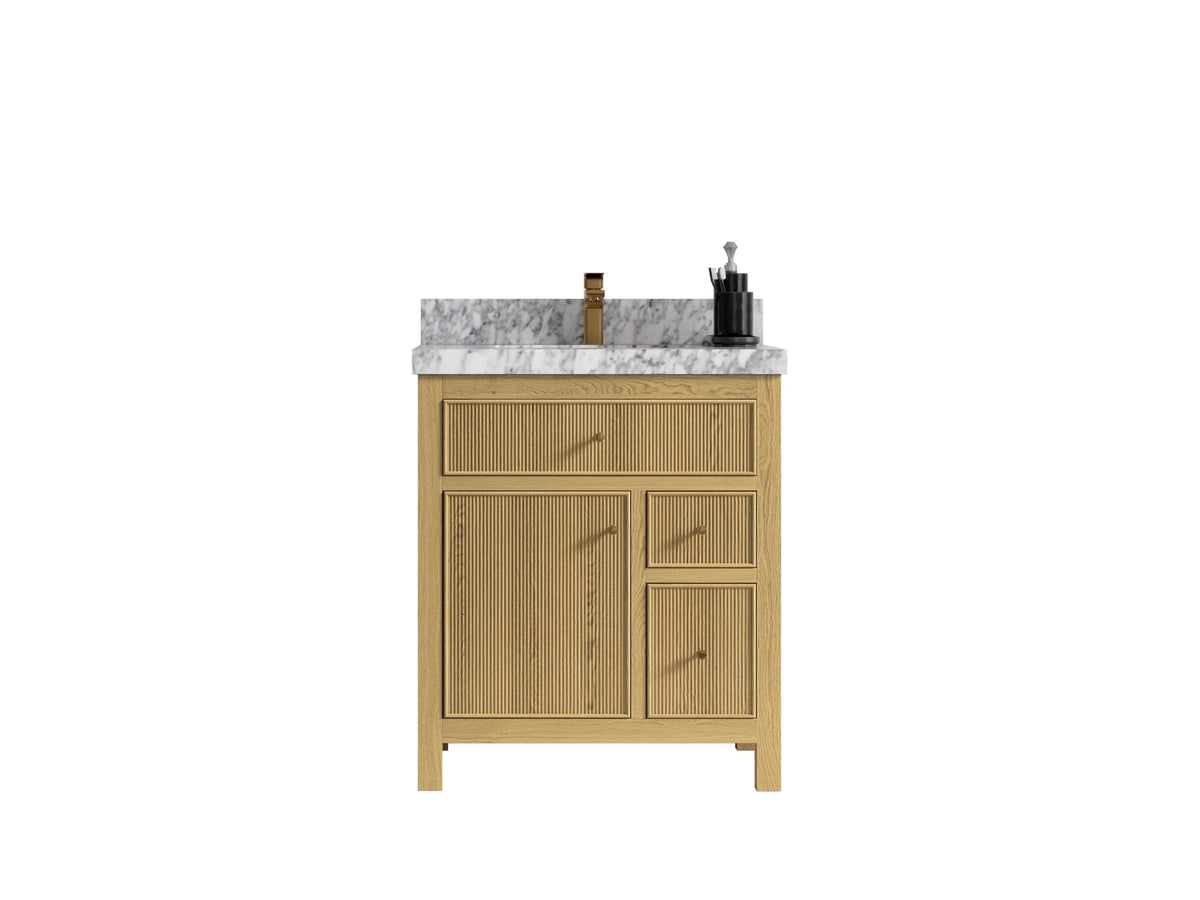





CURATED FOR THIS COLLECTION
Designed Around 30″
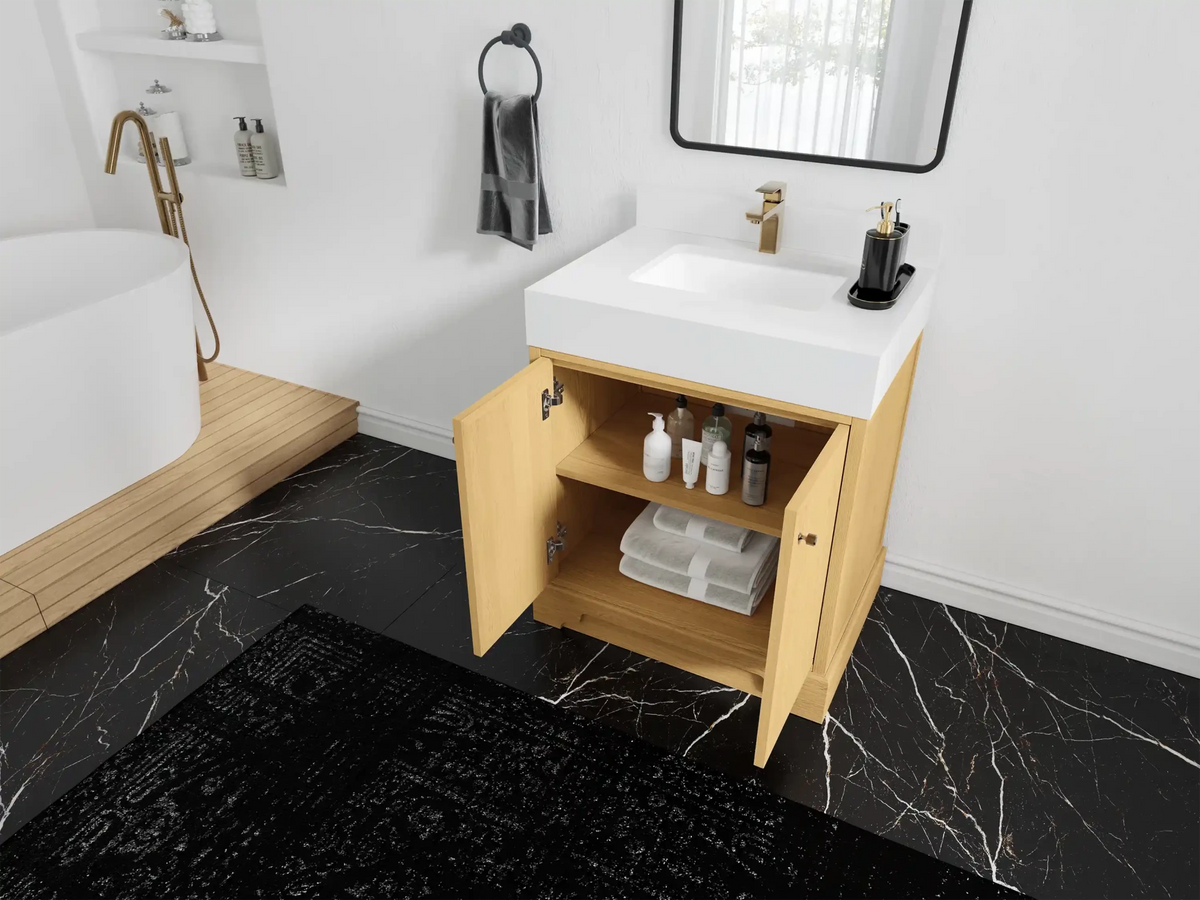
A properly scaled 30″ vanity brings useful storage, genuine stone and visual balance to the room.

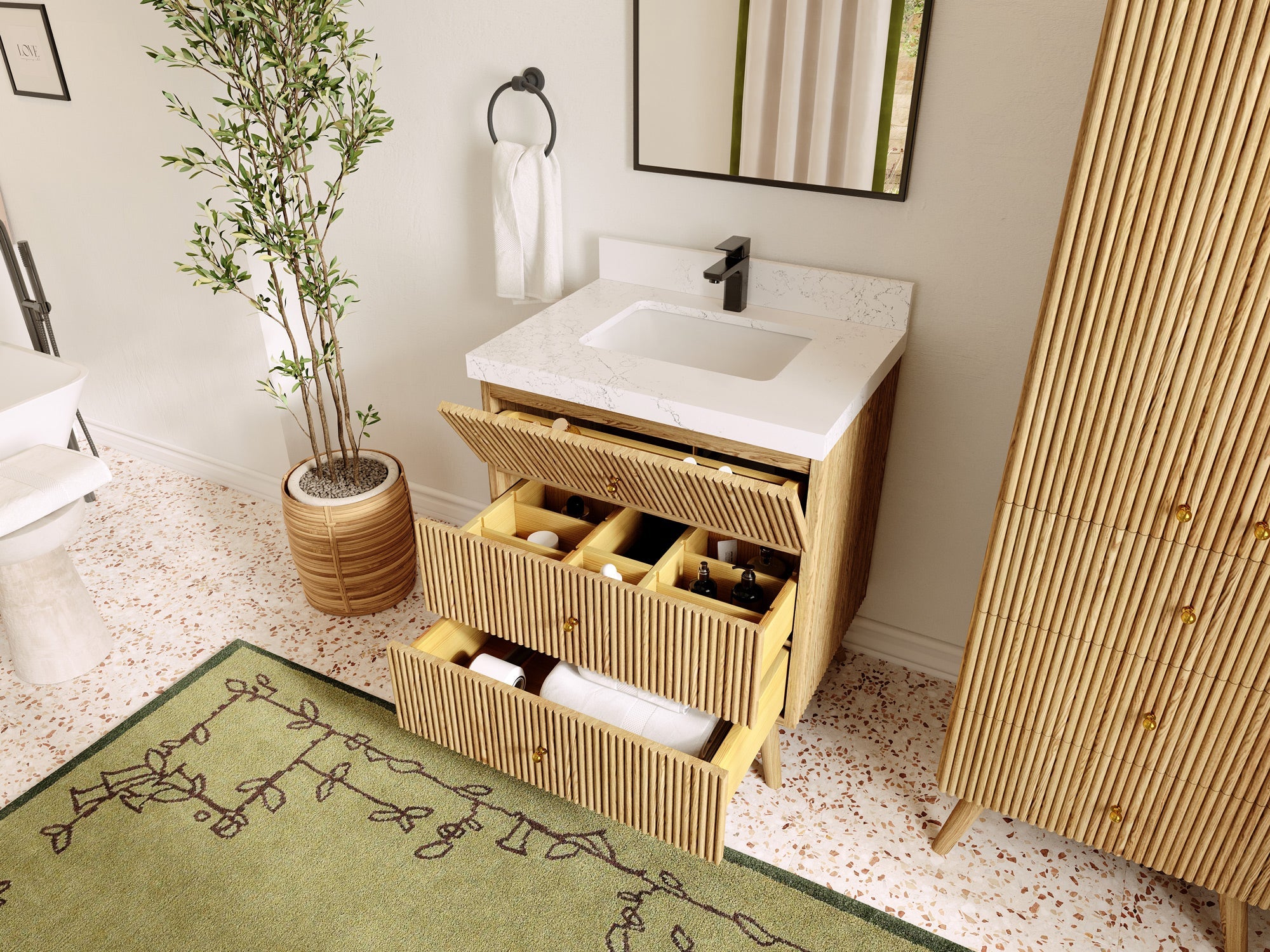
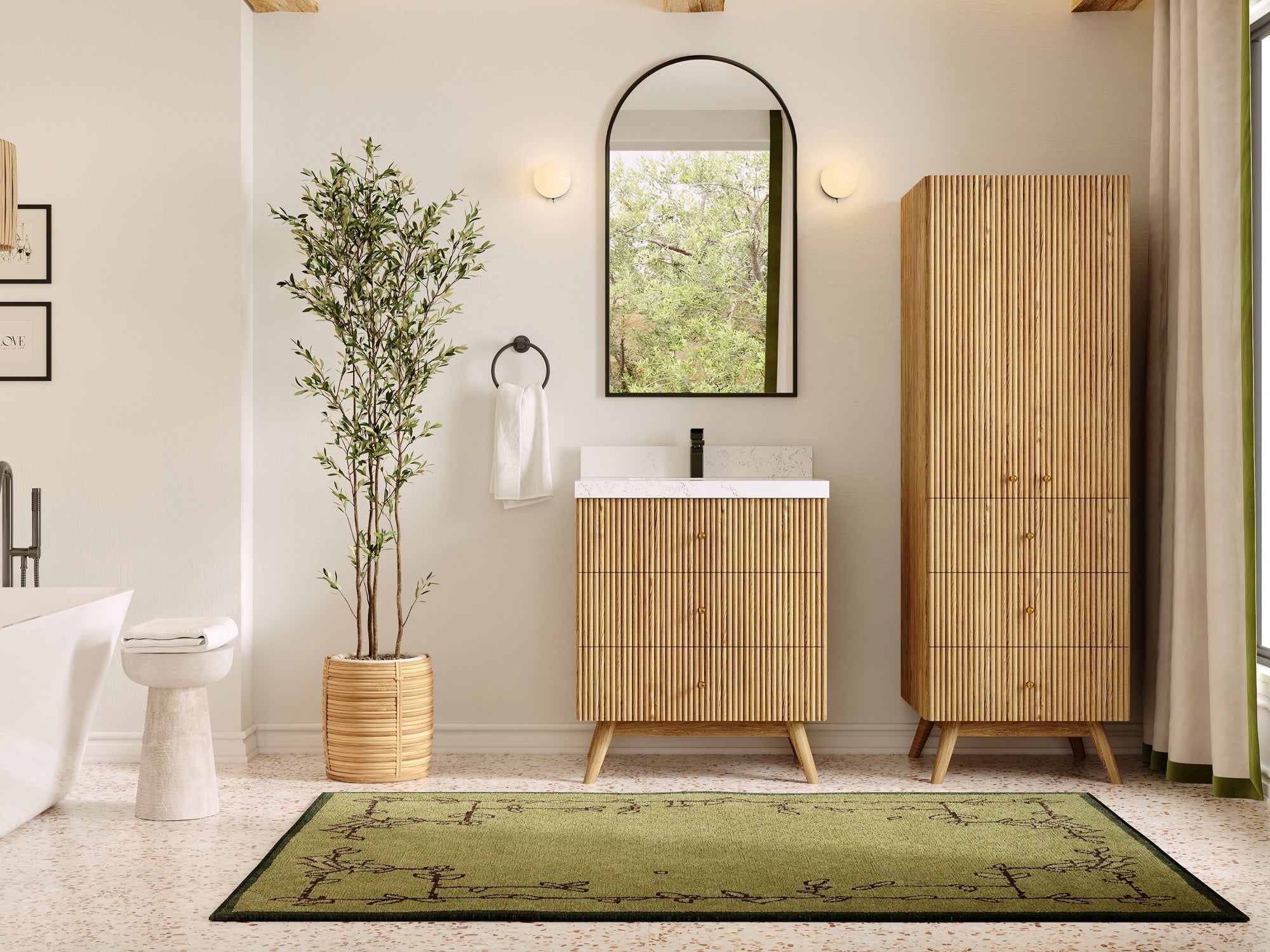

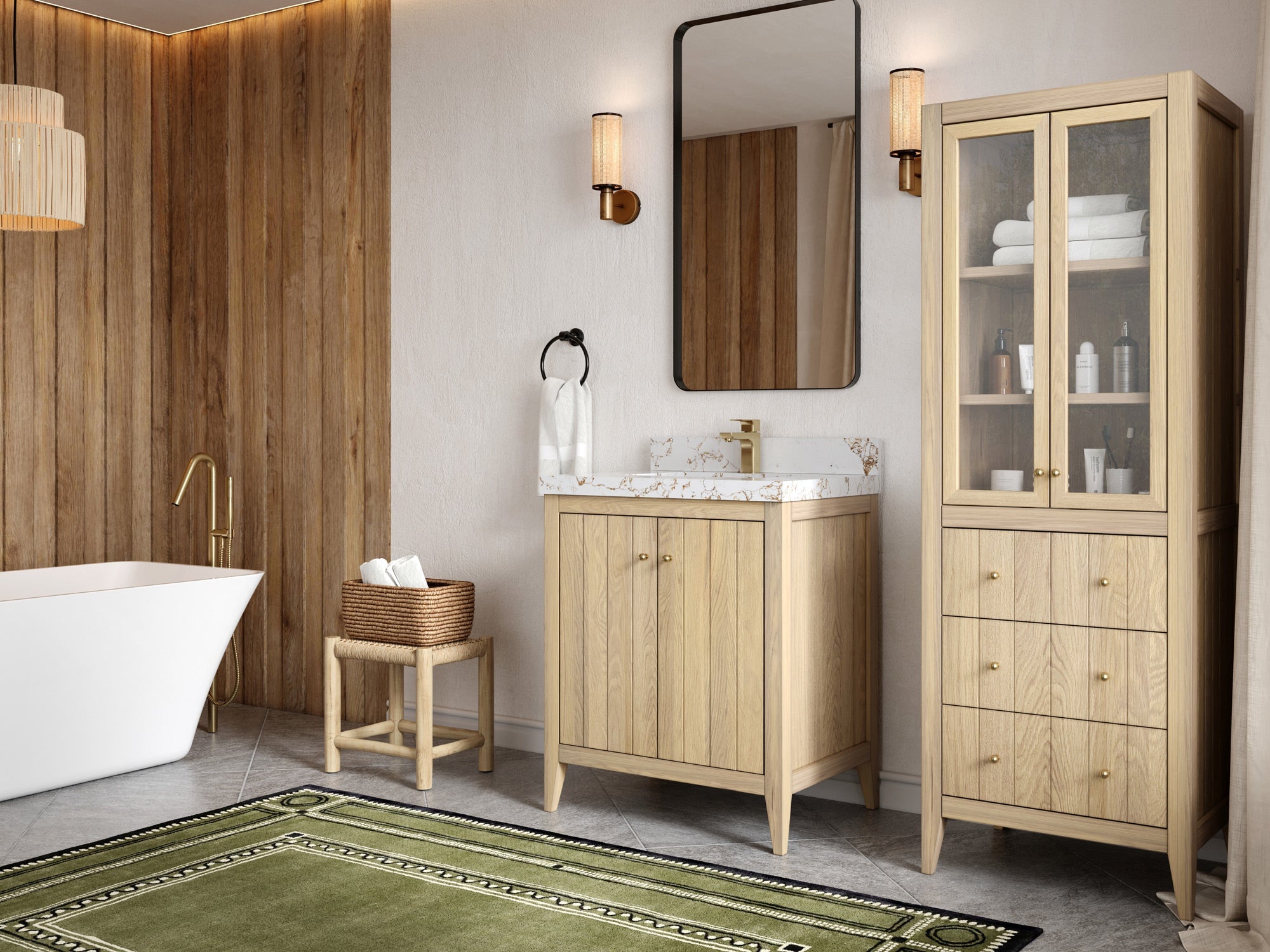
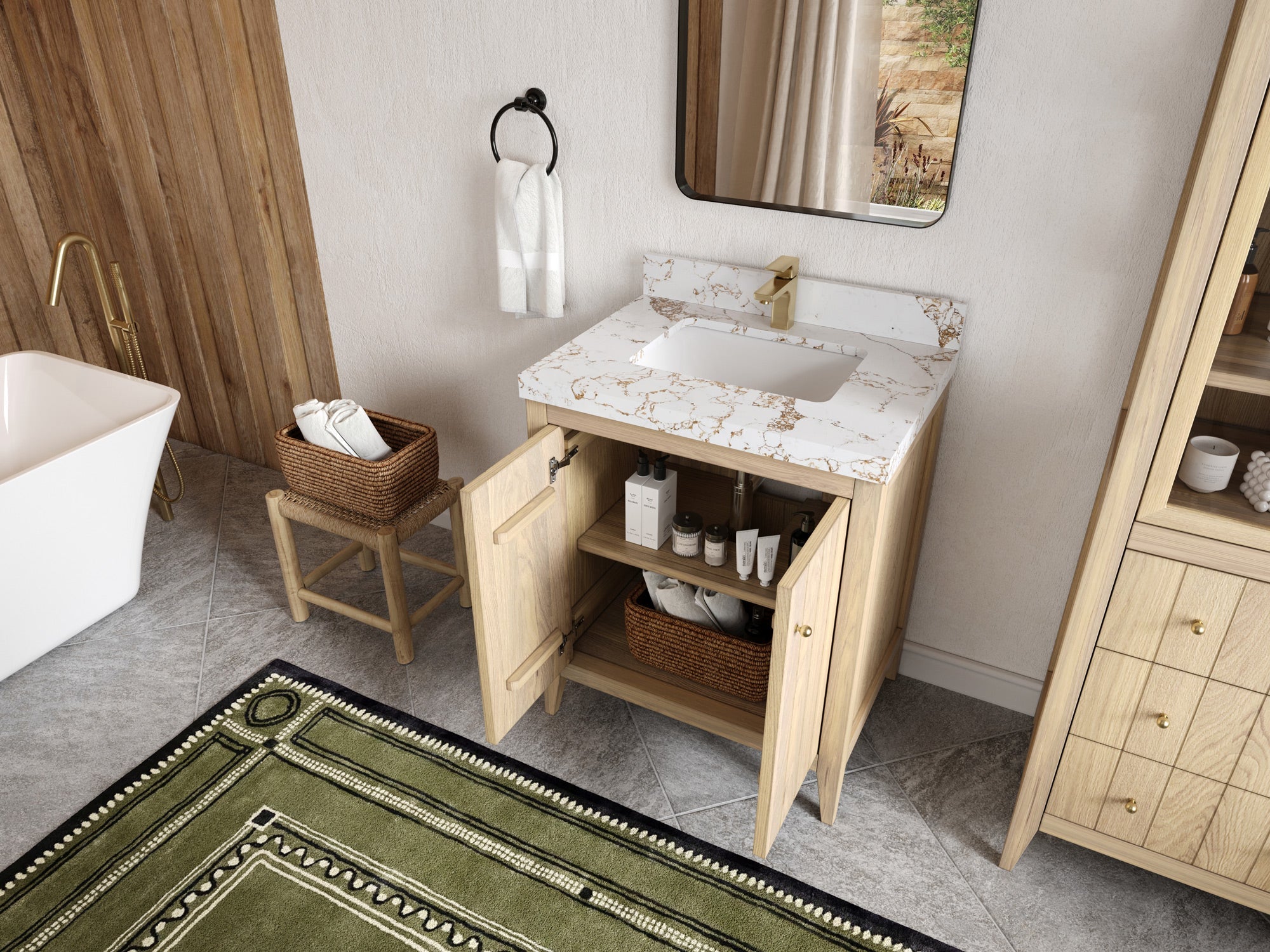

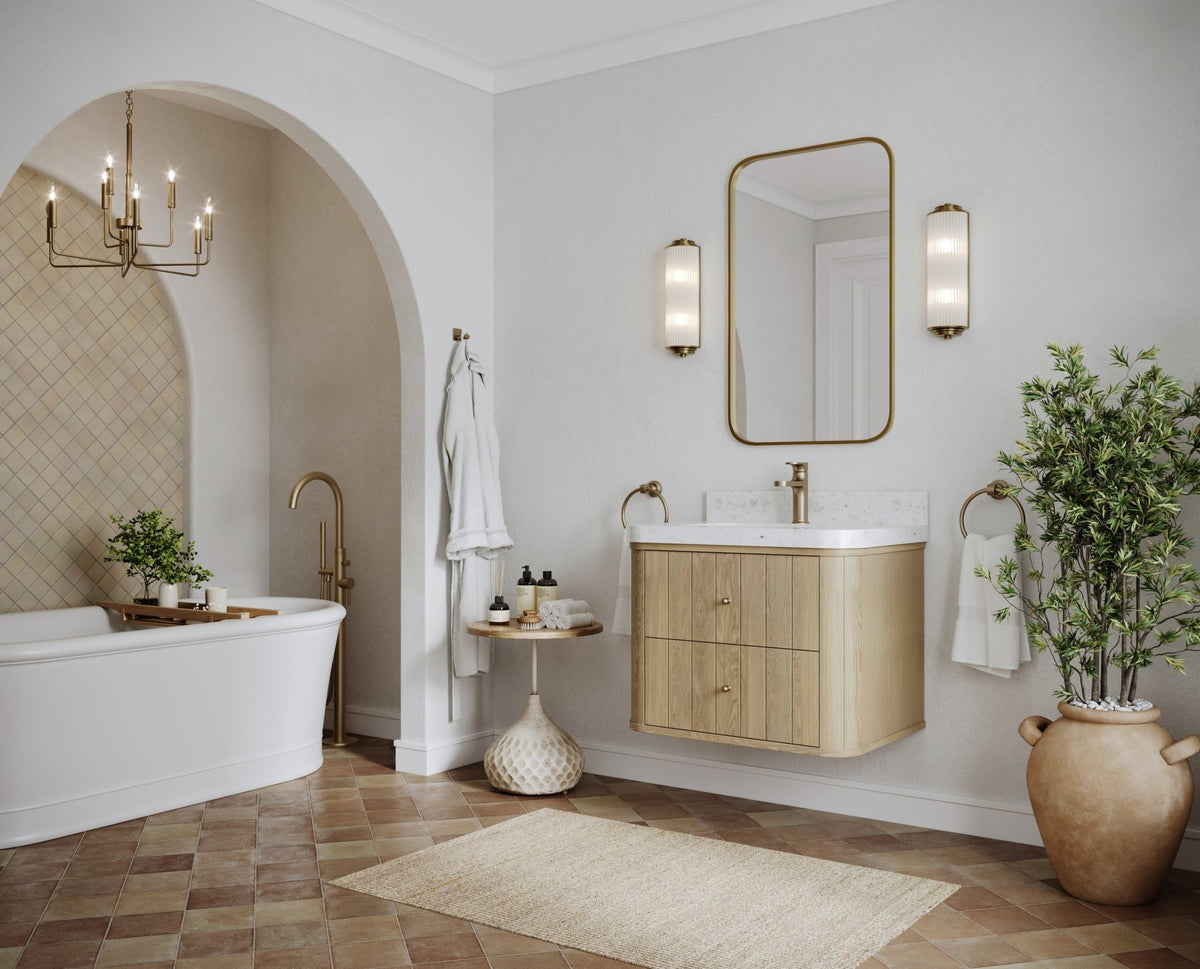
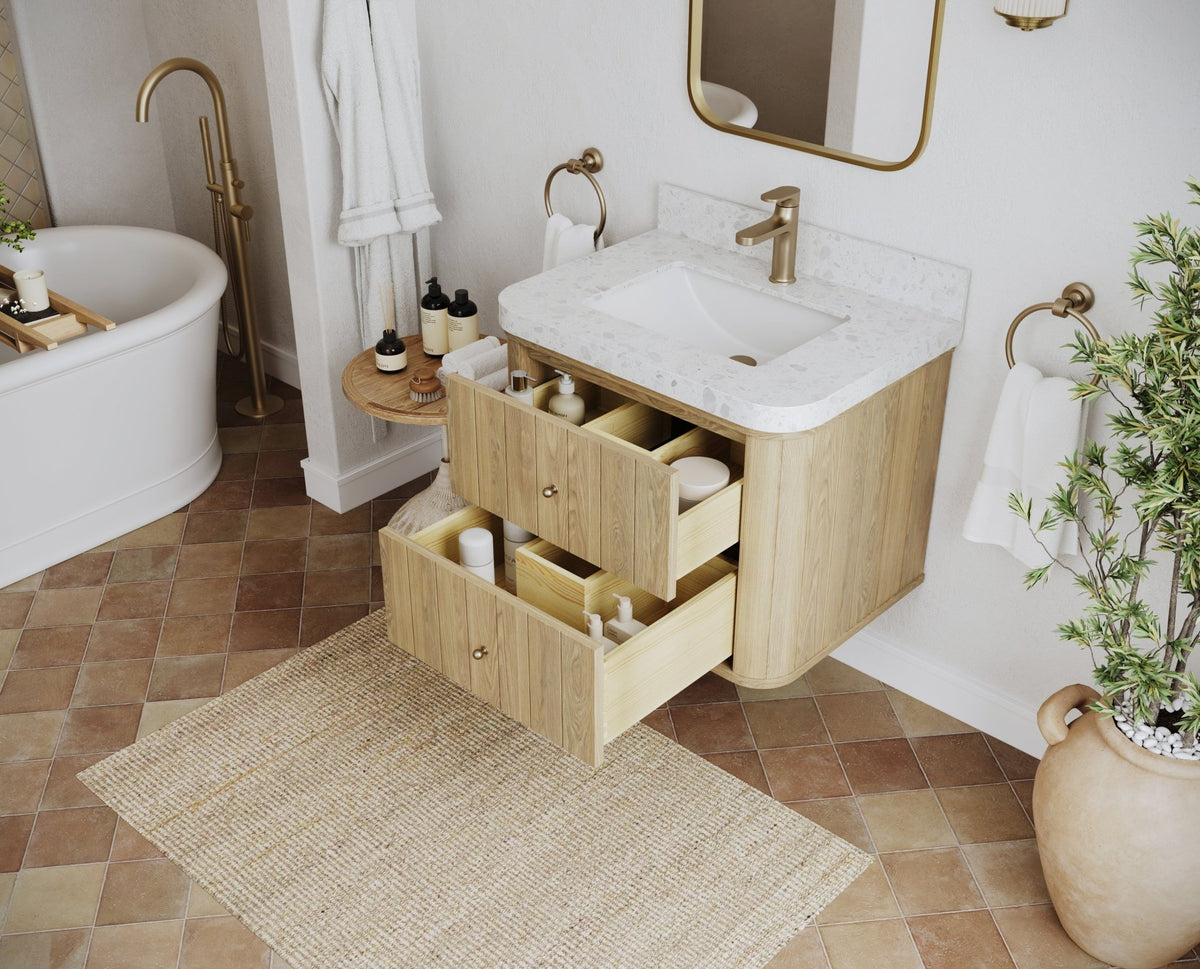
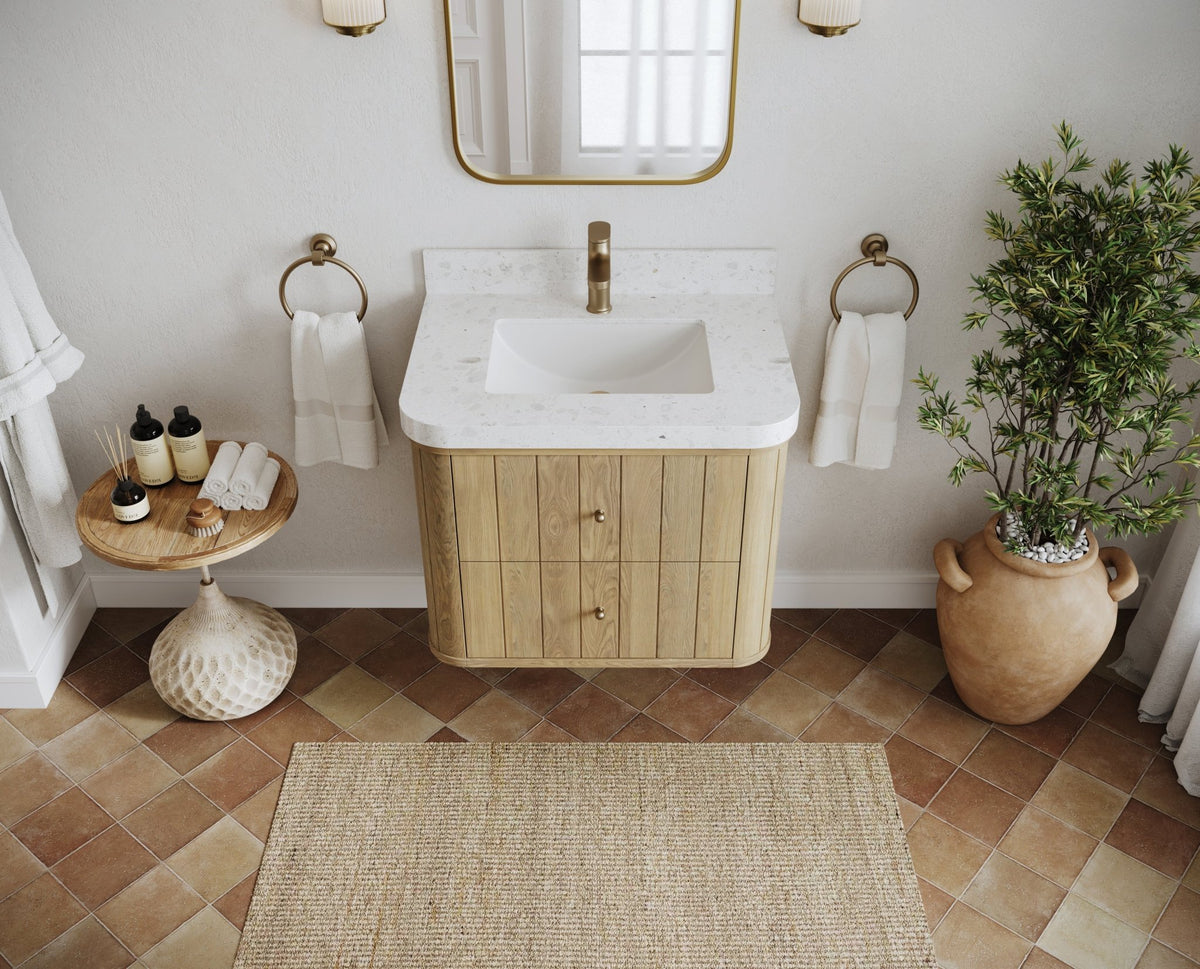
Designing around a 30-inch white oak vanity
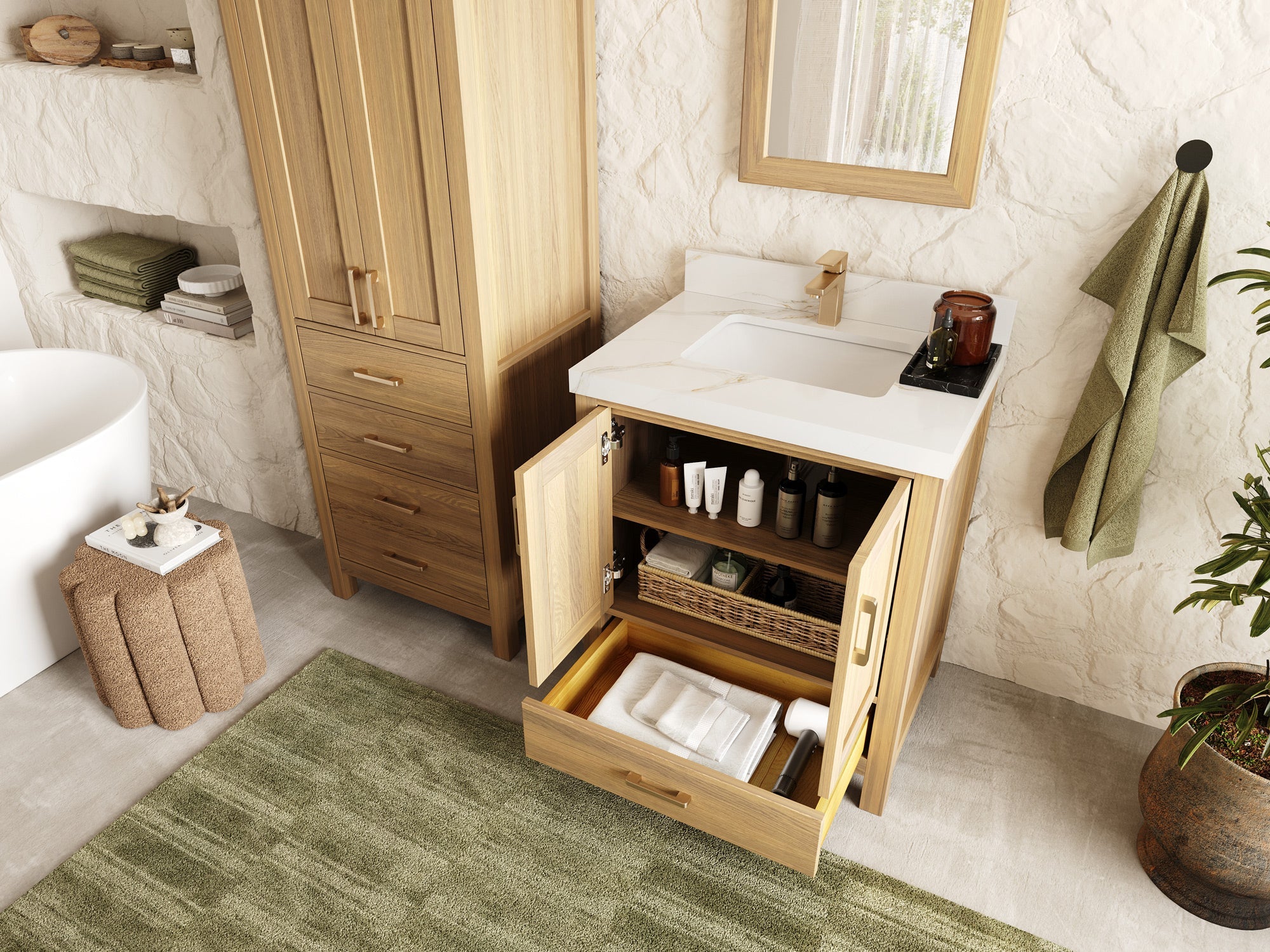
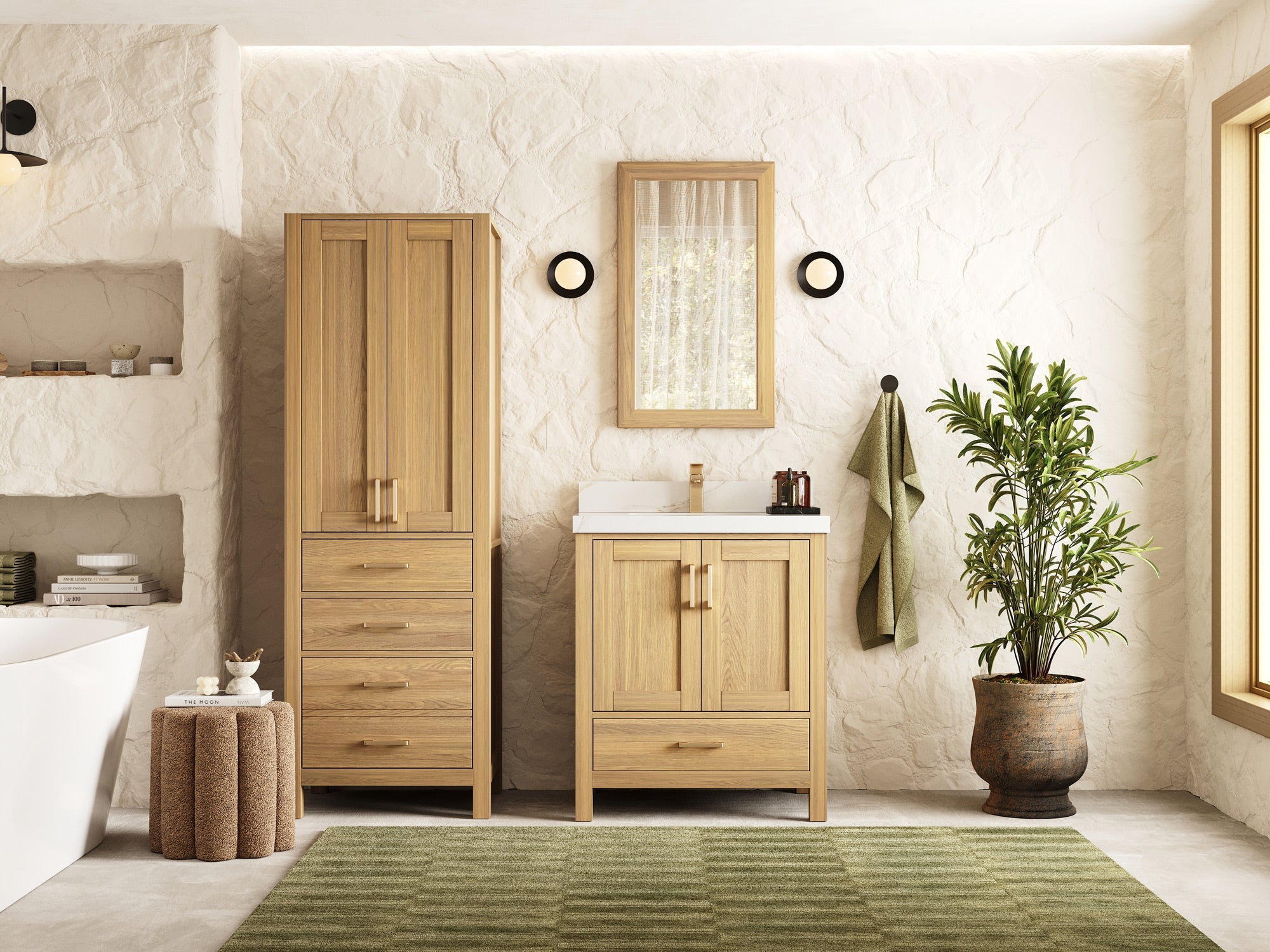
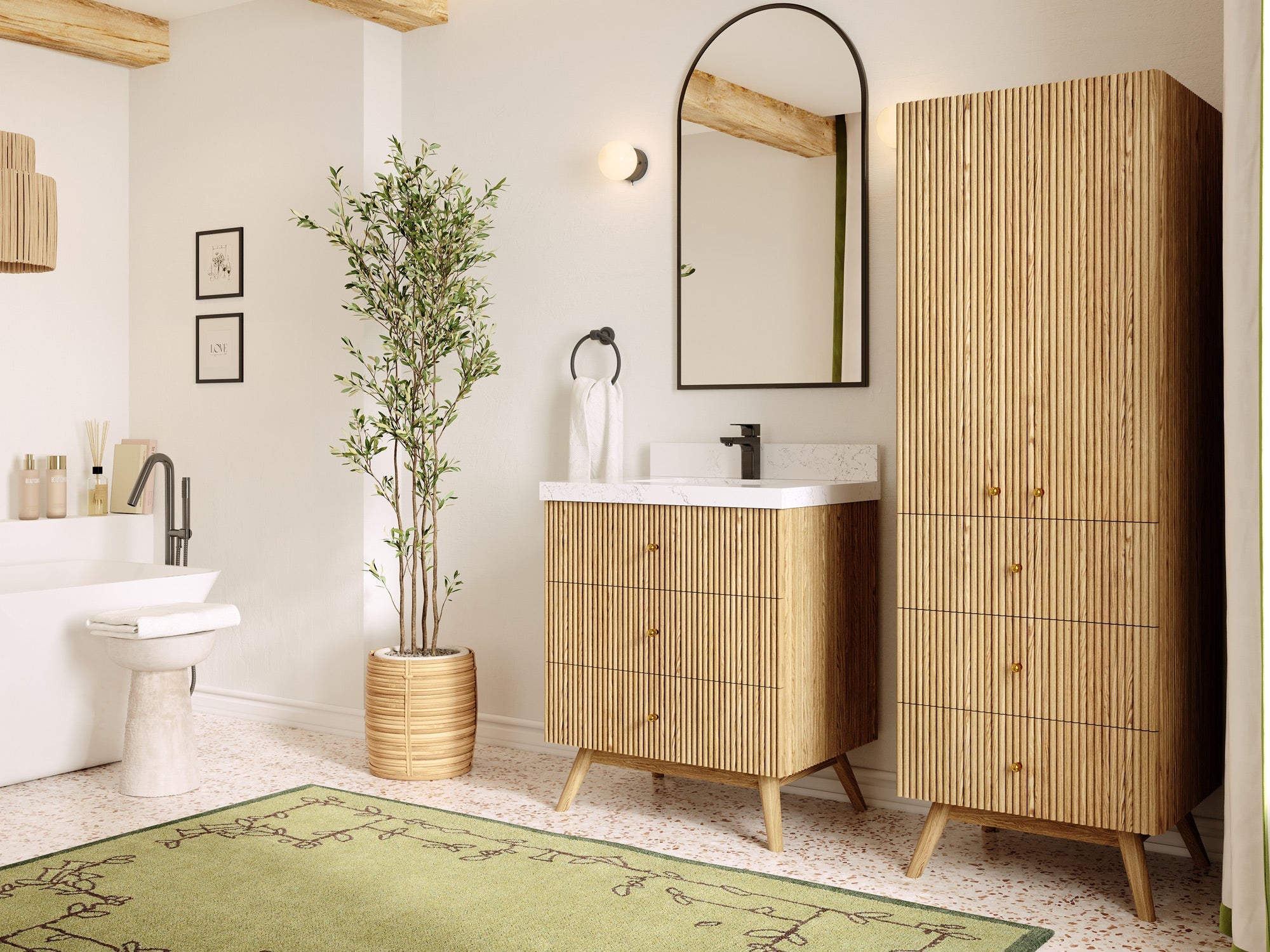
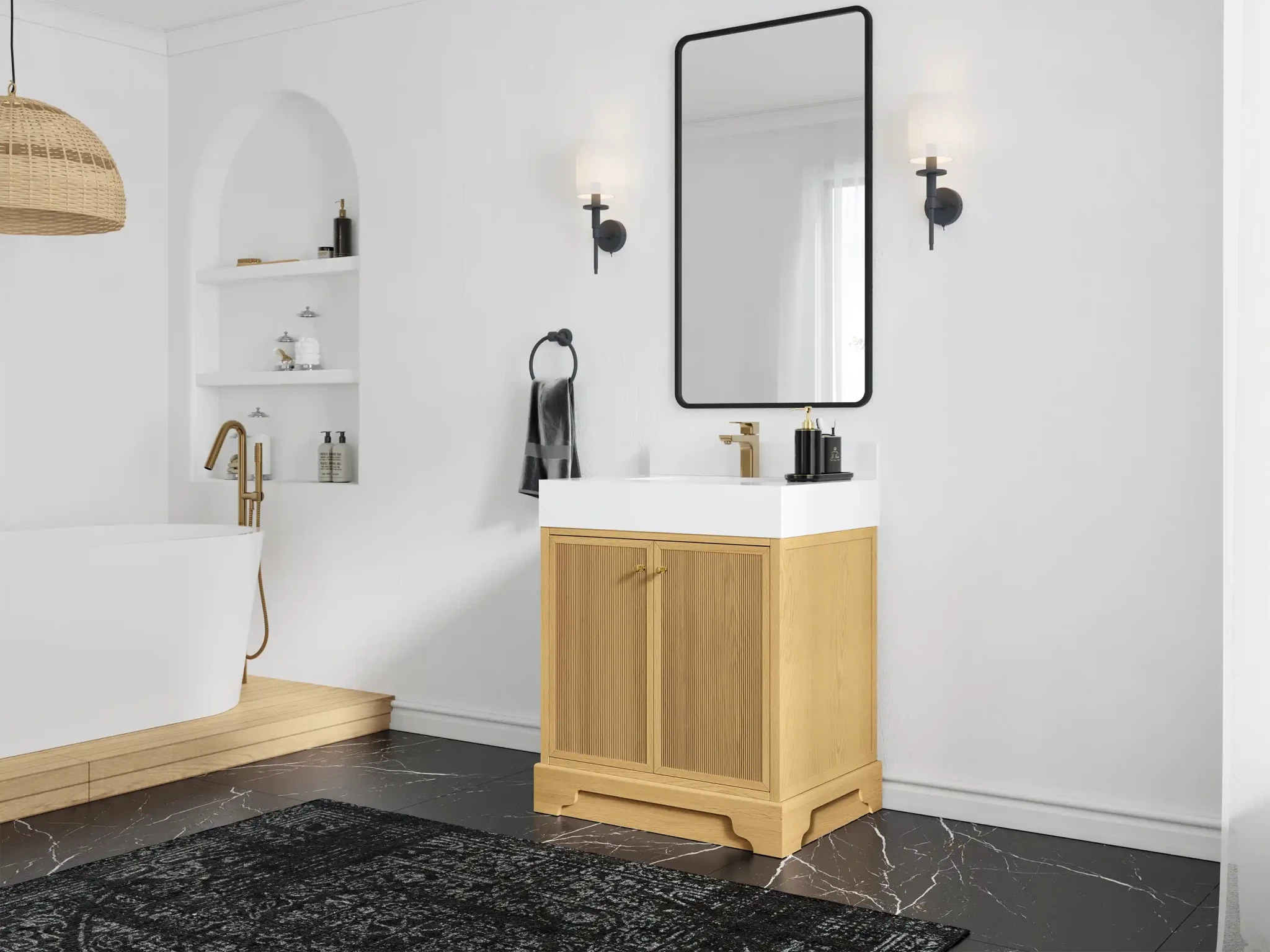
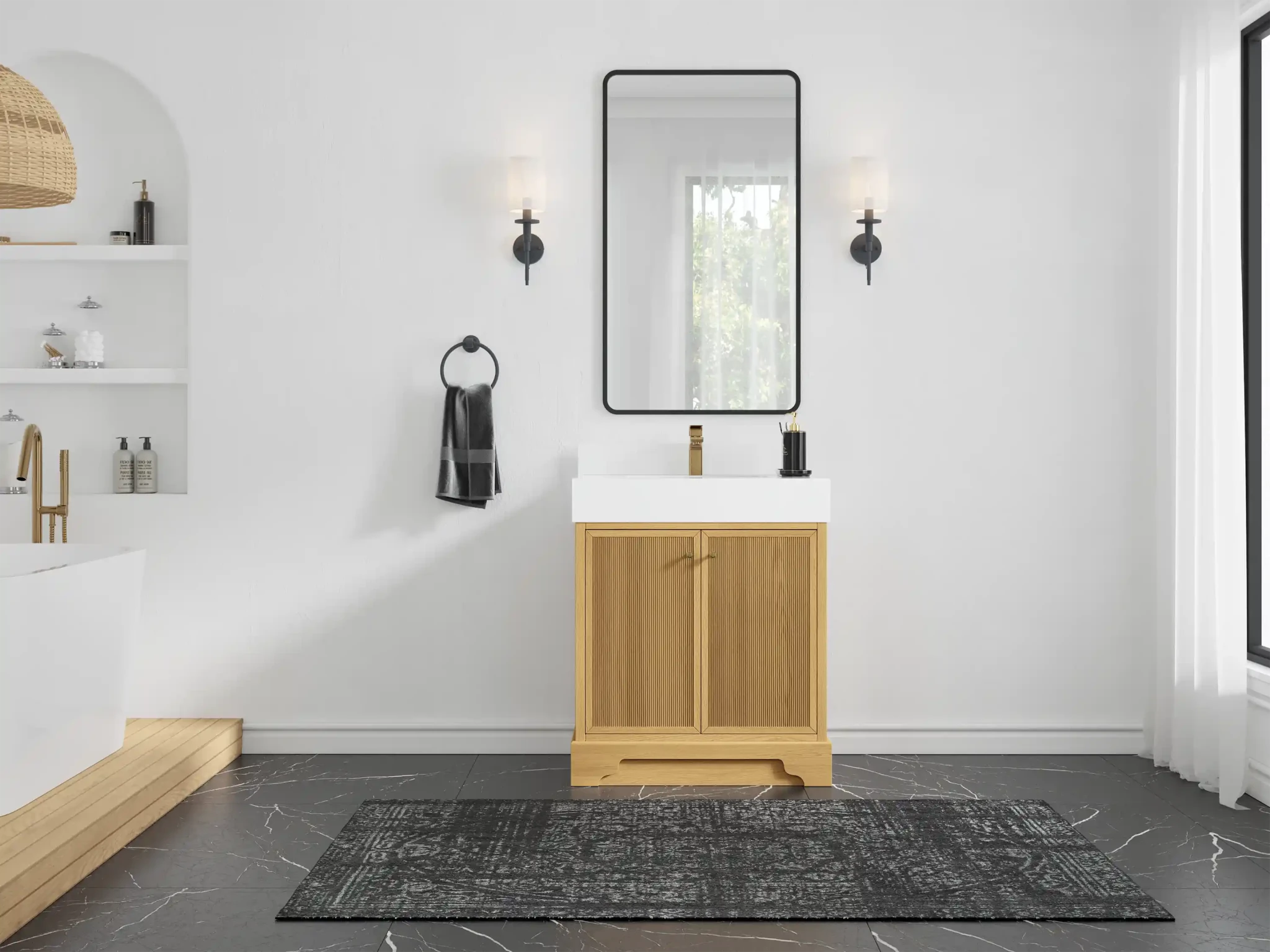
White oak brings pattern and warmth through the wood itself, so a compact bathroom can feel layered without relying on a bold painted color. At 30 inches wide, the grain is visible enough to establish a material direction while the cabinet remains appropriate for many powder rooms and smaller guest baths. The assortment includes clean floating forms, furniture-like freestanding silhouettes and textured or reeded designs.
Choose the finish direction before the accessories
Natural and white-oak finishes keep the palette light and balanced. Nordic directions can feel quieter and cooler, while honey-toned options introduce more warmth where available. Because natural grain and tone vary, coordinate the room to the overall finish direction rather than expecting every board to match a single photo. Compare samples with the floor, wall paint and metal finishes when possible.
Pair oak with the right level of contrast
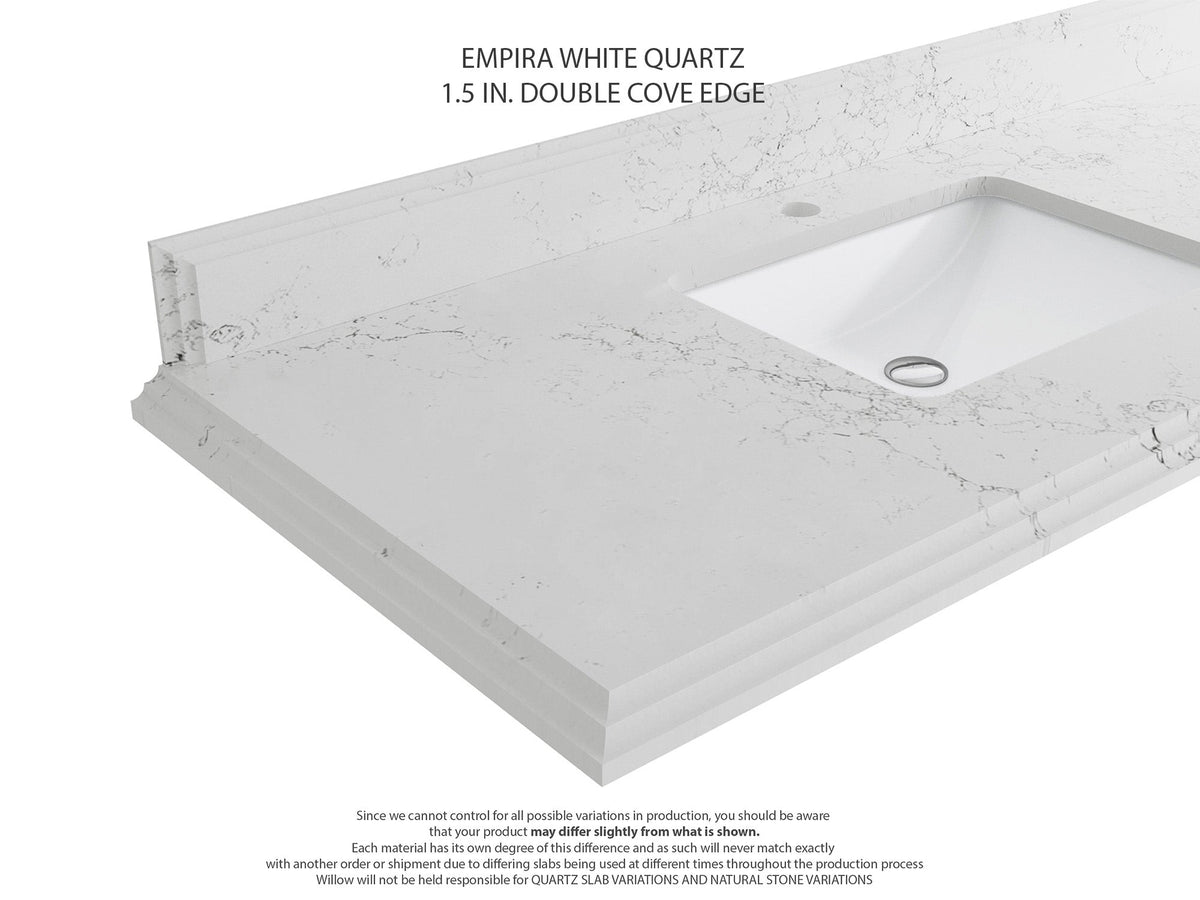
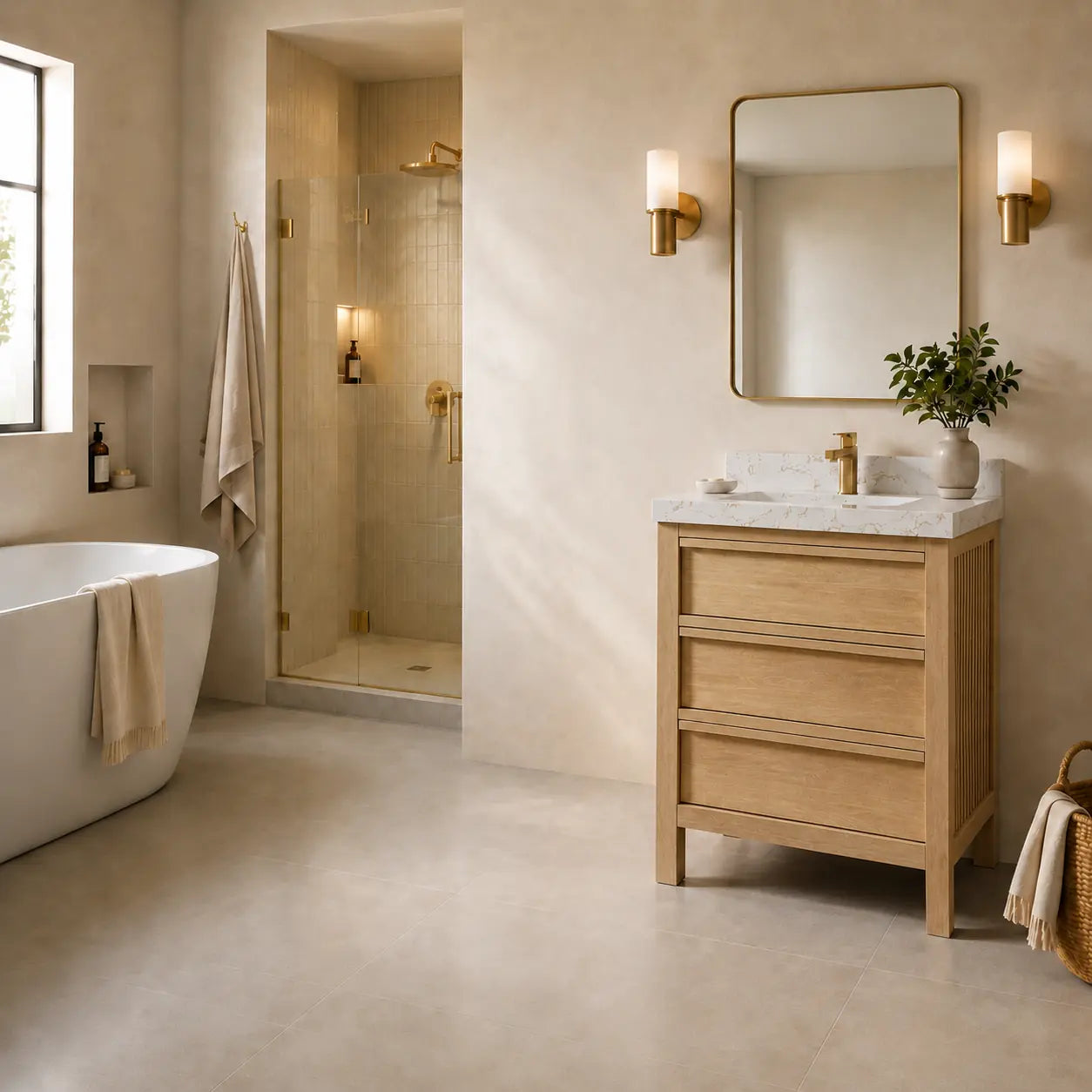
A soft white or pale countertop creates an airy composition. Gray movement can make the cabinet feel more architectural, while warmer veining connects to beige tile and brass-toned fixtures. If the room already has a wood floor or wood-look tile, avoid forcing an exact grain match. Separate the surfaces with a distinct tone so the combination looks intentional.
Decide between floating and freestanding
A floating white oak vanity exposes the floor and emphasizes clean horizontal lines. It requires suitable wall structure and carefully placed plumbing. A freestanding model gives the grain a more furniture-like presence and may integrate more naturally into a conventional remodel. Compare the 30-inch floating vanity collection before deciding.
The families on this page are grouped around a nominal 30 × 22 single-sink format. Check countertop overhang, hardware, drawer movement and plumbing clearance on the exact product page. Browse all 30-inch bathroom vanities to compare painted finishes, visit the broader white oak bathroom vanity collection, and review surface options in the bathroom vanity countertop guide.
White oak also changes with surrounding light. Strong cool daylight can make a pale finish appear more neutral, while warm bulbs bring forward honey tones. Review the cabinet beside the planned wall paint and tile, and keep a little tonal separation between multiple wood surfaces so they complement rather than imitate one another imperfectly.
30-Inch White Oak Bathroom Vanity FAQ
Is white oak the same as an oak-look finish?
Not necessarily. Material and finish are separate product facts. This collection uses verified white-oak product data, and shoppers should confirm the material statement on the exact product page rather than relying only on the color name.
Will my white oak vanity match the product photo exactly?
Natural grain and tone vary. Product imagery establishes the design and finish direction, but individual wood patterning will not be identical.
Can white oak work in a modern bathroom?
Yes. A simple cabinet profile, restrained hardware, pale stone and clean tile lines can make white oak feel modern. Reeded or furniture-inspired forms can move the same material toward transitional or organic styles.
Is a floating white oak vanity available at 30 inches?
The audited assortment includes both floating and freestanding white oak families. Filter by mounting type and verify the product’s wall-support and plumbing requirements.
Which countertop pairs well with white oak?
Soft white and lightly veined tops keep the palette bright. Gray movement adds cool contrast, and warm veining connects to honey tones and brass-toned fixtures. Availability depends on the selected product.
How should I clean a white oak vanity?
Use a soft damp cloth and the care product recommended for the exact finish, then dry the surface. Avoid harsh chemicals, abrasive pads and standing water. Follow separate care instructions for the countertop.
Questions & answers