


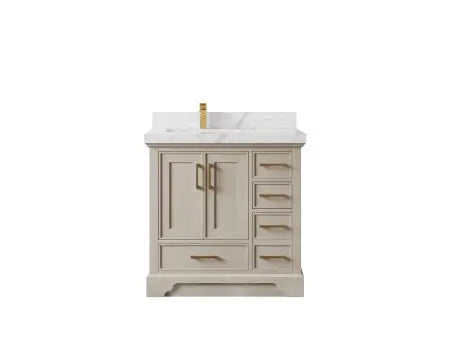
Your bathroom vanity works hard. Between morning and night, toothpaste splatter, cosmetic spills, soap residue, and hard-water spots build up fast — and left alone they turn into stubborn grime that a quick rinse won't shift. A little regular care keeps a single-sink vanity looking its best for years. Here's a simple routine, plus fixes for the most common issues.
A Simple Cleaning & Care Routine
Daily
- Quick wipe-down: a damp cloth removes toothpaste, hair-product overspray, and water spots before they set.
- Mirror: a spritz of glass cleaner and a soft cloth keeps it streak-free.
- Dry the sink: a quick wipe after use prevents water spots.
Weekly
- Sink: use a gentle, non-abrasive cleaner on soap scum and hard-water marks, then rinse and dry.
- Faucet: a mild polish keeps brass or chrome bright — skip harsh chemicals that dull the finish.
- Cabinet: wipe doors and drawer fronts with a damp cloth; a mild all-purpose cleaner handles tougher spots.
Monthly
- Countertop: match the cleaner to the material — quartz wipes clean with mild soap, while natural marble and granite need a stone-safe, pH-neutral cleaner to avoid etching.
- Hardware: tighten loose screws and check hinges and drawer slides, lubricating moving parts as needed.
- Plumbing: look under the sink and around the faucet for leaks and fix them promptly.
Ongoing
- Go gentle: mild cleaners and soft cloths protect the finish — harsh chemicals shorten its life.
- Drain defense: a drain cover catches hair and debris to prevent clogs.
- Inspect: periodically check for water marks, scratches, or chipped finish and address them early.
Common Vanity Issues & Fixes
- Water damage: catch it early — minor spots can be handled with wood filler or fresh caulk; extensive damage needs a pro. (A solid-wood vanity resists this far better than MDF, which swells permanently.)
- Sagging doors: hinges loosen over time — tighten the screws or replace the hinge.
- Countertop cracks: small cracks take a repair kit; large ones mean replacing the top.
- Faucet leaks: a drip wastes water and damages the cabinet — repair or replace the fixture promptly.
- Clogged drains: clean regularly; clear clogs with a plunger or drain cleaner, or call a plumber for stubborn ones.
The Best Defense: a Solid-Wood Vanity
Much of vanity maintenance is really about fighting moisture — and the cabinet material decides that battle. Every Willow vanity is built from solid teak, solid white oak, or durable painted birch — never MDF or particleboard — with soft-close hardware and a quartz or natural Carrara marble top, so it holds its finish and structure for years with just basic care.
FAQ
How do you clean a bathroom vanity?
Wipe the sink and counter daily with a damp cloth, do a weekly clean with a gentle non-abrasive cleaner, and match the countertop cleaner to the material (stone-safe for marble and granite). Dry after use and avoid harsh chemicals that dull finishes.
What should you not use to clean a wood vanity?
Avoid harsh chemicals, abrasive scrubbers, and excess standing water. Use a soft cloth and a mild cleaner, and dry the surface — harsh products strip the protective finish over time.
How do you protect a bathroom vanity from water damage?
Wipe up standing water, seal the joint between counter and wall with silicone, fix leaks promptly, and choose a solid-wood cabinet, which resists moisture far better than MDF or particleboard.
How often should you deep clean a bathroom vanity?
A weekly clean of the sink, faucet, and cabinet plus a monthly check of the countertop, hardware, and plumbing keeps a vanity looking and working its best.
Built to last with basic care. Willow Bath and Vanity builds every vanity from solid teak, solid white oak, and durable painted birch — never MDF or particleboard — with a quartz or Carrara marble top.
Shop Single-Sink · All Vanities · Double-Sink.


Share:
Small Bathroom, Big Impact: The Power of a 36-Inch Vanity
Why Choose a Wood Vanity for a Modern Bathroom?