


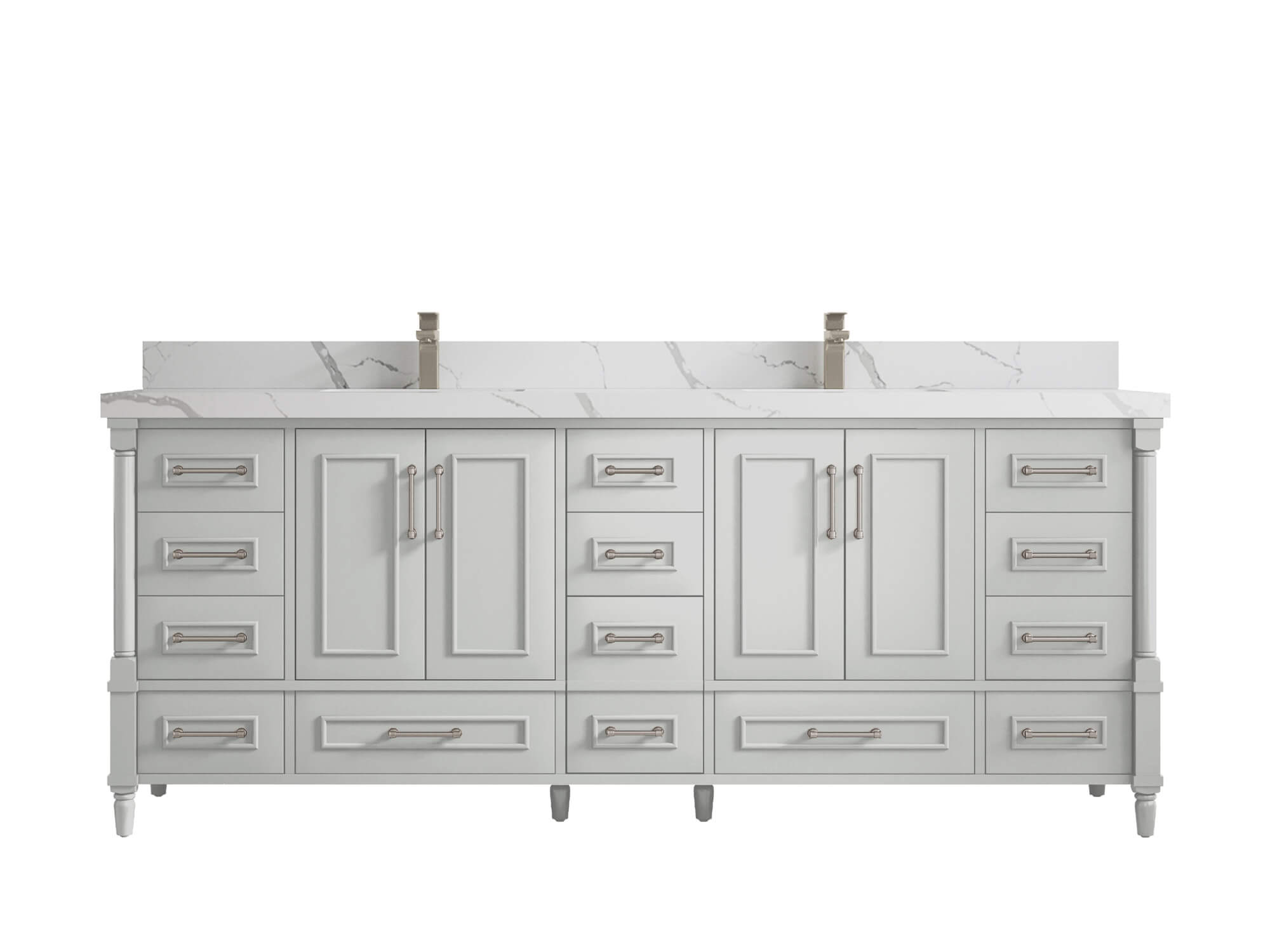
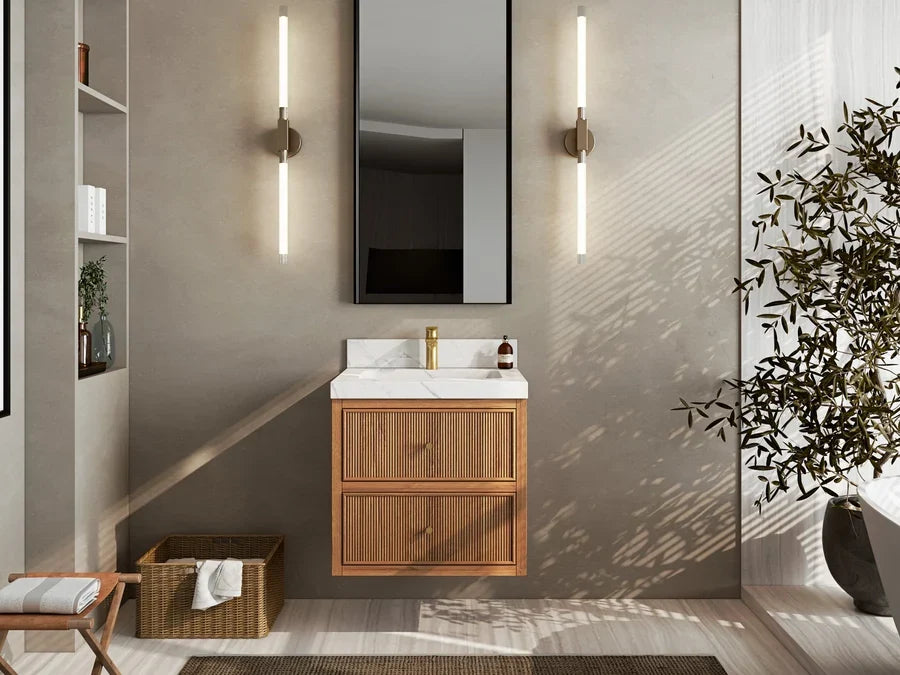
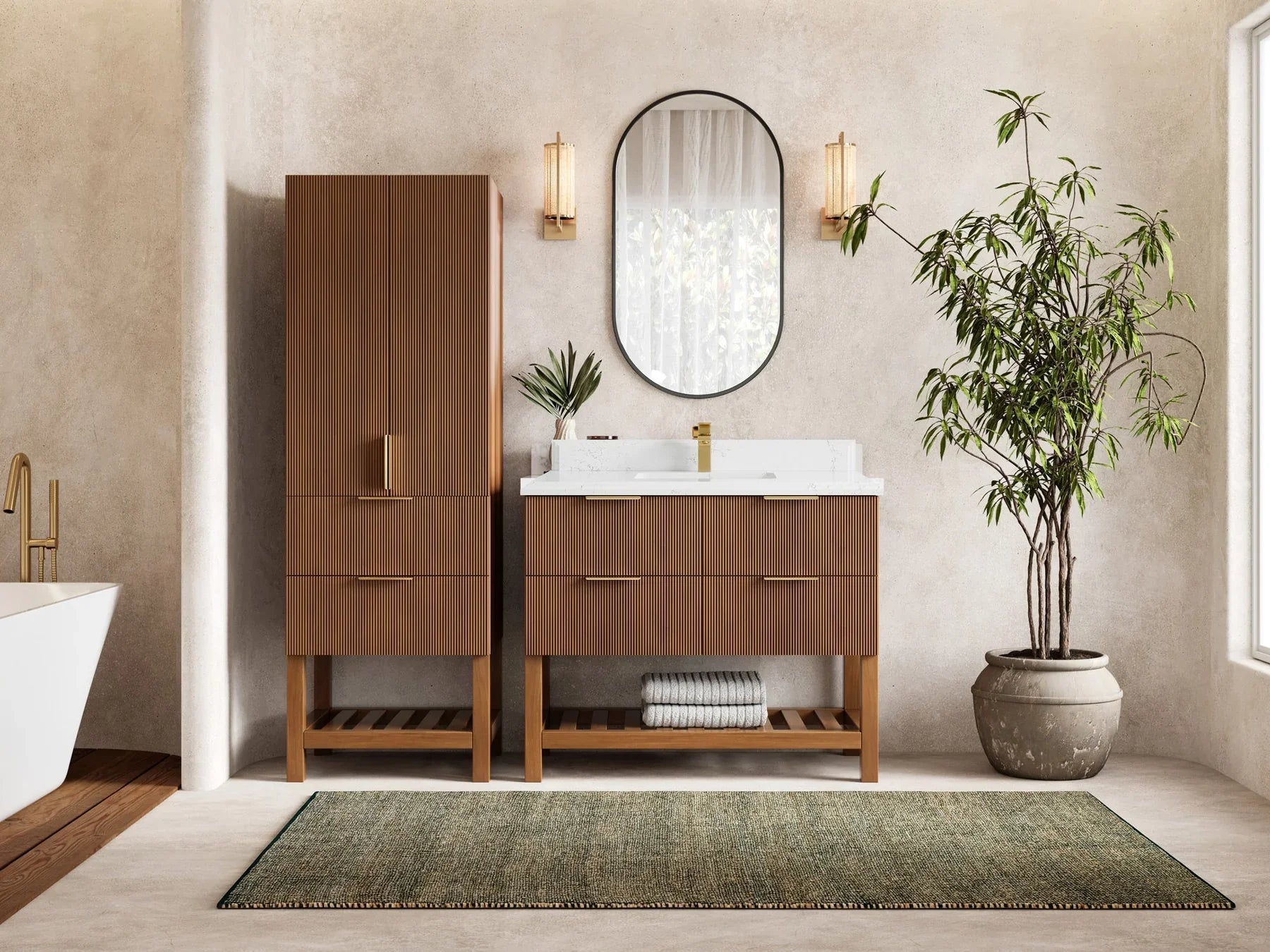
A modern bathroom can look clean without feeling cold. A wood vanity helps create that balance: the cabinet brings natural grain and warmth into a room that is otherwise dominated by tile, glass, mirrors, metal, and stone.
The best choice is not simply “wood versus another material.” A successful vanity needs the right proportions, finish, storage, sink layout, hardware, and construction for the room. This guide focuses on those design decisions so the vanity feels integrated rather than added as an afterthought.
Five Reasons to Choose a Wood Bathroom Vanity
1. Natural Grain Softens Hard Surfaces
Bathrooms contain many smooth, reflective surfaces. Wood grain introduces a quieter layer of detail that can keep the space from feeling flat. Because the pattern is part of the material or veneer, it can add interest without requiring decorative molding or a busy cabinet profile.
2. Wood Works With Simple Cabinet Shapes
Modern design often relies on proportion and material rather than ornament. A flat-front or restrained vanity can still have presence when the grain and finish are visible. This makes wood useful in rooms where the cabinet should feel substantial but not elaborate.
3. Finish Changes the Mood of the Room
A light finish can support an open, calm palette. A mid-tone finish brings warmth without dominating the room. A dark finish creates contrast against pale tile or countertops. Treat the finish name as a color decision, then read the specification separately to understand the cabinet materials beneath it.
4. Wood Bridges Multiple Modern Styles
The same material can support several directions. Pale, quiet grain fits Scandinavian-inspired rooms. Warmer wood works in organic modern spaces. A dark, clean-lined cabinet can suit a more dramatic contemporary bathroom. Hardware, countertop, lighting, and wall finish determine which direction the room takes.
5. It Can Make the Vanity Feel Like Furniture
Visible grain, balanced proportions, and well-planned legs or a clean base can make a vanity read as a considered furniture piece. That effect is especially useful when the vanity is the first feature visible from the bathroom door.
Choose the Wood Look Before Choosing Accessories
Start with the cabinet because it occupies more visual space than faucets, pulls, and small accessories. Once the wood direction is clear, the rest of the palette becomes easier to control.
| Design direction | Vanity approach | Coordinate with | Watch for |
|---|---|---|---|
| Light and airy | Light wood or a pale finish with a simple cabinet front | White or quiet stone, soft wall colors, restrained hardware | Too many competing pale wood tones in the same sightline |
| Warm organic modern | Visible grain and a warm natural finish | Textured tile, warm metal, stone, and soft lighting | Adding so many organic textures that the room loses a clear focal point |
| High contrast | Dark wood or a deep finish with a clean silhouette | Pale countertop, lighter walls, deliberate metal finish | Insufficient lighting around a dark cabinet |
| Quiet contemporary | Consistent grain, minimal hardware, and simple proportions | Large-format tile and a limited neutral palette | Oversizing the vanity and reducing necessary circulation space |
Light Wood, Warm Wood, or Dark Wood?
Light Wood
Light wood tends to recede visually and can help a smaller bathroom feel less crowded. It pairs naturally with white, cream, pale gray, and muted stone. If you want visible grain with a lighter appearance, compare Willow’s white oak bathroom vanities.
Warm Wood
Warm wood tones can make a room feel more relaxed and grounded. They work well with off-white walls, textured tile, warmer stone, and metals such as brass or bronze. The exact result depends on undertone, so compare samples and product photography under lighting similar to the bathroom.
Dark Wood
A dark vanity creates a focal point and works especially well when the surrounding surfaces are lighter. Make sure the room has enough light to preserve grain visibility. Also confirm whether a dark color name identifies the actual species or only the finish.
More Visible Grain and Variation
If natural variation is part of the design goal, mango wood vanities offer a useful reference point. Expect one cabinet to differ somewhat from another, and verify how the retailer represents natural variation before ordering.
Match the Vanity to the Bathroom, Not Just the Mood Board
A vanity can look perfect in a photograph and still be wrong for the room. Before choosing a style, document the physical constraints:
- available wall width and depth;
- door, shower, and drawer clearances;
- existing drain and water-line positions;
- baseboards, outlets, switches, vents, and wall trim;
- mirror and lighting width;
- delivery route, stairways, doors, and turning space;
- the amount and type of storage needed by daily users.
Use those measurements to narrow Willow’s bathroom vanity collection before comparing finish details.
Choose a Sink Layout That Supports the Room
The number of sinks should follow daily use and available width rather than trend alone. A single-sink vanity can preserve more uninterrupted counter space and may provide simpler storage around one drain. A double-sink vanity can support two users, but it also adds a second basin and additional plumbing that occupy cabinet and countertop space.
If two basins are a priority, compare available widths and storage layouts in the double-sink bathroom vanity collection. Confirm faucet spacing, mirror or medicine-cabinet placement, and the location of both drains before ordering.
Coordinate the Countertop, Hardware, and Lighting
Countertop
Use the countertop to either calm or sharpen the cabinet. A lightly patterned surface lets pronounced grain remain the focal point. A stronger stone pattern can work with a quieter wood, but two dominant patterns may compete.
Hardware
Hardware should support the overall contrast level. Matte black can define a pale cabinet; warm metal can emphasize warmer grain; softer nickel tones can keep the palette restrained. Check the finish under the same lighting as the vanity whenever possible.
Lighting
Lighting changes how wood color and grain appear. Daylight, warm lamps, and cool lamps can make the same finish read differently. Review finish samples or product imagery under lighting close to the planned bathroom conditions rather than relying on one screen image.
Do Not Confuse Finish With Construction
A modern appearance does not reveal what the vanity is made from. “White oak,” “walnut,” “natural,” and similar phrases may describe species, veneer, or finish color depending on the product. Read the component specification and ask what is used for the frame, doors, drawer fronts, side panels, shelves, bottom, and back.
For a detailed material comparison, read the guide to choosing the best wood for a bathroom vanity. To browse by cabinet material, see Willow’s solid wood bathroom vanities and teak bathroom vanities.
How to Keep a Modern Wood Vanity Looking Intentional
- Limit the room to one dominant wood direction unless two wood tones have been compared deliberately.
- Keep counters visually clear by choosing storage around actual daily items.
- Wipe standing water promptly and use the cleaning method recommended for the specific finish.
- Ventilate the bathroom during and after showers.
- Repair plumbing leaks promptly and inspect the cabinet interior periodically.
- Do not apply oil, wax, polish, or another coating unless the manufacturer approves it for that finish.
Frequently Asked Questions
Are wood vanities suitable for modern bathrooms?
Yes. Wood can support modern design when the cabinet has appropriate proportions, a controlled finish, and a simple relationship with the countertop, hardware, mirror, and lighting.
What wood color works best in a small modern bathroom?
A light or mid-tone finish often feels less visually heavy, but size and layout matter more than color alone. Preserve door, drawer, shower, and walkway clearances before choosing the finish.
Can I mix a wood vanity with wood flooring?
Yes, but the tones should relate intentionally. They do not need to match exactly. Compare undertones and grain activity, and let one wood surface be more visually dominant so the room does not feel accidental.
Should a modern bathroom have a single- or double-sink vanity?
Choose from available width and daily routine. A single sink preserves more continuous counter space, while a double sink may help two users but requires more basin and plumbing space.
How do I protect a wood vanity in a humid bathroom?
Use effective ventilation, wipe up standing water, repair leaks, follow finish-specific cleaning guidance, and confirm that exposed edges and plumbing openings are sealed appropriately.
Ready to compare styles and sizes? Browse all solid wood bathroom vanities.
Share:
Quick Guide to Cleaning and Maintaining Your Single Sink Vanity
Is it a good idea to buy a 30-inch Bathroom vanity with a Double sink?