


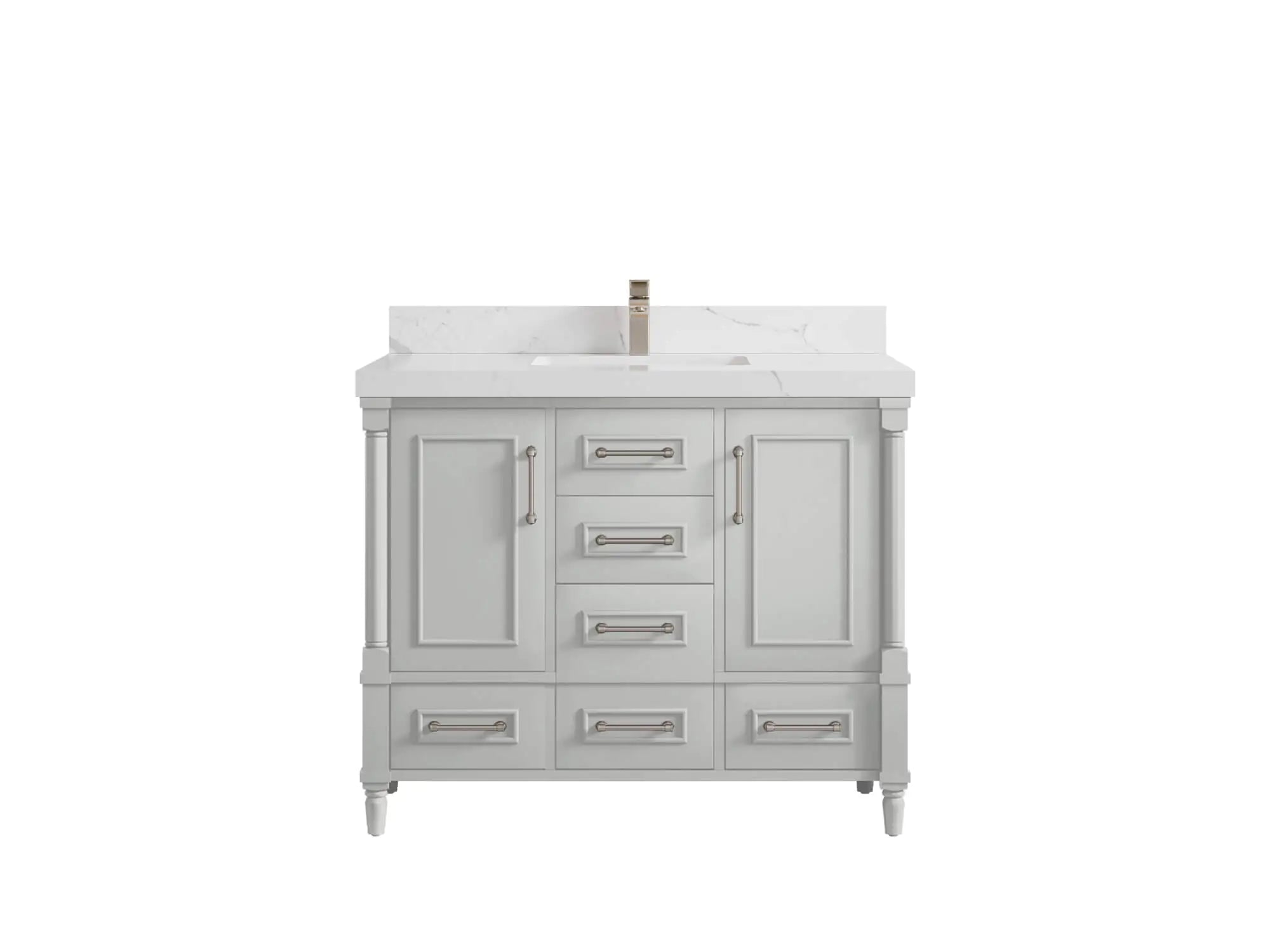
A double vanity helps most when two people need the bathroom at the same time. The cabinet alone does not create a smoother routine; sink spacing, personal storage, mirrors, lighting, outlets and cleaning zones determine whether the shared layout actually works.
This guide focuses on planning a shared-bathroom routine. To compare products after the layout is settled, shop current double-sink bathroom vanities.
Give Each Person a Defined Zone
Start with the tasks each user performs: brushing, shaving, skincare, hair styling or contact lenses. Assign a basin, nearby counter and reachable storage to each person. A double vanity feels convenient when daily items do not have to cross the other user’s wet area.
Protect the Middle Counter
The space between two basins often becomes the most useful shared surface. Keep it available for soap, a small tray or temporary grooming items instead of filling it with permanent decor. Review the actual bowl size and centerline drawing because two cabinets with the same nominal width can provide very different center space.
Plan Storage Around the Plumbing
Two traps divide the cabinet into two wet zones. Side drawers or a central drawer bank can preserve organized storage, while shallow organizers keep small items from disappearing behind plumbing. Count usable compartments, not decorative drawer fronts.
Coordinate Mirrors, Lighting and Outlets
Two mirrors can reinforce individual stations. One wide mirror makes the wall feel calmer and can work well when the sinks are symmetrical. Place light near face level when possible, and verify that outlets remain accessible without cords crossing a basin.
Choose the Width for the Routine
A wider vanity can increase elbow room, central counter and storage, but only if the room has enough clear wall and circulation space. Compare the Bathroom Vanity Size Guide, then use the measurement guide to check trim, doors, supply lines and drains.
Make Cleaning Responsibilities Obvious
Two sinks mean two bowls, two faucets and more edges to wipe. Dedicated zones can make daily cleanup easier because each person knows which items and surfaces belong to them. A shared central tray also reduces scattered bottles and keeps the countertop easier to clean.
When This Layout Does Not Improve the Routine
If the bathroom is normally used by one person at a time, a single basin with more uninterrupted counter may be more useful. The same is true when the second drain would eliminate critical drawers or require costly plumbing changes. Read Single Sink vs. Double Sink Vanity before forcing two stations into a narrow plan.
Shared-Bathroom Planning Checklist
- Identify which tasks happen at the same time.
- Confirm practical basin centerlines and elbow room.
- Reserve storage that each person can reach from their station.
- Plan mirrors, lighting and outlets from the sink locations.
- Keep a useful shared counter zone between the basins.
- Check whether one basin would preserve more valuable storage or counter.
Frequently Asked Questions
Is a double vanity only for a primary bathroom?
No. It can work in a family bathroom or a shared guest suite whenever two people regularly need separate stations.
Should both sides have identical storage?
Not necessarily. Match the storage to each person’s routine, while keeping the exterior balanced if symmetry matters to the design.
What should be planned before choosing the cabinet?
Clear wall width, basin spacing, plumbing, door and trim conflicts, mirror and lighting layout, outlets, storage needs and total installed cost.
Share:
Unveiling the Elegance: Reeded Design Bathroom Vanities - Elevate Your Bathroom's Style
Get The Bathroom Vanity That Suits Your Available Space